Lending

Lending protocols form the backbone of the decentralized money market, allowing users to lend or borrow digital assets without intermediaries. Using smart contracts, platforms like Aave and Morpho automate interest rates based on supply and demand while requiring over-collateralization for security. The 2026 lending landscape features advanced permissionless vaults and institutional-grade credit lines. This tag covers the evolution of capital efficiency, liquidations, and the integration of diverse collateral types, including LSTs and tokenized RWAs.

14550 Articles
Created: 2026/02/02 18:52
Updated: 2026/02/02 18:52
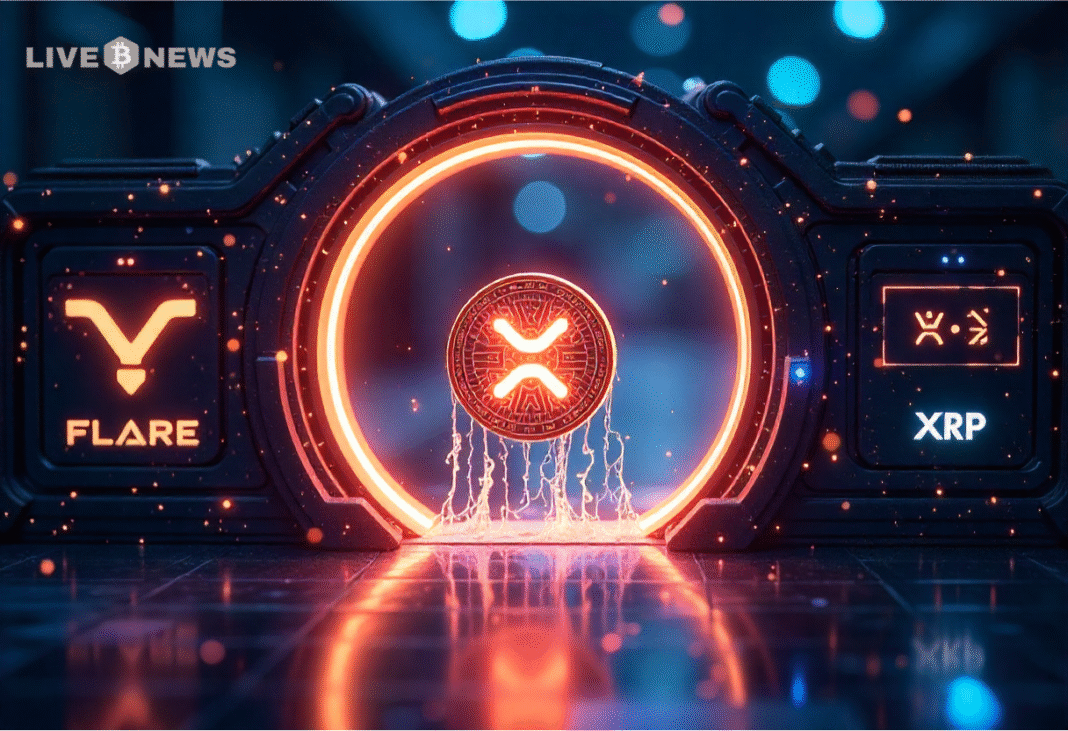
Flare Brings Non-Custodial XRP Into Decentralized Finance

Flare Brings Non-Custodial XRP Into Decentralized Finance

The post Flare Brings Non-Custodial XRP Into Decentralized Finance appeared on BitcoinEthereumNews.com. Fintech 25 September 2025 | 12:00 Flare’s native token, FLR, surged nearly 8% in the past day to trade near $0.03, reflecting investor enthusiasm after the network introduced FXRP – a new wrapped version of XRP designed for decentralized finance. With a market capitalization of around $1.9 billion, FLR is positioning itself as a gateway for assets like XRP to enter DeFi at scale. At its core, FXRP is part of Flare’s FAssets system, which transforms tokens without native smart contracts into onchain, overcollateralized assets. For XRP holders, that means the ability to mint a one-to-one version of their coins that can be deployed into lending markets, liquidity pools, or other DeFi applications. Unlike earlier custodial wrappers that struggled to gain adoption, FXRP uses Flare’s own oracle and data connectors to keep the process decentralized and verifiable. The rollout is starting cautiously, with just five million FXRP available during the first week, though the ceiling will expand over time. Holders can mint directly through Flare’s independent agents or acquire FXRP on decentralized exchanges such as SparkDEX, BlazeSwap, and Enosys. Popular wallets like Luminite and Oxen Flow have already integrated support for minting, swapping, and bridging. Flare is also dangling incentives to bring liquidity onto the network. Rewards in rFLR – its native emissions token – will be distributed to FXRP trading pools, with some early pairs targeting aggressive yields. Borrowing against FXRP is being rolled out as well, providing more utility for the wrapped asset. Security has been a central talking point. The FAssets system has been audited by Zellic and Coinspect, with additional bug bounties and constant monitoring from Hypernative in place. These safeguards are designed to reassure users that the infrastructure can handle large-scale activity. The launch represents a bigger shift for XRP, which has long sat outside…

Author: BitcoinEthereumNews
Ripple News: Flare Brings Non-Custodial XRP Into Decentralized Finance

Ripple News: Flare Brings Non-Custodial XRP Into Decentralized Finance

With a market capitalization of around $1.9 billion, FLR is positioning itself as a gateway for assets like XRP to […] The post Ripple News: Flare Brings Non-Custodial XRP Into Decentralized Finance appeared first on Coindoo.

Author: Coindoo
Atleta Network Collaborates with Okratech to Unlock Powerful DeFi Use Cases, Enhance Sports Fan Engagement

Atleta Network Collaborates with Okratech to Unlock Powerful DeFi Use Cases, Enhance Sports Fan Engagement

By collaborating with Okratech, Atleta enables its sports users can access DeFi, a move that helps it to improve liquidity on its sports network.

Author: Blockchainreporter
The Betrayal at the Heart of Balancer Exploits

The Betrayal at the Heart of Balancer Exploits

As the early 2020s rolled in, DeFi had made a mark with numerous crypto enthusiasts—the innovation grew drastically, and Balancer was a perfect example of what the industry could provide. It surfaced in March 2020, a time when Uniswap was the top dog in the automated market maker (AMM) decentralized exchange (DEX) scene. But that […] The post The Betrayal at the Heart of Balancer Exploits appeared first on Live Bitcoin News.

Author: LiveBitcoinNews
Flare Launches FXRP Wrapped Token for XRP DeFi Integration

Flare Launches FXRP Wrapped Token for XRP DeFi Integration

TLDR Flare launched FXRP, a wrapped version of XRP that enables DeFi functionality on the Flare blockchain Over $7.1 million in XRP was locked in Flare’s vault within hours of the launch FXRP allows XRP holders to lend, borrow, earn interest, and provide liquidity in DeFi protocols The system uses overcollateralization and has undergone security [...] The post Flare Launches FXRP Wrapped Token for XRP DeFi Integration appeared first on CoinCentral.

Author: Coincentral
Europeans Have Only 4 Years Left to Buy Bitcoin: Why Though?

Europeans Have Only 4 Years Left to Buy Bitcoin: Why Though?

The post Europeans Have Only 4 Years Left to Buy Bitcoin: Why Though? appeared on BitcoinEthereumNews.com. Key Takeaways: The ECB is targeting a full digital euro launch by 2029, claiming it will modernize payments, improve access, and reduce reliance on foreign providers. Yet, Vietnam’s recent closure of more than 86 million bank accounts due to new compliance shows how centralized digital money systems can abruptly cut off citizens’ access to their funds. As Europe marches toward a programmable CBDC regime, the window to buy Bitcoin as an independent, uncensorable asset may be narrowing. The countdown has begun, and few seem to realize it. By 2029, if the European Central Bank (ECB) sticks to its current roadmap, the digital euro will have become a reality. While Brussels and Frankfurt hail this as a leap into the future of money, the window for Europeans to freely use, hold, and buy Bitcoin could be closing fast. As the lessons from Asia’s banking crackdowns show, the arrival of programmable money could change what financial freedom looks like in Europe (and not for the better). Digital Euro: Promise or Pandora’s Box? The ECB has set mid-2029 as a realistic date for a full-scale digital euro launch. According to the central bank, this isn’t just innovation for innovation’s sake. The ECB believes a digital euro will modernize payments, boost consumer choice, and ensure European monetary sovereignty. Promised features include real-time payments, the ability to send and receive digital currency both online and offline, and built-in financial inclusion for Europe’s unbanked. Supporters praise the digital euro for reducing Europe’s reliance on foreign card networks and tech companies. ECB officials claim a digital euro is a matter of sovereignty, supposed to be free for everyday use and shield small transactions from Big Brother oversight (at least below certain thresholds). In theory, consumers should gain privacy, speed, and universal digital access. Digital Euro | Source…

Author: BitcoinEthereumNews
Good News for Ripple? Flare Launches First FAssets for XRP on Mainnet

Good News for Ripple? Flare Launches First FAssets for XRP on Mainnet

Flare says other protocols can integrate FXRP directly in their native building blocks, eliminating the need for special technicalities.

Author: CryptoPotato
Crypto.com Expands TWAP Trading Bot By Integrating HEMI Token Support

Crypto.com Expands TWAP Trading Bot By Integrating HEMI Token Support

Crypto.com adds HEMI token into TWAP Trading Bot, where it supports a total of 200+ coins; bringing together Bitcoin security with Ethereum programmability.

Author: Blockchainreporter
Flare Launches FXRP, Opening DeFi Access to XRP Holders

Flare Launches FXRP, Opening DeFi Access to XRP Holders

Flare launches FXRP, a 1:1 XRP-backed token enabling lending, trading, and DeFi access, expanding XRP’s utility in decentralized finance. Flare Network has taken a major step in bringing XRP into decentralized finance. The blockchain platform launched FXRP, a wrapped XRP that enables holders to utilise the token in lending, trading, and liquidity in DeFi applications. […] The post Flare Launches FXRP, Opening DeFi Access to XRP Holders appeared first on Live Bitcoin News.

Author: LiveBitcoinNews
OpenAI’s $100 billion deal with Nvidia is structured as cash payments

OpenAI’s $100 billion deal with Nvidia is structured as cash payments

OpenAI isn’t spending $100 billion to buy chips, it’s paying cash to lease them. The whole deal with Nvidia is built on spreading costs over time, and not dropping billions upfront. The artificial intelligence company wants to access Nvidia’s top-tier GPUs, but instead of buying them outright, it’s locking into long-term lease agreements. That way, […]

Author: Cryptopolitan