Lending

Lending protocols form the backbone of the decentralized money market, allowing users to lend or borrow digital assets without intermediaries. Using smart contracts, platforms like Aave and Morpho automate interest rates based on supply and demand while requiring over-collateralization for security. The 2026 lending landscape features advanced permissionless vaults and institutional-grade credit lines. This tag covers the evolution of capital efficiency, liquidations, and the integration of diverse collateral types, including LSTs and tokenized RWAs.

14550 Articles
Created: 2026/02/02 18:52
Updated: 2026/02/02 18:52
What Future Millionaires Are Projecting Its Value to Be in the Next 3 Years

What Future Millionaires Are Projecting Its Value to Be in the Next 3 Years

The post What Future Millionaires Are Projecting Its Value to Be in the Next 3 Years appeared on BitcoinEthereumNews.com. Crypto investors are constantly on the hunt for opportunities that can transform modest sums into life-changing fortunes. With the emergence of Ozak AI, an innovative presale project blending artificial intelligence with blockchain technology, the possibility of turning a $500 allocation into tens of thousands of dollars within just three years is capturing investor imagination. Overview of Ozak AI Ozak AI is a cutting-edge project designed to bridge the worlds of artificial intelligence and blockchain. Its mission is to compress information latency, delivering predictive market insights in real time, packaged in a way that both institutional traders and retail users can access. By doing so, it aims to democratize the kind of data and decision-making tools that were once exclusive to hedge funds. The OZ token is the heart of this ecosystem, serving as a utility token for governance, rewards, and access to AI-powered features. Unlike many presale coins that are driven only by speculation, Ozak AI is being built on a vision of practical utility, ensuring demand extends far beyond hype cycles. Ozak AI’s Partnerships Strategic partnerships have added significant credibility to Ozak AI’s roadmap. One of its most important collaborations is with Perceptron Network (@PerceptronNTWK), an AI-powered platform supported by over 700,000 active nodes. This partnership provides the infrastructure and distributed intelligence needed to support Ozak AI’s fast, accurate data streams. In addition, Ozak AI has teamed up with SINT and HIVE, both of which bring unique strengths to the project. SINT provides autonomous AI agents, voice-driven interfaces, and cross-chain bridges that enhance Ozak AI’s predictive capabilities, while HIVE integrates blockchain data APIs with Ozak’s 30ms market signals to create seamless real-time insights. These partnerships collectively strengthen Ozak AI’s case as a long-term player in the AI altcoin trend. Ozak AI Presale Currently in Stage 6 of OZ presale…

Author: BitcoinEthereumNews
Best Altcoins to Invest in as Big Players Enter the Market

Best Altcoins to Invest in as Big Players Enter the Market

Ethereum (ETH) continues to be a favorite among institutional investors, especially with big players warming up more to the crypto market. As the largest smart contract platform, ETH continues to be a favorite among investors who seek stability. Another show of optimism comes with Mutuum Finance (MUTM).  At stage 6 of its presale, Mutuum Finance […]

Author: Cryptopolitan
Solana (SOL) vs Mutuum Finance (MUTM): Which is the Best Crypto to Invest in and Turn $300 into $15,000

Solana (SOL) vs Mutuum Finance (MUTM): Which is the Best Crypto to Invest in and Turn $300 into $15,000

The post Solana (SOL) vs Mutuum Finance (MUTM): Which is the Best Crypto to Invest in and Turn $300 into $15,000  appeared on BitcoinEthereumNews.com. Solana (SOL) solidified itself as a reputable name holder among the fastest and most scalable blockchains that have attracted builders and institutional investors alike. Professionals view SOL as a possible source of steady gains during the subsequent bull run. Conversely, Mutuum Finance (MUTM) at a presale price $0.035 is gaining momentum with its lending-and-borrowing protocol. With its lower market price and nascent thrust, MUTM has investors looking at it as one that can deliver disproportionate returns, turning a modest $300 investment into $15,000 once it achieves its milestones. Solana (SOL) Price Prediction As of 23 September 2025, Solana (SOL) stands at around $219.05 after recently retracing following its failure to break resistance levels of $245-$250. The price has started running out of steam. While still being bought and network activity still being healthy, technical indicators have begun to reflect bearish divergence, with the recent rally losing vigor compared to earlier ones.  For SOL to reach the target of about $300, it would likely require a strong breakout above the existing resistance backed by steady institutional inflows and favorable macro trends. Otherwise, it will remain in the band of $200-$250 or breakdown to retest the support around $210-$220. MUTM, however, has stronger potential for growth.  Mutuum Finance (MUTM) Presale  Mutuum Finance (MUTM) has successfully gone live with its presale and stands at Stage 6, where the tokens can be purchased at $0.035. The project has already gained over 16,570 investors and more than $16.3 million in funds. These are indicative of the demand in the market for MUTM and the global anticipation of it going live. Mutuum Finance protocol will hedge liquidity and volatility in real-time. It will short illiquid positions when it’s best, not reaching very low liquidation levels. Risk levels are also managed by hedging into stablecoins and ETH…

Author: BitcoinEthereumNews
Bitcoin Veterans Eye XRP Tundra’s Dual Token Presale Offering Overnight Wealth

Bitcoin Veterans Eye XRP Tundra’s Dual Token Presale Offering Overnight Wealth

The post Bitcoin Veterans Eye XRP Tundra’s Dual Token Presale Offering Overnight Wealth appeared on BitcoinEthereumNews.com. Bitcoin has moved from rebellion to establishment. Exchange-traded funds have drawn in billions, corporations like Strategy and Metaplanet hold BTC as treasury assets, and banks now market Bitcoin to institutional clients. The shift has secured its reputation as a core asset, but it has also ended the days when retail investors could expect life-changing wealth from a few early bets. For veterans of Bitcoin’s earliest bull runs, that realization is pushing attention toward projects still in their infancy. XRP Tundra, currently running its presale, is attracting that interest with a dual-token model, defined launch prices, and the introduction of native staking for XRP. At a moment when Bitcoin offers stability but not explosive growth, Tundra presents the kind of asymmetric upside that recalls crypto’s early millionaire stories. Bitcoin’s Maturity Versus New Frontiers Bitcoin ETFs and corporate treasuries represent a level of legitimacy few predicted in its first decade. The flip side is diminished opportunity for extraordinary returns. Long-term holders are unlikely to complain, but newcomers seeking overnight transformations will find the math less forgiving. Bitcoin may continue to appreciate, yet its trillion-dollar market cap makes another 100x rally implausible. That dynamic explains why experienced Bitcoin holders are scanning for alternatives that combine credibility with early-stage risk. XRP Tundra is one of the few presales pairing these elements. It is offering transparent tokenomics and a staking system that links directly to the XRP Ledger. Dual Tokens and Presale Mechanics The presale introduces two assets. TUNDRA-S, issued on Solana, is a utility and yield-generating token. TUNDRA-X, minted on the XRP Ledger, provides governance and reserve backing. Every purchase of TUNDRA-S comes with free TUNDRA-X, linking participants to both chains in one step. At the current Phase 3 stage, TUNDRA-S is selling at $0.041, with each allocation carrying a 17% bonus. Buyers also…

Author: BitcoinEthereumNews
Big Moves Ahead: 7 Best Cryptos to Watch in 2025 That Could Dominate the Next Market Rally

Big Moves Ahead: 7 Best Cryptos to Watch in 2025 That Could Dominate the Next Market Rally

What if the right meme coin in 2025 could be the difference between an average portfolio and a life-changing windfall? […] The post Big Moves Ahead: 7 Best Cryptos to Watch in 2025 That Could Dominate the Next Market Rally appeared first on Coindoo.

Author: Coindoo
Flare Network Launches FXRP: XRP Now Available for DeFi Applications

Flare Network Launches FXRP: XRP Now Available for DeFi Applications

TLDR Flare has launched FXRP, allowing XRP holders to access DeFi applications Over $7.1 million in XRP was locked in Flare’s vault within hours of launch FXRP enables XRP to be used for lending, borrowing, and earning interest The system is fully decentralized with all transactions tracked on the blockchain Security measures include multiple audits [...] The post Flare Network Launches FXRP: XRP Now Available for DeFi Applications appeared first on Blockonomi.

Author: Blockonomi
Ethereum Co-Founder Vitalik Buterin Introduces Fusaka: Ethereum’s Most Ambitious Scaling Solution Yet

Ethereum Co-Founder Vitalik Buterin Introduces Fusaka: Ethereum’s Most Ambitious Scaling Solution Yet

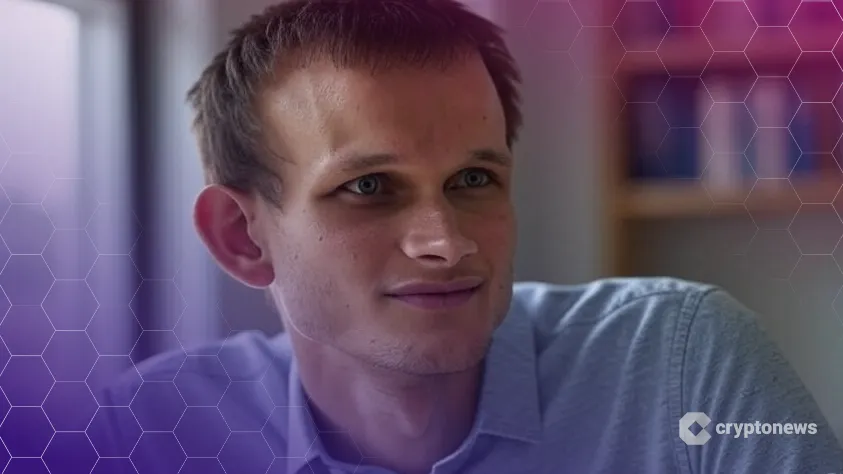
Ethereum co-founder Vitalik Buterin has unveiled Fusaka as the network’s most ambitious scaling upgrade, set to activate on December 3 with revolutionary technology that eliminates the need for any single computer to download complete blockchain data. The upgrade introduces PeerDAS, allowing validator nodes to verify information by checking small random pieces rather than entire data blocks. Buterin described the technology as “unprecedented” for live blockchains, as it enables massive scalability improvements while maintaining security. Each network participant downloads only small “chunks” to probabilistically verify that sufficient data exists for complete reconstruction when needed. The upgrade addresses mounting pressure on Ethereum’s base layer amid criticism that Layer 2 solutions create fragmented user experiences.Source: X/@hildobby Current network congestion forces over 2 million ETH into exit queues, facing 43-day delays, while entry processing completes in just 7 days. Fusaka will more than double blob capacity within two weeks through automated parameter-only forks, expanding from the current limits of 6/9 blobs to 14/21.Source: X/@hildobby The phased approach begins with conservative increases before becoming more aggressive as the technology proves stable. The upgrade comes as Ethereum’s revenue fell 44% to $14.1 million in August despite ETH reaching new all-time highs above $4,950. Layer 2 adoption has reduced base layer fee generation, creating sustainability concerns about the network’s economic model. Revolutionary Data System Changes Everything As reported earlier, the Fusaka Upgrade is scheduled to go live on December 3, and PeerDAS will fundamentally alter how the blockchain networks handle information by distributing data verification across thousands of computers, rather than requiring complete downloads. Traditional systems force every participant to store entire blocks, creating bottlenecks as networks grow larger. The new approach uses mathematical probability to ensure data availability. If more than 50% of data chunks remain accessible across the network, any computer can theoretically download those pieces and reconstruct missing information using erasure coding techniques. Initially, complete data blocks must still exist in one location for broadcasting new information and emergency reconstruction when publishers provide incomplete data. However, these roles remain untrusted, requiring only one honest participant among potentially hundreds of dishonest actors. Future developments will eliminate even these centralized functions through cell-level messaging and distributed block building. Different computers can handle these tasks for different blocks, which further decentralizes the entire process. Notably, Buterin emphasized the cautious testing approach core developers have adopted despite years of development work. The conservative blob count initially increases and will become more aggressive as real-world performance validates the technology’s stability and security. Ethereum Battles Revenue Crisis With Infrastructure Focus The Fusaka upgrade addresses Ethereum’s growing economic challenges as Layer 2 networks reduce mainnet transaction demand. August revenue of $14.1 million marked one of the weakest months since early 2021, which has raised concerns about sustainability. Witnessing this, Buterin recently proposed low-risk DeFi protocols as Ethereum’s potential revenue anchor, comparing the model to Google Search funding broader company operations. He suggested protocols offering 5% yields on blue-chip stablecoins could provide economic stability without compromising ethical foundations. These protocols include mainstream lending platforms like Aave, where users can earn stable returns by supplying USDT and USDC to borrowers without speculative risks. Fusaka’s infrastructure improvements will reduce transaction costs for such applications, making them accessible to everyday users who previously faced prohibitive gas fees when interacting with DeFi protocols. The upgrade includes 11-12 Ethereum Improvement Proposals targeting scalability and node efficiency improvements. Blob parameter-only forks will activate automatically based on predetermined schedules rather than requiring separate network upgrades. Additionally, recent controversies in the validator queue also add to the ongoing scalability pressures. However, Buterin defended the current 43-day exit delays as essential security features, comparing validator commitments to military service, which requires “friction in quitting.” The upgrade follows May’s successful Pectra implementation, which introduced account abstraction and increased validator staking limits from 32 ETH to 2,048 ETH. That upgrade delivered infrastructure improvements for social recovery wallets and smart contract execution capabilities. For Fusaka, the improvements in data availability will support the next growth phase of Ethereum, while maintaining the security guarantees that distinguish Ethereum from its competitors

Author: CryptoNews
Curve DAO crvUSD Credit Line: A Bold Leap for Yield Basis

Curve DAO crvUSD Credit Line: A Bold Leap for Yield Basis

BitcoinWorld Curve DAO crvUSD Credit Line: A Bold Leap for Yield Basis The decentralized finance (DeFi) world is constantly evolving, and a recent development from Curve DAO has certainly captured attention. In a significant move, Curve DAO has officially approved a substantial Curve DAO crvUSD credit line totaling $60 million for Yield Basis (YB), a protocol focused on generating yield from Bitcoin. This decision marks a pivotal moment, aiming to enhance liquidity and expand opportunities within the Bitcoin yield ecosystem. What Does the Curve DAO crvUSD Credit Line Mean for Yield Basis? This newly approved Curve DAO crvUSD credit line provides a robust financial injection for Yield Basis, a protocol designed to offer attractive returns on Bitcoin holdings. The credit line, denominated in crvUSD—Curve’s native stablecoin—is expected to empower YB to scale its operations, provide deeper liquidity, and ultimately, offer more stable and appealing yield opportunities to its users. It’s a strategic partnership that highlights the growing interoperability and support within the broader DeFi landscape. The approval process involved a community governance proposal, a standard practice in decentralized autonomous organizations. This collective decision-making ensures that the community has a say in significant financial undertakings, reflecting the core principles of decentralization. The backing from such a prominent DeFi entity like Curve DAO could significantly boost YB’s credibility and user adoption. Addressing Concerns: Are the Risks of the crvUSD Credit Line Managed? Naturally, a financial commitment of this scale, especially in the volatile crypto space, often invites scrutiny. Concerns were raised regarding the economic risks associated with Yield Basis, questioning whether they were adequately assessed before the Curve DAO crvUSD credit line approval. However, Curve founder Michael Egorov quickly moved to allay these fears, emphasizing the rigorous due diligence performed. Egorov highlighted that Yield Basis has already undergone a comprehensive series of audits: Six independent audits have been successfully completed, scrutinizing various aspects of the protocol’s security and economic models. A seventh audit is currently in progress, demonstrating an ongoing commitment to transparency and robust security measures. This multi-layered audit approach is crucial for building trust and ensuring the long-term viability of such partnerships. It underscores the importance of security and risk management in DeFi, particularly when substantial capital is involved. The Strategic Impact of This DeFi Partnership The provision of a Curve DAO crvUSD credit line to Yield Basis is more than just a financial transaction; it represents a strategic alignment between two key players in DeFi. For Curve DAO, it expands the utility and reach of its crvUSD stablecoin, cementing its position as a foundational liquidity layer. For Yield Basis, it offers a powerful endorsement and the necessary capital to innovate and grow within the competitive Bitcoin yield sector. This collaboration could potentially: Increase Liquidity: Provide deeper liquidity pools for Bitcoin-backed assets. Boost Innovation: Enable Yield Basis to develop new yield-generating strategies. Enhance Trust: The backing of Curve DAO, coupled with extensive audits, can foster greater user confidence. Drive Adoption: Attract more users seeking stable and audited Bitcoin yield opportunities. Such cross-protocol support is vital for the maturation of the DeFi ecosystem, fostering an environment where protocols can leverage each other’s strengths for mutual growth and broader market impact. What’s Next for Yield Basis and Curve DAO? With the Curve DAO crvUSD credit line now in place, the focus shifts to execution and performance. Yield Basis will be tasked with effectively deploying this capital to deliver on its promise of robust Bitcoin yield. The ongoing seventh audit will further contribute to its security profile, offering continuous assurance to investors and users. The success of this credit line could set a precedent for future collaborations between major DeFi protocols and emerging yield platforms. It highlights a growing trend of established DAOs actively supporting innovative projects, thereby strengthening the overall decentralized financial infrastructure. As the DeFi space continues to evolve, these strategic partnerships will likely play an increasingly important role in shaping its future direction. Conclusion: A Landmark Approval for Decentralized Finance The approval of the $60 million Curve DAO crvUSD credit line for Yield Basis is a landmark decision, showcasing the dynamic nature of decentralized governance and inter-protocol cooperation. Despite initial concerns, the rigorous auditing process, championed by Curve’s founder, underscores a commitment to security and transparency. This partnership holds immense potential to invigorate the Bitcoin yield market, drive innovation, and solidify crvUSD’s role as a key stablecoin in the DeFi ecosystem. It’s a testament to the power of community-led finance and a promising step forward for the entire industry. Frequently Asked Questions (FAQs) Q1: What is the purpose of the Curve DAO crvUSD credit line for Yield Basis? A1: The $60 million Curve DAO crvUSD credit line is intended to provide Yield Basis with significant capital to enhance liquidity, scale its operations, and offer more robust and attractive yield opportunities for Bitcoin holders within the DeFi ecosystem. Q2: What is crvUSD? A2: crvUSD is the native decentralized stablecoin of the Curve Finance ecosystem, designed to maintain a stable value and serve as a core component for various DeFi activities, including lending and borrowing. Q3: How were the risks of Yield Basis assessed? A3: Curve founder Michael Egorov confirmed that Yield Basis has undergone six independent security and economic audits, with a seventh audit currently in progress, to thoroughly assess and mitigate potential risks. Q4: What are the potential benefits of this partnership for the broader DeFi space? A4: This collaboration can increase liquidity for Bitcoin-backed assets, foster innovation in yield-generating strategies, enhance trust through rigorous audits, and drive greater adoption of decentralized finance by attracting more users to secure yield opportunities. Q5: Is this type of credit line common in DeFi? A5: While significant, credit lines between DAOs and protocols are becoming more common as the DeFi ecosystem matures. They represent strategic partnerships aimed at mutual growth, liquidity provision, and strengthening the overall decentralized financial infrastructure. Was this article helpful in understanding the latest developments in DeFi? Share your thoughts and spread the word! Join the conversation on social media and let your network know about the exciting new Curve DAO crvUSD credit line for Yield Basis. Your engagement helps us continue to deliver insightful crypto news. To learn more about the latest explore our article on key developments shaping Bitcoin yield protocols and their institutional adoption. This post Curve DAO crvUSD Credit Line: A Bold Leap for Yield Basis first appeared on BitcoinWorld.

Author: Coinstats
Top Cryptocurrencies Under $1 to Buy as Bitcoin (BTC) Dips

Top Cryptocurrencies Under $1 to Buy as Bitcoin (BTC) Dips

As Bitcoin (BTC) is taking a break and falling, investors are looking for altcoins that cost less than $1 but still have upside without breaking the bank. Dogecoin (DOGE) remains one such coin, heavily traded, and with very good community backing. There’s then Mutuum Finance (MUTM), in phase 6 of its presale. The phase is […]

Author: Cryptopolitan
Crypto Bull Run Predictions Favor XRP Tundra Presale Investors with Dual Token Advantage

Crypto Bull Run Predictions Favor XRP Tundra Presale Investors with Dual Token Advantage

The conversation around the next crypto bull run is already taking shape. Analysts and retail traders alike point to cyclical catalysts — from the 2024 Bitcoin halving to accelerating institutional inflows — as reasons why the market could enter a sustained expansion through 2025. Forecasts vary, but the consensus is clear: digital assets are positioned […]

Author: Tronweekly