Lending

Lending protocols form the backbone of the decentralized money market, allowing users to lend or borrow digital assets without intermediaries. Using smart contracts, platforms like Aave and Morpho automate interest rates based on supply and demand while requiring over-collateralization for security. The 2026 lending landscape features advanced permissionless vaults and institutional-grade credit lines. This tag covers the evolution of capital efficiency, liquidations, and the integration of diverse collateral types, including LSTs and tokenized RWAs.

14616 Articles
Created: 2026/02/02 18:52
Updated: 2026/02/02 18:52

Top Rated ICO of 2025? Why the Based Eggman $GGs Presale Is Gaining Recognition

Top Rated ICO of 2025? Why the Based Eggman $GGs Presale Is Gaining Recognition

Learn why Based Eggman $GGs and BullZilla are topping the crypto presale list. Explore the best crypto presale to buy in 2025 and discover leading presale crypto projects shaping Web3.

Author: Blockchainreporter
Lava raises $17.5M and launches bitcoin-backed lending platform

Lava raises $17.5M and launches bitcoin-backed lending platform

The post Lava raises $17.5M and launches bitcoin-backed lending platform appeared on BitcoinEthereumNews.com. Lava, a bitcoin-focused financial services startup, announced on Wednesday that it has raised $17.5 million in new funding while also launching a lending product offering yields on US dollars. In a post on X, the company said its platform allows users to fund overcollateralized loans secured entirely by bitcoin (BTC), with lenders earning up to 7.5% on their deposits.  The funding follows Lava’s earlier $10 million Series A round led by Founders Fund and Khosla Ventures. New backers in this extension include Peter Jurdjevic, Bijan Tehrani of Stake, Charlie Spears, Jacob Brown, Lee Linden, and Zach White. The firm said the additional capital will be used to expand its infrastructure for bitcoin-denominated financial products. Lava’s service is available globally, offering access to dollar liquidity without selling bitcoin, alongside zero-fee bitcoin trading and yield-bearing USD accounts. The model resembles earlier crypto lending products, such as BlockFi’s interest accounts, which drew scrutiny from the US Securities and Exchange Commission (SEC) and resulted in enforcement actions in 2022. Lava’s raise comes amid a surge of late-stage and strategic crypto financing activity in September, according to Blockworks Research. Total crypto fundraising reached its highest monthly levels since early 2022, with infrastructure, finance, and blockchain Layer 1 projects leading deal volume. This is a developing story. This article was generated with the assistance of AI and reviewed by editor Jeffrey Albus before publication. Get the news in your inbox. Explore Blockworks newsletters: Source: https://blockworks.co/news/lava-raise-17m-lending-platform

Author: BitcoinEthereumNews
BoE governor opens door to stablecoins as banks lose grip on lending

BoE governor opens door to stablecoins as banks lose grip on lending

The post BoE governor opens door to stablecoins as banks lose grip on lending appeared on BitcoinEthereumNews.com. The Bank of England is finally warming up to stablecoins, and it’s not a drill. Andrew Bailey, the guy at the top of the UK’s central bank, now says the future of money might not run through commercial banks anymore. Writing in the Financial Times, Andrew said it would be “wrong to be against stablecoins as a matter of principle,” giving a clear nod to crypto’s growing role in payments. That’s not something you hear every day from a central banker whose job is to keep the old system alive. Stablecoins, according to Andrew, can push innovation forward, especially in payment systems, both inside the country and across borders. This is a big change from the same man who once treated crypto like a ticking time bomb. Now, he’s cracking open the door, signaling that these coins might play a real role in the economy, not just in the crypto casino. But there’s a catch: public trust has to come first. Bailey targets stablecoins used for real-world payments Andrew said he’s only interested in stablecoins that actually do something in the real economy. Not the ones you use to hop in and out of trading platforms or meme coins. He wants coins that are used at scale for everyday payments and settling financial stuff, not tokens just floating around for fun. Those don’t count as money in his book, and he made that crystal clear. For any stablecoin to be taken seriously, Andrew said the assets backing them must be risk-free. No debt, no shaky loans, no gambling with interest rates. He’s talking zero exposure to credit or exchange rate swings. If the value isn’t stable, it’s not a stablecoin. And that’s not even the whole story. He warned that even risk-free assets can’t stop cyber attacks. So, if these…

Author: BitcoinEthereumNews
Bad Housing Policy In Seattle Should Be A Warning To Other Cities

Bad Housing Policy In Seattle Should Be A Warning To Other Cities

The post Bad Housing Policy In Seattle Should Be A Warning To Other Cities appeared on BitcoinEthereumNews.com. Seattle housing policies are leading to bad outcomes for people who own and operate affordable housing (Photo by Joel W. Rogers/CORBIS/Corbis via Getty Images) Corbis via Getty Images A recent Seattle Times article (Renting in Seattle area to get harder as supply of new apartments drops) covers troubling signals in the local housing economy for developers and renters. The story moves through a number of emerging data points indicating what might be the future of rental housing prices into the next 18 months. Opponents of inclusionary mandates for affordability can take some vindication from the story because one of the factors impacting apartment supply and construction is the Seattle’s Mandatory Housing Affordability (MHA) program which forces the inclusion of lower rent units in all new multifamily housing or the payment of fee in lieu of inclusion. Given the politics in Seattle, it’s doubtful, but a great place for Seattle to begin addressing the changes in the market is to repeal fully the MHA program. Seattle’s housing economy is being buffeted by the trends present across the country, interest rates stuck at over 6%, construction costs going up, and uncertainty from President Trump’s herky-jerky implementation of tariff policies. According to the Seattle Times article, applications for permits to build apartments are down 66% from a year ago. When the pandemic hit in 2020, lending and building of all kinds mostly stopped, but as interest rates dropped to almost zero, and the pandemic eased, building picked up. According to the Seattle Times, there were double the apartments built in 2023 in 2024, more than 10,000. But this year, permits appear to be trending toward their lowest level since 2018. And according to Mortenson’s construction index costs in Seattle are up 46% this year. Inflation unleashed by low interest rates and massive spending…

Author: BitcoinEthereumNews
Bitcoin lending platform Lava raises $17.5 million and launches USD yield product, with former Visa and Blockchain executives participating.

Bitcoin lending platform Lava raises $17.5 million and launches USD yield product, with former Visa and Blockchain executives participating.

PANews reported on October 1st that Lava, a Bitcoin-backed lending platform, announced it has closed a $17.5 million Series A extension funding round and launched a new USD yield product. This round was backed by several angel investors, including Peter Jurdjevic of the Qatar Investment Authority and former executives from Visa and Block (formerly Square). The newly launched USD Yield product allows users to provide USD funds to provide liquidity for Bitcoin-collateralized loans on the platform and earn a yield, currently offering an annualized yield (APY) of up to 7.5%. Lava stated that all loans are collateralized solely by Bitcoin, with a collateralization ratio exceeding 200%. Lava's previous Series A funding round was led by Peter Thiel's Founders Fund and Khosla Ventures.

Author: PANews
Why is Cardano (ADA) Price Crashing? Analysts Note Interesting Rotation Toward Cheaper Crypto at $0.035 and With Better Tech

Why is Cardano (ADA) Price Crashing? Analysts Note Interesting Rotation Toward Cheaper Crypto at $0.035 and With Better Tech

Cardano (ADA) is under more selling pressure, with massive whale outflows and waning ecosystem traction driving it lower. This decline is less to do with Cardano (ADA) specifically, and more to do with the growing demand for far more advanced competition which is Mutuum Finance (MUTM).  Currently priced at a mere $0.035 in phase 6 […]

Author: Cryptopolitan
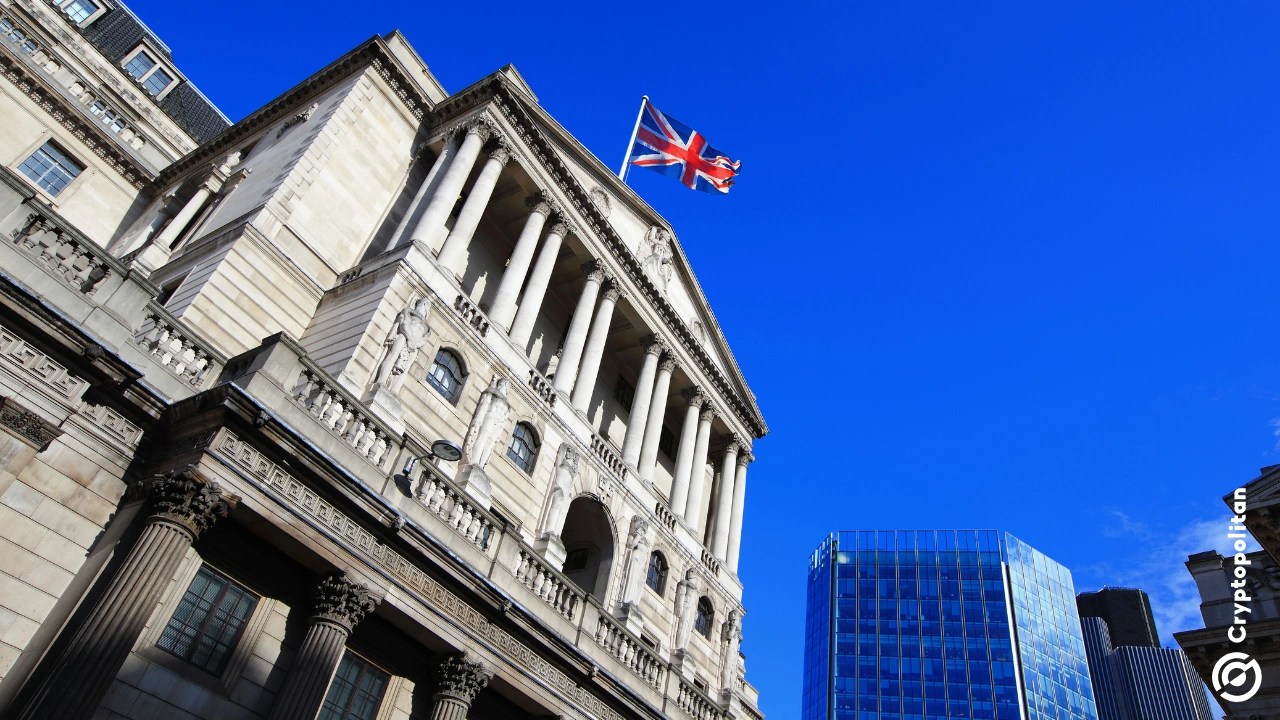
Bank of England warms up to stablecoins, targets real-world payments

Bank of England warms up to stablecoins, targets real-world payments

The Bank of England is finally warming up to stablecoins, and it’s not a drill. Andrew Bailey, the guy at the top of the UK’s central bank, now says the future of money might not run through commercial banks anymore. Writing in the Financial Times, Andrew said it would be “wrong to be against stablecoins […]

Author: Cryptopolitan
US Treasury Eases Crypto Tax Rules — Bitcoin Stands To Gain

US Treasury Eases Crypto Tax Rules — Bitcoin Stands To Gain

The post US Treasury Eases Crypto Tax Rules — Bitcoin Stands To Gain appeared on BitcoinEthereumNews.com. The U.S. Treasury Department has issued new guidance clarifying that unrealized gains on digital asset holdings will not be subject to the Corporate Alternative Minimum Tax (CAMT), a move that spares companies like Michael Saylor’s Strategy from potentially billions of dollars in phantom tax liabilities. The decision marks a pivot from the Biden-era tax framework and comes as debate picks up in Congress over how to regulate and tax digital assets. Even today there is a hearing on crypto taxation in the Senate Finance Committee. The CAMT, enacted in 2022, imposes a 15% minimum tax on corporations earning over $1 billion in annual income, based on their financial statement income rather than taxable income. Under Financial Accounting Standards Board (FASB) rules, companies must “mark-to-market” cryptocurrency holdings on their books, recording paper gains and losses as if the assets were sold at current prices.  That accounting treatment had raised alarms: while unrealized stock gains are excluded from CAMT, digital assets, like Bitcoin, were not explicitly exempt. For firms like Strategy, who aim to hold one trillion-dollars worth of Bitcoin, the distinction could have translated into tens of billions in annual tax bills on unrealized profits. The Treasury’s latest guidance excludes digital assets from CAMT liability, effectively leveling the playing field with equities and bonds.  Bitcoin tax relief and industry pushback This change comes after months of lobbying from industry heavyweights. In May, Strategy and Coinbase submitted a joint letter to the Treasury urging the exemption, arguing that taxing unrealized crypto gains was unfair, unconstitutional, and risked pushing American firms offshore. IRS officials appear to have taken those concerns seriously. The guidance now offers regulatory clarity that could embolden more corporations to add bitcoin to their balance sheets without fear of unpredictable tax shocks. Lummis: Taxing phantom gains doesn’t make sense Senator…

Author: BitcoinEthereumNews
Rate cuts could pave the way for the next DeFi Summer, Aave maker says

Rate cuts could pave the way for the next DeFi Summer, Aave maker says

The post Rate cuts could pave the way for the next DeFi Summer, Aave maker says appeared on BitcoinEthereumNews.com. Stani Kulechov, Aave maker, said lower rate cuts from central banks could push for a new DeFi summer.  He talked about his outlook and predictions during Token2049, which is taking place in Singapore. Kulechov believes steep rate cuts will boost DeFi yields and tokenized assets across the crypto market.  “I think every single rate cut by a central bank, whether it’s by the Fed or ECB … is basically additional arbitrage for these DeFi yields. As rates are gonna go down, we’re gonna see a really good bull market for DeFi yield.” Kulechov links rate cuts to DeFi growth Kulechov said low borrowing costs will make on-chain yields more attractive compared to traditional finance. During the last era of near-zero rates after 2020, DeFi’s total value locked surged from under $1 billion to $10 billion in just months. He believes today’s advanced crypto infrastructure makes DeFi ready for another expansion. However, this time it will be with tokenized assets. “So now, we’ve built this really amazing DeFi infrastructure … And we’re gonna go to a phase where DeFi actually can be embedded into the broader financial and fintech system and distribute yields,” Kulechov told the host at Token2049.  The first ever DeFi summer of 2020 happened during the COVID-19 pandemic. It was driven by a mix of ultra-low interest rates, generous liquidity mining incentives, and the rise of stablecoins. During that time, central banks around the world slashed borrowing costs in response to COVID-19. Because of that, investors start looking for higher yields elsewhere. And this is when they pivoted from traditional finance to crypto.  Decentralized finance dApps like Compound, Aave, and Yearn Finance attracted users with lucrative token rewards. Stablecoins such as USDC and USDT provided the required liquidity for lending and borrowing.  The Federal Reserve kept rates steady…

Author: BitcoinEthereumNews
Best Crypto to Buy in 2025: The Search for the Next Solana (SOL) Ends With This Coin, According to a Top Trader

Best Crypto to Buy in 2025: The Search for the Next Solana (SOL) Ends With This Coin, According to a Top Trader

Little Pepe (LILPEPE) is fast becoming one of the most talked-about crypto projects of 2025. With many investors searching for the next Solana (SOL).

Author: The Cryptonomist