Lending

Lending protocols form the backbone of the decentralized money market, allowing users to lend or borrow digital assets without intermediaries. Using smart contracts, platforms like Aave and Morpho automate interest rates based on supply and demand while requiring over-collateralization for security. The 2026 lending landscape features advanced permissionless vaults and institutional-grade credit lines. This tag covers the evolution of capital efficiency, liquidations, and the integration of diverse collateral types, including LSTs and tokenized RWAs.

15211 Articles
Created: 2026/02/02 18:52
Updated: 2026/02/02 18:52

BCH Trades $559 — Why ConstructKoin (CTK) Is a Top Presale Crypto 2025 Pick

BCH Trades $559 — Why ConstructKoin (CTK) Is a Top Presale Crypto 2025 Pick

The post BCH Trades $559 — Why ConstructKoin (CTK) Is a Top Presale Crypto 2025 Pick appeared on BitcoinEthereumNews.com. Bitcoin Cash (BCH) is trading near $559, showing steady demand as a payments and low-fee settlement alternative in the broader crypto landscape. While BCH’s utility as a fast, inexpensive transfer layer persists, investors are increasingly scanning the market for presales and infrastructure tokens that tie blockchain utility to real-world economic activity. One presale repeatedly showing up on analyst lists is ConstructKoin (CTK) — a ReFi (Real Estate Financing) protocol positioned as a disciplined, institution-friendly presale for 2025. BCH technical snapshot & market context BCH holding around $559 indicates buyers are defending higher levels compared to earlier cycles. Traders are watching $540 as immediate support and $600–$620 as the next resistance area. Bitcoin Cash benefits from straightforward payment use-cases and lower fees than many L1s, which makes it useful for settlement or proof anchoring in certain flows. That said, the market’s rotation toward utility tied to real economy outcomes is creating interest in presales like CTK. Why “presale” matters now — CTK’s differentiated approach Presales are plentiful; the differentiator is execution discipline. ConstructKoin’s presale is a 10-phase, milestone-aligned fundraising (from $0.1 → $1, $100M target) designed to match capital inflows to verifiable product progress. That structure reduces single-event dilution and signals an institutional mindset: funds are released as pilots close, compliance tooling is built, and lender integrations are signed. This contrasts with flash launches that aim for quick coverage but lack operational milestones — making CTK a more credible target for investors seeking repeatable utility rather than social-driven pumps. CTK vs BCH — different roles, complementary exposures Bitcoin Cash (BCH): A payments-focused chain with deep roots in low-cost transfers and merchant settlement. It’s a network asset with established liquidity and adoption in transactional use-cases. ConstructKoin (CTK): A presale-stage protocol focused on financing workflows for real estate and asset-backed lending. CTK is…

Author: BitcoinEthereumNews
Altcoins to Buy Include Tundra as XRP DeFi Ecosystem Expands

Altcoins to Buy Include Tundra as XRP DeFi Ecosystem Expands

The post Altcoins to Buy Include Tundra as XRP DeFi Ecosystem Expands appeared on BitcoinEthereumNews.com. The cryptocurrency market in late 2025 looks nothing like the speculative surge that defined earlier cycles. Bitcoin’s dominance continues to climb, drawing liquidity away from mid-cap altcoins. Most alternative assets trade near multi-year lows relative to BTC, leaving investors highly selective about where they allocate new capital. In that cautious environment, projects with verifiable structure, proven audits, and transparent economics are standing out. Among those, XRP Tundra has drawn steady participation by focusing on fundamentals rather than hype. It combines dual-chain architecture, sustainable yield design, and a fixed-value presale model tied to the XRP Ledger and Solana networks. Selective Capital in a Risk-Off Cycle Altcoins as a group remain under pressure. The altcoins-to-BTC ratio has retested its 2020 base, reflecting traders’ preference for liquidity and security. Yet blockchain data shows that capital rotation hasn’t disappeared entirely. It has narrowed toward projects offering structural advantages and regulatory clarity. The XRP Ledger’s resurgence since the Ripple ruling has created one such zone of renewed building. This shift benefits initiatives with direct XRPL integration. XRP Tundra has launched with full KYC verification by Vital Block and three independent audits — Cyberscope, Solidproof, and FreshCoins. It aligns with that emphasis on provable security. Instead of chasing short-term volume, it aims to build a predictable reward system anchored in transparent token economics. Presale Progress and Fixed-Value Model XRP Tundra’s presale is now in Phase 8, offering TUNDRA-S at $0.132 with a 12% token bonus. It also offers a free one-to-one allocation of TUNDRA-X, its governance pair on the XRP Ledger. The project’s fixed listing values are $2.5 for TUNDRA-S and $1.25 for TUNDRA-X. It gives investors a quantifiable benchmark instead of open-ended speculation. Over $2 million has been raised so far, with roughly $32,000 distributed through the Arctic Spinner program. It is a transparent on-chain…

Author: BitcoinEthereumNews
Antony Turner Shapes BlockDAG’s Architecture with CTO Jeremy Harkness, Blending Leadership Vision & Technical Precision

Antony Turner Shapes BlockDAG’s Architecture with CTO Jeremy Harkness, Blending Leadership Vision & Technical Precision

Explore how Antony Turner and CTO Jeremy Harkness design BlockDAG’s core architecture, blending Proof-of-Work and DAG for unmatched scalability and security.

Author: Blockchainreporter
Deutsche Digital Assets and Safello Launch Staked TAO ETP — New Wave of Crypto Products?

Deutsche Digital Assets and Safello Launch Staked TAO ETP — New Wave of Crypto Products?

Deutsche Digital Assets (DDA), a European crypto asset manager, has teamed up with Safello, the Nordic cryptocurrency exchange, to launch the Safello Bittensor Staked TAO exchange traded product (ETP). The product will use Deutsche Digital Assets white-label crypto ETP platform and will begin trading on the SIX Swiss Exchange under the ticker STAO. According to the firms’ the Safello Bittensor Staked TAO ETP will give investors a regulated way to gain exposure to Bittensor (TAO) — a blockchain network combining decentralized artificial intelligence (AI) and open-source machine learning. The ETP is backed 100% by physically held TAO stored in cold custody with a regulated crypto custodian, STAO offers a compliant structure for investors seeking to diversify portfolios through a trusted and transparent framework. Staked Returns Meet Institutional Standards The new ETP is a total return product that tracks the Kaiko Safello Staked Bittensor Index (KSSTAO Index) and carries a maximum management fee of 1.49%. In addition to accessing TAO’s price performance, investors in STAO will earn staking rewards — with returns accumulated into the product’s NAV. Those rewards are reinvested, allowing compound growth within a regulated exchange-traded format. “The launch of the Safello Bittensor Staked TAO ETP underlines our conviction in decentralized AI,” said Emelie Moritz, CEO of Safello. “Bittensor is a prime example of how decentralized technology and AI are converging to reshape the future of value creation.” A Step Forward for Europe’s Crypto ETP Market? Deutsche Digital Assets white-label ETP platform backs a generation of regulated digital asset products. Through this platform, Safello said it also gains access to DDA’s regulatory infrastructure, index management, and exchange listing capabilities. “We are excited to announce the launch of the Safello Bittensor Staked TAO ETP through our collaboration with Safello,” said Maximilian Lautenschläger, CEO and founder of Deutsche Digital Assets. “By leveraging our platform, we enable partners to bring innovative crypto strategies to market efficiently while ensuring full regulatory compliance and robust index tracking.” Merging DeFi, AI, and Traditional Finance The launch of STAO marks a significant milestone for both the digital asset and AI sectors. By bridging decentralized machine learning with regulated capital markets, the ETP highlights the growing investor appetite for AI-integrated blockchain ecosystems. With its listing on the SIX Swiss Exchange and a total expense ratio of 1.49%, the Safello Bittensor Staked TAO ETP reflects a broader trend: investors demanding institutional-grade access to DeFi and AI-driven assets — all within the safeguards of traditional financial infrastructure. As decentralized AI becomes a cornerstone of Web3 innovation, products like STAO may define a new wave of regulated crypto investment opportunities blending staking, intelligence, and compliance under one banner. Bittensor (TAO) Climbs 42% in October Bittensor’s native token, TAO, is up 42.35% over the past month, trading at $427.59 according to CoinMarketCap. The AI-powered decentralized network continues to attract strong investor interest amid growing enthusiasm for crypto projects merging artificial intelligence and blockchain. TAO’s market capitalization now stands at $4.35 billion, with a fully diluted valuation (FDV) of $8.97 billion, positioning Bittensor among the top 30 crypto assets by market cap. Trading volume in the past 24 hours reached $408 million, suggesting sustained liquidity and investor participation despite recent market corrections across the broader digital asset space

Author: CryptoNews
Polkadot Price Prediction: DOT Holds $3.20 — CTK vs DOT & Why ConstructKoin (CTK) Is a Top Crypto Presale 2025 Pick

Polkadot Price Prediction: DOT Holds $3.20 — CTK vs DOT & Why ConstructKoin (CTK) Is a Top Crypto Presale 2025 Pick

Polkadot (DOT) is trading around $3.20, showing steady interest from developers and capital rotating into interoperability plays. With DOT’s market structure stabilizing and parachain activity picking up, traders are increasingly asking whether established infrastructure tokens or early-stage presales offer the best asymmetric upside.

Author: Cryptodaily
Ironlight Receives Approval as the First US-Compliant ATS to Support On-Chain Atomic Settlement

Ironlight Receives Approval as the First US-Compliant ATS to Support On-Chain Atomic Settlement

PANews reported on October 29th that, according to CoinDesk, Ironlight Markets has received FINRA approval to operate an Alternative Trading System (ATS), enabling the trading of traditional and tokenized securities (including RWAs) and achieving on-chain atomic-level instant clearing and settlement. The platform integrates a centralized order book and on-chain settlement, providing matching in less than 20 microseconds. It targets institutions such as banks, brokerages, and registered investment advisors, supporting FIX and API access. Ironlight plans to initially cover private lending, venture capital, and alternative assets, and will partner with compliant custodians to promote the expansion of the regulated tokenized market.

Author: PANews
Mono Protocol’s $2.8M Crypto Presale Marks Stage 15 Launch

Mono Protocol’s $2.8M Crypto Presale Marks Stage 15 Launch

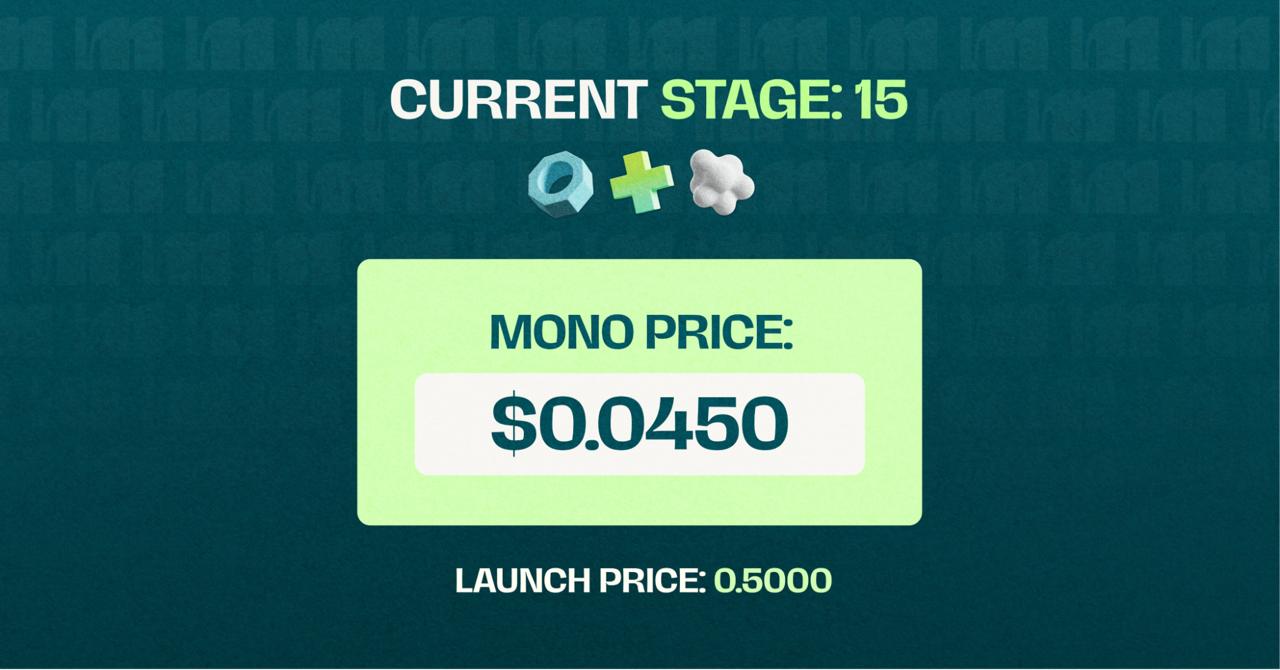
The post Mono Protocol’s $2.8M Crypto Presale Marks Stage 15 Launch appeared on BitcoinEthereumNews.com. Crypto News Mono Protocol raises $2.8 million in its $0.045 crypto presale as Stage 15 goes live, introducing unified cross-chain tools and the Rewards Hub for Web3 builders. Mono Protocol officially launched, entering Stage 15 of its crypto presale with $2.8 million raised. The project aims to solve long-standing blockchain challenges such as fragmented balances, unpredictable transfers, and high integration costs. As a Web3 crypto presale, Mono Protocol focuses on building reliable infrastructure that simplifies blockchain interaction for users and developers. Its latest milestone includes the rollout of the Rewards Hub, where participants earn $MONO for engaging with the ecosystem. Presale Launch and Fundraising Progress The ongoing presale crypto phase has attracted strong investor interest, reaching $2.8 million as Stage 15 goes live. Each token is priced at $0.045, maintaining affordability for new participants while signaling consistent demand. Fifty percent of the token supply is allocated to this pre sale cryptocurrency, with remaining reserves supporting governance, liquidity, marketing, and user rewards. The funds raised will support continued development and the upcoming Beta launch outlined in the project roadmap. Investors can join or track progress directly on the official dashboard. Addressing Blockchain Fragmentation with a Unified Account System Developers face high costs and delays when deploying applications across multiple blockchains. Mono Protocol solves this by introducing a chain abstraction model that allows deployment once, operating seamlessly across networks. For users, this presale coin offers a single-account experience that eliminates the need for multiple wallets. Universal balances and cross-chain gas payments enable transactions using any token, a feature that sets Mono apart from most cryptocurrency presales in 2025. Execution Bonds Strengthen Settlements Delayed transactions often discourage Web3 adoption. Mono Protocol uses execution bonds under its Resource Locks framework to ensure instant and verifiable settlements. Solvers and routers stake $MONO tokens as performance…

Author: BitcoinEthereumNews
How Institutional DeFi Protocols Are Upgrading Capital Markets?

How Institutional DeFi Protocols Are Upgrading Capital Markets?

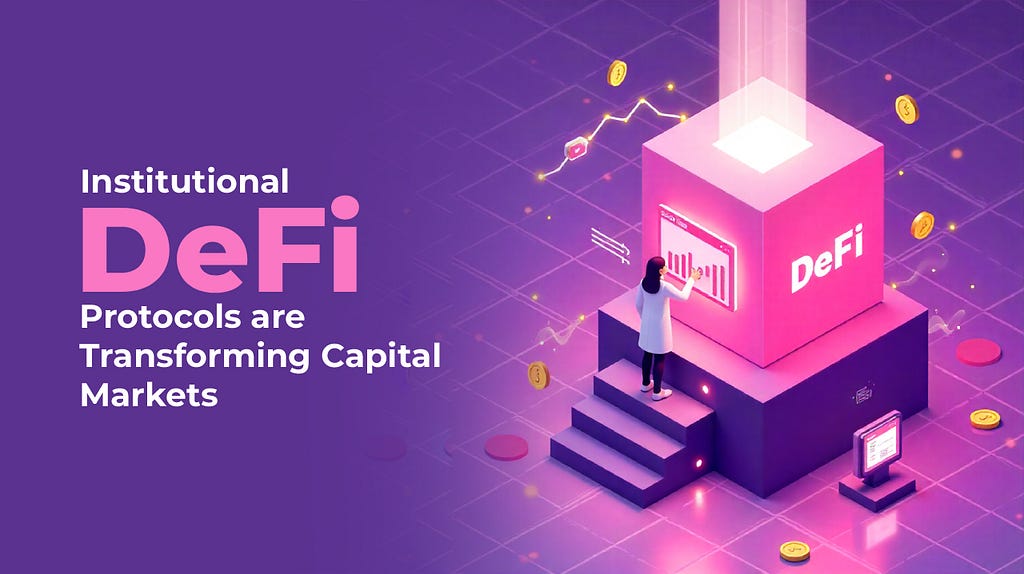
How Institutional DeFi Protocols Are Upgrading Capital Markets? The evolution of finance is entering a new era one where blockchain technology and decentralized systems are redefining the foundations of global capital markets. At the heart of this transformation lie Institutional DeFi Protocols platforms designed to bridge the gap between traditional finance (TradFi) and decentralized finance (DeFi) while ensuring compliance, security, and scalability for institutions. These institutional-grade DeFi systems are reshaping how assets are issued, traded, managed, and settled bringing transparency, automation, and real-time liquidity into a sector that has long relied on intermediaries and slow, opaque processes. Let’s explore in depth how Institutional DeFi Protocols are upgrading capital markets and what this means for the future of global finance.

  1. Understanding Institutional DeFi Protocols Traditional DeFi protocols such as Aave, MakerDAO, or Uniswap allow users to lend, borrow, and trade without intermediaries. However, they operate in open ecosystems with anonymous participants, limited regulatory oversight, and variable risk management conditions unsuitable for institutional investors. Institutional DeFi Protocols take the power of DeFi automation, smart contracts, and 24/7 liquidity and layer it with institutional-grade compliance, KYC/AML mechanisms, audited smart contracts, and risk controls. In simpler terms: These protocols open the door for banks, hedge funds, and asset managers to access decentralized markets safely without compromising regulatory obligations.
  2. Why Capital Markets Need Institutional DeFi Global capital markets encompassing equities, bonds, derivatives, and funds are plagued by inefficiencies that cost trillions annually. Traditional systems depend on multiple intermediaries: custodians, clearinghouses, brokers, and settlement agents. Each layer adds friction, cost, and delay. Common pain points include: ➤T+2 or T+3 settlement cycles (transactions take days to finalize) ➤Limited transparency in asset ownership and pricing ➤High operational costs due to manual reconciliation and intermediaries ➤Restricted liquidity caused by geographic and regulatory fragmentation Institutional DeFi addresses these challenges head-on. Through smart contracts and blockchain automation, financial instruments can be issued, traded, and settled in near real-time, reducing cost and counterparty risk.
  3. The Core Pillars of Institutional DeFi Transformation Institutional DeFi Protocols are upgrading capital markets through several key mechanisms that redefine efficiency, transparency, and accessibility. A. Tokenization of Real-World Assets (RWA)One of the biggest revolutions in capital markets comes from tokenizing real-world assets converting traditional assets like bonds, real estate, or equities into blockchain-based tokens. This enables:➤Fractional ownership, making high-value assets more accessible. ➤24/7 trading, breaking time-zone and exchange barriers. ➤Instant settlement, as ownership is recorded directly on-chain. Institutional DeFi protocols ensure these tokens are legally compliant, audited, and recognized by financial authorities, paving the way for regulated tokenized asset markets. B. On-Chain Liquidity and Automated Market MakingLiquidity has always been the backbone of capital markets. Institutional DeFi introduces automated market makers (AMMs) and liquidity pools designed for institutions. ➤Instead of relying on centralized exchanges, liquidity can be aggregated across decentralized pools that: ➤Maintain deep institutional-grade liquidity ➤Provide real-time price discovery ➤Allow smart contract-based settlement This innovation enables faster, more transparent trading and minimizes dependency on traditional market makers. C. Smart Contracts for Automated OperationsSmart contracts are the silent revolution behind DeFi. In capital markets, they automate processes like: ➤Trade execution and clearing ➤Collateral management ➤Dividend distribution ➤Interest and coupon payments For institutions, these contracts come with auditing, compliance modules, and upgradeability, ensuring both automation and accountability. D. Regulatory Compliance & Permissioned AccessUnlike open DeFi, institutional DeFi uses permissioned systems where every participant undergoes KYC/AML verification before joining. ➤This creates a regulated DeFi environment that aligns with traditional compliance standards while retaining blockchain’s transparency and immutability. ➤Institutions can now enjoy DeFi benefits without violating legal or risk mandates. E. Integration with Traditional SystemsModern institutional DeFi protocols are not isolated; they’re designed to integrate with existing TradFi infrastructure such as SWIFT systems, bank APIs, and institutional custodians. This ensures smooth transition for financial firms entering blockchain ecosystems without having to rebuild their legacy frameworks from scratch.
  4. Real-World Use Cases in Capital Markets Institutional DeFi is no longer a concept it’s being implemented across multiple sectors of global finance. a) Tokenized Bonds and SecuritiesFinancial institutions are using DeFi protocols to issue tokenized bonds with programmable interest payments. For example, governments and corporations can issue blockchain-based securities that settle instantly and are tradeable globally. b) Decentralized Lending for InstitutionsProtocols like Maple Finance and Goldfinch enable institutional lending pools, where verified borrowers (hedge funds, trading firms) access liquidity from decentralized markets under predefined smart contract terms. c) On-Chain Fund Management DeFi protocols support automated portfolio management, where fund operations from NAV calculation to yield distribution occur transparently on-chain. This reduces costs and improves trust among investors. d) Cross-Border SettlementsInstitutional DeFi simplifies international transactions through stablecoins and tokenized assets, allowing instant, low-cost cross-border settlements something traditional systems still struggle to achieve.
  5. How Institutional DeFi Improves Efficiency?
  6. Instant SettlementsTransactions that used to take days are now executed in seconds. Blockchain removes clearinghouses and intermediaries, creating a more direct and reliable system.
  7. Transparency and TraceabilityEvery transaction is recorded on an immutable ledger. This transparency reduces fraud, improves auditability, and boosts investor confidence.
  8. Cost ReductionBy automating back-office operations and removing third parties, institutional DeFi can reduce operational costs by up to 60–80%.
  9. Global AccessibilityInstitutional investors can participate in global asset markets without restrictions, expanding their reach beyond traditional exchanges.
  10. Risk ManagementProtocols integrate real-time analytics, on-chain credit scoring, and programmable compliance, allowing institutions to monitor and mitigate risks dynamically.
  11. The Role of Compliance in Institutional DeFi For capital markets, compliance is non-negotiable. Institutional DeFi protocols integrate regulatory guardrails to ensure seamless adoption. These include:➤KYC/AML systems tied to verified wallets. ➤Whitelist/Blacklist mechanisms for approved participants. ➤Integration with digital identity solutions for legal recognition. ➤On-chain reporting that meets financial authority standards. In the future, regulatory-compliant DeFi could become the preferred structure for institutional-grade securities and lending products.
  12. Institutional DeFi and the Evolution of Liquidity Liquidity fragmentation has long been a challenge for traditional capital markets. Institutional DeFi changes this by creating global liquidity pools that are not bound by geography or intermediaries. ➤Liquidity becomes programmable meaning it can automatically flow to the most efficient markets through smart contracts. ➤This creates a more resilient, 24/7 capital market ecosystem where value moves freely across assets, institutions, and borders.
  13. Challenges to Overcome Despite its potential, institutional DeFi faces real-world challenges: Regulatory Uncertainty: Global regulations around tokenized securities are still evolving. Interoperability Issues: Integration between different chains and legacy systems requires standardization. Security Risks: Even audited smart contracts can be vulnerable to exploits. Adoption Barriers: Large institutions often move slowly due to internal compliance and technology readiness. However, with continued innovation and collaboration between regulators, DeFi developers, and financial institutions, these barriers are being steadily dismantled.
  14. The Future Outlook: A Hybrid Financial System The capital markets of the future will not be purely decentralized or fully traditional they will be hybrid. Institutional DeFi will serve as the bridge between both worlds allowing institutions to access blockchain-based liquidity and automation, while still operating under the frameworks of regulated finance. We’re already seeing major players like JP Morgan, Goldman Sachs, and BlackRock experimenting with tokenized assets and blockchain settlement networks. This signals a massive paradigm shift. Within the next decade, institutional DeFi protocols could underpin the infrastructure of global finance transforming securities trading, asset issuance, and cross-border liquidity management.
  15. Final Thoughts Institutional DeFi protocols are not just an upgrade they’re a reinvention of capital markets. By merging the transparency of blockchain, the efficiency of automation, and the assurance of compliance, they’re building a financial ecosystem that is faster, fairer, and globally accessible. From tokenized securities and on-chain lending to automated settlements and programmable compliance, the future of finance is being rewritten one smart contract at a time. As institutional adoption accelerates, DeFi will no longer be viewed as an alternative it will become the standard operating system for global capital markets.
How Institutional DeFi Protocols Are Upgrading Capital Markets? was originally published in Coinmonks on Medium, where people are continuing the conversation by highlighting and responding to this story

Author: Medium
Bitcoin vs Solana Price Update: BTC $115,476 / SOL $202 — Why the BTC+SOL + CTK Presale Combo Could Win Institutional Interest

Bitcoin vs Solana Price Update: BTC $115,476 / SOL $202 — Why the BTC+SOL + CTK Presale Combo Could Win Institutional Interest

Bitcoin is trading near $115,476 while Solana checks in around $202 — a pairing investors often use to balance macro liquidity (BTC) with execution capacity (SOL). As capital rotates out of large-cap gains, allocators look for pragmatic L1 + presale combinations that offer both reliable settlement rails and credible real-world utility. One combo gaining traction […]

Author: Cryptopolitan
Beyond Hype: Mono Protocol’s $2.8M Crypto Presale Marks Stage 15 Launch

Beyond Hype: Mono Protocol’s $2.8M Crypto Presale Marks Stage 15 Launch

Mono Protocol officially launched, entering Stage 15 of its crypto presale with $2.8 million raised. The project aims to solve […] The post Beyond Hype: Mono Protocol’s $2.8M Crypto Presale Marks Stage 15 Launch appeared first on Coindoo.

Author: Coindoo