RWA

RWA (Real World Assets) refers to the tokenization of tangible assets—such as real estate, private credit, and government bonds—on the blockchain. By bringing traditional financial instruments on-chain, RWA protocols like Ondo and Centrifuge provide DeFi users with stable, real-yield opportunities. In 2026, the RWA sector is a multi-trillion-dollar bridge between TradFi and DeFi, enabling fractional ownership and global liquidity for previously illiquid assets. Follow this tag for insights into on-chain credit markets, regulatory compliance, and asset-backed security innovations.

42990 Articles
Created: 2026/02/02 18:52
Updated: 2026/02/02 18:52
Shiba Inu Team Warns of Scams Amid LEASH V2 Upgrade Plans

Shiba Inu Team Warns of Scams Amid LEASH V2 Upgrade Plans

TLDR Shiba Inu warns holders about scams tied to the LEASH V2 upgrade. No presales or private airdrops are linked to the LEASH V2 migration. LEASH V2 aims for a fixed supply, eliminating new token creation. Shiba Inu community urged to rely on official sources for information. The Shiba Inu team has issued an urgent [...] The post Shiba Inu Team Warns of Scams Amid LEASH V2 Upgrade Plans appeared first on CoinCentral.

Author: Coincentral
BlockDAG, SEI, SUI, and XRP Lead Change

BlockDAG, SEI, SUI, and XRP Lead Change

The post BlockDAG, SEI, SUI, and XRP Lead Change appeared on BitcoinEthereumNews.com. Crypto News Discover the best altcoins to buy in 2025 with BlockDAG, SEI, SUI, and XRP driving fairness, access, and real-world impact. Sometimes progress is not about moving faster, but moving fairer. The crypto space is full of projects chasing scale, but only a few are focused on participation. This list of the best altcoins to buy is for those who believe decentralization should mean access, not exclusion. It highlights platforms that go beyond speculation to create systems built on engagement, equality, and real-world utility. BlockDAG (BDAG): Turning Participation Into Power BlockDAG tops this list not through hype but through its principle of inclusion. Its Proof-of-Engagement model challenges the old idea that only large-scale miners or wealthy holders deserve rewards. Instead, it shifts recognition to consistent participation, creating a more equal system. The X1 mobile mining app makes this vision clear. By simply tapping daily, anyone can earn BDAG coins without expensive rigs or large operations. Over 2.5 million users are already part of this process, proving that access can be open and fair. This approach builds a system where contribution matters more than resources. The presale shows strong traction. With $383 million raised, more than 25.4 billion coins sold, and a price of $0.0276 in batch 29, early users have already seen gains of 2,660% since batch 1. These numbers reflect not only demand but also confidence in a model that prioritizes engagement. By reframing how rewards are earned, BlockDAG (BDAG) is creating a Web3 where opportunity is shared. It stands out as one of the best altcoins to buy for those who see fairness as the real future of crypto. SEI: A Network Designed for High-Speed Trading SEI has emerged as a standout for its focus on fast-paced trading systems. It is built as a Layer 1 chain…

Author: BitcoinEthereumNews
Best Altcoins to Buy in 2025: BlockDAG, SEI, SUI, and XRP Set the Standard for Fair Growth

Best Altcoins to Buy in 2025: BlockDAG, SEI, SUI, and XRP Set the Standard for Fair Growth

Sometimes progress is not about moving faster, but moving fairer. The crypto space is full of projects chasing scale, but […] The post Best Altcoins to Buy in 2025: BlockDAG, SEI, SUI, and XRP Set the Standard for Fair Growth appeared first on Coindoo.

Author: Coindoo
From private paper currency to cloud ledger, how does Google GCUL define the next generation of stablecoin network?

From private paper currency to cloud ledger, how does Google GCUL define the next generation of stablecoin network?

Original source: Google Original title: Beyond Stablecoins: The Evolution of Digital Currency Editor's Note: Internet giant Google has officially unveiled its native blockchain network, GCUL (Google Cloud Universal Ledger). The introduction provides a glimpse into Google's thinking: driven by the explosive growth of stablecoins and their potential trillion-dollar potential, Google is eager to capitalize on this next-generation fintech wave. Consequently, it has created GCUL, a network more akin to a stablecoin consortium blockchain. Rich Widmann, Head of Google Web3, stated that this is the culmination of years of research and development at Google, offering financial institutions a high-performance, trusted, neutral network that supports Python-based smart contracts. Google also published an article detailing its thinking on GCUL. The following is the original text from Google: Stablecoins experienced significant growth in 2024, with transaction volume tripling to $5 trillion organically and $30 trillion in total (sources: Visa , Artemis ). By comparison, PayPal's annual transaction volume is approximately $1.6 trillion, and Visa's is approximately $13 trillion. The supply of stablecoins pegged to the US dollar has grown to over 1% of the total US dollar supply (M2) (source: rwa.xyz ). This surge clearly demonstrates that stablecoins have established a presence in the market. The demand for better services is driving a major shift in the nearly $3 trillion payments market. Stablecoins, without the complexity, inefficiencies, and fees of traditional payment systems, enable seamless fund transfers between digital wallets. New solutions are also emerging in the capital markets to facilitate the payment process of digital asset transactions, improving transparency and efficiency while reducing costs and settlement times. This article explores the evolving financial landscape and proposes a solution that can help traditional finance and capital markets not only catch up, but also lead the way. Private Currency: Similarities Between Paper Money and Stablecoins Stablecoins share many similarities with the privately issued paper money that was widely used in the 18th and 19th centuries. Banks issued their own banknotes, with varying degrees of reliability and regulation. These notes made transactions easier because they were easier to carry, count, and exchange, without the need to weigh or assess the purity of the gold. To foster trust in this new form of money, the notes were backed by reserve funds and promised to be redeemable for real-world assets (most commonly precious metals). The number of trading wallets and liquidity increased significantly. Most banknotes were accepted only in the local area near the issuing bank. For interbank settlements, they were exchanged for precious metals or cleared between banks. In exchange for these benefits, users accepted the risk of a single bank default and fluctuations in value based on the issuing bank's perceived solvency. Fractional Reserve Banking and Supervision Remarkable economic growth followed, and financial innovation followed. Economic expansion required a more flexible money supply. Banks, observing that not all depositors would demand redemptions at the same time, realized they could profitably lend out a portion of their reserves. Fractional reserve banking, in which the amount of banknotes in circulation exceeded the reserves held by banks, emerged. Mismanagement, risky lending practices, fraud, and economic downturns led to bank runs, bankruptcies, crises, and depositor losses. These failures prompted increased regulation and oversight of currency issuance. Along with the establishment and expansion of central bank mandates, these regulations created a more centralized system, improved banking practices, established stricter rules, enhanced stability, and engendered public trust in the monetary system. Today's Monetary System: Commercial Bank and Central Bank Money Our current monetary system utilizes a dual currency model. Commercial bank money, issued by commercial banks, is essentially a liability (IOU) of a specific bank and is subject to comprehensive regulation and oversight. Commercial banks utilize a fractional reserve funding model, meaning they hold only a portion of their deposits in central bank money as reserves and lend the rest. Central bank money is a liability of the central bank and is considered risk-free. Interbank liabilities are settled electronically in central bank money (via RTGS systems such as FedWire or Target2). The public can only use commercial bank money for electronic transactions, and the use of cash (physical central bank money) is declining. In a single currency, all commercial bank money is fungible. Bank competition focuses on services provided, not the quality of the money they offer. Today's financial infrastructure: fragmented, complex, expensive, and slow With the rise of computers and the internet, monetary transactions are recorded electronically, allowing them to be conducted without cash. Liquidity, access, and product innovation have reached new heights. However, solutions vary by country, and cross-border transactions remain economically and technically difficult. Correspondent banking, which requires keeping idle funds with partner banks, faces infrastructure complexity that has forced banks to limit their partnerships. Consequently, banks are exiting correspondent relationships ( down 25% over the past decade ), resulting in longer payment chains, slower payments, and higher costs. Convenient solutions that abstract these complexities (such as global credit card networks) are costly for businesses that pay fees. Furthermore, most improvements have been focused on the front end, while innovation in payment processing infrastructure has been slow. The fragmented financial system increases trade frictions and slows economic growth. The Economist estimates that by 2030, the macroeconomic impact of a fragmented payments system on the global economy will be a staggering $2.8 trillion in losses (2.6% of global GDP), equivalent to more than 130 million jobs (4.3%). Fragmentation and complexity are also harming financial institutions. Annual maintenance costs for outdated payment systems were $37 billion in 2022 and are projected to rise to $57 billion by 2028 ( IDC Financial Insights ). Furthermore, the inability to provide real-time payments exacerbates direct revenue losses due to inefficiencies, security risks, and extremely high compliance costs ( 75% of banks struggle to implement new payment services within outdated systems, and 47% of new accounts are with fintechs and neobanks ). High payment fees can hinder a company's international growth, impacting profitability and valuation. Companies that process large volumes of payments have a strong incentive to reduce their processing fees. For example, for Walmart, reducing its approximately $10 billion in annual processing fees (assuming an average processing fee rate of 1.5% on $700 billion in revenue) to $2 billion could increase earnings per share and stock price by over 40%. New infrastructure, new possibilities Experimentation in Web3 has given rise to promising technologies like distributed ledger technology (DLT). These technologies offer a new way for financial systems to transact by providing a global, always-on infrastructure with advantages such as multi-currency/multi-asset support, atomic settlement, and programmability. The financial industry is already shifting from siloed databases and complex messaging to a transparent, immutable shared ledger. These modern networks streamline interactions and workflows, eliminating independent, costly, and slow reconciliation processes and removing the technical complexity that hinders speed and innovation. Disruptor: Stablecoins Stablecoins, operating on a decentralized ledger, enable near-instant, low-cost global transactions, unconstrained by the time and geographic constraints of traditional banking. This freedom and efficiency have fueled their explosive growth. High interest rates also make them highly profitable. Profits, growth, and growing confidence in the underlying technology are attracting investment from venture capitalists and payment processors. Stripe acquired Bridge, enabling online merchants to accept stablecoin payments. Visa also offers the ability to use stablecoins for partner payments and settlements . Retailers (such as Whole Foods) are accepting and even encouraging stablecoin payments to reduce transaction fees and receive payments instantly ( Federal Reserve Bank of Atlanta article ). Consumers can obtain stablecoins in seconds ( Coinbase integrates ApplePay ). Stablecoins face many challenges. Regulation: Unlike traditional currencies, stablecoins lack comprehensive regulation and oversight. The US is increasing its regulatory oversight, and the EU is applying e-money rules to e-money tokens through MICAR. Depositor protections do not apply to stablecoins. Compliance: Ensuring compliance with anti-money laundering and sanctions laws is challenging when anonymous accounts conduct transactions on public blockchains ( 63% of the $51.3 billion in illicit transactions on public blockchains in 2024 involved stablecoins ). Fragmentation: The wide variety of stablecoins operating on different blockchains requires complex bridging and conversions. This fragmentation has led to a reliance on automated bots for arbitrage and liquidity management, with these bot accounts accounting for almost 85% of all trading volume ( $5 trillion in organic volume versus $30 trillion in total volume ). Infrastructure Scalability: To achieve widespread adoption, the underlying technology must be able to handle a large number of transactions. (There were approximately 6 billion stablecoin transactions in 2024, with ACH transactions roughly an order of magnitude higher and card transactions two orders of magnitude higher.) Economics/Capital Efficiency: Currently, banks drive economic growth by expanding the money supply by lending out funds many times their reserves. Widespread use of stablecoins would divert banks’ reserves, significantly reducing their lending capacity and directly impacting profitability. The immediate challenges facing stablecoins (issuer credibility, regulatory ambiguity, compliance/fraud, and fragmentation) are similar to those faced by early privately issued banknotes. The widespread adoption of fully funded stablecoins would disrupt not only the banking and financial sectors but also the current economic system. Commercial banks extend credit, currency, and liquidity to support economic growth; central banks monitor and influence this process through monetary policy to directly manage inflation and indirectly pursue other policy objectives, such as employment, economic growth, and welfare. A large-scale transfer of reserve funds from banks to stablecoin issuers could reduce the supply of credit and increase its cost. This would dampen economic activity, potentially leading to deflationary pressures and posing challenges to the effectiveness of monetary policy implementation. Stablecoins offer clear benefits to users, particularly in cross-border transactions. Competition will drive innovation, expand application scenarios, and spur growth. Increased transaction volume and increased adoption of stablecoin wallets could lead to reduced deposits, lower lending, and lower profitability for traditional banks. As regulation matures, we may see the emergence of stablecoin models that use partial reserves, blurring the lines between them and commercial bank currencies and further intensifying competition in the payments sector. Innovator's Dilemma Institutions and individuals now have a choice between traditional payment systems, which are familiar and less risky, but slow and costly, or modern systems, which are fast, cheap, convenient, and rapidly improving, but come with new risks. Increasingly, they are choosing modern systems. Payment service providers have a choice. They can view these innovations as niche markets that won't impact their core traditional financial customer base and focus on incremental improvements to existing products and systems. Alternatively, they can leverage their brands, regulatory experience, customer base, and networks to dominate the new payments era. By embracing new technologies and forming strategic partnerships, they can meet evolving customer expectations and drive business growth. Better payments through evolution, not revolution There's a way to enable a new generation of payments—global, 24/7, multi-currency, and programmable—without reinventing money, simply by reimagining the infrastructure. Commercial bank money and strong traditional financial regulation address the stability, regulatory clarity, and capital efficiency issues of the existing financial system. Google Cloud can provide the necessary infrastructure upgrade. Google Cloud Universal Ledger (GCUL) is a new platform for creating innovative payment services and financial market products. It simplifies the management of commercial bank currency accounts and facilitates money transfers via a distributed ledger, enabling financial institutions and intermediaries to meet the needs of the most discerning customers and compete effectively. GCUL is designed to provide a simple, flexible, and secure experience. Let's break it down: Simple: GCUL is delivered as a service, accessible through a single API, simplifying the integration of multiple currencies and assets. There's no infrastructure to build and maintain. Transaction fees are stable, transparent, and invoiced monthly (unlike the volatile, upfront fees of cryptocurrency transactions). Flexible: GCUL offers unparalleled performance and is scalable to any use case. It's programmable, supporting payment automation and digital asset management. It integrates with the wallet of your choice. Secure: GCUL is designed with compliance in mind (e.g., KYC-verified accounts, outsourcing-compliant transaction fees). It operates as a private, permissioned system (which may become more open as regulations evolve) and leverages Google's secure, reliable, durable, and privacy-focused technology. GCUL offers significant advantages to both customers and financial institutions. Customers can enjoy near-instant transactions (especially for cross-border payments), along with low fees, 24/7 availability, and payment automation. Financial institutions, on the other hand, benefit from reduced infrastructure and operational costs by eliminating reconciliations, reducing errors, streamlining compliance processes, and reducing fraud. This frees up resources for developing modern products. Financial institutions can leverage their existing strengths (such as customer networks, licenses, and regulatory processes) to maintain full control over customer relationships. Payments as a catalyst for capital markets Similar to the payments sector, capital markets have undergone a significant transformation through the adoption of electronic systems. Initially met with resistance, electronic trading ultimately revolutionized the industry. Real-time price information and wider access to it increased liquidity, leading to faster execution, tighter spreads, and lower per-trade fees. This, in turn, spurred further growth in market participants (especially individual investors), product and strategy innovation, and overall market size. Despite significantly lower per-trade prices, the industry has experienced significant expansion, with advances in areas such as electronic and algorithmic trading, market making, risk management, and data analytics. However, challenges remain in payments. Due to the limitations of traditional payment systems, settlement cycles can stretch out to several days, necessitating working capital and collateral for risk management. Digital assets and new market structures enabled by distributed ledger technology are hindered by the inherent frictions of bridging traditional and new infrastructure. Independent asset and payment systems perpetuate fragmentation and complexity, hindering the industry from fully benefiting from innovation. Google Cloud Universal Ledger (GCUL) addresses these challenges by providing a simplified and secure platform for managing the entire digital asset lifecycle (e.g., bonds, funds, collateral). GCUL enables seamless and efficient issuance, management, and settlement of digital assets. Its atomic settlement capabilities minimize risk and increase liquidity, unlocking new opportunities in the capital markets. We are exploring how to transfer value using a secure medium of exchange backed by regulated, bankruptcy-protected assets, such as central bank deposits or money market funds. These initiatives will help enable true 24/7 capital mobility and drive the next wave of financial innovation.

Author: PANews
Bitcoin Price, Crypto Market Shakeout Underway: PlanB Invalidates Bear Twist

Bitcoin Price, Crypto Market Shakeout Underway: PlanB Invalidates Bear Twist

The post Bitcoin Price, Crypto Market Shakeout Underway: PlanB Invalidates Bear Twist appeared on BitcoinEthereumNews.com. Key Insights: New BTC investors sold at -3.5% Bitcoin price losses, driving a market shakeout. PlanB said the bull cycle continued despite recent price drops. U.S. spot ETFs posted $219.1 Million in inflows after six days of outflows. Bitcoin (BTC) price saw a shakeout this week as new investors sold below their purchase prices. Despite this negative price outlook, Stock-to-Flow creator PlanB said the market is still in a bull cycle. Market performance markers like the U.S. spot Bitcoin ETFs turned positive after six days of outflows. The stash, led by BlackRock, recorded strong inflows on Monday, August 25. New Bitcoin Troubled as Bitcoin Price in Loss On-chain data showed that the recent sell-off was driven mainly by new Bitcoin investors. Those holding the asset for less than one month, called short term holders (STH), were down by about 3.5% on average. Many of them sold, adding pressure to the market. This sale reduced the supply held by this short-term group. Bitcoin Investor Capitulation Chart | Source: CryptoQuant In contrast, those who had held Bitcoin for one to six months stayed in profit, with average gains of 4.5%. It is important to add that this cohort did not sell in large numbers. This showed that the exits came mostly from very recent buyers. Analysts described the event as a normal shakeout. Coins were moving from new holders, who bought at higher prices, to others with a lower cost basis. Older investors tend to have more patience. By taking coins from weaker hands and placing them with stronger holders, the market removed some future selling pressure. PlanB Says Bitcoin Price Bull Market Still Intact In a separate update, PlanB, the analyst who created the Stock-to-Flow (S2F) model, gave his view on the current Bitcoin price outlook. Bitcoin price was trading around…

Author: BitcoinEthereumNews
Bitmine’s Astounding $427M ETH Acquisition: A Strategic Power Play

Bitmine’s Astounding $427M ETH Acquisition: A Strategic Power Play

BitcoinWorld Bitmine’s Astounding $427M ETH Acquisition: A Strategic Power Play In a move that has captured the attention of the cryptocurrency world, wallets reportedly linked to Bitmine, a prominent Nasdaq-listed Bitcoin mining company, have executed a massive Bitmine ETH acquisition. This significant transfer involved a staggering 95,789 ETH, valued at an impressive $427 million, originating from BitGo over the past eight hours. This event signals a notable shift in strategy for a company primarily known for its Bitcoin operations. What’s Behind Bitmine’s Massive ETH Acquisition? The recent Bitmine ETH acquisition was brought to light by on-chain analytics firm Lookonchain. They identified two specific addresses suspected of belonging to Bitmine as the recipients of this substantial Ethereum transfer. Bitmine has been quietly but strategically accumulating Ethereum, showcasing a potential diversification of its digital asset holdings beyond just Bitcoin. This strategic pivot by a major player like Bitmine could have wider implications for the market. It suggests a growing confidence in Ethereum’s long-term value proposition among institutional entities. Moreover, it highlights the evolving landscape of digital asset investment strategies within the mining sector. Why is Bitmine Investing in Ethereum? Bitmine’s decision to pursue such a significant Bitmine ETH acquisition is likely multifaceted. Primarily, it represents a strategic diversification of its treasury assets. While Bitcoin remains the flagship cryptocurrency, Ethereum’s ecosystem, with its robust decentralized finance (DeFi) and non-fungible token (NFT) markets, offers unique growth opportunities. Companies often seek to balance their portfolios to mitigate risks and capitalize on different market dynamics. Investing in Ethereum provides exposure to a different segment of the crypto market, potentially enhancing overall returns and stability for Bitmine. This proactive approach underscores a forward-thinking investment philosophy. Understanding the Scale of This Bitmine ETH Acquisition To truly grasp the magnitude of this event, let’s break down the numbers. The transfer of 95,789 ETH, equating to $427 million, is one of the largest single institutional Ethereum acquisitions reported recently. This transaction volume underscores the serious commitment Bitmine is making to its Ethereum strategy. Such a substantial investment from a publicly traded company like Bitmine can send powerful signals to the market. It validates Ethereum’s position as a critical digital asset and suggests that large-scale institutional adoption is gaining momentum. Consequently, market observers are keenly watching for any further movements or official statements from Bitmine regarding this significant acquisition. What Does This Mean for the Crypto Market? The ramifications of this large-scale Bitmine ETH acquisition extend beyond just the company itself. It could catalyze increased institutional interest in Ethereum, encouraging other corporations and mining entities to consider similar diversification strategies. This trend might lead to: Enhanced Market Confidence: Large purchases by public companies often bolster investor confidence in the underlying asset. Potential Price Impact: While not immediate, sustained institutional buying pressure can contribute to long-term price appreciation for Ethereum. Validation of Ethereum’s Utility: It reinforces the perception of Ethereum as a foundational layer for the future of decentralized applications. Therefore, this event is not merely a transaction; it is a potential indicator of shifting institutional investment paradigms within the cryptocurrency space. The Broader Picture: Institutional Interest in Ethereum Bitmine’s strategic move is part of a broader narrative of increasing institutional engagement with Ethereum. Over the past few years, major financial institutions and corporations have started to recognize Ethereum’s potential, driven by its innovation in smart contracts and its pivotal role in the Web3 ecosystem. The Bitmine ETH acquisition is a prime example of this growing trend. This institutional embrace brings both benefits and challenges. On the one hand, it injects significant capital and legitimacy into the market. On the other hand, it raises questions about centralization and the original ethos of decentralization. Nevertheless, the involvement of entities like Bitmine highlights Ethereum’s undeniable appeal as a long-term investment asset. In conclusion, the substantial Bitmine ETH acquisition represents a fascinating development in the crypto world. It showcases a strategic pivot by a major Bitcoin mining company towards Ethereum, signaling diversification and strong institutional confidence. This event not only reinforces Ethereum’s position but also provides a glimpse into the evolving investment strategies of large-scale players in the digital asset landscape. It will be interesting to observe how this move influences Bitmine’s future operations and the broader cryptocurrency market dynamics. Frequently Asked Questions (FAQs) What is the significance of Bitmine’s ETH acquisition? The significance lies in a major Nasdaq-listed Bitcoin mining company diversifying its assets by making a substantial investment in Ethereum, signaling growing institutional confidence in ETH and a strategic shift in crypto holdings. Who is Bitmine, and why are they buying Ethereum? Bitmine is a Nasdaq-listed Bitcoin mining company. They are likely buying Ethereum to diversify their digital asset portfolio, capitalize on Ethereum’s robust ecosystem (DeFi, NFTs), and potentially enhance their overall investment strategy beyond just Bitcoin. How was this ETH transfer detected? On-chain analytics firm Lookonchain detected the transfer by monitoring two addresses suspected of belonging to Bitmine, observing the inflow of 95,789 ETH from BitGo. Could this move impact Ethereum’s price? While a single large acquisition does not guarantee an immediate price surge, significant institutional buying, like the Bitmine ETH acquisition, often contributes to increased market confidence and can support long-term price appreciation for Ethereum. What are the implications for other Bitcoin mining companies? This move could encourage other Bitcoin mining companies to explore similar diversification strategies into Ethereum, recognizing its potential as a valuable asset and a hedge against volatility in a single cryptocurrency. If you found this insight into Bitmine’s strategic moves valuable, consider sharing this article with your network on social media! Your shares help us bring more crucial crypto news and analysis to a wider audience. To learn more about the latest crypto market trends, explore our article on key developments shaping Ethereum institutional adoption. This post Bitmine’s Astounding $427M ETH Acquisition: A Strategic Power Play first appeared on BitcoinWorld and is written by Editorial Team

Author: Coinstats
Tokenization Platform Centrifuge Receives Investment from Republic Digital

Tokenization Platform Centrifuge Receives Investment from Republic Digital

PANews reported on August 27th that, according to Crowdfundinsider, Republic Digital announced an investment in Centrifuge, a tokenization platform focused on financial products , furthering its commitment to digital assets and tokenization. Republic Digital did not disclose the specific size of the investment, but it stated that the investment will be used to integrate regulated digital assets with decentralized infrastructure to enable the transfer, combination, and liquidity of real-world assets (RWAs). Republic Digital noted that only $24 billion in RWAs have been tokenized, while the potential market size for asset management is as high as $125 trillion.

Author: PANews
Tazapay Funding: A Powerful Boost from Ripple and Circle for Global Payments

Tazapay Funding: A Powerful Boost from Ripple and Circle for Global Payments

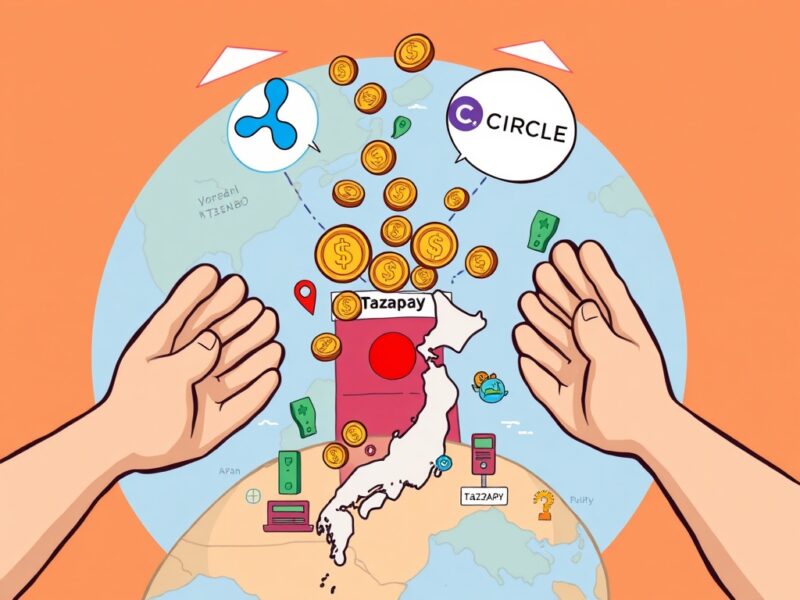
BitcoinWorld Tazapay Funding: A Powerful Boost from Ripple and Circle for Global Payments The world of fintech is buzzing with exciting news! Cross-border payment infrastructure platform Tazapay has just secured significant Series B Tazapay funding, with major participation from industry giants Ripple and Circle Ventures. This strategic investment is poised to dramatically accelerate Tazapay’s growth and innovation in the global payments landscape, especially for those navigating the complexities of international transactions. What Does This Tazapay Funding Mean for Cross-Border Payments? Tazapay operates as a crucial backbone for businesses engaged in international trade, offering a robust platform that simplifies complex payment flows. Their infrastructure supports various payment methods, ensuring secure and efficient transactions across borders. This recent influx of Tazapay funding is a clear vote of confidence in their vision and technological capabilities. Simplified Transactions: Tazapay helps businesses overcome the hurdles of international payments, such as varying regulations and currency conversions. Enhanced Security: The platform prioritizes security, building trust for both payers and recipients. Global Reach: It connects businesses to a vast network of payment options worldwide. Ripple and Circle’s Strategic Investment in Tazapay Funding The participation of Ripple and Circle Ventures in this Series B round is particularly noteworthy. Both companies are at the forefront of digital asset and blockchain-based payment solutions. Their investment in Tazapay funding signifies a shared belief in the potential of modernizing cross-border finance. Ripple is well-known for its enterprise blockchain solutions, especially for international remittances, while Circle is a leading issuer of USDC, a widely adopted stablecoin. Moreover, their combined expertise and resources will undoubtedly provide Tazapay with invaluable strategic guidance and technological synergies. This partnership underscores a growing trend of established crypto firms investing in traditional fintech infrastructure to bridge the gap between legacy systems and decentralized finance. Expanding Horizons: Tazapay’s Focus on Japan with New Funding A key objective for Tazapay, fueled by this latest Tazapay funding, is to significantly expand its operations in Japan. The Japanese market presents a unique opportunity due to its advanced economy and increasing adoption of digital payment solutions. Expanding into Japan will allow Tazapay to: Tap into a vibrant and technologically forward-thinking market. Offer its efficient cross-border payment solutions to Japanese businesses. Strengthen its presence in the Asia-Pacific region, a critical hub for global trade. This geographical expansion is a strategic move, positioning Tazapay to capture a larger share of the lucrative Asian cross-border payment market. Furthermore, it highlights the company’s commitment to becoming a truly global player. Innovating with Stablecoins and Real-Time Payments (RTP) Post-Tazapay Funding Looking ahead, Tazapay intends to invest heavily in stablecoins and real-time payments (RTP). This forward-thinking approach, bolstered by the new Tazapay funding, aligns perfectly with the evolving demands of the global financial ecosystem. Why are stablecoins and RTP so important? Stablecoins: These digital currencies offer the stability of traditional fiat currencies with the efficiency and speed of blockchain technology. They can significantly reduce the volatility risks often associated with cryptocurrency payments, making international transactions more predictable. Real-Time Payments: RTP systems allow for instant settlement of transactions, a crucial feature for businesses requiring immediate fund transfers and improved cash flow management in a fast-paced global economy. By integrating these technologies, Tazapay aims to offer even faster, more cost-effective, and transparent payment solutions, further solidifying its competitive edge and enhancing user experience. The Future of Global Transactions Powered by Tazapay Funding The strategic injection of Tazapay funding from Ripple and Circle Ventures marks a pivotal moment for the cross-border payment sector. It not only validates Tazapay’s innovative platform but also signals a powerful convergence of traditional fintech and the burgeoning crypto economy. Businesses worldwide can anticipate more seamless, secure, and efficient international transactions as Tazapay leverages this investment to expand its reach and technological capabilities. This development is a testament to the ongoing evolution of global finance, where collaboration between established players and innovative startups is driving unprecedented progress. The future of cross-border payments looks brighter and more integrated than ever before, thanks to forward-thinking initiatives like this. Frequently Asked Questions (FAQs) about Tazapay Funding Q1: What is Tazapay? A1: Tazapay is a cross-border payment infrastructure platform that helps businesses facilitate secure and efficient international transactions by simplifying complex payment flows and offering various payment methods. Q2: Who invested in Tazapay’s Series B funding round? A2: Tazapay secured its Series B funding round with participation from prominent industry players, specifically Ripple and Circle Ventures. Q3: How will Tazapay use the new funding? A3: Tazapay plans to use the Series B Tazapay funding to expand its business, particularly in Japan, and intends to invest in stablecoins and real-time payments (RTP) technologies. Q4: Why are stablecoins and real-time payments important for Tazapay’s future? A4: Stablecoins offer transaction stability by linking to fiat currencies, while real-time payments enable instant settlement. Both technologies are crucial for Tazapay to provide faster, more cost-effective, and transparent cross-border payment solutions. Q5: How does this investment impact the broader cross-border payment industry? A5: This investment signifies a growing convergence between traditional fintech and the crypto economy, fostering innovation and potentially leading to more integrated, efficient, and secure global payment systems for businesses worldwide. Did you find this article insightful? Share it with your network to spread the word about the exciting developments in cross-border payments and fintech innovation! To learn more about the latest fintech innovations and cross-border payment trends, explore our article on key developments shaping global finance and digital payment solutions. This post Tazapay Funding: A Powerful Boost from Ripple and Circle for Global Payments first appeared on BitcoinWorld and is written by Editorial Team

Author: Coinstats
Delio Rehabilitation: Shocking New Bid Despite Bankruptcy Ruling

Delio Rehabilitation: Shocking New Bid Despite Bankruptcy Ruling

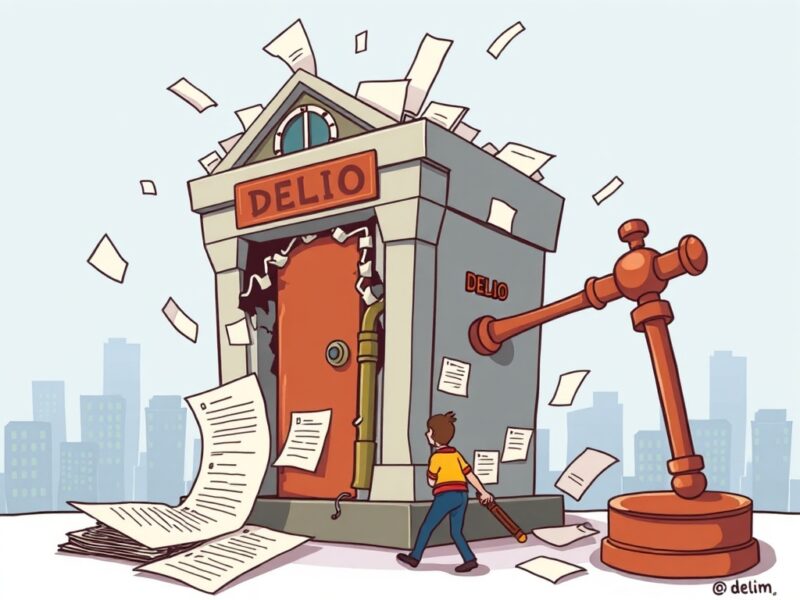
BitcoinWorld Delio Rehabilitation: Shocking New Bid Despite Bankruptcy Ruling The South Korean crypto space is buzzing with a truly shocking development: Delio rehabilitation efforts are back in the spotlight. Despite a clear bankruptcy ruling from the Seoul Bankruptcy Court in November 2024, the crypto deposit platform Delio has once again filed for corporate rehabilitation. This marks its third attempt, following two previous dismissals, as reported by Digital Asset. This latest move adds another layer of complexity to an already tumultuous situation for the company and its many creditors, creating significant uncertainty in the market. What is This Delio Rehabilitation Bid All About? Delio, a prominent South Korean crypto deposit platform, currently finds itself in a challenging legal battle. Corporate rehabilitation, in essence, is a legal process designed to help financially distressed companies restructure their debts and operations. The primary goal is to avoid outright liquidation, aiming to give the company a chance to recover and continue operating. Ultimately, this process seeks to protect stakeholder interests by finding a path to viability. However, the current filing for Delio rehabilitation is particularly noteworthy because it comes after the Seoul Bankruptcy Court had already declared the company bankrupt. This declaration initiated the process of liquidating Delio’s assets, meaning the court was actively preparing to sell off what the company owned to distribute funds among those it owed money to. Therefore, this new rehabilitation application directly challenges the ongoing liquidation process, making it a rare and complex legal maneuver. A Persistent Fight: Why Another Delio Rehabilitation Attempt? One might reasonably wonder why Delio would pursue rehabilitation after a bankruptcy declaration. Typically, bankruptcy signifies the end of a company’s operations, leading directly to asset sales. Rehabilitation, on the other hand, offers a potential lifeline. Delio’s management likely believes they can still salvage the company, perhaps by proposing a viable repayment plan or a significant restructuring of its business model. They aim to convince the court that rehabilitation offers a better outcome for creditors than a forced liquidation, which can often result in lower returns for those owed money. This persistent effort highlights the company’s determination, or perhaps desperation, to regain control of its destiny. The legal system does allow for such appeals and filings, even after initial rulings. However, each dismissal and subsequent filing adds to the legal costs and prolongs the uncertainty for all parties involved in the ongoing Delio rehabilitation saga. What Does This Mean for Delio’s Creditors? For Delio’s creditors, this latest filing introduces even more ambiguity and potential delays. They have been patiently waiting for the distribution of assets following the initial bankruptcy ruling. The new rehabilitation application could potentially pause or significantly delay the liquidation process, which means a longer wait for any potential recovery of their funds. This situation undoubtedly causes considerable frustration and financial strain. Creditors will now closely watch how the court handles this third application for Delio rehabilitation. If the court accepts the filing, it would shift the focus from selling assets to evaluating a detailed restructuring plan. Conversely, if it is dismissed again, the liquidation process would likely resume with renewed momentum. This back-and-forth creates significant stress and financial uncertainty for individuals and institutions who entrusted their crypto assets to Delio. Navigating the Complexities of Crypto Platform Failures The situation with Delio is a stark reminder of the inherent risks and regulatory challenges within the nascent cryptocurrency industry. Unlike traditional financial institutions, crypto platforms often operate in a less defined legal landscape, especially concerning insolvency and investor protection. The repeated attempts at Delio rehabilitation underscore the difficulties in resolving such complex cases within existing legal frameworks. This ongoing legal drama also sends a critical signal to other crypto firms and regulators in South Korea and beyond. It emphasizes the urgent need for clearer guidelines and robust frameworks to manage the collapse of digital asset platforms effectively. Furthermore, it highlights the paramount importance of due diligence for users when choosing where to deposit their valuable crypto assets. Transparency and strong regulatory oversight are crucial for building trust and ensuring stability in this rapidly evolving sector. In conclusion, Delio’s latest filing for corporate rehabilitation, despite a prior bankruptcy declaration, represents a critical and unexpected turn in its legal battle. This persistent pursuit of Delio rehabilitation creates further uncertainty for its creditors and poses significant questions about the future of the platform. The coming weeks will be crucial as the Seoul Bankruptcy Court reviews this third application, determining the next chapter in this complex crypto insolvency case. Stay tuned for updates on this unfolding story, as it holds important lessons for the broader digital asset ecosystem. Frequently Asked Questions (FAQs) What is corporate rehabilitation? Corporate rehabilitation is a legal process that allows financially distressed companies to restructure their debts and operations to avoid liquidation, aiming to recover and continue business. Why is Delio filing for rehabilitation after being declared bankrupt? Delio is likely seeking to convince the court that a restructuring plan could offer a better outcome for creditors than liquidation, giving the company a chance to survive despite the previous bankruptcy ruling. How does this affect Delio’s creditors? This new filing could potentially delay the liquidation process, meaning creditors might have to wait longer to recover any of their funds. It adds uncertainty to their claims. What was the initial bankruptcy ruling about? The Seoul Bankruptcy Court declared Delio bankrupt in November 2024, initiating the process of liquidating the company’s assets to distribute among its creditors. What happens if the court dismisses this third application for Delio rehabilitation? If the court dismisses the application, the liquidation process would likely resume with renewed focus, moving forward with the sale of Delio’s assets to repay creditors. What are the broader implications for the crypto industry? This case highlights the need for clearer regulatory frameworks for crypto platform insolvency and investor protection, emphasizing the risks and complexities within the digital asset sector. Did you find this update on Delio’s ongoing legal battle insightful? Share this article with your network on social media to keep others informed about the evolving landscape of crypto regulations and platform stability! To learn more about the latest crypto market trends, explore our article on key developments shaping crypto regulations and investor protection. This post Delio Rehabilitation: Shocking New Bid Despite Bankruptcy Ruling first appeared on BitcoinWorld and is written by Editorial Team

Author: Coinstats
ZTX Governance Proposal Unlocks Exciting Token Incentives & CRTR Airdrop

ZTX Governance Proposal Unlocks Exciting Token Incentives & CRTR Airdrop

BitcoinWorld ZTX Governance Proposal Unlocks Exciting Token Incentives & CRTR Airdrop The Web3 metaverse space is buzzing with activity, and ZTX, the innovative operator behind ZepetoX, is leading the charge with a significant development. They have officially submitted a crucial ZTX governance proposal designed to empower their community. This proposal aims to introduce attractive ZTX token incentives and facilitate a highly anticipated CRTR token airdrop, marking a pivotal moment for participants in the ZTX ecosystem. What is the ZTX Governance Proposal All About? ZTX, a prominent player in the Web3 metaverse, has put forward a detailed ZTX governance proposal. This initiative seeks to directly reward its dedicated community members. The core of the proposal revolves around two key elements: providing ZTX token incentives and executing a CRTR token airdrop. Such moves are often seen as vital for fostering a vibrant and engaged user base within decentralized ecosystems. Community participation is at the heart of Web3, and this proposal underscores ZTX’s commitment to that principle. The voting period for this impactful proposal is set to run from August 27 to September 3. This window offers every eligible community member the chance to voice their opinion and shape the future direction of the ZepetoX metaverse. Why Are Token Incentives and Airdrops Important for ZTX? Token incentives and airdrops serve multiple strategic purposes in the blockchain and metaverse world. Firstly, ZTX token incentives can significantly boost engagement by rewarding active participation and contribution to the ecosystem. This encourages users to spend more time, contribute ideas, and build within the ZepetoX environment. Secondly, a CRTR token airdrop can broaden the distribution of tokens, potentially attracting new users and increasing the overall decentralization of the project. It’s a powerful way to generate excitement and introduce new assets to a wider audience. Moreover, such initiatives often reflect a project’s long-term vision for sustainable growth and community ownership. Boosting Engagement: Rewards active community members. Attracting New Users: Expands the ecosystem’s reach. Decentralization: Distributes tokens more widely. Community Ownership: Empowers users with a stake in the project. How is ZTX Performing in the Market? Alongside this exciting ZTX governance proposal, the market performance of ZTX tokens provides an interesting context. According to recent data from CoinMarketCap, ZTX is currently trading at $0.001824. This represents a positive increase of 7.64%, indicating a healthy market response, perhaps fueled by anticipation surrounding the governance vote and future developments. Such price movements can reflect investor confidence and community sentiment. While market prices are always subject to volatility, a positive trend often suggests growing interest and belief in the project’s potential. This makes the timing of the ZTX governance proposal particularly strategic, as it could further solidify positive market sentiment. What Are the Next Steps for the ZTX Community? For anyone involved in the ZTX and ZepetoX ecosystem, the immediate next step is clear: participate in the voting process. The period from August 27 to September 3 is crucial for the community to make its voice heard regarding the ZTX token incentives and CRTR airdrop. This is a direct opportunity to influence the project’s trajectory. Actionable Insights for the Community: Review the Proposal: Thoroughly understand the details of the ZTX governance proposal. Cast Your Vote: Exercise your right to vote within the specified window. Stay Informed: Follow official ZTX channels for updates and announcements. Engage in Discussion: Participate in community forums to share insights and discuss the proposal’s implications. The success of Web3 projects heavily relies on active community governance. Therefore, your participation in this vote is not just about potential rewards but also about shaping the future of a dynamic metaverse. In conclusion, the submission of the ZTX governance proposal marks a significant milestone for ZepetoX and its vibrant community. By proposing ZTX token incentives and a CRTR airdrop, ZTX is demonstrating a clear commitment to rewarding and empowering its users. This initiative has the potential to drive further engagement, attract new participants, and strengthen the decentralized ethos of the Web3 metaverse. As the voting period progresses, the eyes of the crypto world will be on ZTX, watching how this exciting proposal unfolds and shapes the future of digital ownership and interaction. Frequently Asked Questions (FAQs) Q1: What is the ZTX governance proposal? A: The ZTX governance proposal is an initiative by ZTX, the operator of the ZepetoX metaverse, to provide ZTX token incentives to its community and conduct a CRTR token airdrop. Q2: When can I vote on the ZTX governance proposal? A: Voting on the proposal will run from August 27 to September 3. Make sure to cast your vote within this period. Q3: What are ZTX token incentives? A: ZTX token incentives are rewards in ZTX tokens given to community members to encourage active participation and contribution within the ZepetoX metaverse. Q4: What is a CRTR token airdrop? A: A CRTR token airdrop is a distribution of CRTR tokens to eligible ZTX community members, often used to expand token distribution and attract new users to the ecosystem. Q5: How is ZTX performing in the market currently? A: According to CoinMarketCap, ZTX is currently trading at $0.001824, showing a positive increase of 7.64%. Q6: How can I participate in the ZTX community? A: You can participate by reviewing the governance proposal, casting your vote, staying informed through official channels, and engaging in community discussions. If you found this insight into the ZTX governance proposal valuable, consider sharing this article with your network! Help us spread the word about these exciting developments in the Web3 metaverse and encourage more community participation. Your shares make a difference! To learn more about the latest Web3 metaverse trends, explore our article on key developments shaping decentralized gaming and virtual economies. This post ZTX Governance Proposal Unlocks Exciting Token Incentives & CRTR Airdrop first appeared on BitcoinWorld and is written by Editorial Team

Author: Coinstats