RWA

RWA (Real World Assets) refers to the tokenization of tangible assets—such as real estate, private credit, and government bonds—on the blockchain. By bringing traditional financial instruments on-chain, RWA protocols like Ondo and Centrifuge provide DeFi users with stable, real-yield opportunities. In 2026, the RWA sector is a multi-trillion-dollar bridge between TradFi and DeFi, enabling fractional ownership and global liquidity for previously illiquid assets. Follow this tag for insights into on-chain credit markets, regulatory compliance, and asset-backed security innovations.

43180 Articles
Created: 2026/02/02 18:52
Updated: 2026/02/02 18:52
Germany Retail Sales (YoY) registered at 1.9%, below expectations (2.6%) in July

Germany Retail Sales (YoY) registered at 1.9%, below expectations (2.6%) in July

The post Germany Retail Sales (YoY) registered at 1.9%, below expectations (2.6%) in July appeared on BitcoinEthereumNews.com. Information on these pages contains forward-looking statements that involve risks and uncertainties. Markets and instruments profiled on this page are for informational purposes only and should not in any way come across as a recommendation to buy or sell in these assets. You should do your own thorough research before making any investment decisions. FXStreet does not in any way guarantee that this information is free from mistakes, errors, or material misstatements. It also does not guarantee that this information is of a timely nature. Investing in Open Markets involves a great deal of risk, including the loss of all or a portion of your investment, as well as emotional distress. All risks, losses and costs associated with investing, including total loss of principal, are your responsibility. The views and opinions expressed in this article are those of the authors and do not necessarily reflect the official policy or position of FXStreet nor its advertisers. The author will not be held responsible for information that is found at the end of links posted on this page. If not otherwise explicitly mentioned in the body of the article, at the time of writing, the author has no position in any stock mentioned in this article and no business relationship with any company mentioned. The author has not received compensation for writing this article, other than from FXStreet. FXStreet and the author do not provide personalized recommendations. The author makes no representations as to the accuracy, completeness, or suitability of this information. FXStreet and the author will not be liable for any errors, omissions or any losses, injuries or damages arising from this information and its display or use. Errors and omissions excepted. The author and FXStreet are not registered investment advisors and nothing in this article is intended…

Author: BitcoinEthereumNews
Crypto — Has the Banking Industry Finally Surrendered?

Crypto — Has the Banking Industry Finally Surrendered?

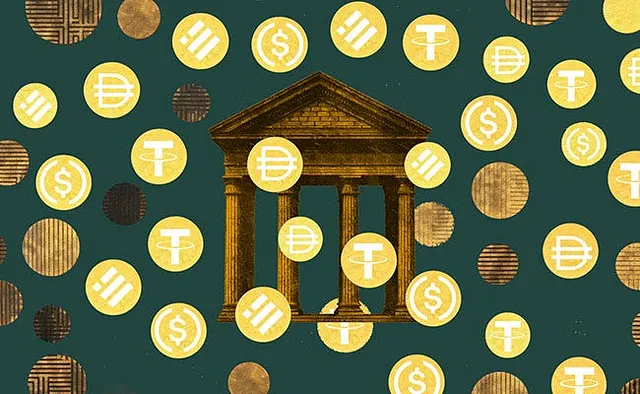
Crypto — Has the Banking Industry Finally Surrendered? (image: Rawpixel/Currency collage) Slowly, slowly then suddenly, as the saying goes. The banking industry, at least on the surface, seems to have surrendered en masse to their previous ankle-biting nemesis: crypto. Stablecoins are now on every banker’s agenda. New stablecoin announcements and launches are everywhere — from brash investment banks to staid old high street legends to broad-based financial service providers to payment processors. To highlight just a few around the world, many of them having announced plans in the last few weeks: Bank of America, Citigroup, JPMorgan Chase, Wells Fargo, Fifth Third Bank, U.S. Bancorp, Fiserv, FIS (Fidelity Information Services), Société Générale, PayPal, Visa, ANZ Bank, Standard Chartered, MUFG, SMBC, Mizuho, Bancolombia, and Banking Circle. Everyone else will have to follow, because that’s where the big wind is blowing and it is not going to abate. There are two stories here. The first is how this happened and what it portends. The second is that this is not a story about cryptocurrency at all — and therein lie the devil’s details. Most major economies had been plodding their way to some sort of slapdash crypto regulatory framework over the past five or so years. It was not a priority for anyone; crypto in all its guises was an annoyance in the great halls of power. Regulatory urgency was in short supply, aside from some testbeds like the canton of Zug in Switzerland, El Salvador, and Dubai. Even where there was regulation, most of what was being done was forcing the round peg of crypto into the square holes of traditional financial oversight. Two things happened to change that. The first was the arrival of the long-delayed launch of Bitcoin ETFs, led by investment giant BlackRock. When BlackRock talks, everyone listens, and so a thumbs-up from them gave naysayers pause. But far more important than that was Trump 2.0. Having turned from sceptic to enthusiastic crypto booster (and perhaps more cynically, a savvy crypto-enthusiastic vote collector), he arrived in the White House and immediately appointed a set of true crypto believers into influential positions across his fiefdom. One can hypothesise all sorts of dark deceits and conspiracies pertaining to Trump and his family’s embrace of the crypto system (from which they have now reaped billions), but that is not as important as its secondary effects: that of firm legitimisation and presidential support of an industry that had previously faced mostly derision and insult. Unsurprisingly, regulators on Capital Hill stepped into high gear, even across party lines. The GENIUS Act was signed into law on 18 July 2025. It is the first federal legislation in the U.S. that specifically regulates payment stablecoins — digital tokens pegged to a stable value to be used for payments or settlement. This cleared the decks of uncertainty, and the blockchain-based digital dollar gold rush is now underway. The Citi Institute projects that the stablecoin industry will grow from $250 billion today to $1.6 trillion as traditional financial institutions worldwide climb aboard the bus. There are others who project that all regulated money will be carried by stablecoins by 2035. This bears repeating: all money globally will be borne by blockchain-based tokens, to be traded, custodied, or transferred via mobile phones instantaneously and safely, including across borders and acting as the rails of all commercial, institutional, governmental, and individual payments globally. To be fair, there were many bankers who saw this coming years ago. But banks are nothing if not regulation’s whore — their submission to compliance is their bread and butter, so the GENIUS Act (and others, like MiCA in Europe) have cleared the runway, especially with respect to the legal protection that it affords to both banks and consumers. Enormous fortunes will be made in this migration, and laggards will get wiped out. Regulated stablecoins are a better mousetrap than the money we all have grown up with on just about every metric you care to measure — speed, cost, process simplification, middlemen leakage, security, divisibility, auditability, portability, fraud resistance. The phrase “better mousetrap” is an understatement. Which leads me to the second, perhaps more interesting, point. Contrary to popular perception, regulated stablecoins are not really cryptocurrencies, at least in the traditional definition of the word accepted by most of the pioneers who built the industry. To understand why, we have to talk about anonymity and consensus, two core philosophical pillars embedded in the original crypto ethos. Firstly, the GENIUS Act requires KYC (Know Your Customer). Anyone who uses a regulated bank-issued stablecoin will have to reveal who they are, just like in any other banking transaction. This is not true in the rest of crypto (including in the unregulated stablecoin projects like DAI), where anonymity is embedded. Secondly, traditional cryptocurrencies ensure that ledgers are immutable via cryptographic magic (which exists in regulated stablecoins too). But the second method that is used is “consensus” — where many anonymous parties all verify the same ledger (up to many hundreds of thousands in the case of the big cryptocurrencies like Bitcoin). This ensures the integrity of the system — no one can change the ledger unless they capture 50%+ of the anonymous verifiers, which is too expensive to contemplate. This core protection will not exist in regulated cryptocurrencies, like the ones being announced now. The blockchains are “permissioned” — they are controlled by corporations and can be monitored, edited, changed, rolled back, or deleted at the discretion of a small group of people. This is horrifying to anyone who has bought into crypto’s foundational principles because of these core tenets of immutability and ledger integrity. What does this portend? It means that there will still be two separate and parallel financial systems — one anonymous and secure and outside of governmental reach, and one that is part of the establishment — basically the same as the old system we all know (and sometimes hate), only faster and cheaper and more flexible than before. So, the banks did not really surrender to cryptocurrencies. They just copied some of the clever crypto plumbing invented by the original crypto creators, because it makes their traditional job easier. I doubt whether they even said thank you. Steven Boykey Sidley is a professor of practice at JBS, University of Johannesburg and a partner at Bridge Capital. His new book “It’s Mine: How the Crypto Industry is Redefining Ownership” is published by Maverick451 in SA and Legend Times Group in UK/EU, available now. Sidley writes for Daily Maverick, Currency News and Daily Friend. Originally published at https://stevenboykeysidley.substack.com. Crypto — Has the Banking Industry Finally Surrendered? was originally published in Coinmonks on Medium, where people are continuing the conversation by highlighting and responding to this story

Author: Medium
How Safe Is Investing in Tokenized RWAs Compared to Traditional Assets?

How Safe Is Investing in Tokenized RWAs Compared to Traditional Assets?

Investors have always looked for safe and reliable ways to grow their wealth. Traditional assets like stocks, bonds, and real estate have long been seen as secure choices because they are supported by laws, regulations, and trusted institutions. Now, a new option is rising: tokenized real world assets (RWAs). These bring the familiar security of physical or financial assets into the digital space by representing them on a blockchain. The big question is: how safe is this new way of investing compared to the old one? Let’s explore the safety features of tokenized RWAs, what makes them attractive, and how they compare to traditional investments. What Are Tokenized RWAs? A real world asset is something with measurable value in everyday life. It can be a building, a plot of land, a gold bar, a treasury bond, or even a piece of fine art. Normally, buying these assets requires large sums of money, paperwork, and middlemen such as brokers or banks. Tokenization changes this. By creating digital tokens on a blockchain that represent ownership in the asset, investors can hold small fractions instead of buying the whole thing. For example, instead of buying a $10 million property, you could buy tokens worth $1,000 that give you partial ownership. This idea not only makes investing more open but also introduces new safety benefits that come from blockchain technology. Safety in Traditional Assets Traditional assets are trusted because they are supported by long-established systems: Clear ownership records: Governments and institutions keep track of who owns what. Legal protection: Investors can rely on courts and laws if disputes occur. Regulation: Markets like stock exchanges are heavily supervised to prevent fraud. These features make traditional assets safe, but they also come with limitations. Transactions can be slow, paperwork heavy, and sometimes expensive due to middlemen fees. Also, even regulated markets can suffer from problems such as mismanagement, inflation, or sudden crashes. Safety Advantages of Tokenized RWAs Tokenized real world assets bring many safety features that are worth highlighting. In some ways, they can even add extra protection compared to traditional systems.

  1. Transparent Ownership Every transaction involving a token is recorded on the blockchain. This creates a permanent record that cannot be erased or changed. It reduces the chance of disputes about ownership or hidden transfers.
  2. Protection Against Fraud Because tokens exist on a blockchain, the system itself is highly secure. Fraudulent changes are nearly impossible without being noticed. This makes it harder for dishonest players to manipulate records or create fake ownership documents.
  3. Clear Audit Trails Investors can track the history of each token directly. This level of visibility gives peace of mind, as you can see when the token was created, who has owned it, and what transactions have taken place.
  4. Direct Access to Assets Instead of going through many intermediaries, investors hold tokens that represent the actual asset. This reduces the risk of losing money to hidden fees or unclear handling by multiple layers of brokers.
  5. Secure Technology Blockchains are designed to be highly resistant to tampering. They are supported by a network of computers worldwide, which makes the system stable and hard to attack.
  6. Global Recognition Because blockchain records are open to anyone, ownership is recognized across borders. This means fewer worries about losing protection when dealing in international markets.
  7. Fractional Ownership With Security Owning smaller portions of large assets is safer for individuals. Instead of putting all money into one property, investors can spread their investments across many tokenized RWAs. This lowers the risk of losing everything if one asset performs poorly. Comparing Traditional Assets and Tokenized RWAs When looking at safety, both options have strengths: Traditional Assets
Supported by laws and government frameworks Familiar to regulators and investors Long history of use Tokenized RWAs Transparent and tamper-proof records Protection from fraud through blockchain Easy to verify ownership and transfers Access to smaller, safer investment portions Growing acceptance across global markets The important point is that tokenized RWAs are not replacing safety with risk. Instead, they are taking the trusted idea of real world assets and adding new layers of protection through technology. Why Investors See Tokenized RWAs as Safe Even though tokenized RWAs are new, they are designed to improve the experience of investing in real world assets. Many investors see them as safe for several reasons: They are backed by real items. Unlike some digital tokens that rely only on speculation, these tokens are linked to assets with measurable value. They reduce the risk of human error. Records are kept digitally and cannot be altered. They open the door to diversification. Owning fractions of many different assets spreads risk in a safe way. This combination of real-world backing and blockchain security gives tokenized RWAs a positive reputation as a safe way to invest. The Future of Safety in Tokenized RWAs Just as traditional assets became safer over time with better regulation and stronger institutions, tokenized RWAs are on the same path. Legal frameworks are being refined, companies are gaining experience, and investors are becoming more comfortable with digital ownership. In the coming years, safety is expected to grow further as governments and regulators provide clearer guidelines and as more trustworthy companies offer these investments. Over time, tokenized RWAs may become as familiar and safe as traditional assets. Practical Safety Tips for Investors For investors looking at tokenized RWAs, here are steps to make the experience even safer: Research the company managing the tokenized asset. A trusted operator adds an extra layer of safety. Check asset backing to make sure the token is truly linked to a real item. Stay informed about regulations in your country to understand your rights. Diversify by investing in different types of tokenized RWAs, such as real estate, bonds, or commodities. By following these steps, investors can enjoy the safety benefits of tokenized RWAs with even more confidence. Final Thoughts So, how safe is investing in tokenized RWAs compared to traditional assets? The answer is very encouraging. Traditional assets bring long histories of protection, while tokenized real world assets add new safety features like transparency, fraud resistance, and easier access. By combining the security of physical assets with the power of blockchain technology, tokenized RWAs create a strong, positive path for modern investors. As regulations improve and adoption grows, their safety will only become stronger. For today’s investors, tokenized RWAs represent a safe and forward-looking way to participate in real world assets while enjoying the extra confidence of digital protection. How Safe Is Investing in Tokenized RWAs Compared to Traditional Assets? was originally published in Coinmonks on Medium, where people are continuing the conversation by highlighting and responding to this story

Author: Medium
What Exactly Is a Carbon Credit — and Why Are Governments, Businesses, and Even Individuals Racing…

What Exactly Is a Carbon Credit — and Why Are Governments, Businesses, and Even Individuals Racing…

What Exactly Is a Carbon Credit — and Why Are Governments, Businesses, and Even Individuals Racing to Get Them? The world is changing quickly, and one of the biggest challenges humanity faces is climate change. Temperatures are rising, weather patterns are shifting, and people everywhere are beginning to feel the effects. To slow down this problem, many countries and companies are searching for solutions that can help reduce greenhouse gases in the atmosphere. One idea that has gained a lot of attention is the carbon credit. You might have seen the term in news headlines or in discussions about the environment, but what exactly is a carbon credit? Why are governments, businesses, and even individuals so interested in them? Let’s explore these questions in a simple and clear way. What is a Carbon Credit? A carbon credit is like a certificate that represents permission to release a certain amount of carbon dioxide (CO₂) or other greenhouse gases into the atmosphere. Usually, one carbon credit equals one metric ton of CO₂. The idea is straightforward: if you pollute less, you can earn or buy credits. If you pollute more, you need to pay for extra credits. This system creates a balance by putting a price on pollution and rewarding those who take action to protect the planet. For example, imagine a factory that wants to reduce its emissions. It invests in clean energy, like solar panels. Because the factory is now producing less pollution, it may earn carbon credits. On the other hand, another company that is still producing higher levels of pollution can buy those credits to cover its excess emissions. In this way, the total amount of pollution stays under control. Why Were Carbon Credits Created? Carbon credits were created as part of a global effort to reduce the effects of climate change. Scientists have shown that greenhouse gases are the main cause of global warming. By creating a system where pollution has a cost, governments hope to encourage industries to find cleaner and smarter ways of doing business. Instead of just punishing companies for polluting, carbon credits offer an alternative: a chance to either cut back emissions or support projects that reduce them elsewhere. This flexibility is one reason why the idea has grown so popular worldwide. How Do Carbon Credits Work? The process can be explained in a few simple steps: Setting a limit: Governments set a total limit, also called a “cap,” on how much carbon can be released in a given year. Distributing credits: Companies receive a certain number of carbon credits that allow them to release greenhouse gases up to that limit. Trading credits: If one company produces less than its allowance, it can sell its unused credits to another company. This creates a market where credits are traded. Investing in projects: Some credits are created through projects like planting trees, developing wind farms, or protecting forests. These projects help absorb carbon from the air and are rewarded with credits that can be sold. This system combines responsibility with opportunity. Polluters pay more, and those who act responsibly are rewarded. Why Are Governments Interested in Carbon Credits? Governments see carbon credits as a practical tool to fight climate change while still allowing economies to grow. Instead of forcing every business to follow the same strict rule, credits give flexibility. For example, a country may want to meet its climate goals under international agreements. By using a carbon credit system, it can ensure that overall emissions go down while still giving businesses room to adapt. Many governments also like that carbon credits encourage innovation, because companies search for creative ways to reduce their carbon footprints. In addition, the money raised through carbon markets can be used to fund renewable energy projects, community programs, or conservation efforts. Why Do Businesses Want Carbon Credits? For businesses, carbon credits are more than just a rule to follow — they are also a chance to improve their reputation and attract customers. Today’s consumers are becoming more eco-conscious. People prefer products and services from companies that show care for the environment. By using carbon credits, businesses can proudly say they are reducing their impact. Carbon credits also help companies plan for the future. As climate rules become stricter worldwide, businesses that already work with credits are better prepared. Instead of being caught off guard, they are ahead of the curve. On top of that, some businesses even earn extra income. If a company invests in renewable energy or efficiency and ends up with more credits than it needs, it can sell them in the carbon market. This turns environmental action into financial opportunity. Why Are Individuals Getting Involved? It may seem surprising, but individuals can also take part in the carbon credit system. People who want to balance out their personal emissions — such as from travel, electricity use, or daily life — can buy carbon credits from certified projects. For example, someone taking a long flight might choose to purchase carbon credits that support a forest restoration project. This way, while their trip produces emissions, they are helping remove or reduce the same amount somewhere else. For many people, this creates a sense of responsibility and connection. They feel that their choices are making a positive impact on the planet. The Positive Impact of Carbon Credits When used properly, carbon credits bring many benefits: Cleaner air: Encouraging companies to cut back on pollution improves air quality, which benefits everyone’s health. Support for green projects: Money from carbon credits funds renewable energy, reforestation, and conservation around the world. Global cooperation: Carbon markets allow countries and businesses to work together across borders to solve a global issue. Innovation: Companies are motivated to develop new technologies and methods to reduce emissions. Personal empowerment: Individuals can take direct action to offset their footprint, no matter how small. Are Carbon Credits the Final Solution? Carbon credits alone cannot solve climate change. They are one tool among many. The world also needs more renewable energy, better public transport, smarter farming methods, and stronger environmental policies. But carbon credits provide a clear and practical starting point. They make it easier for businesses and people to take responsibility today, while broader changes continue to grow. Why the Race for Carbon Credits? So, why is there a global race to get carbon credits? The answer is simple: climate change is urgent, and everyone — from governments to businesses to individuals — wants to take part in the solution. Governments race to secure carbon credits to meet international targets. Businesses race to show leadership, save money, and stay competitive. Individuals race to make their lives more sustainable and meaningful. In the end, carbon credits represent more than just numbers on paper. They are a symbol of action, responsibility, and hope for a greener future. Conclusion A carbon credit may sound like a technical term, but at its heart, it’s a simple idea: putting a value on the air we share. By rewarding those who reduce emissions and making polluters accountable, carbon credits create a path toward a cleaner and safer planet. Governments, businesses, and individuals are all drawn to this idea because it allows each of them to play a part in solving one of the greatest challenges of our time. While carbon credits are not the only answer, they are a powerful step forward — one that connects financial systems with environmental care, and local action with global goals. The race for carbon credits is not just about numbers or markets — it’s about shaping a healthier world for the generations to come. What Exactly Is a Carbon Credit — and Why Are Governments, Businesses, and Even Individuals Racing… was originally published in Coinmonks on Medium, where people are continuing the conversation by highlighting and responding to this story

Author: Medium
100 Reasons Why DeFi Market Must Be Protected

100 Reasons Why DeFi Market Must Be Protected

The post 100 Reasons Why DeFi Market Must Be Protected appeared on BitcoinEthereumNews.com. Key Insights: Over 110 crypto firms urged Congress to protect DeFi developers in new laws in the US. Coalition warned unclear rules could push innovation outside the US. Stablecoins highlighted as key to expanding the global reach of the dollar Over 110 Web3 stakeholders, including crypto firms, investors, and advocacy groups, have asked US lawmakers to protect DeFi developers and non-custodial services in new digital asset laws. They warned that blockchain innovation could slow if clear federal rules are not written into future market structure legislation. Industry Calls for Stronger DeFi Developer Protections The DeFi market came under the spotlight in Washington as more than 110 companies, investors, and advocacy groups signed a letter to Senate Banking and Agriculture Committee leaders. The letter was led by the DeFi Education Fund and supported by Coinbase, a16z crypto, Ripple, and several blockchain councils. The group asked lawmakers to protect developers who publish open-source code and provide non-custodial services. Industry Groups Calls for DeFi Developer Protection | Eleanor Terrett They warned that labeling them as financial intermediaries would place them under rules built for banks and brokers, not software creators. This, they said, could hold back blockchain progress in the United States. The letter noted that open-source developers had long been shielded by law and said the same principle should apply in digital assets. It also pointed to a White House report showing a drop in the share of US open-source developers, from 25% in 2021 to 18% in 2025. That decline, the group argued, showed that talent was leaving the country due to regulatory uncertainty. Although the coalition welcomed some protections included in draft market structure bills, such as the right to self-custody assets, it argued that these steps were not enough. It called for clear nationwide standards to avoid a patchwork…

Author: BitcoinEthereumNews
Nvidia said two unnamed buyers made up 39% of its Q2 revenue

Nvidia said two unnamed buyers made up 39% of its Q2 revenue

The post Nvidia said two unnamed buyers made up 39% of its Q2 revenue appeared on BitcoinEthereumNews.com. Nvidia disclosed on Wednesday that just two unnamed customers were responsible for 39% of its total revenue in the second quarter of its fiscal year, a detail buried inside a regulatory filing submitted to the U.S. Securities and Exchange Commission. The company listed the buyers simply as “Customer A” and “Customer B,” with the first accounting for 23% and the second for 16% of Nvidia’s sales during the three-month period ending in July. Combined, they nearly controlled $6 billion of the chipmaker’s Q2 topline. That level of concentration is significantly higher than the same quarter last year, when Nvidia’s two biggest customers made up 14% and 11%. The spike is now fueling deeper scrutiny into who exactly is behind the massive surge in AI chip spending, and what that means for Nvidia’s revenue stability going forward. Despite repeated speculation that cloud heavyweights like Amazon, Microsoft, Google, or Oracle might be behind the numbers, Nvidia declined to name the clients. Nvidia keeps mystery buyers hidden behind layers of supply chain In the filing, Nvidia described Customer A and Customer B as “direct customers.” That doesn’t mean they’re using the chips themselves. These direct customers are firms that purchase Nvidia’s hardware to assemble complete systems or boards, which are then sold to the actual end users; like cloud companies, government agencies, and corporate enterprises. The list of potential intermediaries includes original design manufacturers and equipment builders such as Foxconn, Quanta, and big system integrators like Dell. Nvidia also acknowledged having indirect customers, the companies who eventually use the systems but don’t buy chips directly from Nvidia. These are the cloud infrastructure players, tech firms, and large organizations building internal AI platforms. The company said it can only estimate how much of its revenue comes from indirect buyers, using purchase orders and internal…

Author: BitcoinEthereumNews
Urgent: Argentine Opposition Reignites Milei LIBRA Investigation

Urgent: Argentine Opposition Reignites Milei LIBRA Investigation

BitcoinWorld Urgent: Argentine Opposition Reignites Milei LIBRA Investigation A significant development is unfolding in Argentina’s political and crypto landscape. Five opposition parties are actively pushing to reopen a crucial Milei LIBRA investigation into President Javier Milei’s involvement with the memecoin, LIBRA. This move comes amidst claims of substantial financial losses suffered by investors who allegedly acted on the president’s previous promotions. Why is the Milei LIBRA Investigation Being Relaunched? The core of the issue stems from President Milei’s past actions. He had openly promoted the memecoin LIBRA on his X account, drawing considerable attention to the digital asset. However, following a dramatic crash in the token’s price, many investors found themselves in a difficult financial situation. This situation initially triggered an inquiry by Argentina’s Anti-Corruption Office. Interestingly, the task force assigned to this case was later disbanded, leading to questions and concerns among the public and political figures. The opposition now seeks to revive this dormant Milei LIBRA investigation, aiming for greater transparency and accountability. Understanding the Controversy: What is LIBRA Memecoin? Memecoins are a unique and often volatile segment of the cryptocurrency market. They typically gain popularity through social media hype rather than underlying technological innovation or utility. LIBRA, in this context, appears to be one such token. The controversy surrounding the Milei LIBRA investigation highlights the inherent risks associated with these digital assets, especially when public figures endorse them. Investors, drawn by high-profile promotions, often face significant financial exposure if the token’s value plummets. The Role of Presidential Endorsement in Crypto When a head of state promotes a specific cryptocurrency, it carries immense weight and can significantly influence public perception and investment decisions. This raises important ethical and regulatory questions. For instance, is it appropriate for political leaders to endorse speculative assets? What responsibilities do they bear if their endorsements lead to investor losses? These are critical considerations that the renewed Milei LIBRA investigation seeks to address, potentially setting precedents for future engagements between politicians and the crypto space. Challenges and Future of the Milei LIBRA Investigation Reopening a high-profile investigation involving a sitting president presents numerous challenges. The opposition will need to gather robust evidence to substantiate their claims of investor losses directly linked to the president’s promotion and to demonstrate any potential wrongdoing. Key aspects of the renewed probe include: Evidence Collection: Scrutinizing Milei’s past social media posts and the timeline of LIBRA’s price movements. Investor Testimonies: Gathering accounts from individuals who lost money after investing in LIBRA based on the president’s promotion. Legal Framework: Navigating Argentina’s legal system to ensure a fair and thorough investigation. The outcome of this Milei LIBRA investigation could have far-reaching implications, not just for President Milei, but also for the future of crypto regulation in Argentina and how public figures interact with digital assets globally. A Critical Juncture for Crypto and Politics in Argentina The push to reopen the Milei LIBRA investigation marks a pivotal moment. It underscores the growing demand for accountability in the rapidly evolving world of cryptocurrencies, especially when intertwined with political influence. This situation reminds us of the importance of due diligence for investors and the ethical considerations for those in positions of power. As the opposition moves forward, the world will be watching to see how this complex case unfolds and what lessons can be learned about the intersection of digital finance and political endorsement. Frequently Asked Questions (FAQs) 1. What is the Milei LIBRA investigation about? The investigation concerns President Javier Milei’s past promotion of the memecoin LIBRA, which allegedly led to significant financial losses for investors after the token’s price crashed. Opposition parties are pushing to reopen this probe. 2. Who is President Javier Milei? Javier Milei is the current President of Argentina, known for his libertarian views. He previously promoted the memecoin LIBRA on his social media. 3. What is LIBRA memecoin? LIBRA is a memecoin, a type of cryptocurrency often characterized by its speculative nature and popularity driven by internet trends rather than fundamental utility. Its price can be highly volatile. 4. Why are opposition parties pushing to reopen the probe? Opposition parties claim that investors suffered massive financial losses due to President Milei’s promotion of LIBRA. They seek to relaunch the investigation, which was previously initiated by the Anti-Corruption Office but later saw its task force disbanded. 5. What are the potential consequences of this investigation? The investigation could lead to increased scrutiny of presidential endorsements in the crypto space, potential legal ramifications for those involved, and influence future crypto regulatory policies in Argentina. Don’t keep this crucial update to yourself! Share this article on your social media platforms to inform others about the ongoing Milei LIBRA investigation and its implications for the crypto world. To learn more about the latest crypto market trends, explore our article on key developments shaping crypto regulation price action. This post Urgent: Argentine Opposition Reignites Milei LIBRA Investigation first appeared on BitcoinWorld and is written by Editorial Team

Author: Coinstats
Xverse Integrates Spark, Unlocking Instant Bitcoin DeFi and Stablecoins for 1.6 Million Users

Xverse Integrates Spark, Unlocking Instant Bitcoin DeFi and Stablecoins for 1.6 Million Users

The post Xverse Integrates Spark, Unlocking Instant Bitcoin DeFi and Stablecoins for 1.6 Million Users appeared on BitcoinEthereumNews.com. The leading self-custodial Bitcoin wallet aims to become the home of BitcoinFi with the addition of the high-performance L2. HONG KONG — Xverse, the leading self-custodial Bitcoin wallet for the on-chain economy, today announced the integration of Spark, a new high-performance Bitcoin Layer 2 protocol. For the more than 1.6 million Xverse users, this integration unlocks instant, low-fee payments and tokens, representing a significant leap forward for DeFi on Bitcoin. Developed by Lightspark, the Spark protocol is an open-source Layer 2 built on innovative statechain technology. This design enables Bitcoin to achieve high transaction performance and native support for stablecoins, making it practical for everyday payments and advanced financial applications. By integrating Spark, Xverse is directly addressing the core challenges of scalability and usability in the ecosystem. “Bitcoin’s potential is finally being unlocked for more than just holding. Our goal is to make Xverse the definitive home of BitcoinFi, and integrating Spark is a monumental step,” said Ken Liao, Founder and CEO of Xverse. “We’re giving our users the tools for a true on-chain economy—delivering the speed of modern finance without ever compromising the self-custody that is core to Bitcoin’s ethos.” Thanks to the integration, Xverse users can now leverage Spark’s key features directly within their Bitcoin wallet. This includes sub-second transaction finality, near-zero fees for transfers within the Spark network, and seamless compatibility with the Lightning Network without the complexity of managing nodes or channels. Most importantly, it enables the issuance and transfer of stablecoins on Bitcoin using powerful native standards, opening the door to a robust DeFi ecosystem. “Spark was built to make Bitcoin fast, scalable, and useful for everyday applications. It’s exciting to see Xverse bring this to over a million users and is a huge step forward,” said David Marcus, Co-Founder & CEO of Lightspark. The…

Author: BitcoinEthereumNews
MAGACOIN FINANCE Compared to Early XRP and SHIB — Here’s Where to Buy This Hot Presale

MAGACOIN FINANCE Compared to Early XRP and SHIB — Here’s Where to Buy This Hot Presale

The cryptocurrency market is buzzing with excitement, and for good reason. With XRP making headlines after its historic legal victory and Shiba Inu pushing forward with major ecosystem updates, investors are once again reminded of how early presales can deliver life-changing gains. Now, a new contender has entered the stage — MAGACOIN FINANCE — quickly […] Continue Reading: MAGACOIN FINANCE Compared to Early XRP and SHIB — Here’s Where to Buy This Hot Presale

Author: Coinstats
Bitcoin Bull Market: Explosive Autumn Rally Predicted by Analyst

Bitcoin Bull Market: Explosive Autumn Rally Predicted by Analyst

BitcoinWorld Bitcoin Bull Market: Explosive Autumn Rally Predicted by Analyst The cryptocurrency world is buzzing with anticipation! An insightful analysis suggests that the long-awaited Bitcoin bull market could finally kick off this autumn. For investors closely watching the digital asset space, understanding the forces at play is crucial. This deep dive explores why an expert anticipates a significant shift in market dynamics. Is the Bitcoin Bull Market Finally Here? According to CryptoDan, a respected contributor to on-chain analytics platform CryptoQuant, the current Bitcoin market cycle is showing unique characteristics. We are experiencing a more prolonged cycle compared to historical patterns. This extended phase has led many to question the timing of the next major uptrend. One key observation from CryptoDan’s analysis involves on-chain data. The proportion of Bitcoin held for over one year is increasing, but at a noticeably slower pace than in previous cycles. This metric often signals conviction among long-term holders, and its current trajectory indicates a nuanced market sentiment. Why is This Bitcoin Bull Market Different? Several factors contribute to this evolving market landscape. CryptoDan highlights a few significant influences that are shaping the upcoming Bitcoin bull market: Spot ETF Introduction: The approval and launch of spot Bitcoin Exchange-Traded Funds (ETFs) have dramatically altered market structure. These financial products provide traditional investors with easier access to Bitcoin, changing capital flows. Institutional and National Adoption: Increased interest and adoption from institutions and even nations are also playing a role. This growing mainstream acceptance brings new money and long-term commitment into the ecosystem. Altcoin Capital Flows: Interestingly, Bitcoin’s rallies have repeatedly stalled when funds shift into altcoins. This dynamic suggests a more diversified investor base, where capital can quickly move between different digital assets, impacting Bitcoin’s momentum. These elements collectively create a market that behaves differently from past cycles, demanding a fresh perspective on future movements. Key Catalysts for the Autumn Bitcoin Bull Market Looking ahead, the analysis points to specific events that could ignite the anticipated Bitcoin bull market this autumn and winter. These potential catalysts are already on investors’ radars: September Interest Rate Cut Expectations: There is growing anticipation for a potential interest rate cut in September. Such a move by central banks typically makes risk assets, like cryptocurrencies, more attractive. It can signal a loosening of monetary policy, encouraging investment. Potential Spot Altcoin ETF Approvals: October could bring another significant development: the potential approval of spot altcoin ETFs. While focused on altcoins, this would likely be a net positive for the entire crypto market. It could attract more institutional capital, benefiting Bitcoin indirectly. These macroeconomic and regulatory shifts are expected to foster a more positive market sentiment, paving the way for a robust uptrend. Seizing Opportunities in the Next Bitcoin Bull Market For savvy investors, understanding these market dynamics offers a clear path forward. CryptoDan concludes that any further market corrections could present highly favorable buying opportunities. This perspective emphasizes a long-term strategy rather than short-term trading. The prolonged cycle, while perhaps frustrating for some, allows for more accumulation at potentially lower prices. Therefore, keeping an eye on market dips and having a clear investment strategy during this period could prove beneficial when the full force of the Bitcoin bull market eventually arrives. Summary: Preparing for the Anticipated Bitcoin Bull Market In conclusion, while the current Bitcoin market cycle is longer than previous ones, this complexity is driven by new factors like spot ETFs and broader adoption. Analyst CryptoDan’s insights suggest that upcoming economic and regulatory developments could set the stage for a powerful Bitcoin bull market this autumn and winter. Smart investors will view any dips as strategic entry points, positioning themselves for the next significant rally in the crypto space. Frequently Asked Questions (FAQs) What is causing the current Bitcoin market cycle to be prolonged? The current cycle is prolonged due to factors such as the introduction of spot Bitcoin ETFs, increased institutional and national adoption, and capital flows frequently shifting into altcoins, which can temporarily stall Bitcoin’s momentum. Who is CryptoDan and what is CryptoQuant? CryptoDan is an analyst and contributor to CryptoQuant, a reputable on-chain analytics platform. CryptoQuant provides data and insights into cryptocurrency markets based on blockchain activity. How do spot Bitcoin ETFs impact the market? Spot Bitcoin ETFs provide traditional investors with an accessible way to gain exposure to Bitcoin without directly holding the asset. This has introduced new capital into the market, influencing its structure and dynamics. What are the key catalysts expected to trigger the Bitcoin bull market? Key catalysts include the expectation of a September interest rate cut, which could make risk assets more attractive, and the potential approval of spot altcoin ETFs in October, which could boost overall crypto market sentiment. Why are altcoin capital flows relevant to Bitcoin’s price? When funds move into altcoins, Bitcoin’s rallies have often stalled. This suggests a market where capital can quickly diversify, temporarily diverting momentum from Bitcoin and influencing its short-term price action. What does ‘favorable buying opportunities’ mean for investors in a Bitcoin bull market? ‘Favorable buying opportunities’ refers to periods of market correction or dips. According to the analysis, these corrections could be strategic entry points for investors looking to accumulate Bitcoin before the anticipated bull market fully takes hold. Did you find this analysis insightful? Share this article with your network to keep them informed about the potential for an explosive Bitcoin bull market this autumn! To learn more about the latest Bitcoin bull market trends, explore our article on key developments shaping Bitcoin’s price action. This post Bitcoin Bull Market: Explosive Autumn Rally Predicted by Analyst first appeared on BitcoinWorld and is written by Editorial Team

Author: Coinstats