RWA

RWA (Real World Assets) refers to the tokenization of tangible assets—such as real estate, private credit, and government bonds—on the blockchain. By bringing traditional financial instruments on-chain, RWA protocols like Ondo and Centrifuge provide DeFi users with stable, real-yield opportunities. In 2026, the RWA sector is a multi-trillion-dollar bridge between TradFi and DeFi, enabling fractional ownership and global liquidity for previously illiquid assets. Follow this tag for insights into on-chain credit markets, regulatory compliance, and asset-backed security innovations.

43553 Articles
Created: 2026/02/02 18:52
Updated: 2026/02/02 18:52
How To Tell If Your Workplace Embraces A Culture Of Curiosity

How To Tell If Your Workplace Embraces A Culture Of Curiosity

The post How To Tell If Your Workplace Embraces A Culture Of Curiosity appeared on BitcoinEthereumNews.com. How To Tell If Your Workplace Embraces A Culture Of Curiosity getty Curiosity is one of the strongest predictors of innovation, engagement, and resilience, yet most companies never stop to measure it. Many leaders assume employees will naturally speak up with questions or share bold ideas, but the reality often looks very different. According to SAS’s Curiosity@Work Report, 67 percent of U.S. managers say curiosity is a very valuable trait, yet nearly a quarter admit their organizations do not do enough to encourage it. Leaders may believe they are promoting curiosity, while employees experience something entirely different. You see it in meetings where ideas are limited or in talented employees who avoid new projects because they are worried about failing. Curiosity will only grow when leaders take an honest look at whether their culture truly supports it. Do People Feel Safe Showing Curiosity At Work? getty Do People Feel Safe Showing Curiosity At Work? The quickest way to gauge a workplace is to pay attention to how questions are received. If employees believe asking a question could make them look unprepared or invite pushback, curiosity is already gone. But when they know their curiosity will be taken seriously, they are more willing to share ideas and challenge how things have always been done. Leaders should ask: Do employees believe their curiosity will be respected, or do they see it as something that could work against them? Are Employees Willing To Experiment With Curiosity? getty Are Employees Willing To Experiment With Curiosity? Curiosity depends on having the chance to try things without needing a guaranteed result. If success is the only acceptable outcome, most employees will avoid taking chances. That limits learning and slows growth. When mistakes are treated as a normal part of progress, people are more open to experimenting.…

Author: BitcoinEthereumNews
Ripple & Thunes Partner, Expand Cross-Border Payments Network

Ripple & Thunes Partner, Expand Cross-Border Payments Network

The post Ripple & Thunes Partner, Expand Cross-Border Payments Network appeared on BitcoinEthereumNews.com. Ripple and Thunes have expanded their partnership to integrate Ripple Payments into Thunes’s global network The collaboration aims to solve the high fees and long settlement times of traditional cross-border payments The move is a major step for financial inclusion, especially in underserved markets with limited banking Ripple and Thunes are expanding their partnership in a major move to reshape global cross-border payments. The collaboration, which builds on a relationship started in 2020, will integrate Ripple’s blockchain-powered payment solutions with Thunes’s massive global network, signaling a growing demand for faster and more reliable financial services. How Will the Expanded Partnership Work? According to the press release, the partnership is designed to combine Thunes’s extensive network with Ripple’s blockchain infrastructure to improve the efficiency of global money transfers. What is Thunes’s “Smart Superhighway”? Thunes operates what it calls a “Smart Superhighway” for international money transfers, connecting financial institutions, fintechs, and businesses. By integrating Ripple Payments into its Direct Global Network, Thunes gains additional tools to improve real-time payout capabilities in local currencies.  This approach is particularly significant in markets where traditional banking access remains limited. Consequently, businesses and consumers will see improved access to fast and affordable payment options, regardless of geography. Related: Ripple’s RLUSD Becomes Key Collateral in Aave’s New RWA Market, Powered by Chainlink What does this mean for Ripple’s enterprise clients? The integration allows Ripple’s enterprise clients to withdraw funds in more currencies and markets, significantly broadening their global footprint and payment options. Move to Meet the Rising Demand for Digital Finance This collaboration directly addresses the major pain points of the traditional financial system. How does Ripple solve problems with traditional banking? Traditional cross-border payments often involve high fees, long settlement times, and a lack of transparency. By leveraging Ripple’s blockchain solutions, Thunes can offer its clients…

Author: BitcoinEthereumNews
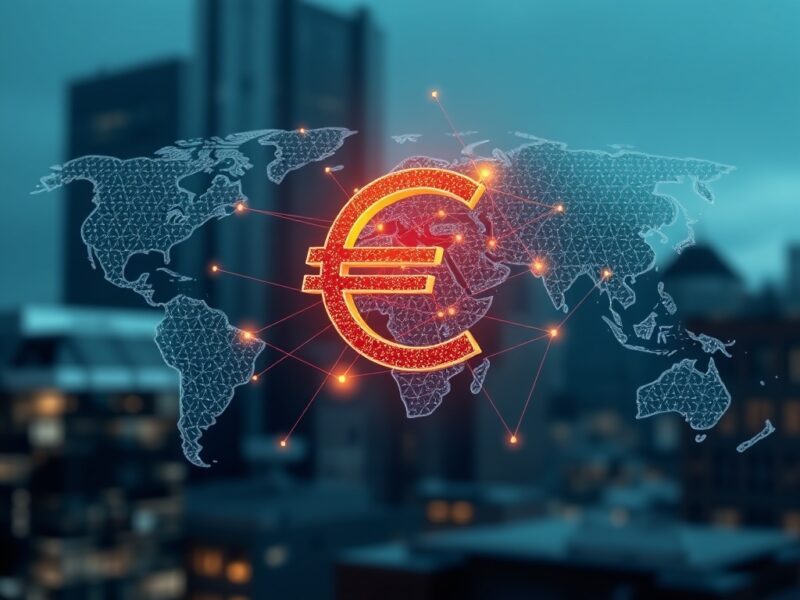
Euro’s Ascendant Journey: Unpacking Its Global Role 100 Days After Lagarde’s Bold Call

Euro’s Ascendant Journey: Unpacking Its Global Role 100 Days After Lagarde’s Bold Call

BitcoinWorld Euro’s Ascendant Journey: Unpacking Its Global Role 100 Days After Lagarde’s Bold Call In the dynamic world of cryptocurrencies, where volatility often reigns supreme, the quest for stability and alternative financial paradigms is constant. While digital assets chart new territories, the foundations of traditional finance continue to evolve, often with profound implications for the global economic landscape. One such evolution is the renewed focus on the Euro’s Global Role, a topic gaining significant traction 100 days after European Central Bank (ECB) President Christine Lagarde issued a clarion call for its strengthening. For those invested in understanding the broader financial currents that shape markets, including the burgeoning crypto space, tracking the Euro’s journey is not just about conventional currency; it’s about observing a major player’s strategic moves in an increasingly interconnected world. Is the Euro’s Global Role Truly Expanding? ING’s recent observations suggest early signs of progress in the Euro’s international standing, following President Lagarde’s proactive stance. Her call aimed to bolster the Euro’s position as a reserve currency and a medium for international trade and finance. A stronger Euro’s Global Role offers numerous benefits, not just for the Eurozone but for global economic stability. It provides a crucial counterweight in a financial system often dominated by a single currency, fostering diversification and potentially reducing systemic risks. This strategic move could lead to a more balanced international monetary system, offering businesses and central banks around the world more choices in their financial dealings. Trade Invoicing: Increased use of the Euro in international trade transactions. Reserve Holdings: Central banks diversifying their foreign exchange reserves into Euro-denominated assets. Bond Issuance: More international bonds being issued in Euros. Understanding ECB Policy and Its Impact on Global Standing The European Central Bank (ECB) plays a pivotal role in shaping the Euro’s destiny. President Lagarde’s statements are not just rhetoric; they are backed by the institution’s monetary policy decisions. Recent ECB Policy adjustments, including interest rate hikes and efforts to combat inflation, have aimed to stabilize the Eurozone economy and enhance the currency’s appeal. The credibility and effectiveness of these policies are crucial for convincing international investors and central banks to increase their Euro exposure. A stable economic environment, coupled with clear and consistent monetary policy, reinforces confidence in the currency. The ongoing balancing act between supporting economic growth and taming inflation is a delicate one, with every decision having ripple effects across global financial markets. Gauging Euro’s Currency Strength in a Volatile World The assessment of the Euro’s Currency Strength involves looking at a multitude of factors, from economic performance within the Eurozone to geopolitical events. While early progress is noted, the path to a significantly enhanced global role is not without its challenges. The Euro has faced headwinds from energy crises, geopolitical tensions, and differing economic performances among member states. Its strength is often measured against other major currencies like the US Dollar, Japanese Yen, and British Pound. A stronger Euro can make imports cheaper but exports more expensive, impacting trade balances. Investors and traders closely monitor economic indicators such as GDP growth, inflation rates, and employment figures, as these directly influence the perceived value and stability of the currency. Key Factors Influencing Euro’s Strength: Economic Growth: Robust GDP figures boost confidence. Inflation Control: Stable prices maintain purchasing power. Interest Rate Differentials: Higher rates attract foreign capital. Political Stability: A unified and stable political landscape reduces uncertainty. The Digital Euro: A Game Changer for International Finance? Perhaps one of the most transformative initiatives that could significantly bolster the Euro’s Global Role is the ongoing exploration of a Digital Euro. This central bank digital currency (CBDC) initiative is not just about modernizing payments within the Eurozone; it holds the potential to reshape international finance. A Digital Euro could offer a highly efficient, secure, and potentially cheaper means for cross-border payments, challenging the dominance of existing payment rails and other reserve currencies. For crypto enthusiasts, the concept of a CBDC is particularly intriguing, as it represents a convergence of traditional central banking with digital ledger technology, albeit in a centralized form. Its successful implementation could provide a powerful tool for the Euro to assert its digital sovereignty and extend its reach globally, offering an alternative to private digital currencies and other national CBDCs. Potential Benefits of a Digital Euro: Benefit Description Efficiency Faster and cheaper cross-border transactions. Security Enhanced security features and reduced fraud risks. Accessibility Broader access to digital payments for individuals and businesses. Monetary Policy Tool New avenues for implementing monetary policy. Navigating the Forex Market: Opportunities and Challenges For investors and traders, the evolving Euro’s Global Role and the factors influencing its Currency Strength create significant dynamics within the Forex Market. The Euro’s performance against other major currencies is a constant point of analysis. Early signs of progress, as noted by ING, can translate into opportunities for those looking to diversify their portfolios or capitalize on currency movements. However, the market remains susceptible to rapid shifts driven by economic data, central bank announcements, and geopolitical events. Staying informed about ECB Policy, Eurozone economic health, and the progress of initiatives like the Digital Euro is essential for making informed trading and investment decisions. The interplay between traditional currency movements and the growing interest in digital assets also presents a complex landscape for those navigating the global financial arena. Actionable Insights for Forex Participants: Monitor ECB Communications: Pay close attention to Lagarde’s speeches and ECB policy statements. Track Economic Indicators: Keep an eye on Eurozone GDP, inflation, and trade balance data. Diversify Portfolios: Consider Euro-denominated assets as part of a diversified strategy. Assess Geopolitical Risks: Understand how global events can impact the Euro’s value. A Resilient Path Forward for the Euro? The first 100 days since President Lagarde’s call for a stronger Euro’s Global Role show encouraging, albeit early, signs of progress. The confluence of proactive ECB Policy, the ongoing pursuit of greater Currency Strength, and the ambitious project of the Digital Euro are all contributing to a compelling narrative for the Euro’s future. While challenges persist in the ever-fluctuating Forex Market, the strategic intent to elevate the Euro’s international standing is clear. For participants in both traditional finance and the burgeoning digital asset space, observing these developments offers valuable insights into the broader shifts in global economic power and the evolution of money itself. The Euro’s journey is a testament to the continuous adaptation required in a complex and interconnected financial world, signaling its enduring importance on the global stage. To learn more about the latest Forex market, macro trends, and geo-political developments, explore our article on key developments shaping the Euro, US Dollar, interest rates, and institutional adoption. This post Euro’s Ascendant Journey: Unpacking Its Global Role 100 Days After Lagarde’s Bold Call first appeared on BitcoinWorld and is written by Editorial Team

Author: Coinstats
Avalanche, Toyota Blockchain Building Autonomous Robotaxi infrastructure

Avalanche, Toyota Blockchain Building Autonomous Robotaxi infrastructure

The post Avalanche, Toyota Blockchain Building Autonomous Robotaxi infrastructure appeared on BitcoinEthereumNews.com. Avalanche and Toyota Blockchain Lab are planning the future infrastructure necessary for self-deployed, autonomous robotaxi fleets, highlighting another emerging use case for blockchain technology in the future of transportation. Avalanche and Toyota are researching the creation of a new blockchain layer to “orchestrate trust and unlock mobility’s value” through a blockchain-based intermediary network called the Mobility Orchestration Network (MON). Built on Avalanche’s multichain infrastructure and Interchain Messaging (ICM), the proof-of-concept aims to enable secure data sharing for vehicle financing, ride sharing, insurance and carbon credit tracking, while streamlining ownership transfers for secondary markets. Avalanche and Toyota’s forthcoming MON network will open the gateway to new emerging use cases, including the future implementation of fully autonomous robotaxi fleets, according to Roi Hirata, head of Japan at Ava Labs, the company behind the development of the Avalanche Network. Monetizing mobility on the blockchain. Source: toyota-blockchain-lab.org Related: $11B Bitcoin whale surpasses SharpLink with $4B Ethereum bet  Robotaxis are one of the most interesting emerging use cases for the network, he said, speaking during Cointelegraph’s Chain Reaction daily live X spaces show on Wednesday: “The payments, the leasing, you can actually start your own robotaxi services by raising funds onchain, with some kind of security token system.” Investors will be able to raise their funds and track their robotaxis via the blockchain, meaning that the entire business model can be built onchain “from scratch,” Hirata said. Toyota – the Japanese automobile manucfacturer – is deeply exploring blockchain and has published a deep research paper with @avax. We’re chatting to Roi Hirata live now on #CHAINREACTION 👇https://t.co/NCCP8wsVbz — Gareth Jenkinson (@gazza_jenks) August 27, 2025 Related: Andrew Tate’s WLFI bet fails, opens new long despite $67K loss Robotaxi infrastructure still needs manufacturers and regulators Regulators and manufacturers still need to come on board to realize the…

Author: BitcoinEthereumNews
SEC, CFTC Clear Path for Spot Crypto Trading on Registered Exchanges

SEC, CFTC Clear Path for Spot Crypto Trading on Registered Exchanges

Joint statement marks regulatory shift under Trump administration's pro-crypto agenda

Author: Blockhead
Is Jack Ma in the game? Yunfeng Financial invests $44 million in ETH and partners with Ant Financial to develop RWA.

Is Jack Ma in the game? Yunfeng Financial invests $44 million in ETH and partners with Ant Financial to develop RWA.

By Asher, Odaily Planet Daily Yesterday, Yunfeng Financial, in which Jack Ma indirectly holds a stake, announced that its board of directors has approved the purchase of ETH on the open market as a reserve asset. As of the date of the announcement, the group had purchased a total of 10,000 ETH on the open market, with a total investment cost (including fees and expenses) of US$44 million. Furthermore, the group's use of ETH as a reserve asset aligns with its development in cutting-edge areas such as Web 3, and can optimize its asset structure and reduce its reliance on traditional currencies. Yunfeng Financial (0376.HK) saw its stock price rise nearly 10% on the day following this news. Yunfeng Financial's stock price Jack Ma and Yunfeng Financial Yunfeng Financial has always been regarded as a "Jack Ma concept stock." Yunfeng Financial's controlling shareholder is Yunfeng Capital, co-founded in 2010 by Jack Ma and Juzhong Media founder Yu Feng. The name "Yun" is taken from Jack Ma, and the name "Feng" is taken from Yu Feng. According to public data, Alibaba founder Jack Ma indirectly holds approximately 11.15% of Yunfeng Financial's shares through Yunfeng Capital, a 29.85% stake in Yunfeng Financial Holdings Co., Ltd., and a 40% non-voting stake in Shanghai Yunfeng Capital. Jack Ma and Yu Feng Yunfeng Financial's predecessor can be traced back to Wansheng International Securities, founded in 1982 and listed on the Hong Kong Stock Exchange in 1987, gradually growing into a leading local brokerage firm in Hong Kong. In 2015, Yunfeng Capital, led by Jack Ma and Yu Feng, invested HK$3.9 billion to take a controlling stake, driving the company's transformation. Subsequently, Yunfeng Financial acquired a 60% stake in MassMutual Asia in 2018, integrating securities, insurance, and asset management licenses to gradually build a closed "finance + technology" ecosystem. Yunfeng Financial's purchase of Ethereum is just the beginning Yunfeng Financial announced yesterday that it has added Ethereum to its strategic reserve assets. This move marks the beginning of the group's expansion into digital assets and Web 3. Going forward, the company will continue to promote the strategic integration of crypto assets and digital financial innovation, and explore the inclusion of mainstream tokens such as BTC and SOL in its reserves. At the same time, the group plans to deeply integrate digital assets with its own business, explore the tokenization of RWA (real-world assets) and the potential application of blockchain technology in core businesses such as insurance and asset management, and build a "finance + technology" ecological closed loop for the company. Yunfeng Financial will flexibly adjust the size of its digital asset reserves based on market developments, the regulatory environment, and its financial situation. The group emphasized that it will continue to accelerate its Web 3 deployment and promote Fintech innovation to enhance customer service experience and financial autonomy. Strategically invested in the public blockchain Pharos and jointly developed the RWA sector with Ant Financial On September 1st, Yunfeng Financial announced a strategic partnership with Ant Financial and a strategic investment in the Pharos public blockchain. This partnership aims to accelerate the integration and innovation of Web 3 and traditional finance, jointly developing RWA (real-world asset) tokenization and Web 3 initiatives through the Pharos public blockchain platform. Pharos Project Introduction Pharos is a new generation Layer 1 public chain focusing on RWA. In terms of performance, the network features a modular design and high parallelism. The current testnet reaches 30,000 TPS, far exceeding other EVM and parallel networks. Pharos also utilizes an innovative GPU-like architecture, increasing storage efficiency by 80% and enabling support for billions of users. The Pharos core team includes not only Web 2 experts from Ant Financial and Alibaba Blockchain, but also veterans of the Web 3 industry. In terms of financing, on November 8, 2024, Pharos completed an $8 million seed round of financing, led by Faction and Hack VC, with participation from SNZ Holding, Hash Global, MH Ventures, Dispersion Capital, Generative Ventures, and Chorus One. Testnet Season 2 tasks in progress Currently, the second season of the Pharos Open Testnet is available for early user experience. The specific interactive operations are as follows: STEP 1. Get test coins. You can choose to get 0G test coins first and then exchange them for PHRS test coins. STEP 2. Go to the Season 2 interactive website, connect your wallet, and complete your daily sign-in. STEP 3. Complete on-chain interaction and social tasks as required. summary Yunfeng Financial, in which Jack Ma indirectly holds shares, has strategically positioned itself in Ethereum, demonstrating not only its belief in emerging technologies but also its forward-looking exploration of financial architecture. From an overall strategic perspective, Yunfeng Financial has taken a key step in optimizing the company's reserves and reducing its dependence on traditional fiat currencies by increasing its investment in digital assets. On the other hand, it is also trying to deeply integrate traditional financial services with Web 3 technology, especially exploring the application scenarios of blockchain in the fields of insurance and securities. Leveraging Hong Kong's advantages in digital asset regulation, Yunfeng Financial is poised to become a crucial bridge between traditional finance and the crypto ecosystem. Perhaps, for Jack Ma, Yunfeng Financial's purchase of 10,000 ETH is just the beginning of his Web 3 strategy—the true digital financial landscape has only just begun to unfold.

Author: PANews
Kasu Secures $1M Strategic Investment from XDC Network

Kasu Secures $1M Strategic Investment from XDC Network

Kasu Finance, an RWA (Real World Asset) business lending protocol, has announced securing $1 million investment from XDC Network, a popular blockchain platform that specializes in RWA tokenization and trade finance.  It is a significant milestone for the protocol which will strengthen its vision of involving decentralized finance in institutional trade flows. Bringing XDC native infrastructure to the ecosystem of Kasu will provide new opportunities to retail and institutional investors. Kasu will enhance efficiency and accessibility by providing real yield offerings, a no-friction stablecoin application, and liquid wrappers to other applications of decentralized finance. Strengthening DeFi with Trade Finance Backing XDC Network is reputed to have a robust presence in international trade finance, and its partnership with Kasu introduces institutional-quality liquidity and deal flows to the DeFi ecosystem. The $1M investment is a way to not only grow Kasu but also offer credibility by association with a chain that already has networks in traditional financial markets. With the capabilities of XDC, Kasu can provide customers with stable and transparent on-chain solutions. This comes with stablecoin payment and yield-generative opportunities to bridge the digital and the financial streams. These capabilities may prove critical to further DeFi adoption by businesses and institutions interested in safe blockchain-based services. Unlocking Institutional Opportunities Besides the benefit of interacting with retailers, the partnership between XDC and Kasu will also be focused on closing the gap between institutional finance and decentralized applications. Kasu supports traditional investors to enter blockchain ecosystems with liquid wrappers and real yield models supported by trade finance deal flow. That standardization would allow access to scale in finance, and decentralized platforms would come in handy in areas where liquidity and reliability would presumably become problematic. The migration is reflective of an overall pattern of institutionalized adoption of blockchain networks where utility is not speculative. Conclusion The XDC Network strategic investment of 1M is a vote of confidence in the vision of Kasu. The partnership will provide the foundation of scalable financial solutions based on transparent and institution-ready trade finance by integrating the existing trade finance infrastructure developed by XDC and the DeFi innovation of Kasu. With the ongoing proliferation of blockchain usage, relationships such as this one demonstrate the convergence of mainstream finance and decentralization. Not only has XDC Network support become a source of financing for Kasu, but it is also an activity that is being directed to further inclusion in the international financial markets.

Author: Coinstats
XRP Gets Big Nod from China as Fintech Giant Leverages XRPL for Supply Chain Applications ⋆ ZyCrypto

XRP Gets Big Nod from China as Fintech Giant Leverages XRPL for Supply Chain Applications ⋆ ZyCrypto

The post XRP Gets Big Nod from China as Fintech Giant Leverages XRPL for Supply Chain Applications ⋆ ZyCrypto appeared on BitcoinEthereumNews.com. Advertisement &nbsp &nbsp XRP Ledger (XRPL) is getting a major nod from a leading fintech giant following the establishment of a strategic partnership aimed at advancing the global digital supply chain for financial applications. Linklogis, a leading Chinese-based supply chain fintech giant, reportedly announced its new collaboration with the leading decentralized blockchain ledger, XRPL. The partnership marks a tactical move to develop a deployment strategy to enable Linklogis’s digital supply chain finance application to run on the XRP Ledger. Post-deployment goals include facilitating commercialization on a wider scale and authorizing cross-border settlements for digital assets supported by real-world transactions. In the long term, both parties aim to strengthen the partnership through the exploration of Stablecoins, supply chain finance innovation, trading of supply chain finance RWA assets with a focus on smart contracts, and the intersection of blockchain and AI in the broader trade finance sector. While XRPL is notable for its commitment to providing solutions for business through the facilitation of financial transactions, the partnership is poised to position XRPL as a noteworthy force in advancing enterprise-grade real-world assets. Advertisement &nbsp For Linklogis, the partnership once again underscores the firm’s commitment to advancing supply chain finance through innovative technology. In 2019, Linklogis launched a cross-border business with a global reach, offering services in 27 countries worldwide. By 2024, it had processed RMB 20.7 billion ($2.88 billion) in cross-border assets. However, this is not the firm’s first move into the blockchain and crypto sector. Back in 2024, Linklogis launched a DeFi innovation lab named SuperFi Labs—the DeFi project aimed to develop on-chain consumer products.  SuperFi Labs would go on to serve two primary audiences with RWA products designed for users interested in its assets and DeFi-based products for another arm of its business. Source: https://zycrypto.com/xrp-gets-big-nod-from-china-as-fintech-giant-leverages-xrpl-for-supply-chain-applications/

Author: BitcoinEthereumNews
Dogecoin Price Pumps as Elon Musk’s Lawyer Launches $175M Treasury: Best Crypto to Buy Now?

Dogecoin Price Pumps as Elon Musk’s Lawyer Launches $175M Treasury: Best Crypto to Buy Now?

Alex Spiro, Elon Musk’s lawyer, has recently become the chairman of a publicly listed cleaning solutions firm based in Omaha, CleanCore, which has entered the crypto space by announcing a strategic partnership with House of Doge, the official corporate arm of the Dogecoin Foundation, on Tuesday. Per the announcement, the partnership has established a $175M […]

Author: The Cryptonomist
Dialogue with BlackRock CEO Larry Fink: Bitcoin is a hedge against an uncertain future

Dialogue with BlackRock CEO Larry Fink: Bitcoin is a hedge against an uncertain future

Legends Live @Citi with Larry Fink, Chairman and CEO of BlackRock Guest: Larry Fink, Co-founder, Chairman and CEO of BlackRock Moderator: Leon Kalvaria, Chairman of Citigroup Global Bank Compiled and edited by LenaXin and ChainCatcher ChainCatcher Editor's Summary This article is compiled from the latest episode of Legends Conversation @Citi, in which Leon Kalvaria, Chairman of Citi Global Bank, speaks with Larry Fink, co-founder, chairman, and CEO of BlackRock. As of the video's release, BlackRock's assets under management have reached $12.5 trillion. How did Larry achieve this? In this episode, Larry will share his unique insights on leadership, themes from his career, and his experiences in creating a brilliant journey. ChainCatcher did the collation and compilation. Summary of highlights: What really changed Wall Street was the personal computer. The profound lessons learned were: First, we thought we had a top-notch team and market knowledge, but our thinking did not evolve with the market; second, when competing with Salomon Brothers, we were blinded by the ambition to gain market share. The foundation of the firm is the development of risk tools, and BlackRock’s culture is deeply rooted in risk technology. Artificial intelligence and financial asset tokenization will reshape future investment and asset management The essence of the asset management industry is results-oriented Investors need to seek out information that is not fully understood by the market; old news is no longer able to generate excess returns. If active investing were effective, ETFs would never have taken off. If the US economic growth rate cannot sustainably reach 3%, the deficit problem will overwhelm the country. As long as assets and liabilities are matched and deleveraged, losses will not spread into a systemic crisis. Bitcoin is a hedge against an uncertain future Only by fully committing to the whole process can we continue to have the qualifications for dialogue and the right to speak in the industry (1) How did Larry’s upbringing shape his leadership? Leon Kalvaria: How did your family background shape your unique worldview and risk-taking ability, ultimately leading to excellence with a global perspective? Larry Fink: My parents were truly remarkable. They were socialists, open-minded, and they valued two things above all else: academic achievement and personal responsibility. They often told me, " If you're not happy as an adult , don't blame your parents; blame yourself. " This indoctrination taught me the importance of independence from a young age. Starting at age 10, I worked in a shoe store, an experience that taught me how to connect with customers and build relationships. While it's uncommon for children to work so young these days, that time helped me mature early and teach me to take responsibility. It wasn't until I was 15 that I truly began to plan a more purposeful life. Leon Kalvaria: How did your West Coast academic background help you transition into a leader within an established company? Larry Fink: I first saw snow in January 1976 during a job interview in New York. I was a typical West Coast teenager, wearing turquoise jewelry, long hair, and a brown suit. Of all the firms, First Boston was the most appealing to me. They offered a personalized training program, and the trading leaders felt very approachable. They even assigned me directly to the trading desk, which was unusual at the time. Wall Street back then was completely different from what it is today. In 1976, First Boston hired only 14 people. The combined capital of all Wall Street investment banks at the time, including Goldman Sachs, Loblolly, Kuhn Loeb, Lehman Brothers, Whitewell, Merrill Lynch, and others (excluding commercial banks), was only about $200 million. At the time, investment banks operated like cottage industries, taking almost no risk. Balance sheet expansion only began after 1976. Within my first month on the trading floor, I was convinced I was qualified for the job. After my training, I was assigned to the Mortgage and Guarantee Department, which consisted of only three people, which was very exciting. (2) Larry's entrepreneurial journey Leon Kalvaria: What fundamental new understandings of finance and risk did your early experience in securitization give you? Larry Fink: What really changed Wall Street was the personal computer. Before that, there were tools like the Monroe calculator or the HP-12C. In 1983, the mortgage department was equipped with a few computers. Although they were primitive by today's standards, they allowed us to completely rethink how we assembled mortgage pools and calculated their cash flow characteristics. The ability to restructure cash flows by processing real-time data launched the securitization process. While many calculations were still done manually, the application of trading-level technology gave rise to derivatives like interest rate swaps. Wall Street was forever transformed. An important factor in the establishment of BlackRock was that the sell-side technology was always ahead of the buy-side technology. Leon Kalvaria: What was the most unexpected lesson you learned, and what insights did you gain that may have shaped your subsequent leadership at BlackRock? Larry Fink: Let me tell you about my career trajectory. I became the youngest managing director at the age of 27, joined the company's executive committee at the age of 31, and became insufferable at the age of 34 because of my arrogance. Back then, the team-first philosophy only worked when we were profitable. In 1984-1985, we were the company's most profitable division, even setting a quarterly record. But then we suddenly suffered a $100 million loss in the second quarter of 1986. This exposed the root of the problem: We were hailed as heroes when we were profitable, but when we lost money, 80% of our employees stopped supporting us . The so-called team spirit completely collapsed. I learned two hard lessons: first, I thought I had a top-notch team and market knowledge, but my thinking didn't evolve with the market; second, when competing with Salomon Brothers, I was blinded by my ambition to gain market share. Lou was fired a year before me for the same mistake, but I didn't learn from it. I've never been able to forgive myself for not speaking out forcefully when the company was blindly adding capital. We lacked risk management tools, yet we took on risks no one knew about. This experience of failure ultimately became the soil that nurtured BlackRock's growth. Leon Kalvaria: What keeps you convinced that entrepreneurship can succeed despite widespread skepticism and personal setbacks? Larry Fink: That experience definitely eroded my confidence. Although I spent a year and a half rebuilding my career, and received several partner offers from Wall Street firms during that time, I felt it wasn't right to repeat my old path. So I began exploring the possibility of transitioning to a buy-side market. Two key clients were willing to fund my startup, but I wasn't confident enough to start on my own, so I reached out to Steve Schwarzman. First Boston had helped raise some of Blackstone's first fund (approximately $545 million), and I had helped fund it, leveraging our relationships with thrift institutions. Bruce Wasserstein introduced me to Steve and Pete. They were very interested in the idea I proposed, and in fact, Steve believed in me more than I did, and I eventually became the fourth partner of Blackstone. The weekend after I resigned, I held an open house at my home. About 60 to 70 people showed up to discuss my new plans. I told some of them directly, "You'll thrive after I leave." The company was going through a period of disintegration, with some leaving and some staying, but this candor helped all parties find a more suitable path forward. (3) The Development and Importance of Aladdin Technology Leon Kalvaria: What were the key factors in BlackRock's selection to provide key advisory services to the US government during the financial crisis? Did Aladdin's early deployment of technology provide a decisive advantage? Larry Fink: When we started the company, we had two technologists out of eight people. We invested $25,000 in a SunSpark workstation, which had just been released in 1988. This allowed us to develop our own risk tools at BlackRock. From day one, the foundation of the firm has been developing risk tools, and BlackRock’s culture is deeply rooted in risk technology. When Kidder Peabody, a subsidiary of General Electric (GE), went bankrupt in 1994, we leveraged our long-standing partnership with GE to proactively offer assistance to CEO Jack Welch and CFO Dennis Damerman. While Goldman Sachs was widely expected to be hired, we, leveraging our Aladdin system, were entrusted with liquidating its troubled assets. I stated that I didn't need consulting fees and would pay after success. After nine months of operation, the asset portfolio finally became profitable, and GE ultimately paid the highest consulting fee in its history. I wanted my investment team to be able to establish themselves based on their own success and capabilities, and I wanted Aladdin to be able to compete and win against anyone. We decided to open the Aladdin system to all our customers and competitors. In 2003, we encountered the financial crisis. Leveraging our trusted relationship with the U.S. government and regulators, we shared a common philosophy in multiple rescue efforts. Bear Stearns was hired by JPMorgan Chase (JP) to analyze its asset portfolio over the weekend. While urgently assisting JP with risk assessments on Friday and Saturday, I was allowed to communicate simultaneously with Hack from the Treasury Department and Tim from the Federal Reserve. At 6 a.m. on Sunday morning, Tim called and asked for support. I responded that we needed to get permission from JPMorgan Chase CEO Jamie before we could transition to government service. To expedite the process, we were directly hired by the U.S. government. The Treasury Secretary asked, "Will American taxpayers lose money from taking over the assets?" I suggested that principal and interest be included in the calculation, because the assets had been significantly written down and the interest rate was extremely high, so taxpayers would most likely get their money back. Since then, we have been hired to handle the restructuring of AIG and the crisis responses of the governments of the UK, the Netherlands, Germany, Switzerland and Canada. (Note: American International Group is referred to as AIG.) (4) What is the purpose of the annual letter to shareholders? Leon Kalvaria: What's the core rationale behind the annual shareholder letter you've written since 2012? Is it to document key milestones, provide insights to investors, or perhaps make a strategic statement? Larry Fink: Beyond a few core themes, I never intended these letters to be manifestos. I wouldn't have written them if we hadn't acquired BGI in 2009 to become the world's largest index provider. At the time, we assumed significant equity management responsibilities, but only had voting rights, not disposal rights . This is consistent with the concept discussed by Warren. The core of the first few letters was to promote "long-termism" and think about long-term trends for long-term investors . This was the whole original intention. (Note: Leon Kalvaria jokingly called Larry Fink's shareholder letter a companion piece to Warren Buffett's letter.) (V) Major trends in reshaping asset management in the future Leon Kalvaria: From your perspective, what are the major trends that you see that will reshape your investments and asset management in the future? Larry Fink: Artificial Intelligence and the Tokenization of Financial Assets. During lunch today with a former Treasury Secretary and central bank governor, he privately admitted that the banking industry has been left behind by technology in many areas . Brazil's New Bank's innovative practices are spreading to Mexico, and digital platforms like Germany's Trade Republic are also disrupting traditional practices. These cases demonstrate the power of technology to transform. The disruptive nature of AI can be better understood by considering how it is transforming big data analytics . For example, BlackRock established an AI lab at Stanford in 2017, employing a team of professors to develop optimization algorithms. We manage $12.5 trillion in assets and process a massive volume of transactions, but technological innovation is driving us back to our roots of responsibility. Leon Kalvaria: These tools will be made available to the public. How can we ensure transparency and accountability while maintaining BlackRock's advantages? Larry Fink: Early-stage scale operators will have an advantage, which makes me worried about society as a whole. Large institutions that can afford the cost of AI technology will become the dominant ones. However, as second-generation AI becomes ubiquitous, our competitive advantage will be challenged. BlackRock's current advantage is far greater than it was a year ago or five years ago. Our investment in technology has reached a massive scale, with all of our operations underpinned by a technology architecture, including transaction processing, process optimization, M&A integration, and a unified technology platform. The scale of our investment far exceeds public perception. Leon Kalvaria: How do the three major acquisitions in the private equity sector (Prequin, HBS, and Bio) reshape investors' asset allocation landscape in the private equity market? Larry Fink: Today's earnings call reaffirmed the importance of ongoing transformation. While the 2009 acquisition of BGI (including iShares) sparked market skepticism, the strategy of "passive and active integration with full portfolio focus" has proven successful—iShares' size has leapt from $340 billion to nearly $5 trillion. By 2023, BlackRock's private equity business will have grown significantly, with infrastructure investment increasing from zero to $50 billion and private credit expanding rapidly. This unexpected surge in client demand has driven innovation, accelerating the integration of public and private equity. Technological advances will facilitate the free allocation of public and private assets, a trend that will extend to all institutional investors and even 401(k) plans. The acquisition of Prequin cost only one-third of that of its peers, but it is a key strategy: by integrating the E-Front private equity analysis platform and the Aladdin public equity system, it has established full-chain risk control capabilities for public and private assets, facilitating investment portfolio integration and deepening customer dialogue. Leon Kalvaria: What is the current state of retirement funding? Larry Fink: If you can earn 50 basis points over 30 years, your returns in the private equity market will exceed that over the long term, otherwise the liquidity risk is not worth taking. In total, your portfolio can increase by 18%. Four months ago, BlackRock hosted a retirement summit in Washington, D.C., with 50 members of Congress and the Speaker of the House of Representatives among the guests. As administrator of the federal government's retirement plans, we manage 50% of the $12.5 trillion in retirement assets. (VI) Relationships with Global Leaders and Strategic Influence Leon Kalvaria: When global leaders seek your personal advice on financial and geopolitical issues, how do you combine your investment expertise with your geopolitical risk assessment? Larry Fink: Building trust is fundamental. Since 2008, central bank governors and finance ministers have made it a practice to have in-depth conversations with me, all held behind closed doors. While there are no formal confidentiality agreements, the trust is similar to my interactions with CEOs, where the core of the conversation is confidentiality. These conversations always focus on substantive issues . I'm not always right, but my views are always grounded in history and facts. Leon Kalvaria: You have been a mentor to so many leaders for a long time, and this unique communication channel is rare. Larry Fink: The asset management industry is inherently results-oriented . We don't profit by capital turnover or trading volume, but rather by concrete results. We are deeply involved in retirement systems around the world (we are the third-largest retirement management company in Mexico, the largest foreign-invested retirement management company in Japan, and the largest pension fund manager in the UK), so we maintain a focus on long-term issues. This kind of influence cannot be replicated; it's built on years of trust . I proactively meet with new leaders (such as Claudia in Mexico and Kiel in Germany) before they take office to ensure a smooth flow of information, which is a reflection of our unique value. Leon Kalvaria: When you look back at your recent career, who have been your mentors and influences? Larry Fink: When we went public in 1999, BlackRock's market capitalization was only $700 million. We immediately attracted senior directors like Merrill Lynch CEO Dave Kamansky and General Electric's Dennis Damerman. Our board of directors has always been a core pillar of our organization. When we acquired Merrill Lynch Investment Management, we transitioned from a US-based fixed income firm to a global operation in 40 countries. During this time, I repeatedly discussed our management model with the board. Today, the board remains crucial, with Cisco CEO Chuck Robbins providing technical insights and former Estée Lauder CEO Fabrizio Freda contributing marketing wisdom. These multidisciplinary experts allow me to continue to rely on the board to drive progress. (VII) Audience Question Session Q: How will AI reshape the future investment paradigm? How do you think different investment strategies (for both individual investors and institutions) will evolve? Where will this trend head in the future? Larry Fink: Every investor needs to seek out information that the market doesn't fully understand. Traditional information (old news) no longer generates excess returns. Artificial intelligence generates unique insights by analyzing differentiated data sets. Our systematic equity team has consistently outperformed the market for 12 years. Its thematic investment strategy, based on AI algorithms and big data, has outperformed 95% of fundamental stock pickers over the past decade. But like baseball, maintaining a 30% batting average is incredibly difficult, and achieving it for five consecutive years is even rarer. Only a select few investors consistently outperform. Most fundamental investors experience dismal returns after fees, which is the core of the decline in the active management industry. If active investing truly worked, ETFs would never have taken off. Traditional asset management companies face depressed market capitalizations. Many of our peers listed in 2004 have market capitalizations of only $5 billion to $20 billion, while BlackRock's is $170 billion. This is due to our inability to invest in technological upgrades. The gap between us and traditional agencies will continue to widen. Leon Kalvaria: What is the most underestimated black swan risk in the current market? If the US economic growth rate cannot be maintained at 3% (even if inflation is controlled), what systemic crises may be triggered? Larry Fink: If the US economic growth rate cannot continue to reach 3%, the deficit problem will overwhelm the country . The deficit was $8 trillion in 2000, soared to $36 trillion 25 years later, and continues to worsen. Only by maintaining 3% growth can the debt/GDP ratio be controlled. However, the market is skeptical. The deeper risks lie in: 1. 20% of US debt is held by foreign countries. If tariff policies lead to isolationism, dollar holdings may decrease; 2. The development of domestic capital markets in many countries (e.g., BlackRock raising $2 billion in India and Saudi Arabia launching MBS business) has resulted in domestic savings being retained in the country, weakening the appeal of US Treasuries; 3. Stablecoins and currency digitization may reduce the global role of the US dollar. The solution lies in releasing private capital and simplifying the approval process . Countries such as Japan and Italy are also facing deficit crises caused by low growth. While black swan events are possible in the private credit sector, higher matching ratios mean that systemic risk in the current capital market is lower than in previous years. As long as assets and liabilities are matched and deleveraging is achieved, losses will not escalate into a systemic crisis. (8) Why did Larry’s attitude towards digital assets change? Leon Kalvaria: What were the key factors behind your evolving stance on digital assets, particularly stablecoins? Has your perspective changed due to the unexpected speed at which other institutions have embraced the space? Larry Fink: I harshly criticized Bitcoin in a discussion with Jamie Dimon, calling it a "currency for money laundering and theft." That was my view in 2017. But my reflections and research during the pandemic changed my perspective: an Afghan woman used Bitcoin to pay the salaries of female workers banned by the Taliban. With the banking system under control, cryptocurrency became a solution. I gradually realized the irreplaceable value of the blockchain technology behind Bitcoin. It's not a currency, but a "fear asset" designed to mitigate systemic risk. People hold Bitcoin out of concern for national security and currency devaluation. Even though 20% of Bitcoin is held illegally in China, it's still held by Chinese citizens. If you don’t believe that your assets will appreciate in value over the next 20-30 years, why invest? Bitcoin is a hedge against an uncertain future. The high-risk and rapidly changing environment requires us to continue learning. 9. Larry’s Leadership Principles Q: What are your core leadership principles? How do you maintain leadership consistency, especially when facing dramatic industry changes and needing to flexibly adjust strategies? Larry Fink: Daily learning is essential. Stagnation means falling behind. There's no pause button when leading a large enterprise; you have to give it your all. To be the best, you must constantly challenge yourself and hold your team to the same standard. I've been in the industry for 50 years, and I still strive to be at my best every day. Ultimately, only by fully committing to the process can one maintain a position of authority and a voice in the industry . This right must be earned daily and should never be taken for granted.

Author: PANews