NFT

NFTs are unique digital identifiers recorded on a blockchain that certify ownership and authenticity of a specific asset. Moving past the "PFP" craze, 2026 NFTs emphasize utility, representing everything from IP rights and digital fashion to RWA titles and event ticketing. This tag explores the technical standards of digital ownership, the growth of NFT marketplaces, and the integration of non-fungible tech into the broader Creator Economy and enterprise solutions.

12521 Articles
Created: 2026/02/02 18:52
Updated: 2026/02/02 18:52
DoS Protection: Safeguarding Your Contract’s Availability

DoS Protection: Safeguarding Your Contract’s Availability

Denial of Service (DoS) attacks pose a critical threat to decentralized applications (dApps). These attacks are not designed to steal funds, but rather to cripple a program’s functionality, making it unusable or inaccessible for legitimate users. This disruption can prevent crucial operations from executing, block user interactions, and severely erode trust in the application. Such incidents effectively “shut down” access, even if underlying assets remain secure. This section will detail common DoS attack methods found in smart contracts and, more importantly, provide robust strategies to defend against them, ensuring your dApps remain resilient and consistently available.

  1. Avoid Unbounded Loops For collections that still need to be iterated (e.g., for data display in a dApp), implementing pagination is crucial to fetch items in smaller, manageable chunks, thus avoiding the block gas limit and potential DoS attacks. How Pagination Works Instead of trying to read an entire large array or list from your smart contract in one go (which can exceed the gas limit), pagination allows your frontend application to request data in smaller, defined segments. This distributes the gas cost over multiple, smaller transactions and prevents any single transaction from becoming too expensive. Examples of Pagination in Solidity Let’s illustrate with a simple example of a contract storing a list of user addresses. Vulnerable Example (Without Pagination): This function tries to return all addresses, which would fail if users array becomes too large. // VULNERABLE: Trying to return an entire unbounded arrayaddress[] public registeredUsers;function addRegisteredUser(address _user) public { registeredUsers.push(_user);}// This function will revert if registeredUsers.length is too largefunction getAllRegisteredUsers() public view returns (address[] memory) { return registeredUsers;} DoS Protected Example (With Pagination): Here, we provide functions that allow the frontend to request users in batches, controlling the gas cost. // DoS Protected: Paginationaddress[] public registeredUsers;function addRegisteredUser(address _user) public { registeredUsers.push(_user);}// Function to get the total count of registered usersfunction getTotalRegisteredUsersCount() public view returns (uint256) { return registeredUsers.length;}// Function to get a paginated list of users// _startIndex: the starting index for the slice// _count: the number of elements to retrieve from the startIndexfunction getPaginatedRegisteredUsers(uint256 _startIndex, uint256 _count) public view returns (address[] memory) { require(_startIndex <= registeredUsers.length, "Start index out of bounds"); uint256 endIndex = _startIndex + _count; if (endIndex > registeredUsers.length) { endIndex = registeredUsers.length; } uint256 actualCount = endIndex - _startIndex; address[] memory result = new address; for (uint256 i = 0; i < actualCount; i++) { result[i] = registeredUsers[_startIndex + i]; } return result;} How a Frontend Would Use It A frontend application (e.g., in React or plain JavaScript) would interact with this paginated contract like this:
Get Total Count: First, call getTotalRegisteredUsersCount() to know how many users there are in total. Calculate Pages: Based on the total count, decide how many items to display per page (e.g., 10 or 20). Fetch Pages: Make repeated calls to getPaginatedRegisteredUsers(startIndex, count) as the user navigates through pages. For instance, to get the first 10 users, it would call getPaginatedRegisteredUsers(0, 10); for the next 10, it would call getPaginatedRegisteredUsers(10, 10), and so on. This way, no single transaction tries to fetch all data at once, keeping gas costs manageable and preventing DoS attacks due to excessive computation. 2. Guard Against Unexpected Reverts (External Call DoS) If your contract’s logic depends on the successful execution of an external call (e.g., sending Ether to an address), and that external call can be made to revert by a malicious actor, it can cause a DoS. Vulnerable Example (Auction Refund): Imagine an auction contract that automatically refunds the previous highest bidder when a new higher bid comes in. If the previous highest bidder is a malicious contract that always reverts when it receives Ether, the bid function would always fail, preventing anyone else from bidding. // VULNERABLE: DoS via external call revert address public highestBidder; uint256 public highestBid; function bid() public payable { require(msg.value > highestBid, "Bid must be higher"); if (highestBidder != address(0)) { // If highestBidder is a malicious contract that always reverts on Ether receipt, // this transfer will fail, causing the entire bid function to revert. payable(highestBidder).transfer(highestBid); // Or .send() or .call() } highestBidder = msg.sender; highestBid = msg.value; } Solution: Pull Payment Pattern (as shown above): By using a pull payment system, the contract doesn’t force a transfer to potentially malicious addresses. Users must explicitly call a withdraw function, isolating the failure to their own transaction if they are a malicious contract.
  1. Consider Transaction Ordering Dependence (Front-running) While not a direct DoS in the sense of halting a contract, front-running can effectively deny a legitimate user their intended outcome by having a malicious transaction executed before theirs. This is often seen in decentralized exchanges or auction protocols.
Scenario: An attacker sees your transaction to buy a rare NFT in the public mempool. They then submit a similar transaction with a higher gas price, ensuring their transaction is mined first, effectively “stealing” the NFT. Mitigation: Commit-Reveal Schemes: For sensitive operations like auctions or votes, users first commit a hashed version of their action, and only later reveal the actual action. This prevents others from knowing their intent beforehand. Time Delays: Implement delays so that sensitive actions can only be executed after a certain number of blocks, giving time for others to react if they see a front-running attempt. Using a Decentralized Sequencer/Relayer: In some Layer 2 solutions, transactions are ordered by a centralized or decentralized sequencer, which can help mitigate front-running risks.
  1. Reentrancy Guards (Indirect DoS) While primarily a fund-draining vulnerability, a reentrancy attack can indirectly lead to a DoS if the recursive calls exhaust the gas limit or cause an unexpected state. Protecting against reentrancy is a fundamental security practice.
Solution: Checks-Effects-Interactions Pattern: Always update the contract’s state before making any external calls. // Protected with Checks-Effects-Interactions function withdrawSafely() public { uint256 amount = balances[msg.sender]; // Check require(amount > 0, "No funds to withdraw"); balances[msg.sender] = 0; // Effect (update state BEFORE external call) // Interaction (external call) (bool success, ) = payable(msg.sender).call{value: amount}(""); require(success, "Transfer failed"); } Solution: Reentrancy Guard: Use a mutex-like mechanism (e.g., OpenZeppelin’s ReentrancyGuard modifier) to prevent a function from being called again while it's still executing. // SPDX-License-Identifier: MITpragma solidity ^0.8.0;import "@openzeppelin/contracts/security/ReentrancyGuard.sol";contract MyContract is ReentrancyGuard { // Example withdraw function protected against reentrancy attacks function withdraw() public nonReentrant { // withdrawal logic }} Conclusion: Engineering for Uninterrupted Decentralization Protecting your smart contracts from Denial of Service attacks is paramount to building truly reliable and user-friendly decentralized applications. While often overlooked in favor of direct financial security, a successful DoS attack can be just as crippling, effectively locking out users and halting critical operations. By diligently applying strategies such as avoiding unbounded loops, implementing pull payment patterns, considering transaction ordering, and utilizing reentrancy guards, you empower your smart contracts to withstand malicious attempts at disruption. Remember, a resilient smart contract not only secures assets but also guarantees continuous access and functionality, fostering user trust and contributing to a truly robust decentralized future. DoS Protection: Safeguarding Your Contract’s Availability was originally published in Coinmonks on Medium, where people are continuing the conversation by highlighting and responding to this story

Author: Medium
Utility Over Hype: The Future of NFTs in Real-World Finance

Utility Over Hype: The Future of NFTs in Real-World Finance

NFTS are the new face of investment in the digital space. Read on to learn how to be part of this shift. For much of their short history, NFTs have been associated with digital art, collectibles, and speculative bubbles. Headlines have focused on million-dollar JPEGs and meme-worthy drops, overshadowing the true potential of the technology. But as markets mature, one truth is becoming clear: the long-term future of NFTs lies not in hype, but in utility. The next generation of NFTs won’t just be collectibles. They will be financial instruments that bridge blockchain and the real economy. One project demonstrating this shift is AxionVerse, a platform designed to move NFTs beyond speculation and into structured, revenue-backed investing. Why NFT Hype Was Never Enough The 2021 NFT boom was exciting, but it revealed a structural weakness: most NFTs offered no real utility. Their value was tied to cultural perception, scarcity, or community hype. As markets cooled, investors began asking tougher questions: What does this NFT actually do? Does it generate income or solve a real problem? Why should I hold it long-term? Without sustainable answers, speculative NFTs collapsed in value. But the underlying technology — blockchain-based proof of ownership and programmability — remains as powerful as ever. That’s where utility-focused NFTs come in. NFTs as a Bridge to Real-World Finance Utility-based NFTs represent something tangible. They can serve as access passes, governance rights, or even fractionalized ownership of real-world assets. By tying NFTs to cash flows or functional use, projects can create durable value instead of fleeting hype. AxionVerse embodies this model. Its NFTs — called Axion StakeCards — are not profile pictures or collectibles. Each one represents a share in a capital pool that funds revenue-generating businesses such as UAE service apartments and food franchises. Here’s what sets them apart: Low entry point: Each NFT is priced at $0.54 USDT, opening the door to everyday investors. Revenue-backed: Funds raised go directly into real businesses, with profits redistributed to holders in USDT. On-chain transparency: Every movement of funds is logged on the blockchain, from withdrawals to dividend payouts. Evolving governance: Through the upcoming AxionCore (AXC) token, NFT holders will participate in voting on future investments, distribution cycles, and platform governance. This model transforms NFTs from speculative bets into functional, yield-bearing assets. Why Real-World Utility Matters Shifting NFTs toward utility solves several of the pain points that plagued the hype-driven era: Sustainability — NFTs backed by real cash flows are not reliant on market sentiment alone. Accessibility — Fractionalized ownership means global retail investors can access institutional-grade opportunities once reserved for the wealthy. Trust — Smart contracts and on-chain logs replace opaque intermediaries, ensuring transparency. Scalability — Utility NFTs can extend across industries: real estate, franchising, hospitality, and more. The question is no longer whether NFTs have value, but whether they can deliver consistent, real-world outcomes. AxionVerse as a Case Study in Utility The AxionVerse model highlights what the future of NFTs looks like: Quarterly or bi-annual dividend payouts to NFT holders, distributed directly in USDT. Fractional participation in sectors like UAE service apartments, one of the most profitable real estate niches driven by global tourism and business travel. Community-driven growth through referral incentives, governance rights, and DAO mechanisms in future phases. Scalable vision that expands into franchises, food ventures, and global partnerships. This is more than an experiment — it’s a working example of how NFTs can shift from collectibles to capital infrastructure. The Bigger Picture: Utility as the Next Wave The next phase of Web3 will be defined not by hype cycles, but by integration into real-world finance. NFTs, in this context, are not an endpoint but a framework for ownership, governance, and cash flow distribution. Imagine a future where: Teachers in Manila earn rental income from Dubai service apartments through fractional NFTs. Small investors in Africa diversify into global hospitality and food businesses without ever leaving their city. Communities vote, via governance tokens, on how profits are distributed or which sectors to expand into next. That future is already being built. Final Thoughts The hype-driven NFT market has had its time. The next chapter belongs to utility-focused NFTs that empower investors, unlock global access, and bring real-world finance onto the blockchain. Projects like AxionVerse prove that NFTs can do more than represent culture — they can represent cash flows, rights, and opportunities. In the years ahead, the NFT projects that thrive will be those that deliver lasting value. Not because they were trending on Twitter, but because they turned ownership into something meaningful, inclusive, and profitable. The future of NFTs is not hype. It’s utility. And it’s already here. Utility Over Hype: The Future of NFTs in Real-World Finance was originally published in Coinmonks on Medium, where people are continuing the conversation by highlighting and responding to this story

Author: Medium
Arbitrum Orbit: Redefining Layer 3 Blockchain Innovation

Arbitrum Orbit: Redefining Layer 3 Blockchain Innovation

Arbitrum Orbit: Redefining Layer 3 Blockchain Innovation The blockchain industry has undergone massive innovation in the past decade. From Bitcoin pioneering decentralized finance to Ethereum introducing smart contracts, the technology has continued to evolve. The next frontier in blockchain scalability and efficiency is the emergence of Layer 3 blockchains — and leading this charge is Arbitrum Orbit. Arbitrum Orbit is designed to help developers build customized Layer 3 blockchains on top of Arbitrum’s Layer 2 ecosystem. By offering scalability, modularity, and interoperability, it unlocks new possibilities for decentralized applications (dApps), enterprises, and Web3 ecosystems. In simple terms, Orbit allows developers to design their own blockchain networks with the performance of Arbitrum, while still benefiting from Ethereum’s security. This blog explores how Arbitrum Orbit is redefining Layer 3 blockchain innovation, its architecture, advantages, use cases, and why it is poised to reshape the blockchain landscape. Blockchain Layers: From L1 to L3 Before diving into Arbitrum Orbit, it’s essential to understand the evolution of blockchain layers: Layer 1 (L1) — The Base Layer ✦Examples: Ethereum, Bitcoin, Solana. ✦Provides the foundation for security and decentralization. ✦However, faces scalability challenges such as high gas fees and slower transaction throughput. Layer 2 (L2) — Scaling the Base Layer ✦Examples: Arbitrum One, Optimism, Polygon. ✦Built atop L1 to minimize network load and increase processing speed. ✦Uses rollups and sidechains to enhance efficiency while still leveraging L1 security. Layer 3 (L3) — Application-Specific Blockchains ✦Emerging concept focused on customization and flexibility. ✦Enables developers to build specialized chains tailored to certain use cases. ✦Enables tailored management of fees, tokenomics, privacy, and governance. Arbitrum Orbit plays a key role in this evolution by providing the tools and framework to launch Layer 3 blockchains seamlessly. What is Arbitrum Orbit? Arbitrum Orbit is a permissionless framework that allows developers to deploy custom Layer 3 blockchains (Orbit chains) on top of Arbitrum’s Layer 2 ecosystem. In practice, developers can build their own blockchain network that inherits security from Ethereum, leverages Arbitrum’s rollup technology, and still offers customization. These Orbit chains can be optimized for DeFi, gaming, NFTs, enterprise use cases, or decentralized identity systems. Key Highlights of Arbitrum Orbit: Permissionless Development: Anyone can build Layer 3 chains without requiring special approval. Inherited Security: Orbit chains benefit from Ethereum’s robust security model via Arbitrum’s rollups. Customizability: Developers can configure block times, gas fees, tokenomics, and governance. Scalability: Supports massive throughput with near-zero transaction costs. Interoperability: Easy integration with Orbit chains, Arbitrum L2 chains, and Ethereum. Arbitrum Orbit Architecture Arbitrum Orbit is designed to maximize performance and flexibility. Its architecture combines several blockchain components: Settlement Layer:✦Orbit chains settle transactions on Arbitrum L2 chains (e.g., Arbitrum One or Nova). ✦This ensures lower fees compared to direct Ethereum settlement. Execution Layer:✦The Orbit chain processes transactions independently. ✦Developers can adjust gas mechanisms, consensus, and transaction parameters. Data Availability Layer:✦Transactions are secured using Ethereum’s data availability guarantees. ✦Orbit supports both Arbitrum AnyTrust (optimized for cost-efficiency) and Rollup modes (optimized for security). Interoperability Layer:✦Orbit chains communicate with each other and the broader Arbitrum ecosystem. ✦Facilitates dApp communication, asset transfers, and liquidity pools across multiple chains. This modular structure provides high flexibility without sacrificing decentralization. Advantages of Arbitrum Orbit Arbitrum Orbit brings several innovations that redefine Layer 3 blockchain development:

  1. Infinite ScalabilityBy offloading execution to customizable chains, developers can achieve nearly limitless throughput while keeping fees extremely low.
  2. Tailored Customization Orbit allows chains to fine-tune aspects like: ✦Governance models. ✦Token utilities and gas economics. ✦Privacy settings (public vs private chains). ✦Use-case-specific optimizations (e.g., gaming, DeFi).
  3. Ethereum SecurityDespite being a Layer 3, Orbit chains benefit indirectly from Ethereum’s battle-tested security, thanks to Arbitrum’s rollup framework.
  4. Cost Efficiency Arbitrum Nova’s AnyTrust-based Orbit chains reduce gas fees dramatically, optimizing performance for high-frequency transactions.
  5. Ecosystem InteroperabilityOrbit enables smooth interoperability with Arbitrum One, Arbitrum Nova, and other Orbit chains. This fosters liquidity sharing and cross-chain dApp functionality.
  6. Permissionless DeploymentUnlike earlier blockchain models that required approvals or centralized control, Orbit chains can be launched by anyone, ensuring true decentralization. Use Cases of Arbitrum Orbit The versatility of Orbit chains opens doors for multiple industries:
  7. DeFi Applications✦Orbit chains can optimize transaction fees for trading, lending, and yield farming. ✦Enables high-frequency DeFi applications like derivatives and perpetuals trading.
  8. Gaming Ecosystems✦Developers can build gaming-optimized chains with ultra-low gas and high throughput. ✦Supports in-game NFTs, token economies, and seamless player transactions.
  9. NFT Marketplaces✦NFT projects can launch their own Orbit chains to reduce minting costs. ✦Offers flexibility in royalty structures and marketplace governance.
  10. Enterprise Solutions✦Corporates can build private or consortium-based Orbit chains for supply chain, finance, or healthcare. ✦Provides privacy and compliance while benefiting from Ethereum’s security indirectly.
  11. Social and Identity Platforms✦Decentralized identity (DID) systems can operate on Orbit chains. ✦Reduces risks of centralization while enabling scalable authentication systems.
  12. Cross-Chain Liquidity Hubs✦Orbit chains can function as liquidity bridges. ✦Enhances interoperability across ecosystems. Arbitrum Orbit vs Other Blockchain SolutionsArbitrum Orbit vs Other Blockchain Solutions This comparison highlights how Arbitrum Orbit extends blockchain flexibility beyond L1 and L2 models. Challenges and Considerations Despite its promise, Orbit comes with challenges: Security Complexity — While Orbit chains inherit Ethereum security indirectly, misconfigurations at the chain level may create vulnerabilities. Ecosystem Fragmentation — Too many app-specific chains could fragment liquidity and user bases. Adoption Curve — Developers need time and resources to build on Orbit, and user education is crucial. Regulatory Hurdles — Enterprises building private chains may face compliance and jurisdictional challenges. The Future of Arbitrum Orbit Arbitrum Orbit has the potential to transform how developers think about blockchain scaling. By empowering developers to create custom Layer 3 chains, it lays the foundation for a new era of blockchain specialization. In the coming years, we can expect: ✦More gaming ecosystems built on Orbit with seamless token integration. ✦Layer 3-focused DeFi advancements like liquidity pools and derivatives platforms. ✦Enterprise adoption for industries like logistics, real estate, and healthcare. ✦Enhanced tooling to simplify Orbit chain deployment and interoperability. If L1 provided decentralization, and L2 offered scalability, L3 via Orbit introduces specialization and customization. Conclusion Arbitrum Orbit is redefining blockchain innovation by making Layer 3 development a reality. It merges efficiency, scalability, and tailored solutions while being secured by Ethereum. By empowering developers to launch specialized chains, it creates a new paradigm where every industry can have a blockchain tailored to its needs. As blockchain adoption accelerates, solutions like Arbitrum Orbit will play a vital role in shaping the future of Web3. With the rise of Orbit, the industry is moving closer to a world where decentralized applications are not limited by scalability, costs, or rigid infrastructure — but instead thrive in specialized ecosystems optimized for their use cases. Arbitrum Orbit doesn’t just scale blockchain — it redefines how blockchains are built.
Arbitrum Orbit: Redefining Layer 3 Blockchain Innovation was originally published in Coinmonks on Medium, where people are continuing the conversation by highlighting and responding to this story

Author: Medium
Analysts Predict BlockchainFX as the Next Big Crypto of 2025, as These 5 Other Cryptos Give Steady Momentum

Analysts Predict BlockchainFX as the Next Big Crypto of 2025, as These 5 Other Cryptos Give Steady Momentum

The post Analysts Predict BlockchainFX as the Next Big Crypto of 2025, as These 5 Other Cryptos Give Steady Momentum appeared on BitcoinEthereumNews.com. Crypto News The race for the top crypto presale of 2025 is heating up, and investors are chasing the projects that promise not just hype, but long-term returns. Among a sea of emerging tokens, BlockchainFX ($BFX) is being hailed by analysts as the next big crypto of 2025. Its presale has already surpassed $6.2M raised, with forecasts suggesting explosive upside potential. While other presales like Jet Bolt, Nexchain, Coldware, SUBBD, and Space Pay are gaining traction, BlockchainFX is standing out with its real utility, massive APY staking rewards, and analyst-backed predictions of becoming a 1000x ROI opportunity. Let’s break down why BlockchainFX is dominating this presale season and how it stacks up against its competitors. Last Chance! Use AUG35 Now and Score 35% Extra $BFX Tokens Before Time Runs Out! BlockchainFX ($BFX): The Strongest Presale Pick for 2025 BlockchainFX isn’t just another token, it’s positioning itself as a DeFi infrastructure leader with a focus on liquidity, cross-chain utility, and high staking yields. The presale bonus (AUG35) allows buyers to grab 35% extra tokens, which significantly boosts their entry point. BlockchainFX Presale Stats Metric Value Current Price $0.021 Presale Raised $6.2M+ Bonus Offer 35% Extra (AUG35) Projected Launch Price $0.08 Long-Term Forecast $1+ Staking APY 90% Potential ROI (2025) 1000x Investment Scenarios Early Buy (with 35% bonus): $1,000 = $1,350 worth of $BFX instantly. At Launch ($0.05): That $1,350 turns into $2,380. Mid-Term ($0.25): Same buy grows to $16,000+. Long-Term ($1+): Investors could be looking at $64,000+. With analyst predictions putting BlockchainFX in the same conversation as Ethereum’s early days, this is the presale investors don’t want to miss. Jet Bolt (JBT) Jet Bolt is building a lightning-fast payments network designed for real-time transactions across borders. With scalability at its core, Jet Bolt is targeting partnerships with fintech apps and online…

Author: BitcoinEthereumNews
Cardano Price Performance Concerns Holders, With Many Rushing To Layer Brett For Insane 1,000% Staking Rewards

Cardano Price Performance Concerns Holders, With Many Rushing To Layer Brett For Insane 1,000% Staking Rewards

The post Cardano Price Performance Concerns Holders, With Many Rushing To Layer Brett For Insane 1,000% Staking Rewards appeared on BitcoinEthereumNews.com. Cardano’s recent performance has left many holders uneasy, especially since its price momentum is slipping and bearish signals are starting to surface. The uncertainty has sparked a rush toward alternatives that promise stronger returns. One project drawing that attention is Layer Brett, a meme-driven DeFi platform offering eye-popping rewards of up to 1,000%. Here’s why you should capitalize on this investment opportunity:  LBRETT Shows Promise To Be MemeFi’s Next Big Giant  Most meme coins today rely on noise. Their value lives and dies on how many posts trend on social media. The price moves when the hype cycle turns, and when it fades, the project empties out. However, LBRETT is rewriting this narrative by demonstrating that meme culture can coexist with real infrastructure. It doesn’t rely on hashtags or viral tweets for its success. LBRETT’s design leans on Layer 2 scaling, which means faster transactions, cheaper fees, and smoother user experience. This provides a foundation that goes beyond mere meme status, allowing traders to recognize its utility beyond speculation. It is also fully self-custodial, with no KYC requirements, ensuring true ownership remains in the hands of the community. While honoring the culture that birthed meme coins, LBRETT adds meaningful functionality. Additionally, staking sits at the center of the LBRETT platform. Holders who commit are rewarded and the longer a user holds a token, the stronger the token starts. The model is simple, but it creates steady momentum. Gamified features also give users more reason to return which helps build activity that doesn’t disappear when the hype cools. NFT integrations also bring another layer of use to the LBRETT ecosystem They create value beyond the token itself and invite more creativity into the system. When it comes to actual tokenomics, LBRETT’s token supply is capped at 10 billion, which keeps the…

Author: BitcoinEthereumNews
New 2025 Study Highlights VeChain as a Leader in Autonomous Supply Chains

New 2025 Study Highlights VeChain as a Leader in Autonomous Supply Chains

Sebastian has put the spotlight on research recognizing VeChain’s potential to bring more transparency to supply chain management. In an earlier report, the sustainability think tank Sustain pointed to VeChain as a key player advancing waste recycling transparency through blockchain. VeChain, launched in 2015 and fully live on its own mainnet by 2018, is a [...]]]>

Author: Crypto News Flash
The Sandbox to lay off 50% of workforce as metaverse pioneer pivots to memecoin launchpad: report

The Sandbox to lay off 50% of workforce as metaverse pioneer pivots to memecoin launchpad: report

The Sandbox Animoca Layoff

Author: Crypto.news
Philippine Lawmaker Introduces Blockchain Proposal for Transparent Government Budget

Philippine Lawmaker Introduces Blockchain Proposal for Transparent Government Budget

The Philippines is making strides in utilizing blockchain technology to enhance government transparency and accountability. The country’s House of Representatives has approved a bill that aims to leverage blockchain for the management of the national budget, marking a significant move towards integrating cryptocurrency and distributed ledger technology into public administration. Blockchain to Improve Budget Transparency [...]

Author: Crypto Breaking News
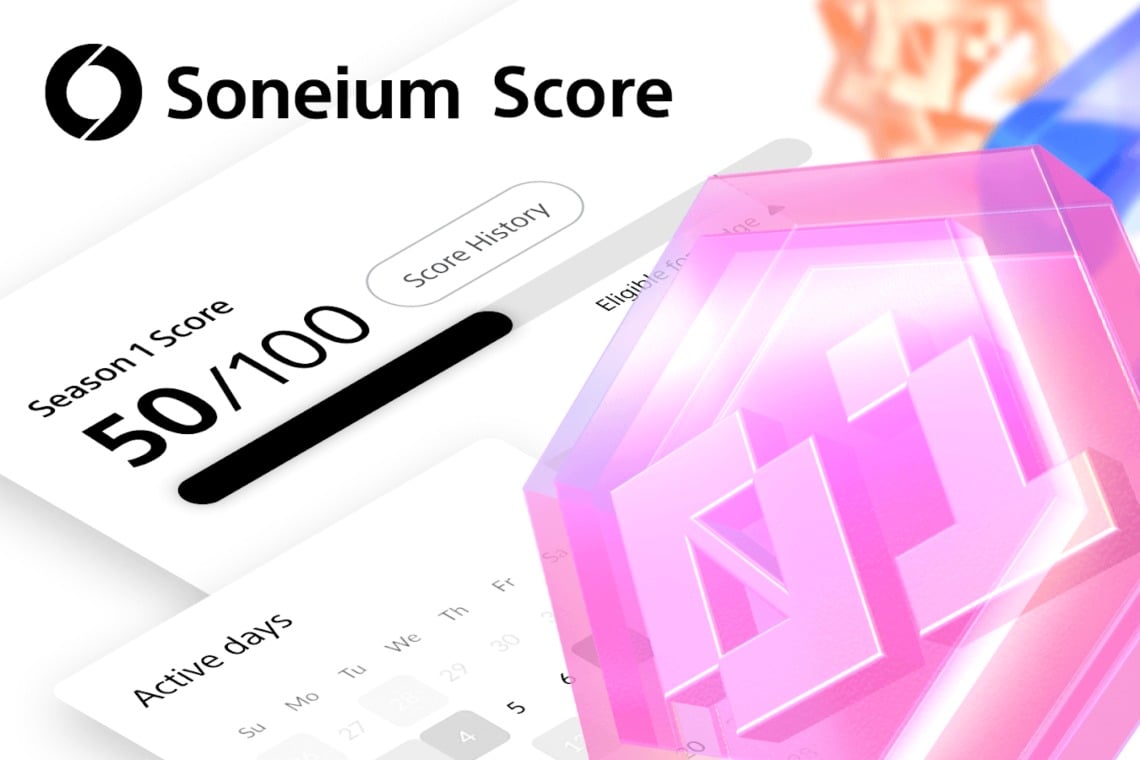
Soneium Score: Sony launches the system to reward on-chain participation

Soneium Score: Sony launches the system to reward on-chain participation

The Web3 revolution takes a decisive step with the announcement of Soneium Score, Sony's new proof-of-contribution system.

Author: The Cryptonomist
Crowd Shouts XRP as American Rapper Tells Crowd It’s Not Too Late to Buy Crypto

Crowd Shouts XRP as American Rapper Tells Crowd It’s Not Too Late to Buy Crypto

American hip hop artist Big Sean told his audience in a recent performance that it's not too late to invest in Bitcoin, Ethereum, and XRP. Born Sean Michael Leonard Anderson, the Detroit-born rapper made headlines at the "Unlock The Block" event on Friday, Aug. 22, 2025, when he urged attendees to invest in cryptocurrency without hesitation.  Big Sean Promotes Crypto  The free block party, organized by Stand With Crypto, combined live music with crypto awareness, drawing a vibrant crowd that responded cheerfully to the artist's remarks. On stage, Big Sean told the audience that it was not too late to get into the crypto market, encouraging them to buy digital assets immediately rather than waiting. He stressed that those who put money into cryptocurrencies right away would likely see returns.  https://twitter.com/Xaif_Crypto/status/1960757310072217771 He specifically mentioned Bitcoin, Ethereum, and XRP. The artist admitted he did not possess any insider information but strongly believed prices were poised to rise despite expressing a level of uncertainty.  Growing Retail Interest Around XRP Interestingly, as he spoke, the crowd repeatedly shouted "XRP," indicating the retail excitement surrounding the XRP token. Notably, this energy confirmed the growing cultural relevance of XRP, which continues to enjoy grassroots support despite wider market volatility. That same resilience has captured the attention of major voices in the financial sector. Galaxy Digital CEO Mike Novogratz has repeatedly said that XRP remains relevant because of its loyal and expanding community, which he noted has stood the test of time through both bull and bear markets.  Similarly, Steven McClurg, CEO of Canary Capital, said recently that he has now seen why they call the community the "XRP Army," pointing to the overwhelming demand his firm has witnessed for the XXRP leveraged ETF.  Meanwhile, Big Sean's comments in Detroit are not the first time he has publicly connected himself to crypto culture. Back in 2018, he referenced cryptocurrencies in his verse on YG's hit song Big Bank, where he rapped about purchasing luxury goods with digital coins and even used crypto as a metaphor for paying tuition.  Later, on Sada Baby's track Little While, he boasted about gifting someone a Robinhood account loaded with $30,000 worth of Dogecoin.  Trend of Celebrity Endorsements Other celebrities have also ventured into crypto in recent years. For instance, Eminem partnered with Crypto.com in an ad campaign that went viral on social media in April 2024.  Also, Lindsay Lohan became a familiar face in the sector after multiple promotional appearances in 2023, which eventually led to regulatory scrutiny and SEC charges for illegal promotion.  In 2021, Tom Brady and Gisele Bündchen took equity stakes in the now-defunct FTX, while Brady also co-founded the NFT platform Autograph. Within the same year, Matt Damon became the face of a Crypto.com commercial. Meanwhile, Snoop Dogg has been one of the longest-standing celebrity figures in crypto, choosing to accept Bitcoin for music releases as far back as 2013. He also promoted Dogecoin and launched NFT collections.  Soccer stars Cristiano Ronaldo and Lionel Messi have also pushed blockchain adoption, with Ronaldo receiving 770 fan tokens from Juventus in 2021 and Messi accepting PSG Fan Tokens as part of his signing deal in 2022.

Author: The Crypto Basic