NFT

NFTs are unique digital identifiers recorded on a blockchain that certify ownership and authenticity of a specific asset. Moving past the "PFP" craze, 2026 NFTs emphasize utility, representing everything from IP rights and digital fashion to RWA titles and event ticketing. This tag explores the technical standards of digital ownership, the growth of NFT marketplaces, and the integration of non-fungible tech into the broader Creator Economy and enterprise solutions.

12522 Articles
Created: 2026/02/02 18:52
Updated: 2026/02/02 18:52
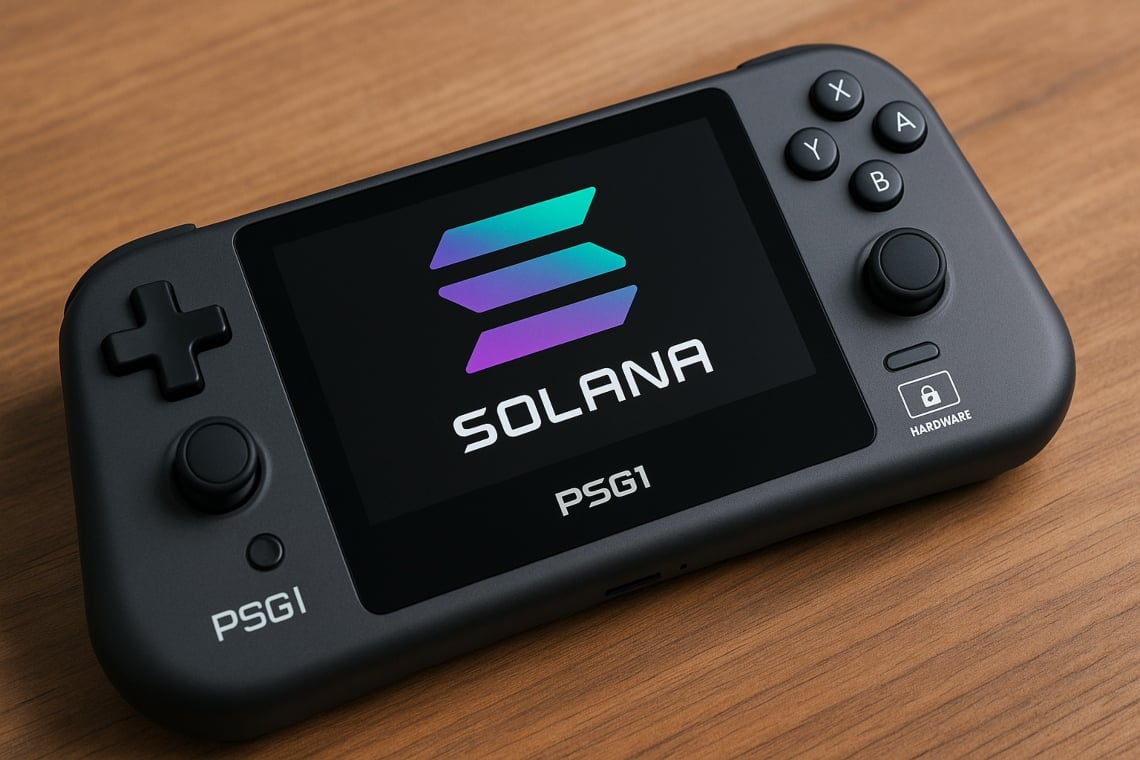
PSG1 Solana, portable Web3 console with hardware wallet

PSG1 Solana, portable Web3 console with hardware wallet

The post PSG1 Solana, portable Web3 console with hardware wallet appeared on BitcoinEthereumNews.com. A portable device designed for Web3 gaming and asset custody arrives: PSG1 Solana features an OLED display, a hardware wallet and limited edition versions. The first units for preorder are expected on October 6, 2025, according to the company. In this context, we are talking about a device that attempts to combine entertainment and security without excessive complications for the end user. Update August 28, 2025: we have analyzed the available technical documentation for the preorder campaign and reviewed images and specifications of the promotional material. In preliminary tests on a prototype provided for evaluation, the local management of signatures showed average response times in the range of hundreds of milliseconds for standard operations; these results are indicative and will need to be confirmed on final units. Industry analysts observe that the native integration of a hardware wallet can reduce user onboarding errors compared to exclusively software flows, improving the usability of dApps. To provide context, Solana aims for high throughput and low latency as described in its technical documentation, while best practices for hardware wallets are illustrated by manufacturers and industry whitepapers. What changes: console and cold wallet in the same device PSG1 Solana is designed to combine gaming, token management, and NFT access to dApp on the Solana ecosystem. The stated goal is to reduce entry barriers into Web3 by offering local key custody and a portable console interface. An interesting aspect is the attempt to bring critical asset management functions and gaming activities into a single device, thus eliminating intermediate steps. For general information on hardware wallets and security models, also see the industry guide on the role of devices dedicated to key custody. Main Specifications (in brief) Chipset: Rockchip RK3588S octa-core Wikipedia RAM: 8 GB LPDDR4X Storage: 128 GB eMMC OLED Screen: 3.92″, 1240×1080 Connectivity: Wi‑Fi…

Author: BitcoinEthereumNews
The Ethereum Memecoin Set to Beat Solana and Cardano

The Ethereum Memecoin Set to Beat Solana and Cardano

The post The Ethereum Memecoin Set to Beat Solana and Cardano appeared on BitcoinEthereumNews.com. Crypto News Which crypto will lead this bull run and deliver the kind of returns that change lives? With Bitcoin’s halving complete and a fresh cycle beginning, investors are searching for the projects that combine timing, fundamentals, and community strength. Cardano and Solana have history on their side, while Hyperliquid is bringing new ideas to DeFi. But another name is cutting through the noise. Pepeto (PEPETO), still in presale at only $0.000000149, has already raised more than $6.4 million and is building real tools alongside meme culture. The real question now is whether Pepeto can outshine established players and become the breakout crypto of this bull run. Cardano (ADA) Secure but Slow to Deliver Cardano is known for its academic development style and research-first approach. It introduced smart contracts after long delays, and while its community has stayed loyal, real adoption has been slow compared to other chains. Many features have taken years to roll out, and the ecosystem has struggled to keep up in areas like DeFi, NFTs, and meme coins where faster networks already dominate. Liquidity and daily activity remain limited, and developer growth is smaller than on competing platforms. Because of these factors, Cardano is unlikely to lead in this bull run. It may still appeal to long-term holders, but it lacks the speed and traction needed to win attention in a cycle driven by rapid gains. Hyperliquid (HLP) Promising Tech, Unproven Market Position Hyperliquid is still a young project in the decentralized trading space. It promotes zero-gas transactions and an on-chain matching engine, but these features will not be unique for long, as other platforms are moving in the same direction. Adoption so far is limited, and it faces competition from established names like dYdX and GMX that already dominate this sector. Its native token HLP…

Author: BitcoinEthereumNews
American Rap Star Shouts Out XRP During Performance, Says It’s Not Too Late To Buy

American Rap Star Shouts Out XRP During Performance, Says It’s Not Too Late To Buy

A video clip from a Detroit event has been stirring discussion across social media platforms, showing Grammy-nominated rapper Big Sean urging his audience to take a chance on cryptocurrencies. The moment occurred at the Stand With Crypto event in Michigan for its digital asset community, where Big Sean delivered an energetic show.  However, a call […]

Author: Bitcoinist
BlockDAG, Ethereum, Solana, and Avalanche Stand Out

BlockDAG, Ethereum, Solana, and Avalanche Stand Out

The post BlockDAG, Ethereum, Solana, and Avalanche Stand Out appeared on BitcoinEthereumNews.com. With major events like Token2049 Singapore drawing in thousands of blockchain insiders and builders, the second half of 2025 has become a proving ground for the most promising crypto projects. From big-name layer 1s continuing to evolve, to fresh entrants making noise with high-ROI offers, the race is heating up. Among the top cryptos to watch, one project has moved with calculated intensity, BlockDAG, whose limited-time 2049% bonus is making waves right before the industry’s largest stage. Here’s a breakdown of the coins currently turning heads in August 2025.  BlockDAG (BDAG) BlockDAG’s 2049% presale bonus isn’t just a promotion, it’s a declaration. By aligning this bold offer with Token2049 Singapore, BlockDAG isn’t waiting for attention; it’s claiming it.  The project has already raised $385 million, sold over 25.5 billion coins, and entered batch 30 at $0.03. Early buyers from batch 1 ($0.001) are sitting on a 2,900% ROI, while new participants can still target a 1,566% return based on the $0.05 projected launch price. But this is more than numbers. The 2049% bonus is proof of intent, BlockDAG wants mindshare, and it’s executing a playbook designed to secure it. The network combines a DAG-based structure with a PoW mechanism, making it both scalable and secure.  On top of that, BlockDAG is integrating features like its X1 mobile miner, an expanding DApp ecosystem, and real-world brand partnerships. With a timed presence at Web3’s most visible event and a presale closeout designed to convert attention into action, BlockDAG isn’t asking for recognition. It’s earning it. Solana (SOL) Solana continues to hold its place as one of the top cryptos to watch going into Q4 2025. After the successful rollout of its Firedancer validator client, Solana has seen a boost in transaction throughput and stability. Its DeFi ecosystem has rebounded significantly since early…

Author: BitcoinEthereumNews
Sony launches the system to reward on-chain participation

Sony launches the system to reward on-chain participation

The post Sony launches the system to reward on-chain participation appeared on BitcoinEthereumNews.com. The Web3 revolution takes a decisive step towards the mainstream with the announcement of Soneium Score, the new proof-of-contribution system developed by Sony Block Solutions Labs (SBSL) for its Ethereum Layer-2 blockchain Soneium.  This initiative, supported by leading protocols such as Uniswap and AAVE, promises to redefine the concept of digital identity and engagement in the blockchain, concretely rewarding users for every interaction on the platform. Every onchain action should count 💿 That’s why we built Soneium Score, a new way to reward your proof of contributions across the entire Soneium ecosystem. One score. Multiple ways to earn. Let’s understand how you can evolve your score 🧵👇 pic.twitter.com/28wStyFWpO — Soneium 💿 (@soneium) August 28, 2025 Digital Identity and Rewards: The Heart of Soneium Score At the heart of Soneium Score is the goal of building a lasting digital identity for each user, transforming every action—from asset swap to staking, to minting of NFT—into points, positions in seasonal rankings, and non-transferable SBT (Soulbound Token) badges. In this way, each participant can have their real contribution to the ecosystem recognized and valued, while developers finally have an effective tool to identify and engage active users without additional technical complexities. How the Soneium Score Rating System Works The scoring system of the Soneium Score program is based on four fundamental components: Activity Score: rewards consistency in daily transactions and activity streaks that can last up to 28 consecutive days per season. Liquidity Score: it accumulates by providing liquidity (TVL) through different protocols. NFT Score: is awarded to those who hold specific NFT collections within the ecosystem, with a maximum cap between 12 and 18 points. Bonus Score: offers extra scoring opportunities through featured projects that rotate monthly. The calculation formulas are designed to be flexible and adapt to the growth of the ecosystem,…

Author: BitcoinEthereumNews
AI-Generated Content: Will Smith’s Shocking Crowd Video Sparks Authenticity Debate

AI-Generated Content: Will Smith’s Shocking Crowd Video Sparks Authenticity Debate

BitcoinWorld AI-Generated Content: Will Smith’s Shocking Crowd Video Sparks Authenticity Debate In the rapidly evolving digital landscape, where blockchain aims for verifiable truth and NFTs promise unique digital ownership, the line between reality and fabrication is increasingly blurred. This challenge is starkly highlighted by recent events involving none other than Hollywood icon Will Smith, whose latest social media post has ignited a fiery debate about AI-generated content and the very nature of authenticity online. For those in the crypto and tech spheres, this incident offers a compelling look at the public’s immediate reaction to perceived digital manipulation, a crucial lesson for any project built on trust and transparency. Will Smith AI Video: A Digital Mirage or Reality? Will Smith recently shared a video from his European tour, showcasing vast crowds of adoring fans. His caption, "My favorite part of the tour is seeing you all up close," aimed to convey genuine connection. However, keen-eyed viewers quickly spotted disturbing inconsistencies: distorted faces, unnatural finger placements, and oddly augmented features. This immediate visual discord led to widespread accusations that the footage was created using AI, turning what was meant to be an uplifting post into a source of fresh cringe. The Will Smith AI video quickly became a prime example of how quickly public perception can shift when digital fakery is suspected. The visual anomalies included: Digitally-mangled faces in the crowd. Nonsensical finger placements on fans’ hands. Oddly augmented features across various clips. While some fans held up genuine signs expressing their love, including one claiming his music helped them survive cancer, the overall presentation raised significant red flags for a discerning online audience. The Generative AI Controversy: Why It Matters The initial assumption that the crowd footage was entirely AI-generated sent ripples through social media. For a public figure like Will Smith, still navigating reputational recovery post "the slap," such an accusation is particularly damaging. The idea that a celebrity might fabricate fan interactions, or even spin up stories of fans using his music to cope with cancer treatment, strikes a deeply inauthentic chord. This incident underscores a growing Generative AI controversy: the ethical dilemmas surrounding the creation of hyper-realistic but potentially misleading content. While the full extent of AI usage in Smith’s video remains debated, the immediate public reaction highlights a strong societal aversion to perceived digital deceit. The implications extend beyond celebrity PR: Erosion of Trust: When content creators use AI to enhance reality, it risks undermining audience trust. Misinformation Spread: The difficulty in discerning AI-generated content fuels a nightmare of misinformation online. Ethical Quandaries: Questions arise about the moral responsibility of creators to disclose AI usage. Unpacking the Truth: Is All AI-Generated Content Deceptive? As tech blogger Andy Baio pointed out, the situation is more nuanced. Smith’s team has previously posted genuine photos and videos from the tour featuring some of the same fans and signs. The contentious video appears to be a collage of real footage blended with AI-generated elements, likely using real crowd photos as source material. This hybrid approach makes it incredibly difficult to definitively label it as purely ‘fake’ or ‘real.’ Compounding the issue, YouTube’s recent testing of a feature to ‘unblur, denoise, and improve clarity’ on Shorts inadvertently made Smith’s video look even more synthetic on that platform, sparking further outrage before YouTube offered an opt-out. This incident serves as a stark reminder of the challenges in identifying and regulating AI-generated content, especially when it’s skillfully interwoven with authentic material. Consider the spectrum of digital manipulation: Tool/Technique Public Perception Impact on Authenticity Traditional Video Editing Generally accepted Minimal, if used for narrative flow Photoshop/Retouching Accepted with caveats (e.g., models) Moderate, if used to alter reality Autotune (Voice) Often criticized, but common High, if used to mask poor talent Generative AI (Fake Crowds) Highly resistant, seen as deceptive Extreme, seen as fabricating reality Social Media Authenticity: The Public’s Shifting Trust Regardless of the technical intricacies, the court of public opinion delivered a swift verdict: Will Smith posted a ‘fake’ video. Most social media users won’t delve into past posts to verify authenticity. What sticks is the perception of deception. This reaction reveals a critical shift in public tolerance. While tools like Photoshop and auto-tune have long been accepted, generative AI evokes a stronger resistance. Fans expect a certain level of truthfulness from artists; relying on AI to create fan interactions feels like a breach of trust. The incident highlights the fragile nature of social media authenticity, where a single misstep can erode years of built-up goodwill. The core issue isn’t just the use of AI, but the intent behind it. If the goal is to present fabricated interactions as real, it crosses a line. This is analogous to a pop star whose recordings are heavily auto-tuned but cannot perform live, or an advertisement for facial moisturizer that photoshops acne off a model’s face. In both cases, the audience feels duped. Rebuilding Celebrity Trust in the AI Era The Will Smith video saga is a cautionary tale for all public figures and content creators navigating the AI landscape. While the temptation to enhance content with generative AI is understandable for visual appeal, the risk to Celebrity trust is immense. When an artist breaks their audience’s trust – whether through heavily auto-tuned vocals that don’t match live performances or seemingly fabricated fan interactions – it’s incredibly difficult to win back. Transparency and clear disclosure regarding the use of AI in creative work will become paramount. As AI tools become more sophisticated, the onus will be on creators to maintain an honest relationship with their audience, ensuring that the ‘Fresh Prince’ of digital content remains genuinely fresh, not artificially enhanced. The Will Smith crowd video, whether fully AI-generated or a clever blend of real and synthetic, serves as a powerful case study in the evolving relationship between celebrities, technology, and their audience. It underscores the public’s growing skepticism towards AI-enhanced content and the critical importance of authenticity in the digital age. As generative AI becomes more pervasive, the challenge for creators will be to leverage its power without compromising the trust that forms the bedrock of their connection with fans. To learn more about the latest AI news, explore our article on key developments shaping AI features and institutional adoption. This post AI-Generated Content: Will Smith’s Shocking Crowd Video Sparks Authenticity Debate first appeared on BitcoinWorld and is written by Editorial Team

Author: Coinstats
The Sandbox co-founders ousted from exec roles amid mass layoffs

The Sandbox co-founders ousted from exec roles amid mass layoffs

The post The Sandbox co-founders ousted from exec roles amid mass layoffs appeared on BitcoinEthereumNews.com. This is a segment from The Drop newsletter. To read full editions, subscribe. The metaverse is long over. And yet, it’s always been here, since the dawn of the internet. You’re in the metaverse as you read this. The metaverse in the 2022-era sense of the word was little more than a fancy marketing play around rebranding VR. But every video game, every livestream, and every social media app is arguably all part of the existing metaverse that is the internet. Paradoxically, the metaverse as corporate executives imagined it never materialized, because it was already here this whole time. Today we’re unpacking some details about what’s been going on at The Sandbox, one of the OG crypto metaverse projects, and the massive overhaul it now faces. The Sandbox gets slashed, pivots to memes Ethereum-based metaverse land game The Sandbox is being gutted and restructured, facing layoffs and executive changes as Animoca Brands reshapes its future. The crypto newsletter TheBigWhale first reported the news on Wednesday. Animoca Brands confirmed to Blockworks that a “restructuring” has occurred. Animoca Brands has laid off over half of The Sandbox’s 250 employees and moved the game’s co-founders — Sébastien Borget and Arthur Madrid — into new roles.  Animoca CEO Robby Yung was internally appointed The Sandbox’s new CEO about two weeks ago, TheBigWhale notes, with an internal source adding that Borget and Madrid “no longer have executive powers” in their new roles. In a statement shared with Blockworks, Animoca confirmed the role changes but said that both of The Sandbox’s cofounders “remain deeply involved” with the project. Borget is taking on the role of “ambassador,” while Madrid is taking a “chairman” role. In a phone call with TheBigWhale, Borget reportedly said: “I remain the person who best represents The Sandbox around the world.” Borget did…

Author: BitcoinEthereumNews
Swaps, Bridges & Conversions: Major Changes Coming in 2025

Swaps, Bridges & Conversions: Major Changes Coming in 2025

As the cryptocurrency landscape evolves, the methods available for swapping digital assets are expanding rapidly. Looking ahead to 2025, industry experts and industry insiders are exploring innovative options that promise to enhance efficiency, security, and user experience in crypto trading and exchange platforms. Emerging Decentralized Solutions Decentralized exchanges (DEXs) continue to gain popularity due to [...]

Author: Crypto Breaking News
CryptoVirally Expands Web3 Marketing Services, Unifying PR, KOLs, and Community Growth Into One Full-Funnel Program

CryptoVirally Expands Web3 Marketing Services, Unifying PR, KOLs, and Community Growth Into One Full-Funnel Program

BitcoinWorld CryptoVirally Expands Web3 Marketing Services, Unifying PR, KOLs, and Community Growth Into One Full-Funnel Program CryptoVirally today announced an expanded suite of crypto marketing and Web3 marketing solutions that combine press releases, media placements, influencer and KOL activations, community growth, and conversion-focused campaigns into one coordinated offering. The upgraded stack adds premium distribution options (including Cointelegraph and CoinDesk homepage placements), self-serve campaign planning, and transparent, on-site pricing to help crypto, DeFi, GameFi, and NFT teams scale with clarity and speed. Founders don’t need a grab-bag of disconnected tactics—they need a synchronized growth engine,” said Glenn Nasta, CEO and Co-Founder of CryptoVirally. “This expansion brings together Web3 PR, influencer marketing, community activation, and measurable reporting so projects can earn trust faster and sustain momentum across cycles.” What’s new in the expanded offering – Press Release & Web3 PR upgrades. New PR bundles now span mainstream and crypto media with transparent inclusions and reporting. Options range from broad “Most Wanted” multi-channel PR (covering outlets like Business Insider and AP-distributed sites, plus 50+ crypto sites and Google News/CoinStats aggregators) to premium homepage visibility on CoinDesk. Campaigns include writing support and live links in post-campaign reports. – Cointelegraph packages. Dedicated Cointelegraph packages (Lite to Diamond) position announcements in front of a global crypto audience, with content creation and submission managed by CryptoVirally and delivery targets published publicly. – Influencer & KOL marketing. Structured packages for X (Twitter), YouTube reviews, Telegram, TikTok, and Instagram help founders tap verified creators for AMAs, sponsor reads, threads/spaces, and targeted blasts—complete with performance tracking and compliance guidance. – Media reach & organic reviews. “Crypto News & Reviews” packages place multi-format stories and reviews across reputable crypto and tech publications, with SEO-oriented link building and transparent reporting. – Community growth at scale. Telegram and Discord targeted awareness and funnel traffic into owned communities, paired with post-campaign recommendations. – Out-of-home amplification. Digital billboards and LED trucks across the US/EU/Asia (including Times Square New York and SpaceX Hawthorne) extend crypto campaigns into high-visibility DOOH inventory, with photo/video proof of play. Why it matters for crypto teams The expanded services are designed around three outcomes: trusted awareness, engaged community, and measurable conversion. Projects can browse and buy services directly on CryptoVirally.com with clear deliverables and pricing—no hidden fees—then receive hands-on onboarding. According to CryptoVirally’s public FAQs, the agency has operated since 2020, served 1,000+ clients with 1,500+ campaigns, and emphasizes transparent reporting and fast kickoff after payment. For PR-led launches, CryptoVirally’s distribution stack is built for reach and credibility; the company cites a maximum potential reach of 1.75B+ readers across networks and aggregators, with content creation and formatting included where needed. Early customer proof CryptoVirally highlights client testimonials and public case studies spanning influencer pushes, Cointelegraph bundles, and digital billboard campaigns, alongside recognizable exchange and wallet brands in its “Hear from our clients” section. Founders can also review independent customer feedback on Trustpilot. Read our Trustpilot reviews. Availability All expanded crypto marketing services are available globally via the Our Services hub, including Press Releases, Cointelegraph, Influencer Marketing, Social Media Marketing, Media Reach, Token Sale support, Interviews & Podcasts, and Digital Billboards. Teams can also use the Campaign Planner to tailor a plan by goals, timeline, and budget. “Crypto marketing works best when PR, creators, and community move in lockstep. With this expansion we’re making that orchestration—and the reporting behind it—straightforward and transparent for Web3 builders,” added Glenn. Media Contact CryptoVirally Media Relations: hello@cryptovirally.com About CryptoVirally CryptoVirally is a Bucharest-based, crypto-exclusive marketing agency helping blockchain projects launch and scale through Web3 PR, crypto press release distribution, media placements, influencer/KOL marketing (including Crypto YouTube reviews), community growth (Telegram crypto promotions and Discord), Podcasts/Interviews and AMAs, and out-of-home amplification. Operating since 2020, the company emphasizes transparent on-site pricing, clear deliverables, and detailed reporting, with 1,000+ clients served to date. This post CryptoVirally Expands Web3 Marketing Services, Unifying PR, KOLs, and Community Growth Into One Full-Funnel Program first appeared on BitcoinWorld and is written by Keshav Aggarwal

Author: Coinstats
PSG1 Solana, portable Web3 console with hardware wallet: shipments on October 6, 2025

PSG1 Solana, portable Web3 console with hardware wallet: shipments on October 6, 2025

A laptop designed for Web3 gaming and asset custody arrives: PSG1 Solana features an OLED display.

Author: The Cryptonomist