Lending

Lending protocols form the backbone of the decentralized money market, allowing users to lend or borrow digital assets without intermediaries. Using smart contracts, platforms like Aave and Morpho automate interest rates based on supply and demand while requiring over-collateralization for security. The 2026 lending landscape features advanced permissionless vaults and institutional-grade credit lines. This tag covers the evolution of capital efficiency, liquidations, and the integration of diverse collateral types, including LSTs and tokenized RWAs.

15513 Articles
Created: 2026/02/02 18:52
Updated: 2026/02/02 18:52
JPMorgan Steps Into Tokenized Banking With New Digital Asset

JPMorgan Steps Into Tokenized Banking With New Digital Asset

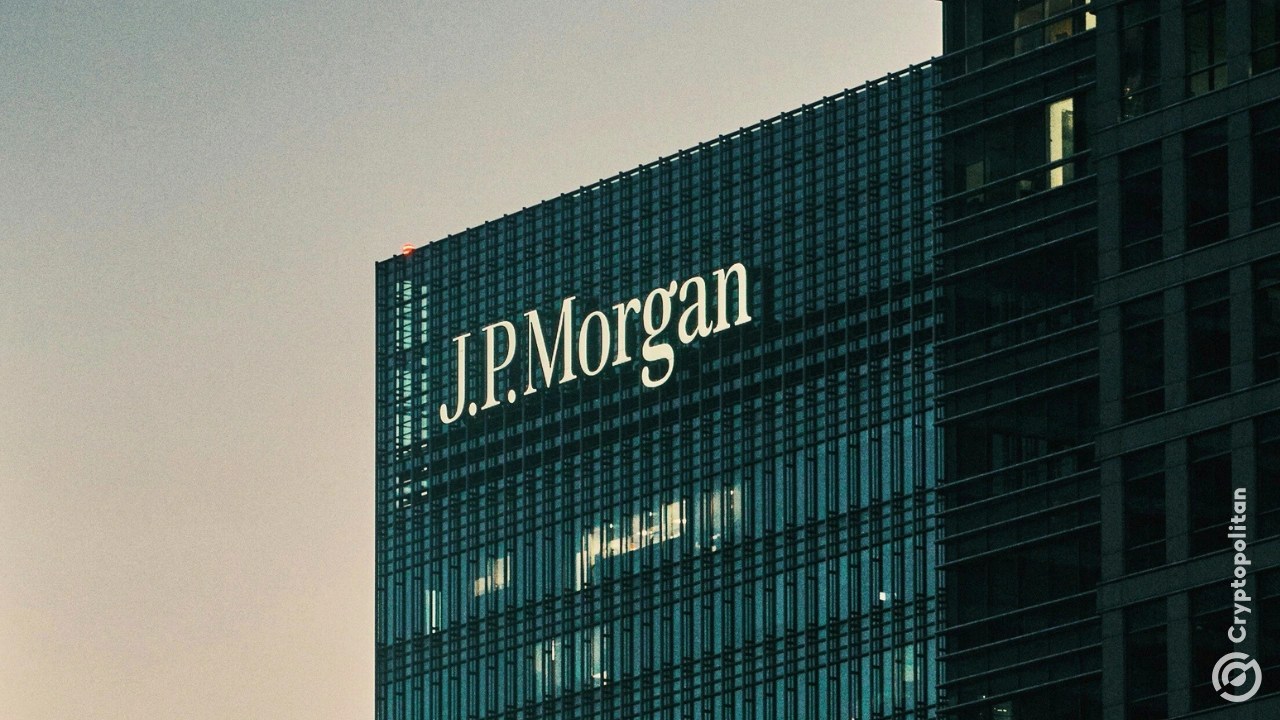
The post JPMorgan Steps Into Tokenized Banking With New Digital Asset appeared on BitcoinEthereumNews.com. BlockchainFintech In a move that underscores Wall Street’s growing fascination with blockchain, JPMorgan has introduced a new digital asset designed to reshape institutional payments. The product, known as JPM Coin, is a blockchain-based deposit token that transforms traditional dollar deposits into programmable, onchain instruments. The project signals a major shift for one of the world’s largest banks, which for years maintained a cautious stance toward crypto-related innovation. This time, JPMorgan isn’t just observing from the sidelines — it’s building the rails itself. A 24/7 Settlement Network for Institutions Unlike conventional interbank systems that close after hours, JPM Coin enables around-the-clock fund transfers that finalize in seconds. Transactions move between corporate clients on a permissioned layer connected to Base, the blockchain developed by Coinbase, marking one of the first high-profile uses of a public chain by a global bank. Behind the project is Kinexys, JPMorgan’s rebranded blockchain division, co-led by Naveen Mallela. He said the token’s debut follows extensive pilot testing with industry heavyweights such as Mastercard, Coinbase, and B2C2, noting that the network’s early users represent “the next stage of institutional settlement.” From Trademarks to Tokenization Hints of JPMorgan’s broader digital asset ambitions appeared months ago when the firm registered the JPMD trademark in the United States, covering crypto-related payment and trading services. Observers now expect the bank to roll out a second variant, JPME, tied to the euro. While many companies have raced to launch stablecoins, JPMorgan has taken a more conservative approach. Its deposit token model keeps the backing inside the regulated banking system, where funds remain as on-balance-sheet deposits rather than external collateral. Mallela described this structure as a “safer, yield-capable alternative” to stablecoins, one that could appeal to corporations seeking compliance and reliability over speculative returns. Traditional Finance Finds Its Blockchain Moment The announcement puts JPMorgan…

Author: BitcoinEthereumNews
Top 3 Cryptocurrencies Analysts Expect to Outperform SHIB and PEPE in 2026

Top 3 Cryptocurrencies Analysts Expect to Outperform SHIB and PEPE in 2026

The post Top 3 Cryptocurrencies Analysts Expect to Outperform SHIB and PEPE in 2026 appeared on BitcoinEthereumNews.com. As meme coins like Shiba Inu (SHIB) and Pepecoin (PEPE) lose momentum, market attention is shifting toward projects that combine use cases with token growth potential. Analysts tracking upcoming market rotations point to a new mix of top cryptocurrencies expected to outperform meme assets in 2026, with Ripple (XRP), Polygon (POL), and Mutuum Finance (MUTM) leading the conversation. While XRP and POL remain established names with deep liquidity and strong ecosystems, both face structural hurdles that may limit future upside. In contrast, newer entrants like Mutuum Finance are gaining recognition for pairing DeFi crypto functionality with strong token mechanics and sustained presale momentum. Ripple (XRP) Ripple’s XRP trades around $2.20, maintaining a market capitalization of roughly $140 billion. As one of the largest digital assets, XRP plays a central role in cross-border payment infrastructure, aiming to make remittances faster and cheaper through its RippleNet network. This strong utility base makes XRP a consistent performer in institutional markets. However, its growth ceiling may already be visible. The asset faces major resistance around $2.10–$2.15, with further barriers near $3, where sellers often take profit. Despite multiple rallies, breaking beyond these ranges has proven difficult. While XRP still attracts volume from long-term holders, its large circulating supply and established valuation make explosive percentage gains less likely in the short term. Polygon (POL) Polygon (POL) (formerly MATIC) remains one of the most influential DeFi crypto scaling solutions on Ethereum. It is currently priced near $0.17, with a market cap around $7 billion. Polygon’s Layer-2 network has long been praised for its speed, low gas fees, and strong ecosystem of decentralized applications. Despite its technological strength, Polygon’s token has struggled to maintain momentum throughout 2025. The chart shows major resistance levels between $0.25 and $0.30, which the coin has failed to break convincingly. With the…

Author: BitcoinEthereumNews
Avalanche-Powered Gateway Revolutionizes Liquidity for Community Banks

Avalanche-Powered Gateway Revolutionizes Liquidity for Community Banks

The post Avalanche-Powered Gateway Revolutionizes Liquidity for Community Banks appeared on BitcoinEthereumNews.com. Zach Anderson Nov 11, 2025 05:49 Intain and FIS leverage Avalanche blockchain to launch the Digital Liquidity Gateway, enhancing capital access for community banks in the US. The Digital Liquidity Gateway, a new marketplace developed by Intain Markets and FIS, is set to transform the financial landscape for regional and community banks across the United States. Built on the Avalanche blockchain, this platform aims to provide these banks with enhanced access to institutional-grade liquidity, as reported by Avax.network. Modernizing Asset-Backed Finance The Digital Liquidity Gateway introduces sophisticated financial tools previously reserved for major institutions to approximately 2,000 regional and community banks. These banks, which play a pivotal role in small business and commercial real estate lending, often struggle with accessing broader investor capital. By integrating directly with FIS’ core banking systems and employing artificial intelligence (AI) to automate workflows, the platform aims to streamline loan management and securitization processes. Traditionally, banks pool loans and sell them to investors to free up capital for new lending. The Digital Liquidity Gateway leverages Intain’s Avalanche Layer-1 blockchain, enabling instant data verification and programmatic settlements. The platform is currently onboarding banks and investors, with expectations of handling hundreds of millions in transactions by the end of the year. Expanding Capital Access and Strengthening Local Economies Regional and community banks are crucial in financing small businesses and fostering local development but face challenges in accessing wider capital markets. The Digital Liquidity Gateway addresses this by creating a transparent marketplace for distributing loan portfolios directly to institutional investors. Initial transactions between institutional partners have demonstrated the platform’s capability to facilitate faster and more transparent interactions. The digitized onboarding and verification processes simplify due diligence and investment procedures, thus enabling banks to redeploy capital more efficiently while providing investors…

Author: BitcoinEthereumNews
JPMorgan Just Crossed the Line Between TradFi and DeFi

JPMorgan Just Crossed the Line Between TradFi and DeFi

The post JPMorgan Just Crossed the Line Between TradFi and DeFi appeared on BitcoinEthereumNews.com. Wall Street is finally stepping onto the same rails as DeFi, as seen with JPMorgan Chase & Co. beginning to roll out its JPM Coin deposit token on Coinbase’s Base network. This enables institutional clients to settle transactions instantly and 24/7, marking a major expansion of traditional banking into public blockchain infrastructure. Sponsored Sponsored Deposit Tokens Meet Public Blockchain JPM Coin, representing dollar deposits held at the bank, allows clients to send and receive funds on Base chain, a public, Ethereum-compatible network. Citing Naveen Mallela, global co-head of JPMorgan’s blockchain division Kinexys, Bloomberg reported that deposit tokens are a compelling alternative to stablecoins, offering yield-bearing capabilities directly tied to customer deposits. Unlike traditional stablecoins, which rarely pass on interest earned from reserve assets, JPM Coin can pay holders interest. This makes it attractive for institutions, including crypto trading firms that use stablecoins for collateral or liquidity management. JPMorgan’s rollout follows trials involving Mastercard, Coinbase, and B2C2. The bank plans to extend access to clients of its clients and add other currency versions, pending regulatory approval. Mallela confirmed the trademark of “JPME” for a potential euro-denominated token. Sponsored Sponsored Coinbase’s Base Network as The Common Rail The launch leverages Base, Coinbase’s Layer 2 solution that has already powered its $1 billion on-chain Bitcoin-backed loan book. Through Base, Coinbase allows users to borrow USDC against Bitcoin without selling BTC, integrating protocols like Morpho to streamline collateralized lending. Next goal: $100B in onchain borrow originations. These adoption charts are what every product manager wants to see: hockey stick growth. The onchain economy is thriving. Proud of the team for making DeFi more accessible and easier to use. https://t.co/LgqfOacPWQ — Brian Armstrong (@brian_armstrong) September 30, 2025 By hosting both JPM Coin and DeFi-native services, Base is now the first public blockchain to support a…

Author: BitcoinEthereumNews
Avalanche (AVAX) Powers Digital Liquidity Gateway with FIS and Intain Partnership

Avalanche (AVAX) Powers Digital Liquidity Gateway with FIS and Intain Partnership

The post Avalanche (AVAX) Powers Digital Liquidity Gateway with FIS and Intain Partnership appeared on BitcoinEthereumNews.com. Caroline Bishop Nov 11, 2025 05:42 Intain and FIS leverage Avalanche’s blockchain to launch the Digital Liquidity Gateway, enhancing capital access for community banks and modernizing asset-backed finance. In a significant move for the blockchain and financial sectors, Intain Markets and FIS have teamed up to launch the Digital Liquidity Gateway, a platform built on Avalanche’s blockchain, according to Avax.network. This innovative marketplace is designed to connect regional and community banks to institutional-grade liquidity, enabling them to buy, sell, and securitize loan portfolios with enhanced transparency and efficiency. Modernizing Asset-Backed Finance The Digital Liquidity Gateway is poised to revolutionize asset-backed finance by integrating with FIS’ core banking systems and utilizing artificial intelligence to automate processes traditionally handled manually. This platform moves the securitization of loans onto Intain’s Avalanche Layer-1 blockchain, where data verification and settlement occur instantly and programmatically. As the platform begins onboarding banks and investors, it anticipates processing hundreds of millions of dollars in transactions by the end of the year. Siddhartha, CEO of Intain Markets, emphasized the importance of this development, stating, “This partnership brings blockchain where it matters most – into asset-backed finance.” The platform’s automation and transparency are designed to rebuild trust in financial assets, particularly in light of recent industry challenges. Expanding Capital Access and Strengthening Local Economies Community banks, which are crucial for financing small businesses and local projects, often face difficulties accessing wider capital markets. The Digital Liquidity Gateway aims to bridge this gap by creating a transparent marketplace that allows these banks to distribute loan portfolios directly to institutional investors. Early transactions have demonstrated the platform’s ability to facilitate faster and more transparent interactions, simplifying due diligence and investment processes. John Omahen, Head of FIS Digital Assets, highlighted the transformative impact, noting, “Digital…

Author: BitcoinEthereumNews
JPMorgan targets digital-asset market by launching deposit token

JPMorgan targets digital-asset market by launching deposit token

The post JPMorgan targets digital-asset market by launching deposit token appeared on BitcoinEthereumNews.com. JPMorgan Chase & Co. (JPM) has officially begun rolling out a new deposit-token product, branded as JPM Coin (or JPMD), aimed at its institutional clientele. These tokens operate on the Base blockchain, which is linked to Coinbase, and represent dollar deposits at JPMorgan. The bank has tested JPM Coin on leading firms and plans to add other currencies once regulators approve.  Unlike many so‑called stablecoins, JPM Coin is structured as a “deposit token”, meaning it is a digital claim on actual bank deposits at JPMorgan rather than a separately issued asset backed by reserves JPMorgan speeds up transactions using JPM Coin Normal bank payments only work during business hours and can take one or more days to go through, but users can now transact with JPM Coin at any time of the day within seconds.  Before allowing more people to use JPM Coin, the bank tested it with major companies, including Mastercard, Coinbase, and B2C2, to assess how well the token performs in real-world business operations. JPMorgan also used the trial to identify and fix any bugs and plan how to use the token with other payment networks. The banking institution aims for JPM Coin to reach a broader range of businesses over time. JPMorgan will also create other versions of the coin in different currencies, such as the Euro, which will be called JPME. This way, companies around the world will be able to send and receive money in seconds, while still adhering to the rules set by banks and regulators.  JPMorgan also runs Kinexys Digital Payments, and JPM Coin is a part of it. The network already processes over $3 billion every day and accommodates transactions in dollars, euros, and pounds. JPMorgan is a great example of how banks can utilize new technology to facilitate faster payments and provide…

Author: BitcoinEthereumNews
Banking Groups Challenge Coinbase’s Path to Federal Trust Charter

Banking Groups Challenge Coinbase’s Path to Federal Trust Charter

The Independent Community Bankers of America has filed a formal objection to Coinbase’s application for a National Trust Company Charter, marking the latest friction between traditional banks and crypto companies pushing into regulated financial services. In a November 3 letter to the Office of the Comptroller of the Currency, the trade group raised concerns about […]

Author: Tronweekly
Top Crypto to Buy Now Under $1 as Shiba Inu (SHIB) Stalls

Top Crypto to Buy Now Under $1 as Shiba Inu (SHIB) Stalls

While Shiba Inu (SHIB) has been struggling to regain its former momentum, investors are increasingly turning their attention to Mutuum […] The post Top Crypto to Buy Now Under $1 as Shiba Inu (SHIB) Stalls appeared first on Coindoo.

Author: Coindoo
Tether Launches USD₮0, CNH₮0 on China-Approved Conflux

Tether Launches USD₮0, CNH₮0 on China-Approved Conflux

The post Tether Launches USD₮0, CNH₮0 on China-Approved Conflux appeared on BitcoinEthereumNews.com. Tether launched CNH₮0 and USD₮0 on Conflux to link offshore yuan and U.S. dollar liquidity for faster cross-border use. The Conflux deployment gives Tether a regulatory-aligned network in Asia for CNH-denominated payments, credit, and FX flows. The dual launch builds a unified liquidity layer so businesses can move value between China-focused and dollar markets. Tether is expanding its on-chain liquidity network by launching CNH₮0 and USD₮0 on the Conflux blockchain. The launch links China’s offshore yuan and the U.S. dollar to a network that is approved for use in China. Tether is targeting cross-border settlements across Asia, the Middle East, and Europe so institutional users can move value in compliant environments. The Tether expansion shows the issuer is tying real-world currencies to chains regulators and enterprises already recognize. Tether Strengthens CNH Liquidity Across Chains CNH₮0, the omnichain version of Tether’s offshore yuan token, gives users more flexibility in cross-border transactions. CNH₮0 lets CNH-backed value move across multiple chains without wrapped tokens or liquidity fragmentation. That means institutions, FX desks, and developers can build payments networks, lending markets, and routing tools on top of CNH liquidity. The CNH₮0 design creates room for yuan-linked rails in regions where offshore yuan already circulates. The CNH₮0 rollout on Conflux also lowers settlement costs and time for international businesses. The Tether yuan token supports CNH-denominated liquidity pools and credit instruments that expand financial access across global markets. The CNH₮0 model simplifies trade invoicing, streamlines capital movement, and reinforces the use of offshore yuan in digital finance. That positions CNH₮0 as a building block for new cross-border payment products. Related: Tether Targets $20B Raise at $500B Valuation, Expansion Beyond Crypto Planned Why Tether Picked Conflux The first deployment of CNH₮0 and USD₮0 takes place on Conflux, a high-throughput Layer 1 blockchain optimized for real-world use cases.…

Author: BitcoinEthereumNews
SoFi Stock: Bank Returns to Crypto Trading After Two-Year Absence

SoFi Stock: Bank Returns to Crypto Trading After Two-Year Absence

TLDR SoFi Technologies launched crypto trading services for customers on Monday, becoming the first nationally chartered consumer bank to offer this service. The rollout includes dozens of cryptocurrencies like Bitcoin and Ethereum, with phased access for customers over the coming weeks. SoFi plans to launch its own stablecoin called SoFi USD by 2026, backed dollar-for-dollar [...] The post SoFi Stock: Bank Returns to Crypto Trading After Two-Year Absence appeared first on CoinCentral.

Author: Coincentral