Lending

Lending protocols form the backbone of the decentralized money market, allowing users to lend or borrow digital assets without intermediaries. Using smart contracts, platforms like Aave and Morpho automate interest rates based on supply and demand while requiring over-collateralization for security. The 2026 lending landscape features advanced permissionless vaults and institutional-grade credit lines. This tag covers the evolution of capital efficiency, liquidations, and the integration of diverse collateral types, including LSTs and tokenized RWAs.

15868 Articles
Created: 2026/02/02 18:52
Updated: 2026/02/02 18:52
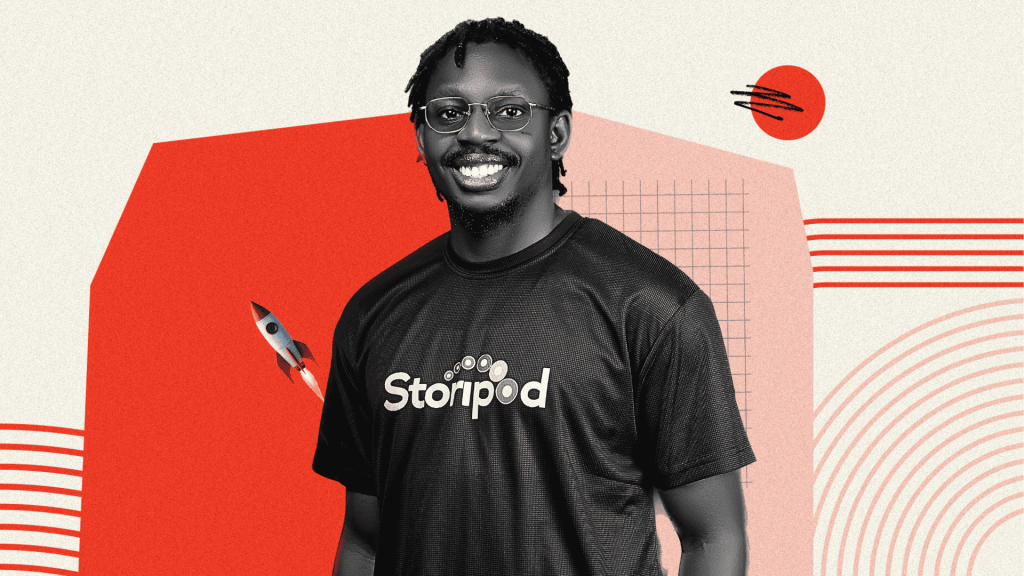
👨🏿‍🚀TechCabal Daily – Google’s AI brain is coming to Nigeria

👨🏿‍🚀TechCabal Daily – Google’s AI brain is coming to Nigeria

In today's edition: Google to revamp AI curricula in Nigeria || 27 banks have turned to the markets for capital, says CBN || Kenya has lost $200 million to cybercrimes this year || Special Number

Author: Techcabal
Stablecoins in 2025: You're in the Dream of the Red Chamber, I'm in Journey to the West

Stablecoins in 2025: You're in the Dream of the Red Chamber, I'm in Journey to the West

2025 was a year of excitement and division for stablecoins, starting with the US Genius Act's definition of stablecoin compliance, followed by Hong Kong's passage of the Stablecoin Ordinance, which sparked heated discussions about offshore RMB stablecoins and debates about the digital RMB, culminating in the final chapter of stablecoins in mainland China in 2025. Who is in the Dream of the Red Chamber, and who is in Journey to the West? We probably all have the answer in our hearts. However, we need to look beyond the surface to understand the essence. We need to clarify the underlying logic of stablecoins in 2025 and see the future development trends. What has changed fundamentally about stablecoins that have garnered global attention in 2025, and what hasn't actually changed at all? At the 2025 Financial Street Forum Annual Meeting in October, Pan Gongsheng, Governor of the People's Bank of China, stated: "Since 2017, the People's Bank of China, together with relevant departments, has successively issued a number of policy documents to prevent and deal with the risks of domestic virtual currency trading and speculation. These policy documents are still in effect. In the next step, the People's Bank of China will work with law enforcement agencies to continue to crack down on the operation and speculation of domestic virtual currencies, maintain economic and financial order, and at the same time closely monitor and dynamically assess the development of overseas stablecoins." We will focus on: "Policy documents remain in effect" and "Dynamically assess the development of offshore stablecoins". I. Mainland regulators' attitude towards virtual currencies remains unchanged – continued crackdown. 1.1 Mainland China Regulation: The Virtual Currency Nature of Stablecoins Recently, 13 ministries held a meeting to define the legal status of stablecoins under the mainland's regulatory system: http://www.pbc.gov.cn/goutongjiaoliu/113456/113469/5916794/index.html On November 28, 2025, the People's Bank of China convened a meeting of the coordination mechanism for combating speculation in virtual currency trading. Officials from the Ministry of Public Security, the Cyberspace Administration of China, the Central Financial Stability and Development Office, the Supreme People's Court, the Supreme People's Procuratorate, the National Development and Reform Commission, the Ministry of Industry and Information Technology, the Ministry of Justice, the People's Bank of China, the State Administration for Market Regulation, the State Financial Regulatory Commission, the China Securities Regulatory Commission, and the State Administration of Foreign Exchange attended the meeting. The meeting pointed out that in recent years, all units have earnestly implemented the decisions and deployments of the CPC Central Committee and the State Council, and in accordance with the requirements of the "Notice on Further Preventing and Handling Risks of Virtual Currency Trading and Speculation" jointly issued by the People's Bank of China and ten other departments in 2021, have resolutely cracked down on virtual currency trading and speculation, rectified the chaos in the virtual currency market, and achieved significant results. Recently, affected by various factors, virtual currency speculation has resurfaced, and related illegal and criminal activities have occurred from time to time, posing new challenges and new situations for risk prevention and control. The meeting emphasized: Virtual currencies do not have the same legal status as legal tender, do not have legal tender status, and should not and cannot be used as currency in the market. Virtual currency-related business activities are illegal financial activities. Stablecoins are a form of virtual currency that currently cannot effectively meet requirements for customer identification and anti-money laundering, and are at risk of being used for illegal activities such as money laundering, fundraising fraud, and illegal cross-border fund transfers. The meeting required all units to adhere to the guidance of Xi Jinping Thought on Socialism with Chinese Characteristics for a New Era, fully implement the spirit of the 20th National Congress of the Communist Party of China and its subsequent plenary sessions, regard risk prevention and control as the perpetual theme of financial work, continue to uphold the prohibitive policy on virtual currencies, and persistently crack down on illegal financial activities related to virtual currencies. All units should deepen coordination and cooperation, improve regulatory policies and legal basis, focus on key links such as information flow and capital flow, strengthen information sharing, further enhance monitoring capabilities, severely crack down on illegal and criminal activities, protect the property safety of the people, and maintain the stability of the economic and financial order. 1.2 The attitude of mainland regulators towards virtual currencies remains unchanged. Yesterday's meeting was a concrete implementation of the "Notice on Further Preventing and Handling Risks of Virtual Currency Trading and Speculation" (Yinfa [2021] No. 237) issued in 2021, demonstrating that "the policy document remains valid." https://www.gov.cn/zhengce/zhengceku/2021-10/08/content_5641404.htm Including stablecoins within the category of virtual currencies means that stablecoin/virtual currency-related business activities constitute illegal financial activities. "We will continue to uphold our prohibitive policy towards virtual currencies and persistently crack down on illegal financial activities related to virtual currencies." The rhetoric represents a trend toward stricter enforcement; previously, the descriptions of illegal financial activities involving virtual currencies were illustrative, but now they are direct and general. Although virtual currencies are recognized as "virtual commodities" in China (with their property attributes partially acknowledged in criminal and civil judicial practice), their place of existence as "financial assets" or "settlement tools" has been completely eradicated in mainland China. 1.3 The practitioners remain unchanged – walking on thin ice Although stablecoins have been included in the scope of virtual currencies under the mainland's regulatory framework, let's think back and see what changes this brings to industry practitioners. Actually, no. We are still expanding overseas, still operating within compliance regulations, obtaining licenses in the relevant jurisdictions, and fulfilling the regulatory requirements of various regions. It's still like walking on thin ice. II. The financial infrastructure based on blockchain has changed – dynamically assessing the development of overseas stablecoins The U.S. Genius Grant Act provides a clear definition for stablecoins: "Payment stablecoins" are digital currencies that rely on distributed ledgers, are pegged to national fiat currencies, and are used for payments and settlements. Let's set aside for now the various forms of digital currency: stablecoins, deposit tokens, and CBDCs. What has changed? — The ledgers on which assets are based have changed, becoming more efficient, more convenient, and more globalized. This is what Europe and America are flocking to; it's what Blackrock's CEO stated: "asset tokenization" will lead the next financial revolution; it's the Federal Reserve's "historic" meeting where they actively discussed embracing this innovation; it's the direction of Nasdaq's transformation: tokenized trading, tokenized IPOs, and 24/7 trading. This is also a point that mainland regulators need to dynamically assess – the financial infrastructure based on blockchain, regardless of what kind of digital assets are running on it. 2.1 Starting from the origins of blockchain As Dr. Xiao said, we need to start from the origin of blockchain, from first principles, and from the basics, to examine the currently hotly debated digital currencies/crypto assets, the crypto market, and the blockchain technology behind them. What is the essence of finance? It is the mismatch of value across time and space. This essence has remained unchanged for millennia. Blockchain-based new finance can greatly improve the efficiency of finance: Transcending time. This is reflected in two aspects: firstly, the time value of money; and secondly, transactions and settlements. Cross-space. Globally, value allocation across spaces. The way value is transferred. Just as the essential attributes (measure of value) and core function (medium of exchange) of money remain unchanged, despite the evolution of its various forms and manifestations such as shells, tokens, cash, deposits, electronic money, and stablecoins, the essence of finance remains the same. The key question is how to provide better financial services in a distributed, digitalized, and time-transcending context. 2.2 New Financial Infrastructure Compared to traditional finance, the biggest innovation of new finance lies in the change in the way accounting is done—the blockchain, a transparent and publicly accessible global public ledger. Humanity's accounting methods have only changed three times in thousands of years, each profoundly shaping economic forms and social structures, and each breakthrough reflecting the co-evolution of technology and civilization. The single-entry bookkeeping system of the Sumerian period (around 3500 BC) enabled humanity to overcome the limitations of oral communication for the first time, promoting early trade and the formation of states, as it necessitated the recording of taxes and trade. Commercial dispute clauses appeared in the ancient Babylonian Code of Hammurabi. Double-entry bookkeeping played a significant role in the commercial revolution of the Renaissance (14th-15th centuries). The prosperity of trade among Mediterranean city-states, the investment of Genoa's fleet, and the Medici family's transnational bank all required complex financial instruments, which in turn spurred the emergence of banks and multinational corporations and the establishment of commercial credit. What followed was the distributed ledger technology we are familiar with, which was driven by Bitcoin in 2009, leading to decentralized finance, changes in trust mechanisms, and the rise of digital currencies. This new financial system, revolutionized by distributed ledger technology, is inextricably linked to blockchain, smart contracts, digital wallets, and programmable currencies. Blockchain, as the ledger settlement layer of financial infrastructure, was initially designed to solve the problem of eventual consistency in payment clearing. The combination of digital currencies built on distributed ledgers and smart contracts can bring limitless possibilities to the new financial system: near-instantaneous settlement, 24/7 availability, low transaction costs, and the programmability, interoperability, and composability with DeFi inherent in digital currency tokens themselves. Therefore, the new finance mainly presents three major changes: First, the accounting method has changed from centralized double-entry bookkeeping to decentralized distributed bookkeeping; Second, the account changes from a bank account to a digital wallet; Third, the accounting unit has changed from legal tender to digital currency. The most important distributed ledger emerged because of its digital characteristics that span time, space, and organization. 2.3 The dramatic changes in financial infrastructure Therefore, regardless of the various forms of digital currency—stablecoins, deposit tokens, CBDCs—the financial infrastructure based on blockchain has undergone a radical transformation. What seeds have been sown here? What makes digital currency unique is that it sits at the intersection of three massive markets: payments, lending, and capital markets. Not to mention the value channel of the future AI-based silicon civilization. Despite the wave of deglobalization caused by geopolitical factors, we will still be brought together by the unified ledger of blockchain, and you will find that the world really is flat. Just like the book says: "We wanted transoceanic planes, but we invented Zoom instead." III. In Conclusion In fact, the key points that "policy documents remain valid" and "dynamically assess the development of overseas stablecoins" still provide us with guidance. Although the reality of stablecoins in 2025 may seem surreal, like "you're in the Dream of the Red Chamber, I'm in Journey to the West." "I am on the journey to the West" is about leaving home, spiritual practice, the obsession with overcoming the eighty-one tribulations, and the ambition to explore the next generation of financial infrastructure. In 2008, Modern Sky released a music compilation album called "You Are in the Dream of the Red Chamber, I Am in Journey to the West", which was inspired by "Dream of the Red Chamber" and "Journey to the West" and reinterpreted classic songs, forming a cultural dialogue between classical and modern, East and West, and fantasy and reality. You go on your journey through the mortal world, while I embark on my long and arduous journey. But in the end, we may all arrive at the same destination by different paths.

Author: PANews
Ethereum Price Falls Under $3,000, But Experts Say Supercycle Is Just ‘Starting’

Ethereum Price Falls Under $3,000, But Experts Say Supercycle Is Just ‘Starting’

The post Ethereum Price Falls Under $3,000, But Experts Say Supercycle Is Just ‘Starting’ appeared first on Coinpedia Fintech News The cryptocurrency market has slipped into the red zone. Bitcoin has once again dipped below the $90k mark and Ethereum has crashed to $2800. Amid this tense situation, Sharplink CEO Joseph Chalom has opened up about a possible Ethereum supercycle.  In an interview with Milkroad, he said that a few years ago, explaining Ethereum to …

Author: CoinPedia
Best Crypto to Buy Now: LivLive ($LIVE) Leads the Top Crypto with 1000x Potential Pack, Featuring ETH, BTC, and SOL

Best Crypto to Buy Now: LivLive ($LIVE) Leads the Top Crypto with 1000x Potential Pack, Featuring ETH, BTC, and SOL

The post Best Crypto to Buy Now: LivLive ($LIVE) Leads the Top Crypto with 1000x Potential Pack, Featuring ETH, BTC, and SOL appeared on BitcoinEthereumNews.com. The top crypto with 1000x potential often emerges from market uncertainty, turning short term setbacks into long term fortunes. Is the December 2025 crypto price correction a moment of panic or a massive buying opportunity? History shows that millionaires are made when smart capital moves against the crowd. This Black Friday, the focus shifts to foundational assets like Bitcoin, Ethereum, Solana, Chainlink, Polygon, and especially the innovative LivLive ($LIVE). LivLive ($LIVE) is making major waves, proving it is a rock solid project from the start. Its presale has already secured over $2.1 million in funding from more than 300 early adopters. With its Stage 1 price set at just $0.02, and the launch price targeting $0.25, the potential for early gains is immense. This unique position makes LivLive an unmissable contender for the top crypto with 1000x potential title. LivLive ($LIVE): $2.1M Raised, Price Set for $0.25 Launch, 300% Bonus Now! LivLive is pioneering a powerful real-world operating system, seamlessly blending AR, blockchain, and wearable technology. It transforms routine actions like walking, shopping, and leaving reviews into valuable digital assets, paid out in $LIVE tokens and XP. This approach creates a gamified AR layer over the physical world, rewarding genuine proof-of-action instead of passive screen time. This is the World’s First Global AR Game Layer for Reality, designed to benefit the early buyers and the community. Players explore their cities, much like in Pokémon GO, completing GPS-verified AR quests to earn $LIVE tokens. This literally turns daily life into an interactive, rewardable experience, providing genuine utility that strengthens long term value. Secure Huge Profits: The Limited Time BLACK300 Bonus Code LivLive is creating massive FOMO with its presale figures and bonus structure. The price is rapidly climbing from $0.02 (Stage 1) to $0.04 (Stage 2), indicating strong community conviction. Presale…

Author: BitcoinEthereumNews
Essential Alert: Binance Adds 5 Tokens Including SXP to Its Monitoring List

Essential Alert: Binance Adds 5 Tokens Including SXP to Its Monitoring List

BitcoinWorld Essential Alert: Binance Adds 5 Tokens Including SXP to Its Monitoring List In a significant move for market integrity, Binance, the world’s largest cryptocurrency exchange, has placed five new digital assets under its microscope. The exchange announced the addition of SXP, CHESS, DENT, DF, and GHST to its monitoring list. This action directly impacts traders and signals the platform’s ongoing commitment to a secure trading environment. But what does landing on this list actually mean for a token’s future? Let’s break it down. What Is the Binance Monitoring List and Why Does It Matter? Think of the Binance monitoring list as an observatory for digital assets. Tokens placed here are not delisted; instead, Binance flags them for closer scrutiny. The exchange evaluates them against a set of rigorous criteria, including trading volume, liquidity, network stability, and team commitment. Therefore, this process acts as an early warning system for the community, highlighting potential risks before they escalate. For traders, this is crucial information. A token on the monitoring list may face higher volatility or eventual removal if it fails to meet Binance’s standards. The primary goal is transparency. By proactively identifying tokens that may be underperforming or risky, Binance empowers users to make more informed decisions. Which 5 Tokens Are Now Under the Spotlight? The latest batch added to the Binance monitoring list includes a mix of projects from different sectors of the crypto ecosystem. Here is a quick overview of each token: SXP (Swipe): The native token of the Swipe Wallet and a core asset for the SXP ecosystem. CHESS: The governance token for the Tranchess protocol, a yield-enhancing asset management platform. DENT: Powers the DENT Wireless platform, focused on mobile data and eSIM services. DF: The token for dForce, a decentralized finance (DeFi) protocol offering lending and synthetic assets. GHST: The utility token for Aavegotchi, a DeFi-enabled NFT gaming universe. Their inclusion does not imply wrongdoing. However, it indicates that Binance has observed metrics that warrant a formal review period for these specific assets. What Are the Potential Outcomes for Listed Tokens? Being on the Binance monitoring list is a critical juncture for any project. The outcome typically follows one of two paths. First, and most favorably, the project team can address the concerns raised by Binance. This could involve boosting network activity, increasing development updates, or improving community engagement. If successful, the token is removed from the list and continues trading normally. Conversely, if a token fails to show sufficient progress or its fundamentals deteriorate further, Binance may proceed with delisting. This action usually leads to a sharp decline in liquidity and price for the token. Consequently, projects on the list often work diligently to reassure their communities and demonstrate their long-term viability. How Should Traders and Investors React? If you hold any of these five tokens, don’t panic. The key is to stay informed and assess your position rationally. Here are actionable steps to consider: Review Project Updates: Closely follow the official channels of the affected projects for their response and action plan. Assess Your Risk Tolerance: Evaluate if holding a token under review aligns with your investment strategy. Monitor Trading Activity: Be prepared for possible increased volatility as the market digests this news. Diversify: This event underscores the importance of not over-concentrating your portfolio in a single asset. Remember, the Binance monitoring list is a tool for risk management, not a final verdict. Savvy investors use this information to conduct deeper due diligence. Conclusion: A Proactive Step for a Maturing Market Binance’s decision to add SXP, CHESS, DENT, DF, and GHST to its monitoring list reflects the exchange’s vital role as a market steward. This proactive measure enhances ecosystem health by encouraging project accountability and providing clear risk signals to users. Ultimately, such practices are essential for building sustainable trust in the cryptocurrency industry. While it presents a challenge for the involved projects, it also offers them a clear opportunity to demonstrate their resilience and commitment to their users. Frequently Asked Questions (FAQs) Q1: Does being on the Binance monitoring list mean the token will be delisted?A: Not necessarily. It is a warning that the token is under review. Delisting only occurs if the project fails to improve and meet Binance’s listing criteria during the monitoring period. Q2: Can I still trade tokens on the monitoring list?A: Yes, trading for these tokens continues normally on Binance unless a formal delisting announcement is made. Q3: How long does a token typically stay on the monitoring list?A: There is no fixed timeframe. The duration depends on how quickly the project addresses Binance’s concerns and the subsequent re-evaluation by the exchange. Q4: What are the main reasons a token gets added to this list?A: Common reasons include low trading volume and liquidity, weak development activity, network instability, or lack of communication from the project team. Q5: Where can I check the official Binance monitoring list?A: You can find the official and updated monitoring list on the Binance Announcements page or within their support documentation. Q6: Should I immediately sell a token that appears on the list?A: This is a personal decision based on your risk assessment. It is advisable to research the project’s response and future plans before making any hasty trading decisions. Found this breakdown of the Binance monitoring list update helpful? Share this essential guide with fellow traders on X (Twitter), Telegram, or your favorite social platform to help them navigate this market development wisely. To learn more about the latest cryptocurrency exchange trends, explore our article on key developments shaping market surveillance and token health assessments. This post Essential Alert: Binance Adds 5 Tokens Including SXP to Its Monitoring List first appeared on BitcoinWorld.

Author: Coinstats
David Sacks Challenges NYT Report on Potential Crypto Conflicts in White House Role

David Sacks Challenges NYT Report on Potential Crypto Conflicts in White House Role

The post David Sacks Challenges NYT Report on Potential Crypto Conflicts in White House Role appeared on BitcoinEthereumNews.com. David Sacks, serving as White House AI and crypto czar under President Trump, faces scrutiny over potential conflicts of interest from his retained investments in 20 crypto-related firms, as reported by The New York Times. Despite divesting over $200 million in assets, concerns persist about how his advisory role might influence policies benefiting those holdings. David Sacks divested over $200 million in crypto and related stocks before his appointment. The New York Times analysis revealed Sacks holds 20 crypto investments and 449 AI-related ones amid his government role. Craft Ventures, co-founded by Sacks, owns 7.8% of BitGo, a crypto infrastructure firm that could gain from stablecoin regulations he supported. Explore David Sacks’ White House crypto czar role and conflicts of interest: divestments, retained investments, and policy impacts. Stay informed on crypto policy developments—read more now. What Are the Conflicts of Interest in David Sacks’ Role as White House Crypto Czar? David Sacks’ conflicts of interest stem primarily from his ongoing financial ties to cryptocurrency and AI investments while advising on federal policies in these sectors. As a special government employee, Sacks has divested significant holdings but retains stakes in 20 crypto firms and hundreds of AI companies, raising questions about impartiality. The New York Times highlighted how these investments could benefit from the very regulations he influences, though Sacks maintains full compliance with ethics rules. How Do David Sacks’ Investments Influence Crypto Policy? David Sacks, co-founder of Craft Ventures, entered his White House position after selling over $200 million in crypto and related stocks, including at least $85 million personally owned. However, financial disclosures analyzed by The New York Times show he still holds interests in 20 crypto-tied private equity investments, alongside 708 total tech stakes, 449 of which are AI-focused. These holdings, described as illiquid, could appreciate if policies…

Author: BitcoinEthereumNews
Funding Weekly Report | 11 publicly announced funding events; Paxos announces acquisition of New York DeFi wallet startup Fordefi for over $100 million.

Funding Weekly Report | 11 publicly announced funding events; Paxos announces acquisition of New York DeFi wallet startup Fordefi for over $100 million.

Highlights of this episode According to incomplete statistics from PANews, there were 11 investment and financing events in the global blockchain sector last week (November 24-30), with a total funding scale exceeding US$572 million; in addition, listed companies raised over US$235 million in cryptocurrency asset reserves. A summary is as follows: In the DeFi sector, four investment and financing events were announced, including Paxos's acquisition of New York-based DeFi wallet startup Fordefi for over $100 million; One investment and financing event was announced in the Web3+AI sector, in which decentralized AI computing network Gonka AI received a strategic investment of $12 million from Bitfury; Three investment and financing events were announced in the infrastructure & tools sector, including SpaceComputer completing a $10 million seed round of financing to run secure blockchain computing from space; In the centralized finance sector, one investment and financing event has been announced: Exodus will acquire W3C Corp, the parent company of Baanx and Monavate, for $175 million. In the area of other Web3 applications, two investment and financing events were announced, including WorkQuest, a decentralized job market and workforce automation protocol, which announced the completion of a $1.16 million seed round of financing. In addition, two publicly traded companies announced plans to raise funds for their crypto treasury strategies: Upexi plans to raise $23 million through a private placement to strengthen its SOL treasury strategy. DeFi Paxos acquires DeFi wallet company Fordefi for over $100 million Paxos has announced the acquisition of Fordefi, a New York-based DeFi wallet startup, for over $100 million. Founded in 2021, Fordefi has approximately 40 employees and 300 customers, and its previous valuation was $83 million. Following the acquisition, Fordefi will continue to operate independently, and Paxos plans to integrate its technology into its own system. This transaction marks Paxos' second acquisition within a year, further expanding its reach after acquiring EU stablecoin issuer Membrane Finance in February to comply with MiCA regulations. Nexton Solutions, an AI-powered restaking and arbitrage execution protocol, has raised $4 million in strategic funding, led by Danal. Nexton Solutions, a native AI-based restaking and arbitrage execution protocol, has completed a $4 million strategic funding round led by South Korean payment company Danal, with participation from Amber Group, Value Systems, Metalabs Ventures, Vista Labs, Outlier Ventures, Kaia Foundation, TON Foundation, STON.fi, and PayProtocol. Nexton's unified AI execution layer comprises two core components: the Nexton-ai cross-DEX/CEX arbitrage routing engine and the Nexton-re automatic restaking module. Pruv Finance has raised $3 million in Pre-A funding to build a compliant and liquid on-chain RWA distribution infrastructure. Pruv Finance has completed a Pre-A round of financing of approximately $3 million, led by UOB Venture Management, with participation from Saison Capital, Taisu Ventures, Ascent, Spiral Ventures, and Royal Group. Pruv claims to be the first digital finance platform to receive approval from the Indonesian OJK regulatory sandbox, resolving the "compliance and liquidity" conflict of RWA, supporting asset lock-up without whitelists, free cross-chain transfer, and native compatibility with DeFi. Digital asset lending platform CreatorFi secures $2 million in strategic investment. Digital asset lending platform CreatorFi announced a strategic partnership with the Aptos Foundation and Aptos Labs. As part of the partnership, CreatorFi will launch its platform on Aptos and receive a total of $2 million in strategic funding to accelerate its development. Developed by Insomnia Labs, CreatorFi is a fintech platform that transforms digital media revenue into loanable assets, providing risk-adjusted pre-approved financing for creators, studios, and media companies. AI Decentralized AI computing network Gonka AI receives $12 million strategic investment from Bitfury. Bitfury Group, a leading global cryptocurrency mining company, recently completed a $12 million strategic investment in Gonka.ai, a decentralized AI computing network, purchasing 20 million GNK tokens at $0.60 each. Founded by the Lieberman brothers, serial entrepreneurs, Gonka.ai aims to build a blockchain-based distributed GPU computing power market. This investment is Bitfury's first publicly disclosed investment since establishing its $1 billion ethical AI fund, indicating that traditional mining companies are systematically deploying in the decentralized AI infrastructure sector. According to public data, the Gonka network already has over 5,000 equivalent NVIDIA H100 series GPUs in computing power, and supports nearly 20 mainstream AI devices, including the 3080, 4090, H100, and H200, forming a distributed computing power cluster. Infrastructure & Tools Bridgepoint acquires majority stake in crypto auditing and compliance service provider ht.digital for approximately £200 million. London-listed private equity firm Bridgepoint announced the acquisition of a majority stake in ht.digital, a digital asset auditing and technology services provider, for approximately £200 million. HT boasts over 700 clients, including major global cryptocurrency exchanges, asset managers, and banks, and benefits from rising institutional demand for cryptocurrency allocations. SpaceComputer raises $10 million in seed funding to support secure blockchain computing from space. Space computing startup SpaceComputer has raised $10 million in seed funding, co-led by Maven11 and Lattice, with participation from Superscrypt, the Arbitrum Foundation, Nascent, Offchain Labs, Hashkey, and Chorus One. Individual investors include Marc Weinstein, Jason Yanowitz, and Ameen Soleimani. The company plans to build a satellite network to provide secure computing services for blockchain from space. SpaceComputer will use its funding to launch satellites equipped with SpaceTEE secure computing hardware, building an orbital network capable of enabling privacy-preserving computing and secure record-keeping. Its co-founder stated that the opportunities space presents for decentralized technologies are undeniable, and an increasing number of applications will incorporate space computing layers. Previously, JPMorgan Chase's digital assets division successfully tested tokenized value transfer using low-Earth orbit satellites. The company is known for its satellite tests on SpaceX's Falcon 9 rockets and is currently collaborating with universities such as the Technical University of Munich and Cornell Technology to explore extraterrestrial blockchain computing. Cryptocurrency payment solutions provider Alchemy receives investment from C1 Fund. Crypto fund C1 Fund has invested in Alchemy, a cryptocurrency payment solutions provider, though the specific amount has not been disclosed. Alchemy is a core infrastructure layer in the Web3 market, providing transaction support for Robinhood, Stripe, JPMorgan Chase, and Coinbase. C1 Fund has previously invested in Chainalysis and Ripple. DAT (These types of transactions are not included in this week's financing report statistics) Enlivex plans to raise $212 million to purchase Rain tokens, aiming to create a digital asset vault for prediction markets. Nasdaq-listed biopharmaceutical company Enlivex Therapeutics announced it will raise $212 million through a PIPE private placement to purchase Rain tokens as the core reserve for its Digital Asset Vault (DAT), claiming the project is the first DAT built around a prediction market token. Rain is a decentralized prediction market protocol on the Arbitrum blockchain. Following the completion of this fundraising, former Italian Prime Minister Matteo Renzi will join the Enlivex board of directors. Upexi plans to raise $23 million through a private placement to strengthen its SOL Treasury strategy. Nasdaq-listed Upexi (UPXI) announced a private placement of up to $23 million in shares and warrants to support its core Solana treasury strategy. The offering price is $3.04 per share including warrants, initially raising $10 million, with an additional $13 million if all warrants are exercised. Despite recent market corrections causing its Solana holdings to lose over $200 million in value, Upexi remains committed to a long-term cash holding strategy and will use the proceeds for general operations and further Solana accumulation. Centralized Finance Exodus will acquire W3C Corp, the parent company of Baanx and Monavate, for $175 million. Crypto wallet company Exodus Movement (NYSE American: EXOD) is acquiring W3C Corp, the parent company of cryptocurrency card and payment companies Baanx and Monavate, for $175 million. The deal is funded by the company's existing cash and financing provided by Galaxy Digital, secured by Exodus's Bitcoin holdings. Baanx and Monavate have been working with institutions such as Visa, Mastercard, and MetaMask to develop cryptocurrency cards and user-controlled Web3 payment services. Overall, this transaction will make Exodus one of the few self-custody wallet providers capable of controlling the entire payment experience from wallet to card. Exodus stated that it will take over the underlying card and payment technology stack, enabling it to issue payment cards through networks such as Visa, Mastercard, and Discover. It will also expand its operations to the US, UK, and EU to support new products and partnerships. Exodus further stated that this infrastructure is expected to enhance the capabilities of enterprise clients whose customers transact through Exodus' XO Swap application. The transaction is subject to standard adjustments and approval processes and is expected to close in 2026. other WorkQuest, a decentralized job marketplace, has raised $1.16 million in seed funding. WorkQuest, a decentralized job marketplace and workforce automation protocol, announced the completion of a $1.16 million seed funding round led by Black Dragon Capital, with participation from Prometeus Labs, TrustDAO Capital, Chain Ridge Capital, Kyros Ventures, Magnus Capital, Titans Ventures, and Matrix Ventures. The new funds will be used to upgrade its platform, enabling employers and employees to interact through smart contracts, stablecoin payments, and on-chain reputation scoring. Monad's on-chain Launchpad platform has announced that it has completed a $1.1 million funding round to date. Nad.fun has announced that it has raised $1.1 million to date, with its most recent seed round led by Neoclassic Capital. Angel investors include Monad community members, developers, and on-chain traders. Nad.fun is a native launchpad platform on the Monad chain, designed around community-driven meme mining and leveraged price prediction markets. Venture capital firms Entrée Capital raises $300 million in new fund, focusing on early-stage investments in AI, cryptocurrencies, and other sectors. Entrée Capital announced the successful raising of a new $300 million fund focused on early-stage investments. This brings the company's total assets under management to $1.5 billion. The new funds will primarily be deployed in pre-seed, seed, and Series A investments in Israel, the UK, Europe, and the US. The fund will target founders in the following areas: Artificial Intelligence (covering native AI applications, vertical AI, and enabling infrastructure); Deep Technology and Quantum Computing (including computing technologies, science-driven systems, and advanced materials); Software, Data, and B2B Productivity Enhancement; Cryptocurrency (primarily focusing on infrastructure and security); and unconventional cutting-edge innovation. It is understood that Entrée Capital has previously invested in Web3 domain registrar Freename and Bitcoin payment startup Breez, among others. Índico Capital Partners launches a €125 million venture capital fund, with investments covering areas such as AI, blockchain/Web3. European venture capital firm Índico Capital Partners officially announced the launch of its sixth venture capital fund, Indico VC Fund III, totaling €125 million. The European Investment Fund (EIF) plans to commit €30 million. The fund's individual investments will reportedly range from €10 million to €10 million, focusing on sustainable economic models in areas such as artificial intelligence, deep technology, blockchain/Web3, fintech, and digital markets. Índico Capital Partners' Web3 portfolio includes luxury NFT platform Exclusible and metaverse startup Sound Particles. DWF Labs launches $75 million DeFi investment fund Crypto market maker DWF Labs has announced a new $75 million decentralized finance (DeFi) fund focused on projects built on Ethereum, BNB Chain, Solana, and Base. This expands DWF's "incubation and venture capital building efforts," specifically seeking to invest in the next wave of founders focused on "solving real structural problems in areas such as liquidity, settlement, credit, and on-chain risk management, rather than incremental improvements to existing protocols." This includes tools like perpetual DEXs with dark pools, on-chain money markets, and fixed-income or yield-generating products—areas poised for significant growth as liquidity continues to migrate to on-chain structures. The new fund is funded by DWF's own capital and is not currently accepting new investors.

Author: PANews
Digitap ($TAP) is the Best Crypto to Buy in a Bear Market: Why Solana Whales Are Switching

Digitap ($TAP) is the Best Crypto to Buy in a Bear Market: Why Solana Whales Are Switching

The post Digitap ($TAP) is the Best Crypto to Buy in a Bear Market: Why Solana Whales Are Switching appeared first on Coinpedia Fintech News Bear markets expose what is real and what is noise. That is exactly what is happening as Solana continues to slide. Whales who bought SOL below $10, or even below $20, captured a once-in-a-cycle move, but now that Solana trades at roughly $140 with a nearly $80 billion market cap, the trade looks very different.The …

Author: CoinPedia
Forget XRP’s Legacy, MUTM Is the Next Big Crypto to Hit $1 Faster Than DOGE

Forget XRP’s Legacy, MUTM Is the Next Big Crypto to Hit $1 Faster Than DOGE

The post Forget XRP’s Legacy, MUTM Is the Next Big Crypto to Hit $1 Faster Than DOGE appeared first on Coinpedia Fintech News XRP and DOGE defined earlier crypto cycles, achieving massive growth through speculative momentum. While their gains were impressive, they lacked working DeFi utility and systematic revenue models. The next era of crypto will reward projects with functional platforms, duanl-lending systems, and stablecoin mechanics. Mutuum Finance (MUTM) is emerging as a DeFi crypto designed to reach …

Author: CoinPedia
Fintech platform LenderLink tops local innovation  champions in KMC Startup Awards 2025

Fintech platform LenderLink tops local innovation champions in KMC Startup Awards 2025

For the third consecutive year, flexible office spaces and offshore solutions provider KMC Solutions recognized the Philippines’ best and brightest startup companies at the KMC Startup Awards 2025 gala night held last Nov. 13, within the Philippine Startup Week. This year’s competition received 140 entries from different startups nationwide, culminating in 24 finalists awarded gold, silver, and bronze distinctions […]

Author: Bworldonline