Lending

Lending protocols form the backbone of the decentralized money market, allowing users to lend or borrow digital assets without intermediaries. Using smart contracts, platforms like Aave and Morpho automate interest rates based on supply and demand while requiring over-collateralization for security. The 2026 lending landscape features advanced permissionless vaults and institutional-grade credit lines. This tag covers the evolution of capital efficiency, liquidations, and the integration of diverse collateral types, including LSTs and tokenized RWAs.

14070 Articles
Created: 2026/02/02 18:52
Updated: 2026/02/02 18:52

JPMorgan Pours $500M Into AI Hedge Fund Powered by Crypto

JPMorgan Pours $500M Into AI Hedge Fund Powered by Crypto

The fund, backed by billionaire Paul Tudor Jones, blends crowdsourced AI models with crypto-based incentives to fuel its trading strategy. […] The post JPMorgan Pours $500M Into AI Hedge Fund Powered by Crypto appeared first on Coindoo.

Author: Coindoo
Top Cardano (ADA) Alternative With Explosive ROI: This Altcoin Could Turn $2,000 into $20,000 in the Next 90 Days

Top Cardano (ADA) Alternative With Explosive ROI: This Altcoin Could Turn $2,000 into $20,000 in the Next 90 Days

The crypto market is changing fast, and Cardano (ADA) is not far behind getting intense competition. One of the coins performing well currently is Mutuum Finance (MUTM), which is a new DeFi token attracting traders and analyst interest. Mutuum Finance (MUTM) is at $0.035 in presale phase 6. Project investors are set to get at […]

Author: Cryptopolitan
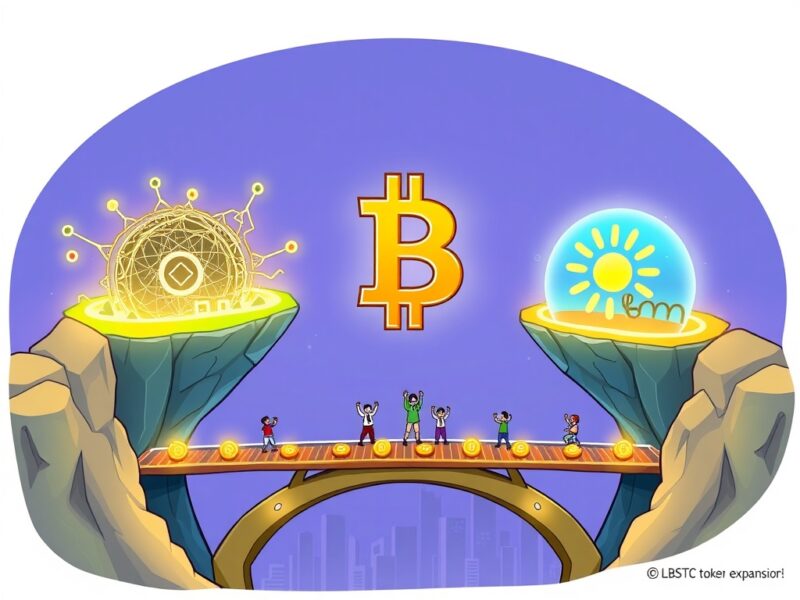
LBTC Token Expansion: Lombard Finance Unleashes New Possibilities on Solana

LBTC Token Expansion: Lombard Finance Unleashes New Possibilities on Solana

BitcoinWorld LBTC Token Expansion: Lombard Finance Unleashes New Possibilities on Solana Exciting news is brewing in the world of decentralized finance (DeFi)! Lombard Finance (BARD), a prominent Bitcoin DeFi firm, recently made a significant announcement: its innovative LBTC token expansion is coming to the Solana blockchain. This strategic move is set to create waves, offering new avenues for liquidity and utility for Bitcoin holders within the rapidly growing Solana ecosystem. According to The Block, this development marks a pivotal moment for cross-chain interoperability. Understanding LBTC: The Core of This Token Expansion Lombard Finance developed LBTC as a liquid staking Bitcoin token. But what exactly does that mean for you, the user? Essentially, LBTC allows Bitcoin holders to participate in DeFi activities while still retaining access to their BTC’s value. It’s like having your cake and eating it too – your Bitcoin remains liquid and usable, generating potential yield in the DeFi space. The upcoming LBTC token expansion to Solana is a game-changer because it extends this powerful utility to a new, high-performance blockchain. Solana is renowned for its speed, low transaction costs, and scalability, making it an attractive destination for DeFi projects looking to reach a wider audience and offer a smoother user experience. Liquidity: Keep your Bitcoin accessible while it’s earning potential rewards. Yield Generation: Participate in DeFi protocols to potentially earn rewards. Interoperability: Bridge Bitcoin’s established value to other blockchain ecosystems. Why Solana is Key for LBTC Token Expansion Lombard Finance’s decision to choose Solana for its LBTC token expansion is a highly strategic one. Solana boasts a robust infrastructure that supports high transaction throughput and near-instant finality. These features are crucial for the fast-paced world of DeFi, where efficiency directly impacts user experience and protocol performance. This move positions LBTC to tap into Solana’s vibrant developer community and its rapidly expanding user base. Consider the immense impact: bringing Bitcoin’s deep liquidity to Solana’s efficient network can unlock new financial primitives and opportunities. It’s a powerful synergy, combining the established trust and value of Bitcoin with the innovative, high-speed capabilities of Solana. This integration promises a more seamless and cost-effective DeFi experience for everyone involved. High Throughput: Solana handles thousands of transactions per second, ideal for DeFi. Low Fees: Significantly reduces the cost of DeFi interactions, benefiting users. Scalability: Built to support massive growth and adoption without congestion. Vibrant Ecosystem: Home to a diverse range of innovative DeFi applications and protocols. Where Will LBTC Token Expansion Integrate on Solana? The LBTC token expansion isn’t just about arriving on Solana; it’s about integrating into its core DeFi infrastructure. Lombard Finance plans to supply LBTC to several leading Solana-based platforms. This ensures immediate utility and broad accessibility. According to the announcement, these key integrations include: Jupiter: A prominent decentralized exchange (DEX) aggregator, enhancing liquidity for LBTC. Drift: A leading perpetuals DEX, offering new trading and leverage possibilities for LBTC holders. Kamino: A concentrated liquidity manager, optimizing yield strategies and capital efficiency for LBTC. Meteora: A dynamic liquidity protocol, further deepening market access and utility for LBTC. These integrations are vital. They ensure that LBTC will be immediately usable and accessible across a spectrum of DeFi services, from trading and lending to yield farming. This widespread availability will significantly boost LBTC’s utility and adoption within the Solana ecosystem, fostering a more robust and interconnected DeFi landscape. Benefits for Users: What the LBTC Token Expansion Means for You For users, the LBTC token expansion translates into more options and greater flexibility. If you’re a Bitcoin holder, you now have a new pathway to leverage your assets within a high-performance DeFi environment. This could mean: Accessing new yield opportunities that were previously unavailable on other chains. Participating in faster, cheaper transactions, making DeFi more accessible. Diversifying your DeFi portfolio across different blockchains, enhancing risk management. Engaging with innovative Solana protocols using your Bitcoin’s value. While exciting, users should always conduct their own research (DYOR) before engaging with any DeFi protocol. Understanding the risks associated with smart contracts, impermanent loss, and protocol security is crucial for navigating this innovative space safely and effectively. The Broader Impact of LBTC Token Expansion on DeFi The LBTC token expansion represents a significant step towards a more interconnected and liquid DeFi landscape. It highlights a growing trend where projects aim to bridge the vast liquidity of Bitcoin with the innovative capabilities of other high-throughput blockchains. This cross-chain collaboration is essential for the long-term growth and maturation of the entire crypto ecosystem. It pushes the boundaries of what’s possible, fostering greater efficiency and accessibility. Ultimately, Lombard Finance’s move is a testament to the ongoing evolution of DeFi, pushing boundaries and creating more efficient, accessible financial tools for everyone. It’s a compelling vision of a future where digital assets flow seamlessly across chains, unlocking unprecedented value and fostering a truly global decentralized financial system. Summary: Bridging Bitcoin to Solana’s Future Lombard Finance’s announcement to bring its LBTC liquid staking Bitcoin token to the Solana blockchain marks a pivotal moment for both ecosystems. This strategic LBTC token expansion promises to unlock new liquidity, enhance user experience through Solana’s speed and low costs, and integrate seamlessly with leading DeFi protocols like Jupiter, Drift, Kamino, and Meteora. As the DeFi space continues to mature, such cross-chain initiatives are vital for fostering innovation and providing users with more robust and versatile financial tools. The future of Bitcoin DeFi on Solana looks incredibly bright, offering a glimpse into a more interconnected and efficient decentralized world. Frequently Asked Questions (FAQs) What is LBTC? LBTC is a liquid staking Bitcoin token developed by Lombard Finance. It allows Bitcoin holders to utilize their BTC in DeFi protocols while maintaining liquidity and potential for yield generation. Why is Lombard Finance expanding LBTC to Solana? Lombard Finance is expanding LBTC to Solana to leverage Solana’s high speed, low transaction costs, and scalability. This move aims to enhance liquidity, improve user experience, and tap into Solana’s vibrant DeFi ecosystem. Which Solana protocols will integrate LBTC? Lombard Finance plans to supply LBTC to several leading Solana-based platforms, including Jupiter (DEX aggregator), Drift (perpetuals DEX), Kamino (liquidity manager), and Meteora (dynamic liquidity protocol). What are the main benefits of this LBTC token expansion for users? Users will benefit from new yield opportunities, faster and cheaper transactions, increased flexibility in managing their Bitcoin assets, and the ability to engage with a wider range of DeFi protocols on Solana. Is it safe to use LBTC on Solana DeFi protocols? While the LBTC token expansion opens exciting opportunities, users should always conduct thorough research (DYOR) on any DeFi protocol. Understand the inherent risks associated with smart contracts, impermanent loss, and platform security before committing funds. Did you find this article insightful? Share it with your network and help spread the word about the exciting developments in cross-chain DeFi! To learn more about the latest crypto market trends, explore our article on key developments shaping Bitcoin institutional adoption. This post LBTC Token Expansion: Lombard Finance Unleashes New Possibilities on Solana first appeared on BitcoinWorld and is written by Editorial Team

Author: Coinstats
Ripple’s RLUSD Joins Aave Horizon, Powering Real-World Assets in DeFi Shift

Ripple’s RLUSD Joins Aave Horizon, Powering Real-World Assets in DeFi Shift

Ripple’s RLUSD stablecoin powers Aave Horizon’s tokenized lending market. Chainlink ensures accurate valuations for Horizon’s real-world asset collateral. Institutions earn yield using RLUSD while accessing compliant DeFi borrowing. Ripple has strengthened its DeFi presence with the integration of its RLUSD stablecoin into Aave Labs’ Horizon market. The development makes RLUSD an essential asset in a framework created to combine tokenized real-world assets with decentralized lending. Ripple reports that inclusion is a long-term goal of integrating institutional-grade products into open finance. Also Read: Ethereum Supply Shock: Institutions Quietly Amass 8% as Price Nears $4,600 Horizon’s Borrowing Framework Aave Labs recently launched Horizon, describing it as an institutional-grade platform operating on a permissioned version of Aave V3. It permits collateralized loan obligations and tokenized assets like US Treasuries to serve as collateral for borrowing stablecoins. The structure is compliance-enforceable at the token level, and the stablecoin markets are open and permissionless, but they prevent cross-application lock-in within DeFi. Powered by Aave and secured by @ethereum, Horizon provides RWA users with the liquidity they need for institutional DeFi. Learn more about Horizon and why RWAs are DeFi's trillion dollar unlock: https://t.co/ap2OdhT6i7 — Aave (@aave) August 27, 2025 Borrowing infrastructure available 24 hours in this model allows institutions to access the infrastructure and still meet regulatory standards. It establishes a first mover connection between old finance and blockchain-based lending models. RLUSD’s Expanding Role RLUSD is now positioned alongside USDC and Aave’s GHO within Horizon. Institutions that place RLUSD in liquidity pools realize yield and facilitate borrowing. The stablecoin is thus a working device that will connect tokenized securities with the decentralization of the credit markets. Ripple has noted that RLUSD is not just a tool of valuation debate. Instead, it is an essential element of Horizon business and a force of efficient capital flow in DeFi. Chainlink’s Infrastructure Support Chainlink provides essential support to Horizon with its SmartData infrastructure. Chainlink Onchain NAV offers tamper-resistant valuations of tokenized assets on-chain in the system. This ensures that overcollateralized loans are supported with real-time information. Further integration with the Chainlink Proof of Reserves and SmartAUM should also be anticipated. These will improve accountability and security for both the borrowers and the liquidity providers in Horizon. Ripple and Aave Target Tokenized Asset Growth Ripple’s collaboration with Aave signals a push into the trillion-dollar tokenized asset market. Horizon’s launch on Ethereum allows investors to earn yield from institutional borrowers while enabling tokenized assets to flow more efficiently across digital markets. The RLUSD is a compliant collateral solution, which strengthens its role in everyday transactions. This equation corresponds with the similar aim of both companies, which is to connect a bridge between banks, funds, and institutions with the possibilities of DeFi. By making RLUSD a part of Horizon, Ripple is both pursuing its global goals and increasing its position at the heart of tokenized finance. Ripple RLUSD has been a focal point of the Aave Horizon market, where assets can be lent out efficiently. Supported by Chainlink’s infrastructure, the platform delivers compliant access for institutions, showing how DeFi is transitioning into capital-ready systems. Also Read: Philippine Senator Pushes for Blockchain-Based National Budget System   The post Ripple’s RLUSD Joins Aave Horizon, Powering Real-World Assets in DeFi Shift appeared first on 36Crypto.

Author: Coinstats
Lygos Aims to Banish Ghosts of Past With Non-Custodial Model

Lygos Aims to Banish Ghosts of Past With Non-Custodial Model

The post Lygos Aims to Banish Ghosts of Past With Non-Custodial Model appeared on BitcoinEthereumNews.com. Lygos Finance unveiled what it calls the first truly non-custodial bitcoin BTC$112,757.01-backed lending platform, aiming to transform the crypto credit market with institutional-grade design. The platform is built on Discrete Log Contracts (DLCs) developed by Atomic Finance, which Lygos acquired earlier this year. DLCs enforce bilateral lending agreements directly on Bitcoin’s base layer, with an external oracle attesting to facts like BTC-USD prices, but not controlling the funds. Borrowers and lenders sign Contract Execution Transactions, meaning settlement happens entirely on the Bitcoin blockchain without custodians or smart-contract risk. “True non-custodial means exactly this,” CEO Jay Patel said in an emailed announcement on Thursday. “No participant other than the borrower and lender can move the funds.” Lygos supports up to $100 million, with BTC collateralized in a native 2-of-2 script and USDC/USDT issued on Ethereum. The model avoids wrapped bitcoin or synthetic collateral, keeping custody native on both sides of the transaction. During the 2021 crypto bull market, centralized lenders such as Celsius Network, Voyager Digital and BlockFi drew billions in deposits by promising high yields. But these returns were often built on risky, interconnected loans. The system unraveled in 2022, when the collapse of the Terra-Luna stablecoin and the bankruptcy of hedge fund Three Arrows Capital (3AC) left many of the major lenders exposed. Mass withdrawals followed, forcing firms to freeze assets and file for bankruptcy. Customers lost much of their deposited funds, and the reputation of bitcoin lending took a severe hit. By enforcing agreements directly on the Bitcoin layer 1, Lygos said it can restore confidence with transparent, enforceable contracts and no reliance on custodians. The debut marks a fresh attempt to reimagine bitcoin credit markets, this time with non-custodial rails. Source: https://www.coindesk.com/business/2025/08/27/lygos-aims-to-banish-ghosts-of-crypto-lending-collapse-with-non-custodial-bitcoin-model

Author: BitcoinEthereumNews
Best Crypto to Invest In Current Week, Analysts Spotlight a Sub-$1 Altcoin Matching ETH and SOL Pace

Best Crypto to Invest In Current Week, Analysts Spotlight a Sub-$1 Altcoin Matching ETH and SOL Pace

Ethereum (ETH) and Solana (SOL) have long been recognized as the pillars of decentralized finance. ETH introduced the world to smart contracts, while SOL proved that scalability and high-speed performance could thrive in DeFi. Both tokens delivered life-changing returns for early investors who recognized their utility before the rest of the market caught on. Now [...] The post Best Crypto to Invest In Current Week, Analysts Spotlight a Sub-$1 Altcoin Matching ETH and SOL Pace appeared first on Blockonomi.

Author: Blockonomi
Top Social Media Star Camilla Araujo Says She Holds $1.3M in XRP

Top Social Media Star Camilla Araujo Says She Holds $1.3M in XRP

A casual podcast featuring two popular social influencers has gone viral in the XRP community after one of the hosts revealed she holds over $1 million worth of XRP. The revelation even sparked commentary about why BlackRock should have already filed for an XRP ETF. "I Have $1.3M in XRP" Notably, the podcast featured well-known social media influencers Julia Filippo and Camilla Araujo, blending humor with serious investment talk. Camilla Araújo is a Brazilian-American model and social media influencer who gained widespread attention after appearing in MrBeast’s 2021 "Squid Game in Real Life" video as contestant number 067. Since then, she’s built a robust online presence across platforms like Instagram, TikTok, and YouTube. Specifically, at some point, Filippo mentioned that she needs help with investing. Responding to this, Araujo replied that she would recommend crypto, revealing that she personally holds $1.3 million in XRP. Araujo went on to predict that the token could eventually surge to $10 per coin, providing her with life-changing wealth based on her XRP portfolio. This suggests she holds over 500,000 XRP tokens, as she valued her holdings at $1.3 million when the coin traded around $2. If XRP reaches $10, her holdings would multiply approximately fivefold. https://twitter.com/AltcoinDaily/status/1960858661754171791 Meanwhile, Araujo’s disclosure of her XRP position has sparked widespread attention within the XRP community. Interestingly, many are interpreting it as a "top signal" for the coin. It suggests that when major influencers, typically outside the crypto community, start calling for massive price movements, it may be a sign of an impending decline. As a result, some humorously suggest it’s time to short XRP. Rather than joining in on the laughter and frenzy surrounding Araujo’s XRP disclosure, Nate Geraci, President of ETFStore, steered the conversation in a different direction. He used the viral video to highlight the growing popularity of XRP in unexpected circles. Where Is BlackRock? He expressed wonder at why, despite XRP's widespread appeal, BlackRock—the world's largest asset manager—has not yet filed for an XRP ETF. His comments echo widespread expectations for BlackRock to enter the XRP space following its success with Bitcoin and Ethereum ETFs. Geraci has repeatedly stated that it would be “illogical” for BlackRock to ignore XRP given its rising demand and expanding market. However, the deadline for the SEC’s decision on pending XRP ETFs is approaching, and BlackRock has shown no interest in pursuing ETFs beyond Bitcoin and Ethereum. Institutional Appetite Already Building Geraci’s remarks come at a time when institutional products tied to XRP are gaining traction. CME Group’s XRP futures contracts recently surpassed $1 billion in open interest in just over three months. Meanwhile, futures-based XRP ETFs have attracted over $800 million in assets, with daily trading volumes climbing higher since their debut. For many market observers, BlackRock’s absence from the XRP ETF race is concerning. Other asset managers, including Grayscale, Franklin, and Bitwise, have already filed for XRP ETFs, while the SEC faces final deadlines in Q4 2025. Geraci has suggested that BlackRock may be waiting for clearer regulations before entering the market, but he believes the asset manager is running out of time. The resolution of the Ripple lawsuit has renewed expectations. Yet BlackRock has still shown no interest in an XRP ETF. Notably, XRP’s recent rally pushed its market cap to $185 billion, briefly overtaking BlackRock’s $177.8 billion and placing XRP among the top 100 global assets. This surge led crypto commentator Zach Rector to predict that BlackRock will eventually launch an XRP ETF.

Author: The Crypto Basic
DeFi Education Fund lobbies Congress to protect developers from regulatory crackdowns

DeFi Education Fund lobbies Congress to protect developers from regulatory crackdowns

The DeFi Education Fund sent another letter to the US Senate, aiming for protections and neutrality toward blockchain developers.

Author: Cryptopolitan
XRP vs LINK: Key Differences

XRP vs LINK: Key Differences

Chainlink and XRP are two well-known cryptocurrencies, but they serve very different purposes in the blockchain world. Chainlink focuses on connecting smart contracts to real-world data using decentralized oracles. XRP aims to provide fast, low-cost international payments by acting as a bridge currency for banks and financial institutions.XRP is best for speedy, affordable cross-border transactions, while Chainlink is key for making smart contracts smarter with real-world information. Investors and users often compare them because they are both big names, but their goals and technology are unique.What Is XRP?XRP is a digital asset used for global payments, designed to let banks and payment providers move money quickly and cheaply across borders. Developed by Ripple Labs, XRP stands out due to its speed, low fees, and focus on financial institutions.Origins and DevelopmentXRP launched in 2012, which makes it one of the older cryptocurrencies on the market. It was created alongside the XRP Ledger, a decentralized blockchain focused on fast and efficient transactions. Ripple Labs, the company behind XRP, built it to solve problems in the existing payment system, like high fees and slow transfer times.The XRP Ledger uses a unique consensus protocol instead of traditional mining. This helps the network process transactions in just a few seconds. Early on, Ripple Labs distributed large amounts of XRP to help grow its adoption, especially among banks and payment companies.The asset was designed to act as a ”bridge currency.” That means it helps transfer value between different currencies, even when there's no direct trading path. Over time, XRP has stayed focused on its original goal: making payments faster and less expensive for the world’s financial sector.Core Functionality in Global PaymentsXRP is built for cross-border payments. Its main use case is to let banks and financial institutions send money to each other around the world without needing pre-funded accounts in every country. This is often called ”real-time gross settlement.”Key advantages of XRP in payments:Transaction Speed: Most transactions settle in 3–5 seconds.Low Fees: Fees are usually a fraction of a cent.Scalability: The network can handle about 1,500 transactions per second.When a bank wants to send money overseas, XRP can be used to convert the currency instantly. The process is automated by the XRP Ledger, which allows for quick settlement without complicated steps or expensive agents. This makes XRP appealing to banks, payment providers, and remittance services that want to cut costs and delays.Role of Ripple LabsRipple Labs is the main company behind XRP's development and growth. The company builds software and products for banks and payment companies, using the XRP Ledger to enable instant transfers. Ripple Labs also works with more than 300 financial institutions worldwide, helping them use blockchain for smoother payments.They promote products like RippleNet and On-Demand Liquidity (ODL). These tools connect banks and payment providers, allowing them to use XRP for instant settlements. Ripple Labs continues to push for wider adoption, focusing on partnerships to get more institutions using its technology.Regulation is another area Ripple Labs deals with. The company often interacts with financial authorities to help clarify how XRP fits into legal frameworks. This helps build trust with financial institutions and supports the broader use of blockchain in traditional finance.What Is Chainlink?Chainlink is a blockchain-based platform that is designed to connect smart contracts with data from the real world through a secure, decentralized system. It uses oracles to provide trusted data feeds and supports a wide range of use cases from finance to gaming.Decentralized Oracle NetworkChainlink is best known as a decentralized oracle network. Its main role is to bridge the gap between blockchain smart contracts and off-chain data sources.Oracles on the Chainlink network are independent entities that provide external data to blockchains. This is important because blockchains alone cannot access outside information like financial market prices, weather results, or sports scores. By tapping into a network of oracles, Chainlink avoids single points of failure, reducing risks of tampering and data manipulation.Each oracle operator must follow strict rules and is often rewarded in LINK tokens for accurate, reliable service. This decentralized approach makes the data trustworthy for smart contracts that depend on it for execution.Chainlink Network ArchitectureThe Chainlink network has several key components working together. At its core, there are smart contracts that request data, oracle nodes that supply the data, and a decentralized system for verifying accuracy.Data requests start with a smart contract on a compatible blockchain, commonly Ethereum. The request is then matched with available nodes on the Chainlink network. These nodes are responsible for gathering data from various sources and delivering it back to the requesting contract.The LINK token is used to pay node operators and incentivize good behavior. Node operators may need to stake LINK tokens as collateral, which can be lost if they provide false or low-quality data. This structure encourages honesty and reliability across the network.Real-World Data IntegrationChainlink allows real-world data integration by making it possible for smart contracts to react to events and information outside the blockchain. Some common examples include accessing stock prices, exchange rates, and weather statistics.Chainlink’s oracles pull data from multiple, verified sources. The results are aggregated and delivered in the form of data feeds, such as price feeds used by DeFi protocols to calculate asset values. These data feeds are critical for lending platforms, decentralized exchanges, and many financial applications on the blockchain.By delivering up-to-date information to smart contracts, Chainlink expands what decentralized applications can do. This capability is essential for creating trustless financial tools, insurance products, and gaming rewards that depend on reliable real-world data.XRP vs LINK Key DifferencesCATEGORYXRPLINKMain PurposeBridge asset for fast, low-cost cross-border payments.Decenralized oracle network connecting smart contracts to real-world data.Blockchain / NetworkRuns on the XRP Ledger.Built primarily on Ethereum and compatable with multiple blockchains.Consensus MechanismXRP Ledger Consensus Protocol (validators agree without mining or PoS/PoW).Relies on the consensus of underlying blockchain.Transaction Speed1,500 TPS, settlement in 3-5 seconds.Depends on host blockchain (Ethereum slower, subject to congestion).Transaction CostFractions of a cent.Varies by blockchain (Ethereum often high, mitigated by L2 solutions).Energy EfficiencyVery high; no mining or heavy computation.Depends on underlying blockchain (now more efficient with Ethereum PoS).SupplyFixed max 100B XRP; 59B circulating.Fixed max 1B LINK; 678M circulatingMarket cap (2025)$176B$16BToken UtilityLiquidity and bridge currency for payments; not stakeable.Payment for oracle services; staked for security and rewards.GovernanceValidator-based consensus; XRP holders don's vote on updates.Node operators chosen by reputation; staking adds security but no formal governance.Institutional Adoption300+ banks and financial institutions for payments and remittances.Widely used in DeFi; integrated across 60+ blockchains.DeFi RoleLimited; basic DEX and assets.Core infrastructure for DeFi; secure price feeds and automation.NFTs and GamingEarly adoption; limited ecosystem.Provides randomness; price feeds, and event verification for NFT and gaming projects.StrengthsFast, cheap, energy-efficient transactions; strong banking partnerships.Dominant oricle provider; essential for DeFi, cross-chain, and real-world asset tokenization.Weaknesses/ ChallengesRegulatory scrutiny; limited beyond payments.Dependent on Ethereum/L1 scalability; fees during congestion.Regulatory OutlookPast SEC legal challenges; Ripple Labs' large holdings raise centralization concerns.Less legal controversy; future complaince needed for financial partnerships.Frequently Asked QuestionsWhat are the primary differences between the use cases of XRP and Chainlink?XRP's main use is for fast and cost-effective cross-border payments. Banks and financial firms use XRP to move money between countries quickly.Chainlink acts as a bridge between blockchains and real-world data. It connects smart contracts to information outside the blockchain, like weather data or market prices.How do the consensus mechanisms of XRP Ledger and Chainlink differ?The XRP Ledger uses a unique consensus protocol called the Ripple Protocol Consensus Algorithm (RPCA). This system allows validators to agree on transactions without needing mining.Chainlink uses a decentralized network of nodes as oracles. These nodes check, collect, and deliver data for smart contracts but do not have a single consensus protocol like XRP Ledger.Can XRP and Chainlink integrate with each other for cross-platform applications?Yes, the functions of XRP and Chainlink can be combined in some blockchain solutions. For example, Chainlink oracles could provide external data to apps that use XRP for payments.Developers may use both platforms to build services that need both payment speed and reliable outside data.What are the advantages of investing in XRP over Chainlink?XRP is aimed at the global payments market, with backing from established financial institutions. It is used for reducing the cost and time of moving funds across borders.For investors interested in markets tied to money transfers and banking, XRP may be more appealing. It is important to consider each token’s risk and regulatory background.How do transaction speeds and costs compare between Chainlink and XRP?XRP is designed to process payments fast, with low fees. Most transactions are confirmed in seconds and cost only a fraction of a cent.Chainlink processes and delivers data rather than direct payments. While its network fees can vary, its core purpose is to keep smart contracts up to date, so the focus is less on payment speed.

Author: Coinstats
Boost Your Crypto Gains: 8 High-ROI Tokens in 2025 for Maximum Long-Term Returns

Boost Your Crypto Gains: 8 High-ROI Tokens in 2025 for Maximum Long-Term Returns

The surge of community-driven digital assets has proven that humor and culture can carry real financial weight, especially when paired […] The post Boost Your Crypto Gains: 8 High-ROI Tokens in 2025 for Maximum Long-Term Returns appeared first on Coindoo.

Author: Coindoo