Executive Summary
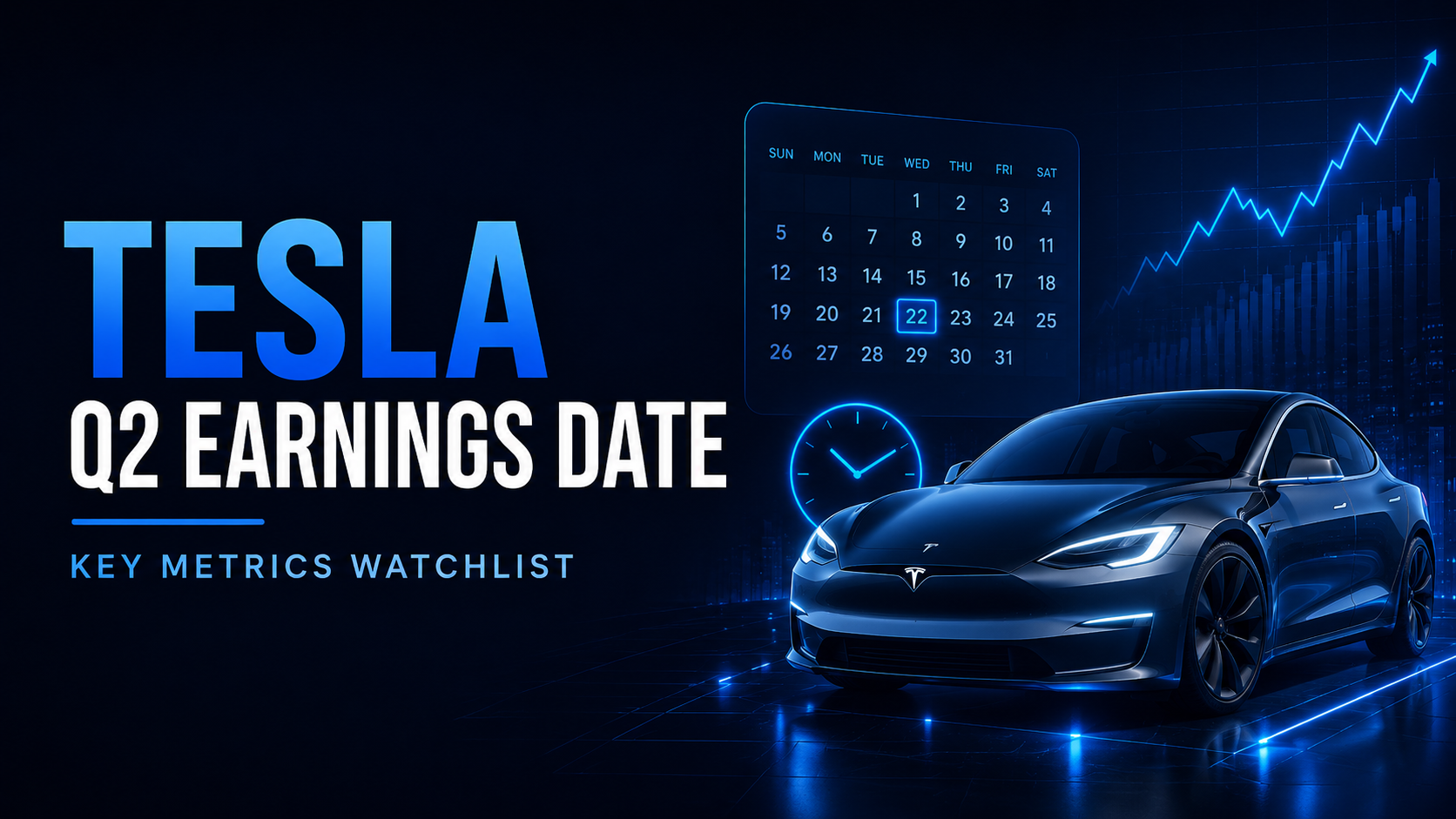
Tesla will report its second-quarter 2026 earnings after the US market closes on Wednesday, July 22. The company’s earnings call and live question-and-answer webcast will begin at 5:30 p.m. Eastern Time. Wall Street expects Tesla to report a strong revenue recovery after the company delivered 480,126 vehicles during the quarter. However, investors already know that vehicle deliveries exceeded expectations. The bigger question is whether higher sales volume translated into stronger margins, earnings and cash generation. Tesla’s company-compiled consensus points to approximately $27.58 billion in revenue, non-GAAP earnings of $0.55 per share and a total gross margin of 19.5%. At the same time, analysts expect heavy capital expenditure to push quarterly free cash flow deeply into negative territory. Management’s updates on Robotaxi, Cybercab, Full Self-Driving and the Optimus humanoid robot may also influence how investors value the company. For a broader explanation of Tesla’s business, investors can read the
Tesla Stock Guide: Deliveries, Margins, Robotaxi and EV Demand Explained.
When Will Tesla Report Q2 2026 Earnings?
Tesla will release its Q2 2026 financial results after market close on July 22, 2026.
Management will hold its earnings webcast at 4:30 p.m. Central Time, or 5:30 p.m. Eastern Time. A replay is expected to become available on Tesla’s investor-relations website approximately two hours after the question-and-answer session ends.
The report follows Tesla’s July 2 production and delivery update. The company produced 451,758 vehicles and delivered 480,126 vehicles during the quarter.
Model 3 and Model Y accounted for 467,762 deliveries, while Tesla’s other models contributed 12,364. The company also deployed 13.5 gigawatt-hours of energy-storage products.
Tesla warned that deliveries and energy-storage deployments should not be treated as direct indicators of quarterly revenue, profitability or cash flow. Final results also depend on average selling prices, production costs, product mix and foreign-exchange movements.
What Does Wall Street Expect From Tesla’s Q2 Earnings?
Tesla published a company-compiled consensus based on forecasts from 23 sell-side firms.
The contributing institutions include Barclays, Bank of America, Deutsche Bank, Goldman Sachs, JPMorgan, Morgan Stanley, UBS, Wells Fargo, RBC, Cantor Fitzgerald and several other firms covering Tesla.
Tesla Q2 2026 Revenue Forecast
The average Wall Street forecast calls for total revenue of approximately $27.58 billion.
Automotive revenue is expected to reach about $20.05 billion. Energy generation and storage revenue is forecast at approximately $3.77 billion, while services and other revenue is expected to contribute another $3.76 billion.
These forecasts suggest that vehicle sales will remain Tesla’s main source of revenue, but energy storage and services are becoming more meaningful parts of the company’s financial results.
Tesla Q2 2026 Earnings Forecast
Analysts expect Tesla to report GAAP earnings of approximately $0.36 per share and non-GAAP earnings of $0.55 per share.
Net income attributable to common shareholders is forecast at approximately $1.28 billion. Operating income is expected to reach $1.50 billion, equal to an operating margin of about 5.4%.
Tesla Q2 2026 Margin Forecast
Wall Street expects Tesla to generate approximately $5.38 billion in gross profit.
The company-compiled consensus places Tesla’s total gross margin at 19.5%. However, investors may pay closer attention to automotive gross margin excluding regulatory-credit revenue because it provides a clearer view of the underlying profitability of Tesla’s vehicle business.
Why Do Different Tesla Earnings Forecasts Show Different Numbers?
Investors may see several different Tesla revenue and earnings estimates before the report. Tesla’s company-compiled consensus forecasts revenue of approximately $27.58 billion and adjusted earnings of $0.55 per share. However, other financial-data providers use different groups of analysts, accounting definitions and update schedules. Reuters reported that LSEG’s analyst consensus expected earnings of approximately $0.50 per share. MarketWatch cited FactSet forecasts of around $26.4 billion in revenue, $1.8 billion in net income and earnings of approximately $0.53 per share. Barron’s reported another consensus estimate of approximately $27.4 billion in revenue and $0.54 in earnings per share. These numbers are not necessarily contradictory. Some sources report GAAP earnings, while others use adjusted earnings. Different databases may also include different analysts or update their estimates at different times. Tesla’s company-compiled figures provide a useful benchmark because they show the average and median forecasts submitted by the firms that cover the company. External estimates can then be used to understand how the wider market is positioned.
Automotive Margins May Matter More Than the Delivery Beat
Tesla’s delivery result created a stronger starting point for Q2 revenue. The harder question is whether the company protected pricing and profitability while increasing sales volume. Analysts tracked by Visible Alpha expect automotive gross margin excluding regulatory credits to fall to approximately 18.1%, compared with 19.2% in the previous quarter. A result below that forecast could suggest that discounts, financing offers, weaker product mix or higher production costs absorbed much of the benefit from stronger deliveries. A margin above expectations would indicate that Tesla converted its delivery rebound into healthier automotive economics. This distinction matters because investors already received the production and delivery figures on July 2. The largest earnings surprises are now more likely to come from average selling prices, regulatory-credit revenue, manufacturing costs and automotive margins.
Free Cash Flow Is the Main Financial Risk
Wall Street expects Tesla to generate approximately $3.45 billion in operating cash flow during the quarter. However, forecast capital expenditure of about $6.70 billion would result in negative free cash flow of approximately $3.25 billion. The median Wall Street estimate points to negative free cash flow of roughly $3 billion. For the full year, Tesla’s company-compiled consensus forecasts more than $25 billion in capital expenditure and negative free cash flow approaching $10 billion. Reuters reported that Tesla could record its first quarterly cash burn in more than two years. The company is investing heavily in AI infrastructure, manufacturing capacity, Robotaxi, Cybercab and Optimus development. The key question is whether Tesla’s automotive, energy-storage and services businesses can generate enough cash to finance these investments without creating sustained pressure on the company’s balance sheet. This issue is not unique to Tesla. Capital-intensive technology companies often depend on one established business to finance projects that may take years to reach commercial scale.
What Major Wall Street Analysts Expect
Bank of America: Robotaxi Scaling Remains the Priority
Bank of America maintains a Buy rating on Tesla and a $391 price target. The firm views Tesla’s core automotive business as healthier following the delivery beat. However, it expects investor attention to remain focused on the expansion of Tesla’s Robotaxi fleet and progress in Optimus production.
This view suggests that a solid earnings result may support the stock, but a larger change in market expectations may require evidence that Tesla is moving beyond limited autonomous-driving deployments.
Morgan Stanley: Better Fundamentals May Not Be Enough
Morgan Stanley maintains an Equal Weight rating and a $415 price target. The firm expects Tesla’s stronger vehicle and energy-storage deliveries to improve near-term fundamentals. However, it does not expect the earnings report alone to provide enough new information to produce a major revaluation of the stock. Morgan Stanley continues to view Robotaxi and Optimus as two of Tesla’s most important long-term valuation drivers.
Oppenheimer: Capital Spending Is Becoming a Leading Indicator
Oppenheimer rates Tesla at Perform and does not publish a formal price target. The firm increased its estimate of Tesla’s 2026 capital expenditure from $18 billion to $20 billion. It argues that investors may increasingly treat infrastructure spending as an early indicator of Tesla’s ability to develop into a physical-AI company. This creates a difficult balance. Higher investment may strengthen Tesla’s long-term technology story, but it can also weaken near-term free cash flow and returns on capital.
Barclays: The Auto Business Still Funds the AI Ambition
Barclays maintains an Equal Weight rating and a $370 price target. The firm believes Tesla’s valuation is increasingly connected to future businesses such as Robotaxi, Full Self-Driving and Optimus rather than vehicle revenue alone. However, the automotive business still matters because it remains Tesla’s largest source of revenue and an important source of funding for its AI and robotics projects.
Cantor Fitzgerald: Robotaxi Could Become a High-Margin Platform
Cantor Fitzgerald has an Equal Weight rating and a $510 price target, placing it among the more optimistic firms covering Tesla. The firm sees Robotaxi and Cybercab as potential high-margin, software-based businesses that could scale after broader commercialization. This forecast depends less on Tesla’s Q2 income statement and more on whether the company can prove that its autonomous-driving platform is commercially, technically and operationally scalable.
What Would Count as a Strong Tesla Earnings Report?
A strong Q2 report would probably require more than a headline revenue or earnings beat. Revenue above Tesla’s company-compiled forecast of approximately $27.6 billion would show that the record delivery result translated into stronger sales. Adjusted earnings above $0.55 per share would indicate that higher vehicle volume was not fully offset by pricing pressure, rising costs or operating expenses. Investors may also look for total gross margin above 19.5%, automotive gross margin excluding credits above the external forecast of approximately 18.1%, and free cash flow that is less negative than the expected $3.25 billion. Beyond the financial statements, Tesla would need to provide measurable information about Robotaxi fleet growth, paid autonomous miles, Cybercab production, Full Self-Driving adoption and Optimus development. General statements about future potential may carry less weight unless management supports them with clear deployment, production or commercialization milestones.
What Could Move TSLA Stock After Earnings?
The initial TSLA stock reaction may depend on revenue, margins, earnings and free cash flow. The longer-lasting reaction may depend on whether management changes investor expectations for Tesla’s AI businesses. A stronger automotive margin combined with lower-than-expected cash burn would show that Tesla can finance its investment cycle from a healthier operating base. Weak margins and heavier cash consumption would raise questions about how long Tesla can maintain its current spending plan without reducing investment or relying more heavily on its existing cash reserves.
At the same time, clear Robotaxi deployment targets or a credible Cybercab production schedule could support Tesla’s long-term valuation narrative even if near-term free cash flow remains weak. Wall Street is therefore not simply asking whether Tesla sold more vehicles. It is asking whether the vehicle recovery can fund the company’s attempted transition from an electric-vehicle manufacturer into a broader AI, autonomy and robotics platform.
Follow Tesla and US Stock Markets on MEXC
Tesla gives investors exposure to one of the market’s most closely watched electric-vehicle, AI and robotics companies. MEXC offers two routes for accessing Tesla and other US stock-related markets:
Product availability may vary by jurisdiction. Futures involve leverage and significant risk and may not be suitable for every market participant
FAQ
What is Tesla’s expected Q2 2026 revenue?
Tesla’s company-compiled sell-side consensus forecasts total revenue of approximately $27.58 billion. Other analyst databases show different estimates because they use different samples and update schedules.
What is Tesla’s expected Q2 2026 EPS?
The company-compiled consensus calls for GAAP earnings of $0.36 per share and non-GAAP earnings of $0.55 per share. Reuters reported a separate LSEG estimate of approximately $0.50 per share.
How many vehicles did Tesla deliver in Q2 2026?
Tesla delivered 480,126 vehicles during the second quarter, including 467,762 Model 3 and Model Y vehicles.
What Tesla margin will investors watch most closely?
Automotive gross margin excluding regulatory credits will be a key measure of Tesla’s underlying vehicle profitability. Analysts tracked by Visible Alpha expect it to be approximately 18.1%.
Why is Tesla free cash flow expected to be negative?
Tesla is expected to spend heavily on AI infrastructure, manufacturing capacity, Robotaxi, Cybercab and Optimus. The company-compiled consensus forecasts approximately $6.70 billion in quarterly capital expenditure, compared with about $3.45 billion in operating cash flow.
Why are Robotaxi and Optimus important to Tesla earnings?
Tesla’s current revenue remains dominated by vehicles, but many analysts believe Robotaxi, Full Self-Driving and Optimus explain a significant part of the company’s long-term valuation. Investors will therefore look for measurable deployment, production and commercialization updates during the earnings call.