On July 17, 2026, a rare macroeconomic combination unfolded intensively within the same week: The US June Consumer price index(CPI) annual rate stood at 3.5%, significantly lower than the expectedOn July 17, 2026, a rare macroeconomic combination unfolded intensively within the same week: The US June Consumer price index(CPI) annual rate stood at 3.5%, significantly lower than the expected
Learn/Market Insights/Hot Topic Analysis/U.S. Stocks...owth Stocks

U.S. Stocks Weekly Report | Jul 11–Jul 17: CPI Plunges 3.5%, Top Three Banks Post Strongest Q2 Ever: Inflation Turning Point Combined with AI Profit Surge Opens Valuation Reset Window for Growth Stocks

Jul 19, 2026MEXC
0m
Gensyn
AI$0.02347-2.00%
Quack AI
Q$0.019939-1.26%
three.ws
THREE$0.001988-6.04%

On July 17, 2026, a rare macroeconomic combination unfolded intensively within the same week: The US June Consumer price index(CPI) annual rate stood at 3.5%, significantly lower than the expected 3.8%, marking the largest single-month drop in nearly two years; JPMorgan Chase, Goldman Sachs, and Morgan Stanley all reported record-breaking Q2 earnings, with AI-driven capital market profits presented to investors for the first time as actual figures rather than forecasts.

But that’s not all—Three Chinese companies were approved to purchase NVIDIA AI chips, leading to a strong rebound in NVDA and AMD on the same day; June retail sales rose +9.4% year-on-year, further solidifying the soft landing narrative with resilient consumption.

This week, four main themes gained momentum simultaneously. Any one of them, in isolation, would have been sufficient to drive the market for the entire week. Their resonance within the same week makes this the most noteworthy week for in-depth review in Q3 2026.

This article breaks down the core investment logic for U.S. stocks this week along four main themes.

Theme 1: CPI Plunges to 3.5%—How Will the Inflation Turning Point Reshape Growth Stock Valuations?


Why is this CPI data more important than ever before?
The June CPI annual rate was 3.5%, against an expectation of 3.8%. While the gap may seem small, the underlying implication is that inflation is cooling at a pace exceeding market expectations, rather than following the rhythm already priced in by the market.

Looking at the details:
  • Core CPI at 2.6% (expected 2.9%): After excluding food and energy, inflationary pressures have also cooled significantly, indicating that this is not just a numbers game driven by one-month energy fluctuations.
  • Energy monthly rate -5.7%: The sharp drop in monthly energy prices was the largest contributor to the CPI beating expectations, marking the biggest single-month decline in nearly two years.
  • Significance of the data: This provides strong evidence that the Federal Reserve has seen core inflation substantially approach its 2% target for the first time in this tightening cycle.

CPI Cools More Than Expected: How Does It Transmit to US Stocks?
Transmission Path
Mechanism
Affected Assets
Inflation cools → Rate cut expectations rise
Expected decline in risk-free rates
High-valuation tech stocks (NVDA, AAPL) benefit
Probability of September rate hike drops
Down from 75% to 63%
Valuation repair window for growth stocks opens
Consumer price pressure eases
Real purchasing power improves
Consumer tech and retail supported
Soft landing credibility rises
No recession + cooling inflation
Overall market risk appetite increases
Who are the biggest beneficiaries of valuation reset?
The decline in expected risk-free rates most directly benefits high-valuation, high-growth tech stocks—because the DCF valuation of such assets is most sensitive to changes in the discount rate. Simply put: for every 1% drop in the risk-free rate, the upside potential for the reasonable P/E ratio of growth stocks is far greater than that of value stocks. This explains why AAPL rose more than 4% in a single day this week, leading the Mag7.
However, there is an important reverse risk to note: the Fed's Beige Book still mentions oil price pressures from some companies. If CPI unexpectedly rebounds later, the reversal of the inflation narrative could be much faster than what the market is currently pricing in.

Theme 2: The Strongest Q2 Ever for the Big Three Banks—How AI Capital Expenditure Drives a Profit Explosion on Wall Street?


Big Three Banks, Same Week, Record-Breaking Across the Board
The three major investment banks that disclosed their Q2 earnings this week delivered results that shocked the market:
Bank
Q2 EPS
Revenue
Highlights
JPMorgan Chase (JPM)
$6.14 (Beat Estimates)
Profit +41% YoY; AI-driven surge in both investment banking and equity trading revenue
Goldman Sachs (GS)
$20.98 (Nearly doubled YoY)
$20.34B (+39% YoY)
Record highs in both equity trading and investment banking
Morgan Stanley (MS)
Equity trading revenue $6.3B, beating estimates by $1.9B
All three banks simultaneously achieved their best quarters in history, which is not an isolated case for any single bank—this is a signal of the maturation of the entire AI capital market ecosystem.
How does AI capital expenditure translate into real revenue for banks?

Many investors ask: What is the direct relationship between AI and banks?
The logical chain is as follows:
  • Large-scale financing by AI companies (OpenAI, Anthropic, xAI, etc. issuing stocks and bonds) → Investment banking underwriting fees
  • Active AI-related M&A activities (acquisition of data center assets and computing power companies) → M&A advisory fees
  • High volatility and high trading volume of AI stocks (NVDA, AMD, etc.) → Surge in stock trading commissions
  • Intensive establishment of AI-themed funds → Asset management and derivatives fees
These four pathways converged in Q2, creating the strongest quarter in Wall Street's history.
Is this round of bank earnings sustainable?
Bank stocks are supported in both scenarios—this is the essence of "offensive when advancing, defensive when retreating":
  • Sustained high interest rates: Net Interest Margin (NIM) remains solid; if AI capital market activity stays hot, investment banking revenue will remain substantial
  • Successful rate cuts: Improved liquidity → further activation of M&A and IPO activities → increased investment banking volume
This improvement in profitability has cyclical continuity, not just a one-quarter numbers game.

Theme 3: Lifting of China's AI Chip Ban—Who Benefits Most, NVIDIA or AMD?


Policy Signal: What does the approval of three companies mean?
News this week: Three unnamed Chinese companies have received U.S. government approval to purchase NVIDIA AI chips.
The significance of this news lies not in the amount of a single large order, but in the policy direction: after a cycle of tightened export controls on AI chips, the approval of the first batch of companies signals a policy easing regarding the previous blockade of NVIDIA's China business. For NVIDIA, the Chinese market once contributed about 20–25% of its data center revenue before the controls—even a partial easing offers considerable upside potential.

NVDA vs. AMD: Who benefits more directly?
Dimension
NVDA (NVIDIA)
AMD (Advanced Micro Devices)
Dependence on the Chinese Market
Historically more dependent on China, benefiting more directly
Benefits simultaneously, but with a relatively smaller scale
Performance This Week
-1.7% (significant rebound on the day of the announcement)
-10% (larger decline, but also greater room for rebound)
Analyst Actions
KeyBanc raises price target to $330
Linked to ASML's positive outlook, overall sector recovery
Product Highlights
Blackwell shipments continue to accelerate
MI300X penetration among hyperscale cloud providers continues to expand
YTD Gain
+11.5%
+133%
Bottom Line: If you're betting on direct beneficiaries of China's market reopening, NVDA is the more direct play; AMD represents another growth pole in AI computing power, and both can coexist in an AI computing portfolio.

With AI chip restrictions lifted, why is HBM memory particularly worth watching now?
While approval to purchase AI chips ultimately lands on computing chips, the core component that makes these chips truly function is HBM (High Bandwidth Memory)—without HBM, NVIDIA's Blackwell GPUs cannot operate properly. The larger the shipment volume of AI chips, the stronger the demand for HBM.

The global leader in the HBM market is SK Hynix.

Opportunities to directly position in the HBM supply chain: SK Hynix is the largest HBM supplier for NVIDIA's Blackwell, and the lifting of AI chip restrictions directly benefits its order outlook. Sign up for MEXC + open a US stock account, get a free $10 SK Hynix stock airdrop

Key Theme 4: Next Week's Critical Calendar—TSLA Earnings + Flash PMI + FOMC, Triple Catalyst Resonance


Next week (Jul 21–25) enters a dense convergence period of earnings season and macroeconomic data, with each node potentially bringing significant market volatility:
Date
Event
Key Highlights
Jul 22 (Wed)
First Wave of Mag7 Earnings: TSLA + GOOGL
Tesla deliveries confirmed at record highs; focus shifts to whether gross margins can stabilize and the Robotaxi commercialization timeline; Alphabet's AI search ads and GCP cloud revenue are the market's biggest concerns
Jul 23 (Thu)
Flash PMI + Initial Jobless Claims
Quick reads on manufacturing and services sentiment; if both weaken, it will further reinforce dovish expectations, adding momentum for a September rate cut
Jul 28–29
FOMC Interest Rate Decision
This week's CPI significantly below expectations has laid the groundwork for a dovish stance; the final decision depends on whether new surprises in inflation or employment data emerge before the meeting
TSLA Earnings: Why Is It Not Just About Tesla?
This Q2 earnings report comes with a special backdrop: delivery volume has already confirmed a record high prior to the earnings release, so the market is no longer concerned about "whether sales targets are met," but instead focuses on:
  • Gross Margin: After trading price for volume, can the gross margin per vehicle stabilize and rebound?
  • Robotaxi Timeline: How is the Austin pilot progressing, and is the commercialization path clear?
  • Energy and Energy Storage: Is the growth rate of Megapack continuing to exceed expectations?
If the three indicators exceed expectations, TSLA's rebound momentum may surpass current market pricing.

GOOGL earnings report: what is the most critical number?
For Alphabet's Q2 earnings, the market is most focused on AI revenue growth for GCP (Google Cloud Platform) and the monetization level of AI search ads. Since the launch of AI Overview, has it eroded traditional search ad revenue or created incremental value? The answer to this question will impact the valuation logic of the entire search advertising sector.

July FOMC: what is the most critical variable?
This week's CPI has laid the groundwork for a dovish stance, but the Federal Reserve consistently emphasizes "data dependence," and single-month data is insufficient to directly trigger action. The true significance of the July FOMC lies in providing the latest signals on whether the window for a September rate cut opens. If the Flash PMI and employment data on Jul 23 continue to soften, the market will quickly bring forward rate cut expectations to September.

5. Review of Core Assets Performance This Week

Asset
Sector
Weekly Change
YTD Change
Core Logic
NVDA NVIDIA
AI Computing Power
-1.7%
+11.5%
Three Chinese companies approved for AI chips; KeyBanc raises target to $330; Blackwell shipments accelerate
AMD Advanced Micro Devices
AI Computing Power
-10%
+133%
Benefits from lifting of China AI chip ban; MI300X penetration in hyperscale cloud providers continues to expand
JPM JPMorgan Chase
Finance
+1.8%
+6.3%
Q2 EPS $6.14 beat expectations, profit +41%; AI drives surge in both investment banking and trading revenue
GS Goldman Sachs
Finance
+4%
+24.2%
Q2 EPS $20.98 nearly doubled, revenue +39%; equity trading and investment banking hit record highs
AAPL Apple
Consumer Tech
+5.6%
+22.2%
Cooling CPI drives broad tech rally; AAPL rises over 4% in a day, leading the Mag7

VI. Frequently Asked Questions (FAQ)


Q1: Is the Consumer price index(CPI) of 3.5% a sustained trend or a one-off figure?
The largest contributor to this month's CPI exceeding expectations was the -5.7% monthly change in energy prices, which indeed has some one-off components. However, the key point is that Core CPI simultaneously dropped to 2.6% (expected 2.9%), indicating that inflationary pressures are substantially improving after removing energy disturbances. The Federal Reserve focuses more on Core PCE, so August data needs to be observed subsequently. If the figures remain below expectations for two consecutive months, the theory of an inflation turning point will gain stronger data support.

Q2: Goldman Sachs' EPS nearly doubled; can this profitability be sustained?
Behind the exceptionally strong Q2 earnings report are two structural drivers: ① Large-scale financing demands from AI companies—this is not a one-off event, as the AI financing cycle is expected to last for several years; ② High trading volumes in AI-related stocks, which are positively correlated with market volatility. If AI capital market activities maintain their momentum, the high prosperity of investment banking business is expected to continue until 2027. The stability of net interest margins depends on the interest rate path.
Q3: TSLA and GOOGL are reporting earnings next week. Should I position in advance or wait for the post-earnings reaction?
It depends on your risk appetite. The advantage of positioning before earnings is capturing the upside from expectation gaps; however, if earnings miss expectations, your holdings will directly face downside risk. For TSLA, deliveries have hit record highs, with gross margin being the main uncertainty; for GOOGL, the progress in AI ad monetization is the biggest variable. If you have a clear view on these specific metrics, you can position moderately; if uncertainty is high, wait until after the earnings report to decide. Although you might miss the initial move, the risk is significantly reduced.

MEXC offers direct investment services for U.S. stocks, supporting popular stocks such as NVDA, AMD, AAPL, JPM, and GS, with fractional share trading and low entry thresholds.

Disclaimer: This content is based on public market information as of July 16, 2026, independently compiled by the MEXC U.S. Stocks Spot team. It is for reference only and does not constitute investment advice. The market carries risks, so please invest with caution.
Market Opportunity
Gensyn Logo
Gensyn Price(AI)
$0.02347
$0.02347$0.02347
-1.46%
USD
Gensyn (AI) Live Price Chart

Popular Articles

View More
China’s Top AI Models in 2026: DeepSeek, Qwen, Kimi, Doubao and the New AI Race

China’s Top AI Models in 2026: DeepSeek, Qwen, Kimi, Doubao and the New AI Race

China's AI market has moved past the idea of a single national champion. In 2025, most global attention went to DeepSeek. Its low-cost reasoning models forced investors, developers and cloud
TSMC Stock Guide: Foundry Revenue, AI Demand, Capex and Margin Drivers

TSMC Stock Guide: Foundry Revenue, AI Demand, Capex and Margin Drivers

TSMC is the world's largest semiconductor foundry, manufacturing chips designed by Nvidia, Apple, AMD, and other leading companies. Its stock trades as TSM in the United States and 2330 in Taiwan.
ASML Stock Guide: EUV Orders, Backlog and AI Capex Signals Explained

ASML Stock Guide: EUV Orders, Backlog and AI Capex Signals Explained

ASML builds the lithography machines that chipmakers need to manufacture advanced semiconductors, and no other company in the world sells EUV systems. For investors, the stock works as an early
What Is a Foundry? How TSMC Fits Into the AI Semiconductor Supply Chain

What Is a Foundry? How TSMC Fits Into the AI Semiconductor Supply Chain

A semiconductor foundry is a contract manufacturer that builds chips designed by other companies. Fabless designers such as Nvidia, AMD, and Apple create the blueprints, while foundries such as TSMC

Hot Crypto Updates

View More
ChangXin Memory Technologies ($CXMT): China's DRAM Champion Powering the Next Memory Supercycle

ChangXin Memory Technologies ($CXMT): China's DRAM Champion Powering the Next Memory Supercycle

As China accelerates its semiconductor self-sufficiency strategy and AI continues to drive explosive demand for memory chips, ChangXin Memory Technologies (CXMT) has emerged as one of the few direct
What Is AKEDO ($AKE)? Exploring the AI-Powered "Vibe Coding" Platform for Game Creation

What Is AKEDO ($AKE)? Exploring the AI-Powered "Vibe Coding" Platform for Game Creation

Amid the rapid growth of artificial intelligence (AI) and Web3 gaming in 2026, AKEDO ($AKE) has emerged as an ambitious project that combines multi-agent AI, an AI-native game creation platform, and
MEXC On-chain Daily Report: Visa Launches Enterprise Stablecoin Services Platform

MEXC On-chain Daily Report: Visa Launches Enterprise Stablecoin Services Platform

Updated: July 17, 2026, 09:30 (UTC+8) | Author: MEXC Headlines Visa Launches Enterprise Stablecoin Services Platform SEC Plans to Fully Digitize Securities Disclosure Injective Applies for On-Chain

Arm Q2 2026 Earnings Preview Can AI Chip Licensing and Royalty Revenue Keep Beating

Arm Q2 2026 Earnings Preview Can AI Chip Licensing and Royalty Revenue Keep Beating

Overview The market's sensitivity to Arm's July 29 report is not about whether it grows — growth is nearly assured — but about two sharper questions: whether a forward multiple near 40 times can be

Trending News

View More
Daily Market Update: Nasdaq Gains 1.3% and Bitcoin Recovers as AI Chip Demand Grows

Daily Market Update: Nasdaq Gains 1.3% and Bitcoin Recovers as AI Chip Demand Grows

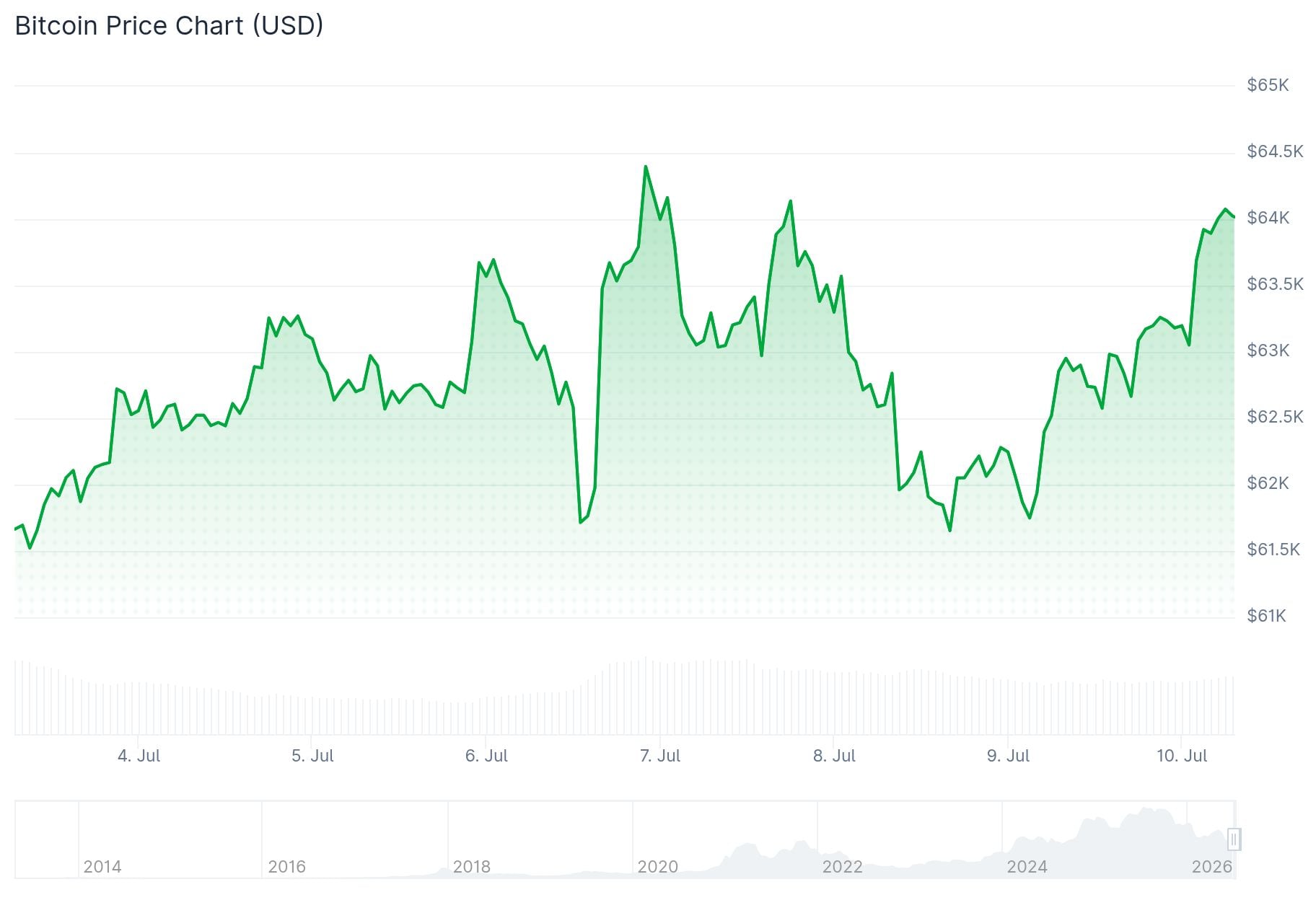
TLDR Bitcoin rose 3.5% to nearly $64,000, finishing the week up 4.2% Ether, XRP, Dogecoin, and Solana all posted gains on Friday The Nasdaq led U.S. stocks higher

KlariVis Names Marcos Souza Chief Data & Analytics Officer, Elevates Guy DeCorte to Chief AI Officer

KlariVis Names Marcos Souza Chief Data & Analytics Officer, Elevates Guy DeCorte to Chief AI Officer

Two dedicated C-suite roles signal the next phase of the company’s data and AI strategy KlariVis, the data intelligence platform built for financial institutions
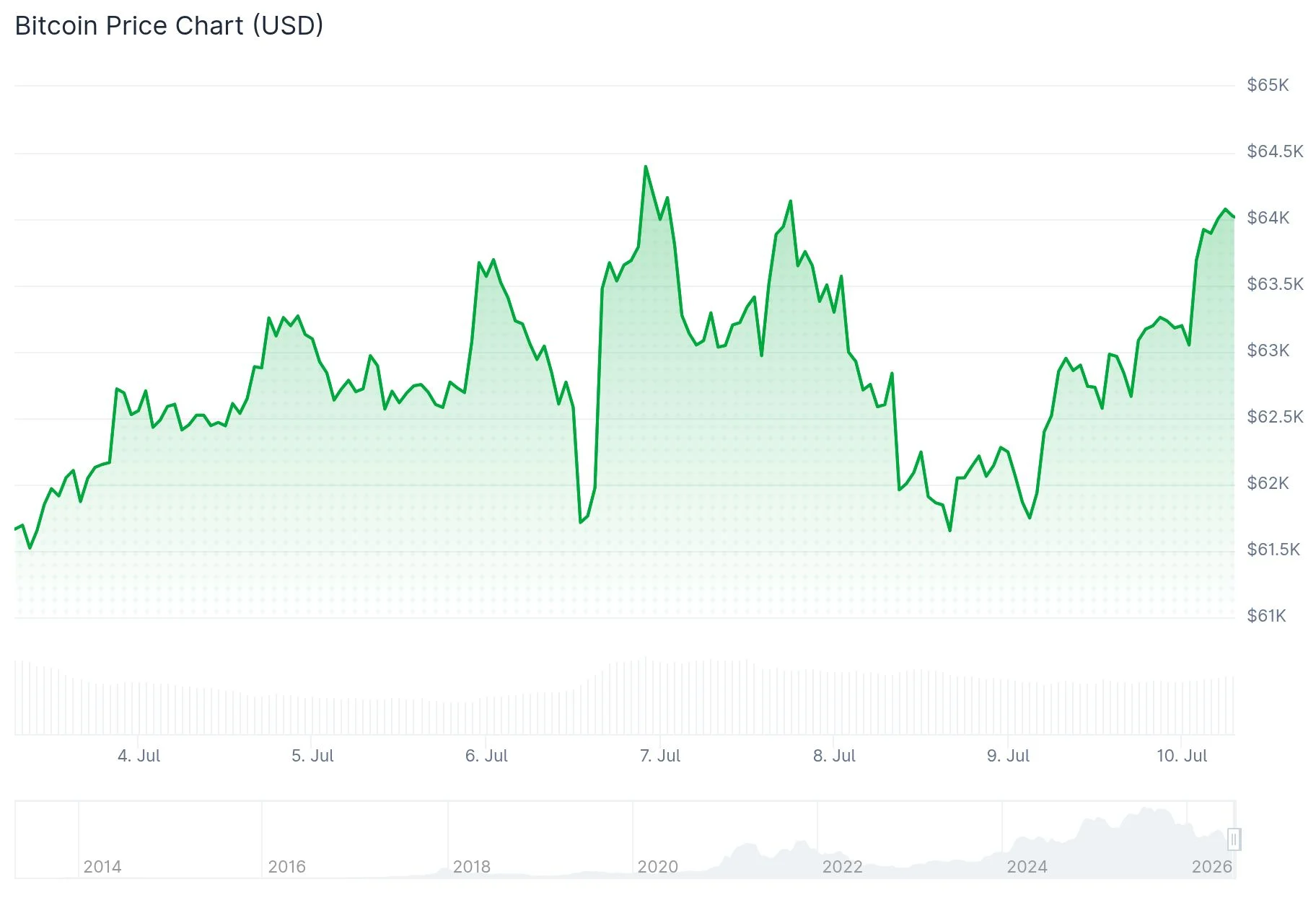

Bitcoin Surges Past $64K as Tech Stocks and Crypto Markets Rally Together

Bitcoin Surges Past $64K as Tech Stocks and Crypto Markets Rally Together

Bitcoin climbs to $64,000 as Nasdaq rises 1.3% and chip stocks rally. Discover how AI semiconductor demand and dollar weakness are driving market gains. The post

Not a loophole: Singapore AI export controls let China tap US AI legally

Not a loophole: Singapore AI export controls let China tap US AI legally

American AI technology is reaching Chinese tech giants through a route that US export controls were never designed to close: Singapore. The city-state sits outside

Related Articles

View More
MEXC Alpha Trader Research Weekly | ETF Outflows End After 8 Weeks, but a $425M Sell-Off Raises the Question: Who Is Driving BTC?

MEXC Alpha Trader Research Weekly | ETF Outflows End After 8 Weeks, but a $425M Sell-Off Raises the Question: Who Is Driving BTC?

Week 2 of July 2026Statistical Period: July 8, 2026 – July 14, 2026Data Cutoff: July 14, 2026Core NarrativeOver the past week, the crypto market experienced a dramatic reversal, shifting from a post-N

MEXC Alpha Trader Research Weekly | NFP Sparks a Rebound, but ETF Outflow Pressure Lingers: Can BTC Hold $63,000?

MEXC Alpha Trader Research Weekly | NFP Sparks a Rebound, but ETF Outflow Pressure Lingers: Can BTC Hold $63,000?

Week 1, July 2026Reporting Period: July 1–7, 2026Data Cutoff: July 7, 2026Core NarrativeOver the past week, the crypto market experienced a dramatic reversal, falling first before staging a strong reb

MEXC Alpha Trader Research Weekly | BTC Falls Below $60K as June ETF Outflows Hit Record Highs: How Far Is the Bottom?

MEXC Alpha Trader Research Weekly | BTC Falls Below $60K as June ETF Outflows Hit Record Highs: How Far Is the Bottom?

Week 4 of June 2026Reporting period: June 24 – June 30, 2026Data Cutoff: June 30, 2026Core NarrativeOver the past week, the crypto market saw its sharpest sell-off since September 2024. On June 24, Bi

Could Bitcoin Fall to $54,000? Inside the $10.6B BTC Options Gamma Trap

Could Bitcoin Fall to $54,000? Inside the $10.6B BTC Options Gamma Trap

More than $10.6 billion in Bitcoin options are settling today, and the market is not where bulls expected it to be.Traders who spent months positioning for BTC above $80,000 are watching those contrac

Sign Up on MEXC
Sign Up & Receive Up to 10,000 USDT Bonus
Is Your Stablecoin Truly Safe?
Is Your Stablecoin Truly Safe?Is Your Stablecoin Truly Safe?
Know the risks of USDT, USDC, OpenUSD & USD1