RWA

RWA (Real World Assets) refers to the tokenization of tangible assets—such as real estate, private credit, and government bonds—on the blockchain. By bringing traditional financial instruments on-chain, RWA protocols like Ondo and Centrifuge provide DeFi users with stable, real-yield opportunities. In 2026, the RWA sector is a multi-trillion-dollar bridge between TradFi and DeFi, enabling fractional ownership and global liquidity for previously illiquid assets. Follow this tag for insights into on-chain credit markets, regulatory compliance, and asset-backed security innovations.

42749 Articles
Created: 2026/02/02 18:52
Updated: 2026/02/02 18:52
Federal Reserve Maintains Cautious Approach as Rate Uncertainty Lingers

Federal Reserve Maintains Cautious Approach as Rate Uncertainty Lingers

The post Federal Reserve Maintains Cautious Approach as Rate Uncertainty Lingers appeared on BitcoinEthereumNews.com. Key Points: The Fed’s cautious stance impacts crypto markets and investor actions. Rate uncertainty triggers significant ETH and BTC market activities. Institutional and whale movements heavily influence asset repositioning. The CME’s “FedWatch Tool” indicated an 87.3% chance of a 25 basis point rate cut by the Fed in September 2025, with unchanged rates at 12.7%. Market participants are adjusting to potential interest rate changes, impacting major cryptocurrencies like ETH, BTC, and BNB, as they assess the Federal Reserve’s upcoming decisions. Fed’s 87.3% Rate Cut Probability Sparks Crypto Fluctuations The Federal Reserve’s interest rate decisions have taken center stage, with Jerome Powell’s remarks at the Jackson Hole symposium emphasizing the Fed’s dual mandate and making only minor policy framework clarifications. Richard Clarida, former Fed Vice Chair, noted the Fed’s preparation for a cautious rate cut, highlighting the cautious climate among central bank observers. The probability of a 25 basis point rate cut now stands at 87.3% according to the FedWatch tool, indicating a strong market expectation for a shift in monetary policy. The potential rate change has already sparked significant market responses. ETH surged beyond its all-time high amid these deliberations, although it later narrowed its gains. In parallel, BTC experienced fluctuations, momentarily dropping before clawing back above key support levels. These market moves have been accompanied by substantial staking and whale activity, reflecting an assertive repositioning strategy amid rate cut speculations. High-profile figures in the crypto industry have acknowledged these developments. Mike Novogratz from Galaxy Digital highlighted the robust performance of Hyperliquid’s platform within the market ecosystem: “Impressive work…we hold a long position in the HYPE token.” The narrative of institutional engagement persists, as evidenced by large BNB investments that pushed it to a new ATH. Meanwhile, the crypto community and other market participants remain vigilant, preparing for possible changes…

Author: BitcoinEthereumNews
Won-Pegged Stablecoin: Kaia and Open Asset Forge Pioneering Alliance

Won-Pegged Stablecoin: Kaia and Open Asset Forge Pioneering Alliance

BitcoinWorld Won-Pegged Stablecoin: Kaia and Open Asset Forge Pioneering Alliance The world of digital finance is constantly evolving, and a significant new development is on the horizon for the South Korean market. We’re witnessing a pivotal moment as Kaia, an innovative EVM-based layer-1 public blockchain, teams up with blockchain solutions powerhouse Open Asset. This collaboration is set to accelerate projects focused on the won-pegged stablecoin, promising to bridge traditional finance with the efficiency of blockchain technology. What is This Strategic Alliance for Won-Pegged Stablecoin Projects? Kaia and Open Asset have officially joined forces through a Memorandum of Understanding (MOU). This partnership, reported by South Korean outlet Edaily, marks a critical step forward in the development and adoption of digital assets tied to the Korean Won. Their combined expertise aims to tackle various aspects of stablecoin integration. The core objective is clear: to foster a robust ecosystem around the won-pegged stablecoin. This isn’t just about creating a new digital currency; it’s about building the infrastructure for its widespread use. The collaboration will focus on several key areas: Issuance: Establishing secure and compliant mechanisms for creating new stablecoins. Distribution: Ensuring these digital assets can reach a broad user base efficiently. Launches: Orchestrating successful market introductions for various stablecoin initiatives. Expanding Real-World Use Cases: Identifying and implementing practical applications for everyday transactions and financial services. This partnership brings together Kaia’s robust blockchain infrastructure with Open Asset’s deep experience in blockchain solutions, creating a powerful synergy. Unlocking Real-World Utility for the Won-Pegged Stablecoin One of the most exciting prospects of this alliance is the commitment to expanding real-world use cases for the won-pegged stablecoin. Why is this so important? Stablecoins offer the best of both worlds: the stability of fiat currency combined with the speed and transparency of blockchain. Imagine a future where: Cross-border payments become instant and significantly cheaper. Online purchases can be made seamlessly using a digital Won. Decentralized finance (DeFi) applications gain a reliable, local currency anchor. Businesses can manage their treasury operations with greater efficiency and lower fees. The goal is to move beyond speculative trading and embed these digital assets into the fabric of daily economic activity. By focusing on practical applications, Kaia and Open Asset aim to drive mass adoption and demonstrate the tangible benefits of blockchain technology to a wider audience in South Korea and beyond. This collaboration could set a new standard for how national currencies interact with the digital economy. What Does This Mean for the Future of Stablecoins in Korea? This strategic partnership has the potential to significantly impact the stablecoin landscape in South Korea. It signals a growing recognition of stablecoins as a vital component of the future financial system. By focusing on compliance, security, and utility, Kaia and Open Asset are laying the groundwork for a trusted digital currency environment. While the path to widespread adoption might present challenges, such as regulatory clarity and user education, the commitment from these two entities is a strong indicator of progress. Their joint efforts could: Accelerate regulatory discussions and frameworks. Increase public trust and understanding of digital assets. Foster innovation within the South Korean fintech sector. Ultimately, this initiative aims to position the won-pegged stablecoin as a reliable and efficient medium of exchange, not just for crypto enthusiasts but for the general public and businesses alike. The journey ahead is promising, and this alliance is certainly one to watch. Concluding Thoughts on the Won-Pegged Stablecoin Initiative The collaboration between Kaia and Open Asset marks a truly significant milestone for the digital asset space in South Korea. By focusing on the robust development and practical application of a won-pegged stablecoin, they are not just launching a project; they are paving the way for a more integrated and efficient financial future. This alliance underscores the immense potential of blockchain technology to revolutionize how we perceive and interact with national currencies, making them more accessible and versatile in the digital age. It’s an exciting time for innovation, and we look forward to seeing the impactful outcomes of this pioneering effort. Frequently Asked Questions (FAQs) 1. What is a won-pegged stablecoin? A won-pegged stablecoin is a type of cryptocurrency designed to maintain a stable value, typically by being tied to the value of the Korean Won (KRW). This means its value should closely track the KRW, offering stability unlike more volatile cryptocurrencies. 2. Who are Kaia and Open Asset? Kaia is an EVM-based layer-1 public blockchain, providing the foundational technology for decentralized applications. Open Asset is a blockchain solutions provider, offering expertise in developing and implementing blockchain-based services. 3. What are the main goals of this partnership? The primary goals include the issuance, distribution, and successful launch of won-pegged stablecoins, along with actively expanding their real-world applications and use cases in the South Korean market. 4. How will this project benefit everyday users? Everyday users could benefit from faster and cheaper cross-border payments, seamless online transactions, and access to more stable digital financial services. It aims to integrate digital assets into daily economic activities. 5. What challenges might this initiative face? Potential challenges include navigating evolving regulatory landscapes, ensuring widespread public understanding and trust in digital assets, and fostering broad adoption across various sectors of the economy. Share This Insight Found this update on the won-pegged stablecoin collaboration insightful? Share it with your network! Help us spread the word about how Kaia and Open Asset are shaping the future of digital finance in South Korea. Your shares help bring these important developments to a wider audience. To learn more about the latest stablecoin trends, explore our article on key developments shaping digital currencies globally. This post Won-Pegged Stablecoin: Kaia and Open Asset Forge Pioneering Alliance first appeared on BitcoinWorld and is written by Editorial Team

Author: Coinstats
Swiss Heroine Riola Xhemaili AimingTo Knock Man United Out Of Europe

Swiss Heroine Riola Xhemaili AimingTo Knock Man United Out Of Europe

The post Swiss Heroine Riola Xhemaili AimingTo Knock Man United Out Of Europe appeared on BitcoinEthereumNews.com. TOPSHOT – Switzerland’s midfielder #07 Riola Xhemaili celebrates at the end of the UEFA Women’s Euro 2025 Group A football match between Finland and Switzerland at the Stade de Geneve in Geneva, on July 10, 2025. (Photo by Fabrice COFFRINI / AFP) (Photo by FABRICE COFFRINI/AFP via Getty Images) AFP via Getty Images The player who scored perhaps the most important goal in the Swiss women’s team’s history now believes PSV can shock Manchester United and knock them out of Europe this week. Last month, Riola Xhemaili was brought on as a late substitute by UEFA Women’s Euro hosts Switzerland in their decisive final group stage match against Finland in Geneva. Trailing by a single goal, the Swiss were seconds away from becoming the first host nation to fail to qualify for the knockout stages in 20 years. Deep into stoppage time, the 22-year-old adeptly steered in a driven cross from the right and altered the course of her country’s fortunes. As a result of the goal, Switzerland qualified for the quarter-finals of the tournament for the first time ever and it ensured that local interest in the competition was sustained. Ultimately, the tournament broke the attendance records of the previous edition in England three years earlier. Unsurprisingly, Xhemaili told me that goal was the best moment of her career to date. “You have a home Euro, a sold-out stadium, scoring for your country to bring them into the quarter-final – it’s something that just happens once. I was running to my family, I saw them and I was just really, really happy. It was kind of like a movie, I would say, a really good movie.” GENEVA, SWITZERLAND – JULY 10: Riola Xhemaili of Switzerland celebrates towards fans after scoring her team’s first goal during the UEFA Women’s EURO…

Author: BitcoinEthereumNews
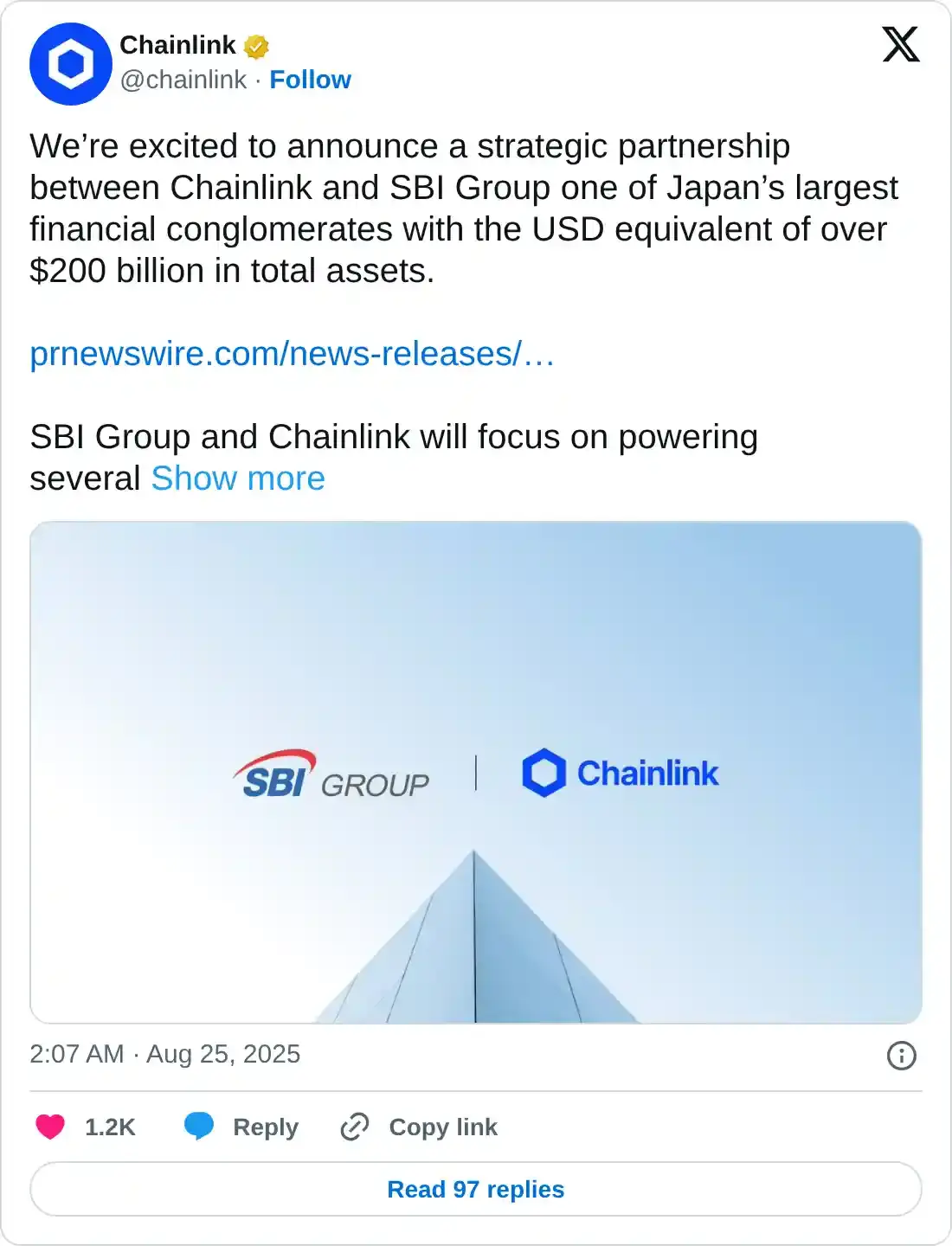
Chainlink, SBI Group partner to boost digital asset adoption

Chainlink, SBI Group partner to boost digital asset adoption

The post Chainlink, SBI Group partner to boost digital asset adoption appeared on BitcoinEthereumNews.com. Chainlink and Japan’s SBI Group have announced a strategic partnership to accelerate institutional adoption of blockchain-based financial products across global markets. Summary SBI and Chainlink partner to advance tokenized assets in Japan and APAC. CCIP to enable cross-chain RWAs, PvP settlements, and stablecoin transparency. SBI cited strong demand for tokenized securities, with 76% of surveyed institutions planning to invest despite infrastructure gaps. According to an Aug. 25 press release, SBI, one of Japan’s largest financial conglomerates with more than $200 billion in assets, will work with Chainlink (LINK) to roll out institutional-grade infrastructure for tokenized assets. The partnership builds on growing demand in Japan. 76% of financial institutions surveyed by SBI Digital Asset Holdings stated they intend to invest in tokenized securities due to cost savings and efficiency improvements. Fixing adoption barrier using Chainkink The absence of scalable, secure, and compliant infrastructure has been a significant obstacle despite growing interest. By utilizing Chainlink’s Cross-Chain Interoperability Protocol, the partnership seeks to unlock cross-chain tokenized real-world assets including bonds and real estate. Additionally, the integration will increase liquidity, facilitate more effective fund administration, and bring fund net asset value data onchain. The partnership will also use Chainlink’s Proof of Reserve to ensure stablecoin reserve transparency while investigating new settlement techniques, such as payment versus payment for foreign exchange and cross-border transactions. Expanding SBI and Chainlink partnership Chainlink co-founder Sergey Nazarov said SBI’s adoption of the protocol validates its role as the standard for secure and compliant institutional transactions. SBI chief executive officer Yoshitaka Kitao added that the partnership combines Chainlink’s leading interoperability solutions with SBI’s financial expertise to drive mainstream adoption. The two companies have previously worked together. Under Singapore’s Project Guardian, SBI Digital Markets, Chainlink, and UBS Asset Management tested automated fund administration in 2023, demonstrating early success in use cases…

Author: BitcoinEthereumNews
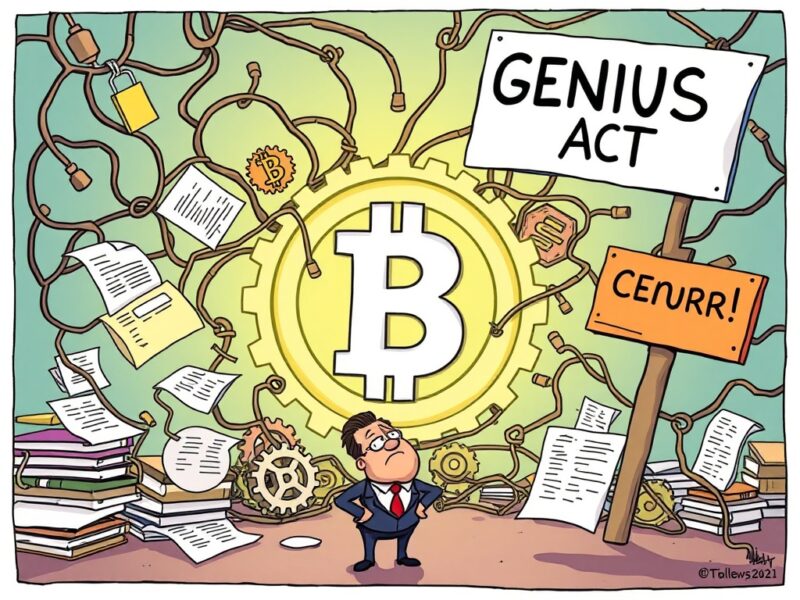
Stablecoin Regulation: Why Custodia CEO Caitlin Long Sees Persistent Uncertainty Despite GENIUS Act

Stablecoin Regulation: Why Custodia CEO Caitlin Long Sees Persistent Uncertainty Despite GENIUS Act

BitcoinWorld Stablecoin Regulation: Why Custodia CEO Caitlin Long Sees Persistent Uncertainty Despite GENIUS Act The world of digital finance is constantly evolving, yet one critical area continues to grapple with unresolved questions: stablecoin regulation. Despite legislative efforts like the U.S. GENIUS Act, a leading voice in the banking sector, Custodia Bank CEO Caitlin Long, suggests that significant uncertainty still looms. Her recent remarks underscore the complex landscape financial institutions and fintechs face when dealing with stablecoins. What’s Stirring the Waters in Stablecoin Regulation? Caitlin Long, a respected figure in the digital asset space, recently shared her insights on CNBC, as reported by Wu Blockchain. She pointed out that the GENIUS Act, while a step forward, has not fully addressed several fundamental issues. These unresolved questions are crucial for the seamless integration of stablecoins into the traditional financial system. Specifically, Long highlighted the ongoing debate around whether traditional banks can issue tokenized deposits. Tokenized deposits are essentially digital representations of traditional bank deposits on a blockchain, offering potential for faster, more efficient transactions. However, the regulatory framework for these is still unclear. Moreover, the level of capital banks must hold when dealing with stablecoins remains ambiguous. This uncertainty creates hesitation and impacts how financial institutions approach these digital assets. Long also noted compliance shortfalls among crypto-focused fintech firms, indicating a need for clearer guidelines across the board. Unpacking the GENIUS Act: A Step Towards Stablecoin Regulation? Enacted in mid-July, the GENIUS Act was indeed designed to bring more structure to the stablecoin industry. Its provisions aim to enhance transparency and stability, which are vital for investor confidence. Here are some key requirements introduced by the Act: Federal Licensing: Stablecoin issuers must obtain federal licenses, ensuring they operate under specific legal frameworks. 1-to-1 Reserve Backing: Issuers are mandated to maintain full 1-to-1 reserve backing for their stablecoins, meaning each digital coin is fully collateralized by an equivalent amount of fiat currency or other liquid assets. Annual Audits: Issuers with a market capitalization exceeding $50 billion must undergo annual audits, adding a layer of scrutiny and accountability. Oversight for Foreign Entities: The Act includes compliance and oversight rules for foreign entities involved in stablecoin issuance, extending its reach beyond domestic players. While these measures are commendable for establishing a baseline for stablecoin regulation, Long’s perspective suggests they haven’t entirely resolved the underlying complexities. Persistent Hurdles in Effective Stablecoin Regulation Despite the GENIUS Act’s introduction, critical areas of uncertainty persist. Caitlin Long emphasized the need for regulators to clarify liability for interbank transfers of tokenized deposits. Currently, banks face restrictions on sharing customer information, which complicates these transfers. Enabling secure information sharing could significantly reduce compliance costs, especially for regional lenders. This is a crucial point because lower compliance burdens can foster greater adoption and innovation. The lack of clear guidance on these operational aspects continues to be a major hurdle for effective stablecoin regulation and broader acceptance. Without definitive answers on issues like capital requirements and interbank liability, financial institutions find it challenging to fully embrace stablecoins. This hesitation, in turn, slows down the potential for growth and innovation within the digital asset ecosystem. Why Clear Stablecoin Regulation is Crucial for Growth Achieving comprehensive and clear stablecoin regulation is not just about compliance; it’s about unlocking immense potential. When regulations are unambiguous, it: Reduces Costs: Banks and fintechs can operate with greater certainty, lowering legal and operational expenses. Boosts Innovation: Clear rules provide a stable environment for developing new products and services around stablecoins. Enhances Trust: Robust regulation protects consumers and fosters confidence in digital assets, encouraging wider adoption. Promotes Stability: A well-regulated market is less prone to volatility and systemic risks, benefiting the entire financial system. Ultimately, addressing these lingering questions will pave the way for stablecoins to fulfill their promise as a stable, efficient, and integral part of the future financial landscape. In conclusion, while the GENIUS Act represents a significant step in establishing a framework for stablecoin regulation, the insights from industry leaders like Custodia Bank’s Caitlin Long highlight that the journey towards comprehensive clarity is far from over. Addressing the nuanced challenges of tokenized deposits, capital requirements, and interbank liability will be crucial for the stablecoin industry to truly flourish and integrate seamlessly into the global financial system. Frequently Asked Questions (FAQs) Q1: What is the GENIUS Act? A1: The GENIUS Act, enacted in mid-July, is a U.S. law requiring stablecoin issuers to obtain federal licenses, maintain full 1-to-1 reserve backing, undergo annual audits for larger issuers, and comply with oversight rules for foreign entities. Q2: Who is Caitlin Long and what is Custodia Bank? A2: Caitlin Long is the CEO of Custodia Bank, a Wyoming-based special purpose depository institution (SPDI) focused on serving the digital asset industry. She is a prominent advocate for clear cryptocurrency regulation. Q3: What are tokenized deposits? A3: Tokenized deposits are digital representations of traditional bank deposits recorded on a blockchain. They aim to combine the stability of bank deposits with the efficiency and programmability of blockchain technology. Q4: Why is regulatory clarity for stablecoins important? A4: Clear stablecoin regulation is crucial because it reduces compliance costs, encourages institutional adoption, fosters innovation, enhances market stability, and protects consumers, ultimately enabling the industry’s growth. Q5: What are the main unresolved issues concerning stablecoin regulation, according to Caitlin Long? A5: According to Caitlin Long, key unresolved issues include whether banks can issue tokenized deposits, the specific capital requirements for holding stablecoins, compliance shortfalls among crypto fintechs, and clarifying liability for interbank transfers of tokenized deposits. If you found this article insightful, please share it with your network! Your support helps us continue to provide valuable analysis on the evolving world of cryptocurrency and blockchain technology. To learn more about the latest stablecoin regulation trends, explore our article on key developments shaping stablecoin regulation institutional adoption. This post Stablecoin Regulation: Why Custodia CEO Caitlin Long Sees Persistent Uncertainty Despite GENIUS Act first appeared on BitcoinWorld and is written by Editorial Team

Author: Coinstats
Chainlink, SBI Group strike deal to expand tokenized assets in Japan

Chainlink, SBI Group strike deal to expand tokenized assets in Japan

Chainlink and SBI Group are joining forces to bring tokenized real-world assets and compliant blockchain infrastructure to Japan’s financial sector.

Author: Crypto.news
Animoca: RWAs only account for $26 billion of the $400 trillion TradFi market, with huge growth potential

Animoca: RWAs only account for $26 billion of the $400 trillion TradFi market, with huge growth potential

PANews reported on August 25 that according to Cointelegraph, Animoca Brands researchers Andrew Ho and Ming Ruan stated in their August research paper: "The estimated potential $400 trillion TradFi market highlights the potential growth space for RWA tokenization." Researchers indicate that the RWA sector represents only a small portion ($26 billion) of a total addressable market currently exceeding $400 trillion. These asset classes include private credit, Treasuries, commodities, equities, alternative funds, and global bonds. Large asset managers are currently engaged in a "strategic race to build full-stack integrated platforms," and those who can "control the asset lifecycle" will reap long-term value.

Author: PANews
Bitcoin Treasury Firm, Metaplanet Buys 103 More Bitcoin, Holdings Near 19,000 BTC

Bitcoin Treasury Firm, Metaplanet Buys 103 More Bitcoin, Holdings Near 19,000 BTC

The post Bitcoin Treasury Firm, Metaplanet Buys 103 More Bitcoin, Holdings Near 19,000 BTC appeared on BitcoinEthereumNews.com. The post Bitcoin Treasury Firm, Metaplanet Buys 103 More Bitcoin, Holdings Near 19,000 BTC appeared first on Coinpedia Fintech News Japanese-listed company Metaplanet Inc. has added another 103 Bitcoin to its treasury, spending around 1.736 billion yen ($11.78 million). With this latest move, the company’s total Bitcoin stash has climbed to 18,991 BTC, representing a massive investment of nearly 285.8 billion yen ($1.94 billion). This purchase is part of Metaplanet’s ongoing Bitcoin Treasury Operations, a strategy that uses metrics like BTC Yield and BTC Gain to track performance. Over the past few quarters, these numbers have shown strong results, providing a direct boost to shareholder value. A Steady Bitcoin Accumulation Strategy Metaplanet Bitcoin’s holding journey began in April 2024 and has been steadily stacking BTC ever since. This isn’t a one-time gamble but a clear sign the company sees Bitcoin as a long-term store of value. Fast forward to August 2025, and Metaplanet now holds nearly 19,000 BTC, putting it in 7th place worldwide among corporate Bitcoin holders, right up there with some of the biggest global names that also keep Bitcoin on their balance sheets.  With each reporting period, the company has revealed consistent accumulation, showing that Bitcoin is no longer just an investment for Metaplanet; it has become a core pillar of its business strategy. Metaplanet Q2 2025 Revenue Jumps 41%, Net Income Hits ¥11.1B The company’s growing Bitcoin position comes alongside impressive financial results. In the second quarter of 2025, Metaplanet reported revenues of 1.2 billion yen ($8.4 million), marking a 41% increase from the previous quarter. Net income also turned around dramatically, reaching 11.1 billion yen ($75.1 million), compared to a 5 billion yen ($34.2 million) loss in the first quarter. In its quarterly report, the company reaffirmed its full-year projections of 3.4 billion yen in…

Author: BitcoinEthereumNews
$400T TradFi market is a huge runway for tokenized RWAs: Animoca

$400T TradFi market is a huge runway for tokenized RWAs: Animoca

                                                                               RWA tokenization value recently surged to an all-time high, with more to come from TradFi's $400 trillion addressable market, researchers say.                     Tokenized real-world assets could eventually represent trillions of dollars worth of traditional finance assets in a multichain future, according to Animoca.“The estimated $400 trillion addressable TradFi market underscores the potential growth runway for RWA tokenization,” said researchers Andrew Ho and Ming Ruan in an August research paper from Web3 digital property firm Animoca Brands.The researchers found that the tokenized real-world asset (RWA) sector is just a small fraction ($26 billion) of the total addressable market currently, which is over $400 trillion. Read more

Author: Coinstats
Chainlink partners with Japan’s SBI Group, focusing on DeFi use cases

Chainlink partners with Japan’s SBI Group, focusing on DeFi use cases

Chainlink (LINK) edges higher by over 1% at press time on Monday with the announcement of securing a partnership with Japan’s financial conglomerate SBI Group. The firm, with over $200 billion in assets, will focus on decentralized finance (DeFi) product offerings.

Author: Fxstreet