RWA

RWA (Real World Assets) refers to the tokenization of tangible assets—such as real estate, private credit, and government bonds—on the blockchain. By bringing traditional financial instruments on-chain, RWA protocols like Ondo and Centrifuge provide DeFi users with stable, real-yield opportunities. In 2026, the RWA sector is a multi-trillion-dollar bridge between TradFi and DeFi, enabling fractional ownership and global liquidity for previously illiquid assets. Follow this tag for insights into on-chain credit markets, regulatory compliance, and asset-backed security innovations.

43512 Articles
Created: 2026/02/02 18:52
Updated: 2026/02/02 18:52
3 Roaring Players For The Best Crypto Coin with 100x Potential

3 Roaring Players For The Best Crypto Coin with 100x Potential

The post 3 Roaring Players For The Best Crypto Coin with 100x Potential appeared on BitcoinEthereumNews.com. Crypto News What sparks a run that turns pocket change into a legend? In every cycle, a small token rises from the noise and writes a bigger story. Traders chase the next flashpoint. Builders race to capture attention. The hunt for the best crypto coin with 100x potential shapes portfolios and late-night charts alike. This cycle has a clear center of gravity. Bull Zilla sets the tone with an aggressive stage system and a spectacle of burns. The promise is straightforward and difficult to overlook. Price steps upward on a clock or on cash. Scarcity tightens as chapters turn. Meanwhile, dogecoin still commands culture, and andy rides a fresh meme current that refuses to slow. These forces collide in a market hungry for the top 100x meme coins and the best ROI cryptos 2025. The presale is live, the window is narrow, and incentives favor speed. BullZilla, dogecoin, and andy each appeal to different instincts. Early entries capture the biggest bite. Join early for maximum perks, because BullZilla rewards decisiveness. BullZilla ($BZIL) — Forged In Fire: Progressive Stages, Roar Burn, Ruthless Scarcity BullZilla ($BZIL) does not tiptoe. The bull charges with a progressive price engine that acts like a metronome. Price rises every 48 hours or instantly when $100,000 is raised. The presale spans 24 stages and began at $0.00000575. The BullZilla presale is currently in its 2nd phase of stage 1. More than $ 13.77 billion BZIL has already been sold, with over $85,662 raised. Anyone can still purchase $BZIL at $0.00001242 in this stage. These numbers speak to momentum, but the design explains the edge. Supply shrinks by design. The roar burn mechanism fires in two layers. Milestone burns destroy tokens at each chapter. Roar surge then turns each burn into a market moment. Scarcity increases. Hype peaks.…

Author: BitcoinEthereumNews
No ID Needed: Gamble With BTC, USDC, TRX & Get Paid Instantly

No ID Needed: Gamble With BTC, USDC, TRX & Get Paid Instantly

Crypto gambling is finally catching up to crypto values. The days of registering with an email, submitting passport scans, and waiting 48 hours for a withdrawal are over. If you’re betting with crypto, there’s no reason to hand over personal data—or wait. Platforms like Dexsport are pushing the model forward: no KYC, instant payouts, and seamless wallet-based access. You connect your crypto wallet, place your bets, and get paid. That’s it. The Problem With Traditional “Crypto Casinos” Most so-called crypto betting platforms are stuck halfway between Web2 and Web3. They accept Bitcoin or USDT but still rely on old systems: centralized accounts, manual approval for withdrawals, and KYC checks that undermine privacy. In short, they take your crypto but make you play by fiat-era rules. Dexsport Does It Differently Dexsport is built from the ground up as a crypto-native betting platform. You don’t create an account in the traditional sense. There’s no signup form, no documents to upload, no verification delays. Instead, you connect a wallet—MetaMask, Trust Wallet, or even Telegram—and start betting. Dexsport recognizes your wallet as your identity. No middlemen. No friction. Supported tokens include: Bitcoin (BTC) Tether (USDT) — ERC-20 and TRC-20 Tron (TRX) Plus ETH, MATIC, DAI, WAVAX, and others Funds stay in your control. You can deposit, wager, and withdraw directly to and from your wallet. Most transactions settle in minutes. 👉 Try Dexsport platform now What You Get: Casino + Sportsbook + Esports, All On-Chain Dexsport delivers the full gambling experience: 10,000+ casino games: Slots, crash, roulette, live dealers Live sports betting: Football, basketball, UFC, tennis, and more Esports coverage: Dota 2, Valorant, CS2, cyber football 100+ markets per match Live streaming for most events—even if you haven’t deposited It’s not flashy. It’s not bloated. It works. The interface is clean, fast, and mobile-ready. Real Bonuses, Not Clickbait Most crypto casinos hide their promotions behind rollover terms no one reads. Dexsport keeps it simple: Up to 25% in freebets across your first 3 deposits VIP cashback from 3.5% to 10% based on total bets Bonus Club tiers with monthly rewards for regular players It’s not life-changing, but it’s fair—and not buried under 50× wagering requirements. Final Word Dexsport is what crypto gambling was supposed to be: permissionless, fast, and user-controlled. You don’t need to prove who you are. You don’t need to wait. You don’t even need a balance to watch live odds and streams. If you want to gamble with BTC, USDT, or TRX—and you want to do it without handing over your passport—this is one of the few platforms that actually walks the walk. No ID. No friction. Just crypto, in and out. Disclaimer: This article is for informational purposes only and does not constitute financial, gambling, or legal advice.

Author: Coinstats
SHIB Price Prediction: Shiba Inu and Dogwifhat Could Drop 50% As A New Meme Coin Steals The Spotlight

SHIB Price Prediction: Shiba Inu and Dogwifhat Could Drop 50% As A New Meme Coin Steals The Spotlight

SHIB and WIF risk a 50% drop, but Layer Brett’s $0.0053 L2 presale with 10K TPS, huge staking rewards, and a $1M giveaway could be 2025’s real winner.

Author: Blockchainreporter
Bunni DEX Drained in $2.3M Smart Contract Exploit

Bunni DEX Drained in $2.3M Smart Contract Exploit

        Highlights:  Bunni lost $2.3 million in a smart contract exploit attack. The vulnerability came from its Liquidity Distribution Function. The exploiter moved funds to Aave, converting to stablecoins and ETH.  Bunni, a decentralized exchange built on Ethereum and Uniswap V4, lost $2.3 million when a security breach let hackers take advantage of a flaw in its liquidity mechanism. The attack happened early on Tuesday, and Certik’s on-chain analysts immediately identified it. The attacker siphoned stablecoins, mostly USDC and USDT, from Bunni’s protocol. These assets were then sent through other decentralized finance (DeFi) platforms and finally deposited into Aave, a well-known lending platform that runs on Ethereum. According to the blockchain data, the wallet of the exploiter held $1.33 million of USDC and $1.04 million of USDT after the exploit.  #CertiKInsight   We have identified a $2.3M exploit on the @bunni_xyz BunniHub contract.https://t.co/lZB0vzSMQx The exploiter has exfiltrated funds to 0xe04efd87f410e260cf940a3bcb8bc61f33464f2b. Stay Vigilant! — CertiK Alert (@CertiKAlert) September 2, 2025  Liquidity Distribution Function Caused the Smart Contract Exploit At the center of the attack was a weakness in Bunni’s Liquidity Distribution Function (LDF). Bunni’s LDF is different from Uniswap’s default method because it tries to increase returns by moving liquidity around between different price ranges. This method was innovative, but it had a big flaw.  Security researchers exposed the attacker’s approach to exploiting this function, which involved trades of very specific sizes. These trades messed up the LDF’s rebalancing logic, which made a mistake when calculating the value of liquidity provider (LP) shares. This allowed the attacker to receive more tokens than they should have been able to. Victor Tran, the co-founder of KyberNetwork, said that the attacker “figured out they could manipulate the LDF by making trades of very specific sizes.” By doing these exact transactions over and over again, the exploiter was able to slowly take money without setting off any automated alarms. Furthermore, this smart contract exploit revealed a precision bug that could have arisen from a recent update to Bunni’s codebase. Despite the exploit, Bunnie had been audited previously.  1. Bunni is a liquidity hook that runs on top of UniswapV4. Instead of using UniswapV4’s normal system, Bunni has its own liquidity curve called LDF (Liquidity Distribution Function). 2. After each trade, Bunni checks if its LDF curve has changed since the last trade. If it has,… https://t.co/uCSWXyuAt2 — Victor Tran (@vutran54) September 2, 2025  Funds Routed Through Aave Following Exploit After successfully extracting funds from Bunni, the attacker transferred them via several DeFi protocols. Eventually, the stolen assets landed in Aave, which deposited them into lending pools, making tracing and recovery more difficult. Analysts were able to confirm that the attacker’s final wallet held large balances in Aave USDC and USDT assets. Shortly after the exploit was discovered, at 3:04 a.m., Bunni’s team posted a statement on X confirming the breach.  The post reads: “The Bunni app has been compromised with a security exploit. For the safety of users, we have paused all smart contract functions on all networks.” Bunni engages with Euler Finance to handle some of its liquidity. However, Euler Labs CEO Michael Bentley explained that their protocol was not impacted by the exploit. He reassured users that none of the Euler systems were compromised during the incident. The timing of the attack was notable. Bunni had just surpassed $60 million in total value locked and more than $1 billion in trading volume in August. Immediately following the attack, BUNNI prices dropped more than 35% within an hour. Further research into the full extent of the exploit is still underway. This incident happened in the midst of a general increase in crypto-related hacks. Over $163 million was lost in 16 crypto-related incidents during the month of August alone. This was a 15% increase from the previous month.    eToro Platform    Best Crypto Exchange   Over 90 top cryptos to trade Regulated by top-tier entities User-friendly trading app 30+ million users    9.9   Visit eToro eToro is a multi-asset investment platform. The value of your investments may go up or down. Your capital is at risk. Don’t invest unless you’re prepared to lose all the money you invest. This is a high-risk investment, and you should not expect to be protected if something goes wrong. 

Author: Coinstats
Ether Machine Secures $654M in Ether, Plans Nasdaq Listing

Ether Machine Secures $654M in Ether, Plans Nasdaq Listing

The post Ether Machine Secures $654M in Ether, Plans Nasdaq Listing appeared on BitcoinEthereumNews.com. Key Points: Ether Machine secures 150,000 ETH valued at $654 million. Jeffrey Berns leads investment and joins board, marking confidence in institutional focus. Listing on Nasdaq aims to attract institutional Ethereum investments. Ether Machine has secured 150,000 ether, valued at approximately $654 million, from Jeffrey Berns, joining its board as the company plans to list on Nasdaq. This funding round boosts Ether Machine’s institutional credibility and market exposure, signaling Ethereum’s growing acceptance among major investors. Private Placement: $654M in ETH Secured by Ether Machine Andrew Keys, Co-Founder and Chairman of Ether Machine, emphasized that the capital engaged from someone with Berns’ understanding is transformative. Berns himself expressed excitement to contribute to expanding Ethereum’s market position. Market anticipation is high, reflecting potential implications for Ethereum’s adoption. Andrew Keys, Co-Founder and Chairman, The Ether Machine, “Securing this amount of capital from a single investor – particularly from someone with Jeff’s understanding and leadership in Ethereum – is a transformative milestone as we prepare for our public debut. We are grateful for Jeff’s confidence in our strategy, and I look forward to partnering with him to build the best-in-class ether-producing machine.” Andrew Keys, Co-Founder and Chairman, The Ether Machine, “Securing this amount of capital from a single investor – particularly from someone with Jeff’s understanding and leadership in Ethereum – is a transformative milestone as we prepare for our public debut. We are grateful for Jeff’s confidence in our strategy, and I look forward to partnering with him to build the best-in-class ether-producing machine.” Analyzing Ethereum’s Institutional Growth and Future Listing Did you know? In the past, ether-focused initiatives have boosted market liquidity significantly, mirroring the growth seen with Bitcoin-focused public vehicles like GBTC when they first launched. CoinMarketCap reports that Ethereum’s current price is $4,382.47, with a market cap of $528.99 billion.…

Author: BitcoinEthereumNews
Interview | Cosmos CEO Mareneck: interoperability will drive stablecoin adoption

Interview | Cosmos CEO Mareneck: interoperability will drive stablecoin adoption

Maghnus Mareneck, co-CEO of Interchain Labs, explains why interoperability is the only way forward for stablecoins.

Author: Crypto.news
Why Remittix Is A Preferred Investment Than Solana This Month As SOL Meme Coin Trading Volume Crashes

Why Remittix Is A Preferred Investment Than Solana This Month As SOL Meme Coin Trading Volume Crashes

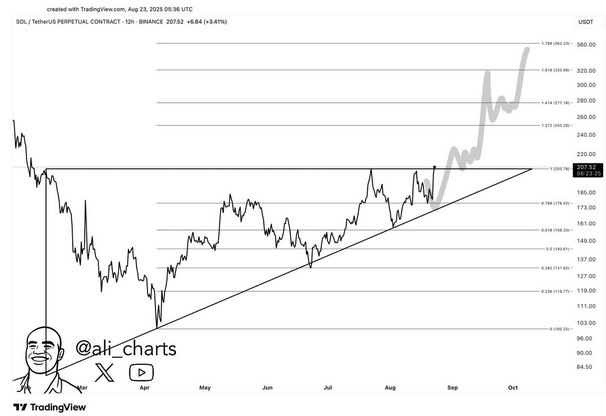
Solana may have broken past $200 recently, but beneath the surface, SOL News shows troubling signs as meme coin trading volume tied to its ecosystem crashes. Meanwhile, Remittix is steadily gaining ground with a $23.3 million raise and a token price of just $0.1030. Unlike Solana’s speculative swings, Remittix offers real-world payment utility, making it [...] The post Why Remittix Is A Preferred Investment Than Solana This Month As SOL Meme Coin Trading Volume Crashes appeared first on Blockonomi.

Author: Blockonomi
Ethereum Foundation Confirms Shutdown of Holesky Testnet After Fusaka Upgrade

Ethereum Foundation Confirms Shutdown of Holesky Testnet After Fusaka Upgrade

TLDR: Ethereum Foundation confirmed Holesky testnet shutdown two weeks after the Fusaka upgrade finalized, marking its planned end-of-life. Holesky launched in 2023 as Ethereum’s largest validator testnet but faced validator exit issues after Pectra testing. Developers are advised to migrate testing to Sepolia for dapps or Hoodi for validator and staking operations. Hoodi, launched in [...] The post Ethereum Foundation Confirms Shutdown of Holesky Testnet After Fusaka Upgrade appeared first on Blockonomi.

Author: Blockonomi
Trump’s Blockchain Move Could Reshape How America Sets Interest Rates

Trump’s Blockchain Move Could Reshape How America Sets Interest Rates

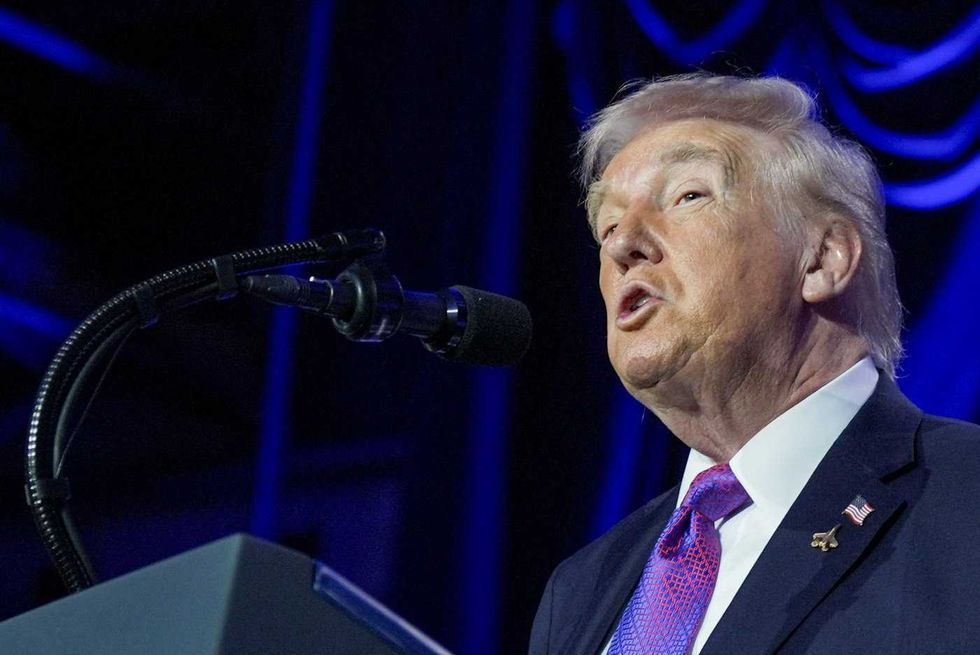
Why this quiet revolution in government transparency has Jerome Powell worriedTrump throws blockchain punch at Powell defending Fed policies in symbolic economic policy showdown. Made with Genspark Ai Agent. Trump’s Commerce Department now publishes GDP data on nine blockchains, making economic truth immutable and globally accessible. This bold move threatens the Federal Reserve’s grip on interest rate decisions by enabling real-time market pricing. Despite Fed Chair Jerome Powell’s resistance, blockchain transparency could restore free market principles to monetary policy. The story begins with a simple announcement that sent shockwaves through Washington’s financial establishment. The U.S. Commerce Department quietly posted America’s GDP data on Bitcoin, Ethereum, and seven other blockchains. What seemed like a tech experiment is actually Trump’s most brilliant chess move yet against the Federal Reserve’s stranglehold on our economy. FINANCIAL DISCLAIMER: This is an opinion article I take no responsibility for any financial decisions made based on this content. I AM NOT a financial expert and I am not licensed to provide financial advice. The views expressed are personal opinions only and should not be considered professional investment guidance. Always conduct your own research and consult with qualified financial advisors before making any investment decisions. Why This Is a “Thing”? Simply because blockchain makes data tamper-proof and instantly accessible worldwide. When Commerce Secretary Howard Lutnick declared “We are making America’s economic truth immutable and globally accessible like never before,” he wasn’t just talking about transparency. He was launching a revolution against central banking as we know it. Tech investor Chamath Palihapitiya gets it. Speaking on the All-In Podcast, he explained the bigger picture: “All the GDP data is now going into a blockchain. So can you imagine what this starts?” The answer should terrify Fed bureaucrats everywhere. GDP data shows unexpectedly strong 4.2% growth. Within seconds, smart contracts on DeFi platforms automatically adjust interest rates based on verified blockchain data. Mortgage rates jump from 6.8% to 7.2% instantly, corporate borrowing costs shift across the entire economy, and savers finally get market-determined returns. No waiting for Fed meetings, no political calculations, just pure market efficiency. Compare that to our current joke of a system. Remember September 2024? When Powell surprised everyone with a massive 50 basis point cut just weeks before the election? Market analysts openly questioned whether the timing was designed to help Kamala Harris’s campaign. That kind of political manipulation becomes impossible when markets set rates automatically based on verified blockchain data. When economic data flows directly to markets through blockchain oracles like Chainlink and Pyth, something beautiful happens. Markets can price risk and set interest rates in real-time, based on actual economic performance rather than the political whims of unelected Fed officials. The Fed’s Panic Makes Perfect Sense Think the Federal Reserve is happy about this? Think again. Trump’s blockchain initiative bypasses their traditional gatekeeping role entirely. No more waiting for Fed meetings. No more Jerome Powell press conferences where he dances around basic questions about inflation and employment. “But won’t this create chaos in financial markets?” That’s exactly what Fed defenders want you to believe. The truth is, markets already react instantly to economic data releases. The difference now is that the data comes directly from the source, verified by blockchain technology, instead of filtered through the Fed’s political lens. Palihapitiya nailed the core issue: “All kinds of economic measures scrubbed for anonymity should get published so that you can have pricing oracles that actually tell you what’s happening in real time. And the markets will then react and set rates in real time.” This isn’t about abolishing the Fed entirely. As Palihapitiya clarified, the central bank should stick to what it does reasonably well = banking regulation and payment system operations. But interest rate manipulation? That’s where free markets beat bureaucrats every single time. Powell’s Political Games ExposedJerome Powell / Source: CNN The timing couldn’t be more perfect. Trump’s blockchain transparency push comes as his tensions with Fed Chair Jerome Powell reach a boiling point. Powell’s track record speaks for itself: calling inflation “transitory” when it clearly wasn’t, then surprising markets with aggressive rate hikes that seemed designed to hurt Trump’s re-election chances. David Sacks, Trump’s crypto and AI czar, put it bluntly on the All-In Podcast: “He’ll cut for [Biden]. He’ll cut for [Yellen]. He’ll cut for Kamala [Harris]. He will not cut for Trump.” This isn’t conspiracy theory territory — it’s pattern recognition. When central bankers make decisions based on political calculations rather than economic data, they undermine the entire system’s credibility. Blockchain data publishing eliminates that human bias factor completely. The numbers are what they are, published instantly and immutably for all to see. Why Markets Beat Bureaucrats The Fed doesn’t want you to understand that interest rates are just prices. They’re the price of money over time, and like all prices, they work best when set by voluntary exchange rather than bureaucratic decree. Traditional Fed policy requires educated guessing about economic conditions, often using outdated data and political considerations. Blockchain-enabled market pricing uses real-time information and the collective wisdom of millions of participants making actual financial decisions with their own money. Which system sounds more reliable to you? The Path ForwardCommerce Secretary Howard Lutnick spearheads Trump’s “landmark effort” to make America the blockchain capital of the world Secretary Lutnick already announced plans to expand blockchain data publishing across all government agencies. Employment data, inflation metrics, trade balances — imagine if all these crucial economic indicators flowed directly to markets through tamper-proof blockchain networks. “Won’t this reduce American financial sovereignty?” Actually, it does the opposite. When other countries see America leading in blockchain financial infrastructure, they’ll want to integrate with our systems. The dollar’s reserve currency status gets stronger, not weaker, when it’s backed by transparent, real-time economic data rather than Fed committee meeting minutes. This initiative puts America on track to become the undisputed “blockchain capital of the world,” as Commerce Secretary Lutnick described it. While other nations debate central bank digital currencies and worry about financial privacy, we’re building the infrastructure for truly free market-based monetary policy. The Bottom Line Trump’s blockchain economic data initiative represents something larger than just technological innovation. It’s a fundamental shift toward transparency, market efficiency, and reduced political manipulation of our financial system. The Federal Reserve’s resistance to this change reveals their true priorities. They’d rather maintain their secretive, politically-influenced decision-making process than embrace the transparency and efficiency that blockchain technology enables. (Ed. note: The most telling aspect of this entire controversy is how quickly Fed defenders resort to fear-mongering about market volatility rather than defending the current system’s actual track record.) Will blockchain-based economic data publishing completely replace traditional monetary policy? Maybe not immediately. But it’s already forcing conversations about central bank accountability that Washington’s financial establishment has avoided for decades. And that alone makes Trump’s latest move a victory for anyone who believes markets work better than bureaucrats when it comes to pricing money. The Fed’s days of unquestioned authority over interest rates may finally be numbered. Originally published at https://bitnewsbot.com on September 2, 2025. Trump’s Blockchain Move Could Reshape How America Sets Interest Rates was originally published in Coinmonks on Medium, where people are continuing the conversation by highlighting and responding to this story

Author: Medium
No “MiCA 2.0 for now”: The EU’s focus shifts to tokenizing RWAs

No “MiCA 2.0 for now”: The EU’s focus shifts to tokenizing RWAs

Mica 2.0 EU

Author: Crypto.news