Lending

Lending protocols form the backbone of the decentralized money market, allowing users to lend or borrow digital assets without intermediaries. Using smart contracts, platforms like Aave and Morpho automate interest rates based on supply and demand while requiring over-collateralization for security. The 2026 lending landscape features advanced permissionless vaults and institutional-grade credit lines. This tag covers the evolution of capital efficiency, liquidations, and the integration of diverse collateral types, including LSTs and tokenized RWAs.

15660 Articles
Created: 2026/02/02 18:52
Updated: 2026/02/02 18:52
As BTC Investors Hunt for High-Upside Plays, This New Crypto Shows One of the Best 20x Setups of Q4 2025

As BTC Investors Hunt for High-Upside Plays, This New Crypto Shows One of the Best 20x Setups of Q4 2025

The post As BTC Investors Hunt for High-Upside Plays, This New Crypto Shows One of the Best 20x Setups of Q4 2025 appeared on BitcoinEthereumNews.com. As long-time Bitcoin holders sit firm, a fresh contender is quietly drawing attention. With large-cap crypto assets seeming to drift, many investors are eyeing opportunities elsewhere. A new project just may fit the bill: lower-priced, early in development, and positioned for a breakout. The question is whether it’s one of the best crypto plays ahead of Q4 2025. Bitcoin (BTC) According to data from Kraken, Bitcoin (BTC) is currently trading around $94,000 USD and holds a market cap of roughly $1.91 trillion USD. Its circulating supply sits near 19.95 million coins, with a hard cap of 21 million. From a technical perspective, Bitcoin faces meaningful resistance. One key barrier lies in the $106,000 to $118,000 zone, where past rallies faltered. Support appears near $90,000, placing the asset in a somewhat defined range. Because of its size and relative maturity, many analysts believe the upside may now be more incremental than explosive.  Mutuum Finance (MUTM) Enter Mutuum Finance (MUTM), a new DeFi crypto project focused on dual lending structures. On the supply side, users deposit assets and receive mtTokens, which earn passive yield and can remain tradable. On the borrower side, the platform offers both variable and stable interest-rate options, with clear loan-to-value (LTV) guidelines and automatic liquidation mechanisms through smart contracts. The team has confirmed that V1 of the protocol will launch on the Sepolia testnet in Q4 2025. This first release will feature a liquidity pool, the mtToken system, a debt token model, and initial assets including ETH and USDT. That move from concept to deployment is a key milestone in the life cycle of an early crypto project. Why MUTM Stands Out When investors look at Bitcoin today, several limitations come into view. Its market cap is massive, making large percentage gains difficult without extraordinary events. Its resistance…

Author: BitcoinEthereumNews
Top 5 Reasons Why XRP Tundra’s Staking Platform Outshines Bitcoin and Ethereum in 2025

Top 5 Reasons Why XRP Tundra’s Staking Platform Outshines Bitcoin and Ethereum in 2025

XRP Tundra’s audited, revenue-backed staking model offers stronger stability, yield potential and transparency than Bitcoin and Ethereum, positioning it as a standout portfolio asset in 2025.

Author: Brave Newcoin
The global market has experienced a massive crash, and even gold has not been spared. Why is this happening?

The global market has experienced a massive crash, and even gold has not been spared. Why is this happening?

Author: Liam, Deep Tide TechFlow November 21st, Black Friday. US stocks plunged, Hong Kong stocks plummeted, and A-shares followed suit. Bitcoin once fell below $86,000, and even safe-haven gold continued to decline. All risky assets collapsed simultaneously, as if held down by the same invisible hand. This is not a crisis of a particular asset, but a systemic, synchronized decline in global markets. What exactly happened? Global stock market crash, let's see who's worse off! Following the "Black Monday" crash, US stocks suffered another sharp decline. The Nasdaq 100 index plunged nearly 5% from its intraday high, ultimately closing down 2.4%, extending its pullback to 7.9% from its record high on October 29. Nvidia's stock price reversed course after rising more than 5% at one point, closing lower, and the entire market lost $2 trillion overnight. Hong Kong stocks and A-shares across the ocean were not spared. The Hang Seng Index fell 2.3%, and the Shanghai Composite Index fell below 3,900 points, a drop of nearly 2%. Of course, the worst off is the crypto market. Bitcoin fell below $86,000 and Ethereum fell below $2,800, with over 245,000 people liquidating $930 million in 24 hours. Starting from a high of $126,000 in October and even falling below $90,000 at one point, Bitcoin not only erased all its gains since 2025 but also fell 9% from the beginning of the year, and a sense of panic began to spread in the market. Even more alarming is that gold, intended as a hedge against risky assets, also failed to hold up, falling 0.5% on November 21 and hovering around $4,000 per ounce. Who is the culprit? The Federal Reserve will be the first to be affected. For the past two months, the market had been anticipating a December rate cut, but the Fed’s sudden shift in attitude was like a bucket of cold water poured over all risk assets. In their recent speeches, several Federal Reserve officials unusually adopted a hawkish stance, citing slow inflation, a resilient labor market, and the possibility of further tightening if necessary. This is tantamount to telling the market: "A December rate cut? Think again." CME FedWatch data confirms the speed of the emotional collapse: A month ago, the probability of an interest rate cut was 93.7%, but now it has dropped to 42.9%. The sudden collapse of expectations sent the US stock and cryptocurrency markets from a state of shock to one of extreme distress. After the Federal Reserve dashed expectations of an interest rate cut, the market's focus shifted to only one company: Nvidia. Nvidia delivered better-than-expected Q3 earnings, which should have ignited tech stocks. However, this "perfect" positive news didn't last long before the market quickly turned green and plummeted from its high. If good news doesn't lead to price increases, that's the biggest negative factor. Especially in a cycle of overvalued tech stocks, if positive news no longer pushes up stock prices, it becomes an opportunity to exit. At this point, Burry, a major short seller who had been consistently shorting Nvidia, added fuel to the fire. Burry has published a series of articles questioning the complex multi-billion dollar "circular financing" relationships between Nvidia and AI companies such as OpenAI, Microsoft, and Oracle. He stated: The actual end-user demand is ridiculously small, with almost all customers being funded by their distributors. Burry has previously warned of an AI bubble multiple times, comparing the AI boom to the dot-com bubble. John Flood, a partner at Goldman Sachs, stated bluntly in a report to clients that a single catalyst is insufficient to explain this dramatic reversal. He believes that market sentiment is currently battered, and investors have fully entered a profit and loss protection mode, focusing excessively on hedging risks. Goldman Sachs' trading team summarized nine factors contributing to the current decline in US stocks: Nvidia's gains have run out Despite better-than-expected Q3 earnings, Nvidia's stock price failed to maintain its upward trend. Goldman Sachs commented that "the real good news not being paid off is usually a bad sign," and the market had already priced in these positive factors. Concerns about private lending are rising. Federal Reserve Governor Lisa Cook publicly warned of potential asset valuation vulnerabilities in the private lending sector and the risks posed by its complex links to the financial system, triggering market vigilance and widening overnight credit market spreads. Employment data failed to reassure people. While the September nonfarm payroll report was solid, it lacked sufficient clarity to guide the Fed's December interest rate decision. The probability of a rate cut only increased slightly, failing to effectively soothe market concerns about the interest rate outlook. Cryptocurrency crash spread Bitcoin's drop below the psychological level of $90,000 triggered a broader sell-off in risk assets, with its decline even preceding the plunge in US stocks, suggesting that the transmission of risk sentiment may have started in high-risk sectors. CTA sell-off accelerates Commodity Trading Advisors (CTAs) were already extremely bullish. As the market fell below short-term technical thresholds, systemic selling by CTAs accelerated, exacerbating the selling pressure. Air Force re-enters the field The reversal of market momentum provided an opportunity for the bears, and short selling became active again, pushing the stock price down further. Poor performance in overseas markets The weak performance of key Asian technology stocks (such as SK Hynix and SoftBank) failed to provide positive external support for US stocks. Market liquidity depletion Goldman Sachs data shows that liquidity at the top of the S&P 500 index has deteriorated significantly, falling well below the year-to-date average. This near-liquidity makes the market extremely poor at absorbing sell orders, meaning even small sell-offs can cause significant volatility. Macro trading dominates the market The surge in the trading volume of exchange-traded funds (ETFs) as a percentage of total market volume indicates that market trading is driven more by a macro perspective and passive funds than by individual stock fundamentals, exacerbating the downward momentum of the overall trend. Has the bull market ended? To answer this question, let's first look at the latest views of Bridgewater Associates founder Ray Dalio on Thursday. He believes that although investments related to artificial intelligence (AI) are driving a market bubble, investors do not need to rush to liquidate their positions . The current market situation is not entirely similar to the bubble peaks investors witnessed in 1999 and 1929. On the contrary, according to some indicators he monitors, the US market is currently at about 80% of that level. This doesn't mean investors should sell their stocks. "I want to reiterate that many things may rise before the bubble bursts," Dalio said. In our view, the drop on November 21 was not a sudden "black swan" event, but a collective run on the market following highly consistent expectations, which also exposed some key issues. Real liquidity in global markets is extremely fragile. Currently, "technology + AI" has become a crowded track for global investment, and any small inflection point can trigger a chain reaction. In particular, the increasing use of quantitative trading strategies, ETFs, and passive funds to support market liquidity has also changed the market structure. The more automated the trading strategies become, the easier it is for a "stampede in the same direction" to form. Therefore, in our view, the essence of this decline is: The "structural crash" was caused by excessive automated trading and overcrowding of funds. Furthermore, an interesting phenomenon is that Bitcoin was the first to fall in this market, marking the first time that cryptocurrencies have truly entered the global asset pricing chain. BTC and ETH are no longer fringe assets; they have become the thermometer of global risk assets and the forefront of sentiment. Based on the above analysis, we believe that the market has not truly entered a bear market, but rather a phase of high volatility. The market needs time to recalibrate its expectations for "growth + interest rates". The investment cycle for AI will not end immediately, but the era of "mindless price increases" is over. The market will shift from expectation-driven to profit realization, whether in the US or A-share market. As the risky asset that fell earliest, had the highest leverage, and the weakest liquidity in this round of decline, cryptocurrencies experienced the most severe drops, but they also often rebounded first.

Author: PANews
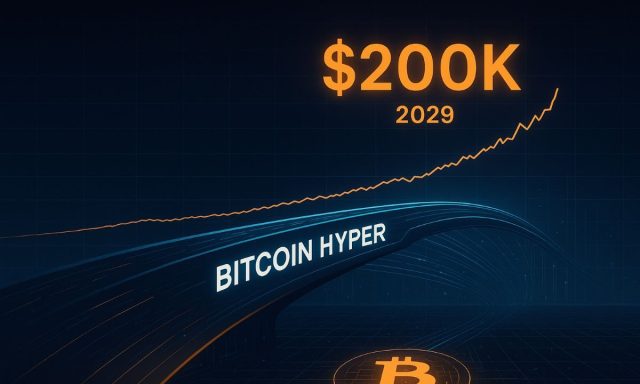
$200K Bitcoin Price Prediction in 2029 Could Make Bitcoin Hyper the L2 of the Future

$200K Bitcoin Price Prediction in 2029 Could Make Bitcoin Hyper the L2 of the Future

Quick Facts: 1️⃣ Peter Brandt’s forecast of a $200K Bitcoin only around 2029 signals multiple infrastructure cycles in the immediate future rather than a single parabolic rise. 2️⃣ Bitcoin Layer-2 contenders – including Lightning, Stacks, and Rootstock – underscore the urgency to solve fees, speed, and on-chain programmability. 3️⃣ Bitcoin Hyper’s Layer-2 will combine ultra-low-latency […]

Author: Bitcoinist
You Could Be Leaving Money on the Table: How XRP Staking Beats Bitcoin Holding in 2025

You Could Be Leaving Money on the Table: How XRP Staking Beats Bitcoin Holding in 2025

Bitcoin’s drop below $90,000 has forced traders to reassess how they approach the market. The month-long slide erased all of Bitcoin’s 2025 performance and sharply contrasted with expectations following October’s highs near $126,000. Renewed uncertainty around interest-rate policy, spot ETF outflows and sustained liquidation pressure intensified the decline, removing more than $1 trillion from total […]

Author: Cryptopolitan
Smart money traders turn bearish on BTC and major altcoins

Smart money traders turn bearish on BTC and major altcoins

Smart money is turning more bearish, with more aggressive shorting on major assets. Short-term holders capitulated with peak realized losses, as BTC dipped below $82,000.

Author: Cryptopolitan
XRP Price Prediction: Why the Growing Tundra Ecosystem Could Skyrocket Your Returns

XRP Price Prediction: Why the Growing Tundra Ecosystem Could Skyrocket Your Returns

The post XRP Price Prediction: Why the Growing Tundra Ecosystem Could Skyrocket Your Returns appeared on BitcoinEthereumNews.com. XRP closes out 2025 in a position that looks increasingly different from many top-tier cryptocurrencies. The broader market has struggled under tightening liquidity and heavy rotation out of high-beta assets. Conversely, XRP has held its structure more effectively, maintaining positive year-to-date performance despite recent volatility. Its historical tendency to perform well during late-Q4 cycles adds context for analysts reassessing what the upcoming months may hold. Those updated projections coincide with a major development for the XRPL ecosystem. A large institution has officially begun acquiring the XRP Tundra project. That’s accelerating its development timeline and confirming a December 15 launch for the full platform.  As part of the acquisition, the institution approved one final 48-hour window at $0.01. It marked the last opportunity for retail buyers to enter before pricing moves higher. Every purchase during this window includes both ecosystem tokens — TUNDRA-S on Solana and TUNDRA-X on the XRP Ledger. Thus, it is preserving the dual-token entry model that shaped earlier phases of the project. As analysts revise 2025 price forecasts toward early 2026, the expanding role of the Tundra ecosystem is becoming a core consideration inside long-range XRP valuation models. XRP’s Position Heading Into 2026’s Market Cycle Market data entering November 2025 shows a split between assets tied to strong institutional infrastructure and those driven primarily by retail speculation. XRP sits in the former category. The aftermath of regulatory clarity earlier this year unlocked direct access for major issuers. That led to the launch of several XRP ETFs. Canary Capital’s fund drew substantial early inflows, and new offerings from additional institutional managers could expand distribution. Corporate treasury participation is also accelerating. Several publicly traded firms have added XRP to operational reserves or cross-border payment programs. That reduced the amount of liquid supply available on exchanges. Ripple’s coordinated treasury initiative…

Author: BitcoinEthereumNews
Cardano ($ADA) is a Ghost Chain: Why Its Investors Are Fleeing to Digitap ($TAP) Crypto Presale

Cardano ($ADA) is a Ghost Chain: Why Its Investors Are Fleeing to Digitap ($TAP) Crypto Presale

Digitap gains momentum as crypto rotates to real utility. With live banking features and rapid presale growth, TAP outshines fading layer1 projects.

Author: Blockchainreporter
What Retail and Institutional Investors Are Overlooking

What Retail and Institutional Investors Are Overlooking

The post What Retail and Institutional Investors Are Overlooking appeared on BitcoinEthereumNews.com. XRP enters the end of 2025 with a valuation structure that looks increasingly misaligned with the fundamentals shaping its next cycle. Retail traders remain locked onto short-term volatility, and institutions continue modeling XRP through narrow lenses that prioritize liquidity and headline catalysts. Both groups are underestimating how much the surrounding infrastructure — especially yield, governance, and audited DeFi layers — will shape XRPL pricing going into 2026. Growing ETF participation, treasury accumulation, and rising ODL settlement volume offer data-backed signals that the XRPL’s utility cycle is accelerating. Yet one of the most overlooked components in current valuation frameworks is the ecosystem forming around XRP Tundra, a dual-chain revenue engine built to support staking, governance, and cross-chain execution. As analysts revisit their long-term models, the gap between market perception and what XRP’s infrastructure is preparing to deliver has become increasingly obvious. Market Signals Show XRP and Tundra Might be Mispriced Heading Into 2026 The market spent most of Q4 reacting to short-term swings, ignoring deeper infrastructure trends unfolding across the XRPL. ETF inflows remain consistent even during corrective periods, and treasury accumulation by public companies continued through the final weeks of 2025. Meanwhile, ODL settlement corridors expanded into additional regions, producing sustainable, non-speculative throughput. Despite these structural signals, XRP remains priced as if its ecosystem has not evolved. Analysts argue that this gap between fundamentals and sentiment is where the most pronounced mispricing develops. Governance workflows, revenue-backed staking mechanics, and coordinated cross-chain liquidity are advancing far faster than either retail or institutional models reflect. This disconnect has only grown after confirmation that a major institution has begun acquiring XRP Tundra, accelerating its entire roadmap and securing a December 15 launch. As part of this acquisition, the institution approved one final 48-hour retail window at $0.01, marking the last time retail buyers…

Author: BitcoinEthereumNews
Coinbase (COIN) Stock: Exchange Offers Million-Dollar Loans Against Your Ethereum

Coinbase (COIN) Stock: Exchange Offers Million-Dollar Loans Against Your Ethereum

TLDR Coinbase introduced Ethereum-backed loans allowing US customers to borrow up to $1 million in USDC against ETH collateral The lending service runs through Morpho protocol on Base network and excludes New York residents Base network has facilitated $1.25 billion in total loan originations with $810 million currently outstanding Borrowers face automatic liquidation if their [...] The post Coinbase (COIN) Stock: Exchange Offers Million-Dollar Loans Against Your Ethereum appeared first on Blockonomi.

Author: Blockonomi