Lending

Lending protocols form the backbone of the decentralized money market, allowing users to lend or borrow digital assets without intermediaries. Using smart contracts, platforms like Aave and Morpho automate interest rates based on supply and demand while requiring over-collateralization for security. The 2026 lending landscape features advanced permissionless vaults and institutional-grade credit lines. This tag covers the evolution of capital efficiency, liquidations, and the integration of diverse collateral types, including LSTs and tokenized RWAs.

15682 Articles
Created: 2026/02/02 18:52
Updated: 2026/02/02 18:52
Best Cryptos to Buy Now: Why XRP Tundra Tops Expert Recommendations

Best Cryptos to Buy Now: Why XRP Tundra Tops Expert Recommendations

The post Best Cryptos to Buy Now: Why XRP Tundra Tops Expert Recommendations appeared on BitcoinEthereumNews.com. The post Best Cryptos to Buy Now: Why XRP Tundra Tops Expert Recommendations appeared first on Coinpedia Fintech News Analysts reviewing the late-2025 landscape are shifting away from sentiment-heavy tokens and looking for systems with verifiable economics, transparent governance and predictable revenue distribution. This shift reflects a broader recalibration: investors are placing greater weight on whether a network can convert real activity into long-term returns rather than relying on market cycles alone. XRP Tundra now appears repeatedly across expert shortlists, not because of marketing momentum, but because its economic structure differs fundamentally from most presale or legacy assets. An institutional acquisition, strictly defined pricing, dual-chain execution and revenue-backed staking make it one of the few early-stage systems positioned for multi-year compounding rather than speculative acceleration. Institutional Control Establishes a Defined Economic Base XRP Tundra’s development changed trajectory after a major institution initiated an acquisition, accelerating the launch to December 15 and formalizing the pricing framework that governs its entry phase. The institution agreed to maintain a final $0.01 retail allocation before institutional pricing replaces it permanently, creating a transparent window that does not fluctuate with market conditions. The due-diligence cycle expanded the project’s verification stack. Independent audits from Cyberscope, Solidproof and FreshCoins accompany full KYC via Vital Block. Contracts are open-source, immutable and deployed with no administrative mint function. All unsold tokens will be burned at launch. For analysts, this creates a clearly defined economic environment — rare for early-phase projects. A breakdown of the acquisition’s implications appears in Token Empire’s recent coverage. Tundra’s Position as the XRPL’s DeFi Layer Is Becoming a Consensus View Experts consistently highlight one of Tundra’s core advantages: its architecture aligns with the XRPL’s emerging demand cycle. As the network moves toward a broader 2026 expansion, analysts expect substantial growth in settlement activity and demand…

Author: BitcoinEthereumNews
Three Altcoins That Look Deeply Discounted and Could Ride the Next Big Rally

Three Altcoins That Look Deeply Discounted and Could Ride the Next Big Rally

The post Three Altcoins That Look Deeply Discounted and Could Ride the Next Big Rally appeared on BitcoinEthereumNews.com. The post Three Altcoins That Look Deeply Discounted and Could Ride the Next Big Rally appeared first on Coinpedia Fintech News The crypto market has been rough lately, but one topic that has suddenly shown up in political conversations is the idea of a possible $2,000 stimulus check. President Trump is trying to boost liquidity in the economy while proving that his tariff policies are working, and this idea has returned as part of that discussion. Nothing is approved yet and no one expects checks this year, but people are talking about what could happen in 2026 if such a payout ever goes through. It has also sparked a simple question.  According to AltcoinBuzz, three projects are attracting more interest because their fundamentals remain strong even though the market is weak. Chainlink: A Quiet but Essential Player in Real World Assets Chainlink continues to feel like the silent backbone of the crypto industry. It does not rely on hype and most of its biggest work happens quietly with institutions and developers. Even so, its importance keeps growing because Real World Assets are becoming one of the strongest long term trends in the market. Everything from tokenized bonds to gold to real estate needs accurate data feeds. Chainlink provides that infrastructure and is still the most trusted oracle network. New ETFs listed with the DTCC are also expected to bring more structured and long term capital into the ecosystem. Despite all this progress, LINK has dropped with the broader market, making it a rare discount for investors who believe RWAs and DeFi will keep expanding. Bittensor: A Rising Force in Decentralized AI Bittensor and its TAO token have become one of the most talked about names in crypto AI. The network now supports more than one hundred AI subnets, with each…

Author: BitcoinEthereumNews
Top Crypto Update, MUTM’s Phase 6 Has Less Than 5% Remaining

Top Crypto Update, MUTM’s Phase 6 Has Less Than 5% Remaining

The post Top Crypto Update, MUTM’s Phase 6 Has Less Than 5% Remaining appeared on BitcoinEthereumNews.com. The post Top Crypto Update, MUTM’s Phase 6 Has Less Than 5% Remaining appeared first on Coinpedia Fintech News The crypto market is shifting rapidly toward utility-driven projects in 2025. Investors are focusing on platforms that deliver real value and continuous activity. Mutuum Finance (MUTM) is quickly emerging as one of the best crypto opportunities this year. Phase 6 of the presale is capturing massive attention. Less than 5% of the allocated 170 million tokens remain, driving urgent buying pressure. Market watchers are preparing for rapid participation as early investors aim to secure tokens before prices rise. Mutuum Finance (MUTM)’s Presale is Closing Fast Phase 6 of Mutuum Finance (MUTM) is priced at $0.035. The total supply will eventually reach 4B MUTMs and have already been releasing phases wise. Combined presale phases have raised approximately $18.90 million and more than 18,100 holders are already participating in the ongoing presale. With 95% of Phase 6 already sold, the remaining supply is extremely limited. Phase 7 will increase the price by 15% to $0.040, making this the final chance to acquire MUTM at the current rate. Investors taking part now will capture maximum potential upside before the price increases. Mutuum Finance (MUTM) is a next-generation lending protocol offering dual lending models: peer-to-contract (P2C) and peer-to-peer (P2P). The platform will focus on delivering practical value for lenders, borrowers, and stakers. Each token interaction inside the ecosystem will drive natural demand and reinforce MUTM’s utility. Why Is It Worth It? Real Activity Supporting Future Demand Mutuum Finance (MUTM) plans a synchronized launch, with the platform going live while the token listing occurs simultaneously. This approach will avoid inactive token periods that often occur in presales. Exchanges are expected to show strong interest because they prefer listing tokens backed by active platforms. Higher trading volume,…

Author: BitcoinEthereumNews
How Tundra’s Dual-Chain Model Beats Single Blockchain Limits

How Tundra’s Dual-Chain Model Beats Single Blockchain Limits

The post How Tundra’s Dual-Chain Model Beats Single Blockchain Limits appeared on BitcoinEthereumNews.com. XRP Latest News: How Tundra’s Dual-Chain Model Beats Single Blockchain […] XRP Latest News: How Tundra’s Dual-Chain Model Beats Single Blockchain Limits   Recent XRP headlines have been dominated by a surge of institutional ETF approvals, marking the most significant shift in the asset’s market structure since the earliest phases of XRPL adoption. 21Shares secured automatic clearance through an SEC Form 8-A filing, preparing its TOXR product for listing on Cboe. Bitwise confirmed its own offering will begin trading on NYSE Arca under the XRP ticker, while Franklin Templeton’s XRPZ gained attention for its 0.19% management fee — the lowest among the first issuers. Grayscale is finalizing its entry with a competing structure expected to go live next week. These launches create regulated access for institutions that cannot hold raw digital assets directly, expanding XRP participation across pension administrators, sovereign vehicles and traditional AUM platforms. As the market concentrates on ETF flows, listing mechanics and fee structures, a parallel development is underway within the XRPL ecosystem. XRP Tundra, now operating under an ongoing institutional acquisition, has accelerated its launch to December 15 and is preparing the network’s first dual-chain DeFi architecture. The liquidity expansion expected from ETF trading directly strengthens the revenue pathways that support Tundra’s staking engine, creating a secondary demand cycle that remains largely overlooked by retail investors. ETF Approvals Reshape XRPL Liquidity and Institutional Access The introduction of multiple XRP ETFs marks a structural milestone similar to Bitcoin’s 2024 inflow cycle, which demonstrated how regulated access transforms market behavior. Trading venues such as Cboe and NYSE Arca enable institutions bound by compliance restrictions to deploy capital into XRP through familiar investment wrappers. These flows tend to exhibit low turnover, extended holding periods and predictable rebalancing cycles, all of which deepen the liquidity profile of the underlying asset.…

Author: BitcoinEthereumNews
XRP Latest News: How Tundra’s Dual-Chain Model Beats Single Blockchain Limits

XRP Latest News: How Tundra’s Dual-Chain Model Beats Single Blockchain Limits

XRP ETF approvals expand institutional access, while Tundra’s dual-chain architecture positions the XRPL for its next phase of liquidity growth and revenue-backed staking.

Author: Brave Newcoin
Bitwise CIO: Structural Drags May Outweigh Paths for DATs to Boost Bitcoin Per Share

Bitwise CIO: Structural Drags May Outweigh Paths for DATs to Boost Bitcoin Per Share

The post Bitwise CIO: Structural Drags May Outweigh Paths for DATs to Boost Bitcoin Per Share appeared on BitcoinEthereumNews.com. Digital asset treasuries (DATs) face structural drag from illiquidity, high expenses, and execution risks, making it unlikely for most to sustain premiums over their crypto holdings. Only exceptional firms with effective strategies like token lending or discounted buys can overcome these challenges and trade at a premium. Illiquidity creates automatic discounts as investors avoid paying […] Source: https://en.coinotag.com/bitwise-cio-structural-drags-may-outweigh-paths-for-dats-to-boost-bitcoin-per-share

Author: BitcoinEthereumNews
Funding Weekly Report | 18 publicly disclosed funding events; prediction market platform Kalshi completes $1 billion funding round, reaching a new valuation of $11 billion.

Funding Weekly Report | 18 publicly disclosed funding events; prediction market platform Kalshi completes $1 billion funding round, reaching a new valuation of $11 billion.

Highlights of this episode According to incomplete statistics from PANews, there were 18 investment and financing events in the global blockchain sector last week (November 17-23), with a total funding scale exceeding US$1.334 billion; in addition, listed companies raised over US$300 million in cryptocurrency asset reserves. A summary is as follows: In the DeFi sector, six investment and financing events were announced, including the completion of a new $7 million financing round for RateX, a yield trading protocol in the Solana ecosystem, with participation from Animoca Ventures and others. Two investment and financing events were announced in the Web3+AI sector. Among them, ZENi, an AI agent intelligent data layer, completed a $1.5 million seed round of financing, led by Waterdrip Capital and Mindfulness Capital. Three investment and financing events were announced in the infrastructure & tools sector, among which CratD2C, a Layer 1 decentralized autonomous smart chain, received a strategic investment of $30 million from Nimbus Capital; Three investment and financing events were announced in the centralized finance sector, including the completion of a €30 million Series A funding round by French crypto bank and fintech company Deblock. In the area of other Web3 applications, four investment and financing events were announced, including the completion of a $10 million Series A funding round for Web3 game WizzWoods, led by Animoca and IVC; In addition, one publicly traded company completed a financing round for its crypto treasury strategy: Onfolio Holdings raised $300 million. DeFi DeFi platform TRONBANK has secured strategic investments from multiple institutions, with BlockX leading the $10 million round. TronBank, a TRON ecosystem infrastructure provider, announced that it has secured strategic investment from five international institutions, with BlockX leading the $10 million round. Other participating institutions include Sky Venture Labs, K300 Ventures, Blockin.Ventures, and Onebit Ventures. TronBank is a DeFi platform on the TRON blockchain, providing energy leasing, TRX staking, and on-chain yield services through secure and transparent smart contracts. TronBank currently focuses on three main areas: energy leasing, TRX staking finance, and yield optimization mechanisms. RateX, the revenue-sharing protocol for the Solana ecosystem, has raised $7 million in new funding, with participation from Animoca Ventures and others. RateX, the revenue-sharing protocol for the Solana ecosystem, has raised a total of $10.4 million in funding over the past two years. Its latest funding round raised $7 million, with investors including Animoca Ventures, ECHO, GSR, Crypto.com Capital, Gate, Rzong Capital, BGX Capital, and Summer Capital. The protocol, as described, helps users trade and manage profits through tokenized financial products. The recently launched Mooncake upgrade supports trading of leveraged tokens without liquidation. In June of this year, the US-listed DeFi Development Corp. strategically integrated its staked tokens with the RateX ecosystem to obtain additional yield strategies. HelloTrade, a blockchain trading platform founded by a former BlackRock executive, has raised $4.6 million in funding, led by Dragonfly Capital. HelloTrade, a blockchain trading platform founded by former BlackRock executives, has completed a $4.6 million Series A funding round, led by Dragonfly Capital, with participation from Mirana Ventures and several angel investors. The company was co-founded by Kevin Tang, former Senior Director of BlackRock's Digital Assets team, and Wyatt Raich, former Head of Engineering at the Digital Asset Labs. Its aim is to provide overseas investors in Vietnam, Indonesia, and other countries with convenient access to US stocks and commodities through blockchain technology. The platform will support derivatives such as perpetual futures and is scheduled to launch between the end of this year and early next year. Mu Digital has raised $1.5 million in Pre-Seed funding to focus on bringing high-yield credit from Asia onto the blockchain. Mu Digital has announced the completion of a $1.5 million Pre-Seed funding round, with investors including UOB Venture Management, Signum Capital, CMS Holdings, Cointelegraph Accelerator, and Echo. Mu Digital focuses on bringing real-world assets from Asia's $20 trillion credit market onto the blockchain and plans to launch its Monad mainnet on November 24th. Products include the Asia Dollar (AZND), offering yields of 6-7%, and muBOND, offering yields up to 15%. Takadao completes $1.5 million seed funding round and launches LifeCard for stablecoin spending. Takadao, a Riyadh-based Saudi Arabian Web3 financial platform with offices in Singapore, announced the completion of a $1.5 million seed funding round. Investors included Hasan VC (Malaysia), Syla Invest (France), Wahed Ventures (UK), Ice Blue Fund (Japan), Istari Ventures (USA), Adverse (Saudi Arabia), and Draper Associates from Silicon Valley. This brings its total funding to approximately $3.1 million (including previous pre-seed rounds and other investments). In addition, Takadao launched LifeCard—a prepaid VISA card that allows users to use stablecoins like cash at any VISA-enabled location. USD.AI development team Permian Labs announced it has received investment from Coinbase Ventures. Permian Labs, the development team behind USD.AI, announced it has received investment from Coinbase Ventures, though the specific amount was not disclosed. USD.AI is a structured on-chain lending system that connects decentralized liquidity with real-world financing for GPU infrastructure that supports artificial intelligence. Permian Labs is responsible for developing and maintaining the USD.AI protocol, which aims to facilitate on-chain secured lending operations using verifiable productive assets as collateral. USD.AI also issues the stablecoin USDai and the yield-generating sUSDai, both of which form the basis of the protocol. AI Numerai completes $30 million funding round at a $500 million valuation. Numerai, an AI-powered decentralized hedge fund, has raised $30 million at a $500 million valuation, led by a university endowment fund. This represents a five-fold increase in valuation compared to its previous round in 2023. Existing investors, including Union Square Ventures, Shine Capital, and Paul Tudor Jones, also participated in this round. ZENi, an AI-powered agent intelligent data layer, has raised $1.5 million in seed funding, led by Waterdrip Capital and others. ZENi, an AI agent intelligent data layer, announced the completion of a $1.5 million seed funding round led by Waterdrip Capital and Mindfulness Capital, with participation from Rootz Labs, Attention Ventures, DePIN-X, and Metalabs Ventures. ZENi is described as an intelligent data layer supporting AI agents and the emerging InfoFi economy. It plans to build the data intelligence backbone upon which AI agents rely, transforming online and on-chain signals into structured intelligent information and enabling automated execution. Infrastructure & Tools CratD2C, a Layer 1 decentralized autonomous smart chain, has received a $30 million strategic investment from Nimbus Capital. CratD2C, a Layer 1 decentralized autonomous smart chain (DASC), has secured $30 million in strategic investment from private alternative investment group Nimbus Capital. This funding will strengthen CratD2C's global infrastructure, expand its diverse "12+1" ecosystem, and accelerate the rollout of its flagship product within the network. CratD2C is described as an EVM-compatible Layer-1 blockchain supporting an interconnected ecosystem encompassing e-commerce, real estate, DeFi, and asset tokenization. CratD2C is based on a DPoS mechanism and has been audited by CertiK and Hacken. 0xbow, a compliant privacy protocol provider, has raised $3.5 million in seed funding, led by Starbloom Capital. 0xbow, a developer of compliant privacy protocols, announced the completion of a $3.5 million seed funding round led by Starbloom Capital, with participation from Coinbase Ventures, Boost VC, Status, and several other well-known investors. 0xbow's Privacy Pools protocol, launched in March 2025, achieves on-chain privacy and regulatory compatibility through zero-knowledge proofs and a real-time compliance layer (ASP), and has processed over $6 million in transactions to date. The protocol was recently integrated into Kohaku, a wallet launched by the Ethereum Foundation. Tether announced an investment in Parfin, accelerating USDT adoption by institutional users in Latin America. Stablecoin issuer Tether announced an investment in Parfin, aiming to accelerate institutional adoption of its USDT stablecoin and enhance Latin America's access to efficient blockchain settlement solutions. Parfin is described as a Latin American digital asset custody, tokenization, trading, and management platform that provides financial institutions with tools to securely explore the potential of digital assets and blockchain technology. DAT (These types of transactions are not included in this week's financing report statistics) Onfolio Holdings, a publicly traded company, raised $300 million to build a digital asset reserve. Onfolio Holdings Inc. (Nasdaq: ONFO, ONFOW) announced that it has secured up to $300 million in financing through a convertible bond arrangement with a U.S. institutional investor. This agreement provides Onfolio with substantial long-term capital to build its digital asset treasury (including Bitcoin, Ethereum, and Solana), generate yield through staking, strengthen its balance sheet, and accelerate the growth of its operations. The initial transaction terms are as follows: $6 million in gross proceeds will be raised upon the first closing approximately November 18, 2025 (subject to customary conditions). An additional $2 million is expected to be raised upon the second closing approximately 30 days later. Potential future tranches of financing could reach up to $292 million, subject to certain conditions. Centralized Finance Kraken receives $200 million investment from Citadel Securities, raising its valuation to $20 billion. US cryptocurrency exchange Kraken has secured a $200 million strategic investment from Citadel Securities, raising its valuation to $20 billion. This funding round follows its $600 million round completed in September, which valued the company at $15 billion. Investors include Jane Street, DRW, and Oppenheimer. Kraken plans to use the funds for global expansion, payment product development, and preparations for an IPO next year. Citadel founder Ken Griffin has historically held a cautious stance on the cryptocurrency market, and this move is seen as a key signal of a shift in his attitude towards digital assets. Crypto banking and fintech company Deblock has raised €30 million in Series A funding, led by Speedinvest. French crypto-bank fintech company Deblock has raised €30 million in Series A funding to support its expansion in Europe, with Germany set to become its next core market. The round was led by Speedinvest, with participation from Commerz Ventures and Latitude, and existing investors 20VC, Headline, Chalfen Ventures, and Kraken Ventures also participating. Since its launch in France in April 2024, Deblock has amassed over 300,000 users. It offers Europe's first fully on-chain banking solution, including a regulated EMI euro account and a 100% self-custodied crypto wallet. Users can manage fiat currency and digital assets on a single platform, trade over 100 cryptocurrencies without restrictions, and use the funds for everyday payments such as rent, shopping, and cross-border transfers. Tether announces strategic investment in Bitcoin lending marketplace Ledn Tether announced a strategic investment in Ledn, a Bitcoin-secured lending marketplace, to expand its Bitcoin-secured lending business opportunities. Ledn's infrastructure encompasses custody, risk management, and clearing systems. Since its inception, Ledn has issued over $2.8 billion in Bitcoin-secured loans, including over $1 billion in 2025, marking its strongest annual performance to date. In the third quarter of 2025 alone, Ledn issued $392 million in loans, nearly matching its total for the entire year of 2024. The company now reports that its annual recurring revenue (ARR) has exceeded $100 million, highlighting the continued growth in market demand for secure Bitcoin-secured lending products. other Predicting the market: Kalshi raised $1 billion in funding at a valuation of $11 billion, led by Sequoia and CapitalG. Prediction market platform Kalshi has completed a $1 billion funding round, valuing the company at $11 billion, led by Sequoia and CapitalG. This round comes less than two months after its previous $300 million funding round at a $5 billion valuation. Kalshi allows users to place bets on various events and operates within legal boundaries, with annualized trading volume exceeding $50 billion. Its main competitor, Polymarket, is also reportedly planning a funding round at a valuation of $12-15 billion. FastX Network Raises $3 Million in Funding FastX Network has completed a $3 million funding round, led by IBC Group, Castrum Partner, Alpha Capital, Gemhead, and TBV Partner. FastX Network is an AI-driven decentralized prediction market that uses custom LLM models for cryptographic predictions and integrates real-time data. It is accessible via a web page and a Telegram bot. Web3 games: Web3 game WizzWoods raises $10 million in Series A funding. Web3 gaming project WizzWoods announced the completion of a $10 million Series A funding round, led by Animoca Brands and Infinity Ventures Crypto (IVC), with participation from several angel investors. This funding round will accelerate product development and drive WizzWoods' growth in the Web3 gaming sector. Blockchain-based shooter game XOCIETY has raised $1.6 million, led by Neoclassic Capital and Winguard. Blockchain-based shooter XOCIETY has raised $1.6 million to prepare for an Early Access launch on the Epic Games Store in November 2025. The funding round, announced on November 19th, was led by Neoclassic Capital and Winguard. The funds will be used to expand the Sui blockchain infrastructure and support XOCIETY's growth within the broader Web3 gaming ecosystem. Venture capital firms New crypto incubator Obex has raised $37 million to support yield-generating stablecoins. In an interview, the team behind the new crypto incubator Obex announced that it has raised $37 million to support the development of a next-generation yield-generating stablecoin led by Framework Ventures, LayerZero, and the Sky ecosystem. The initiative aims to invest in and fund projects that bring real-world asset-backed strategies to on-chain, introducing institutional-grade risk control and underwriting practices to this rapidly evolving field. Obex will become Sky's latest fund allocator, providing financial support to help the project scale from the protocol's large reserves and generate yields through strategies. The program will focus on stablecoins backed by high-quality real-world assets, with a particular emphasis on three core areas: computational credit (such as tokenized GPU infrastructure), energy assets (such as municipal-grade solar and battery deployments), and lending to large fintech companies. The incubator will provide early-stage teams with funding, technical resources, and access to Sky infrastructure for 12-week projects.

Author: PANews
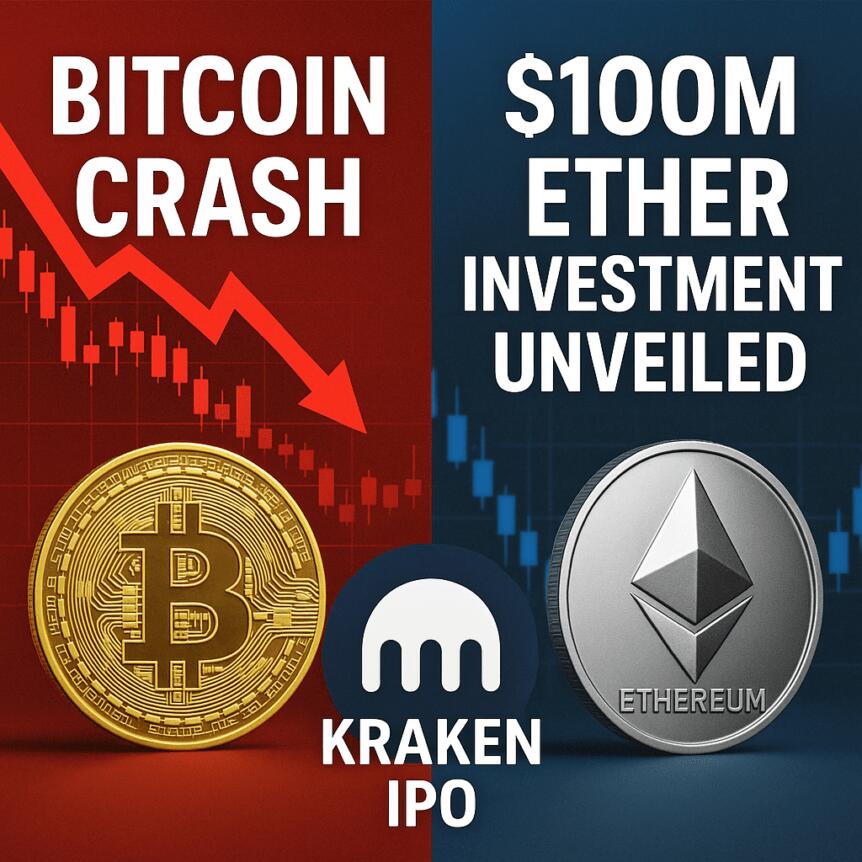
Bitcoin Crash, Kraken IPO, and $100M Ether Investment Unveiled

Bitcoin Crash, Kraken IPO, and $100M Ether Investment Unveiled

Institutional Confidence Persists Despite Bitcoin’s Dip Below $90,000 As Bitcoin’s price fell below the $90,000 mark this week, triggering concerns about a potential market downturn, institutional investors continued to demonstrate strong confidence by funneling hundreds of millions of dollars into crypto enterprises. This ongoing inflow underscores a broader trend of maturation within the digital asset [...]

Author: Crypto Breaking News
KuCoin Vs Bitget 2025: Which Crypto Exchange Is Better for You?

KuCoin Vs Bitget 2025: Which Crypto Exchange Is Better for You?

Are you looking for a Bitget Vs. KuCoin review to make an informed decision? If so, you’re exactly where you need to be. Both Bitget and KuCoin are popular cryptocurrency exchanges, known for their innovative trading tools, low fees, and new token listings.  In this article, we’ll discuss how Bitget and KuCoin compare with respect to their features, products, services, security, and fees. We’ll also highlight the differences between their referral programs, user experience, and customer support.  User Score9.3 Promotion11,000 USDT Sign-Up Bonus-10% Trading FeesClaim RewardKuCoin Review User Score9.4 Promotion6,200 USDT Sign-Up Bonus-20% Trading FeesClaim RewardBitget Review KuCoin Vs Bitget: Overview Comparison Metrics KuCoin Bitget Inception year 2017 2018 Global user base 40M+ 120M+ Geographical reach 200+ countries 150+ countries Native cryptocurrency KCS BGB Listed tokens 1,000+ 600+ Trading pairs 1,300+ 775+ Primary features P2P, spot, margin, futures, options, bot, and leveraged tokens trading. Spot, P2P, margin, on-chain, block, futures, pre-market, bot, and copy trading. Staking products Flexible Savings, On-chain Staking, KCS Staking, Shark Fin, Dual Investment, Snowball, KuMining, Crypto Lending, and KCS loyalty. Fixed/Flexible Earn, On-chain Earn/Yield, HodlerYield, Shark Fin, Crypto Loans, and Dual Investment. Payment options 100+ payment methods, including wire transfer, Google/Apple Pay, and third-party channels like Simplex and Banxa 100+ payment methods, including SEPA, Apple/Google Pay, debit/credit card, and third-party providers like Neteller and Cashapp.  Security Multi-factor authentication, withdrawal anti-tampering, proof-of-reserves, data leak prevention, firewalls, DDoS protection, unified egress management, and centralized security logs. Proof-of-reserves, protection fund, two-factor authentication, anti-phishing code, cold storage, withdrawal whitelists, and fund code. Licenses Possesses PCI DSS and ISO/IEC 27001 certifications; Registered with FIU-India and has applied for MiCAR license in Austria; Holds licenses in Seychelles and the Cayman Islands. Regulatory licenses in multiple countries, including Argentina, Bulgaria, the UK, and Australia. Mobile app iOS and Android iOS and Android Referral Code/Link KuCoin Referral Code Bitget Referral Code What is KuCoin? KuCoin is a leading cryptocurrency exchange, recognized as a global unicorn by Hurun and a top crypto app by Forbes. It aims to leverage the transformative power of blockchain technology to financially empower everyone, especially the unbanked. Its mission is to stimulate a free flow of value in the digital arena. Known as the “People’s Exchange” in the crypto industry, KuCoin serves 40+ million crypto users across 200+ countries. Pros & Cons of KuCoin Pros Cons Best crypto exchange for gaining early access to new tokens before they’re officially listed on other exchanges. Multiple trading and staking options. Advanced trading tools. Offers KuCoin Pay, a cost-efficient Web3 payment solution. Low trading fees. Ranks #1 in globalization. Intuitive interface. Provides detailed educational resources via KuCoin Learn. Exclusive benefits for institutional traders like lower fees, API services, OTC trading, a market maker program, and up to 70% broker commission. Limited trading bots. No copy trading feature. KuCard is available for EEA residents only. Doesn’t render services in many countries, including the US. Standout Features of KuCoin GemSpace: It is KuCoin’s dedicated platform for project promotions and new coin listings. It comprises the following: HODLer airdrops: It is a unique program that rewards KCS holders with airdrops based on the historical snapshot of their asset balances.  Spotlight: It is KuCoin’s Launchpad, where you can gain early access to tokens of upcoming projects.  GemPool: You can earn token airdrops at no extra cost by staking your cryptocurrencies for specified periods. USD1 points: KuCoin has partnered with World Liberty Financial (WLF) to launch USD1, a stablecoin pegged 1:1 to the US Dollar. To earn USD1 points, traders must perform daily tasks. They can redeem these points for rewards in the future. Gemslot: It enables users to unlock prize pools by completing deposit and trade tasks. GemVote: This is the KuCoin community voting process, where you can vote for your favourite projects. The highest-ranked projects have a chance to get listed on the exchange.  KuCoin Earn: KuCoin offers various staking products to help you earn passive income by putting your crypto holdings to work. KuCoin Earn products can be classified into the following categories: Leveraged tokens (LTs): It is a special type of crypto derivative that offers magnified exposure to an underlying cryptocurrency. It doesn’t require margin maintenance or collateral, eliminating liquidation risks. KuCoin Referral CodeUp to $11,000 USDT Welcome Bonus-10% Trading FeesCode Valid: November 2025CopyClaim Reward Now! What is Bitget? Bitget is the best crypto exchange for copy trading. It is also known for its user-friendly interface, TradingView integration, very low fees, intelligent bots, and advanced tools. It aims to encourage people to embrace cryptocurrencies and make smarter investments. Since its launch in 2018, Bitget has emerged as one of the highest-ranked cryptocurrency exchanges by trading volumes. It has a user base of 120+ million across 150+ countries. Pros & Cons of Bitget Pros Cons Top-ranked copy trading platform. Pioneer cryptocurrency exchange to offer quantum swap contracts. Numerous automated bots. High-yield staking and liquidity mining products. Suitable for new crypto traders. Simple and responsive interface. Multiple features, including Lauchhub for accessing promising new tokens. Comprehensive learning resources via Bitget Learn. Exclusive privileges for institutional investors, like low trading fees, 24/7 priority support, API integrations, up to 50% broker commission, and $7 million protection fund. Doesn’t offer standard crypto options. Lower referral commission. Less global coverage and is unavailable to users in all countries, including US traders. Standout Features of Bitget Bitget Copy Trading platform: Bitget is a top crypto exchange for copy trading with 200,000+ elite traders and 800,000+ copiers. All lead traders are vetted by the exchange. Plus, trader statistics are updated in real time to maintain 100% transparency.  Bitget Earn: If you want to earn passive income from idle crypto assets, explore Bitget’s staking services. Simple Earn: You can lock up designated tokens for fixed/flexible durations to earn high yields or hourly and daily interest. On-chain Earn: It helps you stake cryptocurrencies on proof-of-stake blockchains without running your own validator node.  On-chain Elite: It offers curated DeFi strategies and products that generate daily yield. These include BGUSD (backed by RWAs like US treasury bonds), BGBTC(wrapped Bitcoin), and BGSOL (liquidity lock-up). HodlerYield: You can earn baseline APR by holding interest-bearing tokens in your spot and futures trading accounts. Shark Fin: It is a principal-protected product that yields a steady APR of 5% and a variable APR of up to 9%. Dual Investment: It allows you to buy cryptocurrencies at lower prices or sell at higher rates. As it requires you to invest in two crypto assets, you’ll earn interest at settlement time regardless of price direction. Crypto loans: You can borrow cryptocurrencies for flexible periods at competitive rates by pledging your digital assets as collateral. Bitget Referral CodeGet $6,200 USDT Bonus20% Trading Fee DiscountsCode Valid: November 2025CopyClaim Reward Now! KuCoin vs Bitget Comparison: Trading Features Feature KuCoin Bitget P2P platform ✓ ✓ Spot market ✓ ✓ Margin trading ✓ (Up to 100x) ✓ (Up to 125x) Trading bots ✓ ✓ Futures contracts ✓ ✓ Options contracts ✓ х Leveraged tokens ✓ х OTC trading ✓ ✓ Convert ✓ ✓ NFT marketplace ✓ ✓ On-chain trading х ✓ Copy trading х ✓ Pre-market trading х ✓ Paper trading ✓ ✓ KuCoin vs Bitget Comparison: Platform Products and Services KuCoin Spot and derivatives trading: KuCoin supports over 1,290 spot trading pairs and over 560 futures pairs. For derivative enthusiasts, the exchange offers USDC-M, USDT-M, and coin-M futures, and USDT-settled options. It also offers leveraged tokens to help traders amplify their crypto market positions without worrying about margin requirements or liquidation. Leverage trading: Whether you’re trading spot or futures positions, KuCoin enables you to magnify your gains by utilizing leverage. On most spot pairs, you’ll get up to 10x leverage. For select futures pairs, you can even obtain up to 100x leverage.  KuCoin wallet: KuCoin’s decentralized web3 wallet enables you to store, swap, trade, and manage your digital assets across blockchains seamlessly. It helps you navigate dApps, including NFTs, DEXs, and GameFi, with ease. Bitget Spot and futures trading: Bitget features 775+ spot pairs and 786+ futures trading pairs. While the exchange offers USDT, USDC, and coin-settled futures, it also allows you to trade real-world assets through stock futures. If you want to amplify your potential profits, you can also get up to 125x leverage on select futures pairs.  Trading bots: Algorithmic traders looking for AI-powered or customizable automation tools will find Bitget’s trading bots helpful. The platform features pre-built bots that help users maximize gains regardless of market volatility. These include spot/futures grid, martingale, AI, and custodial bots. Moreover, Bitget facilitates automatic trading of expert strategies through bot copy trading. Bitget wallet: It is a non-custodial Web3 wallet, offering multiple services. These include a crypto debit card, staking, token swapping, a dApp browser, and a $300M protection fund. KuCoin vs Bitget Comparison: Trading Fee Structures Product / Service KuCoin fees Bitget fees Spot trading Asset class A: 0.1% for makers and takers. Class B: 0.2% for makers and takers. Class C: 0.3% for makers and takers. 0.1% maker, 0.1% taker. Futures trading 0.02% maker, 0.06% taker 0.02% maker, 0.06% taker. Trading fee rebates 20% discount on spot fees for KCS holders. 20% discount on spot fees for BGB owners. Deposit fees Nil Nil Withdrawal fees Differs based on the cryptocurrency and blockchain you select. Varies depending on the cryptocurrency and network you choose. Crypto debit card Non-EUR transactions: 2% of the total amount. KuCard Annual fee: 10 EUR. Non-USD purchases: 1.7% fiat conversion fee. No top-up, monthly, or annual fees. Zero rate markups. Bitget vs KuCoin: Cryptocurrencies Supported, Liquidity, and Trading Volumes Metrics Bitget KuCoin Supported coins 679+ 1,009+ Spot trading pairs 775+ 1,295+ Derivatives trading pairs 785+ 559+ Liquidity level Deep Deep Trading volumes Daily volume: $20B Consistently ranks among the top 10 largest exchanges. Consistently ranks among the top 10 largest exchanges. KuCoin vs Bitget: Security Comparison KuCoin Security Measures Account safety: To protect user accounts, KuCoin has implemented anti-phishing measures, privacy protection, device integrity audits, and suspicious plugin detection. Wallet security: For safeguarding user wallets, the exchange has formulated anti-tampering measures for withdrawals. It also harnesses machine learning and AI to detect fraudulent transactions. Moreover, its reserves are distributed across hot, warm, and cold wallets, with most assets being stored in multi-signature cold storage. Lastly, it publishes proof-of-reserves monthly. Data protection: The exchange has established various measures to process, store, and safeguard confidential customer data. These include data encryption, backup, recovery, isolation, and leak prevention.  System and app safety: KuCoin has formulated stringent guidelines for developing, testing, and deploying systems and applications. These include real-time security scans, container audits, API whitelisted IP management, etc. Platform and operational security: KuCoin has built a multi-layered defence mechanism, including firewalls, DDoS protection, DNS safety, and real-time traffic monitoring.  Bitget Security Measures Protection Fund: To compensate traders who have incurred losses due to platform issues, Bitget has established a protection fund. It acts as an additional safety layer for user assets against cyber attacks. Currently, the fund has 6,500 BTC, approximately $660 million. Offline storage: Bitget stores most customer assets in cold wallets. For added security, the exchange harnesses multi-signature technology, mandating multiple authorizations for accessing the assets. It has also set up off-site backup solutions for its cold storage.  Advanced security: The exchange maintains and publishes its proof-of-reserves monthly. It holds 100% of user assets in reserves, ensuring that the platform can cover all withdrawals smoothly. Moreover, Bitget has implemented other security features like PIN/fund/anti-phishing code, withdrawal allowlists, and 2FA. KuCoin vs Bitget Comparison: Affiliate & Referral Programs Particulars KuCoin Bitget Referral commission Up to 35% commission. Up to 25% discount on the transaction fees of invitees for 365 days, beginning from the invitees’ sign-up dates. Referral program eligibility Invite 2 friends. Invitees must sign up using your referral code/link, verify KYC, and start trading. Refer new users.  Referees must register using your code/ link, complete identity verification, and perform the qualifying tasks. Rewards Hub Newcomer bonuses (USDT vouchers/coupons) and trading rewards. New user perks, trading bonuses, airdrops, free USDT, futures position vouchers, trial passes, fee rebates, mystery boxes, and daily rewards. Affiliate commission Up to 60% Up to 50% Affiliate program eligibility Any individual/organization with community, media, and resources, such as KOLs, influencers, and content creators. KOLs, content creators, or social media influencers. Exclusive affiliate privileges Personalized dashboard for tracking referral earnings and second-tier commissions. Opportunities to attend industry summits, access to tickets for various sports/entertainment events, 24/7 multilingual support, market updates, and daily insights. Bitget vs KuCoin Comparison: User Experience Both Bitget and KuCoin apps have scored over 4 out of 5 stars, based on reviews from iOS/Android users. Overall, mobile customers are satisfied with the apps’ user-friendly designs and intuitive interfaces. However, user feedback shared on Trustpilot paints a different picture. KuCoin has received a rating of 1.6/5 based on over 1,440 customer reviews. Many KuCoin users have reported issues pertaining to locked funds, withdrawals, and high hidden fees. Some have also accused the exchange of manipulating prices and delisting tokens without giving prior notification.  Conversely, Bitget has a slightly higher rating of 2.4 /5 based on 2,260+ Trustpilot reviews. Customers have predominantly criticized Bitget’s withdrawal process and technical failures. Many users have also experienced sudden asset freezes and account restrictions, despite completing identity verification. The two exchanges have also received negative feedback on Reddit. Users have cited problems related to their P2P trading platforms, dormancy/hidden fees, and unexpected account disablement. Bitget vs KuCoin Comparison: Customer Support Both exchanges provide 24/7 customer support via email and live chat to resolve any issues/questions users may have. Additionally, KuCoin allows you to raise a ticket for your complaints.  Besides, Bitget and KuCoin have also established help centers. They feature self-service guides, FAQs, articles, and platform updates, enabling you to use every feature seamlessly.  However, users of both exchanges are dissatisfied with the customer service. They have complained about the support teams’ delayed responses and inability to redress customer grievances efficiently. Conclusion Bitget and KuCoin are prominent cryptocurrency exchanges, offering a diverse range of trading opportunities, products, and services. Compared to many exchanges, both platforms charge lower fees and provide a fulfilling trading experience. While they have their own merits and demerits, your ultimate choice depends on your goals and risk-return appetite. FAQs which is the better exchange: KuCoin vs Bitget? Bitget and KuCoin offer cutting-edge features, catering to both new and advanced traders. In general, Bitget is better for copy trading, automated tools, cost-efficient transactions, and learning resources. Conversely, KuCoin stands out for its security measures and for providing early access to higher-value crypto gems. Which cryptocurrency exchange is better than KuCoin? If you’re seeking extensive educational resources, beginner-friendly features, innovative staking options, lower fees, and higher liquidity, Bitget is better. For US traders, Coinbase, Gemini, or OKX are the top exchanges. Which exchange platform is more cost-effective: Bitget vs KuCoin? Between KuCoin Vs Bitget, Bitget exchange is the clear winner in terms of spot fees and debit card charges. It levies 0.1% maker and taker fees across all coin pairs for non-VIP users. It also doesn’t collect top-up or annual fees for its debit card. If you trade futures, you can choose either, as both platforms charge the same fees for non-VIP traders.  Which crypto exchange is more beginner-friendly: Bitget Vs. KuCoin? If we compare KuCoin Vs. Bitget, with regard to beginner-friendly features, Bitget has an edge. It is the #1 platform for copy trading and has a cleaner interface. It also provides Futures Kickoff, a simulated environment to help you practice derivative trading strategies.  Moreover, its learning resources are more comprehensive than those of KuCoin.  Which exchange is safer: KuCoin vs Bitget? As per our KuCoin Vs Bitget comparison, KuCoin wins in terms of security. It has designed a robust multi-layered security and compliance framework. This framework includes potent safety measures to protect user accounts, funds, wallets, data, applications, and the platform against cyber threats. The post KuCoin Vs Bitget 2025: Which Crypto Exchange Is Better for You? appeared first on NFT Plazas.

Author: Coinstats
Governance Innovation of On-Chain Credit Infrastructure: Industry Practices from DAO to Curator Model

Governance Innovation of On-Chain Credit Infrastructure: Industry Practices from DAO to Curator Model

Written by: 0xResearcher Introduction: When DeFi Meets a "Midlife Crisis" Since the second half of 2024, a noteworthy phenomenon has emerged in the DeFi lending sector: several leading protocols have simultaneously begun adjusting their governance structures, shifting from pure DAO governance to more flexible hybrid models. Behind this change lies a collective exploration by the entire industry in the face of institutionalization, regulatory pressure, and efficiency bottlenecks. Morpho's MetaMorpho curator system launched in 2024, Aave's attempt at an institution-only marketplace, and Compound's discussions surrounding Treasury all point in the same direction: the traditional "one person, one vote" governance model is revealing its limitations in the face of rapidly changing market demands. This article attempts to answer a core question by comparing and analyzing the strategic adjustments of several major protocols in 2024-2025: How should DeFi lending protocols find a balance between decentralized ideals and commercial efficiency? We will use Gearbox Protocol's Permissionless model launched in March 2025 as a primary case study and conduct a horizontal comparison with the practices of protocols such as Morpho, Aave, and Compound to evaluate the differences in performance of different governance models in actual operation. DAO-managed "chronic disease" Over the past year, the on-chain lending market has experienced a profound identity crisis. The narrative from 2020 to 2022 was "the democratization of permissionless finance," but by 2024, when traditional financial giants like Coinbase and BlackRock truly began deploying on-chain lending, the entire industry suddenly found itself no longer facing the challenge of "how to attract retail investors," but rather "how to serve institutional clients while adhering to the original principles of decentralization." The most direct manifestation of this predicament is the collapse of governance efficiency. Take Compound as an example: a proposal in 2024 regarding adding new collateral types took over eight weeks from discussion to final approval, during which time the market window had already closed. While Aave improved this somewhat through a fast-track approval process (Snapshot voting), the fundamental problem remained unresolved: when a protocol needs to serve 50 user groups with different risk appetites, the DAO's "all-encompassing" logic inevitably leads to "slowness." Another underestimated challenge is regulatory compatibility. The EU's MiCA regulations and the US SEC's enforcement actions have made the entire industry realize that "pure decentralization" is neither a shield for regulatory exemptions nor conducive to integration with traditional financial institutions. Institutional funds require clearly defined responsible parties, clear risk control processes, and auditable decision-making records—precisely the weaknesses of traditional DAO governance. Against this backdrop, a wave of "governance model reconstruction" emerged in 2024. Morpho pioneered MetaMorpho, allowing professional teams to create vaults and manage risk parameters autonomously; Aave launched the Aave Arc program, providing institutional clients with a dedicated KYC marketplace; Euler launched EVC (Ethereum Vault Connector) to achieve more modular risk isolation. The common thread among these attempts is: while maintaining decentralization at the protocol layer, delegating operational decision-making power for specific markets to professional teams. A "Species Atlas" of Four Governance Models Compound: A staunch conservative, Compound still adheres to complete on-chain governance, requiring a full process of proposals, voting, and time locks for any parameter adjustments. The advantages of this model are high transparency and strong community participation, but the cost is a long decision-making cycle (typically 2-4 weeks) and difficulty in quickly responding to market changes. In 2024, the total number of Compound markets only increased from 32 to 41, significantly lagging behind its competitors. However, to be fair, Compound's positioning is "stability first," and its three-year record of zero bad debts proves the risk control advantages of this model. In an industry that generally pursues speed, Compound is like an old craftsman who insists on handcrafted brewing—slow, but with reliable quality. Morpho: A Radical Decentralizer. Morpho's MetaMorpho system is perhaps the most radical attempt at decentralization to date. The protocol itself is only responsible for the underlying lending logic and liquidation mechanism; the creation of specific markets, asset selection, and risk parameters are entirely determined by the curators. This has led to an astonishing rate of expansion: in 2024, Morpho added over 200 markets, and TVL grew from $800 million to $2.8 billion (a 250% increase). However, problems are also evident. As of May 2025, Morpho's top 10 curators controlled over 65% of the TVL, and the risk of centralization cannot be ignored. More worryingly, some curators, in pursuit of higher returns, have begun accepting collateral with poor liquidity, and potential risks are accumulating. Morpho is like handing the steering wheel to the passenger, only responsible for applying the brakes—provided the braking system is sensitive enough. Aave: A Pedestrian in the Dilemma. Aave has adopted a relatively moderate approach: the main pool remains strictly managed by the DAO, but a customized marketplace is offered to institutional clients through Aave Arc. The advantage of this "dual-track" system is that it retains the decentralized foundation while flexibly serving institutional needs. However, operational complexity has increased significantly; Aave's development costs increased by 40% year-on-year in 2024, and the Arc market growth was far below expectations (TVL accounted for only 8% of the total). A key reason is that institutional clients found that while Arc's Know Your Customer (KYC) requirements met compliance needs, they did not offer a significant advantage in interest rates, resulting in insufficient appeal. Aave is like a rider trying to ride two horses at once—theoretically feasible, but extremely exhausting in practice. Compound V3: A Tinkerer's Attempt. Compound V3 attempts to improve upon the traditional DAO framework by introducing a "fast-track proposal" mechanism: for low-risk parameter adjustments (such as interest rate fine-tuning), a simplified process can be implemented, reducing approval time from 4 weeks to 1 week. This alleviates efficiency issues to some extent, but it essentially remains within the DAO framework, and 2024 practice demonstrated that its market expansion speed is still limited. A comparison reveals a growing consensus in the industry: pure DAO governance is ill-suited to the current market pace, but completely abandoning decentralization will create new problems. The key is finding appropriate "decentralization boundaries"—which decisions must remain at the DAO level (such as core protocol parameters and economic models), and which can be delegated to specialized teams (such as risk management in specific markets). Gearbox's "Fast and Furious" Gearbox's Permissionless model, launched in March 2025, can be seen as a variation of the Morpho Curator model, but with added constraints. The core logic is: the protocol layer provides standardized lending and leverage infrastructure, curators are responsible for creating specific markets and managing risk parameters, but curators must bear the first loss themselves (through a staking mechanism), and their operations are subject to on-chain transparency. Data shows that this model achieved significant initial success. From March to August 2025, Gearbox's TVL grew from $105 million to $329 million, a growth rate of 213%. Particularly noteworthy is the Lido dedicated pool, the first large-scale application of the Permissionless model, whose TVL grew from $72 million to $296 million. This growth rate is indeed impressive in the current market environment—for comparison, Aave's overall TVL growth rate during the same period was 45%, Compound's was 31%, and Morpho's was 89%. What's even more interesting is the comparison of expansion speed. Gearbox deployed 42 new markets across 5 chains in 3 months, compared to only 41 markets in the entire year of 2024. This acceleration is driven by the improved decision-making efficiency brought about by the curator model: no longer needing to go through the DAO proposal process for each market, curators can act quickly based on market opportunities. In contrast, Compound's average launch cycle for each new market in 2024 was 3.2 weeks, Aave's was 2.1 weeks, while Gearbox shortened this cycle to an average of 5 days through the Permissionless model. However, rapid expansion has also raised questions. Gearbox currently has "activated" deployment capabilities on 28 EVM chains, but actually only operates on 9 chains. While this "wide net" strategy reduces operating costs, it also means that a large amount of liquidity is dispersed. Taking the Plasma pool as an example, although the TVL reaches $80 million, it is distributed across 4 different chains, and the actual liquidity depth on a single chain is not high. This is similar to the problem faced by Morpho: excessive market fragmentation can weaken capital efficiency. Another noteworthy metric is the quality of the curators. Gearbox currently collaborates with five curators, including Invariant Group, Re7, and Maven11, managing a combined asset size of over $1.5 billion, with four of them ranking among the top 15 DeFi curators. This certainly reflects a certain level of institutionalization, but a comparison with Morpho reveals a gap: Morpho's curator ecosystem includes over 30 professional institutions such as Gauntlet, Steakhouse Financial, and Block Analitica, managing a total asset size exceeding $5 billion. The breadth and depth of the curator ecosystem directly determine the model's resilience. Risk testing is another crucial dimension. Gearbox officially emphasizes that it achieved zero bad debts during the extreme market volatility of October 10, 2024, which is indeed a positive sign. However, it should be noted that the extreme nature of this test was relatively limited (ETH experienced a 12% single-day drop). A true stress test should refer to the Terra crash in May 2022 or the March 12, 2020 black swan event. For comparison, Aave experienced approximately $5.3 million in bad debt during the March 12, 2020 event, but this was covered by insurance and community funds; Compound experienced approximately $8.6 million in liquidation delays, but ultimately did not result in actual losses. Morpho, due to its later launch, has not yet undergone a true systemic risk test, which is one reason why the market remains cautious about its rapid expansion. The strategic transformation of "fighting with our backs to the wall" In August 2025, Gearbox DAO passed proposal GIP-264, deciding to completely abandon the traditional DAO governance pool and fully transition to a permissionless model. This decision sparked intense debate within the community, as it signified a complete departure from the protocol's earlier concept of "community-driven decision-making for specific markets." From a business perspective, this choice is understandable: the permissionless pool already accounted for over 70% of the total TVL, and its growth rate far exceeded that of the DAO pool; maintaining two systems was clearly not cost-effective. The DAO pool's TVL only grew from 82 million to 98 million in 2024 (a 19% increase), while the permissionless pool grew by 180% during the same period. More importantly, the operating costs of the DAO pool (including the time and manpower costs of the governance process) were actually higher. This is akin to a company finding its traditional business unit not only growing slowly but also continuously consuming resources, ultimately deciding to make a drastic decision. However, the objections raised by the opponents are not without merit. First, is a 70% TVL (TVL) percentage sufficient to represent "users voting with their feet"? It's worth considering that the Permissionless pool enjoys preferential resources from the protocol in marketing and curator relationships. Second, will completely abandoning the DAO pool cause the protocol to lose its "decentralized" narrative foundation? In the current regulatory environment, this might actually be a disadvantage. Uniswap has attracted SEC attention due to its overly centralized front-end control, while Compound's pure DAO governance has become a point of defense. From an industry comparison perspective, Gearbox's choice is quite radical. Aave opted for a dual-track approach, Compound still insists on DAO dominance, and even Morpho retains DAO governance at the protocol layer (although the market layer is completely delegated to curators). Gearbox is the first mainstream protocol to completely "bet" on the curator model. This could be a turning point for the industry, or it could be a costly experiment. The design of the migration process is noteworthy. To ensure a smooth transition, Gearbox deployed two new institutional curators (Maven11 and KPK) to take over funding from the original DAO pool. However, a subtle issue arises: are users being "guided" to migrate or migrating "voluntarily"? If support and optimization of the DAO pool gradually cease, users are essentially passively accepting the new model. This "soft coercion" could sow the seeds of future problems—if issues arise with the new model, the community might feel deprived of their right to choose. The Curator Economy: A Two-Sided Mirror The rise of the curator model is essentially an inevitable result of the "specialization" in the DeFi field. However, we need to be soberly aware that this model is far from perfect. The bright side is obvious: professional teams can provide more refined risk management, faster market response, and more user-friendly interfaces for institutional connections. Morpho's data shows that markets managed by its curators have an average capital utilization rate 23% higher than those governed by DAOs. Gearbox claims that its curators can complete the deployment of new markets within 5 days, while the traditional process takes 3-4 weeks. These efficiency improvements are real, just as a professional chef can indeed make more refined dishes than a home kitchen. However, the darker side cannot be ignored. First, there's the risk of centralization. In both Morpho and Gearbox, the top 5 curators control over 50% of the total value (TVL). If these curators make a systemic misjudgment (like the collapses of 3AC and Celsius in 2022), the entire protocol will be severely impacted. A more insidious risk is potential collusion among curators—although theoretically each market is independent, if several major curators use similar risk control models, systemic risk can be amplified. Second, there's the ambiguity of liability. When bad debts occur, should the curators or the protocol bear the burden? Morpho's solution involves curators staking to cover the initial loss, but the staking ratio is typically only 5-10% of the market size, meaning large bad debts will still be passed on to the protocol. Gearbox's mechanism is similar and hasn't undergone true stress testing. In contrast, while Aave is slower, its liability boundaries are clear: the protocol bears all risks, covered by an insurance fund. Third is information asymmetry. Although all operations are on-chain, it's difficult for ordinary users to assess the curator's risk exposure in real time. Morpho has seen cases where curators quietly increased the proportion of risky assets, only to be discovered after someone exposed it on a forum. Gearbox currently relies on third-party dashboards like Dune for transparency, but this is far inferior to the protocol's native risk monitoring system. Fourth is the lack of an exit mechanism. Theoretically, if users are dissatisfied with the curator's decisions, they can withdraw their funds and move them to another market. However, in practice, withdrawals often require a waiting period (due to liquidity management needs), and switching markets incurs gas fees and potential slippage losses. This "stickiness" actually makes curators lack sufficient external constraints, making them resemble a monopoly without competitive pressure. The "bloated" trap of multi-chain expansion Both Gearbox and Morpho heavily promote their multi-chain deployment capabilities, but this strategy warrants closer examination. Gearbox claims to be "activated" on 28 EVM chains, but actually operates on 9. Morpho operates on 12 chains. In contrast, Aave focuses on only 6 mainstream chains, and Compound only has the Ethereum mainnet and a few L2 chains. Which strategy is superior? The logic behind supporting multiple chains is to capture more incremental markets, especially early opportunities in emerging L2 chains. Gearbox's pools on Plasma and Etherlink have indeed capitalized on the early liquidity gaps of these chains, achieving a TVL of $80 million and $17 million respectively. This is successful from the perspective of a single chain, but problems emerge when viewed at the protocol level as a whole. First, liquidity fragmentation severely weakens capital efficiency. When the same asset type is distributed across 10 chains, the depth of a single chain is insufficient to support large-scale lending, necessitating higher interest rates to compensate for liquidity risk. Aave's data shows that its average utilization rate for USDC on the Ethereum mainnet is 75%, while on some smaller L2 chains, the utilization rate of pools with the same parameters is only 40%. Second, cross-chain risks are systematically underestimated. The collapse of Multichain in 2024 resulted in losses exceeding $120 million for multiple protocols, most of which were multi-chain protocols. Each additional chain adds reliance on cross-chain bridges, which remain the most vulnerable link in the entire crypto space. Although Gearbox claims to use "official bridges," official bridges also cannot guarantee absolute security—the Ronin Bridge is a stark example. Third, there is a hidden increase in operating costs. Although Gearbox says "activation" is not the same as "operation," each chain requires oracles, liquidation bots, and monitoring systems. More importantly, there is technical debt: the compatibility of different EVMs is not 100%, and when contracts need to be upgraded, the coordination cost of 28 chains is much higher than that of 6 chains. In contrast, Aave's "selective mainchain" strategy, while seemingly conservative, offers superior capital efficiency and security. Its Ethereum mainnet single-chain TVL exceeds $12 billion, far surpassing the single-chain scale of any multi-chain protocol, implying greater liquidity depth and lower lending costs. Compound's strategy is even more extreme: focusing solely on Ethereum, but maximizing security and stability, resulting in three years of zero bad debts and making it the preferred choice for institutional investors. Multi-chain expansion is essentially an "efficiency illusion": superficially, the market quantity and chain coverage appear extensive, but the true moat lies not in breadth, but in depth. The network effect of DeFi is the network effect of liquidity; decentralization weakens this effect. Like a chain restaurant, opening 100 mediocre branches is less competitive than concentrating resources on 10 boutique stores. Institutionalized "Faustian trade" The overarching context of this governance model revolution is the "institutionalization" wave in DeFi. However, we need to question: is institutionalization truly the future of DeFi? Supporters have a clear logic: institutional funds, with their large size, high stability, and professional risk control, are essential for DeFi to scale up. Data supports this: in 2024, institutional funds accounted for 29% of DeFi's total TVL, up from 12%, contributing the vast majority of the incremental growth. Gearbox's ability to attract institutional curators like Maven11 and KPK, and Morpho's collaboration with top risk control companies like Gauntlet, have indeed enhanced the professionalism of the protocols. But opponents' concerns are equally valid: wasn't the original intention of DeFi to "remove intermediaries"? When we introduce institutional curators, KYC access, and professional risk control teams, how much difference remains between DeFi and traditional finance? A more realistic risk is that institutionalization might turn DeFi into a "licensed club," systematically excluding small teams and individual users. A worrying trend is the "oligopolization" of the curator ecosystem. Of Morpho's top 15 curators, 9 also provide risk consulting for protocols like Aave and Compound. What does this mean? It means that risk decisions for the entire DeFi lending market are effectively controlled by fewer than 20 institutions. Once these institutions adopt similar models and assumptions (which they likely already are), systemic risk will be greatly amplified. Wasn't the lesson of the 2008 financial crisis that "everyone uses the same risk control model"? Another overlooked issue is the disappearance of regulatory arbitrage. A major advantage of early DeFi was the flexibility afforded by regulatory gray areas, but as protocols actively embrace institutionalization, introduce KYC, and establish clearly defined responsible parties, they are essentially relinquishing this advantage. The EU's MiCA and the potential US stablecoin legislation both explicitly require licensed institutions to comply with traditional financial rules such as capital adequacy ratios and liquidity coverage ratios. If DeFi protocols ultimately also have to comply with these rules, will their cost structure become similar to traditional finance, thus losing their competitive advantage? The more fundamental philosophical question is: what kind of financial system do we really want? If the answer is "more efficient traditional finance," then institutionalization is fine. But if the answer is "a truly decentralized, censorship-resistant, permissionless financial system," then the current direction is questionable. Uniswap's success precisely demonstrates that minimalist, truly decentralized protocols can also achieve huge market share (TVL exceeding $4 billion, and completely without curators or governance). This is like asking: do we want a faster horse-drawn carriage or a car? If DeFi is merely moving traditional finance onto the blockchain, what's the point? There are no perfect answers, only the art of weighing options. By comparing and analyzing Gearbox, Morpho, Aave, and Compound, we can draw several conclusions. First, traditional DAO governance does indeed have efficiency bottlenecks, but its "slowness" isn't necessarily a bad thing. Compound's three-year record of zero bad debts proves that caution and transparency have irreplaceable value in risk management. Speed isn't always good, especially when dealing with other people's funds. Second, the curator model improves efficiency, but at the cost of centralized risk and ambiguous responsibility. The rapid expansion of Morpho and Gearbox is impressive, but it hasn't been tested over a full cycle. A key test will be: how will the curator and the protocol share the losses when large-scale bad debts first occur, and will the community accept it? Third, multi-chain expansion seems appealing, but it may actually be an efficiency trap. Capital efficiency and liquidity depth are more important than market size; Aave's curated strategy may be superior in the long run. Fourth, institutionalization is a double-edged sword. It brings professionalism and scale, but it may also cause DeFi to lose its fundamental advantages. The industry needs to find a balance between embracing institutional funds and maintaining decentralization, rather than pursuing the former one-sidedly. Finally, Gearbox's full transition to a permissionless model is a bold experiment, and its success or failure will profoundly impact the future direction of the entire DeFi lending sector. If successful, we may see more protocols follow suit; if it fails, it will serve as a cautionary tale of "over-centralization." Regardless, this experiment deserves close attention from the entire industry. The future of DeFi will not be the victory of any one model, but rather the coexistence of multiple models in different scenarios. Some users need Compound's extreme security, some need Morpho's flexibility and efficiency, and some need Aave's robust balance. The protocol's task is not to find the "perfect model," but to clearly tell users: what trade-offs are you making, what risks are you taking, and what returns are you getting? Transparency and honesty are ultimately more important than any governance model.

Author: PANews