Lending

Lending protocols form the backbone of the decentralized money market, allowing users to lend or borrow digital assets without intermediaries. Using smart contracts, platforms like Aave and Morpho automate interest rates based on supply and demand while requiring over-collateralization for security. The 2026 lending landscape features advanced permissionless vaults and institutional-grade credit lines. This tag covers the evolution of capital efficiency, liquidations, and the integration of diverse collateral types, including LSTs and tokenized RWAs.

15310 Articles
Created: 2026/02/02 18:52
Updated: 2026/02/02 18:52

Cardano Holds $15B But DeFi Lags: Charles Hoskinson Explains the Paradox

Cardano Holds $15B But DeFi Lags: Charles Hoskinson Explains the Paradox

TLDR Charles Hoskinson responded to criticism about Cardano’s low total value locked and slow DeFi growth on October 31. Hoskinson rejected claims that major stablecoins, such as USDT or USDC, would automatically solve Cardano DeFi challenges. Cardano has approximately 1.3 million users who stake or participate in governance and hold over $15 billion in ADA. [...] The post Cardano Holds $15B But DeFi Lags: Charles Hoskinson Explains the Paradox appeared first on CoinCentral.

Author: Coincentral
Hoskinson Gives Insight on Cardano DeFi and ADA Holders

Hoskinson Gives Insight on Cardano DeFi and ADA Holders

The post Hoskinson Gives Insight on Cardano DeFi and ADA Holders appeared on BitcoinEthereumNews.com. Cardano founder Charles Hoskinson has responded to renewed criticism about the network’s total value locked (TVL) and relatively sluggish decentralized finance (DeFi) growth. On October 31, Hoskinson acknowledged the gap between Cardano’s DeFi activity and leading blockchains like Ethereum and Solana. However, he said the numbers fail to capture the network’s broader participation and governance strength. Sponsored Cardano Bets on Bitcoin Interoperability to Unlock Billions in DeFi Liquidity Hoskinson pushed back on the long-standing belief that introducing major stablecoins such as USDT or USDC would automatically transform Cardano’s DeFi ecosystem. “No one’s ever made the argument and explained how the existence of one of these larger stablecoins is magically going to make Cardano’s entire DeFi problem go away, make the price go up, massively improve our MAUs, our TVL, and all these other things,” he said. He argued that their arrival alone would not solve the network’s structural challenges or guarantee growth. According to him, Cardano already has native, asset-backed stablecoins like USDM and USDA that can be minted at will and rarely lose their peg. Sponsored Instead, Hoskinson pointed to user behavior as the main reason Cardano’s DeFi TVL remains small. For context, he noted that the network has about 1.3 million users who stake or participate in governance, collectively holding more than $15 billion in ADA. However, those figures don’t count toward TVL metrics, and most ADA holders remain passive participants rather than active liquidity providers. “Cardano has a fertile ecosystem. There’s a lot of people floating around. There’s a lot of people who hold ADA, who have Cardano wallets, who have been in our ecosystem — in many cases more than five years. But not a lot of those people have crossed the chasm to use DeFi in Cardano,” he stated. Sponsored He added that this distinction…

Author: BitcoinEthereumNews
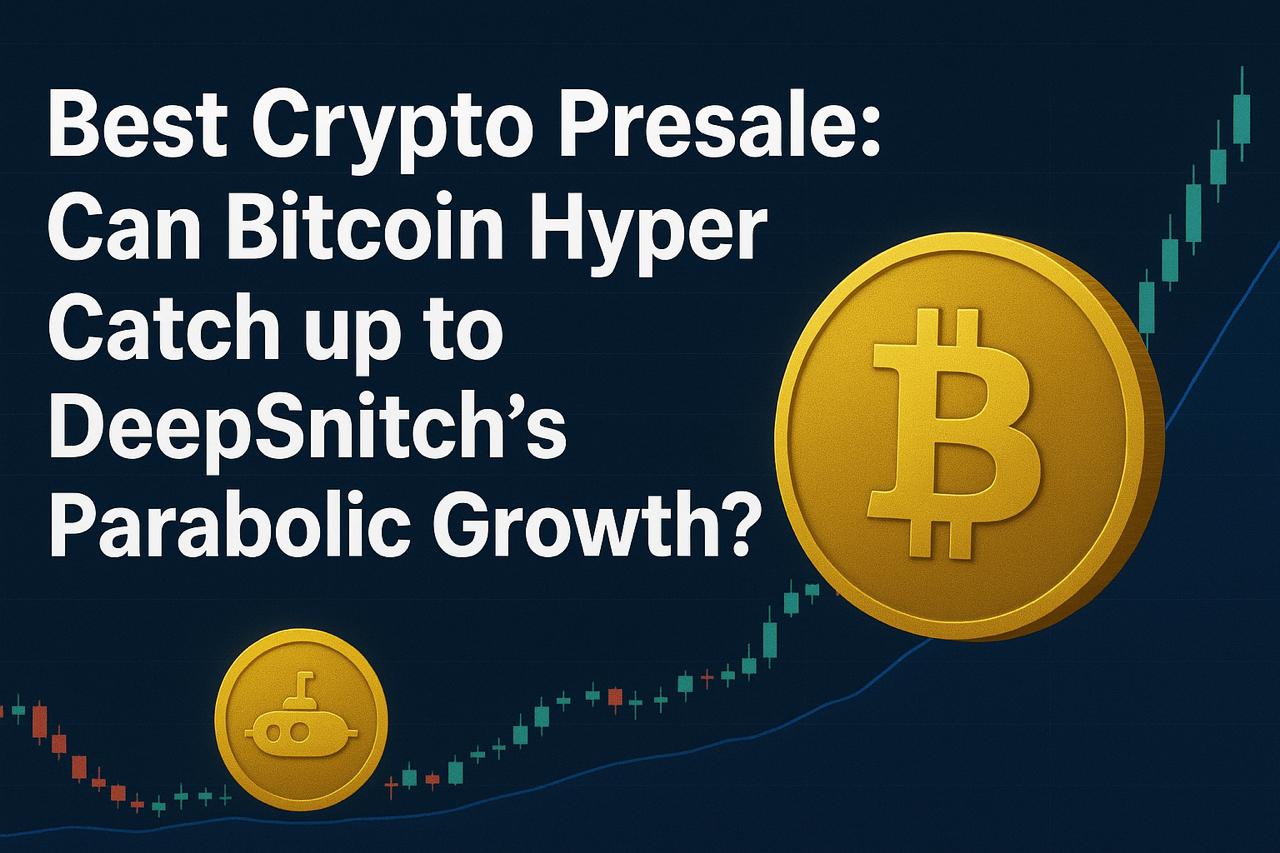
$DSNT Outshines BlockchainFX and Bitcoin Hyper with 40% Gains

$DSNT Outshines BlockchainFX and Bitcoin Hyper with 40% Gains

The post $DSNT Outshines BlockchainFX and Bitcoin Hyper with 40% Gains appeared on BitcoinEthereumNews.com. Crypto News The best crypto presale buys for 2025 include DeepSnitch and DeFi tokens like Bitcoin Hyper. Revolut has expanded its payment offerings with a new free-to-swap stablecoin service as crypto adoption keeps rising. Meanwhile, the search for the best crypto presale continues, following predictions that Bitcoin could surge again before the year ends. Investors are turning away from BlockchainFX and Bitcoin Hyper and moving to DeepSnitch’s crypto analytics ecosystem. DeepSnitch is the perfect tool for the coming market boom, as its crypto analytics services will help investors react before the market does. Read on to see why investors say DeepSnitch AI is poised for a 500x growth this cycle. Revolut supercharges crypto access with free USD-to-stablecoin swaps for 65M users Revolut, the fintech giant, rolled out free, 1:1 USD-to-stablecoin swaps for its 65 million users, completely removing fees and spreads. This means anyone can now flip between dollars and top stablecoins like USDC and USDT across six blockchains, including Ethereum, Solana, and Tron. The update lets users convert up to $578,630 per transaction at zero cost. Leonis Bashlykov, Revolut’s Head of Crypto Product, said the goal is simple: make switching between fiat and digital currencies seamless and stress-free. Revolut will absorb any conversion spreads internally to keep that clean dollar-to-dollar rate, as long as the stablecoins stay pegged. Revolut recently locked in a MiCA license from the Cyprus Securities and Exchange Commission (CySEC), clearing the way to offer regulated crypto services across 30 European countries. This represents another bold step for a company already handling trading, custody, and payments for over 200 digital assets, with customer holdings jumping 66% year-over-year to nearly $35 billion. Analysts say this move could be a game-changer for global businesses and cross-border payments, especially in regions hit by unstable currencies. Best crypto presale of…

Author: BitcoinEthereumNews
Bitcoin White Paper Hits 17th Anniversary with US Treasury Secretary’s Praise for Resilience

Bitcoin White Paper Hits 17th Anniversary with US Treasury Secretary’s Praise for Resilience

The post Bitcoin White Paper Hits 17th Anniversary with US Treasury Secretary’s Praise for Resilience appeared on BitcoinEthereumNews.com. COINOTAG recommends • Exchange signup 💹 Trade with pro tools Fast execution, robust charts, clean risk controls. 👉 Open account → COINOTAG recommends • Exchange signup 🚀 Smooth orders, clear control Advanced order types and market depth in one view. 👉 Create account → COINOTAG recommends • Exchange signup 📈 Clarity in volatile markets Plan entries & exits, manage positions with discipline. 👉 Sign up → COINOTAG recommends • Exchange signup ⚡ Speed, depth, reliability Execute confidently when timing matters. 👉 Open account → COINOTAG recommends • Exchange signup 🧭 A focused workflow for traders Alerts, watchlists, and a repeatable process. 👉 Get started → COINOTAG recommends • Exchange signup ✅ Data‑driven decisions Focus on process—not noise. 👉 Sign up → The Bitcoin white paper marked its 17th anniversary on October 31, 2025, celebrating the foundational document published by Satoshi Nakamoto in 2008 that introduced the world’s first cryptocurrency, highlighting its enduring impact on blockchain technology and financial innovation. Bitcoin’s resilience: The network has operated uninterrupted for 17 years since the white paper’s release. U.S. Treasury Secretary Scott Bessent praised Bitcoin’s reliability in a public statement. Cardano advances with Ouroboros Phalanx upgrade, boosting security and transaction speeds by up to 30%. Discover the Bitcoin white paper 17th anniversary celebrations and Cardano’s latest Ouroboros Phalanx upgrade. Explore how these milestones strengthen crypto’s future—stay informed on blockchain innovations today. What is the significance of the Bitcoin white paper 17th anniversary? The Bitcoin white paper 17th anniversary commemorates the October 31, 2008, publication by Satoshi Nakamoto, which outlined the concept of a peer-to-peer electronic cash system. This document laid the groundwork for Bitcoin, introducing blockchain technology that has revolutionized digital finance. Its enduring legacy is evident in the network’s unbroken operation, underscoring principles of decentralization and security that continue to inspire the cryptocurrency…

Author: BitcoinEthereumNews
Best 3 Crypto Presales: DeepSnitch AI ($DSNT) Outshines BlockchainFX and Bitcoin Hyper with 40% Gains and $0.5M Raised

Best 3 Crypto Presales: DeepSnitch AI ($DSNT) Outshines BlockchainFX and Bitcoin Hyper with 40% Gains and $0.5M Raised

Revolut has expanded its payment offerings with a new free-to-swap stablecoin service as crypto adoption keeps rising. Meanwhile, the search […] The post Best 3 Crypto Presales: DeepSnitch AI ($DSNT) Outshines BlockchainFX and Bitcoin Hyper with 40% Gains and $0.5M Raised appeared first on Coindoo.

Author: Coindoo
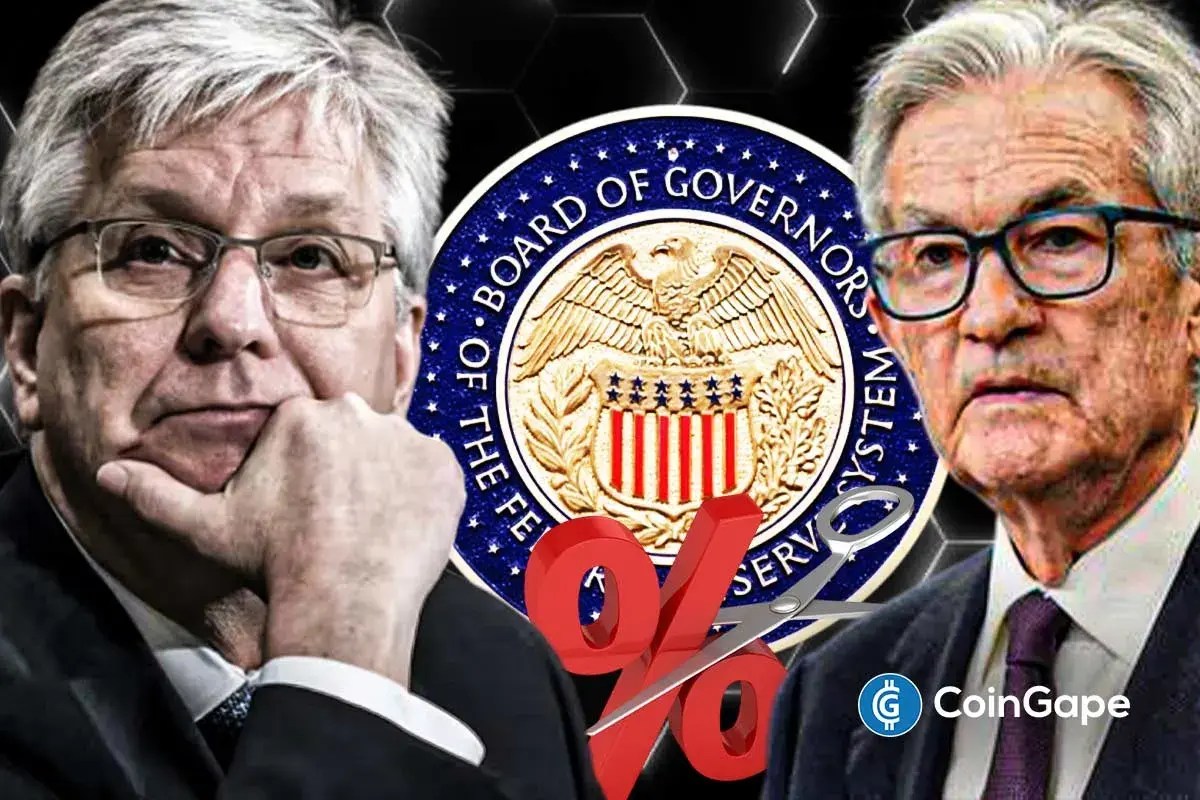
Waller Signals December Fed Rate Cut Despite Powell’s “No More Cuts” Stance

Waller Signals December Fed Rate Cut Despite Powell’s “No More Cuts” Stance

The post Waller Signals December Fed Rate Cut Despite Powell’s “No More Cuts” Stance appeared on BitcoinEthereumNews.com. Governor Christopher Waller has called for another Fed rate cut in December. This comes as Chair Jerome Powell insists the cycle of monetary easing may have reached its end.  Waller Pushes for December Policy Easing According to Reuters, Federal Reserve Governor Christopher Waller has called for one last cut by December, emphasizing the need to act swiftly to protect the job market. “The biggest concern we have right now is the labor market,” Waller said in an interview. “We know inflation is coming down, and that’s why I continue to support a policy rate cut in December, because all the data are pointing that way.” His remarks suggest that Waller believes inflation is cooling fast enough to justify easing. This comes as Powell maintains that rates should stay elevated to avoid reigniting price pressures. Powell admitted after the October FOMC meeting that although inflation is still “somewhat elevated,” the U.S. labour market has started to improve. However, he maintained that the overall state of the economy hasn’t changed enough to warrant another cut just yet. Powell added that new tariffs and rising input costs make price stability more challenging.  This highlights the necessity for the Fed to carefully strike a balance between controlling inflation and protecting jobs. Recent CPI data also supports the case for another Fed rate cut. The Bureau of Labor Statistics reported a 3% year-on-year increase in consumer prices for September, slightly below the 3.1% forecast. Monthly inflation rose 0.3%, also undershooting expectations. Fed Divided on the Next Rate Cut Move While the Fed typically lowers interest rates to spur lending and job growth, it faces a delicate situation. Powell hinted that inflation pressures, outside of tariff impacts, are easing toward the Fed’s 2% target. Meanwhile, several Fed officials remain hesitant. Dallas Fed President Lorie Logan said…

Author: BitcoinEthereumNews
Analysts Say This $0.035 Crypto Could Surpass Shiba Inu (SHIB) in Market Rankings

Analysts Say This $0.035 Crypto Could Surpass Shiba Inu (SHIB) in Market Rankings

Crypto enthusiasts are turning to Mutuum Finance (MUTM), a new crypto that sits at only $0.035, and speculating that it may be the best crypto to surpass Shiba Inu (SHIB) in market rankings. The project’s fast Phase 6 presale has already garnered over $18.27 million of investments, with over 80% of the tokens already sold […]

Author: Cryptopolitan
Russia Claims To Have Tested Poseidon Nuclear UUV, Is The Threat Real?

Russia Claims To Have Tested Poseidon Nuclear UUV, Is The Threat Real?

The post Russia Claims To Have Tested Poseidon Nuclear UUV, Is The Threat Real? appeared on BitcoinEthereumNews.com. Also known as the Status-6 Oceanic Multipurpose System, with the NATO reporting name “Kanyon,” the Poseidon is an unmanned underwater vehicle that was developed to bypass missile defense systems and deliver a nuclear warhead against coastal target getty Russian President Vladimir Putin praised the capabilities of the Poseidon nuclear-powered underwater nuclear-capable torpedo, following a test last month. Also known as the Status-6 Oceanic Multipurpose System, with the NATO reporting name “Kanyon,” it is an unmanned underwater vehicle that was developed to bypass missile defense systems and deliver a nuclear warhead against coastal targets, naval bases and even aircraft carrier strike groups. Named for the Greek god of the sea, earthquakes, and horses, Poseidon reportedly is able to operate at depths up to 1,000 meters, or 3,300 feet, while it can travel upwards of 100 knots, meaning it could be challenging to detect, and even more difficult to intercept. Russian officials, including Putin, have claimed it could employ autonomous navigation with pre-programmed routes and even operate without direct human control. Most worrisome is that some reports suggest it would have a potential yield of up to 100 megatons. It is thus fitting that this devastating weapon is named for the Greek god also known as the “Earth Shaker,” yet it likely wasn’t lost on the Kremlin that Poseidon was also known for having a violent and vengeful disposition. “Poseidon’s capacity significantly exceeds that of Sarmat,” Putin told Russian Special Forces personnel at a meeting earlier this week, comparing the UUV to the Sarmat intercontinental ballistic missile. “You are fighting on the frontline, risking your lives,” Putin added, per a report from Russian state news agency TASS. “And you certainly think about what you are doing it for and to what extent the nation is capable of continuing your efforts, as you…

Author: BitcoinEthereumNews
Maple’s SYRUP Stakers Vote to End Staking Rewards, Launch DAO Treasury

Maple’s SYRUP Stakers Vote to End Staking Rewards, Launch DAO Treasury

The post Maple’s SYRUP Stakers Vote to End Staking Rewards, Launch DAO Treasury appeared on BitcoinEthereumNews.com. Maple Finance says it wants to use protocol revenue for “long-term sustainability” instead of staking rewards. Maple Finance, a decentralized finance lending protocol operating on Solana and Ethereum, is set to sunset SYRUP staking rewards just under a year after the token’s launch. Staked SYRUP (stSYRUP) voted in favor of the move, first proposed in a Maple Improvement Proposal (MIP) on Oct. 24. Voting on MIP-019, which began on Oct. 27, closed on Oct. 31, with over 99% of participating voting power in favor of the move. A total of 26 wallets participated in the vote, with 30% of voting power coming from a single address backing the proposal. Per the proposal, instead of paying out staking rewards to holders of Maple’s native token SYRUP, a portion of platform revenue will be reallocated to a newly created Syrup Strategic Fund (SSF). “As the protocol matures, distributing revenue through staking is less efficient than reinvesting in liquidity and protocol strength,” Maple’s proposal reads. Under MIP-019, 25% of ongoing protocol revenue will be allocated to the SSF in Q4 this year to build a DAO treasury that contains SYRUP, alongside Bitcoin (BTC) and stablecoins. The strategic fund will be used for token buybacks, among other initiatives. The proposal says the aim of the SSF is to let Maple “operate independently and sustainably, avoiding dilutive fundraising and forced selling in bear market environments.” Rewards streamed to stSYRUP holders will end at the close of the current vesting period, with on-chain streams ceasing in November. As the Maple Finance team explained, the firm’s assets under management and revenue have grown in the past year, spurring the team to adjust how it manages revenue. “With AUM growing >10x since SYRUP’s launch and the protocol now generating ~$20M in ARR from fees, the Maple team believes…

Author: BitcoinEthereumNews
Asset Tokenization: Malaysia Unveils Transformative 3-Year Roadmap

Asset Tokenization: Malaysia Unveils Transformative 3-Year Roadmap

BitcoinWorld Asset Tokenization: Malaysia Unveils Transformative 3-Year Roadmap Are you ready to witness a significant shift in the financial landscape? Bank Negara Malaysia (BNM), the nation’s central bank, is spearheading an ambitious initiative with a three-year roadmap for asset tokenization. This move is poised to redefine how real-world assets are managed and traded, promising a future of enhanced efficiency and accessibility. Forget the volatility of traditional cryptocurrencies; Malaysia’s focus is firmly on leveraging blockchain technology for tangible economic benefits. What is Malaysia’s Vision for Asset Tokenization? Malaysia’s central bank is not just talking about innovation; it’s actively building the framework for it. BNM’s newly launched Digital Asset Innovation Hub will be the crucible for this transformation, driving both proof-of-concept (PoC) projects and live pilot tests. This strategic approach ensures that the implementation of asset tokenization is robust, secure, and tailored to the country’s unique economic needs. Proof-of-Concept Projects: Exploring the feasibility and potential of various tokenization models. Live Pilot Tests: Implementing successful concepts in real-world scenarios to refine processes. The roadmap clearly distinguishes its efforts from speculative crypto trading, emphasizing the tokenization of real-world assets (RWA). This distinction is crucial for fostering trust and stability within the financial system. Why is Bank Negara Malaysia Prioritizing Real-World Asset Tokenization? The decision to focus on real-world assets (RWA) for asset tokenization is a calculated one, designed to unlock significant value without inheriting the speculative risks often associated with digital currencies. BNM recognizes the immense potential of distributed ledger technology (DLT) to streamline traditional financial processes and create new economic opportunities. This strategic direction aims to: Boost Efficiency: Automate and simplify complex transactions. Enhance Liquidity: Make illiquid assets more tradable and accessible. Reduce Costs: Cut down on intermediaries and operational overheads. By concentrating on tangible assets like property, commodities, or intellectual property, Malaysia is building a foundation for a more resilient and inclusive financial ecosystem. This approach also aligns with global trends where central banks and financial institutions are increasingly exploring the practical applications of blockchain. How Will Asset Tokenization Impact Key Malaysian Sectors? The roadmap outlines several key applications where asset tokenization is expected to make a significant difference. These areas are vital to Malaysia’s economic growth and financial inclusion, demonstrating BNM’s commitment to practical, impactful innovation. Consider these specific applications: Supply Chain Finance for SMEs: Small and Medium-sized Enterprises (SMEs) often face hurdles in accessing finance. Tokenizing invoices or other supply chain assets can unlock capital more efficiently, providing much-needed liquidity and accelerating business growth. This could revolutionize how SMEs operate and expand. Liquidity Management: For financial institutions and corporations, managing liquidity is paramount. Tokenized assets can offer new avenues for collateral and interbank lending, improving overall market efficiency and stability. Sharia-Compliant Financial Solutions: Malaysia is a leader in Islamic finance. Asset tokenization presents a unique opportunity to develop innovative, Sharia-compliant financial products that adhere to ethical principles while leveraging cutting-edge technology. This could open new markets and attract investments aligned with Islamic values. These targeted applications show a clear understanding of where blockchain can deliver the most immediate and substantial benefits to the Malaysian economy. What Challenges and Opportunities Lie Ahead for Asset Tokenization? While the vision for asset tokenization is bright, the journey will undoubtedly involve navigating various challenges. Regulatory clarity, technological infrastructure, and widespread adoption are critical factors that will shape the success of this roadmap. However, these challenges also present significant opportunities: Regulatory Innovation: BNM’s proactive stance allows it to craft a regulatory environment that fosters innovation while safeguarding financial stability. Technological Advancement: The Digital Asset Innovation Hub will drive the development of robust and secure tokenization platforms. Economic Growth: Successful implementation could position Malaysia as a regional leader in digital finance, attracting foreign investment and fostering a vibrant fintech ecosystem. The collaborative approach, involving various stakeholders, will be essential in overcoming hurdles and maximizing the benefits of this groundbreaking initiative. Malaysia’s three-year roadmap for asset tokenization marks a pivotal moment in its financial evolution. By focusing on real-world assets and practical applications, Bank Negara Malaysia is setting a clear course towards a more efficient, liquid, and inclusive financial future. This bold step promises not only to modernize existing systems but also to create entirely new avenues for economic growth and innovation. The world will be watching as Malaysia transforms its financial landscape, one tokenized asset at a time. Frequently Asked Questions (FAQs) Q1: What is asset tokenization? A1: Asset tokenization is the process of converting real-world assets (like property, art, or commodities) into digital tokens on a blockchain. These tokens represent ownership or fractional ownership of the underlying asset, making them easier to manage and trade. Q2: How does Malaysia’s roadmap for asset tokenization differ from cryptocurrencies? A2: Bank Negara Malaysia’s roadmap specifically focuses on real-world assets (RWA) and their tokenization, aiming for practical financial applications and stability. It explicitly distinguishes these efforts from speculative cryptocurrencies, which are often volatile and not backed by tangible assets. Q3: Which sectors will benefit most from this initiative? A3: Key sectors include Small and Medium-sized Enterprises (SMEs) through improved supply chain finance, financial institutions for enhanced liquidity management, and the Islamic finance sector for new Sharia-compliant solutions. Q4: What is the Digital Asset Innovation Hub? A4: The Digital Asset Innovation Hub is an initiative by Bank Negara Malaysia to conduct proof-of-concept (PoC) projects and live pilot tests for asset tokenization, driving innovation in digital assets within a controlled environment. Q5: What are the primary goals of BNM’s three-year roadmap? A5: The roadmap aims to enhance financial efficiency, improve liquidity, reduce costs, and foster the development of innovative, Sharia-compliant financial products through the secure and regulated use of asset tokenization for real-world assets. Did you find this insight into Malaysia’s groundbreaking asset tokenization roadmap valuable? Share this article with your network and join the conversation about the future of finance! Your insights can help spread awareness about this transformative development. To learn more about the latest asset tokenization trends, explore our article on key developments shaping real-world assets institutional adoption. This post Asset Tokenization: Malaysia Unveils Transformative 3-Year Roadmap first appeared on BitcoinWorld.

Author: Coinstats