Index

A crypto Index provides a way for investors to gain diversified exposure to a specific basket of digital assets through a single tokenized product. These indices often track specific sectors, such as DeFi, DePIN, or RWA, and are automatically rebalanced via smart contracts. In 2026, AI-managed thematic indices have become the gold standard for passive investing, allowing users to track the "blue chips" of the Web3 economy without manual portfolio management. This tag covers index methodology, rebalancing frequency, and the benefits of diversified crypto baskets.

25233 Articles
Created: 2026/02/02 18:52
Updated: 2026/02/02 18:52

Spot Bitcoin ETFs Break Six-Day Outflow Streak With $219M Inflows

Spot Bitcoin ETFs Break Six-Day Outflow Streak With $219M Inflows

The post Spot Bitcoin ETFs Break Six-Day Outflow Streak With $219M Inflows appeared on BitcoinEthereumNews.com. Spot Bitcoin exchange-traded funds (ETFs) ended a six-day streak of net outflows on Monday, with $219 million in daily inflows.  ETF data platform SoSoValue showed that spot Bitcoin (BTC) ETFs rebounded on Monday, marking a shift in sentiment after six consecutive trading days of net outflows.  The outflow streak started on Aug. 15 and extended through Friday, with the biggest outflows coming at $523.31 million on Aug. 19, followed by $311.57 million on Wednesday.  The week of outflows followed a Bitcoin market correction after the asset reached record highs. On Aug. 14, CoinGecko data showed that Bitcoin reached a new all-time high of $124,128. Since then, the asset had dropped 11% to $110,186. Spot Bitcoin ETFs see net outflows on six consecutive trading days. Source: SoSoValue Fidelity, BlackRock lead spot Bitcoin ETF rebound Fidelity and BlackRock ETFs led the rebound on Monday, driving a majority of the daily net inflows. The Fidelity’s Wise Origin Bitcoin Fund (FBTC) led the pack, bringing in $65.56 million.  BlackRock’s iShares Bitcoin Trust (IBIT) followed closely with $63.38 million, while ARK Invest’s ARK 21Shares Bitcoin ETF (ARKB) added $61.21 million. Other issuers saw smaller but positive contributions to the day’s inflows. Bitwise’s BITB saw $15.18 million in net inflows, while Grayscale’s Bitcoin Trust (BTC) and VanEck’s HODL fund recorded $7.35 million and $6.32 million, respectively. US Spot Bitcoin ETFs’ performance on Monday. Source: SoSoValue Related: Bitcoin is rallying on US deficit concerns, not hype: Analyst ETF sell-off comes from “polarized” investor sentiment On Monday, CoinShares’ head of research, James Butterfill, said the recent outflows from crypto funds were their biggest losses since March. Butterfill attributed the sell-off to the “increasingly polarized” investor sentiment over US monetary policy.  He said pessimism around the Federal Reserve’s stance drove $2 billion in outflows. However, the analyst said the…

Author: BitcoinEthereumNews
XRP Jumps 6% to Top Market Gainers as Bitcoin Retakes $111K

XRP Jumps 6% to Top Market Gainers as Bitcoin Retakes $111K

The post XRP Jumps 6% to Top Market Gainers as Bitcoin Retakes $111K appeared on BitcoinEthereumNews.com. Altcoins bounced back sharply on Tuesday after a steep sell-off over the prior 48 hours, with traders seizing lower prices as an opportunity to re-enter the market. XRP led the recovery, gaining 6% over the past 24 hours. Solana (SOL) and dogecoin (DOGE) each climbed about 4.5%, while ethereum (ETH) added 5% over the same period. Open interest across these tokens also ticked higher, signaling renewed speculative activity. XRP once again stood out, with its open interest rising 4.2% in the past day. The uptick comes as CME Group announced earlier Tuesday that its crypto futures suite surpassed $30 billion in notional open interest for the first time. SOL and XRP futures each crossed the $1 billion mark, with XRP becoming the fastest contract to reach that level—doing so in just over three months. Analysts see this milestone as evidence of market maturity and growing institutional participation in crypto derivatives, not to mention the sort of interest a spot XRP ETF might generate. “Think people might be underestimating demand for spot XRP ETFs,” wrote ETF expert Nate Geraci. The broader market also strengthened, with the CoinDesk 20 Index (CD20) up 3.6% on Tuesday. Bitcoin (BTC) lagged behind, gaining only about 1%, but did cross back over the $111,000 mark after dropping below $109,000 at one point hours earlier. Both bitcoin and ether hit record highs earlier this month, lifted by expectations of monetary easing and increased institutional demand. Yet sentiment may be running too hot, according to blockchain analytics firm Santiment. In a report published Sunday, the firm warned that optimism around a potential Federal Reserve rate cut in September has reached levels that often precede corrections. “While optimism about a rate cut is fueling the market, social data suggests caution is warranted,” Santiment said, pointing to a spike in…

Author: BitcoinEthereumNews
Bitcoin Faces $1 Billion ETF Outflows and Weak On-Chain Signals in Volatile Week

Bitcoin Faces $1 Billion ETF Outflows and Weak On-Chain Signals in Volatile Week

Santiment reported that US-listed Bitcoin ETFs are on their sixth straight day of net outflows, marking the longest negative streak since early April when tariff fears gripped markets. At that time, similar withdrawals signaled uncertainty but later paved the way for a rebound. Santiment noted that current outflows increasingly appear retail-driven rather than dominated by […]

Author: Tronweekly
What This Means For Your Portfolio

What This Means For Your Portfolio

The post What This Means For Your Portfolio appeared on BitcoinEthereumNews.com. Altcoin Season Index Plunges: What This Means For Your Portfolio Skip to content Home Crypto News Altcoin Season Index Plunges: What This Means for Your Portfolio Source: https://bitcoinworld.co.in/altcoin-season-index-plunges-6/

Author: BitcoinEthereumNews
Canary Files for ‘American-Made’ Crypto ETF—Will XRP, Solana and Cardano Make the Cut?

Canary Files for ‘American-Made’ Crypto ETF—Will XRP, Solana and Cardano Make the Cut?

The post Canary Files for ‘American-Made’ Crypto ETF—Will XRP, Solana and Cardano Make the Cut? appeared on BitcoinEthereumNews.com. In brief Canary Capital has applied for a “Made in America” crypto ETF. The fund, if approved, would give investors exposure to digital coins created in the U.S. or primarily backed by U.S. operations. Canary Capital has applied for a number of altcoin ETFs, including Litecoin and Tron. Crypto fund manager Canary Capital has applied for a new ETF that would give investors exposure to digital coins and tokens minted on U.S. soil.  The Canary American-Made Crypto ETF, if approved by the SEC, would track the Made-in-America Blockchain Index, a list of American-made cryptocurrencies or crypto projects that have mining or staking operations mostly based in the States, a Monday S-1 registration filing shows.  Nashville, Tennessee-based Canary Capital has already filed applications with the U.S. Securities and Exchange Commission for a number of other crypto ETFs, including Litecoin, Sei, and Tron investment vehicles. If approved, the latest product would trade on the Cboe BZX Exchange. The SEC S-1 filing did not specify exactly which coins and tokens the fund would track. Canary Capital did not immediately respond to Decrypt‘s questions. Solana, XRP, and Cardano are among the prominent assets created by American founders. Price tracker CoinGecko includes those coins in a “Made in USA” category, along with others like Chainlink, Sui, and Avalanche.  U.S. President Donald Trump last year said—along with other pro-crypto pledges—that he wanted all remaining coins to be mined on American soil, although he has provided few specifics about how this might be accomplished. Experts have told Decrypt that it is highly unlikely if not impossible to shift all Bitcoin production to the U.S. Bitcoin’s decentralized nature means that anyone in the world can technically establish a mining operation and start minting new coins, although the biggest share of the coin’s hash rate does indeed come…

Author: BitcoinEthereumNews
Unveiling The Market’s Neutral Stance

Unveiling The Market’s Neutral Stance

The post Unveiling The Market’s Neutral Stance appeared on BitcoinEthereumNews.com. Crypto Fear & Greed Index: Unveiling The Market’s Neutral Stance Skip to content Home Crypto News Crypto Fear & Greed Index: Unveiling the Market’s Neutral Stance Source: https://bitcoinworld.co.in/crypto-fear-greed-index-40/

Author: BitcoinEthereumNews
Bank of Japan operations trigger rare bond market anomaly

Bank of Japan operations trigger rare bond market anomaly

The post Bank of Japan operations trigger rare bond market anomaly appeared on BitcoinEthereumNews.com. Investors are becoming anxious to reduce their holdings of Japanese government bonds, and a good percentage prefer to sell the securities at a discount to the central bank. During the Bank of Japan’s regularly scheduled bond buying operation on Aug. 14 and Aug. 20, something unusual occurred: the operations’ lowest accepted yield matched the accepted average. This is rare because bondholders typically aim to sell at the highest price, which pushes yields lower. In this case, however, the lowest yield rose to meet the average, suggesting some investors offered bonds at bargain prices. Analysts say a few large-scale sales of ¥350 billion ($2.4 billion) of domestic sovereign debt with five- to ten-year maturities filled the purchase quota, forcing other sellers to offload debt in the secondary market. The last time such an anomaly occurred was a decade ago, just before long-term yields fell below zero as the BOJ implemented radical monetary easing to pull the economy out of deflation. This month marked the first back-to-back merger of average and lowest yields since 2013. “It’s hard to determine whether this reflects position adjustments, expectations of higher BOJ rates, or both,” said Shoki Omori, chief desk strategist at Mizuho Securities in Tokyo. “There is a possibility overseas investors sold due to concerns over a slump in long-term bonds.” Benchmark yields hit multi-decade highs on inflation and policy concerns Since these operations, benchmark 10-year yields have surged to their highest since 2008, and those on super-long debt are at their highest in a generation. Yields will likely keep increasing due to worries about inflation, tighter monetary policy, and fiscal expansion. The selloff comes as the BOJ, which owns more than half of Japan’s sovereign notes, moves forward with plans to trim its balance sheet and scale back bond purchases. Other buyers are failing…

Author: BitcoinEthereumNews
Gold eases from $3,385 highs as Fed’s Cook refuses to resign

Gold eases from $3,385 highs as Fed’s Cook refuses to resign

The post Gold eases from $3,385 highs as Fed’s Cook refuses to resign appeared on BitcoinEthereumNews.com. Gold pulls back from daily highs at $3,385 as Fed Governor Lisa Cook refuses to resign. The Precious metal hit fresh two-week highs earlier in the day after Trump’s order to fire her. The US Dollar remains on its back foot on heightened expectations of Fed cuts and growing concerns about the bank’s independence. Gold‘s rally from Monday’s lows at $3,350 has been capped on Tuesday after hitting fresh two-week highs at $3,385. The Precious metal has stalled below $3,380, as the US Dollar regains lost ground, following Fed Governour Lisa Cook’s rejection of President Trump’s calls to fire her. Trump shocked markets, once again, on Monday, announcing an order to fire Federal Reserve Governour Lisa Cook on an alleged mortgage fraud. The news hit the US Dollar with investors concerned about the ability of the central bank to act independently, amid expectations that this move would pursue a faster monetary easing cycle by the central bank. The XAU/USD pair, however, was capped on Tuesday’s European session, as the  US Dollar Index bounced up from lows on the back of Cook’s comments dismissing Trump’s removal order. In a press conference on Tuesday, Governor Cook said that she will continue to carry out her duties at the central bank and that the president has no authority to fire her. These comments have restored some confidence in the bank and provided support to the US Dollar. From a wider perspective, however, the US Dollar remains on its back foot against the precious metal, which has appreciated nearly 2% amid higher bets for Fed easing. In this context, Friday’s PCE Price Index data will provide further clues on September’s Fed decision and determine Gold’s near-term direction. Gold FAQs Gold has played a key role in human’s history as it has been widely used…

Author: BitcoinEthereumNews
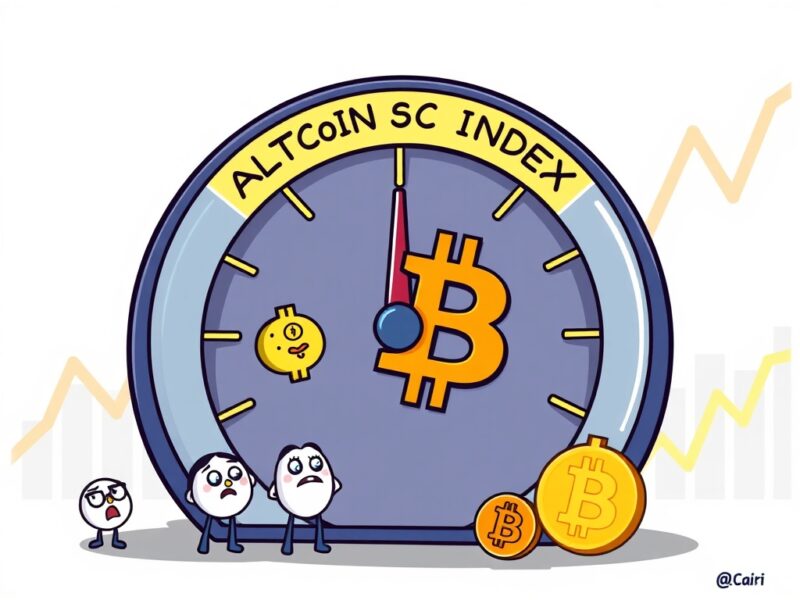
Altcoin Season Index Plunges: What This Means for Your Portfolio

Altcoin Season Index Plunges: What This Means for Your Portfolio

BitcoinWorld Altcoin Season Index Plunges: What This Means for Your Portfolio The crypto world is buzzing with recent market shifts, and a key indicator, the Altcoin Season Index, has just sent a compelling signal. According to CoinMarketCap data, this crucial index has recently fallen three points, landing at 43. This dip from its previous day’s score isn’t just a number; it reflects a significant change in the market’s pulse, suggesting a shift away from widespread altcoin outperformance. What Exactly is the Altcoin Season Index? Understanding the Altcoin Season Index is fundamental for any crypto investor. This unique metric helps determine whether current market conditions are favoring altcoins or if Bitcoin is taking the lead. It does this by meticulously comparing the price performance of the top 100 cryptocurrencies (excluding stablecoins and wrapped tokens) against Bitcoin over a 90-day period. Here’s how it works: The index measures how many of these top 100 altcoins have outperformed Bitcoin. An ‘altcoin season’ is officially declared when at least 75% of these altcoins surpass Bitcoin’s performance within that 90-day window. A score closer to 100 indicates a much stronger and more pervasive altcoin trend, while a lower score suggests Bitcoin’s dominance. Why is the Altcoin Season Index Signaling a Shift? The recent decline of the Altcoin Season Index to 43 is a clear indicator that Bitcoin is currently showing stronger performance relative to a majority of altcoins. This often happens during periods of market uncertainty or when investors seek the relative stability of Bitcoin as the leading cryptocurrency. Several factors can contribute to such a shift: Bitcoin Halving Cycle: Historically, Bitcoin tends to consolidate or rally post-halving, sometimes drawing capital away from altcoins. Macroeconomic Factors: Broader economic conditions, interest rate changes, or geopolitical events can influence investor sentiment, often leading to a flight to perceived safety, which in crypto is often Bitcoin. Market Dominance: When Bitcoin’s market dominance increases, it naturally pulls the Altcoin Season Index down as fewer altcoins are outperforming it. Navigating Your Portfolio When the Altcoin Season Index Dips For investors holding altcoins, a falling Altcoin Season Index presents both challenges and potential opportunities. It’s a moment to re-evaluate strategies and consider market dynamics. Here are some key considerations: Re-evaluate Risk: Altcoins can be more volatile than Bitcoin. A period of Bitcoin dominance might signal increased risk for less established altcoins. Diversification: Ensure your portfolio is adequately diversified. While altcoins offer high reward potential, a balanced approach including Bitcoin can mitigate risk during these phases. Research is Key: Focus on altcoins with strong fundamentals, active development, and clear use cases. These projects might be more resilient even when the overall index is low. Patience: Market cycles are natural. A dip in the index doesn’t mean altcoin seasons are over indefinitely; rather, it suggests a current phase of consolidation or Bitcoin strength. The current reading of the Altcoin Season Index at 43 serves as a vital signal for cryptocurrency investors. It underscores the dynamic nature of the crypto market and the ongoing tug-of-war between altcoins and Bitcoin. While the index currently points to Bitcoin strength, understanding these cycles empowers investors to make informed decisions, adapt their strategies, and prepare for future market shifts. Staying informed about these key indicators is paramount for navigating the exciting, yet volatile, world of digital assets. Frequently Asked Questions (FAQs) Q1: What does the Altcoin Season Index measure? A: The Altcoin Season Index measures whether altcoins or Bitcoin are outperforming over a 90-day period, specifically by comparing the performance of the top 100 altcoins (excluding stablecoins and wrapped tokens) against Bitcoin. Q2: What score indicates an Altcoin Season? A: An Altcoin Season is declared when 75% or more of the top 100 altcoins outperform Bitcoin over the 90-day period. A score closer to 100 indicates a stronger altcoin trend. Q3: Why did the Altcoin Season Index fall to 43? A: The fall to 43 suggests that Bitcoin is currently outperforming a significant majority of altcoins. This can be due to factors like Bitcoin’s halving cycle, broader macroeconomic trends, or increased Bitcoin market dominance. Q4: How does the Altcoin Season Index impact my investment strategy? A: A declining Altcoin Season Index signals a period of Bitcoin strength. Investors might consider re-evaluating risk, diversifying their portfolios, focusing on altcoins with strong fundamentals, and exercising patience during these market phases. Q5: Are stablecoins included in the Altcoin Season Index calculation? A: No, stablecoins and wrapped coins are explicitly excluded from the calculation of the Altcoin Season Index to provide a clearer picture of speculative asset performance. Did this article help you understand the recent shift in the crypto market? Share your thoughts and this valuable insight with your fellow crypto enthusiasts on social media! To learn more about the latest crypto market trends, explore our article on key developments shaping altcoin price action. This post Altcoin Season Index Plunges: What This Means for Your Portfolio first appeared on BitcoinWorld and is written by Editorial Team

Author: Coinstats
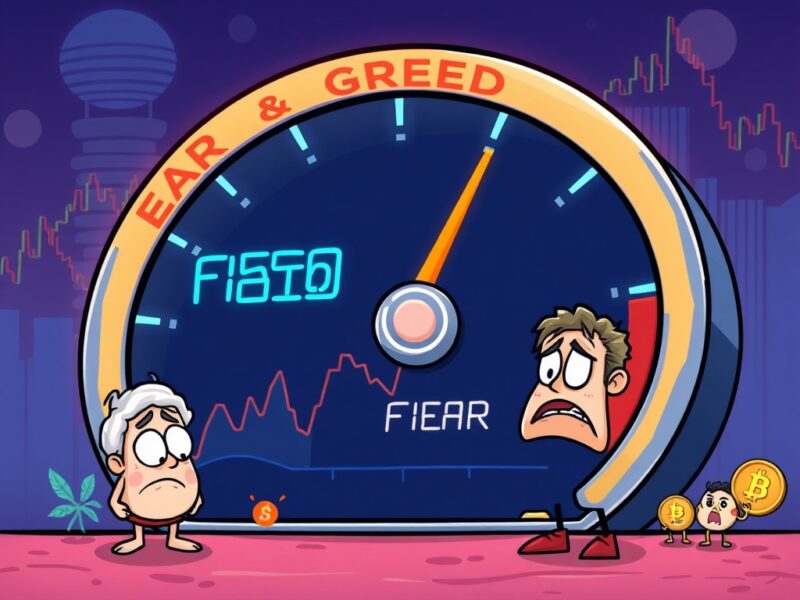
Crypto Fear & Greed Index: Unveiling the Market’s Neutral Stance

Crypto Fear & Greed Index: Unveiling the Market’s Neutral Stance

BitcoinWorld Crypto Fear & Greed Index: Unveiling the Market’s Neutral Stance The cryptocurrency market is a dynamic space, often driven by investor emotions. Currently, the Crypto Fear & Greed Index has edged up to 51, settling firmly in the ‘neutral’ zone. This shift from previous extremes offers a fascinating glimpse into the collective mindset of crypto participants. What does this balanced sentiment truly signify for the future of digital assets? What Does a Neutral Crypto Fear & Greed Index Mean? When the Crypto Fear & Greed Index sits at 51, it suggests a balanced market sentiment. Neither extreme fear nor overwhelming greed dictates investor behavior. This neutral reading, rising three points from the previous day, indicates that market participants are not panicking, nor are they excessively optimistic. Instead, they are approaching the market with a degree of caution and thoughtfulness. A neutral score can be a period of consolidation, where prices stabilize after significant moves. It often precedes new trends, as investors wait for clearer signals. For many, this offers an opportunity to evaluate positions without the pressure of emotional highs or lows. Unpacking the Crypto Fear & Greed Index Calculation Understanding how the Crypto Fear & Greed Index is determined is crucial for interpreting its signals. Data provider Alternative meticulously compiles this index using a sophisticated blend of six key market factors, each contributing a specific weight to the overall score. Let’s break down these components: Volatility (25%): Measures the current market volatility and maximum drawdowns of Bitcoin, comparing it with average values over 30 and 90 days. High volatility often signals fear. Market Volume (25%): Analyzes current trading volume and market momentum, comparing it to average values. High buying volume in a rising market can indicate greed. Social Media (15%): Scans social media sentiment (primarily Twitter) for keywords related to cryptocurrency, assessing the speed and number of posts, and analyzing hashtags. Increased engagement often points to growing interest or FOMO. Surveys (15%): Conducts weekly polls among crypto investors, though this factor is currently paused. Survey results previously provided direct insights into sentiment. Bitcoin Dominance (10%): Tracks Bitcoin’s share of the total crypto market capitalization. A rising dominance often suggests investors are moving into Bitcoin as a safe haven, indicating fear, while falling dominance can signal risk-on behavior (greed). Google Search Trends (10%): Analyzes search queries related to Bitcoin and other cryptocurrencies, looking for changes in search volume and specific ‘fear’ or ‘greed’ related terms. These factors collectively paint a comprehensive picture of the market’s emotional state, from extreme fear (0) to extreme optimism (100). Navigating Market Sentiment with the Crypto Fear & Greed Index For investors, the Crypto Fear & Greed Index serves as a valuable barometer, helping to gauge the prevailing market mood. When the index leans towards ‘extreme fear,’ it can often signal a potential buying opportunity, as prices may be oversold due to panic. Conversely, ‘extreme greed’ might suggest the market is overheated and due for a correction, prompting caution. A neutral reading, like the current 51, encourages a balanced approach. It’s a time to perform due diligence, research projects, and potentially accumulate assets gradually rather than making impulsive decisions. This period can be less volatile, allowing for more strategic planning without the pressure of rapid price swings. Actionable Insights from the Current Neutral Stance The current neutral position of the Crypto Fear & Greed Index offers several actionable insights for both seasoned traders and newcomers: Avoid Hasty Decisions: With emotions balanced, resist the urge to chase pumps or panic sell. Focus on long-term strategies. Research and Due Diligence: Use this calmer period to thoroughly research potential investments. Look beyond hype and evaluate fundamentals. Dollar-Cost Averaging: Consider implementing a dollar-cost averaging strategy. This involves investing a fixed amount regularly, regardless of price, which can mitigate risk during uncertain periods. Portfolio Rebalancing: Review your portfolio. Are your allocations still aligned with your risk tolerance and investment goals? Stay Informed: Continue monitoring the index and other market indicators. Sentiment can shift quickly, and being aware helps you adapt. Ultimately, the index is a tool, not a crystal ball. It complements fundamental and technical analysis, providing an emotional overlay to market dynamics. The rise of the Crypto Fear & Greed Index to a neutral 51 reflects a pause in extreme market emotions. This balanced state offers a unique opportunity for investors to approach the crypto market with a clear head, making informed decisions rather than reactive ones. By understanding the index’s components and implications, you can better navigate the complexities of cryptocurrency trading and investment, leveraging sentiment as one piece of your overall strategy. Frequently Asked Questions (FAQs) Q1: What is the Crypto Fear & Greed Index? A1: The Crypto Fear & Greed Index is a tool that measures the current sentiment of the cryptocurrency market, ranging from 0 (extreme fear) to 100 (extreme greed). Q2: What does a ‘neutral’ score mean for the Crypto Fear & Greed Index? A2: A ‘neutral’ score, like 51, indicates that market participants are neither overly fearful nor excessively greedy. It suggests a balanced and cautious approach to the market. Q3: How often is the Crypto Fear & Greed Index updated? A3: The index is typically updated daily by data provider Alternative, reflecting the most recent market sentiment. Q4: Can I rely solely on the Crypto Fear & Greed Index for trading decisions? A4: No, the index is a sentiment indicator and should be used as one tool among many. It complements fundamental and technical analysis, providing insight into market psychology but not a definitive buy/sell signal. Q5: What factors influence the Crypto Fear & Greed Index most? A5: Volatility and trading volume each contribute 25% to the index, making them the most influential factors, followed by social media, surveys, Bitcoin dominance, and Google search trends. Did you find this analysis helpful? Share this article with your friends and fellow crypto enthusiasts on social media to spread awareness about understanding market sentiment! To learn more about the latest crypto market trends, explore our article on key developments shaping Bitcoin price action. This post Crypto Fear & Greed Index: Unveiling the Market’s Neutral Stance first appeared on BitcoinWorld and is written by Editorial Team

Author: Coinstats