Index

A crypto Index provides a way for investors to gain diversified exposure to a specific basket of digital assets through a single tokenized product. These indices often track specific sectors, such as DeFi, DePIN, or RWA, and are automatically rebalanced via smart contracts. In 2026, AI-managed thematic indices have become the gold standard for passive investing, allowing users to track the "blue chips" of the Web3 economy without manual portfolio management. This tag covers index methodology, rebalancing frequency, and the benefits of diversified crypto baskets.

25867 Articles
Created: 2026/02/02 18:52
Updated: 2026/02/02 18:52

Another Day, Another Record: Bitcoin’s Computing Muscle Flexes Harder

Another Day, Another Record: Bitcoin’s Computing Muscle Flexes Harder

The post Another Day, Another Record: Bitcoin’s Computing Muscle Flexes Harder appeared on BitcoinEthereumNews.com. Bitcoin’s raw computing might just keeps flexing, and on Friday the network notched yet another record — blasting its hashrate up to 1,057 exahash per second (EH/s) or 1.057 zettahash per second (ZH). Bitcoin’s Hashrate Roars to 1.057 ZH/s Another day, another record-breaker for Bitcoin’s global hashrate. On Sept. 12, 2025, data from hashrateindex.com showed […] Source: https://news.bitcoin.com/another-day-another-record-bitcoins-computing-muscle-flexes-harder/

Author: BitcoinEthereumNews
JPMorgan Analysts Reveal Their Forecast for Next Week’s FED Interest Rate Decision – What Will Powell Say?

JPMorgan Analysts Reveal Their Forecast for Next Week’s FED Interest Rate Decision – What Will Powell Say?

The post JPMorgan Analysts Reveal Their Forecast for Next Week’s FED Interest Rate Decision – What Will Powell Say? appeared on BitcoinEthereumNews.com. JPMorgan Chase US chief economist Michael Feroli said he expects the Fed to cut interest rates by 25 basis points next week. Feroli noted that some members wanted a larger rate cut, but none favored leaving rates unchanged. He also noted that the Fed’s dot plot projections are expected to project another rate cut after 2025. Meanwhile, the probability of a US government shutdown this year has risen to 54%, the highest in months, according to data from prediction market Kalshi. Senate Majority Leader Chuck Schumer has warned that Democrats are prepared to deplete government funds if Republicans refuse to accept demands for health care spending. Meanwhile, TD Securities strategists argued in a note that the dollar could appreciate in the short term if the Fed cuts interest rates by 25 basis points but delivers cautious forward-looking messages. The strategists noted that markets are pricing in successive rate cuts, but the Fed could limit these expectations by highlighting inflation risks. It was noted that Fed Chair Jerome Powell is likely to emphasize that the rate cuts are not tied to a predetermined path and that data will be closely monitored. *This is not investment advice. Follow our Telegram and Twitter account now for exclusive news, analytics and on-chain data! Source: https://en.bitcoinsistemi.com/jpmorgan-analysts-reveal-their-forecast-for-next-weeks-fed-interest-rate-decision-what-will-powell-say/

Author: BitcoinEthereumNews
SCOTUS ruling could cost Trump $95B gained in tariff revenue

SCOTUS ruling could cost Trump $95B gained in tariff revenue

The post SCOTUS ruling could cost Trump $95B gained in tariff revenue appeared on BitcoinEthereumNews.com. Revenue from President Donald Trump’s tariffs jumped in August. However, a recent court setback for the White House has raised the prospect that some of the money may have to be paid back. Treasury Department figures show the U.S. collected $30 billion in tariff revenue in August, bringing the year-to-date total to $165 billion. By contrast, August 2024 yielded $7 billion, with $70 billion gathered over the same period a year earlier. That puts the increase in tariff receipts this year at $95 billion. The gains could be temporary, however, if courts ultimately rule the approach unlawful and order refunds. Earlier this month, a federal appeals court found that Trump lacked authority to use the International Economic Emergency Powers Act to impose the duties at issue. The administration is appealing, sending the dispute to the Supreme Court. “We would have to give a refund on about half the tariffs, which would be terrible for the treasury,” Treasury Secretary Scott Bessent said on NBC’s “Meet the Press.” In a court filing, Bessent said between $750 billion and $1 trillion in tariffs could be collected by June 2026, which is when the Supreme Court is expected to issue its ruling. The justices agreed to fast-track the case, with arguments set for November. Court loss may not end tariffs completely Even if the court sides against the administration, the tariffs might not vanish, according to Jeff Buchbinder, chief equity strategist at LPL Financial. He wrote that the White House has other legal routes it could use to re-establish duties. Whether previously collected tariff revenue would have to be paid back remains unresolved. “Regardless of how the highest U.S. court rules, expect most of the current tariffs to remain in place,” Buchbinder wrote. Not every tariff is at stake in the case. At issue…

Author: BitcoinEthereumNews
Best Cryptos to Buy This Month: Here’s Why BDAG, LINK, ADA, and DOGE Make the Cut!

Best Cryptos to Buy This Month: Here’s Why BDAG, LINK, ADA, and DOGE Make the Cut!

When momentum meets proof, the right move is to act early. With several tokens vying for investor attention, only a few show the kind of groundwork that backs long-term value.  As of September 2025, key players like Chainlink, Cardano, and Dogecoin are back in headlines, but one project stands above the rest when it comes […] The post Best Cryptos to Buy This Month: Here’s Why BDAG, LINK, ADA, and DOGE Make the Cut! appeared first on Live Bitcoin News.

Author: LiveBitcoinNews
Claim Your Rewards Now: Spartans 10% CASHRAKE™ Gives Instant Cashback!

Claim Your Rewards Now: Spartans 10% CASHRAKE™ Gives Instant Cashback!

Think back to your last night on a typical casino app or sportsbook. You spun the reels, placed your bets, maybe even rode a streak or two. But when the dust settled, what did you actually get for all that volume of play? Odds are, nothing but the final outcome of your wagers. Traditional casinos […] The post Claim Your Rewards Now: Spartans 10% CASHRAKE™ Gives Instant Cashback! appeared first on Live Bitcoin News.

Author: LiveBitcoinNews
BTC Treasury Smarter Web Company Looks to Buy Competition

BTC Treasury Smarter Web Company Looks to Buy Competition

The post BTC Treasury Smarter Web Company Looks to Buy Competition appeared on BitcoinEthereumNews.com. The Smarter Web Company, the United Kingdom’s largest corporate Bitcoin holder, is considering acquiring struggling competitors to expand its treasury, CEO Andrew Webley said. Webley told the Financial Times that he would “certainly consider” buying out competitors to acquire their Bitcoin (BTC) at a discount. According to BitcoinTreasuries.NET data, The Smarter Web Company is the world’s 25th biggest and the UK’s top corporate Bitcoin treasury. It currently holds 2,470 BTC worth nearly $275 million. The Smarter Web Company’s BTC holdings (orange) and BTC holdings USD value (green). Source: BitcoinTreasuries.NET The Smarter Web Company’s CEO also said the company aspires to enter the FTSE 100 — the UK’s top 100 listed companies index. He also noted that the firm changing its name is “inevitable” but said that he needs “to do it properly.” Alex Obchakevich, the founder of Obchakevich Research, told Cointelegraph that “buying the assets of bankrupt crypto companies often promises discounts, but the reality is actually much tougher than everyone thinks.” Related: Metaplanet, Smarter Web add almost $100M in Bitcoin to treasuries Obchakevich cited the bankruptcies of crypto exchange FTX and crypto lender Celsius. He explained that while initially discounts reached 60% to 70%, “after deducting liabilities liquidated in bankruptcy, encumbrances removed by the court and taxes, the net discount drops to 20–50%.” “This attracts investors with expertise because the assets are undervalued due to their urgency.“ Webley’s comments came after Smarter Web’s stock fell nearly 22% on Friday, dropping from $2.01 at the open to $1.85 at the time of writing. The decline came despite BTC gaining more than 1% over the past 24 hours. The Smarter Web Company share price chart. Source: Google Finance Over the last month, Bitcoin also lost over 4% of its value, while The Smarter Web Company’s price fell by around 35.5%. Smarter…

Author: BitcoinEthereumNews
Polymarket Integrates Chainlink to Automate Prediction Market Settlements

Polymarket Integrates Chainlink to Automate Prediction Market Settlements

Polymarket integrates Chainlink to automate, secure, and accelerate prediction market settlements, enabling real-time, trusted data on the Polygon mainnet. Polymarket, a leading decentralized prediction market platform, has officially integrated Chainlink’s powerful oracle technology to improve how it resolves markets. This new alliance was made known on Friday and is a significant move towards prediction markets […] The post Polymarket Integrates Chainlink to Automate Prediction Market Settlements appeared first on Live Bitcoin News.

Author: LiveBitcoinNews
U.S. collected $30 billion in tariffs in August and $165 billion so far this year

U.S. collected $30 billion in tariffs in August and $165 billion so far this year

Revenue from President Donald Trump’s tariffs jumped in August. However, a recent court setback for the White House has raised the prospect that some of the money may have to be paid back. Treasury Department figures show the U.S. collected $30 billion in tariff revenue in August, bringing the year-to-date total to $165 billion. By […]

Author: Cryptopolitan
Business Leaders Urge Blockchain Inclusion in UK–US Tech Bridge

Business Leaders Urge Blockchain Inclusion in UK–US Tech Bridge

UK business leaders urge blockchain inclusion in UK–US Tech Bridge, highlighting stablecoins, tokenization, and risks of falling behind globally. Business leaders in the UK have called for blockchain to be included in the UK–US Tech Bridge agreement. They want trade and innovation to benefit from distributed ledger technology. In a recent letter to the UK […] The post Business Leaders Urge Blockchain Inclusion in UK–US Tech Bridge appeared first on Live Bitcoin News.

Author: LiveBitcoinNews
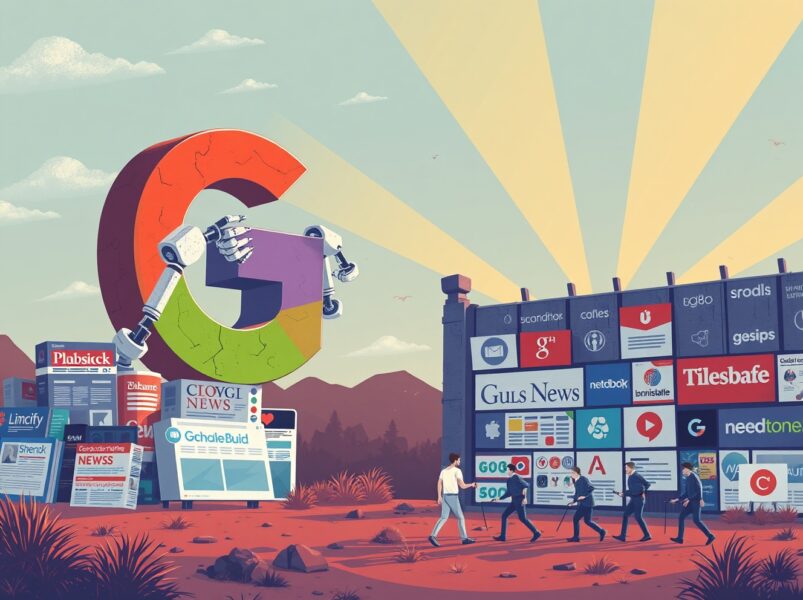
Google AI Under Fire: Publishers Accuse Tech Giant of Content Theft

Google AI Under Fire: Publishers Accuse Tech Giant of Content Theft

BitcoinWorld Google AI Under Fire: Publishers Accuse Tech Giant of Content Theft The digital landscape is currently witnessing an escalating conflict, particularly for those deeply entrenched in the world of digital publishing and content creation. At the heart of this dispute is Google, the undisputed titan of search, now facing severe accusations from major publishers regarding its AI practices. Neil Vogel, the CEO of People, Inc. (formerly Dotdash Meredith), a powerhouse behind over 40 renowned brands like People, Food & Wine, and Better Homes & Gardens, has publicly branded Google as a ‘bad actor.’ His charge? That Google is effectively ‘stealing’ publisher content to fuel its burgeoning AI products, creating a seismic shift in how content creators view the tech giant. The Alarming Accusation Against Google AI Neil Vogel’s bold statements, made at the Fortune Brainstorm Tech conference, have sent ripples through the media industry. He contends that Google is not operating on a level playing field. The core of his argument revolves around Google’s unified crawling mechanism. According to Vogel, Google employs a single bot to crawl websites, serving a dual purpose: indexing content for its traditional search engine (which still directs some traffic to publishers) and simultaneously harvesting data to train its advanced AI features. This dual functionality, Vogel argues, is a profound ethical and economic dilemma for publishers. “Google has one crawler, which means they use the same crawler for their search, where they still send us traffic, as they do for their AI products, where they steal our content,” Vogel articulated. This isn’t merely a complaint; it’s an indictment of a practice that publishers fear could undermine their very existence in the long run. The implication is clear: while Google Search historically served as a vital artery for website traffic, its AI ambitions are now perceived as parasitic, extracting value without equitable compensation or clear consent. The Shrinking Lifeline: Traffic Drop and Publisher Predicaments Vogel’s concerns are rooted in tangible data. He revealed that just three years ago, Google Search accounted for a staggering 65% of People Inc.’s traffic. Today, that figure has plummeted to the “high 20s.” In a more startling revelation to AdExchanger, Vogel even stated that at one point, Google’s traffic represented as much as 90% of their open web traffic. While People Inc. has managed to adapt, growing its audience and revenue despite this significant drop, the principle remains a contentious point. “I’m not complaining. We’ve grown our audience. We’ve grown our revenue,” Vogel clarified, emphasizing that his issue isn’t with his company’s performance. “We’re doing great. What is not right about this is: you cannot take our content to compete with us.” This statement encapsulates the core of the publisher’s grievance: the perceived unfair competition where their own creations are used by a tech behemoth to build products that may eventually bypass or even replace them, without appropriate remuneration. The Battle for Leverage: Blocking AI Crawlers In response to this evolving threat, publishers are seeking new forms of leverage in the AI era. Vogel believes that strategically blocking AI crawlers – automated programs designed to scan websites for AI training – is a necessary step. This tactic aims to force AI developers into negotiating content deals, ensuring fair compensation for the intellectual property they utilize. People, Inc. has already taken proactive measures, leveraging web infrastructure company Cloudflare’s latest solution to identify and block AI crawlers that are not part of a paid agreement. This strategy has already yielded results, prompting several “large LLM providers” to approach the publisher with potential content deals. While no agreements have been finalized, Vogel confirmed that his company is “much further along” in negotiations since implementing the crawler-blocking solution. This demonstrates a potential pathway for publishers to reclaim agency over their valuable content. Here’s a look at how publishers are navigating this new terrain: Identification: Using tools like Cloudflare’s solutions to distinguish between legitimate search engine crawlers and AI training bots. Blocking: Implementing technical blocks (e.g., via robots.txt or Cloudflare’s rules) for AI crawlers that haven’t secured a licensing agreement. Negotiation: Engaging with AI companies that approach them for content licenses, aiming for equitable content deals. Advocacy: Publicly calling out practices deemed unfair and advocating for industry-wide standards for AI content usage. The Google Exception: A Critical Obstacle for Publisher Content Despite the success in negotiating with other LLM providers, Google presents a unique and formidable challenge. Vogel highlighted the critical issue: Google’s crawler cannot be blocked without simultaneously preventing the publisher’s websites from being indexed in Google Search. This would effectively cut off the remaining “20%-ish” of traffic that Google still delivers, a lifeline many publishers cannot afford to sever. “They know this, and they’re not splitting their crawler. So they are an intentional bad actor here,” Vogel asserted, emphasizing the deliberate nature of Google’s approach. This lack of a separate crawler for AI purposes puts Google in a position of immense power, leaving publishers with little recourse but to allow their content to be scraped for AI training if they wish to maintain their search visibility. Industry Voices: A Chorus of Concern Vogel’s sentiments are echoed by other prominent figures in the media industry. Janice Min, editor-in-chief and CEO at Ankler Media, agreed with the assessment, labeling big tech companies like Google and Meta as longtime “content kleptomaniacs.” Her company, too, has opted to block AI crawlers, expressing skepticism about the benefits of partnering with any AI company at this juncture. Matthew Prince, CEO of Cloudflare (whose company provides the AI-blocking solution), offered a nuanced perspective during the same panel. While acknowledging the current challenges, Prince expressed optimism that the behavior of AI companies would eventually change, possibly driven by new regulations. He also questioned the efficacy of relying solely on existing legal frameworks, such as copyright law, which were developed in a pre-AI era. “I think that it’s a fool’s errand to go down that path, because, in copyright law, typically, the more derivative something is, the more it’s protected under fair use…What these AI companies are doing is they’re actually creating derivatives,” Prince explained. He cited Anthropic’s $1.5 billion settlement with book publishers as an example of companies aiming to preserve positive copyright rulings, rather than definitively losing on fair use arguments. This suggests that the legal landscape around AI and copyright is still nascent and complex, with outcomes that may not always favor content creators in the way they expect. The Future of Digital Publishing: Will Google Pay for Content? Prince didn’t shy away from broader critiques, famously proclaiming that “everything that’s wrong with the world today is, at some level, Google’s fault.” He argued that Google had inadvertently trained publishers to prioritize traffic metrics over original content creation, leading to phenomena like BuzzFeed’s clickbait strategies. However, he also acknowledged Google’s current competitive pressures. Despite his criticisms, Prince offered a hopeful prediction: “Internally, they’re having massive fights about what they do, and my prediction is that, by this time next year, Google will be paying content creators for crawling their content and taking it and putting it in AI models.” This forecast, if it materializes, would represent a monumental shift in the relationship between tech giants and content producers, potentially ushering in a new era of compensation for publisher content in the AI age. Conclusion: Navigating the AI Frontier The accusations leveled against Google by prominent figures in digital publishing highlight a critical inflection point for the internet’s content ecosystem. As Google AI and other large language models become increasingly sophisticated, the debate over fair use, content ownership, and compensation intensifies. Publishers, while adapting to changing traffic patterns and developing new revenue streams, are drawing a line in the sand regarding the uncompensated use of their intellectual property for AI training. The strategy of blocking AI crawlers is emerging as a powerful tool to force negotiations and secure much-needed content deals. While the path forward is complex, involving legal ambiguities and the immense power of tech giants, the growing collective voice of publishers, coupled with innovative technical solutions, suggests that the future relationship between AI and content creators will likely be one built on clearer agreements and, hopefully, equitable compensation. To learn more about the latest AI content monetization trends, explore our article on key developments shaping AI models and publisher content strategies. This post Google AI Under Fire: Publishers Accuse Tech Giant of Content Theft first appeared on BitcoinWorld.

Author: Coinstats