Airdrop

An Airdrop is a distribution of free tokens to a community, typically used as a marketing tool or a reward for early protocol adopters and testers. In 2026, the "points-to-airdrop" model has matured into merit-based incentive programs that utilize Sybil-resistance and Proof-of-Humanity to filter out bots. Airdrops remain a primary method for decentralized governance (DAO) bootstrapping. Follow this tag for the latest on retroactive rewards, eligibility criteria, and how to participate in the most anticipated token distributions in the ecosystem.

5385 Articles
Created: 2026/02/02 18:52
Updated: 2026/02/02 18:52

Cannabis Firm Flora Growth Raises $401 Million Treasury for Zero Gravity Blockchain Pivot

Cannabis Firm Flora Growth Raises $401 Million Treasury for Zero Gravity Blockchain Pivot

TLDR Flora Growth secured $401 million ($35M cash, $366M in 0G tokens) to become first publicly traded company holding Zero Gravity tokens The Nasdaq-listed cannabis firm will rebrand to ZeroStack while keeping FLGC ticker after shareholder approval Deal led by Solana treasury firm DeFi Development Corp values 0G token at $3 per token with $3 [...] The post Cannabis Firm Flora Growth Raises $401 Million Treasury for Zero Gravity Blockchain Pivot appeared first on CoinCentral.

Author: Coincentral
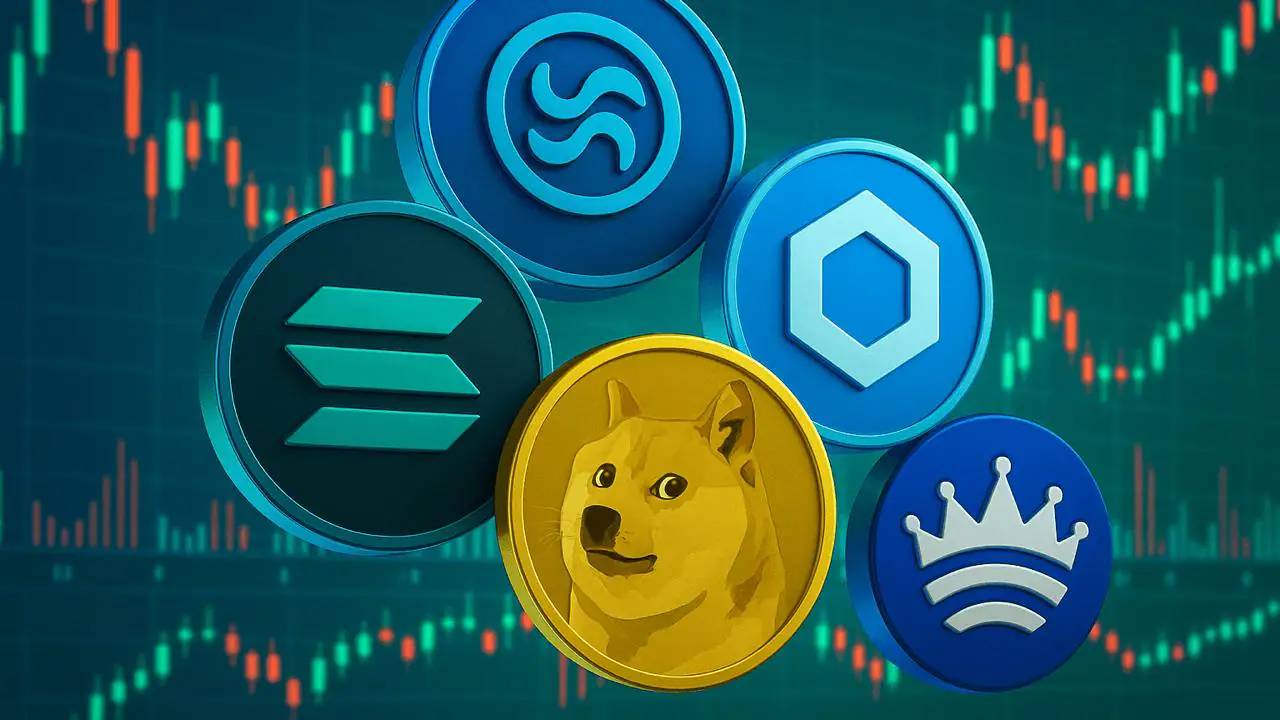
Solana, Hyperliquid, Chainlink, Dogecoin & Zexpire Become 2025’s Must-Have Crypto Picks

Solana, Hyperliquid, Chainlink, Dogecoin & Zexpire Become 2025’s Must-Have Crypto Picks

Analysts cite accelerated network activity, expanding developer communities and a growing roster of institutional partnerships as the chief factors elevating […] The post Solana, Hyperliquid, Chainlink, Dogecoin & Zexpire Become 2025’s Must-Have Crypto Picks appeared first on Coindoo.

Author: Coindoo
Opportunities and strategies in the DeFi boom: tapping into new potential

Opportunities and strategies in the DeFi boom: tapping into new potential

Written by: 0xresearcher The DeFi space has recently become incredibly vibrant. From the short-term surge in MYX, to the tenfold increase in AVNT, to the over tenfold early returns from the Aster airdrop, this wave of activity has practically plunged the entire market into a state of fear of extinction (FOMO). As an observer, I believe this isn't just a short-term frenzy driven by market sentiment; it also reflects investors' sensitivity to innovative DeFi protocols and their ability to identify promising projects. While short-term price fluctuations may attract attention, from a long-term investment perspective, projects with robust technology, a well-structured ecosystem, and experienced teams are truly worthy of attention. On-chain data is very clear: MYX has risen from $10 to $17, with its average daily trading volume nearly quadrupling; AVNT has stabilized at $1, with active addresses increasing by 35% over the past week; and Aster's early airdrop users have seen returns exceeding tenfold, with the price increasing by over 1,300% in 12 hours. This market trend has not only driven prices but also significantly boosted on-chain activity and user engagement, creating a dual resonance between market sentiment and ecosystem vitality in the short term. Judging from market dynamics, the driving effect of price manipulation on the sector is highly evident. Aster's surge in price directly drove a surge in early-stage projects like MYX and AVNT. Meanwhile, platforms like Lighter.xyz, EdgeX_exchange, and TradeParadex have the potential to become the next hot topic. The continued expansion of the Base ecosystem provides investors with a clear path forward. The combination of ecosystem dividends and technological advantages means that amid the sector's frenzy, opportunities always remain for discerning investors. This also explains Professor Suo's lament in the Morning Post, "Everything available to the secondary market, I can't get." The fear of missing out (FOMO) atmosphere drives not only prices but also market attention. A closer look at the entire DeFi space reveals a subtle shift in investment logic. In the past, the market was almost entirely driven by sentiment: airdrops and short-term price manipulation dominated the market, while new coins were often abandoned after a surge. But now, experienced investors are realizing that discovering the next promising project amidst the hype requires several key characteristics: Strong technical capabilities: Sufficient trading depth, efficient matching mechanism, and excellent slippage control enable it to accommodate large amounts of funds and institutional investors, while also forming a natural moat in derivatives and liquidity management. Ecological stability: Early user and community participation is the foundation, and there must also be a clear incentive mechanism and ecological layout to maintain continued activity during capital inflow and market expansion. Reasonable valuation: Popular coins in a track are easily pushed up by short-term pull-ups. If new projects want to become long-term winners, they need to demonstrate stability in FDV and lock-up ratio, while leaving room for growth for long-term investment. Take BSX, for example. Early in the DEX space, it received multiple rounds of investment from Base, led by Blockchain Capital, a veteran crypto investment firm. This demonstrates industry recognition of its technology and team. BSX's order book trading and matching capabilities are comparable to those of HyperliquidX, offering significant advantages in high-frequency trading and liquidity management. While it lacks the short-term profits of Aster, its robust technology and ecosystem offer discerning investors a low-risk investment opportunity. The expansion of Base's ecosystem could also bring additional value. This demonstrates that projects with strong technological moats and ecosystem advantages often maintain steady growth after market euphoria subsides. By this standard, Orderly's performance deserves special attention. Technology and Trading Model: Order book trading and high-frequency matching capabilities give the platform a natural advantage in derivatives and liquidity management. At the same time, its excellent trading depth and slippage control can support large capital inflows and institutional participation. Ecosystem Development: Orderly is promoting collaboration and community incentives, and its platform activity and transaction depth are expected to steadily grow alongside the expansion of ecosystems like Base and EdgeX. Its multi-dimensional ecosystem strategy focuses not only on transaction volume but also on community governance and long-term incentives to retain value for both capital and users. Valuation and Potential: Compared to popular tokens in the space, Orderly's fully circulating market capitalization remains low, suggesting significant potential growth. Judging by its FDV and lock-up ratio, Orderly is relatively robust, providing a margin of safety for long-term investors. Financing Background: It is worth noting that Orderly has raised a total of US$25 million in funding since its founding. Early investors include top global institutions such as Pantera, Dragonfly, Jump, and Sequoia China. The investment from these leading capitals also indirectly confirms its long-term potential and industry status. Everyone's been hyping $AVNT lately, calling it "Hyperliquid on Base," but data suggests $ORDER is a severely undervalued perpetual contract opportunity. Orderly's model is more like the underlying engine of DeFi, or the AWS of Web3: a unified order book + full-chain liquidity, with a processing scale approaching that of centralized exchanges. Currently supporting 58 builders and liquidating billions of dollars, $ORDER's price remains at a low valuation typical of its early stages. Data comparison shows: In terms of core indicators such as trading volume, TVL, and open interest (OI), Orderly is 2–6 times higher than AVNT. But $ORDER’s market capitalization is only 1/7–1/8 of AVNT’s This isn't just an undervaluation; it's more like a market mispricing. Simple valuation models suggest $ORDER's fair value should be above $2.5, yet its current trading price has barely surpassed $0.15. Once the market realizes its true value, the price is likely to correct quickly, rather than slowly returning to its fair value, creating a strong upward momentum. It's worth emphasizing that Orderly isn't just competing with other perp DEXs; it's building a full-chain, ecosystem-wide infrastructure, aiming for a CME-level clearing system. In other words, its value lies not only in short-term market performance but also in its foundation and long-term potential within the entire DeFi ecosystem. Based on recent market dynamics, DeFi investment strategies can be categorized as short-term arbitrage and long-term investment. Short-term arbitrage opportunities are obvious: capitalize on price increases and airdrops to quickly profit, as seen with MYX, AVNT, and Aster. However, long-term investment requires more insight, as truly robust opportunities often lie within projects with deep technical expertise, robust ecosystems, and experienced teams. Orderly is a prime example of this: while it may not be immediately fully recognized by the market, as the DeFi space matures, undervalued technology-focused projects like these often experience a revaluation. From an investor's perspective, the DeFi craze isn't just about chasing short-term profits; it's also a process of re-evaluating the sector's potential, technological innovation, and ecosystem landscape. In this process, Orderly meets the three key criteria of technology, ecosystem, and valuation, allowing it to avoid short-term noise while capturing long-term growth opportunities. In short, the DeFi craze brings more than just price fluctuations; it also provides a window into observing, understanding, and exploring promising projects. Rational investors should remain calm amidst the hype and focus on trends and the core value of each project. Orderly, as a technology-driven coin with potential, undoubtedly deserves continued attention. In the coming months, as market capital flows return and ecosystem dividends are unleashed, Orderly's performance will provide a crucial window into DeFi's maturity and potential investment logic.

Author: PANews
Q4 Projection for September’s Unexpected Altcoin Leaders

Q4 Projection for September’s Unexpected Altcoin Leaders

The post Q4 Projection for September’s Unexpected Altcoin Leaders appeared on BitcoinEthereumNews.com. Crypto News 21 September 2025 | 07:30 AVAX, SUI and ZX closed September as unexpected leaders among alternative digital assets, each outpacing larger names in price gains and trading activity. Sudden inflows, a series of partnership announcements and stronger network use pushed all three into the month’s top-performer list, redirecting market attention toward projects that had spent much of the year in relative quiet. With the final quarter approaching, analysts are now gauging whether the momentum can hold. AVAX enters October backed by a pipeline of new game launches and fresh corporate nodes, SUI faces a decisive upgrade aimed at faster transactions, and ZX prepares for a bridge that will connect it to multiple chains before year-end. Their ability to deliver on these milestones will help determine if September’s surge becomes a sustained advance or a brief seasonal spike. $ZX Early Access: First Token for Profiting from Volatility Zexpire is turning heads as its $ZX token launches at just $0.003, giving early investors a ground-floor entry before the listing price of $0.025 — nearly 800% upside. Crypto analysts are watching closely — options trading is one of DeFi’s fastest-growing segments, with $3B in daily volume and rising. Zexpire is a 0DTE DeFi protocol, making options as simple as a one-click daily prediction game. It is also the first platform that lets traders earn directly from crypto volatility. Instead of betting on direction, users face a simple daily choice: will Bitcoin stay within range, or break out? Losses are capped, no margin calls, no liquidations — just a one-click, fixed-risk way to turn volatility into profit. And every play requires $ZX, so the demand for the token is built in from day one. Early buyers get the best price and unlock: APR staking rewards before TGE Cashback on gameplay Loyalty bonuses…

Author: BitcoinEthereumNews
AVAX, SUI & ZX: Q4 Projection for September’s Unexpected Altcoin Leaders

AVAX, SUI & ZX: Q4 Projection for September’s Unexpected Altcoin Leaders

Sudden inflows, a series of partnership announcements and stronger network use pushed all three into the month’s top-performer list, redirecting […] The post AVAX, SUI & ZX: Q4 Projection for September’s Unexpected Altcoin Leaders appeared first on Coindoo.

Author: Coindoo
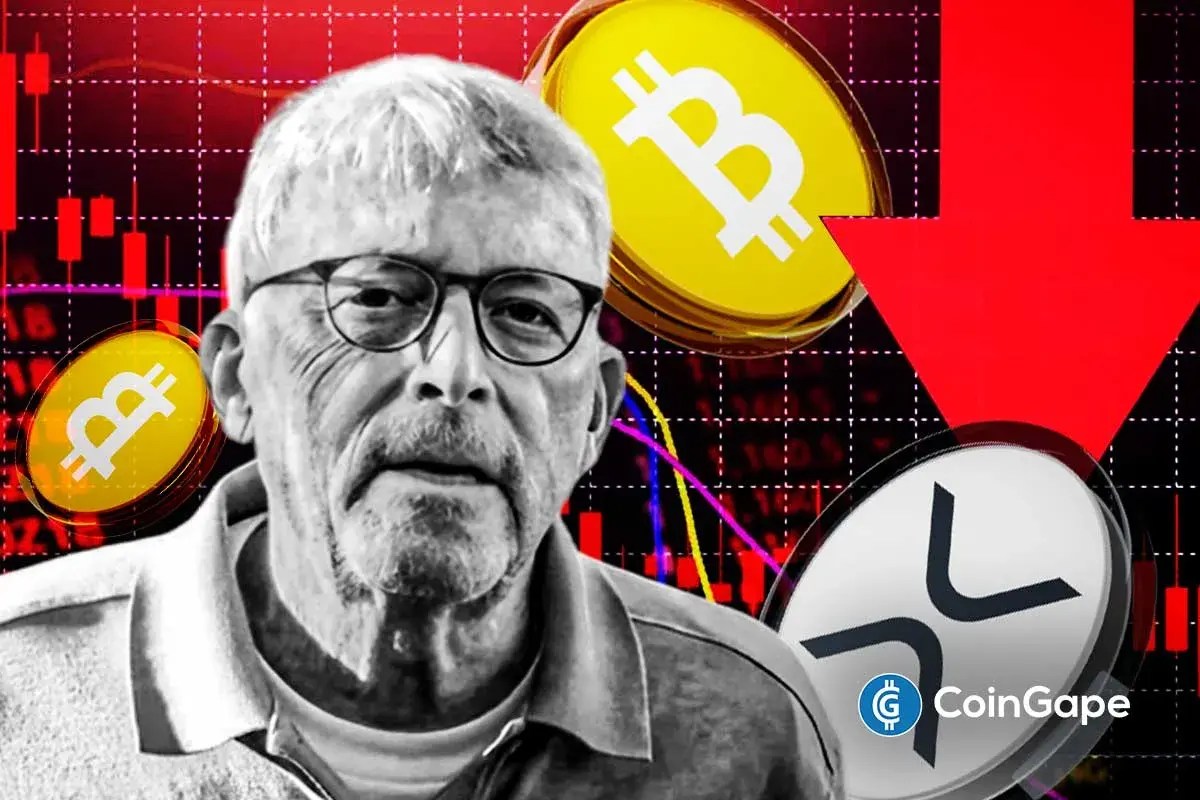
XRP Alert: Investors Brace for a Game-Changing Shift

XRP Alert: Investors Brace for a Game-Changing Shift

The post XRP Alert: Investors Brace for a Game-Changing Shift appeared on BitcoinEthereumNews.com. Disclaimer: This content is a sponsored article. Bitcoinsistemi.com is not responsible for any damages or negativities that may arise from the above information or any product or service mentioned in the article. Bitcoinsistemi.com advises readers to do individual research about the company mentioned in the article and reminds them that all responsibility belongs to the individual. The XRP Ledger is preparing one of its most ambitious upgrades yet, aiming to give users stronger defenses against scams and hacks that have long haunted the community. Developers are pushing forward with the XLS-86 Firewall, a proposed feature that could slow or block suspicious transactions before they empty accounts. It marks a turning point for investor protection on XRPL, which until now has relied heavily on users safeguarding their own wallets. As this milestone nears, some large XRP holders are also exploring other high-growth opportunities, with MAGACOIN FINANCE emerging as a surprising destination for whales looking to diversify. A New Firewall for XRPL The XLS-86 Firewall is being designed to stop attacks at the transaction level, offering users the ability to control how their funds move. Unlike complex multisignature setups, this system is built to be user-friendly, allowing both individuals and businesses to activate rules without deep technical knowledge. At its core, the firewall introduces two simple but powerful tools: transaction thresholds and time delays. Users will be able to set caps on how much can leave their accounts in a given window or delay large withdrawals for several hours. If hackers compromise a wallet, these restrictions could give the real owner time to react, preventing instant losses. Another key feature is whitelisting, which allows trusted addresses to bypass restrictions. Everyday transactions – like paying a supplier or transferring funds between personal accounts – would remain seamless. The balance between strict protection and…

Author: BitcoinEthereumNews
From XRP to Flare: Seasoned Enthusiast Shares What’s Next for Ecosystem

From XRP to Flare: Seasoned Enthusiast Shares What’s Next for Ecosystem

The post From XRP to Flare: Seasoned Enthusiast Shares What’s Next for Ecosystem appeared on BitcoinEthereumNews.com. Flare’s power is in community, infrastructure developer Tim Rowley says “FAssets are imminent” Tim Rowley, one of the earliest enthusiasts of the Flare (FLR) ecosystem, reflects on what makes the blockchain special and what might be next for Flare (FLR) and its adoption workloads. Flare’s power is in community, infrastructure developer Tim Rowley says Tim Rowley, an Australian blockchain educationist and passionate Flare (FLR) ecosystem contributor, shared a reflection on his journey in the ecosystem. He recalled the early days when he became involved because of his father participating in a Spark (the predecessor of FLR) airdrop to the holders of XRP. Image via X While Flare was still in its very nascent stage of an EVM blockchain, Rowley admitted that the passionate community was its strength from the very beginning. Then, he started learning the concept of FTSO, a Flare-specific design of blockchain oracles. Rowley launched FTSO.AU, the first Flare oracle infrastructure provider. Expanding his involvement with the ecosystem, Rowley contributed to Flare Metrics, a data tracker for Flare’s validators, and Flare Builders, a developer experience resource for Flare and its canary network Songbird. The primary motivation was bringing new community members to both ecosystems: This is the very reason we have Flare Metrics and Flare Builders. Our aim is to provide unbiased information such as network statistics and other projects among us that make Flare great. Instead of answering individual questions, we have put this information in a format that can reach a larger audience (this is also the same reason I started making YouTube videos, it’s easier to share a single video that answers the same question many have). Flare (FLR) is a unique Layer-1 blockchain focused on data-heavy use cases. It was introduced in late Q4, 2020, as a “utility fork” of XRP Ledger. “FAssets are…

Author: BitcoinEthereumNews
Flora Growth secures $401 million for Zero Gravity treasury ahead of Monday’s 0G token airdrop

Flora Growth secures $401 million for Zero Gravity treasury ahead of Monday’s 0G token airdrop

The 0G token is set to be launched on Monday following an airdrop from the 0G Foundation and listings on major exchanges.

Author: Coinstats
Altcoin Season Rotation Sees SUI, SEI, and VET Advance; Zexpire Highlights Fixed-Risk Options for Retail Traders

Altcoin Season Rotation Sees SUI, SEI, and VET Advance; Zexpire Highlights Fixed-Risk Options for Retail Traders

SUI, SEI, and VET rally as capital rotates into altcoins, but Zexpire steals focus with fixed-risk, one-click crypto options and rising $ZX token demand.

Author: Blockchainreporter
Vast Majority of Airdrops Lose Value in Three Months: DappRadar

Vast Majority of Airdrops Lose Value in Three Months: DappRadar

The post Vast Majority of Airdrops Lose Value in Three Months: DappRadar appeared on BitcoinEthereumNews.com. Despite billions in tokens airdropped since 2017, data shows that activity drops back to pre-airdrop levels within weeks, as long-term value rarely sticks. Airdrops are Web3’s go-to growth hack, flooding wallets with billions of dollars in tokens to onboard new users, but the data shows most of that hype fades in just 90 days. According to a report from DappRadar, projects across DeFi, NFTs, and blockchain gaming have handed out more than $20 billion in tokens since 2017, including $4.5 billion in 2023 alone. The effect was immediate as Layer-2 chain Arbitrum, for instance, processed 2.5 million daily transactions at launch, while NFT marketplace Blur grabbed over 70% of NFT trading volume overnight. But the hype doesn’t seem to stick. On average, activity drops back to 20-40% above pre-airdrop levels within weeks, and about 88% of airdropped tokens lose value within three months, showing that while airdrops succeed as marketing events, they “rarely secure long-term token strength,” DappRadar’s analyst Sara Gherghelas wrote in a Sept. 18 research report. “Airdrops are unmatched in their ability to accelerate user acquisition, but long-term retention depends on product-market fit,” Gherghelas added. ‘Holder Scores’ Haseeb Qureshi, managing partner of crypto VC firm Dragonfly Capital, calls airdrops “dumb,” arguing in a Sept. 15 post on X that projects “spend months attracting farmers who generate artificial activity, only to watch those same farmers dump tokens immediately after TGE.” Instead of handing out free tokens, Qureshi says projects should adopt “meta-incentives,” somewhat like a traditional credit score, where airdrops “incorporate how users behaved in previous airdrops.” “If users know future protocols will see this Holder Score and incorporate it into their own airdrops, those users will adjust their behavior today,” Qureshi explains. But big projects still favor airdrops to reward long-term supporters. For example, Jesse Pollak, founder of…

Author: BitcoinEthereumNews