Airdrop

An Airdrop is a distribution of free tokens to a community, typically used as a marketing tool or a reward for early protocol adopters and testers. In 2026, the "points-to-airdrop" model has matured into merit-based incentive programs that utilize Sybil-resistance and Proof-of-Humanity to filter out bots. Airdrops remain a primary method for decentralized governance (DAO) bootstrapping. Follow this tag for the latest on retroactive rewards, eligibility criteria, and how to participate in the most anticipated token distributions in the ecosystem.

5392 Articles
Created: 2026/02/02 18:52
Updated: 2026/02/02 18:52
Bitcoin Hyper Promises to Fix Bitcoin and Make It Future-Proof for Modern Demands

Bitcoin Hyper Promises to Fix Bitcoin and Make It Future-Proof for Modern Demands

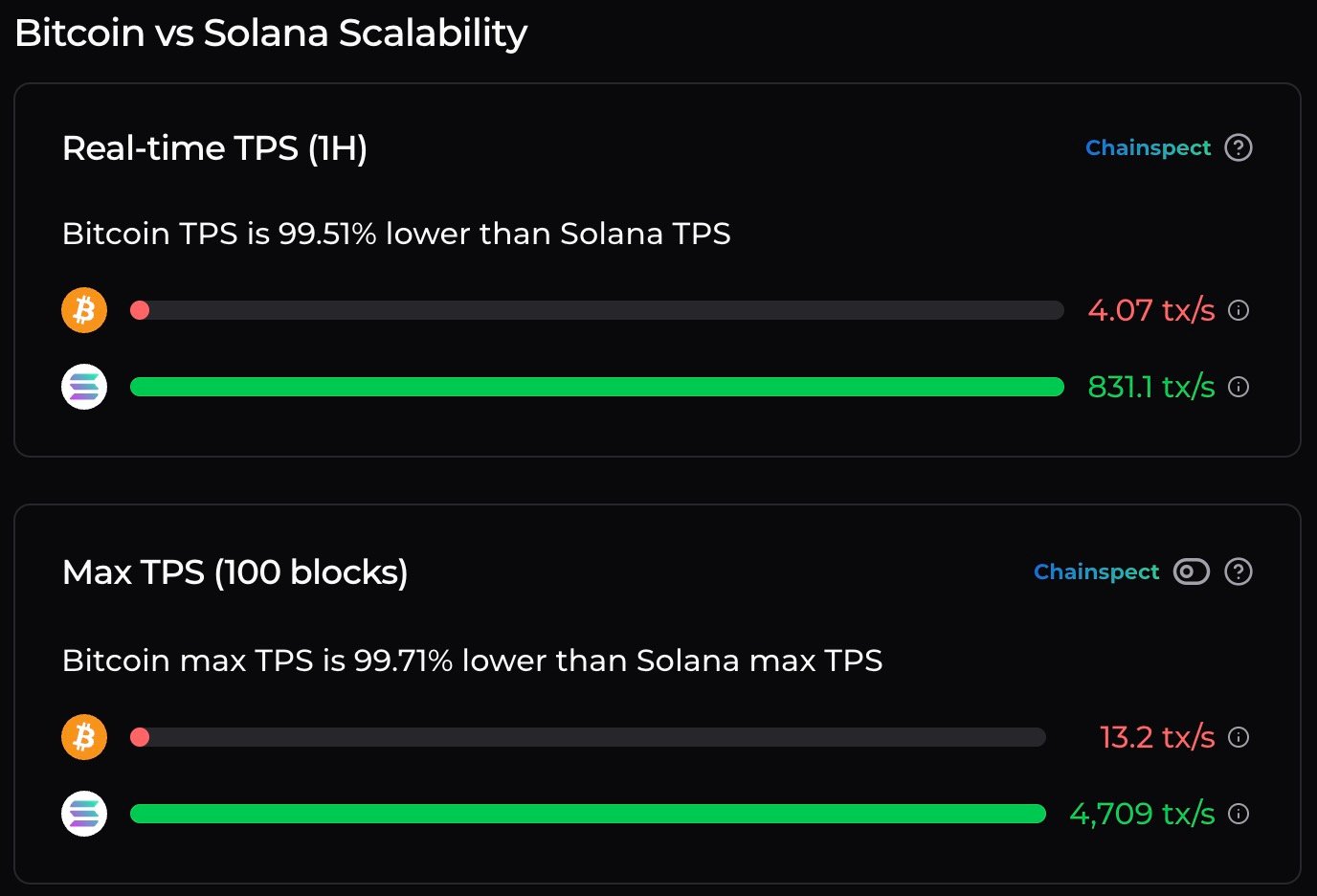
The post Bitcoin Hyper Promises to Fix Bitcoin and Make It Future-Proof for Modern Demands appeared on BitcoinEthereumNews.com. Bitcoin remains crypto’s heavyweight, commanding a $2.25T+ market cap and more institutional inflows than any other asset. Yet for all its dominance, it still struggles with the basics: slow block times, high fees, and no real way to run payments or DeFi at scale. That’s the gap Bitcoin Hyper ($HYPER) aims to fill. As the first true Bitcoin Layer 2, it uses Solana’s Virtual Machine (SVM) to unlock sub-second transactions and near-zero costs for Bitcoin. Investors are already paying attention: the presale has pulled in $17.7M, with $HYPER trading at $0.012965 and staking yields set at 66% APY. And whales are rushing to get in, with $30.5K bought on Sunday ($17.6K and $12.9K). If Bitcoin can finally scale, its dominance won’t just hold… it could expand into whole new sectors. The Problem: Bitcoin’s Scalability Roadblock Bitcoin was designed for security and decentralization, not speed. The trade-off shows in its performance: the network handles roughly 7 transactions per second (tps), with new blocks arriving only every ten minutes. That’s fine for long-term settlement, but it falls flat when stacked against modern demands. Live data from Chainspect shows the gap between Bitcoin and Solana clearly. Bitcoin is processing around 4.07 tps in real time, while Solana handles over 831 tps – a 99.5% difference. Even at current peak capacity, Bitcoin caps out near 13.2 tps, compared to Solana’s 4,709 tps. Source: Chainspect And try paying for a Starbucks coffee with $BTC and the transaction fee would outweigh the cost of the drink. During peak congestion (like the Runes protocol minting frenzy in April 2024) fees have even surged above $100, effectively locking out everyday transactions. This gulf has left Bitcoin typecast as ‘digital gold.’ It’s unmatched as a store of value, but clumsy as a medium of exchange. And attempts to patch…

Author: BitcoinEthereumNews
Embark On a Global World Travel Adventure

Embark On a Global World Travel Adventure

The post Embark On a Global World Travel Adventure appeared on BitcoinEthereumNews.com. Landlord is excited to announce the launch of its brand-new season “World Travel,” kicking off on September 26, 2025 and running until October 2, 2025. This marks one of the most innovative and ambitious seasons since Landlord’s debut, where players will compete across virtual international cities — investing, managing, and strategizing in a cross-border on-chain economic adventure. The highlight of this season is the new globalized map. Unlike previous single-scenario setups, world Travel will feature multiple international world maps, including Singapore, Dubai, Turkey, and New York. Each world has its own unique economic dynamics and competitive landscape. As more players invest and acquire land, each world’s regional popularity score will rise. Top-ranking cities will unlock additional grand prizes for their participants, pushing players to carefully weigh their strategies — should they support their favorite world, or target the one with the highest potential returns? This season also introduces more variability and direct competition between players. New event-driven mechanics and card-based items allow players to hedge risks or seize opportunities, making every move more intense and strategic. Each match becomes a mix of unpredictability, tension, and excitement. Meanwhile, alliance gameplay is under development, designed to expand cooperative opportunities. Players will be able to form real estate alliances and jointly develop regions. Once an alliance’s total assets reach a certain scale, the community can vote to unlock mega construction projects such as shopping malls or CBDs. Unlike traditional plots, these mega projects will be co-managed by alliance members, with rewards distributed proportionally based on contributions. This adds richer layers of collaboration and competition to the game economy. From an economic design perspective, Landlord continues to prioritize sustainability. Landholders continuously generate LT tokens, which can be reinvested to upgrade plots for higher returns. Upgraded plots also yield greater profits when acquired by others,…

Author: BitcoinEthereumNews
Bitcoin Hyper Could Fix Bitcoin and Make It Ready for Modern Demands

Bitcoin Hyper Could Fix Bitcoin and Make It Ready for Modern Demands

Bitcoin remains crypto’s heavyweight, commanding a $2.25T+ market cap and more institutional inflows than any other asset. Yet for all its dominance, it still struggles with the basics: slow block times, high fees, and no real way to run payments or DeFi at scale.

Author: Brave Newcoin
What’s the intention behind a radical proposal to burn 45% of HYPE’s supply?

What’s the intention behind a radical proposal to burn 45% of HYPE’s supply?

Author: David, TechFlow Recently, amid the Perp DEX craze, various new projects have sprung up like mushrooms after rain, constantly challenging Hyperliquid's status as the big brother. With so much attention focused on the innovations of new players, the price fluctuations of the leading token, $HYPE, have been overlooked. However, the most direct correlation to token price fluctuations is the supply of $HYPE. What affects the supply is, first, continuous repurchases, which is equivalent to constantly buying in the stock market to reduce circulation and reduce the water in the pool; and the other is the adjustment of the overall supply mechanism, which is equivalent to turning off the tap. A closer look at $HYPE's current supply design reveals issues: The circulating supply is approximately 339 million coins, with a market capitalization of approximately $15.4 billion; however, the total supply is close to 1 billion coins, with an FDV of up to $46 billion. The nearly threefold gap between MC and FDV comes mainly from two parts: 421 million tokens allocated to the Future Emissions and Community Rewards (FECR) and 31.26 million tokens in the Assistance Fund (AF). The Assistance Fund is Hyperliquid's account for repurchasing HYPE using protocol revenue. It buys HYPE daily but doesn't burn it, instead holding it. The problem is that investors often feel overvalued when they see 46 billion FDV, even though only a third of it is actually in circulation. Against this backdrop, investment manager Jon Charbonneau (DBA Asset Management, which holds a large position in HYPE) and independent researcher Hasu released an unofficial proposal for $HYPE on September 22nd. The content is very radical; the simplified version is: Burning 45% of the current total $HYPE supply will bring FDV closer to its actual circulation value. This proposal quickly sparked community discussion, and as of press time, the post had received 410,000 views. Why such a strong response? If the proposal is adopted, burning 45% of the HYPE supply means the value of each HYPE token will almost double. A lower FDV may also attract investors who were previously on the sidelines. We have also quickly summarized the content of the original post of this proposal and organized it below. Reduce FDV to make HYPE look less expensive Jon and Hasu's proposal looks simple, burning 45% of the supply, but the actual operation is more complicated. To understand this proposal, we first need to understand HYPE's current supply structure. According to the data sheet Jon provided, at $49 (the HYPE price at the time of their proposal), of the total HYPE supply of 1 billion, only 337 million were actually in circulation, corresponding to a market capitalization of $16.5 billion. But where did the remaining 660 million go? The two largest pieces are: 421 million are allocated to "Future Emissions and Community Rewards" (FECR), which is equivalent to a huge reserve pool, but no one knows when and how to use it; the other 31.26 million are in the hands of the Assistance Fund (AF), which buys HYPE every day but does not sell it, and just hoards it. Let’s first talk about how to burn. The proposal includes three core actions: First, the authorization for 421 million FECRs (Future Emissions and Community Rewards) was revoked. These tokens were originally intended for future staking rewards and community incentives, but there has been no clear issuance schedule. Jon believes that rather than letting these tokens hang like a sword of Damocles over the market, it would be better to directly revoke the authorization. When necessary, the issuance can be re-approved through a governance vote. Second, the 31.26 million HYPE tokens held by the Assistance Fund (AF) will be destroyed, and all future HYPE tokens purchased by AF will also be destroyed. Currently, AF uses protocol revenue (primarily 99% of transaction fees) to repurchase HYPE daily, with an average daily purchase volume of approximately $1 million. Under Jon's plan, these purchased tokens will no longer be held but will be burned immediately. Third, remove the 1 billion supply cap. This sounds counterintuitive: if we want to reduce the supply, why remove the cap? Jon explained that the fixed cap is a legacy of Bitcoin's 21 million token model and is meaningless for most projects. With the cap removed, any future issuance of new coins (such as staking rewards) could be determined through governance, rather than allocated from a reserved pool. The comparison table below clearly shows the changes before and after the proposal: the left side is the current situation, and the right side is the situation after the proposal. Why are they so radical? The core reason given by Jon and Hasu is that HYPE’s token supply design is an accounting issue, not an economic issue. The problem lies in the calculation methods of major data platforms such as CoinmarketCap. Each platform handles burned tokens, FECR reserves, and AF holdings differently when calculating FDV, total supply, and circulating supply. For example, CoinMarketCap always uses a maximum supply of 1 billion to calculate FDV, and does not adjust even if tokens are burned. The result is that no matter how HYPE repurchases or burns it, the displayed FDV cannot be reduced. It can be seen that the biggest change in the proposal is that 421 million FECR and 31 million AF will disappear, and the 1 billion hard cap will also be cancelled and replaced by issuance through governance as needed. Jon wrote in the proposal: "Many investors, including some of the largest and most mature funds, only look at the superficial FDV numbers." With a FDV of $46 billion, HYPE looks more expensive than Ethereum. Who would dare to buy it? However, most proposals seem to be driven by one's own opinion. Jon explicitly stated that the DBA Fund he manages holds a "material position" in HYPE, which he personally holds as well, and that if there were a vote, they would vote in favor. The proposal concludes by emphasizing that these changes will not affect the relative shares of existing holders, will not affect Hyperliquid's ability to fund projects, and will not change the decision-making mechanism. In Jon's words, “It just keeps the books more honest.” When “distribution to the community” becomes an unspoken rule But will the community buy into this proposal? The original post's comments section has already exploded. Among them, Dragonfly Capital partner Haseeb Qureshi's comments put this proposal into a larger industry context: “Some of the ‘sacred cows’ in the crypto industry just won’t die, and it’s time to slaughter them.” He was referring to an unspoken rule throughout the crypto industry: after tokens are generated, projects must always reserve 40-50% of their tokens for the "community." This sounds very decentralized and Web3-esque, but it's actually a form of performance art. In 2021, at the height of the bull market, every project was competing to be more "decentralized." Consequently, token economics specifications included claims of 50%, 60%, or even 70% community ownership, with the higher the number, the more politically correct it seemed. But how exactly will these tokens be used? No one can explain. From a more malicious perspective, some project parties are more realistic about the tokens they allocate to the community, allowing them to use them whenever and however they want, under the euphemism of "for the community." The problem is, the market is not stupid. Haseeb also revealed an open secret: professional investors automatically give these "community reserves" a 50% discount when evaluating projects. A project with a FDV of 50 billion but 50% of it allocated to the community is only worth 25 billion in their eyes. Unless there is a clear ROI, these tokens are just empty promises. This is precisely the problem HYPE faces. Of HYPE's $49 billion in FDV, over 40% is reserved for "future emissions and community rewards." This figure can be dissuading for investors. It's not because HYPE is bad, but because the numbers on paper are too inflated. Haseeb believes that Jon's proposal has a driving effect, gradually turning radical ideas that were originally not openly discussed into acceptable mainstream views; we need to question the crypto industry's practice of allocating tokens to "community reserves." To summarize, the supporters' argument is simple: If you want to use tokens, you need to implement governance, clearly stating why they are being issued, how much to issue, and what the expected returns are. It should be transparent and accountable, not a black box. At the same time, because this post is too radical, there are some objections in the comment section. We can summarize it into three parts: First, some HYPE must be used as a risk reserve. From a risk management perspective, some believe the 31 million HYPE in the AF support fund isn't just inventory, but also emergency funds. What if regulatory fines or hacker attacks require compensation? Burning all the reserves would eliminate the crisis buffer. Second, HYPE already has a complete destruction mechanism technically. Hyperliquid already has three natural destruction mechanisms: spot transaction fee destruction, HyperEVM gas fee destruction, and token auction fee destruction. These mechanisms automatically adjust supply based on platform usage, so why would anyone need to intervene? Usage-based destruction is healthier than a one-time destruction. Third, large-scale destruction is not conducive to incentives. Future emissions are Hyperliquid's most important growth tool, used to incentivize users and reward contributors. Burning them would be tantamount to self-destruction. Furthermore, large stakers would be locked out. Without new token rewards, who would be willing to stake? Who does the token serve? On the surface, this seems to be a technical discussion about whether to burn the coin or not. However, a closer look at the positions of all parties reveals that the disagreement is actually a matter of opinion. The view represented by Jon and Haseeb is clear: institutional investors are the main source of incremental funds. These funds manage billions of dollars, and their purchases can truly drive prices. The problem is, they're hesitant to enter the market when they see the $49 billion FDV. So, we need to correct this number to make HYPE more attractive to institutions. The community's perspective is completely different. They see the platform's foundation as the retail traders who open and close positions daily. Hyperliquid's success isn't due to VC funding, but rather the support of 94,000 airdrop recipients. Changing the economic model to cater to institutions is putting the cart before the horse. This isn't the first time this disagreement has arisen. Looking back at DeFi history, almost every successful project has experienced a similar crossroads. When Uniswap launched its token, the community and investors argued fiercely over control of the treasury. The core issue is always the same: Does a project on a blockchain serve big money or grassroots crypto natives? This proposal seems to serve the former. "Many of the largest and most mature funds only look at FDV." The implication is clear: if you want to let these big money come in, you have to play by their rules. Jon, the proposer, is an institutional investor himself, and his DBA Fund holds a significant amount of HYPE. If the proposal passes, it will be large investors like him who will benefit the most. With a reduced supply, the price of the coin is likely to rise, and the value of their holdings will also increase. Considering Arthur Hayes' recent $800,000 sale of HYPE, which he jokingly described as buying a Ferrari, we can sense a subtle timing. The earliest backers are cashing out, and now some are proposing to burn tokens to drive up the price. Who are they actually helping? As of press time, Hyperliquid has yet to officially release its position. Regardless of the final decision, this debate has revealed a truth that no one wants to face: With profit at the forefront, we may never have cared that much about decentralization and were just pretending.

Author: PANews
Rainbow Prepares RNBW Token Launch With Overhauled Crypto App Experience

Rainbow Prepares RNBW Token Launch With Overhauled Crypto App Experience

TLDR: Rainbow will launch RNBW token in Q4 2025, rewarding users who have been collecting points on its app. The app now includes real-time pricing, instant balance updates, and live candlestick charts for crypto traders. Users can connect to any EVM dapp directly inside Rainbow’s in-app browser for smoother transactions. Perps trading powered by Hyperliquid [...] The post Rainbow Prepares RNBW Token Launch With Overhauled Crypto App Experience appeared first on Blockonomi.

Author: Blockonomi
Top Movers: How HBAR, Toncoin, and Litecoin Compare in Today’s Altcoin Drop

Top Movers: How HBAR, Toncoin, and Litecoin Compare in Today’s Altcoin Drop

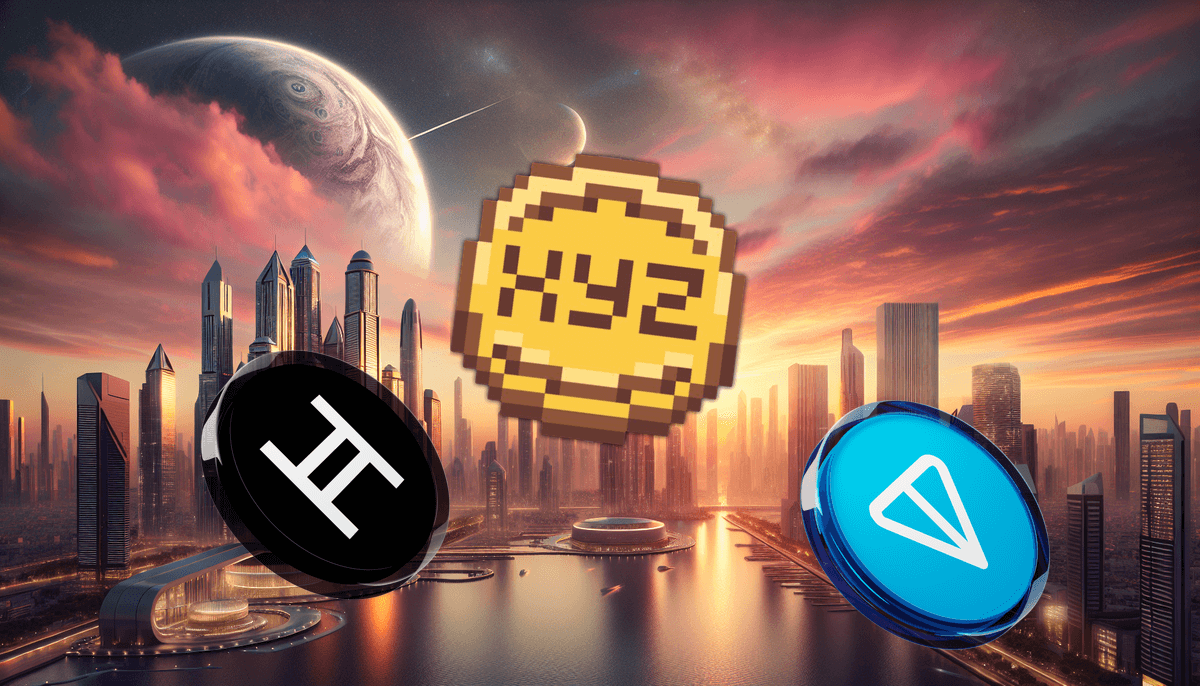
HBAR, Toncoin, and Litecoin have drawn attention as their prices react to today’s broader market slump. Each is moving with its own pace and pattern, standing out amid the downturn. Which coin is weathering the pullback best, and what trends set them apart? A closer look shows unexpected shifts in direction and strength. HBAR: The Green Speedster Racing Past Old Blockchains Hedera Hashgraph works like a busy chat room where every message is logged in order. This design, called hashgraph, skips the slow crunch of mining seen in Bitcoin and Ethereum. Without heavy machines, the network stays light on energy, keeps fees tiny, and can handle many trades at once. Its coin, HBAR, pays those fees and protects the system because users lock up tokens to vote on updates. The result is a fast, green, and low-cost way to run apps and smart deals. Right now, markets crave speed, low fees, and eco-friendly stories. HBAR fits that mood, and big firms on its council add weight. Still, its code is patented, so open-source fans may look elsewhere, and rival staking coins like Solana and Avalanche fight for the same space. After last year’s hard reset, many mid-cap tokens are bouncing as traders hunt fresh themes. If the wider rally holds, HBAR’s clear use case and strong brand could draw new buyers. Yet true breakout will hinge on real-world apps choosing hashgraph over classic chains in the months ahead. From Telegram Dream to DeFi Star: Why Toncoin May Steal the Spotlight Toncoin runs The Open Network, a public, open-source blockchain first built by Telegram. When regulators halted the original “Gram,” fans refused to quit. The non-profit TON Foundation took over, tuned the code, and kept the name alive. The network uses proof of stake, so holders lock coins to help run it. This design lets TON move data fast, cut fees, and stay green. Builders plan more than payments. They work on storage, web names, private links, and tools that talk to each other with ease. Money watchers say the buzz could last. Charts that follow Bitcoin’s four-year rhythm hint at wide price swings: lows of $6.45 and highs of $30.30 in 2025, then $16.06 to $26.04 by 2030. Even the lower 2030 guess beats today’s level by a lot. While giants like Ethereum fight traffic jams, TON still cruises. If fresh apps land and trading mood stays bright, Toncoin may turn from sleeper pick to headline act in the next cycle. Undervalued $XYZ Meme Coin Gears Up for Listing on a Major CEX XYZVerse ($XYZ) is the meme coin that has grabbed headlines with its ambitious claim of rising from $0.0001 to $0.1 during a presale phase. So far, it has gone halfway, raising over $15 million, and the price of the $XYZ token currently stands at $0.0055. At the next stage of the presale, the $XYZ token value will further rise to $0.0056, meaning that early investors have the chance to secure a bigger discount. Following the presale, $XYZ will be listed on major centralized and decentralized exchanges. The team has not disclosed the details yet, but they have put a teaser for a big launch. Born for Fighters, Built for Champions XYZVerse is building a community for those hungry for big profits in crypto — the relentless, the ambitious, the ones aiming for dominance. This is a coin for true fighters — a mindset that resonates with athletes and sports fans alike. $XYZ is the token for thrill-seekers chasing the next big meme coin. Central to the XYZVerse story is XYZepe — a fighter in the meme coin arena, battling to climb the charts and make it to the top on CoinMarketCap. Will it become the next DOGE or SHIB? Time will tell. Community-First Vibes In XYZVerse, the community runs the show. Active participants earn hefty rewards, and the team has allocated a massive 10% of the total token supply — around 10 billion $XYZ — for airdrops, making it one of the largest airdrops on record. Backed by solid tokenomics, strategic CEX and DEX listings, and regular token burns, $XYZ is built for a championship run. Every move is designed to boost momentum, drive price growth, and rally a loyal community that knows this could be the start of something legendary. Airdrops, Rewards, and More — Join XYZVerse to Unlock All the Benefits Litecoin: Digital Silver Racing Ahead of Bitcoin's Slow Gold Litecoin was born in 2011 when former Google coder Charlie Lee wanted a quicker Bitcoin. It adds a new block every two and a half minutes, so money moves fast. Its code lets many users join mining, not only big firms, which keeps the network open. With 84 million coins on tap, four times more than Bitcoin, fans call it “digital silver.” People use it for coffee, game items, and other small buys because its fees stay low. The team keeps tuning the engine. In 2022 they added an upgrade called MWEB that hides amounts and cuts extra data, making transfers both lighter and more private. This fresh paint helps Litecoin stand out in a crowd of new tokens. Today, rising costs on Bitcoin and the buzz around speedy chains give Litecoin a tailwind. It is listed on almost every exchange, so traders hop in and out with ease. While it may not soar as high as some hot meme coins, its long record, clear goal, and active updates offer a solid bet for the next market wave. Conclusion HBAR, TON, and LTC remain solid performers ahead of the 2025 bull run; yet the standout is XYZVerse (XYZ), a sport-meme token marrying fandom and GameFi, targeting outsized early-presale gains. You can find more information about XYZVerse (XYZ) here: https://xyzverse.io/, https://t.me/xyzverse, https://x.com/xyz_verse   Disclaimer: This article is provided for informational purposes only. It is not offered or intended to be used as legal, tax, investment, financial, or other advice.

Author: Coinstats
Smarter Futures Trading Begins: OneBullEx Launches Beta with Bots, Rewards, and Community at the Core

Smarter Futures Trading Begins: OneBullEx Launches Beta with Bots, Rewards, and Community at the Core

The post Smarter Futures Trading Begins: OneBullEx Launches Beta with Bots, Rewards, and Community at the Core appeared first on Coinpedia Fintech News In a crowded crypto exchange market where many platforms rush to launch with unfinished products, OneBullEx is choosing a different path. Instead of chasing hype, the exchange has built carefully, tested with real traders, and prioritized quality above all. With its Beta launch now live, OneBullEx is opening its doors to the global trading community. …

Author: CoinPedia
88% of airdropped tokens last no more than 3 months

88% of airdropped tokens last no more than 3 months

By Sara Gherghelas Compiled and compiled by: BitpushNews While the impact of airdrops on user growth and awareness has transformed the Web3 ecosystem, whether they can create lasting ecosystems or simply spark short-lived speculative activity remains a focus of attention. Airdrops have become one of the most powerful growth tools in Web3, capable of generating massive buzz and onboarding millions of users in just a few days. Over the past two years, projects in areas like decentralized finance (DeFi), non-fungible tokens (NFTs), and blockchain gaming have distributed billions of dollars worth of tokens to reward early adopters and attract new participants. However, the real question is: do these distributions create lasting ecosystems, or are they merely short-lived speculative ventures? While airdrops continue to drive impressive spikes in user growth and transaction volume, their long-term impact on retention, engagement, and token value is far less certain. This report analyzes the outcomes of high-value airdrops in DeFi, NFTs, and gaming, focusing on how they impacted user behavior, token performance, and on-chain activity. Key Takeaways Since 2017, projects have distributed over $20 billion in airdropped tokens, with $4.5 billion in 2023 alone, making airdrops one of Web3’s most powerful, yet most expensive, growth strategies. 88% of airdropped tokens lose value within three months, highlighting the gap between short-term hype and long-term sustainability. Airdrops reliably generate massive spikes in activity: Arbitrum saw 2.5 million daily transactions at launch, and Blur captured over 70% of NFT trading volume overnight. Retention remains a weak link: on average, activity falls back to around 20% to 40% of its pre-airdrop level within a few weeks, with most recipients cashing out. 1. What are airdrops? How do they shape Web3 growth? In the Web3 ecosystem, an airdrop refers to the distribution of free tokens to a group of wallets, typically to reward past activity or incentivize future participation. Unlike ICOs (initial coin offerings), which require users to purchase tokens, airdrops place tokens directly into users' hands. The underlying logic is simple: by giving away ownership, projects can guide their communities, decentralize governance, and create immediate liquidity for their tokens. Airdrops come in different forms: Retroactive Airdrops: Reward users who have interacted with the protocol in the past (e.g. Uniswap in 2020, Arbitrum in 2023). Incentive Airdrops: Encourage ongoing behavior such as trading, staking, or referrals (e.g. Blur’s points system). Community Airdrops: Reward NFT holders, developers, or social community members (such as BONK on Solana). Since 2017, airdrops have evolved from a quirky way to spread news into one of the most effective marketing strategies in Web3. Instead of paying for advertising, projects are distributing ownership. The thinking is: users who feel like stakeholders are more likely to try a product, spread the word, and remain loyal. Key milestones in airdrop history: 2017–2018, the first wave: This first emerged during the ICO era. Many projects used airdrops to cheaply expand Telegram groups and wallet addresses. The impact was mostly speculative, with few users continuing to participate after receiving the airdrops. In 2020, Uniswap set the gold standard with its $UNI airdrop. By distributing 400 UNI (valued at approximately $1,200 at the time, peaking at over $12,000) to every historical user, Uniswap turned early adopters into evangelists. It also established that retroactive airdrops are a fair way to reward "true believers." 2021–2022: The Airdrop Playbook Era: Airdrops became part of the playbook: dYdX, ENS, LooksRare, and others used them to attract traders, domain name service users, or NFT collectors. Some projects succeeded, while others were overwhelmed by "farmers." 2023–2025, the era of super airdrops: Arbitrum ($1.97 billion), Blur ($818 million), and Worldcoin (which continues to airdrop to over 10 million users) demonstrate how large-scale distribution can change the entire ecosystem overnight. While precise tracking is difficult, estimates suggest that: Since 2017, hundreds of airdrops have occurred across DeFi, NFTs, gaming, and infrastructure. The total value distributed via airdrops exceeds $20 billion, with $4.5 billion in 2023 alone (including Arbitrum, Blur, Celestia, etc.). Major airdrops typically target between 100,000 and 1 million addresses, while global campaigns like Worldcoin target tens of millions of users. Research shows that approximately 88% of airdropped tokens lose value within 3 months of launch, highlighting that airdrops, while successful as marketing campaigns, rarely ensure the long-term strength of a token. Why do airdrops work as a marketing tool? Low barrier to entry: Users receive free tokens → try the product. Word-of-mouth effect: Large airdrops make headlines (“free money”) and generate virality. Decentralization: Tokens spread ownership, empower users with governance, and (at least in theory) align them with the future of the project. Competitive pressure: Airdrops can quickly shift market share (e.g. Blur versus OpenSea). However, they also come with challenges: airdrop farming, immediate sell-offs, and retention struggles. However, as of 2025, airdrops remain one of the most effective, albeit imperfect, marketing weapons in the dapp industry. 2. DeFi and Layer-2 airdrops: Is it promoting user growth or feeding the "wool party"? The DeFi sector has long been at the heart of the airdrop phenomenon. From decentralized exchanges to Layer-2 scaling networks, protocols are using token distribution to reward early adopters, decentralize governance, and, most importantly, attract new users. In fact, many of the largest and most discussed airdrops in Web3 history have stemmed from DeFi and network scaling solutions. L2 Network Airdrop The most notable example is Arbitrum's airdrop in March 2023. By distributing 1.16 billion ARB tokens (approximately 11.6% of the total supply) to over 600,000 addresses, Arbitrum created the industry's largest airdrop at the time. At its peak, these tokens were valued at nearly $2 billion. The impact on the chain was immediate: on the day of the redemption, daily transaction volume soared to over 2.5 million, briefly surpassing Ethereum itself. Despite the inevitable cooling of the hype, Arbitrum has retained a higher baseline of activity than before the airdrop. Two months later, the network is still processing approximately one million daily transactions, and unique active wallets (UAWs) have increased by 531%. However, the retention story is more complicated. Our data shows that only approximately 5% of transactions during this period came from wallets that actually received ARB. Many recipients simply sold their tokens and left, while real usage was driven by new or existing DeFi users attracted to Arbitrum's growing ecosystem. Unsurprisingly, the ARB token itself followed a familiar pattern: after launching at around $1.30–$1.40, it fell by over 75% in two years. Optimism offers a helpful comparison. Rather than opting for a single, large-scale event, it has been conducting airdrops in phases since 2022. A second wave of airdrops in 2023 distributed 11 million OP tokens, targeting governance participants such as DAO voters and delegates. While this approach produced smaller spikes in activity than Arbitrum, it more purposefully aligned incentives and strengthened Optimism's governance structure. Our data confirms that Optimism also experienced a sharp jump in UAWs and trading volume during its claiming period, though activity faded more quickly. The OP token has lost 42% of its value since its launch three years ago. DeFi Airdrop DeFi protocols have followed a similar pattern to L2 networks. dYdX's early airdrops to active traders created a surge in trading volume, but once incentives were reduced, activity declined, and its token has since lost approximately 70% of its value. 1inch distributed multiple waves of tokens, driving short-term wallet growth, but governance participation remained low; the token fell 52% shortly after the airdrop and over 90% five years later. ENS's retroactive airdrop in late 2021 was smaller, but its token has performed better, losing only about 40% in four years, while cultivating a relatively loyal governance community among Ethereum nameholders. Across the industry, the data shows a consistent pattern. Airdrops drive immediate user growth, often doubling or tripling daily activity, accompanied by a surge in TVL as users move assets to qualify or claim tokens. However, within a few weeks, activity typically falls back to a baseline level that's only slightly higher than before. Token prices bear this out: most DeFi airdrop tokens lose 60% to 90% of their issuance value within a few months as investors exit their positions. Airdrops are unmatched for accelerating user acquisition, but long-term retention depends on product-market fit. Arbitrum has been able to maintain high usage levels because its network already offers strong DeFi utility and lower costs. Optimism, by designing its airdrops around governance, demonstrates how mechanisms can shape user behavior beyond speculation. However, for protocols lacking a compelling ecosystem or thoughtful design, airdrops are, at best, expensive marketing campaigns that enrich opportunistic takers while failing to ensure lasting adoption. 3. NFT Airdrops: Trading Liquidity vs. Community Loyalty If DeFi and Layer-2 networks use airdrops to expand infrastructure, the NFT space uses them as a weapon to fight for market share. Blur is a prime example of this, as the exchange disrupted OpenSea’s long-held dominance through one of the most aggressive airdrop strategies in Web3 history. Blur ran a “quarterly” rewards program for months before its February 2023 token launch, with traders accumulating points by listing NFTs, providing liquidity, and demonstrating platform loyalty. When the BLUR token finally launched, 51% of its total supply was allocated to the community, and at its peak, the airdrop was worth over $800 million. The results were immediate and dramatic. Blur captured over 70% of Ethereum’s NFT trading volume within days, forcing OpenSea to cut fees and reconsider creator royalties. Our data shows the speed of the liquidity transfer; despite serving fewer active wallets, Blur sometimes saw over five times the volume of OpenSea. However, the nature of this activity tells a cautionary tale. The majority of Blur's volume was driven by a small number of high-frequency traders scalping points for future rewards. Analysis at the time showed that a few hundred wallets accounted for the majority of transactions. While this created unprecedented liquidity, tight spreads, and faster execution for NFTs, it didn't necessarily translate into broader community participation. OpenSea continued to dominate in terms of independent active wallets, favoring casual collectors and creators. The BLUR token itself followed a familiar trajectory. It debuted at around $1.20 but quickly fell as recipients sold off, dropping below $0.10 by 2025. Even consistent quarterly rewards failed to prevent the gradual erosion of value. By the end of 2023, Blur's market share had also begun to decline, stabilizing in the 20% to 40% range after an initial surge. Other NFT airdrops tell a similar story. LooksRare and X2Y2 also engaged in a “vampire attack” model in 2022, distributing tokens to OpenSea traders. Both briefly saw significant trading volume, but much of it was wash trading. Activity quickly plummeted after the rewards dried up. Their tokens, once worth hundreds of millions of dollars, now trade at a fraction of their peak value. More recently, memecoin-style NFT airdrops like Memecoin ($MEME) briefly sparked collector enthusiasm but failed to sustain any lasting ecosystem. The key lesson from NFT airdrops is that while they are highly effective at moving liquidity, they face challenges in creating sticky communities. Traders follow rewards, but collectors and creators seek trust, usability, and cultural relevance—factors that tokens alone cannot achieve. As of 2025, the NFT trading landscape is more competitive than ever, fueled by these airdrops. OpenSea has adopted new professional trading tools, Blur continues to cater to professional traders, and other platforms are experimenting with new models. But the fundamental question remains: Can token incentives in NFT markets truly foster sustainable communities, or simply fuel a temporary liquidity war? 4. Game Airdrops: Limited Impact in a Play-to-Earn World While DeFi and NFT platforms have turned airdrops into multi-billion dollar marketing campaigns, the gaming sector has been more cautious. Blockchain games typically focus on in-game economies and NFTs rather than large-scale token giveaways. As a result, high-value gaming airdrops have been relatively rare over the past two years, and their impact has been more short-lived compared to DeFi or NFT trading markets. Most other blockchain gaming projects have completely avoided major retroactive airdrops. Instead, they rely on launchpads, NFT minting, or in-game earning rewards to distribute tokens. This strategy reflects the lessons of the 2021 Play-to-Earn wave, when the inflationary token economy collapsed under speculative pressure. By 2023–2025, developers appear wary of repeating the same mistake by distributing large amounts of tokens without a sustainable mechanism. Some exceptions occur at the infrastructure level. Immutable, Polygon, and Ronin have experimented with incentives and token rewards for game developers and players, but these structures have been ongoing bounty programs rather than one-time airdrops. Similarly, smaller game studios have distributed NFTs or modest token airdrops to closed beta users, rewarding early participation without disrupting their economies. For games, the real challenge is not onboarding users with tokens, but keeping them entertained long enough to form a lasting ecosystem. Conclusion While 88% of airdropped tokens lost value within months, each airdrop reinforces the same truth: in the Web3 world, attention is the most valuable currency. Previous large-scale token distributions have proven that the true value lies not in the token itself, but in the user behavior it can influence. The challenge facing projects today is no longer about attracting attention, but rather how to convert that traffic into sustainable ecosystems and communities.

Author: PANews
Uptick Network Equips Upward Wallet to Unlock Web3 with ERC-20 Token Creation

Uptick Network Equips Upward Wallet to Unlock Web3 with ERC-20 Token Creation

Uptick Network upgrades Upward Wallet with ERC-20 token creation and gifting tools in order to make Web3 simpler, engaging, and community-driven.

Author: Blockchainreporter
LayerZero Foundation initiates buyback of 50 million ZRO from early backers

LayerZero Foundation initiates buyback of 50 million ZRO from early backers

The post LayerZero Foundation initiates buyback of 50 million ZRO from early backers appeared on BitcoinEthereumNews.com. Key Takeaways LayerZero Foundation has initiated a buyback for 50 million ZRO tokens. The buyback targets early investors who supported LayerZero during its early development stages. LayerZero Foundation, the non-profit entity overseeing the development of the LayerZero blockchain interoperability protocol, today initiated a buyback of 50 million ZRO tokens from early backers. The buyback targets tokens held by initial investors who provided funding during the project’s early development phases. Token buybacks in crypto are typically used to reduce circulating supply and signal long-term confidence in the protocol. ZRO launched in June 2024 with an initial fully diluted valuation of around $3.0 billion. The foundation distributed 8.5% of the token supply through an airdrop on launch day to bootstrap community participation. LayerZero’s protocol connects over 50 blockchains and has facilitated more than 100 million cross-chain messages since launch, enhancing liquidity across decentralized applications. Source: https://cryptobriefing.com/layerzero-zro-token-buyback-early-backers-2025/

Author: BitcoinEthereumNews