Airdrop

An Airdrop is a distribution of free tokens to a community, typically used as a marketing tool or a reward for early protocol adopters and testers. In 2026, the "points-to-airdrop" model has matured into merit-based incentive programs that utilize Sybil-resistance and Proof-of-Humanity to filter out bots. Airdrops remain a primary method for decentralized governance (DAO) bootstrapping. Follow this tag for the latest on retroactive rewards, eligibility criteria, and how to participate in the most anticipated token distributions in the ecosystem.

5429 Articles
Created: 2026/02/02 18:52
Updated: 2026/02/02 18:52
Which Presale Shows Real Growth in 2025?

Which Presale Shows Real Growth in 2025?

The post Which Presale Shows Real Growth in 2025? appeared on BitcoinEthereumNews.com. Crypto News Discover how BlockDAG’s $420M+ raise, 2,900% ROI, and global exposure set it apart, while Remittix struggles with low visibility and traction. BlockDAG continues to gain recognition as one of the best crypto for 2025, having raised over $420 million with 27 billion coins sold. The project’s current batch 31 offers a limited-time price of $0.0012 before it moves closer to its fixed launch price of $0.05. Early participants have already seen around 2,900% ROI since batch 1. By contrast, Remittix presents a use case centered on simplifying cross-border remittances. However, where Remittix remains within crypto forums and whitepapers, BlockDAG (BDAG) has stepped into mainstream visibility. Its partnership with the BWT Alpine Formula 1® Team places it on cars, fan zones, and global broadcasts, giving it an edge that extends far beyond typical presale attention. Remittix Struggles to Build Visibility Despite Practical Goals Remittix has drawn early attention for addressing remittance challenges, especially for people without access to formal banking. Its idea of enabling faster and cheaper cross-border payments could be impactful for global users. Yet the issue lies in exposure. While the Remittix presale price appeals to presale participants, the project lacks exchange listings, real-world partnerships, and active integrations with key financial networks. Without collaboration with major remittance platforms like Western Union, Wise, or mobile wallet providers, its reach stays confined within crypto circles. Even with utility-focused goals, traction remains limited. In the current market, where hundreds of presales compete for attention, visibility often determines progress. Remittix might have a meaningful concept, but without broader engagement or public-facing presence, it risks falling behind projects like BlockDAG that combine functionality with global recognition. Remittix’s efforts highlight that strong ideas alone no longer guarantee success. In a market defined by momentum, visibility, and credibility, it is the projects that connect…

Author: BitcoinEthereumNews
BlockDAG’s Formula 1® Team Deal Outpaces DOGE & ARB Momentum

BlockDAG’s Formula 1® Team Deal Outpaces DOGE & ARB Momentum

The post BlockDAG’s Formula 1® Team Deal Outpaces DOGE & ARB Momentum appeared on BitcoinEthereumNews.com. Crypto News Discover how BlockDAG’s $420M+ presale, BWT Alpine Formula 1® Team partnership, and TGE code overshadow Dogecoin price action and Arbitrum price prediction. The competition for the best crypto for the future is intensifying, with Dogecoin and Arbitrum both navigating key price zones while BlockDAG takes a very different route, pairing real-world partnerships with large-scale adoption and presale strength. Dogecoin (DOGE) is testing critical support levels that could trigger rallies if defended, while Arbitrum (ARB) is struggling to hold above $0.40, even as its $9 billion stablecoin base keeps long-term fundamentals intact. Yet, it is BlockDAG that’s commanding the spotlight. Its multi-year BWT Alpine Formula 1® Team sponsorship, $420M+ presale raise, and exchange-grade Dashboard V4 position it far beyond short-term speculation. Backed by over 312,000 holders, 20,000 miners, and millions of app users, BlockDAG is increasingly seen as a frontrunner for 2025 and beyond. Arbitrum Faces Pressure as Sellers Dominate The latest Arbitrum price prediction shows selling pressure mounting after ARB slipped from above $0.50 to around $0.42, now testing a key support zone at $0.40. A break below could open the door to further losses toward $0.35 or even $0.30. Elliott Wave patterns and Donchian Channel readings confirm bearish sentiment, while the weekly chart places sellers firmly in control unless buyers can reclaim $0.45. Despite the pullback, Arbitrum’s fundamentals remain robust. Its stablecoin liquidity has surged past $9.12 billion, highlighting its status as a leading Ethereum Layer-2 solution. Analysts believe that once the correction plays out, ARB could rebound toward $0.80 in a medium-term cycle, but the near-term remains uncertain. Dogecoin Holds Key Support With Upside Potential The Dogecoin price pattern has shifted after a steep 25% correction from September highs near $0.30. DOGE now trades in a crucial $0.20–$0.22 range, supported by the 200-day EMA, a rising…

Author: BitcoinEthereumNews
How to empower the most popular L2 network? A look at the BASE token economics proposal

How to empower the most popular L2 network? A look at the BASE token economics proposal

By Achim Struve, Outlier Ventures Compiled by AididiaoJP, Foresight News Since several of our portfolio companies are building on Base, we have a strong interest in the success of this ecosystem. This proposal aims to build community engagement by outlining a token design that challenges traditional L2 models. It solves the fundamental revenue-growth paradox through an adaptive quote currency mechanism. The BASE token represents an opportunity to redesign L2 economics from first principles. BASE Token Discussion: Redesigning L2 Token Economics Layer 2s face a fundamental economic challenge: competitive pressure to keep transaction fees low erodes revenue generation. Base boasts $4.95 billion in TVL, 1 million daily active users, and $5.1 million in monthly transaction fees, primarily due to its native connection to Coinbase, competitively low fees of just $0.02 per transaction, and deep integration with the broader EVM-based ecosystem. source This proposal outlines solutions for designing a possible token for Base. It's not just about staying ahead, it's about establishing leadership. A key recommendation is to reduce reliance on fees as a primary revenue source. Combining a quote currency mechanism implemented with a proven bribery mechanism with adaptive economics creates sustainable value capture for Coinbase, Base, and the BASE token. BASE Token Opportunities Traditional L2 focus on transaction fees ignores the primary value driver of successful cryptoassets. As @mosayeri observed, "The crypto community has long misjudged the value accumulation narrative for L1 assets, assuming that the primary driver is transaction fees." The value of ETH and SOL primarily comes from being locked in AMM pools as the quote currency, not from gas fees. This presents an opportunity for BASE to establish itself as the primary quote currency on whitelisted approved Base Ecosystem DEXs. Rather than competing for dwindling fee revenue, BASE can generate demand through real liquidity demand across trading pairs. Quote currency mechanism Users lock up BASE tokens to receive veBASE (voted escrow BASE), which provides governance rights over the fee distribution algorithm. VeBASE holders channel rewards to an AMM pool that uses BASE as its quote currency, with the distribution ratio automatically adjusted based on network health metrics. Ecosystem growth directly increases demand for locked BASE tokens, as they are tied to liquidity incentives. This system builds on the established quote currency concept of Virtuals, while adding a voting escrow mechanism similar to Aerodrome, but without redistributing liquidity pool fees to voters. A portion of sequencer revenue is used to sustainably generate incentives for voting on the BASE denominated pool. This applies even after the initial launch phase. Furthermore, unlike static allocation models, dynamic fee allocation responds to real-time conditions via fine-tuned machine learning algorithms. These algorithms analyze network utilization, DEX trading volume patterns, and ecosystem growth metrics to determine overall incentive distribution. This mechanism will trigger a Curve Wars-like liquidity competition, with protocols accumulating BASE governance tokens to ensure liquidity incentives. As the Base ecosystem expands, more protocols will demand BASE liquidity, reducing the circulating supply and creating natural demand pressure. This approach also provides opportunities for large-scale token swaps with leading protocols already established on Base, further strengthening decentralized ownership within the ecosystem. Base can use tokens from other ecosystems to build its own BASE quote liquidity pool. Trading fees collected from the protocol's own liquidity can serve as a sustainable, long-term revenue stream. Adaptive economic system Current L2 token designs use fixed distribution schedules and are unable to respond to changing market conditions. BASE introduces a complex adaptive system that goes beyond simple fee adjustments like Ethereum’s EIP-1559. Building on previously published adoption-adjusted attribution principles, BASE implements a dynamic emissions plan that responds to ecosystem demand signals through two strategic allocation pools: Distribution-focused allocation pools (Coinbase Strategic Reserve, Protocol Treasury, Community, and User): receive increased emissions during periods of strong KPI performance to optimize value distribution when adoption is high. Growth and Construction Allocation Pools (Ecosystem Fund and Builders, Validators, and Infrastructure): Receive increased incentives during periods of weak KPI performance to stimulate development and network security when additional support is most needed. The Growth and Construction Allocation Pool includes all quote currency pool incentives, distributed through the Ecosystem Fund to protocols using BASE as their primary trading pair. This directly aligns the adaptive emission system with quote currency value capture. Emissions never reach zero during the vesting period of any allocation pool, and the system adjusts the relative weights between allocation pools based on market conditions and ecosystem health. Machine learning models analyze multiple factors to prevent governance bottlenecks while ensuring optimal stakeholder alignment across market cycles. BASE token distribution framework Examples of BASE token distribution and maximum vesting periods. Actual vesting periods may change depending on the precise adaptive emission parameterization. Key Features: Adaptive Emission System: All allocations use a dynamic schedule, with the allocation-focused allocation pool receiving increased emissions during periods of strong adoption, and the Growth & Build allocation pool receiving increased incentives during periods of weakness. COIN Shareholder Alignment: Coinbase’s 20% Strategic Reserve creates direct value alignment without regulatory complexities. Progressive decentralization: Validator incentives (20%) ensure network security during the launch phase, while community allocation supports sustainable decentralized ownership of BASE tokens. Balanced Development: Equal weight between community rewards and ecosystem development ensures success in both adoption and builder retention. The final distribution requires extensive token engineering analysis, legal review, and community input to achieve economic sustainability, regulatory compliance, and user alignment. Strategic value and impact on Coinbase Tokenizing Base represents a fundamental shift in revenue diversification. While Base currently generates modest sequencer fees (kept low for competitive reasons), tokenization could immediately create over $4 billion in value through strategic reserve holdings. The current model faces limitations. Brian Armstrong mentioned the emphasis on low fees, recognizing that higher fees drive users to competitors offering token incentives, creating a revenue-growth paradox. Tokenization breaks this paradox by shifting incentives from fee extraction to ecosystem acceleration and value accumulation. A 20% strategic reserve aligns Coinbase's interests with the long-term success of Base while removing the pressure to maximize fees. Token emission funds growth without impacting the balance sheet, enabling competitive rewards that match other L2 incentives. The strategic impact goes beyond immediate returns through multiple revenue diversification opportunities. Tokenization enables Coinbase to offer institutional custody services for BASE holdings, generating recurring custody fees while positioning itself as the premier institutional gateway for BASE exposure. The Coinbase One integration reduces customer acquisition costs by offering subscribers BASE rewards, discounts, and platform perks, creating stickier customer relationships and higher lifetime value. Allocation Strategy The distribution strategy should balance Coinbase's customer base with Base ecosystem participants. While @Architect9000 suggested "airdropping only to Coinbase One members" for Sybil protection and customer alignment, a fair distribution needs to include active Base chain users and verified builders from the Discord community. Roles earned on the Base community Discord server can be used to measure user consistency and commitment and are tied to an individual's BASE airdrop allocation. This dual approach ensures CEX user retention and true L2 ecosystem participation. Tokenization positions BASE as institutional-grade collateral bridging TradFi and DeFi. As @YTJiaFF noted, "With COIN backing, the BASE token will serve as a secure bridge between public companies and crypto assets." Institutions can custody their BASE holdings at Coinbase and simultaneously use them as both on-chain collateral in DeFi protocols and off-chain collateral in traditional credit markets. This dual-collateralization capability creates the first crypto token designed specifically for the corporate credit market, enabling traditional financial institutions to access crypto liquidity while maintaining regulatory compliance through established custodial relationships. The path to progressive decentralization The transition follows a three-phase approach, balancing innovation with stability. As @SONAR observes, Base has achieved “decentralization in Phase 1 of 3,” and “once Phase 2 arrives, fees will need to be paid to third-party sequencers,” making tokenization a strategic necessity. Phase 1: Coinbase maintains control of the sequencer while initiating token incentives and community governance for fee allocation. In this controlled environment, the quote currency model is validated through some basic KPI-driven incentive allocation. Phase 2: A hybrid model, with an initial set of decentralized validators requiring BASE staking, with Coinbase reserving three permanent seats to ensure transitional stability. This phase introduces prediction market governance (Futarchy), where veBASE holders stake on the success of the implementation, and market proof-of-stake proposals are fast-tracked for approval. Phase 3: Full decentralization, open validator participation, and complete community control. Coinbase transitions to a regular network participant while maintaining strategic token holdings. Advanced cross-chain MEV coordination becomes operational, and institutional credit markets expand into traditional finance. Market positioning and competitive advantages BASE enters a landscape where existing L2 tokens struggle to capture network value. Despite significant ecosystem growth, ARB, OP, and MATIC continue to underperform ETH, highlighting structural issues in traditional L2 token design. These protocols face selling pressure from token unlocks without matching demand. BASE's quote money model solves these structural problems by creating real utility demand through AMM-quoted liquidity deposits. This generates organic buying pressure that scales as the ecosystem grows, moving beyond speculative utility to necessary infrastructure participation. Competitive differentiation goes beyond token design and extends to regulatory clarity, institutional access, and enterprise-grade compliance. Coinbase’s regulatory expertise provides an advantage unmatched by decentralized competitors, while the quote currency model creates a clearer definition of utility and reduces securities classification risk. Conclusion: A Decisive Choice Between Fee Capture and Exponential Value The fundamental question is not whether Coinbase should launch a token, but whether they should capture limited fee revenue or create exponential value through tokenization. The current revenue structure indicates that $180 million will be generated over three years ($5 million per month x 12 months x 3 years). On the other hand, strategic BASE tokenization can be achieved through token distribution ($10 billion initial fully diluted valuation x 0.2 = $2 billion) and due to Quote currency demand Adaptive intelligent incentive distribution POL provides revenue comparable to current sequencer fees Ecosystem acceleration Valuation of another $2 billion And create a comprehensive value of approximately US$4 billion. These are conservative estimates, assuming valuations are in line with other L2s, and adjusted for current fees and TVL data. Note that the Coinbase premium is not included. This represents a significant value creation opportunity for Coinbase. The quote currency model solves the growth-revenue paradox while positioning BASE as the infrastructure for the expanding BASE ecosystem. The early dominance afforded by this L2 token design creates a competitive advantage that can further strengthen BASE's leading market position. For the broader crypto ecosystem, BASE tokenization could signal a further maturation of L2 economics, moving beyond a reliance on transaction fees toward true utility-driven value capture. As @jack_anorak observed, “The BASE token was a product decision. Base needed a token incentive, and it had to be blockspace neutral.” Coinbase’s choice between constrained fee capture and exponential tokenized value represents a defining moment that will determine the trajectory of BASE and Coinbase’s position in the crypto landscape.

Author: PANews
Dogecoin and Arbitrum Face Resistance While BlockDAG’s Over $420M Presale and  BWT Alpine F1® Team Deal Push It Into the Lead

Dogecoin and Arbitrum Face Resistance While BlockDAG’s Over $420M Presale and  BWT Alpine F1® Team Deal Push It Into the Lead

The competition for the best crypto for the future is intensifying, with Dogecoin and Arbitrum both navigating key price zones […] The post Dogecoin and Arbitrum Face Resistance While BlockDAG’s Over $420M Presale and  BWT Alpine F1® Team Deal Push It Into the Lead appeared first on Coindoo.

Author: Coindoo
NFTs Are Back: DappRadar Reports Record 18 Million Sales in 2025’s Biggest Market Comeback

NFTs Are Back: DappRadar Reports Record 18 Million Sales in 2025’s Biggest Market Comeback

NFT transactions skyrocketed to record highs this year as the sector sees strong engagement from existing traders.

Author: CryptoPotato
Best Cryptos Under $1 To Buy Now That Could See Big Gains in 2026

Best Cryptos Under $1 To Buy Now That Could See Big Gains in 2026

Crypto traders are always on the lookout for tokens that are trading below $1 because the one-dollar mark is often seen as an important level for many investors. Once a token starts pushing toward that point, it can build momentum both in the short and long term. In this article, we take a look at.. The post Best Cryptos Under $1 To Buy Now That Could See Big Gains in 2026 appeared first on 99Bitcoins .

Author: 99Bitcoins
BlockDAG, Remittix, Pudgy Pandas & BlockchainFX Race Toward the Next Breakout

BlockDAG, Remittix, Pudgy Pandas & BlockchainFX Race Toward the Next Breakout

The post BlockDAG, Remittix, Pudgy Pandas & BlockchainFX Race Toward the Next Breakout appeared on BitcoinEthereumNews.com. The top crypto presales for 2025 are gaining pace, with over $420 million already raised across major projects as anticipation grows before the next market surge. Leading this list are BlockDAG, Remittix, Pudgy Pandas, and BlockchainFX, each pursuing a unique direction in the digital space. What sets BlockDAG apart is that it’s not just another presale project; it’s a functioning network with active development milestones like GENESIS Day and KEYNOTE 4. Having sold 27 billion coins, reached batch 31 at $0.0304, and achieved a 2900% ROI since batch 1, BlockDAG still offers limited access at $0.0018 through the TGE code. Its mix of speed, scale, and delivery is redefining what a presale can achieve. 1. BlockDAG: Crosses $420M With F1® Partnership and Global Testnet Momentum BlockDAG has moved beyond presale competition to establish itself as a serious market player. GENESIS Day and KEYNOTE 4 are not mere announcements but vital moments marking its transition to the final stages of its presale journey. The project’s global partnership with the BWT Alpine Formula 1® Team puts its name on one of the fastest cars in the world, adding unmatched visibility to its progress. While many top crypto presales still work toward launch readiness, BlockDAG (BDAG) has already activated its Testnet, showing practical results and development maturity. With over $420 million raised, 27 billion coins sold, and batch 31 now live at $0.0304, early holders from batch 1 have seen gains of 2900%. A brief opportunity remains for new participants to acquire coins at $0.0018 using the TGE code. The TGE releases airdrops in stages based on leaderboard rank. The top 300 get instant access, ranks 301–600 after 30 minutes, 601–1000 after 1 hour, 1001–1500 after 2 hours, 1501–2000 after 4 hours, 2001–5000 after 6 hours, and those beyond 5000 after 24 hours.…

Author: BitcoinEthereumNews
4 Leading Trending Cryptos in 2025: BlockDAG, Ethereum, Solana & Avalanche!

4 Leading Trending Cryptos in 2025: BlockDAG, Ethereum, Solana & Avalanche!

The maturing crypto market has shifted attention from mere hype to actual delivery. Ethereum continues to stand tall with its vast ecosystem, Solana is making a mark for speed and efficiency, and Avalanche builds quietly with strong scalability. Meanwhile, a rising force like BlockDAG is taking center stage through global exposure and active rollout. To identify the leading trending cryptos in 2025, one must look beyond promises and focus on projects that already show clear progress in real-world and on-chain adoption. Here’s a closer look at how these four projects stand out in 2025 in terms of delivery, utility, and momentum. 1. BlockDAG: Global Reach, Proven Results, and Real Utility BlockDAG has moved beyond marketing talk to show tangible performance. With its hybrid DAG and Proof-of-Work system, live Testnet IDE, NFT explorer, and no-code smart contract features, it’s setting new standards for blockchain use. The multi-tier mining lineup, from mobile X1 miners to the plug-and-play X100 rigs, is already in user hands. As the official Layer One Blockchain Partner of the BWT Alpine Formula 1® Team, BlockDAG (BDAG) merges real-world visibility with active product deployment. Rather than rushing for early exchange listings, BlockDAG is prioritizing real-world utility. Over 20,000 miners have already been shipped, 3 million users mine daily through the mobile app, and continuous upgrades are strengthening its core performance. The upcoming Genesis Day on November 23, 2025, will feature live-chain demos, global simulations, and developer-focused showcases. With $420 million raised and 27 billion coins sold, BlockDAG is already operating at scale and proving its ecosystem’s strength. Currently priced at $0.0304 in Batch 31, users can still secure the limited $0.0018 offer using CODE “TGE,” which also grants early access at launch based on rank: 1–300 – Instant Airdrop, 301–600 – after 30 min, 601–1000 – after 60 min, 1001–1500 – after 2 h, 1501–2000 – after 4 h, 2001–5000 – after 6 h, and beyond 5001 – after 24 h. Genesis Day stands as more than a showcase; it’s live proof of delivery with an active chain, dApps, and global brand exposure, securing BlockDAG’s position among 2025’s hot trending cryptos. 2. Ethereum: The Pioneer Facing Structural Challenges Ethereum remains the largest blockchain ecosystem. From DeFi apps to NFTs and countless Layer 2 extensions, its presence is unmatched. However, persistent gas fee volatility and scaling limitations continue to frustrate users. While Layer 2 networks like Arbitrum, Optimism, and Base help with scalability, they also create fragmentation. Developers often need to choose a specific Layer 2, making cross-chain interaction complicated. Despite these issues, Ethereum maintains institutional appeal and long-term relevance. Yet, when analyzing the hot trending cryptos in 2025, users are starting to prioritize efficiency and cost-effectiveness. Platforms like BlockDAG are gaining attention for addressing these issues before launch, aiming to offer seamless scalability and affordability from the start. 3. Solana: Blazing Speed with Reliability Questions Solana impresses with unmatched transaction throughput and low costs. It has become the go-to network for meme coins, NFT hubs, and trading applications. Yet, its reliability track record remains under scrutiny due to multiple outages. Even though its community support and funding programs have helped it rebound, concerns about long-term stability linger. The question is whether speed alone can guarantee future dominance. Solana’s position among the leading trending cryptos in 2025 is strong, but reliability issues could slow its momentum. Meanwhile, BlockDAG’s hybrid consensus, combining DAG scalability with Proof-of-Work security, shows promise for long-term stability and trust. 4. Avalanche: Technical Depth Without Mass Appeal Avalanche’s subnet architecture enables scalable, customizable blockchains that function in parallel. Its consensus mechanism offers quick validation and energy efficiency. However, Avalanche still lacks widespread public attention. It doesn’t yet have a headline partnership or massive global campaign that could boost recognition. Without a major brand moment like BlockDAG’s BWT Alpine Formula 1® Team alliance, Avalanche’s strength remains technical rather than cultural. In contrast, BlockDAG connects real-life engagement, gaming, and fan integration with blockchain progress. Genesis Day acts as both a developer event and a mainstream awareness drive, merging technology with mass-market reach. This combination further secures its place among the hot trending cryptos in 2025. Which Crypto Should You Choose in 2025? When comparing the hot trending cryptos in 2025, performance and execution matter most. Ethereum’s ecosystem leadership is solid, but its scalability problems remain. Solana continues to deliver speed but struggles with consistency. Avalanche offers reliable tech but lacks major recognition. BlockDAG, however, is delivering on its promises with real results. With over $420 million raised, 27 billion BDAG coins sold, and an active TGE offer at $0.0018, the project has already surpassed early-stage milestones. As Genesis Day nears on November 23, the focus is no longer on what’s next; it’s on what’s already here. Backed by a partnership with the BWT Alpine Formula 1® Team, BlockDAG’s presence across technology and culture makes it one of the leading trending cryptos in 2025 ready to define the next phase of blockchain growth.   The post 4 Leading Trending Cryptos in 2025: BlockDAG, Ethereum, Solana & Avalanche! appeared first on NFT Plazas.

Author: Coinstats
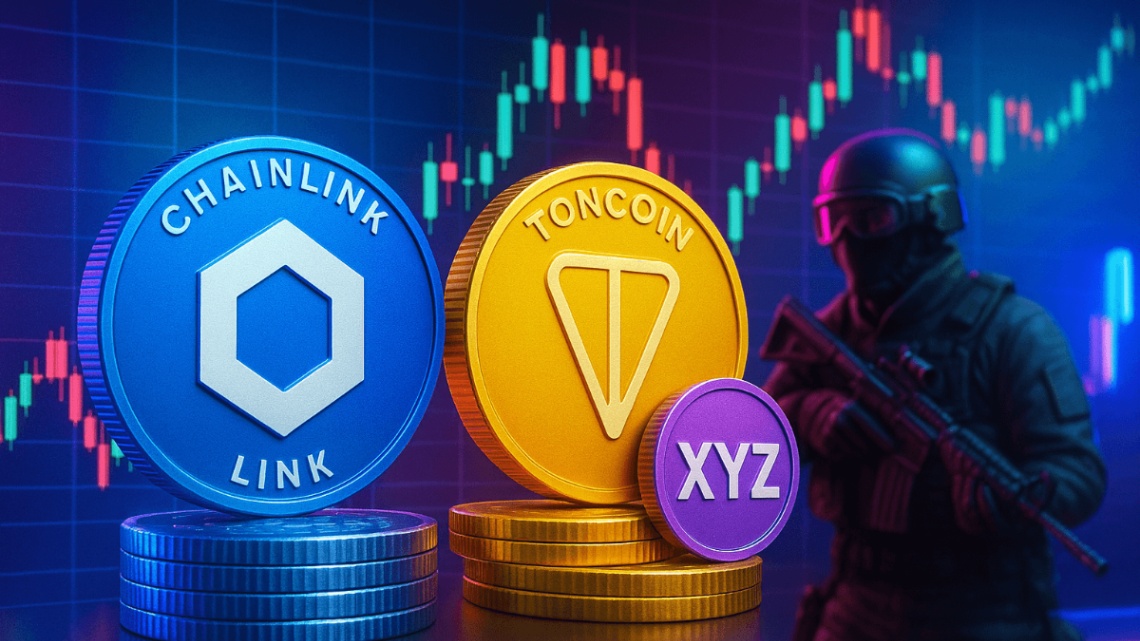
Chainlink Powers Oracles, Toncoin Gains Institutional Backing, XYZVerse Launches Esports 5.5M CS2 League

Chainlink Powers Oracles, Toncoin Gains Institutional Backing, XYZVerse Launches Esports 5.5M CS2 League

The post Chainlink Powers Oracles, Toncoin Gains Institutional Backing, XYZVerse Launches Esports 5.5M CS2 League appeared on BitcoinEthereumNews.com. Fresh moves reshape the digital asset space. A major infrastructure project sees growing adoption. A rising token attracts support from large investors. A new gaming venture unveils a multimillion-dollar tournament for a top action title. These events hint at changing trends and opportunities. More details reveal the forces driving these shifts and who stands to benefit. Chainlink: The Bridge Bringing Real-World Data to Smart Contracts Blockchains are powerful, yet they cannot read the outside world. Chainlink fixes this. Its network of oracles pulls data, checks it twice, and sends it to smart contracts. Each oracle earns a reputation score, so only the most honest stay active. The system works both on the chain, where requests sit, and off the chain, where data lives. The LINK token oils the machine. Node operators get paid in LINK, users pay fees in LINK, and holders can stake LINK to guard the network. After a slow 2022, the market is warming up. Coins with clear use cases now lead the rally. Chainlink fits this trend. It already feeds prices to many top apps, while rivals still chase pilots. New staking rounds cut supply, and big firms like SWIFT test the tech. If the next cycle rewards real demand, LINK could stand out, much like Ether did in 2017. Prices move with the crowd, but a bridge that others depend on often grows faster than the road itself. Undervalued $XYZ Meme Coin Gears Up for Listing on a Major CEX XYZVerse ($XYZ) is the meme coin that has grabbed headlines with its ambitious claim of rising from $0.0001 to $0.1 during a presale phase. So far, it has gone halfway, raising over $15 million, and the price of the $XYZ token currently stands at $0.0055. At the next stage of the presale, the $XYZ token…

Author: BitcoinEthereumNews
Why BlockDAG, Ethereum, Solana, and Chainlink Stand Out as the Most Reliable Crypto to Watch This Year

Why BlockDAG, Ethereum, Solana, and Chainlink Stand Out as the Most Reliable Crypto to Watch This Year

Ethereum and Solana are once again sparking attention as optimism returns to the altcoin market. Ethereum maintains its strong DeFi leadership, while Solana edges closer to reclaiming its previous highs, powered by an active developer network and community support. But next to these established names, one rising crypto to watch is gaining serious traction: BlockDAG. Now in Batch 31, it has already crossed $420 million in funding, selling almost 27 billion coins and recording over 2900% ROI since Batch 1. With its TGE Portal and the upcoming KEYNOTE 4 event, BlockDAG is entering a crucial growth phase. Available at only $0.0018 for a few days, compared to its standard Batch 31 rate of $0.0304, it offers one of the strongest entry points in today’s Web3 market. 1. BlockDAG: A $420M Crypto to Watch Before Mainnet Launch BlockDAG goes beyond the usual presale hype. It’s a full-fledged Layer 1 system that already operates a live testnet, public dashboard, and working ecosystem tools. The TGE Portal has opened limited early access before KEYNOTE 4, giving users a head start. Unlike many upcoming projects still at the whitepaper stage, BlockDAG (BDAG) is live with miner connections, a partnership with the BWT Alpine Formula 1® Team, and a growing worldwide network distributing its X-series mining rigs. Currently, its Batch 31 price is locked at $0.0304, yet TGE remains possible at $0.0018 using the temporary TGE code. The code “TGE” allows early access at launch depending on your rank: Rank 1–300 receive an instant airdrop; Rank 301–600 receive their airdrop after 30 minutes; Rank 601–1000 after 60 minutes; Rank 1001–1500 after 2 hours; Rank 1501–2000 after 4 hours; Rank 2001–5000 after 6 hours; and those ranked above 5001 receive their airdrop after 24 hours. This tiered access structure builds anticipation and rewards early participation, making every second of the countdown significant. So far, it has raised more than $420 million and sold nearly 27 billion coins, reflecting huge traction. With its 2900% ROI growth since Batch 1 and growing mainnet anticipation, BlockDAG serves as a link between older blockchain systems and the next stage of Web3 scale. This project’s progress makes it a standout crypto to watch as it combines working technology, an expanding user base, and early pricing advantages. For those looking for high potential in a market filled with established names, BlockDAG stands as one of the most distinctive additions. 2. Ethereum: The Core Engine of Smart Contracts Ethereum continues to power most of the Web3 ecosystem. Almost every DeFi app, NFT collection, and presale coin has relied on Ethereum’s ERC-20 standard or its trusted network security. With the move to proof-of-stake, Ethereum faces debates about gas costs and scalability, but it also enjoys unmatched developer loyalty. The rise of Layer 2 systems like Arbitrum, Optimism, and Base is helping to expand Ethereum’s processing power without weakening its foundation. Despite price shifts, Ethereum remains the top DeFi platform and a liquidity hub. It may not deliver the same rapid gains as presales such as BlockDAG, yet its role across countless decentralized platforms gives it long-term strength. For anyone seeking dependable performance among leading coins, ETH holds its ground as a top choice. 3. Solana: Fast, Scalable, and Building Momentum Solana is recovering strongly after previous challenges. Known for lightning-speed transactions and fees costing fractions of a cent, it offers a user experience few can match. A growing number of developers are launching on Solana again, driving activity in areas like gaming, DeFi, and data storage. Popular apps such as Jupiter, Helium, and Star Atlas continue to enrich their ecosystem. In October, Solana tested key resistance levels, with experts expecting it could rise toward $35–$40 if trading volume keeps up. The network’s reliability has improved notably since early 2023, helping rebuild confidence. While Solana’s entry cost is higher than BlockDAG’s current presale rate, its fast network and rising adoption make it a top pick for those eyeing growth in the next altcoin cycle. 4. Chainlink: Reliable Data for the Multi-Chain Era Chainlink may not be a flashy Layer 1, but it quietly powers hundreds of major blockchain systems. Its decentralized oracle network feeds real-world data into smart contracts across DeFi, insurance, and gaming platforms. LINK’s importance lies in enabling reliable cross-chain communication and real-world integrations that other projects depend on. The Chainlink Cross-Chain Interoperability Protocol (CCIP) continues to gain adoption, with financial giants like SWIFT testing it for asset transfers. As tokenized real-world assets (RWAs) become more common, Chainlink’s data solutions are likely to grow even more vital. While it doesn’t promise the rapid percentage jumps of presales, it ensures long-term dependability in a market that prizes trust and data accuracy. Final Take: The $420M Crypto to Watch Joins the Leaders Projects like Ethereum, Solana, and Chainlink have proven they can endure and deliver consistent utility. Yet, BlockDAG breaks the mold by offering real working infrastructure paired with presale-level affordability. With over $420 million raised, more than 312,000 holders, and 20,000+ miners already sold, BlockDAG proves its traction. Its TGE access priced at $0.0018 for a short window makes it a rare opportunity in crypto today. For readers seeking both established platforms and a high-growth crypto to watch, this list unites the best of both worlds, and BlockDAG firmly leads it.

Author: Coinstats