Airdrop

An Airdrop is a distribution of free tokens to a community, typically used as a marketing tool or a reward for early protocol adopters and testers. In 2026, the "points-to-airdrop" model has matured into merit-based incentive programs that utilize Sybil-resistance and Proof-of-Humanity to filter out bots. Airdrops remain a primary method for decentralized governance (DAO) bootstrapping. Follow this tag for the latest on retroactive rewards, eligibility criteria, and how to participate in the most anticipated token distributions in the ecosystem.

5490 Articles
Created: 2026/02/02 18:52
Updated: 2026/02/02 18:52
Bitget Launches AI Trading Avatars based on Seven Trading Strategies

Bitget Launches AI Trading Avatars based on Seven Trading Strategies

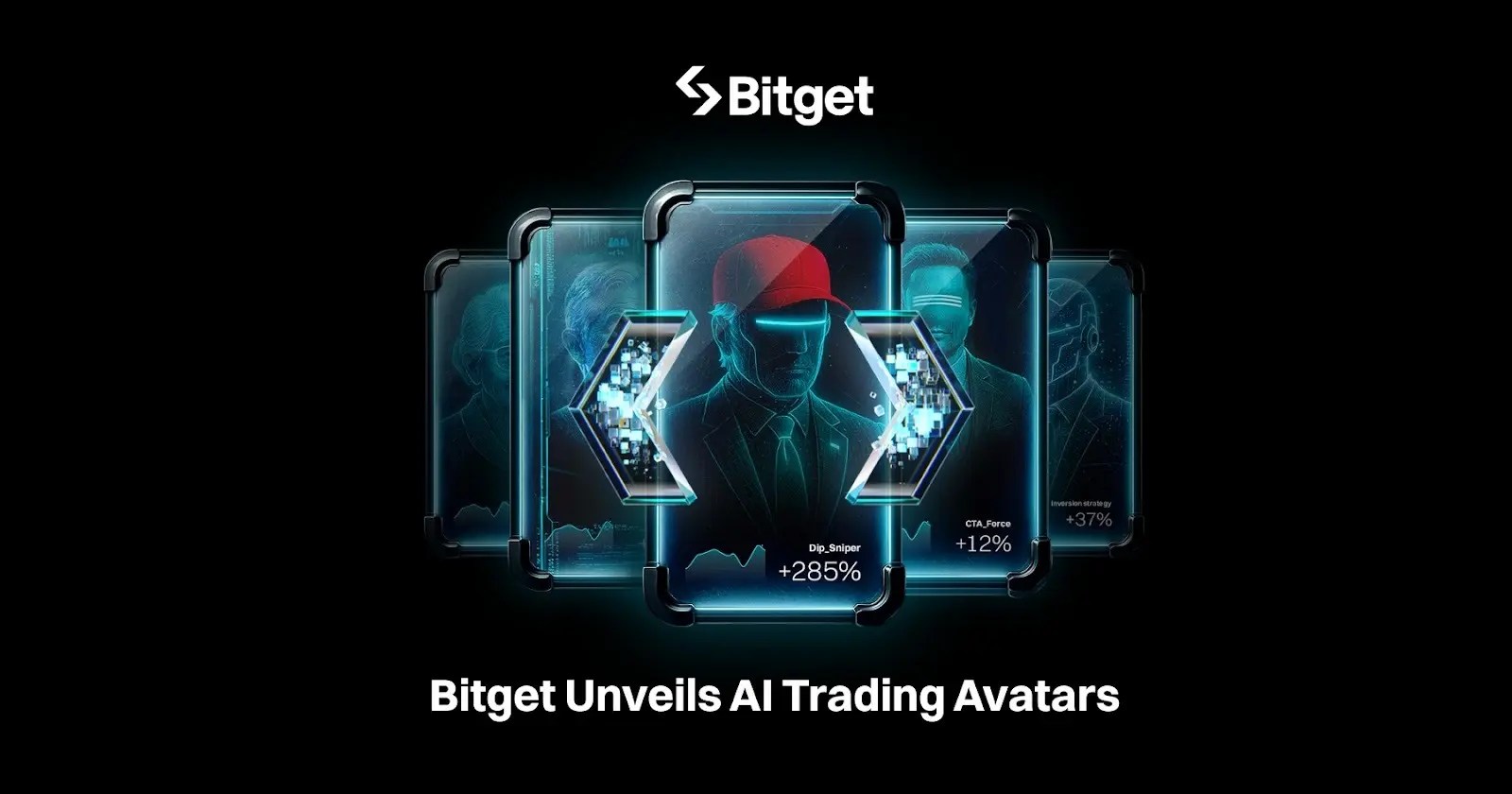
The post Bitget Launches AI Trading Avatars based on Seven Trading Strategies appeared on BitcoinEthereumNews.com. Victoria, Seychelles, November 28, 2025 — Bitget, the world’s largest Universal Exchange (UEX), has launched six all-new AI trading avatars inside GetAgent, marking a major step toward next-generation smart trading. As traders across the world test how well leading AI models like ChatGPT, Gemini and DeepSeek perform when placed into real trading environments, Bitget offers something more tangible: a lineup of AI traders with distinct personalities, strategies, and market philosophies, all running live, trading real accounts, and fully available for one-click copy trading. Each avatar represents a different school of trading logic, ranging from conservative hedging and major-coin momentum to high-beta altcoin breakouts, contrarian reversals and mechanical execution. These include Steady Hedge, Majors Momentum, Altcoin Turbo, CTA Force, Infinite Grid, Dip Sniper, and DeepSeek (base model). All strategies have been built using a multi-factor library of professional trading indicators, extensive backtesting, and iterative refinement inside GetAgent. From 18:00 on November 24 to 18:00 on December 15 (UTC+8), GetAgent users can access a limited one-click copy trading channel, selecting the avatar that aligns most closely with their trading personality. Each AI trader executes autonomously in real time, and users can follow every entry, exit, drawdown and adjustment directly in the Model Arena. With transparent performance curves, strategy documentation and real execution data, the experience offers a front row seat into how different trading strategies act under market pressure. To encourage exploration, Bitget has launched a 10,000 USDT airdrop pool for participating users. Anyone who successfully copy-trades and sends one message to GetAgent qualifies for the reward share, and the first 100 copy trading users each day will receive contract copy trading vouchers worth up to 100 USDT. “People want solutions they can actually use to trade,” said Gracy Chen, CEO of Bitget. “These avatars make trading feel more personal and more…

Author: BitcoinEthereumNews
3 Meme Coins That Will Explode to the Moon: How to be Ahead of Others and Spot the Next 100x Gem

3 Meme Coins That Will Explode to the Moon: How to be Ahead of Others and Spot the Next 100x Gem

Spotting meme coins that will explode before they take off is the edge every trader wants, but most discover them only after the chart has already moved. Sharp jumps often look sudden, yet the signs usually appear long before the rally starts. Three projects, such as Noomez ($NNZ), have been gaining real attention for different […] The post 3 Meme Coins That Will Explode to the Moon: How to be Ahead of Others and Spot the Next 100x Gem appeared first on TechBullion.

Author: Techbullion
CFD Trading in Cryptocurrency: Pros, Cons and Real Examples

CFD Trading in Cryptocurrency: Pros, Cons and Real Examples

In recent years, the global interest in digital assets has surged, pushing cryptocurrency markets into the mainstream. As trading strategies continue to evolve, more investors are looking for flexible, technology-driven ways to participate in this fast-moving financial landscape. AlphaTrade AI stands at the forefront of this shift, offering traders streamlined, intelligent access to cryptocurrency CFD […] The post CFD Trading in Cryptocurrency: Pros, Cons and Real Examples appeared first on TechBullion.

Author: Techbullion
Kalshi’s Valuation Skyrockets as Investors Bet on a Prediction-Market Duopoly with Polymarket

Kalshi’s Valuation Skyrockets as Investors Bet on a Prediction-Market Duopoly with Polymarket

Kalshi’s private valuation has more than doubled in just a few weeks as it claws market share away from Polymarket. The post Kalshi’s Valuation Skyrockets as Investors Bet on a Prediction-Market Duopoly with Polymarket appeared first on Crypto News Australia.

Author: Cryptonews AU
OKX Launches Sei (SEI) Flash Earn Campaign with 7.3 Million SEI Rewards

OKX Launches Sei (SEI) Flash Earn Campaign with 7.3 Million SEI Rewards

The post OKX Launches Sei (SEI) Flash Earn Campaign with 7.3 Million SEI Rewards appeared on BitcoinEthereumNews.com. Jessie A Ellis Nov 27, 2025 12:30 OKX has introduced its Flash Earn campaign featuring Sei (SEI), offering a total of 7,319,915 SEI tokens in rewards. Participation requires identity verification, and rewards are calculated hourly. OKX has unveiled its latest initiative, the Flash Earn campaign, featuring Sei (SEI) and a substantial reward pool of 7,319,915 SEI tokens. This innovative program, previously known as Airdrop Earn, allows participants to subscribe using USDT or other major cryptocurrencies to earn both a base yield and bonus airdrops, according to OKX. Campaign Details The Sei (SEI) Flash Earn campaign is set to run from 11:00 UTC on November 27, 2025, to 11:00 UTC on December 2, 2025. Participants can start earning rewards by completing identity verification, a prerequisite to claim rewards. However, the campaign is exclusive to main accounts, disallowing sub-accounts and institutional accounts from participating. Rewards and Redemption Participants can redeem their funds anytime after subscribing, with rewards being instantly available. If not redeemed manually, USDT and ETH will be reinvested into Simple Earn, while other cryptocurrencies will be auto-redeemed to the user’s funding account within two hours. Rewards are calculated hourly, beginning two hours after fund lending or subscription confirmation. Platform Rules and Compliance OKX emphasizes the necessity for participants to be aware of the Terms and Conditions related to the campaign. It reserves the right to disqualify participants suspected of cheating or engaging in fraudulent activities. Additionally, users from certain countries or regions may be ineligible to participate, as detailed in OKX’s risk and compliance disclosure. OKX has stated that it retains the flexibility to modify campaign rules, including cancelling or extending the campaign without prior notice. The platform assures users that any changes will be communicated where practicable and executed reasonably. Risk…

Author: BitcoinEthereumNews
HIP-3 becomes a new engine for Hyperliquid: Leading DEX drives trading volume tenfold, but ecosystem challenges remain.

HIP-3 becomes a new engine for Hyperliquid: Leading DEX drives trading volume tenfold, but ecosystem challenges remain.

Author: Frank, PANews Since the launch of the HIP-3 growth model, this flagship product has been rapidly becoming a new business growth engine for Hyperliquiid, not only driving explosive growth in trading volume in the market with a tenfold increase in monthly trading volume, but also injecting more innovative vitality and liquidity into the Perp DEX track. Behind the surge in trading volume is HIP-3's ambition to become the underlying trading platform for the future decentralized market. However, this transformation path is far more arduous than the data suggests. Transaction volume increased more than tenfold in a single month; the main driving force behind the growth model The full name of the HIP-3 proposal is "Builder-Deployed Perpetuals." Its core concept is to decentralize "market creation rights" from the core protocol team to the community and developers. Under the HIP-3 architecture, Hyperliquid takes a backseat, becoming the underlying settlement and matching engine, while the rights to define assets, set risk parameters, and select oracles on the front end are completely transferred to third-party "deployers." Under this mechanism, A key hurdle in HIP-3's mechanism is that any developer wishing to deploy a permissionless marketplace must stake 500,000 HYPE tokens on the network. At the current price of $35, this staked amount to approximately $17.5 million. If a deployer engages in malicious behavior, validators can vote to forfeit these assets. Furthermore, even if the deployer intends to exit the marketplace, a 7-day unlocking period applies. This threshold setting forces deployers to be financially strong institutions or teams committed to long-term development, rather than speculative retail investors. On the other hand, such a staking amount is a highly effective deflationary measure for the HYPE token. Considering that HYPE's maximum supply is 1 billion tokens and its current market capitalization is approximately $9.5 billion, each lock-up under this model is equivalent to locking up two-thousandths of the tokens. Furthermore, the HIP-3 market currently enforces an isolated position model. This means that the position risk of a user in a specific HIP-3 market is completely isolated from their BTC/USDC position on the mainnet. Even if a flash crash or oracle attack occurs in a particular asset, its impact is limited to that specific market and will not affect the user's overall account funds or other mainstream asset positions. Since its launch, HIP-3 has experienced exponential growth. As of November 28th, its transaction volume exceeded $3.6 billion, more than ten times that of a month prior. The single-day transaction volume on November 25th even reached $500 million. This performance is comparable to Uniswap V3's transaction volume on Ethereum. Furthermore, the total number of users in the HIP-3 market has reached 18,000, while Hyperliquid has accumulated over 800,000 users to date. The recent surge in HIP-3 data is primarily due to the introduction of Growth Mode on November 19th. This new mode allows for license-free market deployment and significantly reduces fees, thereby improving liquidity. The new feature can reduce transaction fees for new markets by over 90%, with top traders potentially seeing fees as low as 0.00144%. Simultaneously, Growth Mode requires markets to avoid overlap with existing assets and imposes a 30-day lock-up period to maintain stability. The growth effect of this upgrade is clearly evident in the data changes. Leading applications accounted for over 90% of trading activity; the hot US stock market still faces liquidity challenges. According to Nansen data monitoring, more than 100 decentralized applications are currently being built on HIP-3, generating $94 million in new revenue. In terms of trading volume sources, Trade.xyz contributes almost all of the HIP-3 trading activity, consistently accounting for over 95%. Trade.xyz is the first permissionless perpetual contract exchange built on the HIP-3 protocol within the Hyperliquid ecosystem, developed by the Hyperunit (Unit) team. Behind the explosive growth in trading volume, besides the market's high expectations for airdrops to Trade.xyz , according to @kungfu_crypto's analysis, Trade.xyz boasts genuinely active trading, rather than being a volume-driving platform. This is primarily due to its provision of contracts with fees approaching those of US stocks, offering a significant cost advantage for high-frequency, low-leverage trading. This demonstrates that the DEX's trading community has a small average transaction value but high-frequency activity. Furthermore, the Unit team behind it has long been deeply involved in Hyperliquid, building a strong foundation of trust. Currently, Trade.xyz's flagship product is XYZ100, an on-chain index contract tracking the top 100 non-fintech companies in the US (parallel to the Nasdaq 100 index). To date, XYZ100 accounts for over 60% of Trade.xyz's trading volume. In addition, it has launched perpetual contracts for popular US stocks such as NVDA (Nvidia), TSLA (Tesla), and MSFT (Microsoft). It's worth noting that Trade.xyz 's on-chain stock trading doesn't actually involve real stocks in the traditional sense, but rather an index contract. This type of contract doesn't involve physical settlement and doesn't share the liquidity of the US stock market. The biggest advantage of this index contract is that it allows participation in US stock market fluctuations without KYC (Know Your Customer) verification, and it achieves 24/7 uninterrupted trading through a simulated mechanism. For investors who don't need physical settlement but want to profit from US stock market volatility, this casino-like simulated trading platform is the most convenient option. However, this model also exposed the problem of insufficient liquidity. According to a recent report by KOL He Bi, three trading pairs built on another market, Ventures, were unable to close short positions and could only be shorted. This led to an abnormal price surge. The root cause was precisely insufficient liquidity. In fact, this is not a problem unique to the HIP-3 market. The on-chain stock trading market as a whole is still immature, and this lack of liquidity seems to be widespread. Another crypto practitioner, @EthWiz0X, stated that buying $100,000 worth of Ondo Finance's TSLAon on Uniswap would result in a price impact of up to 83.34%. In the HIP-3 market, apart from a few tokens like Trade.xyz 's XYZ100 and NVDA, which have relatively decent trading volumes, other markets like Felix and Ventures maintain daily trading volumes at a low level of several million dollars. This is mainly because trading pairs in markets like Felix and Ventures generally use Hyperliquid's native stablecoin, USDH. Compared to the widely adopted USDC, USDH currently lacks significant market acceptance. Furthermore, the on-chain stock trading service is currently facing increased competition from more players. For example, on November 26th, Binance Wallet announced the addition of on-chain stock trading with transaction fees as low as 0%. In addition, major exchanges such as Bitget and Bybit have also launched similar US stock trading sections. Of course, as a permissionless marketplace, HIP-3's applications are not simply limited to on-chain stock trading. Another project, TROVE, targets the trading of collectible toys, such as Pokémon trading cards, CS2 skins, and perpetual contracts for Nintendo and Pop Mart stocks. Ventuals, on the other hand, targets the pre-IPO market. Compared to the US stock market, these market directions are currently still niche markets, and therefore, the insufficient trading depth in these alternative markets is largely related to their specific themes. Multiple positive factors have driven the rise in popularity, but the dilemma of ecosystem expansion and stablecoins still remains. The recent attention received by the HIP-3 market may be mainly due to the following reasons: 1. The recent divergence in the crypto market has weakened. As the market enters a bear market, the price movements of most tokens are influenced by Bitcoin. In an environment where the entire market rises and falls together, the market favors assets that can move independently. The US stock market, relatively unaffected by the direct impact of the crypto market, exhibits greater independence. 2. Airdrop Expectations for HIP-3 Ecosystem Projects. Previously, Hyperliquid's airdrop left a positive impression on the market, leading to widespread belief that projects within the Hyperliquid ecosystem are likely to replicate the success of the Hyperliquid airdrop. These projects, which haven't yet issued their own tokens, are currently in a period of high trading volume. 3. There is much more potential to be explored in HIP-3. As mentioned earlier, the potential of HIP-3 is not limited to the stock market; it may see explosive growth in more alternative markets in the future. Therefore, in a market currently experiencing a lack of narrative, such potential can easily fuel optimism. In September of this year, the Hyperliquid community also proposed the concept of HIP-4, aiming to introduce perpetual contracts for prediction markets. This roadmap is even more aligned with current market trends. A Falconx report also noted, "We expect the incremental fees generated by the perpetual futures markets deployed by HIP-3 builders to drive HYPE growth by 67% over the next year, with the equity and index markets being the main drivers." Despite multiple positive factors in the market, these optimistic expectations do not necessarily guarantee a bright future for the HIP-3 market. In terms of liquidity, apart from Trade.xyz, other markets currently have pitifully low liquidity and trading volume. Regarding trading currencies, the HIP-3 market's popularity still relies on the mainstream acceptance of USDC, while Hyperliquid aims to support its native stablecoin USDH as a mainstream trading currency. Finding a balance between these two factors is the biggest obstacle preventing the HIP-3 market from truly taking off.

Author: PANews
Crypto Wins Big: Thailand Moves To A 0% Tax On Local Exchange Gains

Crypto Wins Big: Thailand Moves To A 0% Tax On Local Exchange Gains

Thailand has officially adopted a new tax-rule giving a 0% personal income tax rate on capital gains from cryptocurrency trades — but only under certain conditions. Related Reading: Bitcoin Faces More Downside After Recent Crash, Data Shows According to regulation Ministerial Regulation No. 399 (MR 399), profits earned from selling or transferring cryptocurrencies such as Bitcoin via exchanges, brokers, or dealers licensed by the Securities and Exchange Commission of Thailand (SEC) will be tax-free from January 1, 2025 until December 31, 2029. What The 0% Tax Means Under the new scheme, individual investors who trade crypto through SEC-licensed platforms don’t pay personal income tax on any gains. The exemption applies only if the trade is done on a local approved exchange, broker, or dealer. FACT: THAILAND NOW OFFERS 0% CAPITAL GAINS TAX ON #BITCOIN TRADED ON NATIONAL EXCHANGES GLOBAL GAME THEORY AT WORK ✨ pic.twitter.com/8rf21xJxKT — The Bitcoin Historian (@pete_rizzo_) November 26, 2025 Regular income tax rules apply to the same type of income for taxpayers who participate in foreign/unlicensed exchange activity, as well as those who generate crypto income from mining, staking and/or airdrops. The publication of this regulation in the Royal Gazette on September 5th 2025 makes it official and enforceable by law. Reaction to this regulation was also positive from both officials and investors: an official statement indicates the primary purpose of creating this regulation was to provide incentives for current and future traders to use local regulated exchanges as opposed to using foreign/unregulated exchanges. They hope this will strengthen Thailand’s financial system and bring more transparency into crypto trades. Some analysts expect the policy to draw both local and international interest in Thailand’s licensed exchanges. The government seems to try making its digital-asset sector more competitive while ensuring regulatory compliance. What Investors Should Know To benefit from 0% tax, trades must go through valid, licensed channels. Gains from outside platforms or unapproved services don’t qualify. Accurate records of purchase and sale, including dates and exchange receipts, are vital to prove eligibility if asked by tax authorities. Related Reading: Bitcoin Whale Reenters ETH Market, Fires Off A $44-M Long The exemption runs only until December 31, 2029. After that date, the law will need review or renewal. So traders thinking long-term should consider what might happen after 2029. This policy shift represents a significant signal from Bangkok to both domestic and global crypto players. It makes compliant crypto trading cheaper — maybe more attractive — while drawing a clearer line between regulated and unregulated channels. Featured image from Unsplash, chart from TradingView

Author: NewsBTC
Important news from last night and this morning (November 27-November 28)

Important news from last night and this morning (November 27-November 28)

Data: Over the past 30 days, Bitcoin whales have flowed $7.5 billion into Binance, the highest level in a year. CryptoQuant analyst Martunn wrote that the latest data shows that over the past 30 days, Bitcoin whales have poured $7.5 billion into Binance, the highest level in a year. This surge in inflows is similar to the pattern seen during previous periods of high market volatility (such as March 2025), when Bitcoin's price plummeted from approximately $102,000 to a low of $70,000. In these situations, whales typically move funds into exchanges to take profits or manage risk when the market weakens. Given that the 30-day inflow indicator is still climbing, the current data does not yet indicate that selling pressure has stabilized. For investors, this mainly means that the risk zone has not yet been fully resolved. Large inflows into exchanges often act as a barometer of pressure: they indicate that funds are being mobilized, but do not necessarily predict when a trend reversal will occur. In similar periods in the past, it took the market about a month to find a local bottom. Entrée Capital raises $300 million in new fund, focusing on early-stage investments in AI, cryptocurrencies, and other sectors. According to official news, Entrée Capital has announced the successful raising of a new $300 million fund focused on early-stage investments. This brings the company's total assets under management to $1.5 billion. The new funds will primarily be deployed in pre-seed, seed, and Series A investments in Israel, the UK, Europe, and the US. The new fund will target founders in the following areas: Artificial Intelligence (covering native AI applications, vertical AI, and enabling infrastructure); Deep Technology and Quantum Computing (including computing technologies, science-driven systems, and advanced materials); Software, Data, and B2B Productivity Enhancement; Cryptocurrency (primarily focusing on infrastructure and security); and unconventional cutting-edge innovation. Entrée Capital has previously invested in Web3 domain registrars such as Freename and Bitcoin payment startup Breez. A whale borrowed another 5.5 million USDT from Aave and subsequently bought 60.07 WBTC. According to on-chain analyst @ai_9684xtpa, address 0x931...3c721 continues to borrow funds to go long on WBTC. In the past 3 hours, he borrowed 5.5 million USDT from Aave, transferred it to address 0x276...23E87, and bought 60.07 WBTC at an average price of $91,242.6. Currently, he has borrowed a total of 22.48 million USDT by pledging 375.07 WBTC on Aave. Bitmine has purchased 14,618 ETH from BitGo, worth $44.34 million. According to OnchainLens monitoring, Bitmine has purchased 14,618 ETH from BitGo, worth $44.34 million. Alliance DAO co-founder: L1 token lacks a moat; betting on the application layer may be the way out. QwQiao, co-founder of Alliance DAO, stated in an article on the X platform that he finds it difficult to convince himself to hold L1 public chain tokens long-term. The reason is not their high price-to-earnings ratio (P/E), but rather the lack of a moat, making them easily commoditized and difficult to capture meaningful value. Currently, cross-chain transfers are very convenient for users, and most application developers can quickly migrate their applications from one chain to another. Furthermore, launching a new chain is significantly easier than before, and the switching costs are far lower than infrastructure like AWS. QwQiao also mentioned that the only way for a chain to strengthen its moat is to develop vertically and control the application layer. He observed that chains like Solana, Base, and Hyperliquid have realized this and are actively taking action, as is the emerging enterprise-level chain Tempo. He firmly believes that the crypto industry will experience exponential growth, and betting on the application layer is the best way to express this view. OKX donated HK$10 million to Hong Kong to support emergency relief and recovery efforts. According to official sources, OKX has donated HK$10 million to Hong Kong to support local emergency relief and disaster recovery efforts. As cryptocurrency fraud spreads, Interpol has upgraded fraud networks to a global threat. According to Decrypt, Interpol adopted a resolution at its general assembly in Marrakech this week, formally recognizing cryptocurrency-related fraud as a core element of a massive fraud industry and listing the network as a transnational criminal threat. Global law enforcement agencies are currently strengthening coordinated control over its financial flows. These criminal networks rely on human trafficking, online fraud, and forced labor, with victims from over sixty countries. Criminals often lure victims with promises of high-paying overseas jobs, forcing them into illegal locations and engaging in illicit activities such as voice phishing, romance scams, investment fraud, and cryptocurrency scams. Fraud rings recruit victims using fake job opportunities, transport them to illegal locations, and then force them to commit crimes. They utilize advanced technology to "deceive victims and cover up their crimes," and these transnational criminal networks are "highly adaptable." The fraud hub model initially attracted international attention in Southeast Asia and has now spread to parts of Russia, Colombia, East African coastal countries, and parts of the UK. In May of this year, the US Treasury Department severed financial ties with Cambodia's Huawang Group, accusing it of laundering $4 billion in money for fraud. This month, the U.S. Department of Justice, together with several other agencies, established a special task force to combat this crime. This resolution by Interpol marks a new stage in global law enforcement cooperation. A "whale" that accumulated WBTC and ETH at high prices through revolving loans has sold off 350 WBTC at a loss in the past week. According to on-chain analyst Yu Jin, a "whale" who hoarded WBTC and ETH at high prices through revolving loans subsequently sold off 18,517 ETH at a loss, incurring a loss of $25.29 million. He also gradually sold off his WBTC at a loss. Over the past week, he sold 350 WBTC at an average price of $87,732, exchanging them for 30.7 million USDT. His WBTC cost price was $116,762, resulting in a loss of $10.16 million from this sale. His remaining 1,210 WBTC are currently showing a paper loss of $30.9 million. The UK Financial Conduct Authority opens sandbox environment for stablecoin companies. According to Ledger Insights, the UK Financial Conduct Authority (FCA) has announced the launch of a stablecoin project group as part of its regulatory sandbox program, with an application deadline of January 18, 2026. Bloomberg also reports that the UK Debt Management Office is exploring expanding the UK government bond market, a move that will be related to stablecoin reserves. In a speech yesterday, David Geale of the FCA stated that a “large company” has been included in the sandbox program to test a sterling stablecoin for payments. Sandbox participants must ensure their designs comply with the requirements outlined in the FCA's consultation document in May. The UK employs a two-track system for stablecoin regulation: the Bank of England regulates systemically important stablecoins for prudential and financial stability purposes; the FCA is responsible for regulating other stablecoins, and is also responsible for the conduct and consumer protection oversight of all stablecoins. The UK has proposed introducing a "no profit, no loss" tax rule for DeFi. According to CoinDesk, the UK government is developing a new tax framework that could benefit DeFi users. A proposal released this week shows that HM Revenue and Customs supports a "no profit, no loss" principle for cryptocurrency lending and liquidity pool arrangements. Under the current system, DeFi users depositing funds into protocols, even just for profit or as collateral for loans, can trigger capital gains tax. The new measure will postpone tax payment until an economically meaningful asset disposal occurs. This means that users depositing cryptocurrency into lending protocols or providing tokens to automated market makers will no longer need to pay tax on the deposit itself, but only when they eventually sell or trade the assets and realize a profit or loss. The proposal aims to align tax rules with the actual operation of DeFi, thereby reducing the administrative burden and avoiding unreasonable tax outcomes. The new principle also applies to complex multi-token arrangements; if a user withdraws more tokens than they deposited, the profit will be taxed; if less, it will be considered a loss. However, this model is not yet finalized, and the government is still consulting with professionals and DeFi developers. While HM Revenue and Customs has not set a timetable for legislation, it has stated that it will continue to engage with the industry to assess the necessity of such legislation. Bitwise has updated its filing for the spot Avalanche ETF, proposing to add staking functionality. According to CoinDesk, Bitwise has updated its filing with the U.S. Securities and Exchange Commission (SEC) for its spot Avalanche ETF. This revision changes the ETF's ticker symbol to BAVA and sets the sponsorship fee rate at 0.34%, currently the lowest among similar products. In comparison, VanEck's Avalanche ETF has a fee rate of 0.40%, and Grayscale's is 0.50%. The updated S-1 filing also states that the trust will be allowed to stake up to 70% of its AVAX holdings on Avalanche's proof-of-stake network to earn additional tokens. However, the issuer is considering deducting 12% of the proceeds as fees, with the remainder distributed to shareholders. Since competitors have not yet launched staking services, their fees are currently limited to sponsorship fees. Bitwise is also offering a full fee waiver for the first month on its initial $500 million in assets, aiming to position BAVA as the lowest-cost way for traditional investors to gain exposure to Avalanche and earn staking income. YZi Labs seeks to expand the board of directors of BNB treasury company CEA Industries to improve strategy execution and oversight. YZi Labs announced on its X platform that, as a significant shareholder of CEA Industries Inc. (NASDAQ: BNC), it has filed a preliminary consent statement with the U.S. Securities and Exchange Commission (SEC) seeking written shareholder consent to expand the company's board of directors and add new board seats. YZi Labs stated that despite a significant increase in the value of BNC's main asset under management, BNB, the company's performance since the completion of its $500 million PIPE financing deal this summer has fallen far short of the expected results from that investment rationale. It believes BNC's poor performance is a direct result of poor strategy execution, insufficient investor communication, and a lack of effective oversight. YZi Labs also expressed concern about delays in key SEC filings, failure to promptly update investors on digital asset fund management and net asset value (NAV), and continued investor confusion regarding the company's identity, communication, and strategy. The Wormhole Foundation announced the purchase of $5 million worth of W tokens. According to official sources, the Wormhole Foundation announced that it has purchased $5 million worth of W tokens and added them to its balance sheet. Balancer security incident update: DAO begins discussions on an $8 million recovery plan. According to CoinDesk, weeks after a major vulnerability in Balancer v2 vaults led to the loss of over $110 million, the Balancer DAO has begun discussing a plan to distribute approximately $8 million in recovered assets to affected limited partners (LPs). The proposed scheme includes structured rewards for white-hat hackers and compensation based on snapshots of user pool assets at the time of the exploit, consistent with the Safe Harbor Protocol. This protocol stipulates a bounty cap of $1 million per incident, requiring white-hat hackers to undergo comprehensive KYC and sanctions screening. Several anonymous rescuers on Arbitrum have waived their bounty claims. Recovered tokens cover networks including Ethereum, Polygon, Base, and Arbitrum, with liquidity providers receiving compensation proportionally to the tokens initially provided and per pool. A claims mechanism is currently under development; if the proposal is approved, users will need to accept updated terms of use. Additionally, $19.7 million in osETH and osGNO were recovered by StakeWise and will be processed separately; $4.1 million recovered internally in collaboration with Certora is ineligible for a bounty due to a previous agreement. This exploit, caused by a smart contract flaw, marks Balancer's third major security incident, resulting in a plunge in total value locked (TVL) from approximately $775 million to $258 million, and a loss of about 30% in the value of BAL tokens. Uniswap's "UNIFication" proposal has passed preliminary approval, and the fee switch contract has entered its $15.5 million bounty period. Snapshot voting results show that Uniswap's "UNIfication" governance proposal received over 63 million UNI in support and almost zero opposition in the provisional vote. The proposal aims to unify the governance structure of Uniswap Labs and the foundation, and activate the protocol-level fee mechanism. The fee-switch smart contract has been included in the Cantina bug bounty program, with a reward of $15.5 million. Formal on-chain voting is expected to begin next week, and if the proposal passes, it will facilitate the implementation of the UNI governance token revenue distribution mechanism. Binance donated HK$10 million to Hong Kong to support fire relief and reconstruction. According to an official announcement from Binance, Binance will donate HK$10 million to the fire-stricken area of Hung Fook Court in Tai Po, Hong Kong, to support rescue and reconstruction efforts. Binance stated that it will implement the donation through relevant channels and extend its condolences to the affected people. Infinex will launch its token presale on Sonar, distributing 5% of its INX tokens before January TGE to raise $15 million. According to The Block, Infinex, the crypto super-application founded by DeFi pioneer Kain Warwick, announced that it will launch an INX token sale through the Sonar platform before the Time of Government Expiry (TGE) in January 2026. The plan is to sell 5% of the total supply at a valuation of $300 million, raising $15 million. Patron NFT holders will enjoy tiered allocations (a single INX will receive $2,000, with 5/25/100 INX corresponding to caps of $15,000/$100,000/$500,000 respectively); non-holders will participate through a lottery, with a cap of $5,000 per person and a minimum of $200. The sold tokens will be locked for one year, with the option to unlock them early by paying a premium. The project states that the proceeds will be used for token buybacks; approximately 25% of the tokens will be reserved in a vault for incentives; pre-registration will open within weeks. INX is planned to be officially generated and listed for circulation in January 2026. The platform integrates wallet, trading, prediction, and cross-chain functions, aiming to create a next-generation Web3 gateway. The UK tax authorities adopted the "no profit, no loss" tax treatment for DeFi, which the founder of Aave called a major victory for users. Aave founder Stani Kulechov posted that the UK's HM Revenue and Customs (HMRC) has released the results of its tax consultation on DeFi lending and staking activities, proposing a "No Gain No Loss" (NGNL) tax treatment. This means that when users deposit crypto assets into protocols like Aave, it will not be considered a capital gain disposal. If this policy is legislated, it will greatly simplify the reporting burden for users and is considered a significant victory for DeFi users. The Aave team participated in the consultation process and pushed for this policy to reflect the economic substance of on-chain interactions. The USDC Treasury minted an additional 750 million USDC on the Solana blockchain. According to Whale Alert monitoring, at 20:23, 20:24 and 20:25 (UTC+8), USDC Treasury minted 250 million USDC on the Solana chain each time, with a total value of $750 million. The Bhutanese government pledged 320 ETH, equivalent to approximately US$970,000. According to OnchainLens, the Royal Government of Bhutan has staked 320 ETH, or approximately $970,000, on the Ethereum 2.0 network Figment. Avenir Group and its charitable foundation announced a donation of HK$10 million to support fire relief efforts in Tai Po, Hong Kong. Avenir Group and its charitable foundation, Avenir Foundation, announced a donation of HK$10 million to support emergency relief, resettlement of affected residents, and community recovery efforts following the fire in Tai Po District. The donation will be used to provide immediate support, including basic necessities, temporary accommodation, and assistance with subsequent community reconstruction, aiming to provide tangible assistance to affected families and help the community return to normalcy as quickly as possible. Binance Alpha integrates with the Arbitrum chain, and a new batch of Alpha projects are launched. According to a Binance announcement, Binance Alpha now supports the Arbitrum chain. Users can purchase the token through the "Markets" - "Alpha" - "Arbitrum" tab in the Binance App or Binance Wallet. The official announcement also states that an exclusive trading competition and token airdrop for the Arbitrum chain will be launched; specific rules and event schedules will be announced separately. Eligibility is granted through trading via Binance Alpha or a keyless wallet. SuperFortune will provide 5% of the total MANTA tokens as mining rewards to MANTA token stakers. Superfortune's token, GUA, has officially launched on Binance Alpha. As the first Web3 project incubated by Manta Network, according to its token economic model, 5% of Superfortune's total token supply will be used as mining rewards for MANTA stakers. A snapshot of GUA TGE will be taken in 3 weeks, and rewards will be available one month later, for a period of 25 months. Both on-chain and exchange-based MANTA stakers are eligible. US stock and bond markets are closed today; trading in gold, silver, and oil has ended early. Due to the Thanksgiving holiday in the United States (November 27), US stock and bond markets will be closed today and will close early tomorrow (November 28). Today, trading in CME Group's precious metals and US crude oil futures contracts will end early at 03:30 Beijing time on November 28, and trading in stock index futures contracts will end early at 02:00 Beijing time on November 28. Trading in ICE Brent crude oil futures contracts will end early at 02:30 Beijing time on November 28.

Author: PANews
From "whoever pays, gets paid" to "only the right people": The next generation of Launchpad is poised to reshape the landscape.

From "whoever pays, gets paid" to "only the right people": The next generation of Launchpad is poised to reshape the landscape.

Article by: Nishil Jain Article compiled by: Block unicorn Foreword ICOs are back, and launchpads are flocking to them, all wanting a piece of the pie. In October, Coinbase acquired Echo and launched its token sale platform earlier this month; in September, Kraken partnered with Legion. Meanwhile, Binance has a close relationship with Buildlpad, and PumpFun is attempting to issue utility tokens through Spotlight. These developments come at a time when investor interest and trust in ICOs are recovering. Umbra Privacy raised $156 million on MetaDAO with a $750,000 funding goal, while Yieldbasis was oversubscribed 98 times in less than a day on Legion. Aria Protocol was oversubscribed 20 times on Buildpad, attracting more than 30,000 participants. As ICOs begin to raise funds at several times their offering price, filtering out the noise becomes especially important. In our previous article, "Capital Formation in the Cryptocurrency Sector," Saurabh explained how capital formation in the cryptocurrency space has evolved. He explored how new financing structures, such as Flying Tulip's investment model and MetaDAO's ICO, attempt to resolve potential conflicts of interest among teams, investors, and users. Each new model claims to offer a better balance of interests among the parties involved. While the success of these models remains to be seen, we are seeing various Launchpads attempting to resolve the conflicts between investors, users, and teams in different ways. They are achieving a more selective investor cap by allowing project teams to choose their own investors during public token sales. In today's article, I will guide you through the reasons and methods of investor screening. Selected holders will be given priority. Between 2017 and 2019, ICO investments mostly adopted a first-come, first-served model, attracting a flood of investors attempting to enter at low valuations, typically aiming for quick profits in the early stages of a project. Research data from over 300 ICO projects shows that 30% of investors exited within the first month of the project's launch. While quick returns are always tempting to investors, project teams are not obligated to accept every wallet asking for money. Truly visionary teams should be able to select their ICO participants, filtering out investors committed to long-term growth. The following is Ditto from Eigencloud discussing the shift from a first-come, first-served (FCFS) sales model to a community-centric sales system. The problem with this round of ICOs is that it ultimately fell into a "lemon market" dilemma. Too many ICO projects emerged, many of which were scams or traps, making it difficult for people to distinguish between high-quality and low-quality projects. Launchpad's inability to rigorously vet all projects led to low investor trust in ICOs. Ultimately, the number of ICOs surged, but the available funding to support them was insufficient. Now it seems that the situation is starting to change again. Cobie's Echo fundraising platform has raised $200 million for over 300 projects since its launch. Meanwhile, in some independent fundraising events, we've seen millions of dollars disappear in just minutes. Pump.fun successfully completed its ICO, raising $500 million in less than 12 minutes; Plasma raised $373 million in its public offering of XPL, targeting a $50 million goal. This shift is evident not only in token issuance but also in Launchpad itself. Emerging platforms like Legion, Umbra, and Echo promise greater transparency, clearer mechanisms, and more robust architectures for founders and investors. They are eliminating information asymmetry, enabling investors to distinguish between good and bad projects. Today, investors can clearly understand a project's valuation, funding amount, and related details, thus better mitigating the risk of being trapped in a losing investment. This led to a return of capital to ICO investment, with project subscriptions far exceeding expectations. The new generation Launchpad is also working to build an investment community that aligns with the project's long-term vision. Following its acquisition of Echo, Coinbase announced the launch of its own token sale platform, emphasizing a user-platform fit screening process. Currently, they achieve this by tracking users' token selling patterns. Users who sell tokens within 30 days of the sale's start will receive a lower allocation, and more fit metrics will be announced soon. This shift towards a community-centric distribution philosophy is clearly demonstrated in the meticulously designed airdrop program of Monad and the ICO distribution program of MegaETH, both of which are centered on community members. MegaETH was oversubscribed by approximately 28 times. The project required users to link their social media profiles and wallets with their on-chain history in order to filter out a list of token holders they believed best aligned with the project's philosophy. This is the shift we're seeing: when funds from ICOs become abundant again, project teams need to choose who to allocate those funds to. The new generation of Launchpad was created to address this problem. Next-generation Launchpad Currently, platforms such as Legion, Buildlpad, MetaDAO, and Kaito are emerging, representing a new type of launchpad. The first step is to vet ICO projects to ensure investors' trust in the launchpad platform; the next step is to vet participating investors to ensure that fund allocation complies with project standards. Legion adheres to a performance-based distribution philosophy and provides the most comprehensive community member ranking system. The platform has successfully completed 17 token offerings, with the most recent offering experiencing an oversubscription rate of approximately 100 times. To ensure that tokens reach the right people in an oversubscribed sale, each participant is assigned a Legion Score, which takes into account their on-chain history and activity across protocols, developer qualifications (such as GitHub contributions), social impact, network reach, and qualitative statements about their intended contributions to the project. Founders launching products on Legion can choose to assign weighted metrics, such as developer engagement, social influence, KOL (Key Opinion Leader) engagement, or community education contribution, and allocate weight accordingly. Kaito takes a more targeted approach, allocating a portion of its resources to "speakers" who actively participate in Twitter discussions. Engagement is weighted based on a user's voting credibility and speaking influence, the amount of $KAITO staked, and the rarity of the genesis NFT. Project teams can choose from these preferred supporter types. Kaito's model helps projects attract influential social media participants as early-stage investors. This strategy is particularly useful for projects that heavily rely on initial exposure. Buildlpad's core concept is based on the allocation of funds. The more funds a user stakes, the more tokens they receive when participating in the token sale. However, this also means that only wallets with funds can participate. To balance this capital-based system, Buidlpad introduced a "team system" that awards leaderboard points and extra rewards based on community activities such as content creation, educational outreach, and social media promotion. Of the four launchpads, MetaDAO is the most unique. Funds raised through the MetaDAO ICO are placed in an on-chain vault and governed by a market-based mechanism called Futarchy. Futarchy is essentially a futures market for the underlying tokens, but trading is based on governance decisions rather than price. All funds raised are held in an on-chain vault, and every expenditure is validated by a conditional market. The team must propose a plan for how the funds will be used, and token holders bet on whether these actions will create value. A transaction can only be completed when the market reaches a consensus. MetaDAO's ICO was permissionless and completely open to investor participation, with each investor receiving a token allocation based on their invested capital. However, community building and alignment of interests among token holders occurred after the ICO. Each proposal served as a marketplace within Futarchy, allowing traders to sell or buy more tokens upon proposal approval. Consequently, the token holder community evolved based on the final decision. While this article focuses on curated allocation schemes, from a project team's perspective, many other factors need to be considered before deciding to launch an ICO, such as project selection criteria, founder flexibility, platform fees, and post-launch support. The following comparison table can help you understand all these factors at a glance. Web3 can bring together users, traders, and contributors through incentive mechanisms based on verifiable reputation systems. Without mechanisms to weed out bad actors or attract suitable participants, most community token sales will remain immature, filled with a mixed group of believers and non-believers. The current Launchpad provides the team with an opportunity to improve the token economy and take the right first steps. The project needs tools to identify suitable users within the ecosystem and reward their tangible contributions. This includes influential users with active communities behind them, as well as founders or builders who create useful applications and experiences for others. These user groups play a vital role in driving the ecosystem's growth and should be incentivized for long-term retention. If the current momentum continues, the next generation of Launchpad may help solve the community launch problem in the cryptocurrency space, a problem that airdrops have failed to address.

Author: PANews
APRO (AT) to Binance HODLer Airdrops

APRO (AT) to Binance HODLer Airdrops

Binance has listed APRO (AT) as the newest project eligible for HODLer Airdrops, adding the data-oracle protocol to its expanding lineup of early-distribution tokens. Any user who kept BNB in Simple Earn or On-Chain Yields between 4 and 6 November 2025 will receive AT, with distributions scheduled ahead of trading. The exchange plans to open AT trading at 14:00 UTC on 27 November across four pairs: USDT, BNB, USDC and TRY. Deposits will be available from 10:30 UTC, and AT will launch with a seed tag. AT HODLer Airdrops Details Eligible users are those who held BNB in Simple Earn (flexible or locked) or in On-Chain Yields during the snapshot window from 4 November 00:00 UTC to 6 November 23:59 UTC. Binance will complete the AT distribution within 24 hours of the listing announcement. Token metrics: Name: APRO (AT) Total Supply: 1,000,000,000 AT Airdrop Allocation: 20,000,000 AT, representing 2 percent of supply Marketing Reserve: 20,000,000 AT earmarked for promotional use six months after listing Circulating Supply at Launch: 230,000,000 AT Listing Fee: None BNB Hard Cap: Individual holdings capped at 4 percent of the total eligible pool Source: Binance Binance noted that the airdrop covers a small slice of the supply, with additional allocations locked for longer-term ecosystem growth. Eligible users do not need to perform any extra steps; tokens will be credited automatically before the market opens. Introducing Binance HODLer Airdrops Binance’s HODLer Airdrops give long-term BNB users a way to receive new token distributions simply by keeping their assets in eligible earning products. Instead of requiring active participation or ongoing tasks, the program relies on historical snapshots of BNB balances to determine who qualifies. Learn more: Allora (ALLO) to Binance HODLer Airdrops Users who put BNB into Simple Earn, whether flexible or locked, are automatically counted in the snapshot pool and stay eligible for Launchpool and Megadrop rewards. Those who allocate BNB to On-Chain Yields also qualify for HODLer Airdrops and earn on-chain returns at the same time. What makes the program appealing is how little users need to do. As long as BNB stays in one of the supported products during the snapshot period, the account automatically qualifies for upcoming airdrops. There is no sign-up step, no special campaign to join and no manual claiming once the distribution goes live. How to Benefit from HODLer Airdrops Users who want to participate only need to allocate BNB into one of Binance’s supported Earn products. To join, they enter the Earn section, search for BNB and choose the product that fits their preferences. Binance tracks balances through multiple hourly snapshots and later uses them to compute the average holdings for each account. Each airdrop uses a separate snapshot period selected after the announcement. For example, a mid-June distribution may rely on balances recorded earlier that month. Once Binance completes the calculation, rewards are delivered directly to the Spot Wallet, often within one day. This approach lets BNB holders earn new tokens passively while keeping full control of their assets. Learn more: NFTPlazas first exchange choice to trade AT The post APRO (AT) to Binance HODLer Airdrops appeared first on NFT Plazas.

Author: Coinstats