SpaceX xAI Merger: Elon Musk’s $1.25 Trillion Gamble to Build AI Data Centers in Space
BitcoinWorld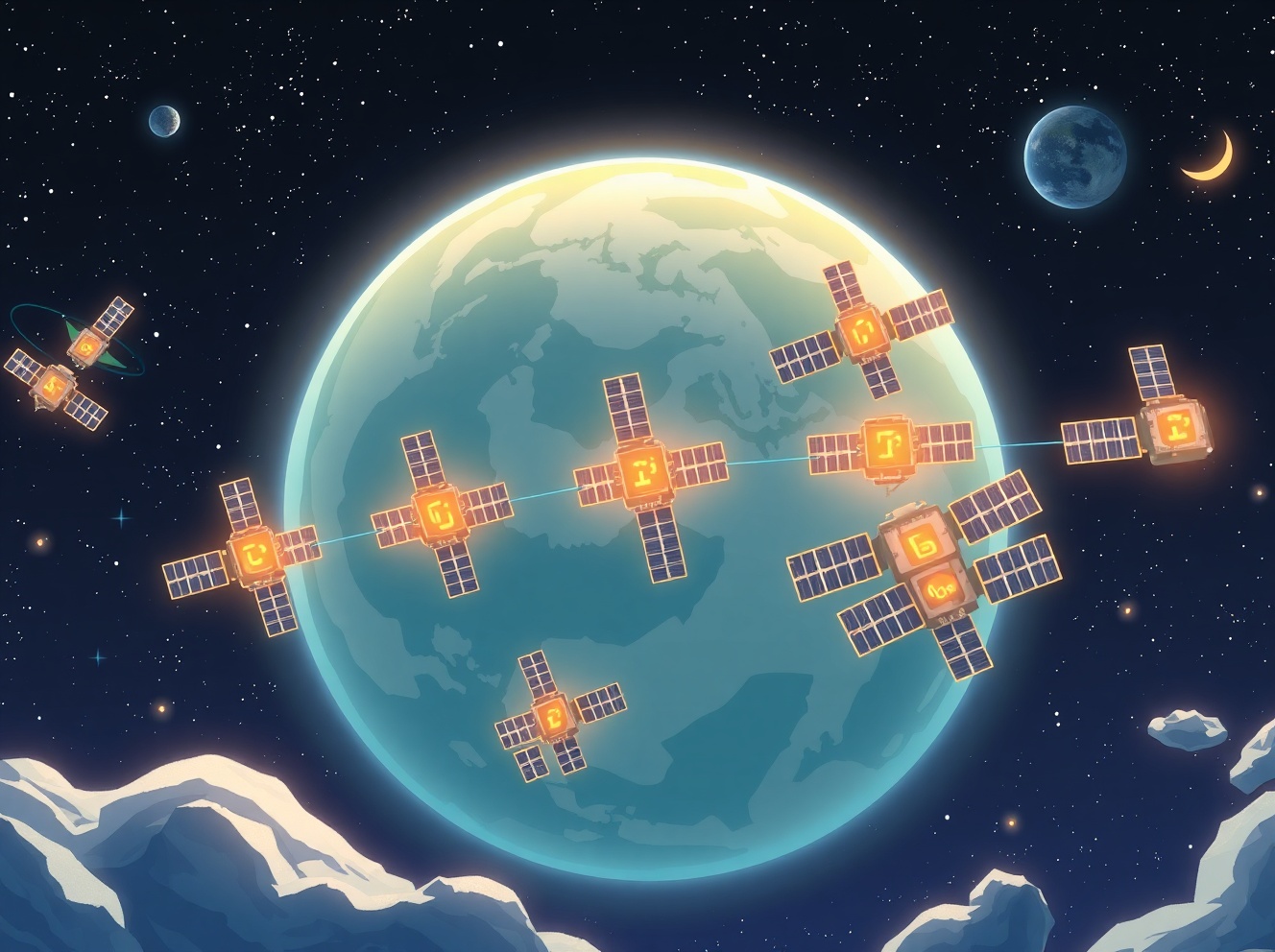
SpaceX xAI Merger: Elon Musk’s $1.25 Trillion Gamble to Build AI Data Centers in Space
In a move that redefines the frontiers of both artificial intelligence and space technology, SpaceX has officially acquired Elon Musk’s artificial intelligence startup, xAI, creating the world’s most valuable private company with a combined valuation of $1.25 trillion. Announced on Monday, October 13, 2025, this unprecedented merger centers on a single, ambitious goal: to construct the first generation of data centers in space. Consequently, this strategy directly tackles the unsustainable energy consumption of terrestrial AI infrastructure. Musk, who serves as CEO of both entities, detailed the rationale in a public memo, framing the union as a necessary evolution for the future of computation.
The Core Rationale Behind the SpaceX xAI Merger
Elon Musk’s memo outlines a critical problem facing the AI industry. Current advances in artificial intelligence depend entirely on massive terrestrial data centers. These facilities demand immense amounts of electrical power and sophisticated cooling systems. Musk argues that global electricity demand for AI cannot be met with Earth-bound solutions in the near term. Furthermore, meeting this demand would impose significant hardship on local communities and the environment. This concern is not theoretical. For instance, xAI has previously faced accusations related to the environmental and community impact of its data centers in Memphis, Tennessee. Therefore, the merger positions SpaceX’s launch capabilities as the foundational solution to this growing crisis.
Engineering the Vision: How Space-Based Data Centers Would Work
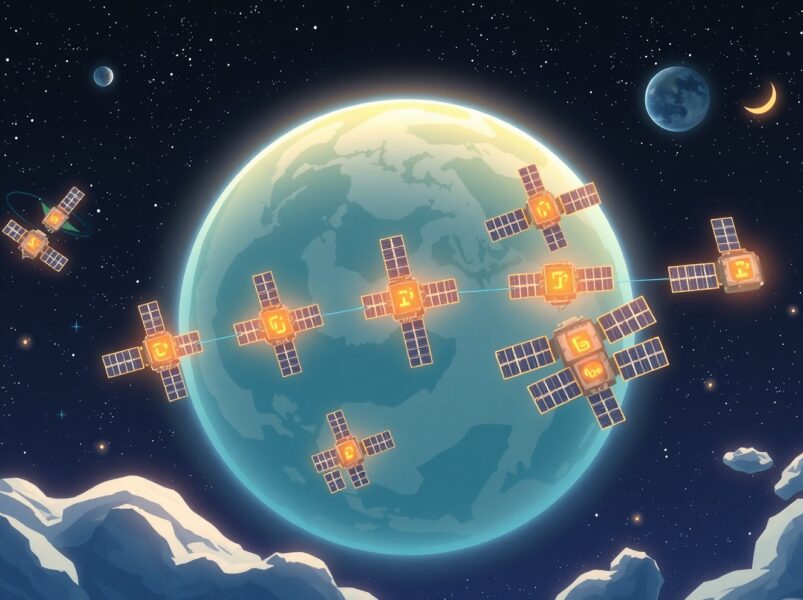
The technical blueprint involves deploying a constant stream of specialized satellites. Each satellite would function as a modular data processing unit in low Earth orbit. Musk indicated that creating a functional orbital network would require many satellites, although he did not specify a precise number. This architecture offers several potential advantages. Primarily, satellites in space can leverage near-constant solar power without atmospheric interference. Additionally, the cold vacuum of space provides a natural and efficient medium for cooling powerful computer processors. However, significant challenges remain, including radiation hardening of hardware, data latency for Earth communication, and the colossal upfront cost of deployment.
| Terrestrial Data Center | Proposed Orbital Data Center |
|---|---|
| Requires grid power (often non-renewable) | Powered by constant, unobstructed solar energy |
| Needs massive water/air cooling systems | Uses passive radiative cooling in vacuum |
| Subject to local regulations & community impact | Operates in international orbital space |
| Fixed location with limited expansion | Modular, scalable constellation |
| Hardware refresh cycles every few years | Mandatory de-orbit/replacement every ~5 years (FCC rule) |
Financial Mechanics and the IPO Question
The merger brings together two capital-intensive ventures. Reports indicate xAI is currently burning approximately $1 billion per month developing its AI models. Conversely, SpaceX generates an estimated 80% of its revenue from launching its own Starlink internet satellites. Musk’s vision creates a compelling revenue loop: SpaceX launches the data center satellites, and xAI utilizes them, ensuring a steady demand for launch services. This cycle appears even more attractive considering the Federal Communications Commission’s rule requiring satellites to be de-orbited every five years, guaranteeing a recurring launch business. Meanwhile, the merger’s impact on SpaceX’s long-rumored IPO, potentially slated for as early as June of this year, remains unclear. Musk did not address the public offering in his announcement.
Divergent Near-Term Missions and Integration Challenges
Despite the unified long-term vision, SpaceX and xAI currently pursue very different immediate objectives. SpaceX is deep in the development and testing of its Starship rocket, a vehicle critical for NASA’s Artemis moon missions and eventual Mars colonization. Simultaneously, xAI is in a fierce competitive race against AI giants like Google and OpenAI. The pressure in this arena is intense. A recent Washington Post report noted that Musk loosened safety restrictions on xAI’s Grok chatbot to accelerate development, a move that reportedly contributed to the model being misused to generate harmful imagery. Successfully merging these two distinct corporate cultures—one focused on aerospace engineering and the other on agile AI software development—will be a monumental management challenge.
Historical Context and Musk’s Corporate Synergy
This acquisition continues Elon Musk’s strategy of creating synergies between his companies. Previously, Tesla and SpaceX each invested $2 billion into xAI. Last year, xAI also acquired the social media platform X (formerly Twitter), with Musk claiming a combined valuation of $113 billion. The new SpaceX-xAI entity now sits at the center of a vast interconnected ecosystem. This network includes Tesla (electric vehicles and robotics), The Boring Company (infrastructure), and Neuralink (brain-computer interfaces). Each company potentially generates data for, or consumes intelligence from, the combined AI-space infrastructure. Ultimately, this creates a closed-loop technological empire unlike any other in history.
Expert Analysis on Feasibility and Impact
Industry analysts point to both the staggering ambition and the profound hurdles of the plan. Aerospace engineers question the reliability of housing advanced, sensitive computing hardware in the harsh radiation environment of space. Energy experts acknowledge the logic of using orbital solar power but caution that the energy required to launch the mass of these data centers may offset early gains. AI ethicists have raised immediate concerns, citing the loosened safeguards on Grok. They warn that deploying powerful, less-restricted AI models on orbital infrastructure, far from direct terrestrial oversight, could introduce novel and complex regulatory challenges. Nevertheless, if successful, the project could fundamentally decouple AI progress from the planet’s energy grids and environmental limits.
Conclusion
The SpaceX xAI merger represents a watershed moment in technological convergence. It directly confronts the looming AI energy crisis with a characteristically bold, space-based solution. While the path to operational space data centers is fraught with technical, financial, and ethical obstacles, the $1.25 trillion valuation underscores the market’s belief in Musk’s integrated vision. This move does more than combine two companies; it attempts to fuse the future of intelligence with the final frontier, setting the stage for the next decade of competition in both aerospace and artificial intelligence. The success or failure of this gamble will likely define the trajectory of both industries.
FAQs
Q1: Why does Elon Musk want to put data centers in space?
The primary motivation is to solve AI’s massive and growing energy demand. Terrestrial data centers require enormous power and cooling, straining local grids and the environment. Space offers constant solar power and natural vacuum cooling.
Q2: How much is the combined SpaceX-xAI company worth?
According to reports, the merger values the combined entity at approximately $1.25 trillion, making it the world’s most valuable private company.
Q3: Will this merger affect SpaceX’s plans for an IPO?
It is currently unclear. SpaceX has been reportedly preparing for an IPO, but Elon Musk did not address how the acquisition of xAI might alter that timeline in his initial announcement.
Q4: What are the biggest technical challenges for space-based data centers?
Key challenges include protecting computing hardware from space radiation, managing data transmission latency to and from Earth, achieving cost-effective deployment, and ensuring reliable operation without physical maintenance.
Q5: How does this relate to Musk’s other companies, like Tesla and Neuralink?
The space-based AI infrastructure could serve as a powerful, centralized compute resource for all of Musk’s ventures. Tesla’s autonomous driving data, Neuralink’s brain-computer interfaces, and data from platform X could all be processed and enhanced by the orbital AI system.
This post SpaceX xAI Merger: Elon Musk’s $1.25 Trillion Gamble to Build AI Data Centers in Space first appeared on BitcoinWorld.
You May Also Like

FCA komt in 2026 met aangepaste cryptoregels voor Britse markt

Cashing In On University Patents Means Giving Up On Our Innovation Future