Will Bitcoin Go Back Up? Key Recovery Factors and Market Outlook

For Bitcoin fundamentals and market history, see our complete investment guide.
- Bitcoin dropped 27% from its $126,000 all-time high but maintains strong institutional support with Harvard University tripling its holdings.
- The cryptocurrency's 95% mined supply and April 2024 halving create long-term scarcity dynamics favoring price recovery.
- Expert forecasts project Bitcoin reaching $110,000-$150,000 by 2026, with extreme bearish scenarios considered highly unlikely.
- Technical indicators show oversold conditions near $90,000-$95,000 support levels, historically signaling potential reversal points.
- Improving regulatory clarity and potential Federal Reserve rate cuts provide macroeconomic tailwinds for Bitcoin's recovery.
- Dollar-cost averaging remains the recommended strategy for building positions during current market volatility.
Bitcoin Market Outlook: Current Position and Price Analysis
Will Bitcoin Go Back Up? Key Factors Driving Recovery
1. Institutional Demand Continues Growing
2. BTC Supply Dynamics and Price Forecast
3. Macro Conditions Supporting Growth
4. Technical Indicators Signal Recovery
5. Regulatory Clarity Improving
Bitcoin Price Prediction 2026: Expert Forecasts and Scenarios
Understand the key factors driving Bitcoin price increases.
When Will Bitcoin Go Back Up? Investment Strategy Guide
Ready to invest? Evaluate if now is a good time to buy Bitcoin.
Worried about further downside? Read our crash scenario analysis.
Frequently Asked Questions
Conclusion
Learn long-term investment strategies in our ultimate BTC beginner's guide.
Popular Articles
View More
What Does BTC Mean in Text? We Read All 56 Slang Entries. "Because They Can" Isn't One.
Search "what does BTC mean in text" and the same answer comes back from site after site: "Because They Can." There is no record of anyone ever saying that. Two of them are the ones you'll actually

MEXC On-chain Daily Report:Russia’s State Duma will review a cryptocurrency regulation bill
Updated: July 21, 2026, 9:30 (UTC+8)|Author: MEXC Headlines Russia’s State Duma will review a cryptocurrency regulation bill. Superseed is abandoning its Layer2 and requiring users to migrate assets

MEXC Alpha Trader Research Weekly | ETF Outflows End After 8 Weeks, but a $425M Sell-Off Raises the Question: Who Is Driving BTC?
Week 2 of July 2026 Statistical Period: July 8, 2026 – July 14, 2026 Data Cutoff: July 14, 2026 Core Narrative Over the past week, the crypto market experienced a dramatic reversal, shifting from a

MEXC Alpha Trader Research Weekly | NFP Sparks a Rebound, but ETF Outflow Pressure Lingers: Can BTC Hold $63,000?
Week 1, July 2026 Reporting Period: July 1–7, 2026 Data Cutoff: July 7, 2026 Core Narrative Over the past week, the crypto market experienced a dramatic reversal, falling first before staging a
Hot Crypto Updates
View More
Bitcoin Price Eyes $65,000 as Standard Chartered Backs $100,000 Target: Is the Bottom In?
Key Takeaways Bitcoin (BTC) has rallied from about $61,400 on July 6 to an intraday high of $64,653 on July 10 and trades near $63,800 at the time of writing, as risk appetite returns across crypto.
Why Is Crypto Down Today? Bitcoin Slides Toward $62,000 as US-Iran Ceasefire Collapses
Key Takeaways Bitcoin (BTC) fell more than 2% to around $62,000 on July 8, 2026 after US President Donald Trump declared the ceasefire with Iran over at the NATO summit in Ankara. More than $450

Will Nonfarm Payroll Move Bitcoin Tonight?
Overview The U.S. June nonfarm payrolls report will be released at 8:30 a.m. ET on July 2, 2026. According to the U.S. Bureau of Labor Statistics release schedule, this report is coming on Thursday

Trending News
View More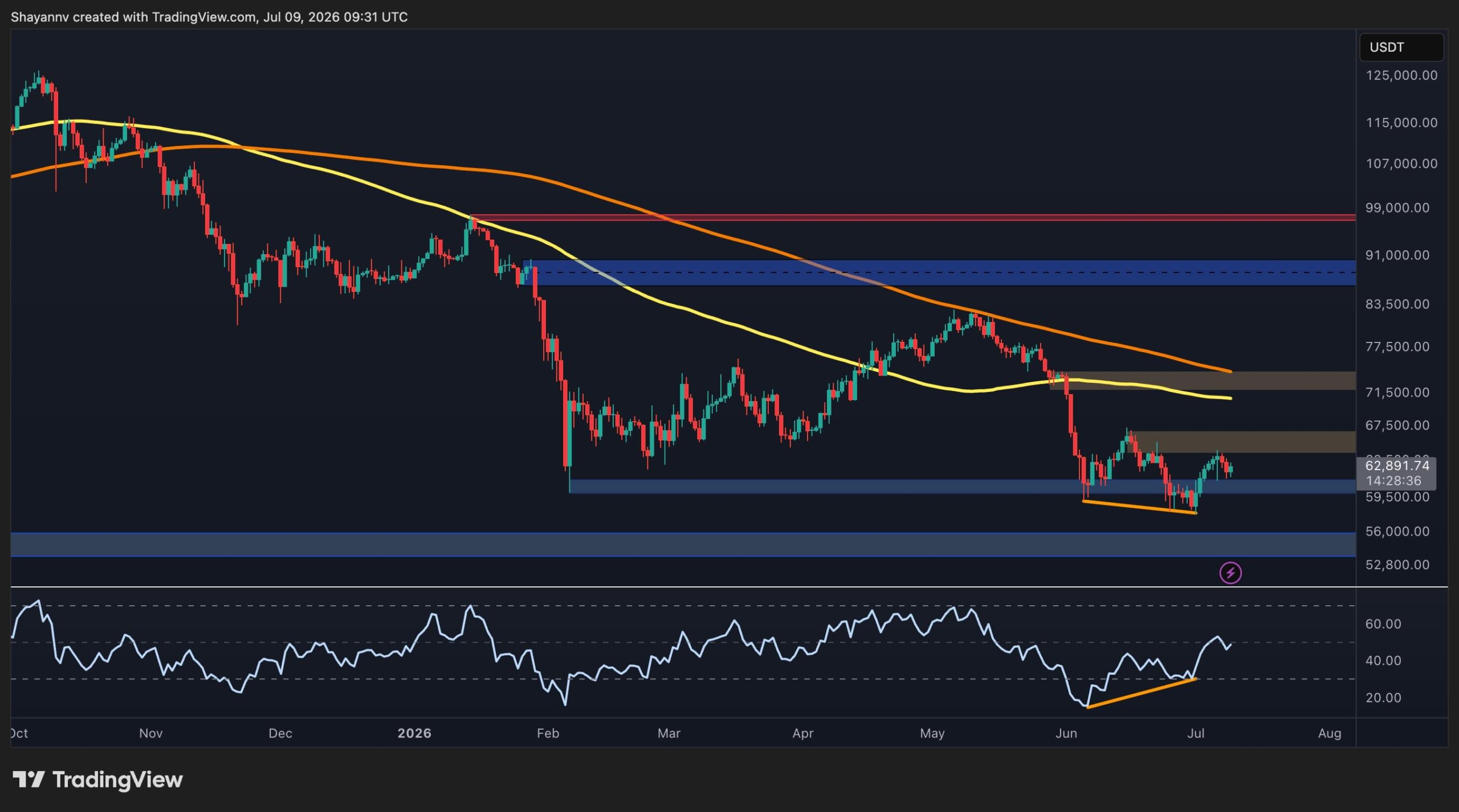
Bitcoin Price Analysis: Has BTC Cleared the Danger Zone After $64K Surge?
Despite showing signs of short-term stabilization above a major support zone, Bitcoin’s downtrend might not be over yet. While momentum has improved on lower timeframes

JPMorgan Says Bitcoin’s Bigger Risk Is Permissioned Blockchains
JPMorgan says Bitcoin's biggest long-term risk isn't Strategy selling BTC—it's the rise of permissioned blockchains that could bypass public chains and crypto

Related Articles
View More
Solana Price History: What the SOL Chart Shows and What It Leaves Out
Solana has two all-time highs, and they have almost nothing in common.The first, near $260 in November 2021, was driven by NFT and DeFi activity. The second, around $294 in January 2025, was driven by
What Does BTC Mean in Text? We Read All 56 Slang Entries. "Because They Can" Isn't One.
Search "what does BTC mean in text" and the same answer comes back from site after site: "Because They Can."There is no record of anyone ever saying that.Two of them are the ones you'll actually hit i

Is Polkadot Dead? Polkadot Fixed Its Two Biggest Problems and DOT Fell Anyway
Polkadot is not dead.Its governance still passes major reforms and delivers them on the date it promised, including a supply cap that ended five years of uncapped issuance.But the ecosystem built on t