

Artificial intelligence is transforming the global technology landscape, but behind every breakthrough AI model lies an equally important component: advanced memory chips. As demand for AI computing cArtificial intelligence is transforming the global technology landscape, but behind every breakthrough AI model lies an equally important component: advanced memory chips. As demand for AI computing c

Artificial intelligence is transforming the global technology landscape, but behind every breakthrough AI model lies an equally important component: advanced memory chips. As demand for AI computing continues to surge, semiconductor companies are racing to expand production and strengthen supply chains. One of the latest and most significant moves comes from Micron Technology, which announced that it will increase its planned U.S. investment from approximately $200 billion to more than $250 billion by 2035.
The expansion is more than a financial milestone—it reflects the growing importance of memory technology in the AI era. With billions of dollars flowing into AI infrastructure, Micron’s decision positions the company as a key player in the next generation of computing while reinforcing America’s ambitions to rebuild domestic semiconductor manufacturing.
1.AI’s Growing Appetite for Advanced Memory
The rapid adoption of generative AI has fundamentally changed the semiconductor industry. Training and running large AI models require enormous computing power, but processors alone cannot deliver that performance. They rely on high-speed memory to move vast amounts of data efficiently, making advanced memory chips an essential part of every AI system.
Micron is one of the world’s leading manufacturers of DRAM and NAND flash memory, technologies that power AI servers, cloud infrastructure, smartphones, and enterprise data centers. The company has also become an important supplier of High Bandwidth Memory (HBM), a specialized memory technology designed to work alongside AI accelerators from companies such as NVIDIA and AMD.
Micron President and CEO Sanjay Mehrotra has described AI as a “transformational” opportunity for the memory industry, highlighting that demand is expected to remain strong for years rather than being a short-term trend. As AI applications continue expanding across healthcare, finance, manufacturing, and scientific research, the need for advanced memory solutions is likely to increase even further.
2. Micron’s Quarter-Trillion-Dollar Commitment
Micron’s decision to raise its planned U.S. investment to more than $250 billion marks one of the largest commitments ever made by an American memory-chip manufacturer. The company also announced an additional $3 billion investment to strengthen the domestic semiconductor supply chain, including $500 million dedicated to supporting GlobalWafers’ silicon wafer facility in Texas through a long-term supply agreement.
The company’s strategy extends beyond constructing new fabrication plants. It includes expanding research and development, increasing manufacturing capacity, and creating thousands of high-skilled jobs over the coming decade. According to Micron, these investments will eventually enable nearly 40% of its DRAM production to be manufactured in the United States.
This expansion also aligns with Washington’s broader objective of reducing dependence on overseas semiconductor production. Recent global supply chain disruptions and geopolitical tensions have highlighted the importance of securing domestic manufacturing capabilities for technologies that are increasingly viewed as critical national infrastructure.
3. Beyond Manufacturing: Strengthening America’s AI Supply Chain
Micron’s investment reflects a broader shift in how governments and businesses view semiconductors. Once considered just another component of the electronics industry, advanced chips are now recognized as strategic assets that influence economic competitiveness, technological leadership, and national security.
Building advanced memory chips requires years of research, highly specialized equipment, and a reliable supply of raw materials. By expanding domestic production, Micron aims to reduce supply chain risks while ensuring that U.S.-based AI companies have greater access to critical hardware.
The investment also complements broader efforts to strengthen America’s semiconductor ecosystem through public and private partnerships. As AI infrastructure continues to expand, a resilient domestic supply chain will become increasingly important for supporting innovation and reducing vulnerabilities to future disruptions.
4. The Ripple Effect Across the Semiconductor Industry
Micron’s announcement sends a strong signal to the broader semiconductor market. While companies such as NVIDIA have captured headlines for their AI processors, memory manufacturers are becoming equally important as AI models grow larger and more complex.
The expansion is likely to intensify competition with other major memory producers, including SK Hynix and Samsung Electronics, both of which are investing heavily in advanced memory technologies. At the same time, cloud providers and AI developers stand to benefit from increased production capacity, which could help meet the growing demand for high-performance computing hardware.
For investors, Micron’s quarter-trillion-dollar commitment demonstrates confidence in the long-term growth of artificial intelligence rather than short-term market cycles. Such a significant investment would be difficult to justify without strong expectations that AI-driven demand will continue expanding well into the next decade.
Conclusion
Micron’s decision to increase its U.S. investment to more than $250 billion represents far more than a manufacturing expansion. It highlights the central role that advanced memory technology now plays in powering artificial intelligence and underscores the strategic importance of semiconductor production in the global economy.
As AI continues reshaping industries around the world, companies capable of delivering reliable, high-performance memory solutions will become increasingly valuable. Micron’s latest investment is not simply a response to today’s ddeman, it is a long-term bet on the future of AI, semiconductor innovation, and America’s position in one of the world’s most competitive technology sectors.
Disclaimer:This content is for educational and reference purposes only and does not constitute any investment advice. Digital asset investments carry high risk. Please evaluate carefully and assume full responsibility for your own decisions.
市場機遇
Gensyn實時價格 (AI)
--
----
USD
Gensyn (AI) 實時價格圖表
描述:幣圈脈動基於 AI 技術與公開信息,第一時間呈現最熱代幣趨勢。如果想了解更多專業解讀與深度分析,請訪問新手學院。
本頁面分享的文章均源自公開平台,僅供參考。該內容不代表 MEXC 的立場或觀點。所有版權歸 Mubashir 所有。如果您認為任何內容侵犯了第三方的權益,請聯絡 service@support.mexc.com 以便及時刪除。 MEXC 不保證任何內容的準確性、完整性或及時性,且不對基於所提供信息而採取的任何行動負責。本內容不構成財務、法律或其他專業建議,亦不應被解釋為 MEXC 的推薦或認可。如需專家見解和深入分析,請造訪 MEXC 學院。
學習更多 Gensyn 知識
查看更多
SpaceX 如何賺錢?有獲利嗎?三大業務中只有一項真正賺錢
SpaceX 透過三大事業部門賺取收入,但在 2025 年,只有其中一個部門實現獲利。 Starlink 當年的營業利益為 44 億美元,火箭業務則虧損 6.57 億美元,AI 業務虧損 64 億美元。 過去 24 年來,這些數字一直未對外公開。 直到 2026 年 5 月 20 日,SpaceX 向美國證券交易委員會提交 S-1 表格後,這些經過查核、正式列入公開紀錄,且與火箭升空所呈現的企業形
2026/07/21
美股周報 | 6.22–6.26:加息三次,誰扛得住?AI 硬體超級週期還在不在?
本週美股經歷了一次教科書級別的「利率衝擊+板塊輪動」行情。美國銀行(美銀)一份加息預測報告在週一引爆晶片股踩踏, SOXX 單日暴跌 8%;但與此同時,美光科技(MU)交出了歷史上最亮眼的一份 Q3 季報——營收 $414.6 億,大幅超出市場預期 16%。本文基於 MEXC 美股團隊本週獨家整理的一手數據,帶你全面復盤這個資訊密度極高的交易週。 1. 本週核心宏觀事件:美國銀行加息炸彈與 SOX
2026/07/01

MEXC Alpha Trader 投研週報 | BTC 失守 60K,6 月 ETF 流出創紀錄——底部還有多遠?
2026 年 6 月第 4 周 統計周期:2026 年 6 月 24 日 – 6 月 30 日 數據截止:2026 年 6 月 30 日 核心敘事 過去一周,數位資產市場經歷了 2024 年 9 月以來最猛烈的下跌。6 月 24 日,比特幣暴跌超 5%,自 2024 年 9 月以來首次跌破 60,000 美元關口,最低觸及 59,018 美元,創下年內新低。這一破位徹底打破了此前「62,500 美
2026/07/01
Gensyn 最新動態
查看更多
KlariVis 任命 Marcos Souza 為首席數據與分析官,並提拔 Guy DeCorte 為首席人工智慧官
兩個專設的高階主管職位標誌著公司數據與人工智慧策略的下一階段:KlariVis,一個專為金融機構打造的數據智能平台
2026/07/10
比特幣突破64,000美元,科技股與加密貨幣市場同步上漲
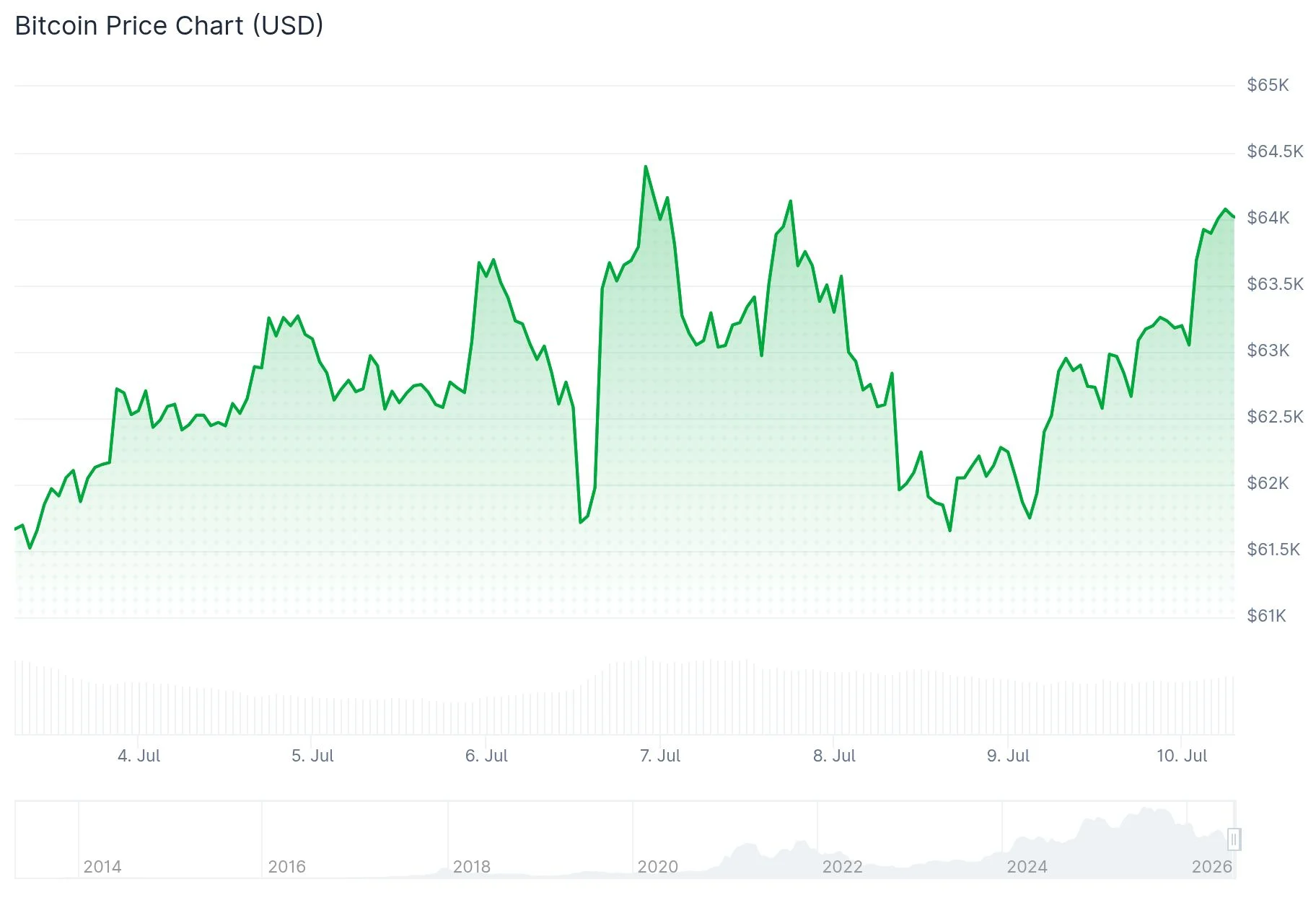
Bitcoin 攀升至 $64,000,Nasdaq 上漲 1.3%,晶片股反彈。了解 AI 半導體需求與美元走弱如何推動市場漲勢。這篇文章
2026/07/10

北京傳考慮管控DeepSeek、月之暗面,因中國 AI 模型正被矽谷廉價狂擼
中國大模型近年崛起迅猛,《華爾街日報》最新披露,北京正考慮對本土 AI 模型技術進行管控,以防優質模型被免費使 […] 〈北京傳考慮管控DeepSeek、月之暗面,因中國 AI 模型正被矽谷廉價狂擼〉這篇文章最早發佈於動區BlockTempo《動區動趨-最具影響力的區塊鏈新聞媒體》。
2026/07/10


熱門
目前熱門備受市場關注的加密貨幣
加密貨幣價格
按交易量計算交易量最大的加密貨幣