

Trump guaranteed never-ending ridicule with this stupid gambit to immortalize himself
When the news popped up on our phones during an early dinner with friends on Thursday night that Donald Trump’s signature will go on U.S. paper currency, it drew guffaws, grrrs, and plenty of expletives around the table.
As someone who worked in PR for 30 years, I usually view Trump’s stunts through the lens of perception. So when I read the breaking news that his pubic-hair-like John Hancock will start appearing later this year on dollar bills, that’s when I laughed.
Only Donald Trump could think he’s doing something that will immortalize him, when in the end it will bring him scorn and shame. Not since the illegal fraud of Trump University have we seen something so destined to cause pain, humiliation, and trigger thoughts of ruin.
Trump’s stupidity about money will now extend to his failed attempt to brand it.
He has always had a pathological need to put his name on entities and things that end up “losers,” as he might say: buildings, steaks, that spurious university, bottled water, airlines, casinos - too many collapses to list here. All of them failed. All of them.
And now, in the most ominous act of authoritarian vanity since Saddam Hussein put his face on the dinar, Trump is putting his signature on American currency.
He ignorantly thinks this makes him immortal. He’s right about that! It’s just not in the glorious way he imagines.
In all likelihood, by the end of this year, right around the time those freshly signed bills start circulating through American wallets, cash registers, and proverbial pocketbooks, the American economy will be facing serious and significant headwinds, causing visible, undeniable pain.
It will also be around the holiday shopping season, where early predictions are already sluggish. That means perhaps even fewer dolls and pencils for kids this year.
Grocery store pain. Heating bill pain. Gas pump pain. Health care pain. Pencil-and-dolls pain.
The economic indicators are already moving in the wrong direction. They started shifting the moment Trump idiotic, brazen tariff whack-a-mole game began. Now the Iran war is pushing fuel costs higher, and they’re likely to stay elevated for months, even if the war ends relatively soon.
By the time consumers start seeing Trump’s pubic hair like scrawl on their money at the start of winter, home heating oil prices are likely to be exorbitant. Groceries like eggs, meat, bread, and the basics, will eat deeper into paychecks that aren’t growing fast enough to keep up.
The adverse effects on health care costs from the “Big Beautiful Bill” will be fully realized. Weak job numbers, which have worsened since the start of the year, are unlikely to improve. The war isn’t ending cleanly. The tariffs aren’t going away. And every one of these pressures compounds over time.
By December, at the confluence of these menacing trends, when Trump’s signature starts appearing on the dollar, Americans will already know something is deeply, deeply wrong.
And there it will be, in all its infamous glory, his name stamped on the very thing Americans don’t have enough of.
Trump wants to own money, and now he’s about to own what money can’t buy anymore. He’ll own the heating bill you can’t pay. He’ll own the embarrassment at the grocery line when you have to put something back. He’ll own your sickness because you’re rationing medication. He’ll own the humiliation of collectors coming after your unpaid credit card balance (Ask TSA agents about that.).
Every transaction, every crumpled and precious bill handed across a counter for something that cost less a year ago will carry his signature. It will be a metaphorical receipt for all the damage he’s done.
Narcissists who chase legacy never think about the long-term consequences. History, however, offers one example of success: Augustus Caesar put his face on coins during an era of relative peace and prosperity. His image conveyed stability.
Trump’s signature, on the other hand, will debut during an era of self-inflicted economic chaos. It will say something entirely different.
Think about that in the context of how we remember failed currency. Germany’s Weimar Republic marks were a miserable failure, as were Confederate bills. Currency can become a time capsule of the era that produced it.
With that in mind, future Americans, really meaning your kids and grandkids, may hold a bill with Trump’s signature one day and learn in history class about the rot of the Trump era: tariff wars, exploding deficits, a health care system gutted for tax cuts, grocery inflation, and a government run by a self-obsessed authoritarian fixated on seeing his name and visage on everything.
By signing the “check,” Trump’s dooming, disastrous loser-legacy of a name will live forever on American money.
The egomaniac genuinely believes his signature elevates him. We don’t have to assume that because we know how highly Trump feels about Trump. He thinks his signature on a bill places him alongside George Washington, Abraham Lincoln, and Andrew Jackson, whose faces appear on paper currency.
But those men built things meant to last, and things that still stand the test of history.
Trump has spent both of his presidencies tearing things down including institutions, relationships, alliances, and now the economic stability of ordinary American families.
Every Trump-signed dollar that passes through a working American’s hands this coming winter will tell the same story: this is what he did, and this is what it cost you, in an immediate, visceral way, the kind that makes people say, “I can’t believe how much this costs now.” It will change how they vote, think, and remember.
Donald Trump wanted his signature to be glorious. It will be inglorious. By the time his scrawl makes its debut, it will be a symbol for every American who reaches into their wallet and discovers they don’t have enough paper currency to pay the bill.
You May Also Like
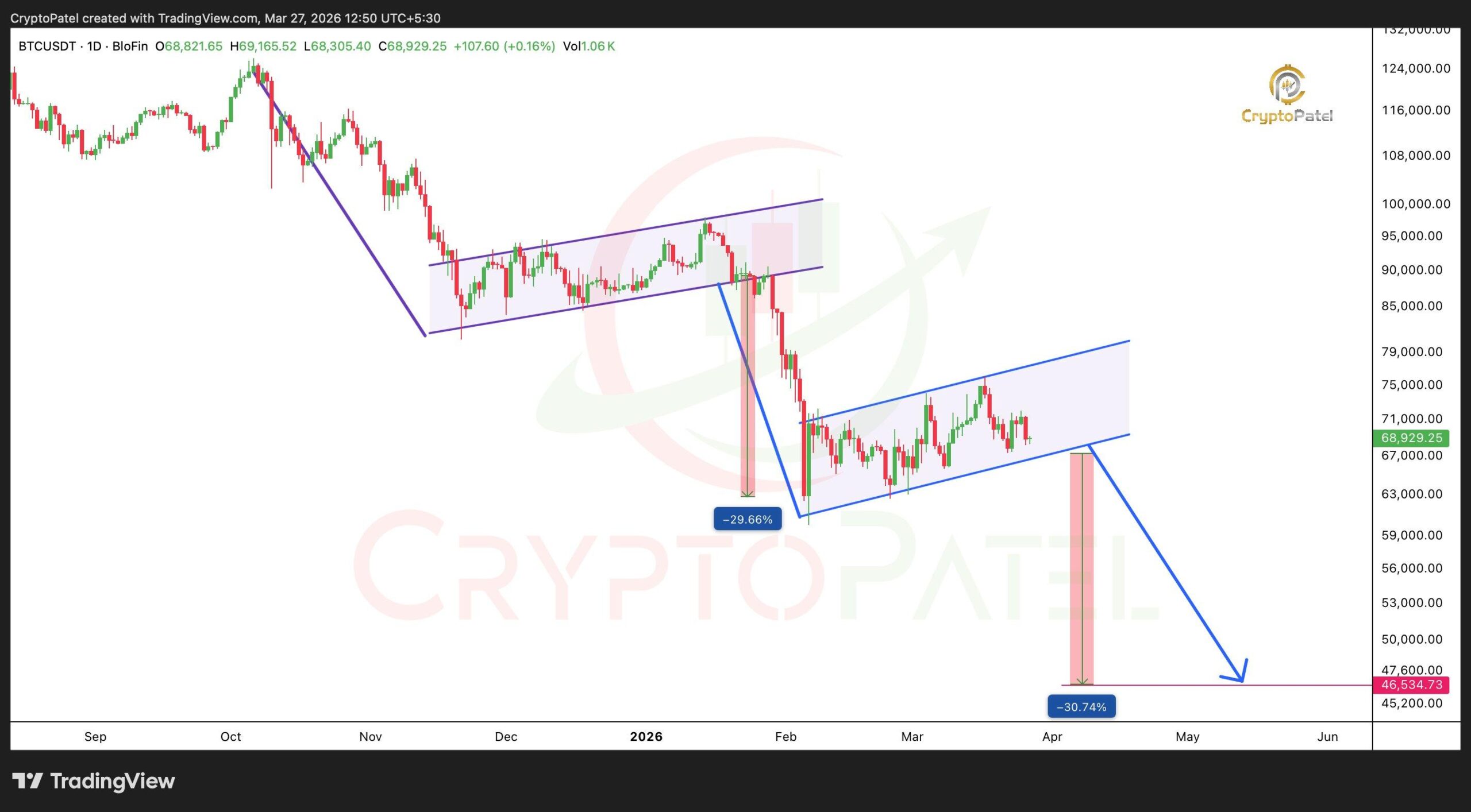
Veteran Analyst Predicts Bitcoin Price Crash to $49,000, Here’s Why

Morgan Stanley Submits Filing for 0.14% Spot Bitcoin ETF


