Presales are often the proving ground for blockchain projects. They show whether a team has real vision or is simply chasing fast funding. Too many presales promise vague utility or rely on single-token models that quickly collapse under the pressure of governance conflicts and inflationary rewards. XRP Tundra is taking a different path. Its presale […]Presales are often the proving ground for blockchain projects. They show whether a team has real vision or is simply chasing fast funding. Too many presales promise vague utility or rely on single-token models that quickly collapse under the pressure of governance conflicts and inflationary rewards. XRP Tundra is taking a different path. Its presale […]

Blockchain News: XRP Tundra Unveils Innovative Presale Structure with Dual-Chain Token Strategy

2025/09/13 18:00
5 min read
XRP Tundra

Presales are often the proving ground for blockchain projects. They show whether a team has real vision or is simply chasing fast funding. Too many presales promise vague utility or rely on single-token models that quickly collapse under the pressure of governance conflicts and inflationary rewards. XRP Tundra is taking a different path. Its presale introduces a dual-chain token structure designed to solve problems that have plagued token sales for years.

The model distributes two assets at once, one built on the XRP Ledger and the other on Solana. Each serves a distinct purpose, separating governance from utility and aligning incentives across two powerful ecosystems. The result is a presale that does more than raise funds — it lays the foundation for sustainable staking and long-term growth.

Why Traditional Presales Struggle

Single-token presales often try to pack too many functions into one coin. The same asset is expected to act as money, fund rewards, drive governance, and maintain value on exchanges. This creates constant tension. If tokens are used too heavily for staking rewards, supply inflates and the price suffers. If governance rights are tied to speculative assets, short-term traders can disrupt long-term planning.

Investors know this pattern, and it makes them cautious. A presale may offer upside, but without a clear structure, it often lacks staying power. XRP Tundra’s design directly addresses these weaknesses.

How the Dual-Chain Model Works

XRP Tundra’s presale distributes two tokens, each with a clear and independent role:

  • TUNDRA-X (XRPL): A governance and reserve token native to the XRP Ledger. It anchors system stability and grants holders voting rights over future decisions.
  • TUNDRA-S (Solana): A utility token built on Solana, used for staking rewards, liquidity, and integration into Solana’s DeFi ecosystem.

This structure does more than diversify. It creates balance. Governance is secured on XRPL, a network trusted for reliability and payments, while utility thrives on Solana, a chain optimized for speed and application growth. Participants in the presale automatically receive both tokens, gaining a position in two ecosystems without the need to split their investment.

The separation prevents the clashes that undermine single-token launches. Rewards can flow without diluting governance power, and governance can evolve without being distorted by speculative swings in utility demand.

Staking as the Foundation

The presale is tied directly to XRP Tundra’s staking system. Through Cryo Vaults, XRP holders can lock tokens for periods of 7, 30, 60, or 90 days. At the end of the term, their XRP is released along with TUNDRA rewards. All staking happens on the XRP Ledger, with no lending or off-chain custody, keeping the process transparent and energy-efficient.

For the first time, XRP becomes a yield-bearing asset. Holders who have waited years for staking can now earn predictable returns while preserving the speed and security of XRPL. Presale participants gain early access to this system, positioning themselves ahead of wider adoption.

Tokenomics That Reinforce Stability

A clever presale structure only works if tokenomics support it. XRP Tundra fixes supply at 200 million TUNDRA-X and 100 million TUNDRA-S, ensuring scarcity and protecting long-term value.

Distribution reflects a balance between rewarding early supporters and securing the system’s future. Forty percent of both supplies go to presale participants. A quarter of the supply is dedicated to staking rewards, released gradually with caps to avoid inflationary shocks. The remainder is split between ecosystem development, liquidity provision, and a team allocation locked under a vesting schedule.

This model avoids the pitfalls of endless token printing or reliance on constant new deposits. Rewards are predictable, governance power is preserved, and growth funding is set aside without undermining long-term scarcity.

Why This Presale Stands Out

XRP Tundra’s presale is designed to give participants clear value from the start. At the Phase 1 entry price of $0.30, every purchase delivers two tokens instead of one — TUNDRA-X on XRPL and TUNDRA-S on Solana. Buyers gain governance rights on the XRP Ledger and utility access on Solana with a single transaction.

The dual-chain setup keeps governance and utility separate, the staking model makes XRP yield-generating for the first time, and the fixed-supply tokenomics protect long-term sustainability.

Independent reviews by Cyberscope, Solidproof, and Freshcoins confirm the security of XRP Tundra’s contracts. The project also completed Vital Block’s KYC verification, reinforcing confidence in its long-term vision.

For participants, the presale provides direct access to yield, governance, and cross-chain growth at a launch-stage price.

Conclusion

Presales are often judged on how well they prepare a project for the future. XRP Tundra’s structure delivers on that test: it provides access to staking rewards and transparency in tokenomics, creating a foundation that can last beyond short-term cycles.

For XRP holders, this presale represents a chance to join a project that bridges ecosystems and offers staking where it has never been available before.

Follow XRP Tundra for updates:

  • Official website
  • Twitter/X
  • Telegram
  • Medium
Market Opportunity
RealLink Logo
RealLink Price(REAL)
$0.0536
$0.0536$0.0536
+3.25%
USD
RealLink (REAL) Live Price Chart
Disclaimer: The articles reposted on this site are sourced from public platforms and are provided for informational purposes only. They do not necessarily reflect the views of MEXC. All rights remain with the original authors. If you believe any content infringes on third-party rights, please contact service@support.mexc.com for removal. MEXC makes no guarantees regarding the accuracy, completeness, or timeliness of the content and is not responsible for any actions taken based on the information provided. The content does not constitute financial, legal, or other professional advice, nor should it be considered a recommendation or endorsement by MEXC.

You May Also Like

CME Group to Launch Solana and XRP Futures Options

CME Group to Launch Solana and XRP Futures Options

The post CME Group to Launch Solana and XRP Futures Options appeared on BitcoinEthereumNews.com. An announcement was made by CME Group, the largest derivatives exchanger worldwide, revealed that it would introduce options for Solana and XRP futures. It is the latest addition to CME crypto derivatives as institutions and retail investors increase their demand for Solana and XRP. CME Expands Crypto Offerings With Solana and XRP Options Launch According to a press release, the launch is scheduled for October 13, 2025, pending regulatory approval. The new products will allow traders to access options on Solana, Micro Solana, XRP, and Micro XRP futures. Expiries will be offered on business days on a monthly, and quarterly basis to provide more flexibility to market players. CME Group said the contracts are designed to meet demand from institutions, hedge funds, and active retail traders. According to Giovanni Vicioso, the launch reflects high liquidity in Solana and XRP futures. Vicioso is the Global Head of Cryptocurrency Products for the CME Group. He noted that the new contracts will provide additional tools for risk management and exposure strategies. Recently, CME XRP futures registered record open interest amid ETF approval optimism, reinforcing confidence in contract demand. Cumberland, one of the leading liquidity providers, welcomed the development and said it highlights the shift beyond Bitcoin and Ethereum. FalconX, another trading firm, added that rising digital asset treasuries are increasing the need for hedging tools on alternative tokens like Solana and XRP. High Record Trading Volumes Demand Solana and XRP Futures Solana futures and XRP continue to gain popularity since their launch earlier this year. According to CME official records, many have bought and sold more than 540,000 Solana futures contracts since March. A value that amounts to over $22 billion dollars. Solana contracts hit a record 9,000 contracts in August, worth $437 million. Open interest also set a record at 12,500 contracts.…
Share
BitcoinEthereumNews2025/09/18 01:39
China Blocks Nvidia’s RTX Pro 6000D as Local Chips Rise
China Blocks Nvidia’s RTX Pro 6000D as Local Chips Rise

The post China Blocks Nvidia’s RTX Pro 6000D as Local Chips Rise appeared on BitcoinEthereumNews.com. China Blocks Nvidia’s RTX Pro 6000D as Local Chips Rise China’s internet regulator has ordered the country’s biggest technology firms, including Alibaba and ByteDance, to stop purchasing Nvidia’s RTX Pro 6000D GPUs. According to the Financial Times, the move shuts down the last major channel for mass supplies of American chips to the Chinese market. Why Beijing Halted Nvidia Purchases Chinese companies had planned to buy tens of thousands of RTX Pro 6000D accelerators and had already begun testing them in servers. But regulators intervened, halting the purchases and signaling stricter controls than earlier measures placed on Nvidia’s H20 chip. Image: Nvidia An audit compared Huawei and Cambricon processors, along with chips developed by Alibaba and Baidu, against Nvidia’s export-approved products. Regulators concluded that Chinese chips had reached performance levels comparable to the restricted U.S. models. This assessment pushed authorities to advise firms to rely more heavily on domestic processors, further tightening Nvidia’s already limited position in China. China’s Drive Toward Tech Independence The decision highlights Beijing’s focus on import substitution — developing self-sufficient chip production to reduce reliance on U.S. supplies. “The signal is now clear: all attention is focused on building a domestic ecosystem,” said a representative of a leading Chinese tech company. Nvidia had unveiled the RTX Pro 6000D in July 2025 during CEO Jensen Huang’s visit to Beijing, in an attempt to keep a foothold in China after Washington restricted exports of its most advanced chips. But momentum is shifting. Industry sources told the Financial Times that Chinese manufacturers plan to triple AI chip production next year to meet growing demand. They believe “domestic supply will now be sufficient without Nvidia.” What It Means for the Future With Huawei, Cambricon, Alibaba, and Baidu stepping up, China is positioning itself for long-term technological independence. Nvidia, meanwhile, faces…
Share
BitcoinEthereumNews2025/09/18 01:37
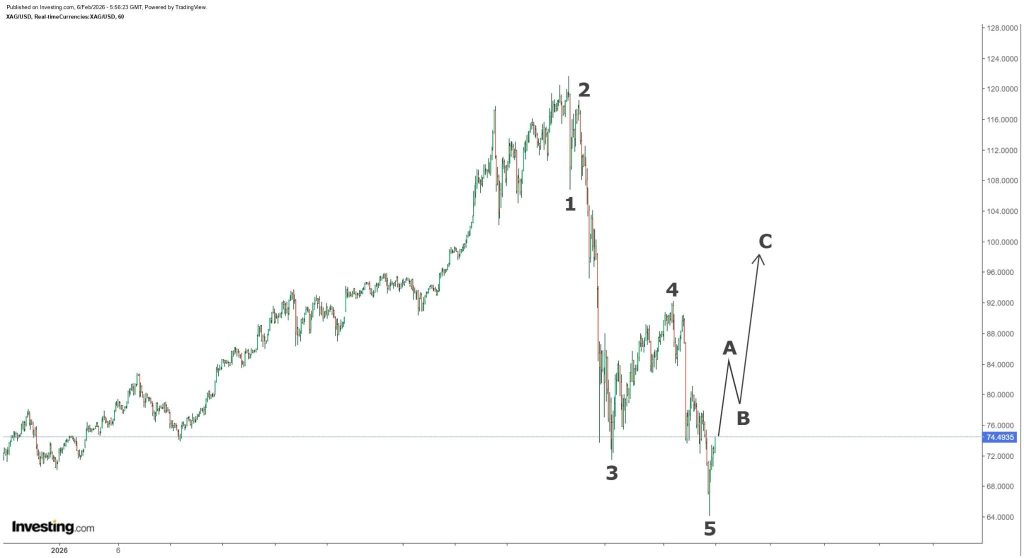
Silver Price Crash Is Over “For Real This Time,” Analyst Predicts a Surge Back Above $90

Silver Price Crash Is Over “For Real This Time,” Analyst Predicts a Surge Back Above $90

Silver has been taking a beating lately, and the Silver price hasn’t exactly been acting like a safe haven. After running up into the highs, the whole move reversed
Share
Captainaltcoin2026/02/07 03:15
