Sub-Saharan Africa is quietly becoming one of the hottest crypto frontiers. The latest Chainalysis 2025 report shows that the region […] The post Sub-Saharan Africa Named Third-Fastest Crypto Adoption in Report – Can $HYPER Ride the Wave? appeared first on Coindoo.Sub-Saharan Africa is quietly becoming one of the hottest crypto frontiers. The latest Chainalysis 2025 report shows that the region […] The post Sub-Saharan Africa Named Third-Fastest Crypto Adoption in Report – Can $HYPER Ride the Wave? appeared first on Coindoo.

Sub-Saharan Africa Named Third-Fastest Crypto Adoption in Report – Can $HYPER Ride the Wave?


2025/09/12 00:32
5 min read

Sub-Saharan Africa is quietly becoming one of the hottest crypto frontiers.

The latest Chainalysis 2025 report shows that the region is now the third-fastest growing market for crypto adoption, with $205B in value received between July 2024 and June 2025 – a 50% jump year-on-year.

Unlike many regions where speculation dominates, activity here is split between grassroots retail use (with over 8% of transfers under $10K) and institutional flows, like multi-million stablecoin settlements powering trade.

That mix makes the continent a proving ground for crypto’s ‘real-world use’ story, and why scaling solutions like Bitcoin Hyper ($HYPER) are catching attention.

Retail Adoption & Economic Pressures

The clearest sign of sub-Saharan Africa’s retail-driven growth came in March 2025, when the region posted nearly $25B in on-chain volume in a single month.
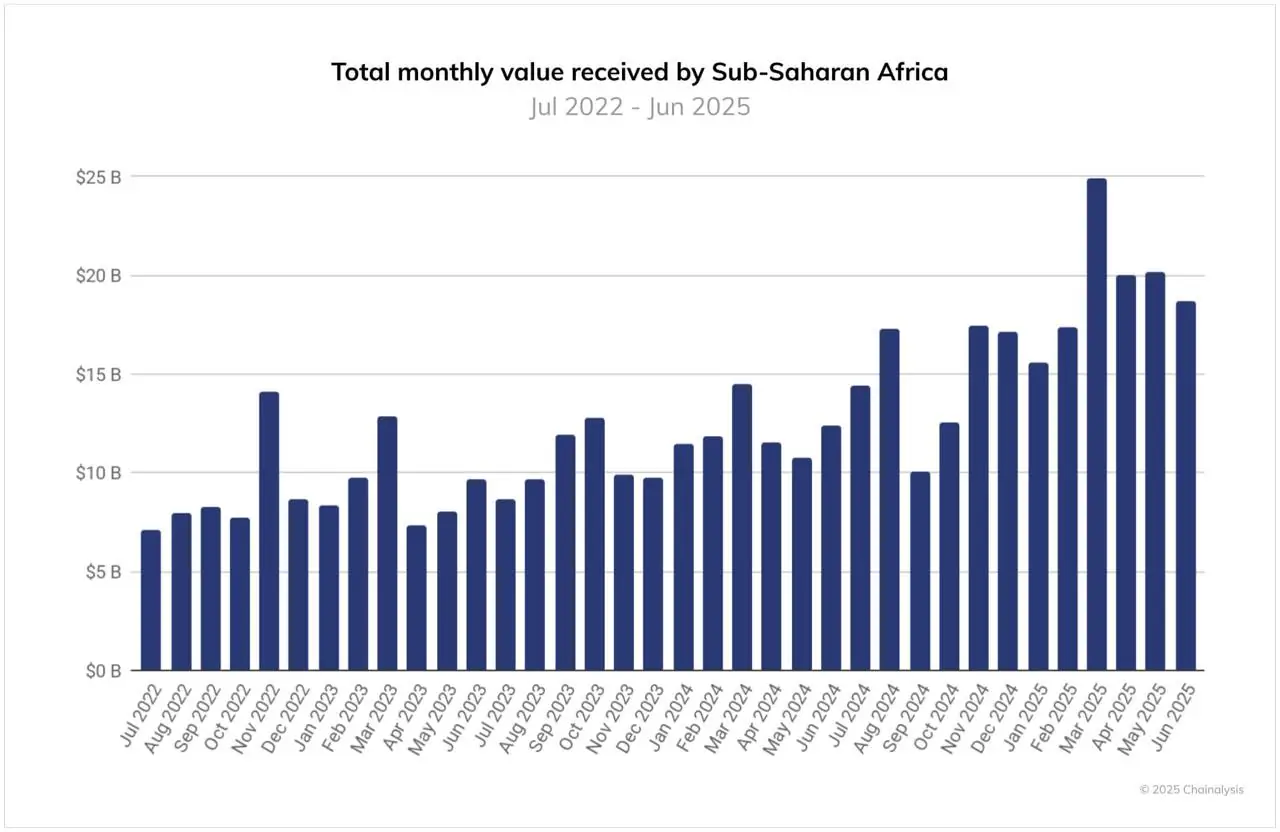
Bar chart of monthly on-chain volume in sub-Saharan Africa.Source: Chainalysis Report

That spike stood out globally, as other regions were cooling off. The trigger was Nigeria’s sharp currency devaluation, which forced people to look for alternatives.

Such shocks typically push crypto volumes higher in two ways: more citizens move towards digital assets to hedge against inflation; and the same amount of fiat buys less crypto, making nominal values surge.

Retail adoption is also visible in the transfer data. In sub-Saharan Africa, more than 8% of all crypto transactions were under $10K, compared to 6% across the rest of the world. This suggests that everyday use is a bigger factor here than speculative trading.

We must also consider the context: a region where many adults remain unbanked, but mobile money is already a part of daily life. For many Africans, crypto is a tool for payments, remittances, and savings when local currencies simply don’t hold up.

Institutional Flows & Regional Leaders

On the institutional side, Nigeria continues to dominate sub-Saharan Africa’s crypto flows. Between July 2024 and June 2025, the country received $92.1B+ in value, nearly triple South Africa’s intake.
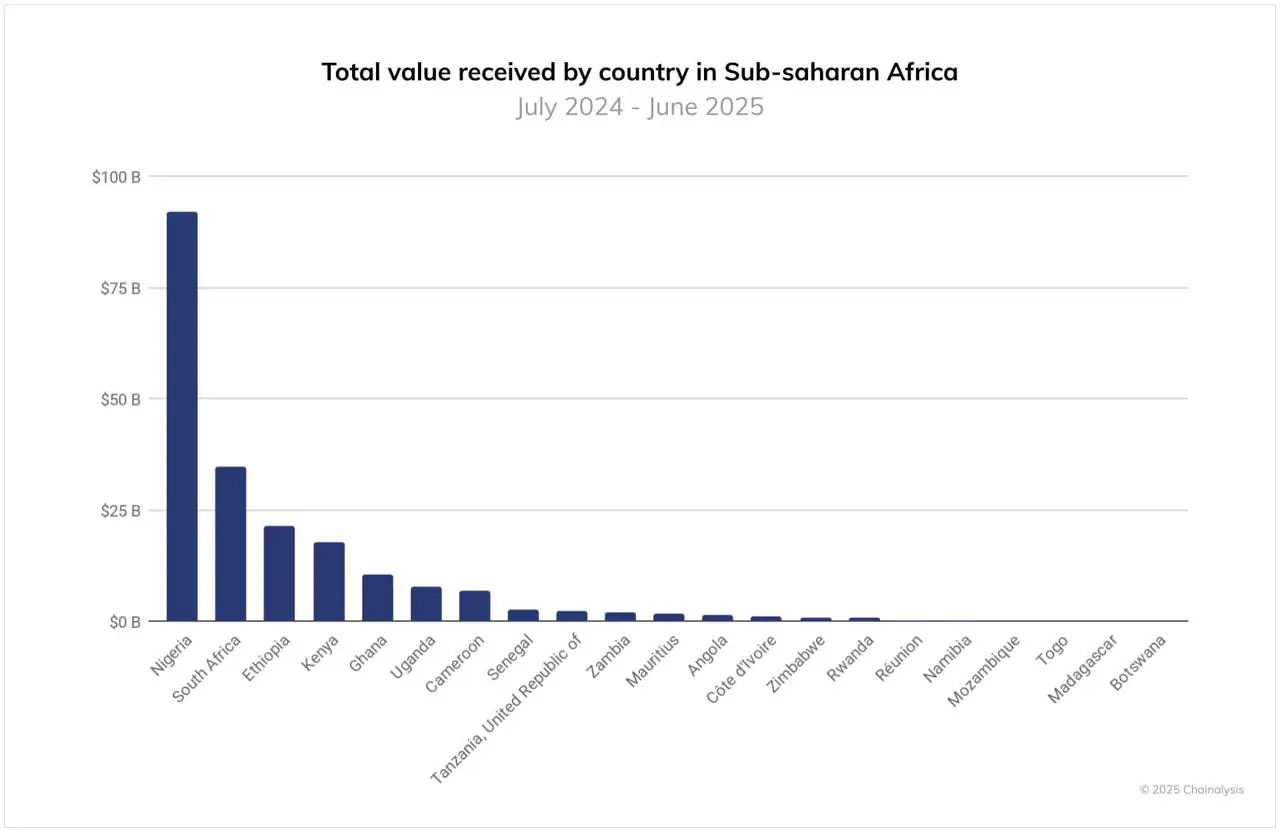
Bar chart of total value received by countries across ub-Saharan Africa.Source: Chainalysis Report

Inflationary pressures and tight access to US dollars have pushed both retail and businesses toward $BTC and $USDT, with stablecoins in particular acting as a lifeline for dollar exposure.

South Africa, meanwhile, is carving out a different kind of leadership. According to the Chainanalysis report, South Africa’s advanced regulatory framework has already licensed hundreds of virtual asset service providers, giving institutions the certainty to engage.

Local banks, including Absa, are now piloting custody solutions and even exploring stablecoin issuance on an institutional level, shifting from it being an experimental tool to a mainstream financial product.

Cross-border flows tell another part of the story. Multi-million dollar stablecoin transfers now facilitate trade between Africa, the Middle East, and Asia, with energy and merchant payments leading the way.

Taken together, the region is building adoption from both ends – retail users on one side, and institutional rails on the other.

Bitcoin’s Influential Role

Bitcoin remains the dominant entry point into crypto across sub-Saharan Africa. In Nigeria, 89% of fiat purchases go into $BTC, while in South Africa the figure stands at 74%. Both are far higher than the 51% share seen in $USD markets.
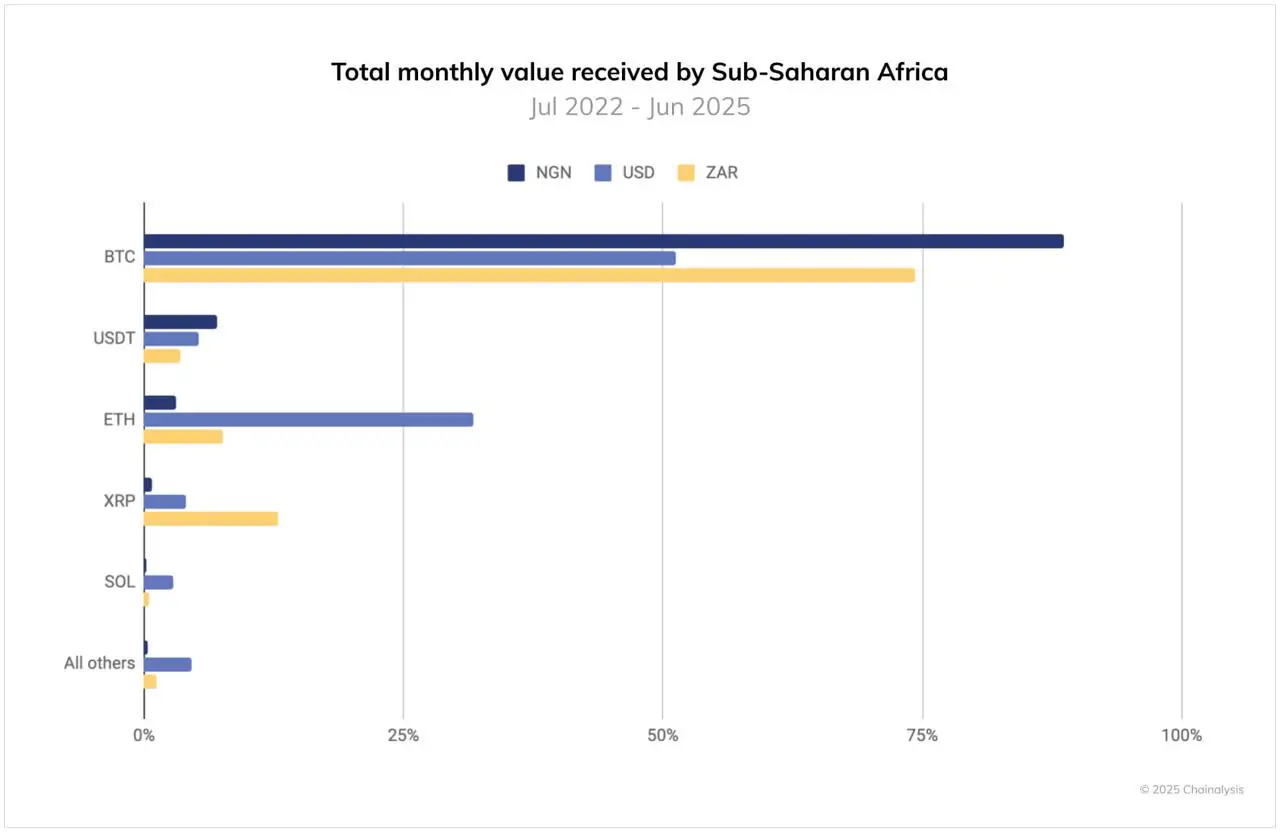
Bar chart of total value received by crypto assets in sub-Saharan Africa.Source: Chainalysis Report

The reasons are clear: in economies where inflation bites and dollar access is restricted, Bitcoin functions as both a hedge and a ‘digital dollar’ substitute. Stablecoins also play a key role, with $USDT making up 7% of purchases in Nigeria, compared to just 5% in US markets.

This dual purpose of Bitcoin being ‘digital gold’ and a practical financial tool underlines why adoption is so prevalent in the region. Yet $BTC’s biggest drawback remains speed and cost. That’s where scaling solutions like Bitcoin Hyper ($HYPER) aim to step in.

Bitcoin Hyper ($HYPER) – Bitcoin’s Execution Layer

Bitcoin Hyper ($HYPER) is positioning itself as an innovative Bitcoin Layer-2 ecosystem that integrates the Solana Virtual Machine.

The project aims to give Bitcoin what it has always lacked: speed, low fees, and real programmability. On Hyper, $BTC can be bridged in, transacted instantly at near-zero cost, and settled back to Bitcoin’s base chain with zero-knowledge proofs.
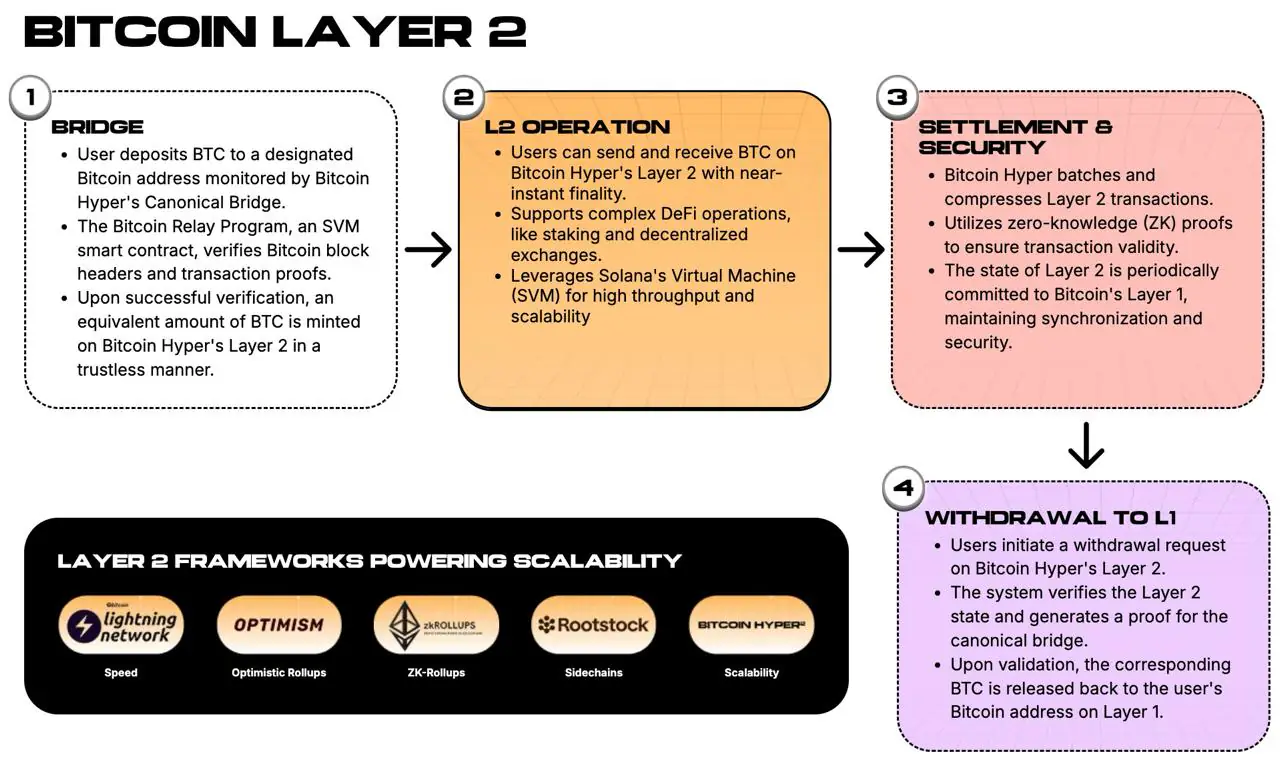
Bitcoin Hyper ($HYPER) Layer-2 framework for powering scalability.

It promises interoperability with Ethereum and Solana, making Bitcoin part of a broader multi-chain ecosystem. Bitcoin Hyper turns $BTC from static ‘digital gold’ into an execution layer where DeFi apps, meme coins, NFTs, and payments can actually run.

That unlocks the use cases already visible in sub-Saharan Africa (fast transfers, dollar substitutes, cross-border trade) but without today’s $BTC bottlenecks.

The $HYPER presale has gained a lot of investor attention, raising $15M+, with tokens priced at $0.012895 and staking yields hovering around 74% APY.

If Bitcoin is already functioning as money in places like Lagos and Cape Town, $HYPER could become the app store layered on top of it.

Remember, this article is not financial advice. Please do your own research before committing any capital.


This publication is sponsored. Coindoo does not endorse or assume responsibility for the content, accuracy, quality, advertising, products, or any other materials on this page. Readers are encouraged to conduct their own research before engaging in any cryptocurrency-related actions. Coindoo will not be liable, directly or indirectly, for any damages or losses resulting from the use of or reliance on any content, goods, or services mentioned. Always do your

The post Sub-Saharan Africa Named Third-Fastest Crypto Adoption in Report – Can $HYPER Ride the Wave? appeared first on Coindoo.

Market Opportunity
Hyperlane Logo
Hyperlane Price(HYPER)
$0.09538
$0.09538$0.09538
-2.45%
USD
Hyperlane (HYPER) Live Price Chart
Disclaimer: The articles reposted on this site are sourced from public platforms and are provided for informational purposes only. They do not necessarily reflect the views of MEXC. All rights remain with the original authors. If you believe any content infringes on third-party rights, please contact service@support.mexc.com for removal. MEXC makes no guarantees regarding the accuracy, completeness, or timeliness of the content and is not responsible for any actions taken based on the information provided. The content does not constitute financial, legal, or other professional advice, nor should it be considered a recommendation or endorsement by MEXC.

You May Also Like

Jerome Powell’s Press Conference: Crucial Insights Unveiled for the Market’s Future

Jerome Powell’s Press Conference: Crucial Insights Unveiled for the Market’s Future

BitcoinWorld Jerome Powell’s Press Conference: Crucial Insights Unveiled for the Market’s Future The financial world, including the dynamic cryptocurrency market, often hangs on every word from the Federal Reserve. Recently, Jerome Powell’s press conference following the Federal Open Market Committee (FOMC) meeting concluded, leaving investors and analysts dissecting his remarks for clues about the future economic direction. This event is always a pivotal moment, shaping expectations for inflation, interest rates, and the overall stability of global markets. What Were the Key Takeaways from Jerome Powell’s Press Conference? During Jerome Powell’s press conference, the Fed Chair provided an update on the central bank’s monetary policy decisions and its economic outlook. His statements often reiterate the Fed’s dual mandate: achieving maximum employment and stable prices. This time was no different, with a strong emphasis on managing persistent inflation. Key points from the recent discussion included: Inflation Control: Powell emphasized the Fed’s unwavering commitment to bringing inflation back down to its 2% target. He reiterated that the fight against rising prices remains the top priority, even if it entails some economic slowdown. Interest Rate Policy: While the Fed’s stance on future interest rate adjustments was discussed, the path remains data-dependent. Powell indicated that decisions would continue to be made meeting-by-meeting, based on incoming economic data. Economic Projections: The updated Summary of Economic Projections (SEP) offered insights into the Fed’s forecasts for GDP growth, unemployment, and inflation. These projections help market participants gauge the central bank’s expectations for the economy’s trajectory. Quantitative Tightening (QT): The ongoing process of reducing the Fed’s balance sheet, known as quantitative tightening, was also a topic. This reduction in liquidity in the financial system has broad implications for asset prices. How Did Jerome Powell’s Remarks Impact Cryptocurrency Markets? The conclusion of Jerome Powell’s press conference often sends ripples through traditional financial markets, and cryptocurrencies are increasingly sensitive to these macroeconomic shifts. Digital assets, once thought to be uncorrelated, now frequently react to the Fed’s monetary policy signals. Higher interest rates, for instance, tend to make riskier assets like cryptocurrencies less attractive. This is because investors might prefer safer, interest-bearing investments. Consequently, we often see increased volatility in Bitcoin (BTC) and Ethereum (ETH) prices immediately following such announcements. The tightening of financial conditions, driven by the Fed, reduces overall liquidity in the system, which can put downward pressure on asset valuations across the board. However, some argue that this growing correlation signifies crypto’s increasing integration into the broader financial ecosystem. It suggests that institutional investors and mainstream finance are now paying closer attention to digital assets, treating them more like other risk-on investments. Navigating the Economic Landscape After Jerome Powell’s Press Conference For cryptocurrency investors, understanding the implications of Jerome Powell’s press conference is crucial for making informed decisions. The Fed’s policy trajectory directly influences the availability of capital and investor sentiment, which are key drivers for crypto valuations. Here are some actionable insights for navigating this environment: Stay Informed: Regularly monitor Fed announcements and economic data releases. Understanding the macroeconomic backdrop is as important as analyzing individual crypto projects. Assess Risk Tolerance: In periods of economic uncertainty and tighter monetary policy, a reassessment of personal risk tolerance is wise. Diversification within your crypto portfolio and across different asset classes can mitigate potential downsides. Focus on Fundamentals: While market sentiment can be swayed by macro news, projects with strong fundamentals, clear use cases, and robust development teams tend to perform better in the long run. Long-Term Perspective: Cryptocurrency markets are known for their volatility. Adopting a long-term investment horizon can help weather short-term fluctuations driven by macro events like Fed meetings. The challenges include potential continued volatility and reduced liquidity. However, opportunities may arise from market corrections, allowing strategic investors to accumulate assets at lower prices. In summary, Jerome Powell’s press conference provides essential guidance on the Fed’s economic strategy. Its conclusions have a profound impact on financial markets, including the dynamic world of cryptocurrencies. Staying informed, understanding the nuances of monetary policy, and maintaining a strategic investment approach are paramount for navigating the evolving economic landscape. The Fed’s actions underscore the interconnectedness of traditional finance and the burgeoning digital asset space. Frequently Asked Questions (FAQs) Q1: What is the Federal Open Market Committee (FOMC)? A1: The FOMC is the monetary policy-making body of the Federal Reserve System. It sets the federal funds rate target and directs open market operations, influencing the availability of money and credit in the U.S. economy. Q2: How do the Fed’s interest rate decisions typically affect cryptocurrency markets? A2: Generally, when the Fed raises interest rates, it makes borrowing more expensive and reduces liquidity in the financial system. This often leads investors to shy away from riskier assets like cryptocurrencies, potentially causing prices to decline. Conversely, lower rates can stimulate investment in riskier assets. Q3: What does “data-dependent” mean in the context of Fed policy? A3: “Data-dependent” means that the Federal Reserve’s future monetary policy decisions, such as interest rate adjustments, will primarily be based on the latest economic data. This includes inflation reports, employment figures, and GDP growth, rather than a predetermined schedule. Q4: Should I change my cryptocurrency investment strategy based on Jerome Powell’s press conference? A4: While it’s crucial to be aware of the macroeconomic environment shaped by Jerome Powell’s press conference, drastic changes to a well-researched investment strategy may not always be necessary. It’s recommended to review your portfolio, assess your risk tolerance, and consider if your strategy aligns with the current economic outlook, focusing on long-term fundamentals. If you found this analysis helpful, please consider sharing it with your network! Your insights and shares help us reach more readers interested in the intersection of traditional finance and the exciting world of cryptocurrencies. Spread the word! To learn more about the latest crypto market trends, explore our article on key developments shaping Bitcoin price action. This post Jerome Powell’s Press Conference: Crucial Insights Unveiled for the Market’s Future first appeared on BitcoinWorld.
Share
Coinstats2025/09/18 16:25
Shiba Inu Price Forecast for Feb 9: Here’s Key Overhead Resistance for Any Move Upwards

Shiba Inu Price Forecast for Feb 9: Here’s Key Overhead Resistance for Any Move Upwards

Shiba Inu remains under pressure as resistance cap rebounds, while falling open interest and weak momentum continue to limit upside potential. The Shiba Inu (SHIB
Share
Coinstats2026/02/09 18:10
Australian regulators ease regulations on stablecoin intermediaries

Australian regulators ease regulations on stablecoin intermediaries

PANews reported on September 18th that, according to Decrypt, the Australian Securities and Investments Commission (ASIC) has granted a regulatory exemption to stablecoin intermediaries, allowing them to distribute cryptocurrencies issued by licensed Australian institutions without having to hold a separate financial services license. The exemption, published Thursday, states that intermediaries distributing stablecoins issued by Australian Financial Services (AFS) licensed issuers no longer need to apply for separate AFS, market, or clearing facility licenses. This measure, effective upon registration of federal legislation, is a significant step forward in addressing Australia's regulatory challenges in the stablecoin market. Blockchain APAC CEO Steve Vallas stated that this move is a temporary transition before broader reforms and is consistent with financial services law. The exemption does not change the determination of whether stablecoins are financial products, but simply "suspends the secondary licensing requirement for distributors of licensed issuers," allowing distribution through licensed channels while maintaining issuer liability and requiring intermediaries to provide product disclosure statements to ensure transparency.
Share
PANews2025/09/18 13:25
