

Exclusive interview with Binance CMO Rachel: Uncovering Binance’s global marketing strategy, proactive localization and emotional connection
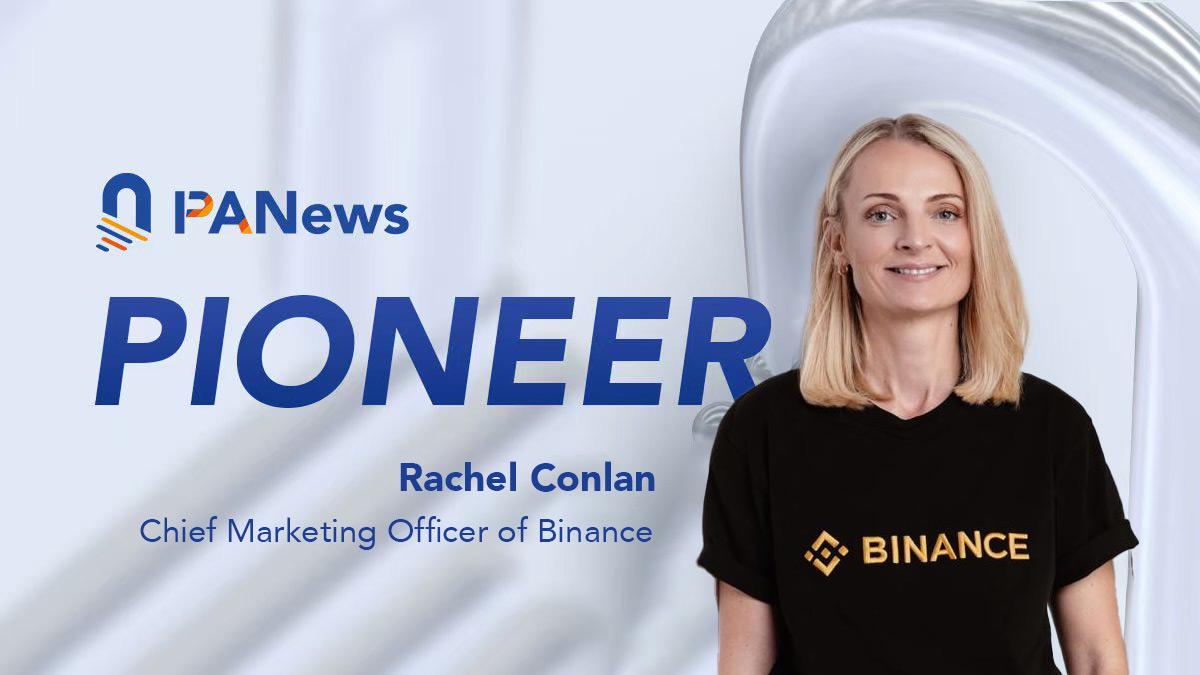
Author: Weilin, PANews
Emily from Shanghai did not expect that as a user, she could take a photo with the founder of Binance, which has a market value of more than 90 billion US dollars. This scene took place at Binance's Blockchain Week in Dubai, which attracted users, partners, and practitioners from all over the world. Binance's founder and former CEO CZ unexpectedly appeared at the scene for a half-hour sharing, and applause and laughter broke out from the audience from time to time. Afterwards, everyone lined up to take photos with CZ, and He Yi, another co-founder of Binance, also became a "human check-in point" at the venue, and participants took photos with her one after another.
This allowed her, who used to work in traditional finance, to feel the vitality and cohesion of the crypto community up close. If she had worked in the traditional financial field where everyone was dressed in suits and ties, it would have been hard to imagine that ordinary users would have the opportunity to gather together, listen to founders and executives share their experiences, or even communicate and take photos with them at close range off the stage.
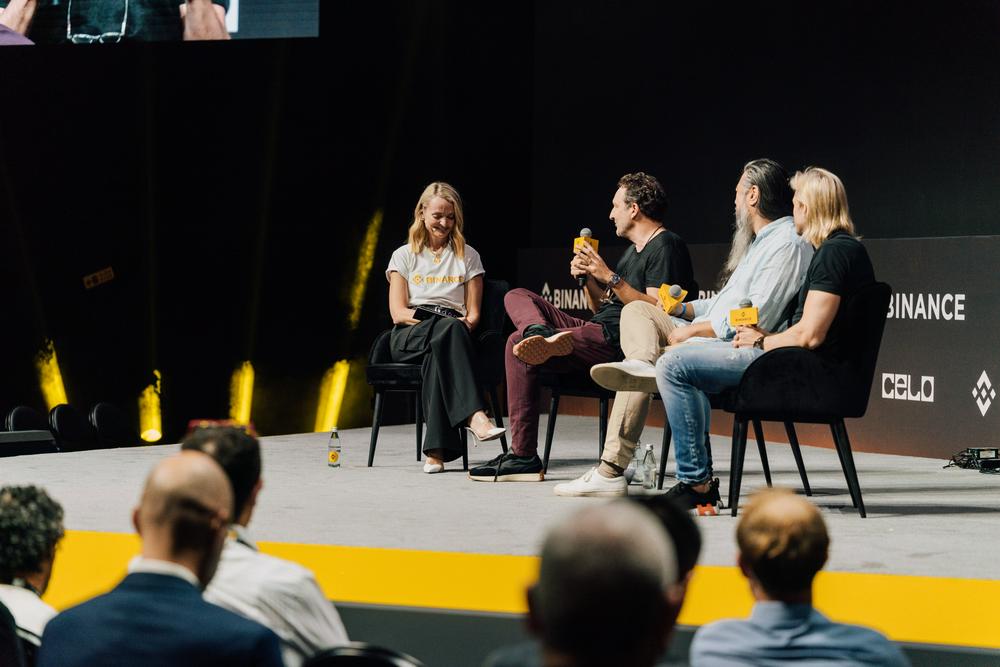
At Binance Blockchain Week in Dubai from October 30 to October 31, Binance, the world's largest cryptocurrency exchange, presented not only a financial event in the Web3 field, but also a carnival of the cryptocurrency industry. As Binance's Chief Marketing Officer (CMO), Rachel Conlan was the overall person in charge of this event.
CMO was He Yi's position when he joined Binance in August 2017, and now Rachel Conlan has taken over He Yi's position for nearly a year and a half. In a period when Binance is facing unprecedented challenges, she led the team to help and witness Binance's steady growth. According to the latest data, as of the end of October this year, the number of Binance users worldwide has approached 240 million, and this cryptocurrency exchange is leading the global crypto market with the largest market share.
PANews exclusively interviewed Rachel Conlan in Dubai, trying to reveal Binance's marketing focus, brand promotion strategy and KPI. She said that Binance executives including CEO Richard Teng and He Yi would hold meetings every night to maintain agile communication, and she also admitted, "This is the most exciting and challenging job I have ever done."
From the traditional marketing industry to the crypto field, emotional connection with users is always the core
Before joining Binance in June 2023, Rachel had 15 years of marketing experience. Talking about her transition from traditional marketing to the crypto industry, she said that she has always been attracted to fast-growing businesses and technology companies. The marketing basics she learned while working at well-known advertising companies such as Havas enabled her to have agile decision-making capabilities in dealing with the strict requirements of her clients. "This experience taught me the importance of speed and scale, which allows me to make decisions in real time without hesitation. I am good at digesting large amounts of information and distilling it into the actions we need to take." This ability allows her to adapt quickly and be effective in a real-time data-driven environment like Binance.
When talking about the uniqueness of the crypto industry, Rachel pointed out that her experience working in the sports and entertainment industry at Creative Artist Agency helped her realize that marketing is not only about functional presentation, but also about the art of establishing emotional connections . This is also applied in Binance's marketing, and she emphasized: "This is also what I am proud to think of as the core part of Binance. We are not just a functional product, we have an emotional connection with our users."
The fast pace of the crypto space makes her feel both excited and challenged. She mentioned that she now spends several hours on social platforms every day, and her husband even complains that she always holds her phone, but she said it is work and she feels like she is part of it. Because this is where she understands the big trends in the market, "helping us grasp these trends and know what we should do."
Binance's global market expansion: an important strategy is "localized marketing"
In the past seven years, it took Binance five years to reach 100 million users, and then another two years to break through the 200 million user mark. Currently, Binance's global registered user base is close to 240 million. Rachel pointed out that Binance's user growth has been a long process. Such a growth rate makes Binance likely to become the world's first crypto trading platform to reach 1 billion users. She believes that "Binance is moving forward as planned and hopes to successfully reach the 1 billion user goal set for me as a marketer. That will be a key node for the entire industry to move from niche to mainstream."
To achieve this goal, one of Binance's core strategies is localized marketing. Rachel explained: "We operate in more than 100 countries and have a diverse user base, including OGs, newbies, long-term holders, traditional users, and institutional users. We always maintain a global vision while taking localized actions and adjusting our marketing plans to better attract users in different regions, such as the Asian market, Mandarin-speaking regions, Japanese users, and Vietnamese users. This is an important part of our work."
In addition, Binance focuses on cooperation in the fields of sports and entertainment that are relevant to local users, holds events related to the local community, and ensures that different content is set for different types of individuals in large-scale events such as Binance Blockchain.
During Binance Blockchain Week, Binance invited as many as 350 KOLs. "We strive to ensure that we cover KOLs of all sizes, from top KOLs to very important (audience size) smaller KOLs, in order to connect different audience groups. We are also constantly paying attention to emerging KOLs and inviting them to join our community."
At Binance Blockchain Week, Rachel hosted the Binance Square Creator Awards. There are currently about 800,000 creators on the platform. "We gave awards to 12 of them. While everyone is a winner, these 12 stood out in the community and were voted in. In addition, we also hold smaller or more intimate events, and have a lot of meetings with leadership teams and KOLs, trying to understand the feedback they receive and where we can improve as an industry and a company."
A Deep Dive into Binance’s Marketing KPIs: Brand Growth, User Growth, and Operational Efficiency
What is the KPI of the marketing team of the world's largest cryptocurrency exchange? Is it the price of BNB or the number of users?
Rachel introduced that Binance's marketing team has three core KPI assessment indicators: the first is brand growth - that is, social exposure and community interaction. This is similar to a media platform, ensuring that it has enough voice share in the industry to maintain its leadership.
The second is to focus on user growth, transaction volume, cross-product usage, and how to help users use the platform more deeply. Data-driven management in this area makes Rachel not only a marketer, but also a promoter of business growth. She said that the decisions made by the team are all based on data, although it is not entirely about ROI and KPI, but more importantly, getting better.
Finally, Rachel’s team focuses on operational efficiency. As the Binance marketing team has grown from 5 people to 235 people, it is critical to ensure operational effectiveness and efficiency, especially when operating globally and in multiple languages.
Rachel talked about Binance’s recent collaborations with well-known figures and brands such as Cristiano Ronaldo (C Ronaldo), The Weeknd, and the Alpine F1 team, noting that these collaborations not only increased brand exposure, but also introduced new user groups to the crypto industry. She mentioned that these collaborations helped Binance reach more non-crypto native users.
“These marketing campaigns are very effective in introducing cryptocurrencies to new audiences. As a result, they can increase awareness and change the public’s perception of the industry. Because as you know, there are many misconceptions and prejudices about cryptocurrencies, and we are constantly working to counter these views. For Ronaldo, Web3 technology and blockchain enable him to connect directly with his audience in a whole new way as he considers the next step in his career.”
Rachel said that as one of the largest trading platforms in the crypto industry, she and her team do not want to communicate with only the same group of users. "We know that the cryptocurrency community is a core group, but we need to attract more other users to join without excluding those core users. So, using strategies such as sports and entertainment is part of our strategy."
Facing market and market share volatility: Flexibly adjust to ensure the message delivered is balanced
From a global perspective, what is Binance's market share in different markets? Which market is growing the fastest? Rachel said, I think the most exciting market is Asia, which is very mature. The Asian market has always been an early adopter of technology. Asian consumers are young, digitally savvy, at the forefront of trends, and have embraced the crypto industry.
Similarly, the Middle East and North Africa (MENA) region also has great potential, especially the UAE market. The penetration rate of cryptocurrency is close to 20% to 25%. "They see it as part of a diversified financial strategy. So I am very optimistic about both regions. But each region has its own characteristics, such as LATAM, which is also showing its appeal in different ways. Each region requires different education, interaction and content strategies to promote it."
In the competitive environment of centralized exchanges (CEX), Binance is the market leader. Nevertheless, its market share advantage will fluctuate to a certain extent. Rachel said that volatility is an attribute of any financial business, not just cryptocurrencies. Therefore, we have developed a core strategy to focus on education and ensure that content is always provided. During volatile periods, different types of content will be provided to help people deal with volatility, which may trigger FOMO or fear. "We try our best to help traders and users maintain a balanced and focused mindset. This is an important part of our content strategy."
Rachel believes that Binance will avoid the gold rush. “We try to be neutral in providing information and really focus on education. Because at the end of the day, Binance is an exchange with many great tokens and listed projects, and we have to make sure that the information we deliver is balanced.”
Responding to global regulatory challenges: Headwinds are the norm, and Binance is still a "newborn"
Last year, Binance reached a settlement with the U.S. Securities and Exchange Commission (SEC), which attracted widespread attention from the market. Now, Binance has begun a new chapter under the leadership of a new CEO. Against the backdrop of the ever-changing global crypto regulatory policies, Rachel emphasized Binance’s rigorous attitude towards compliance.
Rachel and Binance CEO Richard Teng, co-founder He Yi and other executives have a flat structure and "always stay active" in their daily collaboration. Rachel said that they stand on the shoulders of the giants who created Binance. "We communicate multiple times a day and have meetings every night to discuss important issues of the day for immediate processing. This is a very collaborative, always-online approach that does not require cumbersome reporting processes like traditional companies. Our processes are very streamlined and efficient, forming a culture of reporting problems as soon as they are encountered, and a culture of proposing solutions in real time and seizing opportunities quickly. This agility will help us maintain our position as the industry's number one."
In her opinion, headwinds are the norm in this industry. Binance has just been established for 7 years and is still a "newborn" in the entire industry landscape. "But we always see these bottlenecks as opportunities to improve ourselves. We realize that compliance is crucial to ensuring a safe and reliable user environment. Therefore, as a leadership team and various business units of Binance, we actively embrace compliance and are committed to ensuring that our marketing methods do not confuse users and convey clear information. This is all for the users. Despite the difficult times and ups and downs in the past 18 months, we have become stronger and better. This is also the charm of blockchain-bad actors will be discovered faster and scams will be exposed faster. Therefore, we have invested a lot of resources in infrastructure and supporting law enforcement."
As global regulation of cryptocurrencies continues to evolve, Rachel has proposed specific approaches from a marketing perspective. She said that the information she sends to the market will be reviewed by the legal department, who will confirm that the information is accurate and will not cause problems or mislead users. "So we are very strict in this regard, but we will adjust it according to the market we are in. This is why I work closely with our legal and compliance teams. I have worked in three regulated industries: banking clients, the pharmaceutical industry, and highly regulated alcohol marketing, so I understand the importance of developing these norms and governance measures to ensure the safety of our team and users, but we will adjust it according to market needs."
Industry future: Integration of Web 2.0 brands and expectations for popularization of encrypted payments
Talking about the future of the industry and hot trends, Rachel expressed great interest in Web 2.0 brands re-entering the blockchain and crypto industry.
“We saw this trend 24, 36 months ago, especially in the last bull run,” she said. “LVMH, for example, was at the forefront of how to use blockchain to verify product authenticity, use blockchain to enable seamless payments, and this really provides an opportunity to drive the efficiencies that I mentioned earlier. So Web 2.0 partnerships and alliances are going to be critical.”
In addition, she is also looking forward to the popularization of crypto payments in daily life, hoping that crypto payments can be as convenient and popular as MasterCard and Visa cards, so as to achieve the real popularization of cryptocurrencies. "What I look forward to most is that cryptocurrencies can become part of everyday society and integrate into the daily life of society. Just like we use MasterCard, Visa or Apple Pay now, in the future you can use these payment methods just like cryptocurrency payments and Binance Pay. I think that until we achieve this, we can really show the full utility and benefits of cryptocurrencies to ordinary users. For example, for me, my father, and my grandmother, they need to be able to quickly access their financial assets. I think this is crucial."
Rachel said she hopes to see some progress announcements by the end of 2025 to help us achieve this goal.


You May Also Like

Metaplanet buys 5,075 Bitcoin in Q1 to become 3rd-largest treasury

FBI: Crypto Fraud Reaches $11 Billion




