A unit of Ant Group is reportedly tying more than 60b yuan, or about $8.4b, of energy infrastructure and power assets to its blockchain, marking one of the most ambitious real-world applications of digital ledgers in China. Bloomberg reported Tuesday that Ant Digital Technologies, the enterprise arm of the Jack Ma-backed fintech giant, has linked more than 15m devices such as wind turbines and solar panels to its AntChain platform. The system records power output and monitors outages, creating an immutable stream of data from the grid. The company has already taken steps beyond tracking. It has issued tokens tied to some of those assets and used them to raise capital. Financing worth about 300m yuan ($42m) has been secured for three clean energy projects through the new structure. By cutting traditional financial intermediaries out of the process, companies can use tokenization to raise money more efficiently. Instead of going through loan officers and underwriters, project operators can offer digital tokens directly to investors that represent fractional ownership or revenue rights. Ant Digital Channels 300M Yuan Into Renewables Through Tokenized Assets Ant Digital has tested this model with offshore investors. In August last year, it helped Longshine Technology Group, a Shenzhen-listed energy firm, raise 100m yuan. More than 9,000 of the company’s charging units were linked to AntChain. A few months later, it arranged over 200m yuan in funding for GCL Energy Technology by connecting its photovoltaic assets to the blockchain. In total, Ant Digital has already tied over 60b yuan of energy-related assets to AntChain, giving the initiative a scale that stands out in the global tokenization push. Executives are now weighing whether to extend the approach to offshore exchanges to create liquidity for the tokens, Bloomberg said. The plans remain tentative and depend heavily on regulatory clearance. Global Tokenization Still Nascent But Momentum Builds Tokenization of energy assets is still in its early days globally. Yet interest has been growing as regulators in markets such as the US and Europe have introduced clearer frameworks for digital assets, while blockchains like Ethereum and Polygon have matured enough to support automated compliance. Other companies are experimenting in parallel. Securitize has brought equities and bonds onto blockchain rails, Ondo Finance and BlackRock’s BUIDL product are focusing on tokenized Treasuries, and RealT and Lofty are offering fractional real estate. These developments suggest a broader shift toward digitizing real-world assets, with Ant’s push adding energy infrastructure to the mix. Ant Reinvents Itself Through Cross-Border Financial Services For Ant, blockchain has become a cornerstone of its international strategy. The firm is best known for running Alipay, but since Beijing halted its record IPO in 2020 and curtailed its online lending business, it has shifted focus to cross-border payments and enterprise services. As of June, the company was exploring stablecoin licenses in hubs such as Singapore and Hong Kong. Its Whale blockchain already processes a share of the more than $1 trillion that Ant’s global payments platform handled last year. The pivot shows how Ant is trying to reinvent itself after regulatory setbacks at home. By linking clean energy projects to its blockchain, the company is betting that tokenization can draw in new investors and accelerate the flow of capital into infrastructure. Turning energy output into tradable digital assets could open financing channels that were once reserved for large institutions, widening access at a time when China is racing to expand its renewable power capacityA unit of Ant Group is reportedly tying more than 60b yuan, or about $8.4b, of energy infrastructure and power assets to its blockchain, marking one of the most ambitious real-world applications of digital ledgers in China. Bloomberg reported Tuesday that Ant Digital Technologies, the enterprise arm of the Jack Ma-backed fintech giant, has linked more than 15m devices such as wind turbines and solar panels to its AntChain platform. The system records power output and monitors outages, creating an immutable stream of data from the grid. The company has already taken steps beyond tracking. It has issued tokens tied to some of those assets and used them to raise capital. Financing worth about 300m yuan ($42m) has been secured for three clean energy projects through the new structure. By cutting traditional financial intermediaries out of the process, companies can use tokenization to raise money more efficiently. Instead of going through loan officers and underwriters, project operators can offer digital tokens directly to investors that represent fractional ownership or revenue rights. Ant Digital Channels 300M Yuan Into Renewables Through Tokenized Assets Ant Digital has tested this model with offshore investors. In August last year, it helped Longshine Technology Group, a Shenzhen-listed energy firm, raise 100m yuan. More than 9,000 of the company’s charging units were linked to AntChain. A few months later, it arranged over 200m yuan in funding for GCL Energy Technology by connecting its photovoltaic assets to the blockchain. In total, Ant Digital has already tied over 60b yuan of energy-related assets to AntChain, giving the initiative a scale that stands out in the global tokenization push. Executives are now weighing whether to extend the approach to offshore exchanges to create liquidity for the tokens, Bloomberg said. The plans remain tentative and depend heavily on regulatory clearance. Global Tokenization Still Nascent But Momentum Builds Tokenization of energy assets is still in its early days globally. Yet interest has been growing as regulators in markets such as the US and Europe have introduced clearer frameworks for digital assets, while blockchains like Ethereum and Polygon have matured enough to support automated compliance. Other companies are experimenting in parallel. Securitize has brought equities and bonds onto blockchain rails, Ondo Finance and BlackRock’s BUIDL product are focusing on tokenized Treasuries, and RealT and Lofty are offering fractional real estate. These developments suggest a broader shift toward digitizing real-world assets, with Ant’s push adding energy infrastructure to the mix. Ant Reinvents Itself Through Cross-Border Financial Services For Ant, blockchain has become a cornerstone of its international strategy. The firm is best known for running Alipay, but since Beijing halted its record IPO in 2020 and curtailed its online lending business, it has shifted focus to cross-border payments and enterprise services. As of June, the company was exploring stablecoin licenses in hubs such as Singapore and Hong Kong. Its Whale blockchain already processes a share of the more than $1 trillion that Ant’s global payments platform handled last year. The pivot shows how Ant is trying to reinvent itself after regulatory setbacks at home. By linking clean energy projects to its blockchain, the company is betting that tokenization can draw in new investors and accelerate the flow of capital into infrastructure. Turning energy output into tradable digital assets could open financing channels that were once reserved for large institutions, widening access at a time when China is racing to expand its renewable power capacity

Jack Ma–Backed Ant Group Unit Leverages Blockchain for $8B Energy Asset Overhaul

3 min read

A unit of Ant Group is reportedly tying more than 60b yuan, or about $8.4b, of energy infrastructure and power assets to its blockchain, marking one of the most ambitious real-world applications of digital ledgers in China.

Bloomberg reported Tuesday that Ant Digital Technologies, the enterprise arm of the Jack Ma-backed fintech giant, has linked more than 15m devices such as wind turbines and solar panels to its AntChain platform. The system records power output and monitors outages, creating an immutable stream of data from the grid.

The company has already taken steps beyond tracking. It has issued tokens tied to some of those assets and used them to raise capital. Financing worth about 300m yuan ($42m) has been secured for three clean energy projects through the new structure.

By cutting traditional financial intermediaries out of the process, companies can use tokenization to raise money more efficiently. Instead of going through loan officers and underwriters, project operators can offer digital tokens directly to investors that represent fractional ownership or revenue rights.

Ant Digital Channels 300M Yuan Into Renewables Through Tokenized Assets

Ant Digital has tested this model with offshore investors. In August last year, it helped Longshine Technology Group, a Shenzhen-listed energy firm, raise 100m yuan.

More than 9,000 of the company’s charging units were linked to AntChain. A few months later, it arranged over 200m yuan in funding for GCL Energy Technology by connecting its photovoltaic assets to the blockchain.

In total, Ant Digital has already tied over 60b yuan of energy-related assets to AntChain, giving the initiative a scale that stands out in the global tokenization push.

Executives are now weighing whether to extend the approach to offshore exchanges to create liquidity for the tokens, Bloomberg said. The plans remain tentative and depend heavily on regulatory clearance.

Global Tokenization Still Nascent But Momentum Builds

Tokenization of energy assets is still in its early days globally. Yet interest has been growing as regulators in markets such as the US and Europe have introduced clearer frameworks for digital assets, while blockchains like Ethereum and Polygon have matured enough to support automated compliance.

Other companies are experimenting in parallel. Securitize has brought equities and bonds onto blockchain rails, Ondo Finance and BlackRock’s BUIDL product are focusing on tokenized Treasuries, and RealT and Lofty are offering fractional real estate.

These developments suggest a broader shift toward digitizing real-world assets, with Ant’s push adding energy infrastructure to the mix.

Ant Reinvents Itself Through Cross-Border Financial Services

For Ant, blockchain has become a cornerstone of its international strategy. The firm is best known for running Alipay, but since Beijing halted its record IPO in 2020 and curtailed its online lending business, it has shifted focus to cross-border payments and enterprise services.

As of June, the company was exploring stablecoin licenses in hubs such as Singapore and Hong Kong. Its Whale blockchain already processes a share of the more than $1 trillion that Ant’s global payments platform handled last year.

The pivot shows how Ant is trying to reinvent itself after regulatory setbacks at home. By linking clean energy projects to its blockchain, the company is betting that tokenization can draw in new investors and accelerate the flow of capital into infrastructure.

Turning energy output into tradable digital assets could open financing channels that were once reserved for large institutions, widening access at a time when China is racing to expand its renewable power capacity.

Market Opportunity
Mind-AI Logo
Mind-AI Price(MA)
$0.0001525
$0.0001525$0.0001525
-4.68%
USD
Mind-AI (MA) Live Price Chart
Disclaimer: The articles reposted on this site are sourced from public platforms and are provided for informational purposes only. They do not necessarily reflect the views of MEXC. All rights remain with the original authors. If you believe any content infringes on third-party rights, please contact service@support.mexc.com for removal. MEXC makes no guarantees regarding the accuracy, completeness, or timeliness of the content and is not responsible for any actions taken based on the information provided. The content does not constitute financial, legal, or other professional advice, nor should it be considered a recommendation or endorsement by MEXC.

You May Also Like

The Next Bitcoin Story Of 2025

The Next Bitcoin Story Of 2025

The post The Next Bitcoin Story Of 2025 appeared on BitcoinEthereumNews.com. Crypto News 18 September 2025 | 07:39 Bitcoin’s rise from obscure concept to a global asset is the playbook every serious investor pores over, and it still isn’t done writing; Bitcoin now trades above $115,000, a reminder that the life-changing runs begin before most people are even looking. T The question hanging over this cycle is simple: can a new contender compress that arc, faster, cleaner, earlier, while the window is still open for those willing to move first? Coins still on presales are the ones can repeat this story, and among those coins, an Ethereum based meme coin catches most of the attention, as it’s team look determined to make an impact in today’s market, fusing culture with working tools, with a design built to reward early movers rather than late chasers. If you’re hunting the next asymmetric shot, this is where momentum and mechanics meet, which is why many traders quietly tag this exact meme coin as the best crypto to buy now in a crowded market. Before we dive deeper, take a quick rewind through the case study every crypto desk knows by heart: how Bitcoin went from about $0.0025 to above $100,000, and turned a niche experiment into the story that still sets the bar for everything that follows. Bitcoin 2010-2025 Price History Back to first principles: a strange internet money appears in 2010 and then, step by step, rewires the entire market, Bitcoin’s arc from about $0.0025 to above $100,000 is the case study every desk still cites because it proves one coin can move the entire game. In 2009 almost no one guessed the destination; launched on January 3, 2009, Bitcoin picked up a price signal in 2010 when the pizza trade valued BTC near $0,0025 while early exchange quotes lived at fractions of…
Share
BitcoinEthereumNews2025/09/18 12:41
Strategy Defines Its Bitcoin Stress Point After Q4 Volatility
Strategy Defines Its Bitcoin Stress Point After Q4 Volatility

During Strategy’s Q4 2025 earnings call on February 5, management addressed concerns around a $17.4 billion unrealized Bitcoin loss by reframing risk around time
Share
Ethnews2026/02/06 16:16
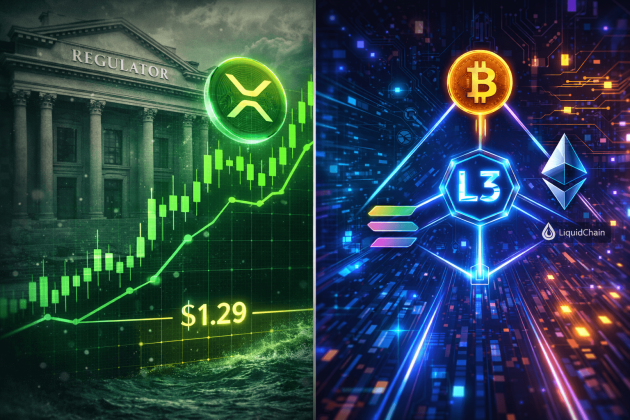
XRP Retests $1.29 Support: Is $2 Still in Play or Will LiquidChain Capture the Momentum?

XRP Retests $1.29 Support: Is $2 Still in Play or Will LiquidChain Capture the Momentum?

Quick Facts: ➡️ XRP’s dip to $1.29 is a technical retest of support; holding here is key for a potential run toward $2.00. ➡️ Regulatory clarity (post-SEC changes
Share
Bitcoinist2026/02/06 16:33