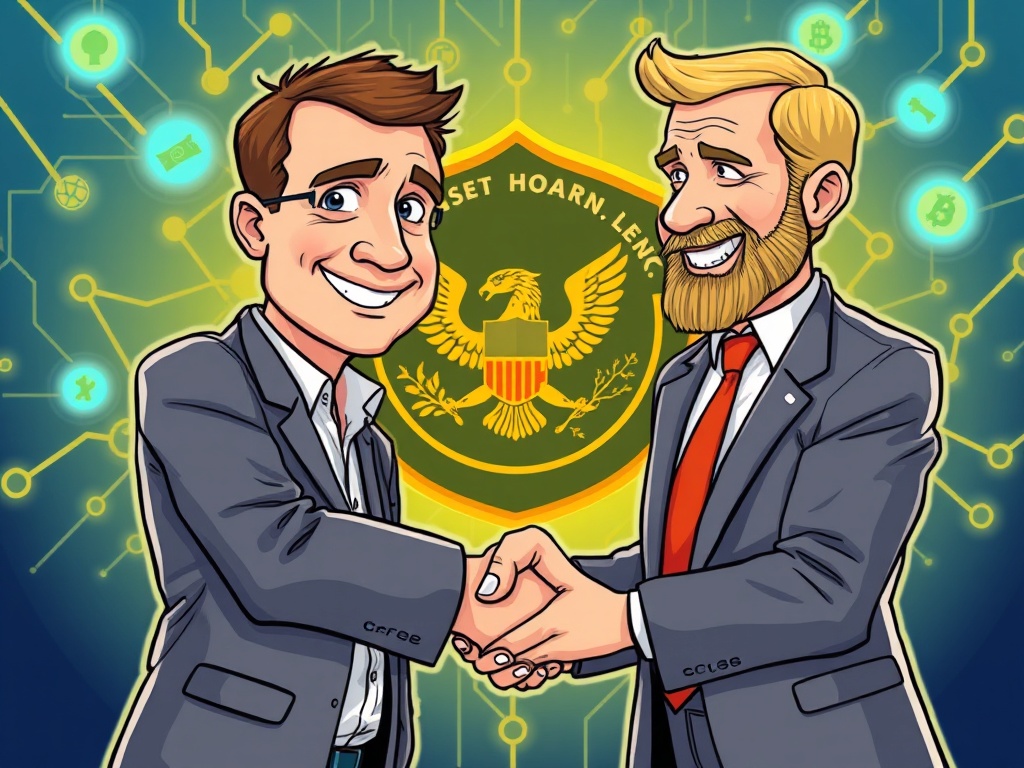
BitcoinWorld Asset Tokenization: SEC’s Astounding Interest Revealed by Chainlink Founder The world of finance is buzzing with a groundbreaking development: asset tokenization. This innovative process, which converts rights to an asset into a digital token on a blockchain, is now catching the serious attention of top U.S. regulators. Recently, Chainlink founder Sergey Nazarov revealed a fascinating insight from his meeting with the U.S. Securities and Exchange Commission (SEC), suggesting a significant shift in how authorities view digital assets. What’s Driving the SEC’s Interest in Asset Tokenization? During a recent interview with CoinDesk, Sergey Nazarov shared details of his meeting with the SEC. He specifically highlighted SEC Chairman Paul Atkins’ profound interest in asset tokenization. This wasn’t just a casual inquiry; Chairman Atkins was keen to understand how on-chain assets can be built and operated while fully complying with existing securities laws. This focus indicates a proactive approach rather than a dismissive one. Nazarov expressed his admiration for the agency head’s commitment. Chairman Atkins, he noted, is dedicated to ensuring both market stability and efficiency. This pursuit is distinct from the broader debate about whether the U.S. should even permit blockchain tokenization in its financial system. It suggests a move towards understanding and integrating, rather than simply rejecting, the technology. Adding to this, Nazarov also mentioned a separate meeting with a White House crypto official. Both the SEC and the White House, it appears, are advancing their policy on asset tokenization at an impressive pace. This synchronized interest from key government bodies signals a potential acceleration in regulatory frameworks for digital assets. Why is Asset Tokenization Gaining Momentum? Asset tokenization offers a host of benefits that are difficult for traditional finance to ignore. By representing real-world assets as digital tokens on a blockchain, it introduces unprecedented levels of efficiency, liquidity, and transparency into markets. Here are some key advantages: Increased Liquidity: Tokenizing illiquid assets like real estate or fine art makes them divisible and tradable 24/7, opening them up to a wider pool of investors. Enhanced Transparency: Blockchain’s immutable ledger provides a clear, verifiable record of ownership and transactions, reducing fraud and increasing trust. Reduced Costs: Automation through smart contracts can significantly cut down on intermediaries, paperwork, and processing times associated with traditional asset transfers. Fractional Ownership: High-value assets can be divided into smaller, affordable units, making investment opportunities more accessible to retail investors. Consider examples like tokenized real estate, where investors can own a fraction of a property, or digital representations of company shares, allowing for faster and more secure trading. These innovations are reshaping how we perceive and interact with value. What Are the Challenges and Regulatory Hurdles for Asset Tokenization? While the potential of asset tokenization is vast, it is not without its complexities, particularly concerning regulation. The core challenge lies in fitting these new digital instruments into existing legal frameworks, especially securities laws. Regulators, like the SEC, are grappling with: Classification Issues: Determining whether a token represents a security, a commodity, or another asset class has significant legal implications. Jurisdictional Ambiguity: Blockchain’s global nature makes it challenging to apply national laws consistently, leading to potential conflicts. Investor Protection: Ensuring that investors in tokenized assets are adequately protected from fraud, market manipulation, and other risks. Technological Integration: The need for robust and secure infrastructure to support tokenization platforms and prevent cyber threats. The dialogue between industry leaders like Nazarov and regulatory bodies is crucial. It helps bridge the gap between technological innovation and the need for a stable, compliant financial system. This collaborative approach is essential for building a robust and secure future for digital assets. What Does This Mean for the Future of Asset Tokenization? The rapid advancement in policy discussions by both the SEC and the White House regarding asset tokenization suggests a future where digital assets play a more integrated role in the mainstream financial system. This isn’t just about crypto; it’s about the fundamental transformation of how value is represented, transferred, and owned. Key takeaways for the industry and investors: Increased Clarity: Expect clearer guidelines and regulatory frameworks, which will reduce uncertainty and foster legitimate innovation. Mainstream Adoption: As regulatory comfort grows, traditional financial institutions will likely accelerate their adoption of tokenization. New Opportunities: Businesses and entrepreneurs should explore how tokenization can create new revenue streams, improve operational efficiency, and unlock value in existing assets. The dialogue initiated by Chainlink’s founder indicates a maturing landscape where innovation and regulation are beginning to find common ground. This constructive engagement is vital for unlocking the full potential of blockchain technology in the global economy. Summary: A New Era for Digital Assets The revelation from Chainlink founder Sergey Nazarov about the SEC’s keen interest in asset tokenization marks a pivotal moment. It signifies a shift from mere observation to active engagement from top U.S. regulators and policymakers. This proactive approach, focused on ensuring market stability and efficiency while embracing technological advancements, paves the way for a more integrated and compliant future for digital assets. The collaborative discussions between industry innovators and government officials are crucial, setting the stage for significant growth and clarity in the rapidly evolving world of tokenized assets. Frequently Asked Questions About Asset Tokenization What exactly is asset tokenization? Asset tokenization is the process of converting the rights to an asset, whether physical or digital, into a digital token on a blockchain. These tokens represent ownership or fractional ownership of the underlying asset and can be easily traded. Why is the SEC interested in asset tokenization? The SEC is interested in asset tokenization to understand how these new digital assets can be integrated into the financial system while ensuring compliance with existing securities laws and maintaining market stability and efficiency. What are the main benefits of tokenizing assets? Key benefits include increased liquidity for traditionally illiquid assets, enhanced transparency through blockchain’s immutable ledger, reduced transaction costs by cutting out intermediaries, and enabling fractional ownership for high-value assets. What challenges does asset tokenization face? Challenges include classifying tokens under existing legal frameworks, addressing jurisdictional complexities due to blockchain’s global nature, ensuring robust investor protection, and integrating secure technological infrastructure. How does Chainlink play a role in asset tokenization? Chainlink provides decentralized oracle networks that connect real-world data and off-chain systems to smart contracts on the blockchain. This is crucial for asset tokenization, as it allows tokenized assets to react to real-world events and data, ensuring their utility and accuracy. Did you find this deep dive into the SEC’s interest in asset tokenization insightful? Share this article with your network and join the conversation about the future of finance and digital assets! Your thoughts and discussions help illuminate the path forward for this transformative technology. To learn more about the latest crypto market trends, explore our article on key developments shaping the Ethereum ecosystem’s institutional adoption. This post Asset Tokenization: SEC’s Astounding Interest Revealed by Chainlink Founder first appeared on BitcoinWorld and is written by Editorial TeamBitcoinWorld Asset Tokenization: SEC’s Astounding Interest Revealed by Chainlink Founder The world of finance is buzzing with a groundbreaking development: asset tokenization. This innovative process, which converts rights to an asset into a digital token on a blockchain, is now catching the serious attention of top U.S. regulators. Recently, Chainlink founder Sergey Nazarov revealed a fascinating insight from his meeting with the U.S. Securities and Exchange Commission (SEC), suggesting a significant shift in how authorities view digital assets. What’s Driving the SEC’s Interest in Asset Tokenization? During a recent interview with CoinDesk, Sergey Nazarov shared details of his meeting with the SEC. He specifically highlighted SEC Chairman Paul Atkins’ profound interest in asset tokenization. This wasn’t just a casual inquiry; Chairman Atkins was keen to understand how on-chain assets can be built and operated while fully complying with existing securities laws. This focus indicates a proactive approach rather than a dismissive one. Nazarov expressed his admiration for the agency head’s commitment. Chairman Atkins, he noted, is dedicated to ensuring both market stability and efficiency. This pursuit is distinct from the broader debate about whether the U.S. should even permit blockchain tokenization in its financial system. It suggests a move towards understanding and integrating, rather than simply rejecting, the technology. Adding to this, Nazarov also mentioned a separate meeting with a White House crypto official. Both the SEC and the White House, it appears, are advancing their policy on asset tokenization at an impressive pace. This synchronized interest from key government bodies signals a potential acceleration in regulatory frameworks for digital assets. Why is Asset Tokenization Gaining Momentum? Asset tokenization offers a host of benefits that are difficult for traditional finance to ignore. By representing real-world assets as digital tokens on a blockchain, it introduces unprecedented levels of efficiency, liquidity, and transparency into markets. Here are some key advantages: Increased Liquidity: Tokenizing illiquid assets like real estate or fine art makes them divisible and tradable 24/7, opening them up to a wider pool of investors. Enhanced Transparency: Blockchain’s immutable ledger provides a clear, verifiable record of ownership and transactions, reducing fraud and increasing trust. Reduced Costs: Automation through smart contracts can significantly cut down on intermediaries, paperwork, and processing times associated with traditional asset transfers. Fractional Ownership: High-value assets can be divided into smaller, affordable units, making investment opportunities more accessible to retail investors. Consider examples like tokenized real estate, where investors can own a fraction of a property, or digital representations of company shares, allowing for faster and more secure trading. These innovations are reshaping how we perceive and interact with value. What Are the Challenges and Regulatory Hurdles for Asset Tokenization? While the potential of asset tokenization is vast, it is not without its complexities, particularly concerning regulation. The core challenge lies in fitting these new digital instruments into existing legal frameworks, especially securities laws. Regulators, like the SEC, are grappling with: Classification Issues: Determining whether a token represents a security, a commodity, or another asset class has significant legal implications. Jurisdictional Ambiguity: Blockchain’s global nature makes it challenging to apply national laws consistently, leading to potential conflicts. Investor Protection: Ensuring that investors in tokenized assets are adequately protected from fraud, market manipulation, and other risks. Technological Integration: The need for robust and secure infrastructure to support tokenization platforms and prevent cyber threats. The dialogue between industry leaders like Nazarov and regulatory bodies is crucial. It helps bridge the gap between technological innovation and the need for a stable, compliant financial system. This collaborative approach is essential for building a robust and secure future for digital assets. What Does This Mean for the Future of Asset Tokenization? The rapid advancement in policy discussions by both the SEC and the White House regarding asset tokenization suggests a future where digital assets play a more integrated role in the mainstream financial system. This isn’t just about crypto; it’s about the fundamental transformation of how value is represented, transferred, and owned. Key takeaways for the industry and investors: Increased Clarity: Expect clearer guidelines and regulatory frameworks, which will reduce uncertainty and foster legitimate innovation. Mainstream Adoption: As regulatory comfort grows, traditional financial institutions will likely accelerate their adoption of tokenization. New Opportunities: Businesses and entrepreneurs should explore how tokenization can create new revenue streams, improve operational efficiency, and unlock value in existing assets. The dialogue initiated by Chainlink’s founder indicates a maturing landscape where innovation and regulation are beginning to find common ground. This constructive engagement is vital for unlocking the full potential of blockchain technology in the global economy. Summary: A New Era for Digital Assets The revelation from Chainlink founder Sergey Nazarov about the SEC’s keen interest in asset tokenization marks a pivotal moment. It signifies a shift from mere observation to active engagement from top U.S. regulators and policymakers. This proactive approach, focused on ensuring market stability and efficiency while embracing technological advancements, paves the way for a more integrated and compliant future for digital assets. The collaborative discussions between industry innovators and government officials are crucial, setting the stage for significant growth and clarity in the rapidly evolving world of tokenized assets. Frequently Asked Questions About Asset Tokenization What exactly is asset tokenization? Asset tokenization is the process of converting the rights to an asset, whether physical or digital, into a digital token on a blockchain. These tokens represent ownership or fractional ownership of the underlying asset and can be easily traded. Why is the SEC interested in asset tokenization? The SEC is interested in asset tokenization to understand how these new digital assets can be integrated into the financial system while ensuring compliance with existing securities laws and maintaining market stability and efficiency. What are the main benefits of tokenizing assets? Key benefits include increased liquidity for traditionally illiquid assets, enhanced transparency through blockchain’s immutable ledger, reduced transaction costs by cutting out intermediaries, and enabling fractional ownership for high-value assets. What challenges does asset tokenization face? Challenges include classifying tokens under existing legal frameworks, addressing jurisdictional complexities due to blockchain’s global nature, ensuring robust investor protection, and integrating secure technological infrastructure. How does Chainlink play a role in asset tokenization? Chainlink provides decentralized oracle networks that connect real-world data and off-chain systems to smart contracts on the blockchain. This is crucial for asset tokenization, as it allows tokenized assets to react to real-world events and data, ensuring their utility and accuracy. Did you find this deep dive into the SEC’s interest in asset tokenization insightful? Share this article with your network and join the conversation about the future of finance and digital assets! Your thoughts and discussions help illuminate the path forward for this transformative technology. To learn more about the latest crypto market trends, explore our article on key developments shaping the Ethereum ecosystem’s institutional adoption. This post Asset Tokenization: SEC’s Astounding Interest Revealed by Chainlink Founder first appeared on BitcoinWorld and is written by Editorial Team

Asset Tokenization: SEC’s Astounding Interest Revealed by Chainlink Founder

6 min read

BitcoinWorld

Asset Tokenization: SEC’s Astounding Interest Revealed by Chainlink Founder

The world of finance is buzzing with a groundbreaking development: asset tokenization. This innovative process, which converts rights to an asset into a digital token on a blockchain, is now catching the serious attention of top U.S. regulators. Recently, Chainlink founder Sergey Nazarov revealed a fascinating insight from his meeting with the U.S. Securities and Exchange Commission (SEC), suggesting a significant shift in how authorities view digital assets.

What’s Driving the SEC’s Interest in Asset Tokenization?

During a recent interview with CoinDesk, Sergey Nazarov shared details of his meeting with the SEC. He specifically highlighted SEC Chairman Paul Atkins’ profound interest in asset tokenization. This wasn’t just a casual inquiry; Chairman Atkins was keen to understand how on-chain assets can be built and operated while fully complying with existing securities laws. This focus indicates a proactive approach rather than a dismissive one.

Nazarov expressed his admiration for the agency head’s commitment. Chairman Atkins, he noted, is dedicated to ensuring both market stability and efficiency. This pursuit is distinct from the broader debate about whether the U.S. should even permit blockchain tokenization in its financial system. It suggests a move towards understanding and integrating, rather than simply rejecting, the technology.

Adding to this, Nazarov also mentioned a separate meeting with a White House crypto official. Both the SEC and the White House, it appears, are advancing their policy on asset tokenization at an impressive pace. This synchronized interest from key government bodies signals a potential acceleration in regulatory frameworks for digital assets.

Why is Asset Tokenization Gaining Momentum?

Asset tokenization offers a host of benefits that are difficult for traditional finance to ignore. By representing real-world assets as digital tokens on a blockchain, it introduces unprecedented levels of efficiency, liquidity, and transparency into markets. Here are some key advantages:

  • Increased Liquidity: Tokenizing illiquid assets like real estate or fine art makes them divisible and tradable 24/7, opening them up to a wider pool of investors.
  • Enhanced Transparency: Blockchain’s immutable ledger provides a clear, verifiable record of ownership and transactions, reducing fraud and increasing trust.
  • Reduced Costs: Automation through smart contracts can significantly cut down on intermediaries, paperwork, and processing times associated with traditional asset transfers.
  • Fractional Ownership: High-value assets can be divided into smaller, affordable units, making investment opportunities more accessible to retail investors.

Consider examples like tokenized real estate, where investors can own a fraction of a property, or digital representations of company shares, allowing for faster and more secure trading. These innovations are reshaping how we perceive and interact with value.

What Are the Challenges and Regulatory Hurdles for Asset Tokenization?

While the potential of asset tokenization is vast, it is not without its complexities, particularly concerning regulation. The core challenge lies in fitting these new digital instruments into existing legal frameworks, especially securities laws. Regulators, like the SEC, are grappling with:

  • Classification Issues: Determining whether a token represents a security, a commodity, or another asset class has significant legal implications.
  • Jurisdictional Ambiguity: Blockchain’s global nature makes it challenging to apply national laws consistently, leading to potential conflicts.
  • Investor Protection: Ensuring that investors in tokenized assets are adequately protected from fraud, market manipulation, and other risks.
  • Technological Integration: The need for robust and secure infrastructure to support tokenization platforms and prevent cyber threats.

The dialogue between industry leaders like Nazarov and regulatory bodies is crucial. It helps bridge the gap between technological innovation and the need for a stable, compliant financial system. This collaborative approach is essential for building a robust and secure future for digital assets.

What Does This Mean for the Future of Asset Tokenization?

The rapid advancement in policy discussions by both the SEC and the White House regarding asset tokenization suggests a future where digital assets play a more integrated role in the mainstream financial system. This isn’t just about crypto; it’s about the fundamental transformation of how value is represented, transferred, and owned.

Key takeaways for the industry and investors:

  • Increased Clarity: Expect clearer guidelines and regulatory frameworks, which will reduce uncertainty and foster legitimate innovation.
  • Mainstream Adoption: As regulatory comfort grows, traditional financial institutions will likely accelerate their adoption of tokenization.
  • New Opportunities: Businesses and entrepreneurs should explore how tokenization can create new revenue streams, improve operational efficiency, and unlock value in existing assets.

The dialogue initiated by Chainlink’s founder indicates a maturing landscape where innovation and regulation are beginning to find common ground. This constructive engagement is vital for unlocking the full potential of blockchain technology in the global economy.

Summary: A New Era for Digital Assets

The revelation from Chainlink founder Sergey Nazarov about the SEC’s keen interest in asset tokenization marks a pivotal moment. It signifies a shift from mere observation to active engagement from top U.S. regulators and policymakers. This proactive approach, focused on ensuring market stability and efficiency while embracing technological advancements, paves the way for a more integrated and compliant future for digital assets. The collaborative discussions between industry innovators and government officials are crucial, setting the stage for significant growth and clarity in the rapidly evolving world of tokenized assets.

Frequently Asked Questions About Asset Tokenization

  • What exactly is asset tokenization?
    Asset tokenization is the process of converting the rights to an asset, whether physical or digital, into a digital token on a blockchain. These tokens represent ownership or fractional ownership of the underlying asset and can be easily traded.
  • Why is the SEC interested in asset tokenization?
    The SEC is interested in asset tokenization to understand how these new digital assets can be integrated into the financial system while ensuring compliance with existing securities laws and maintaining market stability and efficiency.
  • What are the main benefits of tokenizing assets?
    Key benefits include increased liquidity for traditionally illiquid assets, enhanced transparency through blockchain’s immutable ledger, reduced transaction costs by cutting out intermediaries, and enabling fractional ownership for high-value assets.
  • What challenges does asset tokenization face?
    Challenges include classifying tokens under existing legal frameworks, addressing jurisdictional complexities due to blockchain’s global nature, ensuring robust investor protection, and integrating secure technological infrastructure.
  • How does Chainlink play a role in asset tokenization?
    Chainlink provides decentralized oracle networks that connect real-world data and off-chain systems to smart contracts on the blockchain. This is crucial for asset tokenization, as it allows tokenized assets to react to real-world events and data, ensuring their utility and accuracy.

Did you find this deep dive into the SEC’s interest in asset tokenization insightful? Share this article with your network and join the conversation about the future of finance and digital assets! Your thoughts and discussions help illuminate the path forward for this transformative technology.

To learn more about the latest crypto market trends, explore our article on key developments shaping the Ethereum ecosystem’s institutional adoption.

This post Asset Tokenization: SEC’s Astounding Interest Revealed by Chainlink Founder first appeared on BitcoinWorld and is written by Editorial Team

Market Opportunity
Threshold Logo
Threshold Price(T)
$0.007771
$0.007771$0.007771
+0.80%
USD
Threshold (T) Live Price Chart
Disclaimer: The articles reposted on this site are sourced from public platforms and are provided for informational purposes only. They do not necessarily reflect the views of MEXC. All rights remain with the original authors. If you believe any content infringes on third-party rights, please contact service@support.mexc.com for removal. MEXC makes no guarantees regarding the accuracy, completeness, or timeliness of the content and is not responsible for any actions taken based on the information provided. The content does not constitute financial, legal, or other professional advice, nor should it be considered a recommendation or endorsement by MEXC.

You May Also Like

Best Sit and Go Poker Sites – Where to Play SNG Poker Tournaments in 2025

Best Sit and Go Poker Sites – Where to Play SNG Poker Tournaments in 2025

Like its name implies, Sit and Go tournaments, widely popular as SNG poker events, allow players to jump into the action immediately, appealing to players who prefer not to wait for scheduled games.  These events start as soon as the seats are filled rather than at a set time, ensuring a more spontaneous and fast-paced […]
Share
The Cryptonomist2025/09/18 05:45
SOL Moves Sideways While Ozak AI Token Targets Life-Changing Gains for Presale Investors
SOL Moves Sideways While Ozak AI Token Targets Life-Changing Gains for Presale Investors

The post SOL Moves Sideways While Ozak AI Token Targets Life-Changing Gains for Presale Investors appeared on BitcoinEthereumNews.com. In the world of crypto, two tokens are making waves, albeit with different trajectories. While Solana (SOL) continues to move sideways, the Ozak AI token is gaining significant momentum with impressive presale results. With Ozak AI’s presale showing growth of over 1,100%, investors are eyeing substantial returns as the presale progresses. Ozak AI Presale Performance: Rapid Growth and Strong Fundamentals The Ozak AI token is in Phase 6 of its presale, with the price fixed at $0.012. The project has made remarkable strides, seeing its token grow by more than 1,100% since the beginning of the event. Over 905 million tokens have been sold, raising over $3.2 million. As the presale moves forward, the next price increase will take the token to $0.014, requiring a minimum investment of $100. Ozak AI has a total supply of 10 billion tokens, with 30% allocated to presale. Other allocations include ecosystem incentives, reserves, liquidity, and the project team. The distributions support both growth and sustainability, ensuring a balanced supply for adoption and development. Key Features and Partnerships Supporting Ozak AI’s Growth Ozak AI offers significant value beyond just speculation. The platform utilizes machine learning with decentralized networks to provide predictive analytics for financial markets. Ozak AI offers real-time data feeds, customizable prediction agents, and decentralized applications (dApps) to users. The integration of the Ozak AI Rewards Hub adds a unique feature to the platform, where users can participate in staking, governance, and rewards. This initiative also raises awareness about the presale success. Ozak AI has partnered with various leading platforms. Pyth Network enhances the reliability of its predictive models and provides accurate financial data across blockchains. Additionally, Dex3’s liquidity solutions improve the platform’s trading experience, enabling seamless transactions. The integration of Weblume’s no-code tools and the SINT protocol for one-click AI upgrades makes…
Share
BitcoinEthereumNews2025/09/18 23:49
UBS CEO Targets Direct Crypto Access With “Fast Follower” Tokenization Strategy

UBS CEO Targets Direct Crypto Access With “Fast Follower” Tokenization Strategy

The tension in UBS’s latest strategy update is not between profit and innovation, but between speed and control. On February 4, 2026, as the bank reported a record
Share
Ethnews2026/02/05 04:56