

Sky (SKY) Token Surges After Governance Vote Cuts Emissions and Expands USDS Stablecoin Credit Infrastructure
- SKY rose 10% after the network cut staking emissions and continued buybacks, tightening supply across the market.
- Sky expanded the USDS credit infrastructure as lower token issuance and steady buybacks supported bullish market momentum.
SKY, the governance token of the DeFi protocol formerly known as Maker, rose about 10% after a governance vote introduced lower staking emissions and credit infrastructure tied to the USDS stablecoin. The proposal, which combined reduced token issuance with continued buybacks, passed on February 27 and took effect on March 2.
The update changed how SKY enters circulation through staking rewards. Under the new plan, the protocol will distribute about 838.18 million tokens over 180 days. That total is about 161.82 million tokens lower than the earlier schedule, which reduced the pace of new supply entering the market.
Lower emissions spark market movements because they can reduce dilution for existing holders. In this case, the change arrived while the network continued to remove tokens from circulation through its buyback system. This tightened the available supply and supported the token’s upward move.
Sky has already used about $114.5 million in USDS to repurchase nearly 1.83 billion tokens. The program executes purchases in small transactions across the day, with many trades near $10,000 each, removing around 3.6 million tokens from circulation every day.
Additionally, two-thirds of the token supply is staked. That leaves a smaller share of tokens available for active trading, which can add pressure on prices when demand rises.
SKY traded at $0.07819, up 5.13% in the past 24 hours at the time of reporting. The trading volume also rose over 54% in the same period, reaching about $39.97 million.
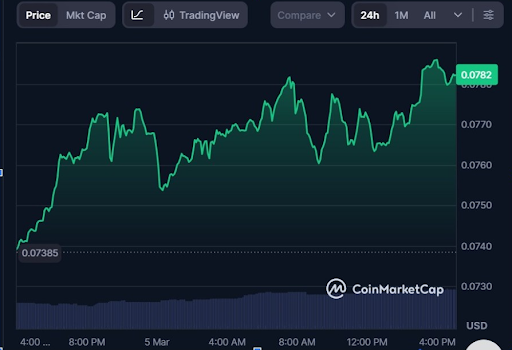 SKYUSD 1-Day Chart | Source: CMC
Meanwhile, we also covered that on March 12, Polkadot will reset its tokenomics under a new monetary framework that will cap DOT supply at 2.1 billion and reduce emissions by 53.6%.
USDS Credit Infrastructure Expansion Adds Momentum to SKY Token
The governance changes also expanded the protocol’s credit structure around USDS. Sky onboarded two new Launch Agents to support credit deployment and liquidity management within the USDS ecosystem. This step gives the protocol more tools to grow stablecoin-related activity while improving its internal market structure.
The credit expansion connects directly to Sky’s effort to strengthen USDS usage across its network. A wider credit base can support borrowing, liquidity provision, and related financial activity tied to the stablecoin. As that infrastructure grows, the protocol can create more on-chain demand around its core products.
The SKY move also fits a wider pattern across DeFi. More protocols now favor lower emissions and market-based buybacks instead of large token distributions. Earlier DeFi models often relied on heavy token incentives, but those systems often increased selling pressure as users sold rewards soon after receiving them.
Recent examples show how this model is changing. Hyperliquid has directed part of its trading-fee revenue toward buying and burning HYPE tokens. Jupiter also voted in February to remove new JUP emissions in 2026, while dYdX approved a plan that sends 75% of protocol revenue toward token buybacks.
]]>You May Also Like

Tether CEO Delivers Rare Bitcoin Price Comment

a16z Targets $2 Billion Crypto Fund as Venture Capital Eyes Blockchain Recovery
