

Strait of Hormuz Crisis Sends Crude Oil Prices Surging to Highest Since 2024
TLDR
- Brent crude rose 2.6% to $83.54/barrel; WTI climbed 3.1% to $76.96 on Thursday
- Iran effectively closed the Strait of Hormuz — shipping traffic dropped over 95%
- Iraq declared force majeure, cutting nearly 1.5 million barrels per day of output
- Analysts warn Brent could hit $140/barrel if the blockade holds; $100 if partial
- China told refiners to halt fuel exports; Japan sought to tap strategic reserves
The Middle East conflict entered its sixth day Thursday with no sign of stopping, pushing oil prices to their highest level since July 2024.
Brent crude futures rose 2.6% to $83.54 per barrel. West Texas Intermediate climbed 3.1% to $76.96. Both benchmarks have now risen for five straight sessions.
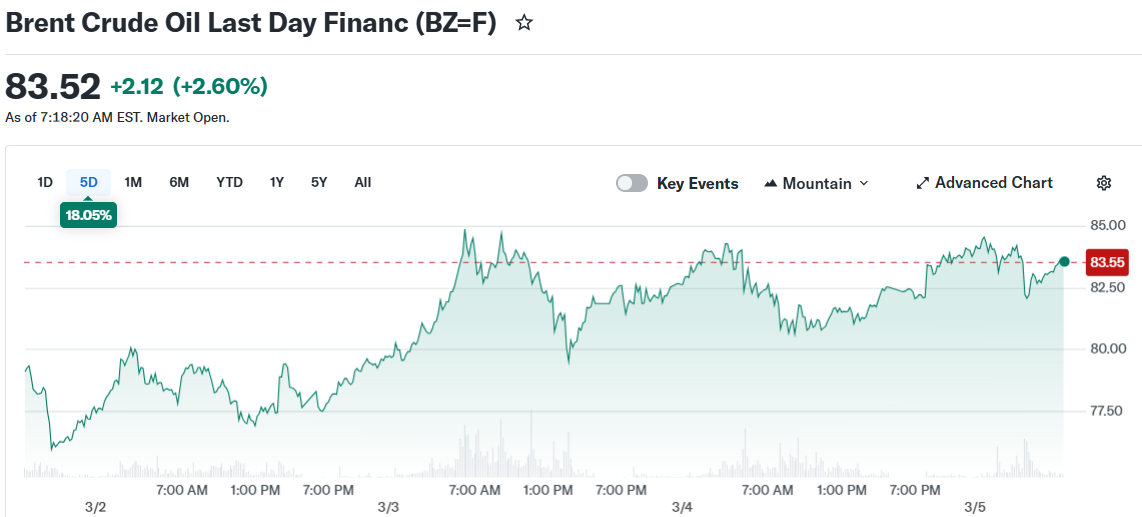 Brent Crude Oil Last Day Financ (BZ=F)
The conflict began over the weekend when the U.S. and Israel launched coordinated strikes on Iran. The U.S. has since sunk an Iranian warship near Sri Lanka in international waters.
The U.S. Senate voted Wednesday, largely along party lines, against a motion that would have required Congressional approval for the air campaign to continue.
Tehran rejected reports that Iran’s Ministry of Intelligence had reached out to Washington to negotiate. Iran called the reports “pure falsehood.”
The Strait of Hormuz Blockade
The Strait of Hormuz sits at the center of the crisis. Around 20 million barrels of oil and products passed through it daily in 2025, according to the International Energy Agency.
Ship-tracking data from Bloomberg shows traffic through the strait has fallen by over 95%. Most vessels are avoiding the route entirely.
Iraq declared force majeure on some crude exports due to the disruption. The country cut output by nearly 1.5 million barrels per day, officials told Reuters.
Iraq is the second-largest crude producer in OPEC. The loss of that supply is one of the main drivers of the current price surge.
Washington has proposed providing insurance guarantees and possibly naval escorts to vessels. The world’s largest insurance broker, Marsh, said that could take weeks to arrange.
One oil tanker, the Sonangol Namibe, was attacked in the northern Persian Gulf. It was spilling water from a ballast tank but did not leak oil.
How Asian Importers Are Responding
China told major state refiners to halt diesel and gasoline exports. Beijing is prioritizing domestic supply as the disruption tightens fuel availability.
Japan asked its government to release oil from strategic petroleum reserves. A major Indian refiner also told customers it would suspend product exports.
Analysts at ING said a full blockade of the strait could push Brent to $140 per barrel. A partial disruption, including tanker attacks, could spike prices toward $100 before settling in an $80–$90 range.
U.S. crude stockpiles rose by 5.6 million barrels in the week ended February 28, according to the American Petroleum Institute. That beat expectations of a 2.2 million barrel build.
Official inventory data from the U.S. Energy Information Administration was due later Thursday.
The post Strait of Hormuz Crisis Sends Crude Oil Prices Surging to Highest Since 2024 appeared first on CoinCentral.
You May Also Like

X money beta expands with 6% yield and cashback in beta

Crucial US Stock Market Update: What Wednesday’s Mixed Close Reveals
