Decentralized technologies promise a future of autonomy and enhanced privacy but often stumble when it comes to robust infrastructure. NodeOps, under the guidance of its Co-founder and CEO Naman Kabra, is pioneering a solution to these challenges, aiming to redefine how infrastructure supports decentralized applications. The company, which boasts a network of over 700,000 users managing assets worth more than $150 million, not only supports enormous scale but also exemplifies profitability with over $4.1 million in revenue. NodeOps ranks among the top ten DePIN projects globally, based on revenue growth. The Role of AI in Web3 Infrastructure NodeOps differentiates itself by leveraging artificial intelligence to manage the lifecycle of decentralized compute resources. This includes everything from discovery and deployment to scaling and monitoring. The AI systems efficiently handle thousands of different nodes, ensuring optimal performance and security with minimal human intervention. "AI is not just part of our infrastructure; it is the backbone," says Kabra. This advanced technology allows NodeOps to offer seamless and automatic orchestration of decentralized services, which Kabra believes is crucial for the future of Web3. Building a Sustainable Economic Model At the heart of NodeOps' economic strategy is the $NODE token, which integrates unique mechanisms such as burning to access compute credits and staking for earnings. This is complemented by a rigorous bonding system ensuring commitment from service providers, thereby securing the network's integrity and performance. Recently, NodeOps announced a significant token burn event, where over $2.2 million worth of $NODE tokens were eliminated from circulation. This act not only underscores their commitment to a stable token economy but also aligns token supply directly with actual network revenue, promoting long-term value for token holders. Read more about their strategy on their official blog. From Concept to Market Leader Unlike many infrastructure projects that remain in perpetual test phases, NodeOps has been commercially active from its inception. In its first operational week of 2025 alone, the platform generated $100,000 in revenue. "Direct revenue generation from the start has been our proof of concept," Kabra remarks, highlighting the practical and immediate utility of NodeOps in the competitive market of decentralized networks. Future Prospects and Innovations Looking forward, Kabra is enthusiastic about expanding NodeOps's capabilities. The focus will remain on enhancing AI functionalities to further automate and secure decentralized operations, thus supporting more complex and diverse applications across the Web3 ecosystem. Disclaimer: This article is provided for informational purposes only. It is not offered or intended to be used as legal, tax, investment, financial, or other advice.Decentralized technologies promise a future of autonomy and enhanced privacy but often stumble when it comes to robust infrastructure. NodeOps, under the guidance of its Co-founder and CEO Naman Kabra, is pioneering a solution to these challenges, aiming to redefine how infrastructure supports decentralized applications. The company, which boasts a network of over 700,000 users managing assets worth more than $150 million, not only supports enormous scale but also exemplifies profitability with over $4.1 million in revenue. NodeOps ranks among the top ten DePIN projects globally, based on revenue growth. The Role of AI in Web3 Infrastructure NodeOps differentiates itself by leveraging artificial intelligence to manage the lifecycle of decentralized compute resources. This includes everything from discovery and deployment to scaling and monitoring. The AI systems efficiently handle thousands of different nodes, ensuring optimal performance and security with minimal human intervention. "AI is not just part of our infrastructure; it is the backbone," says Kabra. This advanced technology allows NodeOps to offer seamless and automatic orchestration of decentralized services, which Kabra believes is crucial for the future of Web3. Building a Sustainable Economic Model At the heart of NodeOps' economic strategy is the $NODE token, which integrates unique mechanisms such as burning to access compute credits and staking for earnings. This is complemented by a rigorous bonding system ensuring commitment from service providers, thereby securing the network's integrity and performance. Recently, NodeOps announced a significant token burn event, where over $2.2 million worth of $NODE tokens were eliminated from circulation. This act not only underscores their commitment to a stable token economy but also aligns token supply directly with actual network revenue, promoting long-term value for token holders. Read more about their strategy on their official blog. From Concept to Market Leader Unlike many infrastructure projects that remain in perpetual test phases, NodeOps has been commercially active from its inception. In its first operational week of 2025 alone, the platform generated $100,000 in revenue. "Direct revenue generation from the start has been our proof of concept," Kabra remarks, highlighting the practical and immediate utility of NodeOps in the competitive market of decentralized networks. Future Prospects and Innovations Looking forward, Kabra is enthusiastic about expanding NodeOps's capabilities. The focus will remain on enhancing AI functionalities to further automate and secure decentralized operations, thus supporting more complex and diverse applications across the Web3 ecosystem. Disclaimer: This article is provided for informational purposes only. It is not offered or intended to be used as legal, tax, investment, financial, or other advice.

Revolutionizing Web3 Infrastructure: The NodeOps Journey

3 min read

Decentralized technologies promise a future of autonomy and enhanced privacy but often stumble when it comes to robust infrastructure. NodeOps, under the guidance of its Co-founder and CEO Naman Kabra, is pioneering a solution to these challenges, aiming to redefine how infrastructure supports decentralized applications.

The company, which boasts a network of over 700,000 users managing assets worth more than $150 million, not only supports enormous scale but also exemplifies profitability with over $4.1 million in revenue. NodeOps ranks among the top ten DePIN projects globally, based on revenue growth.

The Role of AI in Web3 Infrastructure

NodeOps differentiates itself by leveraging artificial intelligence to manage the lifecycle of decentralized compute resources. This includes everything from discovery and deployment to scaling and monitoring. The AI systems efficiently handle thousands of different nodes, ensuring optimal performance and security with minimal human intervention.

"AI is not just part of our infrastructure; it is the backbone," says Kabra. This advanced technology allows NodeOps to offer seamless and automatic orchestration of decentralized services, which Kabra believes is crucial for the future of Web3.

Building a Sustainable Economic Model

At the heart of NodeOps' economic strategy is the $NODE token, which integrates unique mechanisms such as burning to access compute credits and staking for earnings. This is complemented by a rigorous bonding system ensuring commitment from service providers, thereby securing the network's integrity and performance.

Recently, NodeOps announced a significant token burn event, where over $2.2 million worth of $NODE tokens were eliminated from circulation. This act not only underscores their commitment to a stable token economy but also aligns token supply directly with actual network revenue, promoting long-term value for token holders. Read more about their strategy on their official blog.

From Concept to Market Leader

Unlike many infrastructure projects that remain in perpetual test phases, NodeOps has been commercially active from its inception. In its first operational week of 2025 alone, the platform generated $100,000 in revenue. "Direct revenue generation from the start has been our proof of concept," Kabra remarks, highlighting the practical and immediate utility of NodeOps in the competitive market of decentralized networks.

Future Prospects and Innovations

Looking forward, Kabra is enthusiastic about expanding NodeOps's capabilities. The focus will remain on enhancing AI functionalities to further automate and secure decentralized operations, thus supporting more complex and diverse applications across the Web3 ecosystem.

Disclaimer: This article is provided for informational purposes only. It is not offered or intended to be used as legal, tax, investment, financial, or other advice.

Market Opportunity
Moonveil Logo
Moonveil Price(MORE)
$0.0007861
$0.0007861$0.0007861
-1.14%
USD
Moonveil (MORE) Live Price Chart
Disclaimer: The articles reposted on this site are sourced from public platforms and are provided for informational purposes only. They do not necessarily reflect the views of MEXC. All rights remain with the original authors. If you believe any content infringes on third-party rights, please contact service@support.mexc.com for removal. MEXC makes no guarantees regarding the accuracy, completeness, or timeliness of the content and is not responsible for any actions taken based on the information provided. The content does not constitute financial, legal, or other professional advice, nor should it be considered a recommendation or endorsement by MEXC.

You May Also Like

Three dormant wallets, suspected to belong to the same entity, purchased 5,970 ETH eight hours ago.
Three dormant wallets, suspected to belong to the same entity, purchased 5,970 ETH eight hours ago.

PANews reported on February 4 that, according to Lookonchain monitoring, three wallets that had been dormant for four years (likely controlled by the same entity
Share
PANews2026/02/04 11:36
NVIDIA Stock Price Analysis as OpenAI Issues Concerns About its Chips

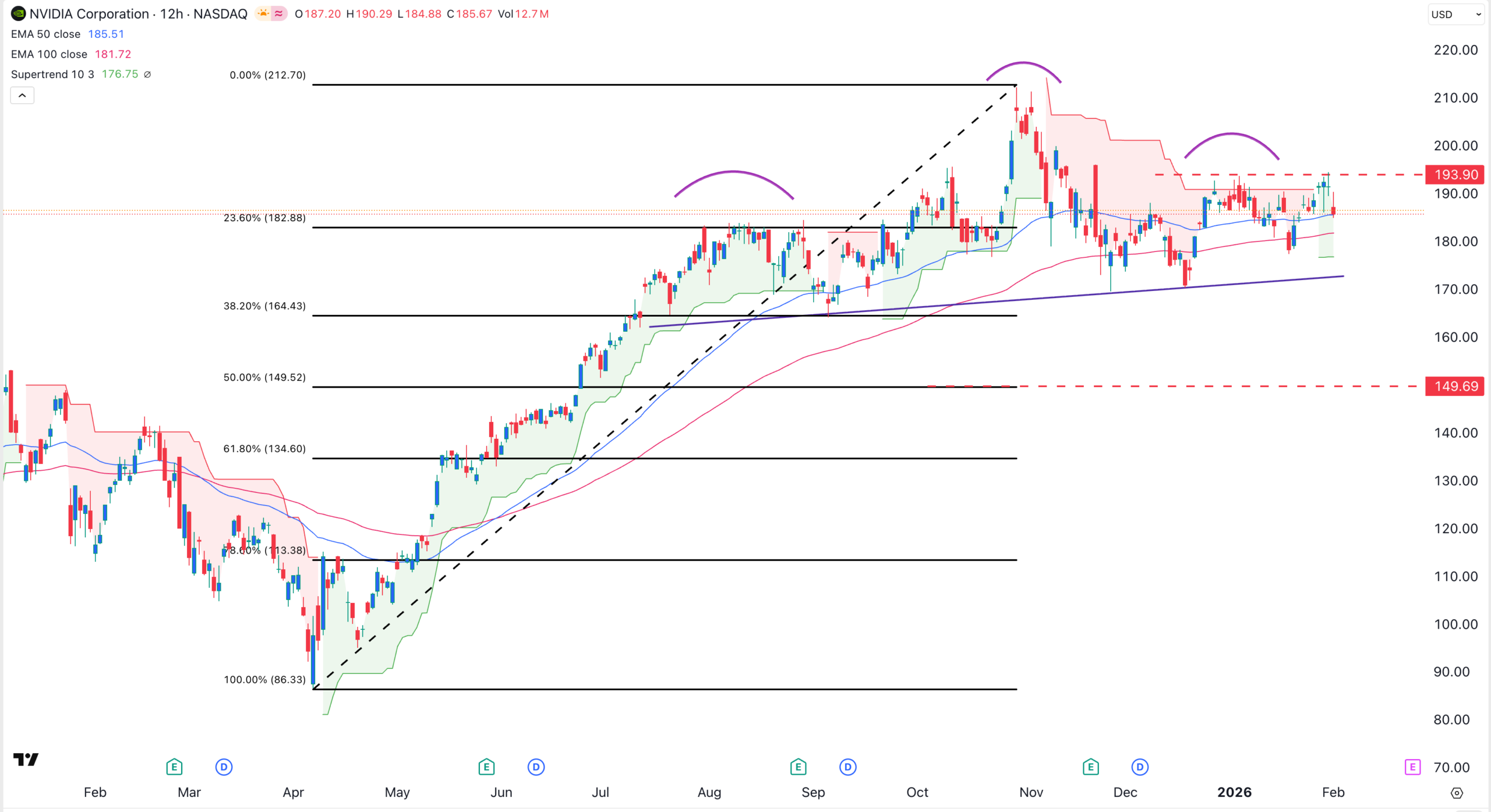
NVIDIA Stock Price Analysis as OpenAI Issues Concerns About its Chips

Key Insights NVIDIA stock started the week in the red. It crashed by over 2%. Meanwhile, the S&P 500, Dow Jones, and Nasdaq 100 moved close to their all-time highs
Share
Themarketperiodical2026/02/04 11:27
Ondo Finance Launches USDY Yieldcoin on Stellar, Bringing Tokenized U.S. Treasuries to Users

Ondo Finance Launches USDY Yieldcoin on Stellar, Bringing Tokenized U.S. Treasuries to Users

Ondo Finance, a U.S.-based digital asset firm specializing in bringing traditional financial products on-chain through tokenization, is expanding its yieldcoin USDY to the Stellar network. This lates update marks a step forward in merging tokenized real-world assets with a global payments infrastructure, unlocking new opportunities for users worldwide. The announcement was made at the Stellar Meridian event in Copacabana, Rio de Janeiro, on September 17. USDY Joins the Stellar Ecosystem Ondo Finance, a recognized leader in tokenized real-world assets, announced the deployment of United States Dollar Yield (USDY) on Stellar, the payments-focused blockchain known for speed and low transaction costs. USDY is the most widely available “yieldcoin,” offering investors access to onchain assets backed by U.S. Treasuries. This launch allows Stellar’s global user base to tap into permissionless, yield-bearing assets tied to one of the safest financial instruments in the world. It also aligns with Stellar’s mission of driving fast, affordable cross-border payments. Combining Yield with Payments Infrastructure “Stablecoins unlocked global access to the U.S. dollar. With USDY, we’re taking the next step by bringing U.S. Treasuries onchain in a form that combines stability, liquidity, and yield,” said Ian De Bode, Chief Strategy Officer at Ondo Finance. “Fast, affordable cross-border payments are at the center of what Stellar was designed to do. The global reach of the Stellar ecosystem combined with a yield-bearing asset like USDY levels up what is possible onchain, allowing wallets and businesses to offer yield opportunities to their users,” said Denelle Dixon, CEO of the Stellar Development Foundation. Ondo claims by pairing USDY with Stellar’s infrastructure, new possibilities open up in treasury management, collateralization, and everyday financial applications. Unlocking Institutional and Retail Use Cases USDY currently manages over $650 million in total value locked (TVL) across nine blockchains and offers a 5.3% APY. By launching on Stellar, Ondo Finance extends these benefits to global retail and institutional users. The firm explains balances on Stellar can now become productive, supporting use cases such as onchain savings, institutional treasury strategies, cost-efficient collateral for DeFi protocols, and remittance flows that carry yield rather than remaining static. A Milestone for Tokenized Treasuries With the integration of USDY, Stellar users gain more than just access to stable-value assets—they gain access to institutional-grade yield. For investors outside the U.S., the launch represents a new way to combine the safety of Treasuries with the accessibility of blockchain technology. As tokenization accelerates globally, Ondo Finance’s decision to deploy USDY on Stellar reinforces the narrative that blockchain is not just about speculation, but about reimagining the global financial system through secure, yield-bearing digital assets
Share
CryptoNews2025/09/18 00:46
