BitcoinWorld Bitcoin-Gold Correlation: Crucial Shift as Weakening Trend Emerges The financial world is witnessing a significant shift. For years, many investors considered Bitcoin a digital equivalent to gold, a safe haven against economic uncertainty. However, recent developments suggest this long-held belief is undergoing a dramatic re-evaluation. The Bitcoin-gold correlation, once a strong talking point, is now showing clear signs of weakening, leaving analysts and investors alike pondering the implications. Understanding the Shifting Bitcoin-Gold Correlation Recent reports highlight a surprising divergence between two of the most talked-about assets: Bitcoin and gold. Following President Donald Trump’s remarks last week concerning inflation, the market reacted in unexpected ways. While many anticipated a synchronized movement, the reality proved different, challenging established investment narratives. Cointelegraph, citing multiple analysts, reported a rapid weakening of the Bitcoin-gold correlation. This shift became particularly evident after the President suggested there was ‘almost no inflation’ in the U.S. What followed was a stark contrast in performance. Gold’s Surge: Despite the inflation remarks, gold’s price soared, renewing its all-time high, reinforcing its traditional role as a store of value. Bitcoin’s Correction: In stark contrast, Bitcoin experienced a significant correction, dropping over 13% from its peak and hitting a two-month low. This divergence has caught the attention of market watchers, prompting a closer look at the underlying dynamics of these two assets. Why is the Bitcoin-Gold Correlation Weakening? What’s driving this noticeable split? Vince Yang, co-founder of zkLink, offers a compelling perspective. He has observed a weak, or even negative, Bitcoin-gold correlation throughout the current year. His analysis sheds light on the fundamental differences influencing their market behavior. Yang explains that while gold continues to hold its ground as a primary safe-haven asset, Bitcoin operates under different pressures. Gold’s value often rises during periods of economic instability or inflation fears, serving as a reliable hedge. Its appeal lies in its scarcity, historical significance, and tangible nature. Conversely, Bitcoin, despite its growing acceptance, remains more susceptible to fluctuations driven by liquidity and broader market risk factors. Its price can be heavily influenced by: Liquidity Changes: Large movements of capital in and out of the crypto market. Market Sentiment: Investor confidence, regulatory news, and overall risk appetite. Macroeconomic Factors: While gold reacts to inflation, Bitcoin can be more sensitive to interest rate changes or global economic growth outlooks, sometimes acting more like a tech stock than a traditional commodity. Therefore, the perceived similarity between Bitcoin and gold as ‘digital gold’ is increasingly being re-evaluated in light of these distinct market sensitivities. Navigating the Divergence: Implications for Investors The weakening Bitcoin-gold correlation presents both challenges and opportunities for investors. Understanding this shift is crucial for refining investment strategies and diversifying portfolios effectively. It suggests that treating Bitcoin purely as a gold substitute might be an oversimplification. Investors should consider the following: Diversification Rethink: If Bitcoin and gold no longer move in tandem, they could offer more effective diversification benefits when combined in a portfolio. Risk Assessment: Bitcoin’s higher volatility and sensitivity to market liquidity mean it carries different risk profiles compared to gold. Investors need to assess their risk tolerance accordingly. Independent Analysis: Relying on the historical correlation might be misleading. Each asset now requires independent analysis based on its unique drivers and market conditions. This new dynamic encourages a more nuanced approach to asset allocation, recognizing the evolving roles of both traditional and digital assets in a complex global economy. The Future Landscape: Bitcoin, Gold, and Market Volatility As global markets continue to grapple with inflation concerns, geopolitical events, and technological advancements, the future relationship between Bitcoin and gold will remain a key area of observation. The current weakening trend suggests a maturity in the crypto market, where Bitcoin is carving out its own identity beyond just being ‘digital gold’. It’s becoming clear that while both assets offer value, their paths are increasingly distinct. Gold’s steadfast role as a traditional safe haven is unlikely to diminish soon, whereas Bitcoin’s journey is characterized by innovation, adoption, and a different set of market influences. This evolving landscape demands vigilance and adaptability from investors. The recent reports of a weakening Bitcoin-gold correlation mark a pivotal moment in financial analysis. This divergence, influenced by distinct market dynamics and investor perceptions, underscores the importance of independent evaluation for each asset. As we move forward, understanding these unique drivers will be essential for making informed investment decisions in an ever-changing economic environment. Frequently Asked Questions (FAQs) What is the Bitcoin-gold correlation? The Bitcoin-gold correlation refers to how closely the prices of Bitcoin and gold move in relation to each other. Historically, some investors believed Bitcoin acted similarly to gold as a hedge against inflation or economic uncertainty. Why did analysts expect Bitcoin and gold to correlate? Analysts often expected a correlation because both assets are seen as scarce, decentralized, and outside traditional financial systems. Bitcoin earned the moniker ‘digital gold’ due to these perceived similarities, especially its limited supply, much like gold. What factors are causing the Bitcoin-gold correlation to weaken? The weakening correlation is attributed to several factors. Gold maintains its traditional safe-haven status, reacting to inflation and economic instability. Bitcoin, however, is increasingly influenced by broader market liquidity, risk appetite, and specific cryptocurrency market dynamics, making it more sensitive to different economic signals. How should investors adjust their strategy given this divergence? Investors should re-evaluate their portfolio diversification, recognizing that Bitcoin and gold may now serve different roles. It’s crucial to conduct independent analysis for each asset, understanding their unique drivers and risk profiles, rather than assuming a synchronized movement. Is Bitcoin still considered a ‘digital gold’? While Bitcoin shares some characteristics with gold, the recent weakening correlation suggests its role is evolving beyond a direct ‘digital gold’ substitute. It’s carving out its own identity, influenced by technological adoption and its distinct market factors, making it a unique asset class. If you found this analysis insightful, please consider sharing it with your network on social media. Your shares help us continue providing valuable insights into the dynamic world of cryptocurrency and traditional finance! To learn more about the latest crypto market trends, explore our article on key developments shaping Bitcoin’s institutional adoption. This post Bitcoin-Gold Correlation: Crucial Shift as Weakening Trend Emerges first appeared on BitcoinWorld and is written by Editorial TeamBitcoinWorld Bitcoin-Gold Correlation: Crucial Shift as Weakening Trend Emerges The financial world is witnessing a significant shift. For years, many investors considered Bitcoin a digital equivalent to gold, a safe haven against economic uncertainty. However, recent developments suggest this long-held belief is undergoing a dramatic re-evaluation. The Bitcoin-gold correlation, once a strong talking point, is now showing clear signs of weakening, leaving analysts and investors alike pondering the implications. Understanding the Shifting Bitcoin-Gold Correlation Recent reports highlight a surprising divergence between two of the most talked-about assets: Bitcoin and gold. Following President Donald Trump’s remarks last week concerning inflation, the market reacted in unexpected ways. While many anticipated a synchronized movement, the reality proved different, challenging established investment narratives. Cointelegraph, citing multiple analysts, reported a rapid weakening of the Bitcoin-gold correlation. This shift became particularly evident after the President suggested there was ‘almost no inflation’ in the U.S. What followed was a stark contrast in performance. Gold’s Surge: Despite the inflation remarks, gold’s price soared, renewing its all-time high, reinforcing its traditional role as a store of value. Bitcoin’s Correction: In stark contrast, Bitcoin experienced a significant correction, dropping over 13% from its peak and hitting a two-month low. This divergence has caught the attention of market watchers, prompting a closer look at the underlying dynamics of these two assets. Why is the Bitcoin-Gold Correlation Weakening? What’s driving this noticeable split? Vince Yang, co-founder of zkLink, offers a compelling perspective. He has observed a weak, or even negative, Bitcoin-gold correlation throughout the current year. His analysis sheds light on the fundamental differences influencing their market behavior. Yang explains that while gold continues to hold its ground as a primary safe-haven asset, Bitcoin operates under different pressures. Gold’s value often rises during periods of economic instability or inflation fears, serving as a reliable hedge. Its appeal lies in its scarcity, historical significance, and tangible nature. Conversely, Bitcoin, despite its growing acceptance, remains more susceptible to fluctuations driven by liquidity and broader market risk factors. Its price can be heavily influenced by: Liquidity Changes: Large movements of capital in and out of the crypto market. Market Sentiment: Investor confidence, regulatory news, and overall risk appetite. Macroeconomic Factors: While gold reacts to inflation, Bitcoin can be more sensitive to interest rate changes or global economic growth outlooks, sometimes acting more like a tech stock than a traditional commodity. Therefore, the perceived similarity between Bitcoin and gold as ‘digital gold’ is increasingly being re-evaluated in light of these distinct market sensitivities. Navigating the Divergence: Implications for Investors The weakening Bitcoin-gold correlation presents both challenges and opportunities for investors. Understanding this shift is crucial for refining investment strategies and diversifying portfolios effectively. It suggests that treating Bitcoin purely as a gold substitute might be an oversimplification. Investors should consider the following: Diversification Rethink: If Bitcoin and gold no longer move in tandem, they could offer more effective diversification benefits when combined in a portfolio. Risk Assessment: Bitcoin’s higher volatility and sensitivity to market liquidity mean it carries different risk profiles compared to gold. Investors need to assess their risk tolerance accordingly. Independent Analysis: Relying on the historical correlation might be misleading. Each asset now requires independent analysis based on its unique drivers and market conditions. This new dynamic encourages a more nuanced approach to asset allocation, recognizing the evolving roles of both traditional and digital assets in a complex global economy. The Future Landscape: Bitcoin, Gold, and Market Volatility As global markets continue to grapple with inflation concerns, geopolitical events, and technological advancements, the future relationship between Bitcoin and gold will remain a key area of observation. The current weakening trend suggests a maturity in the crypto market, where Bitcoin is carving out its own identity beyond just being ‘digital gold’. It’s becoming clear that while both assets offer value, their paths are increasingly distinct. Gold’s steadfast role as a traditional safe haven is unlikely to diminish soon, whereas Bitcoin’s journey is characterized by innovation, adoption, and a different set of market influences. This evolving landscape demands vigilance and adaptability from investors. The recent reports of a weakening Bitcoin-gold correlation mark a pivotal moment in financial analysis. This divergence, influenced by distinct market dynamics and investor perceptions, underscores the importance of independent evaluation for each asset. As we move forward, understanding these unique drivers will be essential for making informed investment decisions in an ever-changing economic environment. Frequently Asked Questions (FAQs) What is the Bitcoin-gold correlation? The Bitcoin-gold correlation refers to how closely the prices of Bitcoin and gold move in relation to each other. Historically, some investors believed Bitcoin acted similarly to gold as a hedge against inflation or economic uncertainty. Why did analysts expect Bitcoin and gold to correlate? Analysts often expected a correlation because both assets are seen as scarce, decentralized, and outside traditional financial systems. Bitcoin earned the moniker ‘digital gold’ due to these perceived similarities, especially its limited supply, much like gold. What factors are causing the Bitcoin-gold correlation to weaken? The weakening correlation is attributed to several factors. Gold maintains its traditional safe-haven status, reacting to inflation and economic instability. Bitcoin, however, is increasingly influenced by broader market liquidity, risk appetite, and specific cryptocurrency market dynamics, making it more sensitive to different economic signals. How should investors adjust their strategy given this divergence? Investors should re-evaluate their portfolio diversification, recognizing that Bitcoin and gold may now serve different roles. It’s crucial to conduct independent analysis for each asset, understanding their unique drivers and risk profiles, rather than assuming a synchronized movement. Is Bitcoin still considered a ‘digital gold’? While Bitcoin shares some characteristics with gold, the recent weakening correlation suggests its role is evolving beyond a direct ‘digital gold’ substitute. It’s carving out its own identity, influenced by technological adoption and its distinct market factors, making it a unique asset class. If you found this analysis insightful, please consider sharing it with your network on social media. Your shares help us continue providing valuable insights into the dynamic world of cryptocurrency and traditional finance! To learn more about the latest crypto market trends, explore our article on key developments shaping Bitcoin’s institutional adoption. This post Bitcoin-Gold Correlation: Crucial Shift as Weakening Trend Emerges first appeared on BitcoinWorld and is written by Editorial Team

Bitcoin-Gold Correlation: Crucial Shift as Weakening Trend Emerges

2025/09/01 15:10
6 min read

BitcoinWorld

Bitcoin-Gold Correlation: Crucial Shift as Weakening Trend Emerges

The financial world is witnessing a significant shift. For years, many investors considered Bitcoin a digital equivalent to gold, a safe haven against economic uncertainty. However, recent developments suggest this long-held belief is undergoing a dramatic re-evaluation. The Bitcoin-gold correlation, once a strong talking point, is now showing clear signs of weakening, leaving analysts and investors alike pondering the implications.

Understanding the Shifting Bitcoin-Gold Correlation

Recent reports highlight a surprising divergence between two of the most talked-about assets: Bitcoin and gold. Following President Donald Trump’s remarks last week concerning inflation, the market reacted in unexpected ways. While many anticipated a synchronized movement, the reality proved different, challenging established investment narratives.

Cointelegraph, citing multiple analysts, reported a rapid weakening of the Bitcoin-gold correlation. This shift became particularly evident after the President suggested there was ‘almost no inflation’ in the U.S. What followed was a stark contrast in performance.

  • Gold’s Surge: Despite the inflation remarks, gold’s price soared, renewing its all-time high, reinforcing its traditional role as a store of value.
  • Bitcoin’s Correction: In stark contrast, Bitcoin experienced a significant correction, dropping over 13% from its peak and hitting a two-month low.

This divergence has caught the attention of market watchers, prompting a closer look at the underlying dynamics of these two assets.

Why is the Bitcoin-Gold Correlation Weakening?

What’s driving this noticeable split? Vince Yang, co-founder of zkLink, offers a compelling perspective. He has observed a weak, or even negative, Bitcoin-gold correlation throughout the current year. His analysis sheds light on the fundamental differences influencing their market behavior.

Yang explains that while gold continues to hold its ground as a primary safe-haven asset, Bitcoin operates under different pressures. Gold’s value often rises during periods of economic instability or inflation fears, serving as a reliable hedge. Its appeal lies in its scarcity, historical significance, and tangible nature.

Conversely, Bitcoin, despite its growing acceptance, remains more susceptible to fluctuations driven by liquidity and broader market risk factors. Its price can be heavily influenced by:

  • Liquidity Changes: Large movements of capital in and out of the crypto market.
  • Market Sentiment: Investor confidence, regulatory news, and overall risk appetite.
  • Macroeconomic Factors: While gold reacts to inflation, Bitcoin can be more sensitive to interest rate changes or global economic growth outlooks, sometimes acting more like a tech stock than a traditional commodity.

Therefore, the perceived similarity between Bitcoin and gold as ‘digital gold’ is increasingly being re-evaluated in light of these distinct market sensitivities.

The weakening Bitcoin-gold correlation presents both challenges and opportunities for investors. Understanding this shift is crucial for refining investment strategies and diversifying portfolios effectively. It suggests that treating Bitcoin purely as a gold substitute might be an oversimplification.

Investors should consider the following:

  • Diversification Rethink: If Bitcoin and gold no longer move in tandem, they could offer more effective diversification benefits when combined in a portfolio.
  • Risk Assessment: Bitcoin’s higher volatility and sensitivity to market liquidity mean it carries different risk profiles compared to gold. Investors need to assess their risk tolerance accordingly.
  • Independent Analysis: Relying on the historical correlation might be misleading. Each asset now requires independent analysis based on its unique drivers and market conditions.

This new dynamic encourages a more nuanced approach to asset allocation, recognizing the evolving roles of both traditional and digital assets in a complex global economy.

The Future Landscape: Bitcoin, Gold, and Market Volatility

As global markets continue to grapple with inflation concerns, geopolitical events, and technological advancements, the future relationship between Bitcoin and gold will remain a key area of observation. The current weakening trend suggests a maturity in the crypto market, where Bitcoin is carving out its own identity beyond just being ‘digital gold’.

It’s becoming clear that while both assets offer value, their paths are increasingly distinct. Gold’s steadfast role as a traditional safe haven is unlikely to diminish soon, whereas Bitcoin’s journey is characterized by innovation, adoption, and a different set of market influences. This evolving landscape demands vigilance and adaptability from investors.

The recent reports of a weakening Bitcoin-gold correlation mark a pivotal moment in financial analysis. This divergence, influenced by distinct market dynamics and investor perceptions, underscores the importance of independent evaluation for each asset. As we move forward, understanding these unique drivers will be essential for making informed investment decisions in an ever-changing economic environment.

Frequently Asked Questions (FAQs)

What is the Bitcoin-gold correlation?

The Bitcoin-gold correlation refers to how closely the prices of Bitcoin and gold move in relation to each other. Historically, some investors believed Bitcoin acted similarly to gold as a hedge against inflation or economic uncertainty.

Why did analysts expect Bitcoin and gold to correlate?

Analysts often expected a correlation because both assets are seen as scarce, decentralized, and outside traditional financial systems. Bitcoin earned the moniker ‘digital gold’ due to these perceived similarities, especially its limited supply, much like gold.

What factors are causing the Bitcoin-gold correlation to weaken?

The weakening correlation is attributed to several factors. Gold maintains its traditional safe-haven status, reacting to inflation and economic instability. Bitcoin, however, is increasingly influenced by broader market liquidity, risk appetite, and specific cryptocurrency market dynamics, making it more sensitive to different economic signals.

How should investors adjust their strategy given this divergence?

Investors should re-evaluate their portfolio diversification, recognizing that Bitcoin and gold may now serve different roles. It’s crucial to conduct independent analysis for each asset, understanding their unique drivers and risk profiles, rather than assuming a synchronized movement.

Is Bitcoin still considered a ‘digital gold’?

While Bitcoin shares some characteristics with gold, the recent weakening correlation suggests its role is evolving beyond a direct ‘digital gold’ substitute. It’s carving out its own identity, influenced by technological adoption and its distinct market factors, making it a unique asset class.

If you found this analysis insightful, please consider sharing it with your network on social media. Your shares help us continue providing valuable insights into the dynamic world of cryptocurrency and traditional finance!

To learn more about the latest crypto market trends, explore our article on key developments shaping Bitcoin’s institutional adoption.

This post Bitcoin-Gold Correlation: Crucial Shift as Weakening Trend Emerges first appeared on BitcoinWorld and is written by Editorial Team

Market Opportunity
OFFICIAL TRUMP Logo
OFFICIAL TRUMP Price(TRUMP)
$3.479
$3.479$3.479
+0.43%
USD
OFFICIAL TRUMP (TRUMP) Live Price Chart
Disclaimer: The articles reposted on this site are sourced from public platforms and are provided for informational purposes only. They do not necessarily reflect the views of MEXC. All rights remain with the original authors. If you believe any content infringes on third-party rights, please contact service@support.mexc.com for removal. MEXC makes no guarantees regarding the accuracy, completeness, or timeliness of the content and is not responsible for any actions taken based on the information provided. The content does not constitute financial, legal, or other professional advice, nor should it be considered a recommendation or endorsement by MEXC.
Tags:

You May Also Like

Ethereum unveils roadmap focusing on scaling, interoperability, and security at Japan Dev Conference
Ethereum unveils roadmap focusing on scaling, interoperability, and security at Japan Dev Conference

The post Ethereum unveils roadmap focusing on scaling, interoperability, and security at Japan Dev Conference appeared on BitcoinEthereumNews.com. Key Takeaways Ethereum’s new roadmap was presented by Vitalik Buterin at the Japan Dev Conference. Short-term priorities include Layer 1 scaling and raising gas limits to enhance transaction throughput. Vitalik Buterin presented Ethereum’s development roadmap at the Japan Dev Conference today, outlining the blockchain platform’s priorities across multiple timeframes. The short-term goals focus on scaling solutions and increasing Layer 1 gas limits to improve transaction capacity. Mid-term objectives target enhanced cross-Layer 2 interoperability and faster network responsiveness to create a more seamless user experience across different scaling solutions. The long-term vision emphasizes building a secure, simple, quantum-resistant, and formally verified minimalist Ethereum network. This approach aims to future-proof the platform against emerging technological threats while maintaining its core functionality. The roadmap presentation comes as Ethereum continues to compete with other blockchain platforms for market share in the smart contract and decentralized application space. Source: https://cryptobriefing.com/ethereum-roadmap-scaling-interoperability-security-japan/
Share
BitcoinEthereumNews2025/09/18 00:25
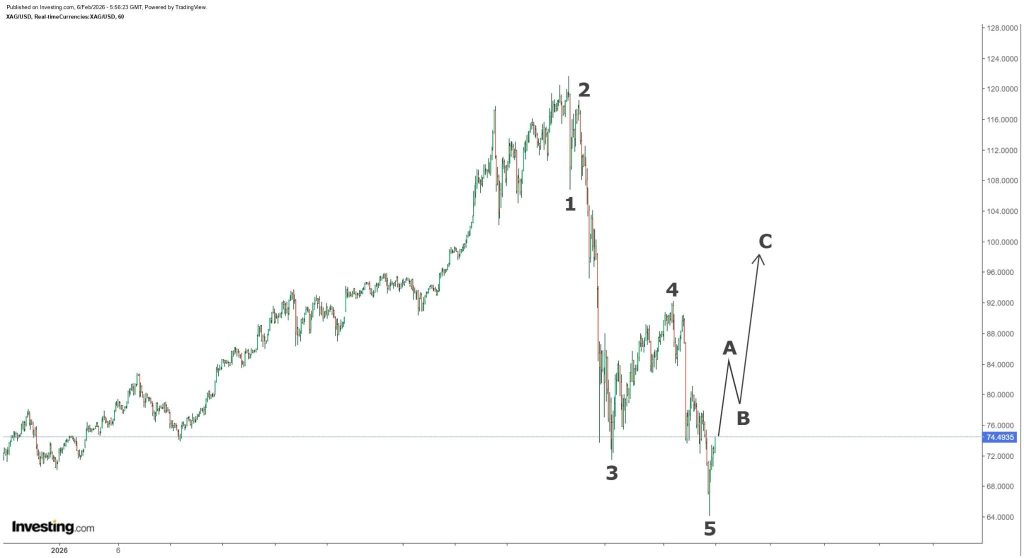
Silver Price Crash Is Over “For Real This Time,” Analyst Predicts a Surge Back Above $90

Silver Price Crash Is Over “For Real This Time,” Analyst Predicts a Surge Back Above $90

Silver has been taking a beating lately, and the Silver price hasn’t exactly been acting like a safe haven. After running up into the highs, the whole move reversed
Share
Captainaltcoin2026/02/07 03:15
Tapzi is Investors’ 1000x Pick in Volatile Market

Tapzi is Investors’ 1000x Pick in Volatile Market

The post Tapzi is Investors’ 1000x Pick in Volatile Market appeared on BitcoinEthereumNews.com. Crypto News 18 September 2025 | 00:05 Bitcoin swings after CPI data release as Tapzi’s presale gains momentum, emerging as a top crypto project in 2025. The crypto market moved sharply last week after the release of US Consumer Price Index (CPI) data. Bitcoin, the largest digital asset, reacted within minutes of the announcement, recording rapid swings before settling back near earlier levels.  At the same time, presale projects continued to attract investors, with Tapzi emerging as one of the most-watched tokens this month. It is being picked by investors as the next crypto to explode due to its high-growth potential in Tier 1 and Tier 2 countries, with Web3 gaming’s increasing adoption. Tapzi Presale Draws Attention While Bitcoin reacted to economic data, Tapzi’s presale has become a focal point among both retail and larger investors. Tapzi is a Web3 gaming platform designed to merge competitive gameplay with blockchain-based settlements. Players stake TAPZI tokens in head-to-head matches of chess, checkers, rock-paper-scissors, and tic-tac-toe. Winners receive tokens directly from prize pools funded by players, not by inflationary rewards. Don’t Watch the Wave – Ride It With $TAPZI! The presale opened with tokens priced at $0.0035. More than 27 million tokens have already been sold, with prices set to increase in each new stage. Analysts following the sale point to potential gains of around 300% once TAPZI lists on exchanges later this year. Liquidity locks and vesting schedules are in place to reduce the risks of sharp sell-offs after launch. This has placed Tapzi on the radar of investors searching for the best crypto to buy now. Bitcoin Price Reacts to CPI Last week, Bitcoin climbed toward $114,000 before jumping to $114,500, its highest level in weeks. The gains were short-lived as the price quickly dropped by $1,000. At press time, Bitcoin…
Share
BitcoinEthereumNews2025/09/18 06:26