Glassnode Chain Weekly Report: The macro environment is still unclear, and most of the losses are caused by new investors
Author: Glassnode
Compiled by: Felix, PANews
Key Points
- The macroeconomic environment remains uncertain and global trade relations are undergoing restructuring. This uncertainty has increased volatility in U.S. Treasury bonds and stocks.
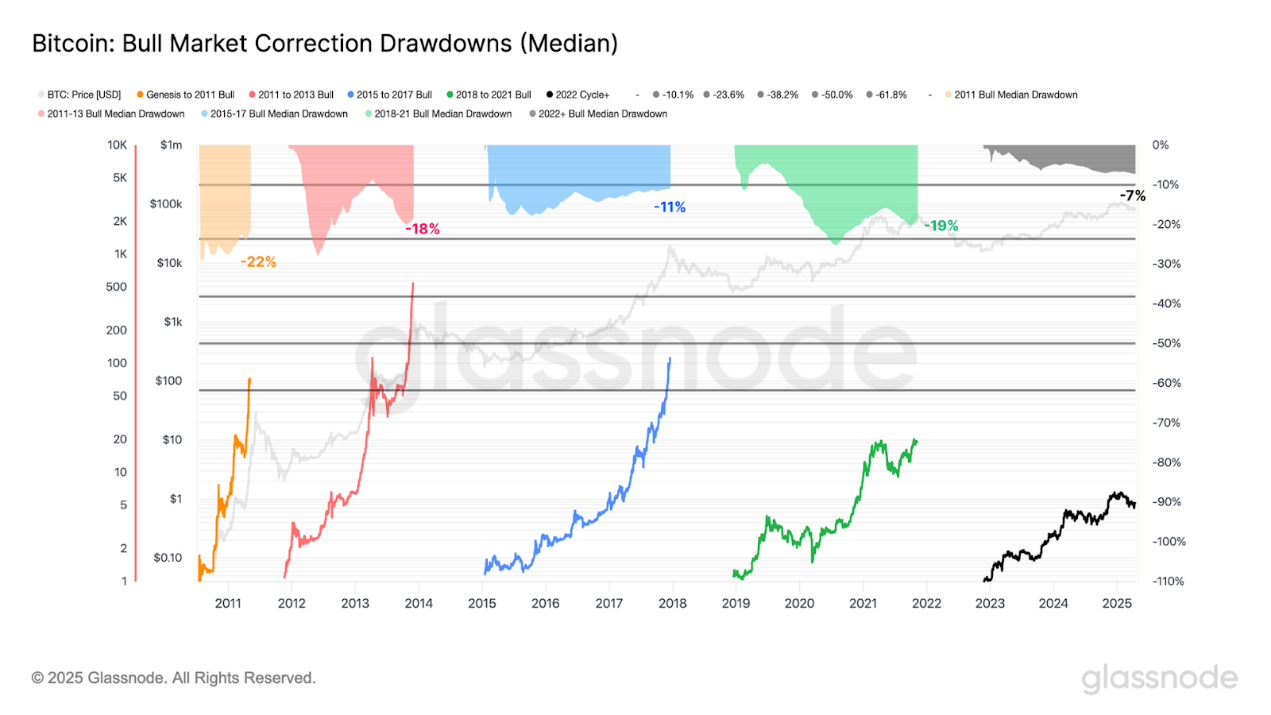
- Against a challenging economic backdrop, Bitcoin recorded its biggest drop in this cycle. Nevertheless, the drop is still within the range of previous bull market corrections. In addition, the median drop in this cycle is still an order of magnitude lower than previous bull markets, highlighting that demand is more resilient.
- Liquidity across the entire digital asset ecosystem continues to tighten, reflected in declining capital inflows and stagnant stablecoin growth.
- Investors are under tremendous pressure and are currently facing their largest unrealized losses ever. However, most of these losses are concentrated among new market participants, while long-term holders generally remain profitable.
Macro uncertainty remains widespread
As the Trump administration attempts to upend and restructure global trade relations, uncertainty about the macroeconomic outlook is becoming increasingly prominent. Currently, U.S. Treasury bonds are collateral and the foundation of the financial system, and the 10-year Treasury bond is regarded as the benchmark risk-free rate.
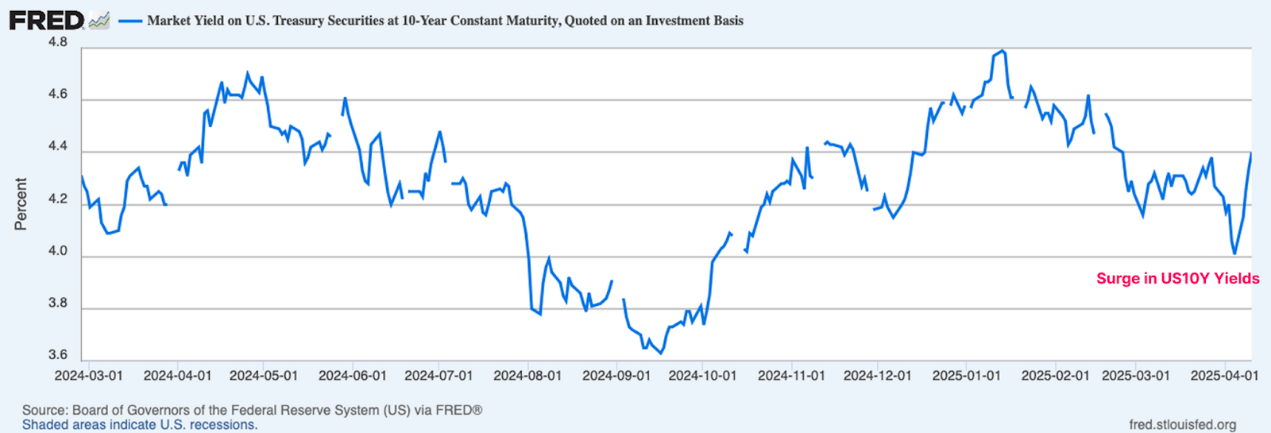
A key government goal was to lower the yield on the 10-year Treasury note, which had some initial success in the first few months of the year, dropping to 3.7% amid a broad market sell-off. But that was short-lived, with yields surging to 4.5%, erasing those losses and causing huge volatility in the bond market.
Source: FRED
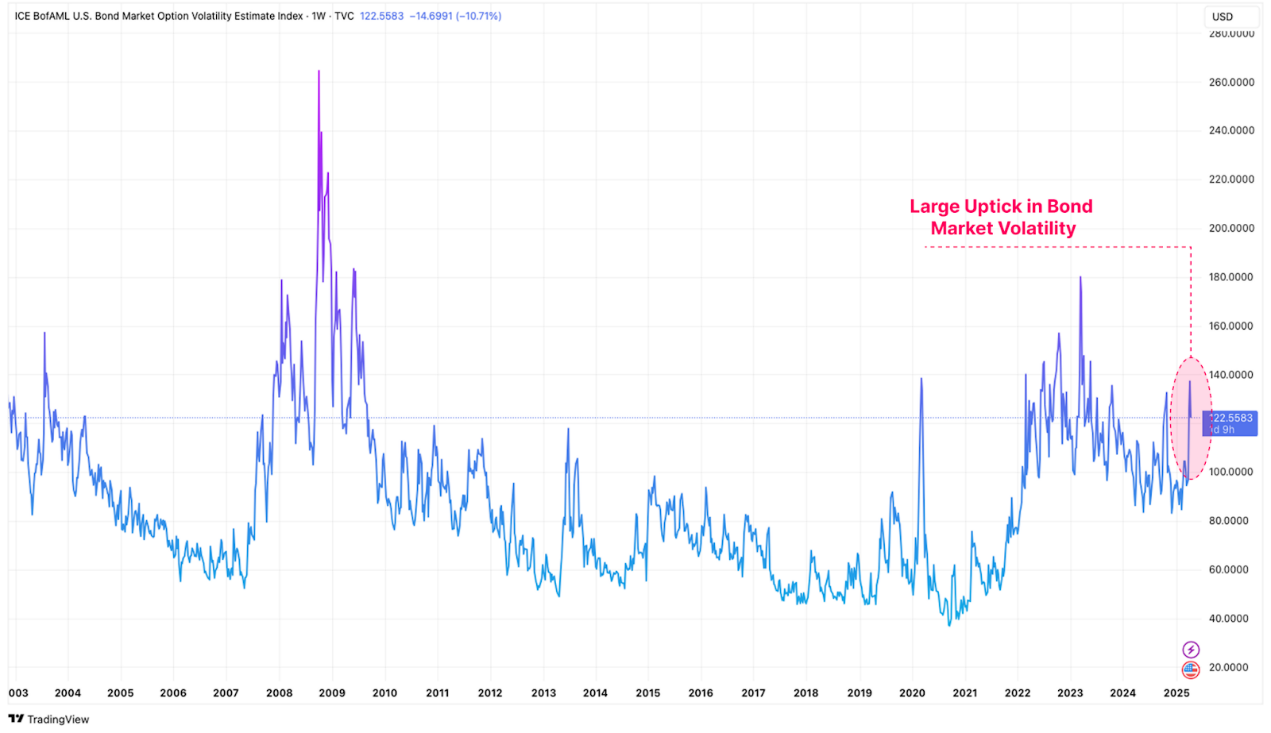
The chaotic behavior of the bond market can be quantified using the MOVE index, a key measure of bond market stress and volatility derived from the 30-day implied volatility of the U.S. Treasury market based on option prices of different maturities.
The volatility of U.S. Treasuries, as measured by this indicator, has risen sharply, highlighting the extreme uncertainty and panic among bond market investors.
Source: Tradingview
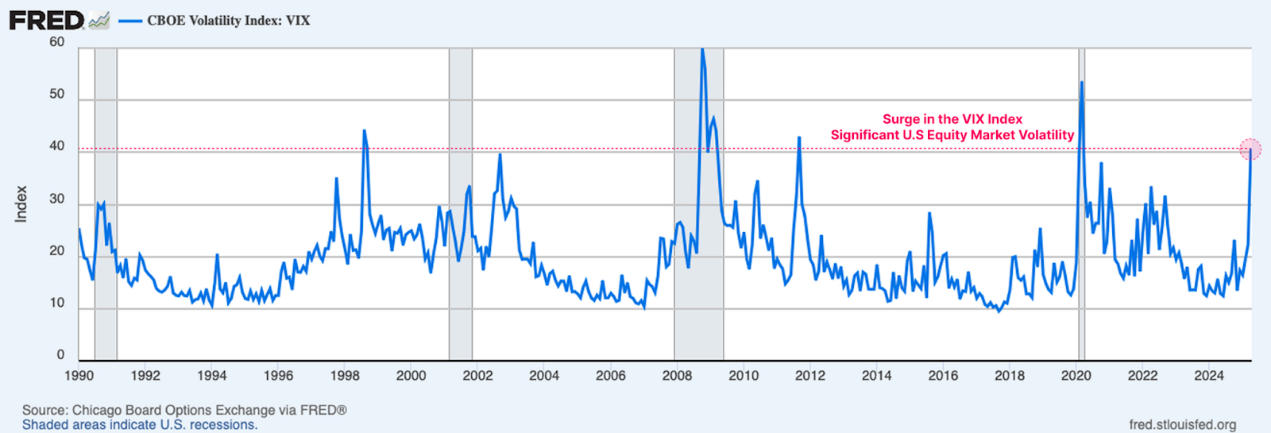
In addition, the volatility of the US stock market can be measured using the Volatility Index (VIX), which measures the market's expectations of 30-day volatility in the US stock market. The volatility of the bond market is also significantly reflected in the stock market, and the current volatility of the VIX is similar to the volatility values during the 2020 COVID-19 crisis, the 2008 global financial crisis, and the 2001 Internet bubble.
Fluctuations in the underlying collateral of the financial system often lead to capital withdrawals by investors and tightening of liquidity conditions. Given that Bitcoin and digital assets are among the most liquidity-sensitive instruments, they are naturally also affected by volatility and risk asset drawdowns.
Source: FRED
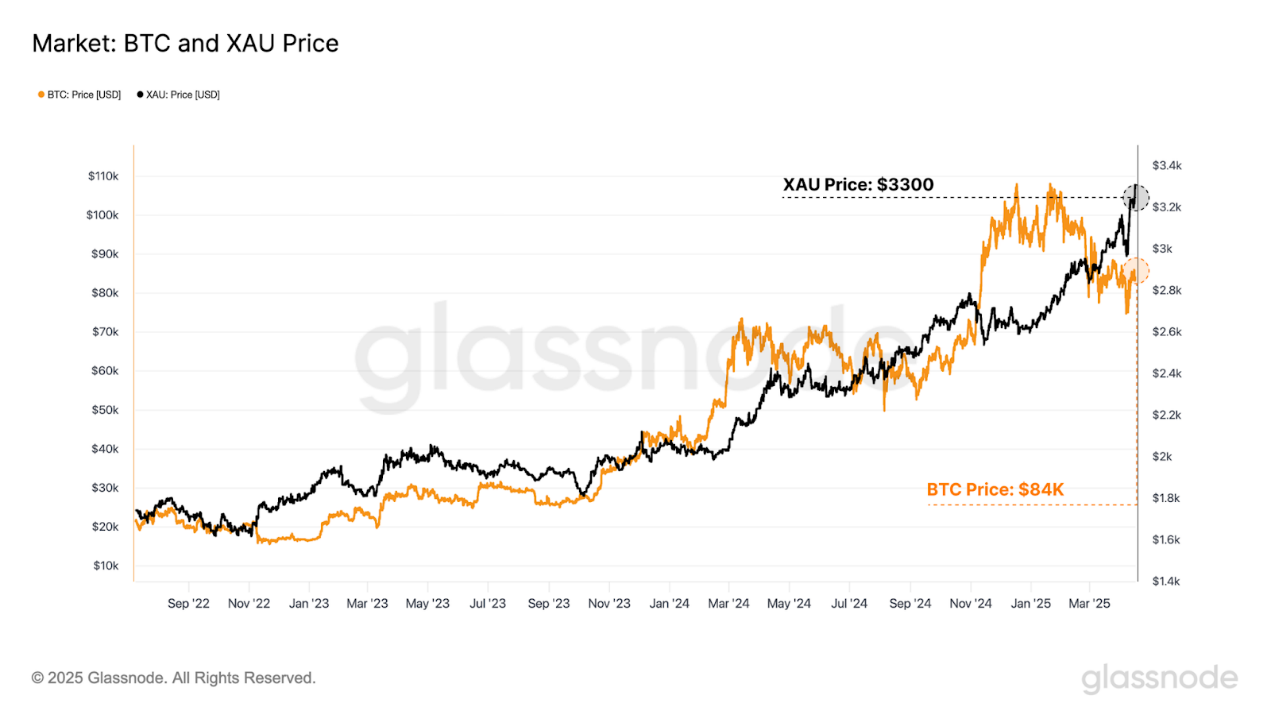
Amid this turmoil, “hard” assets have continued to perform impressively. Gold prices continued to surge, hitting new highs of $3,300 as investors flocked to the traditional safe-haven asset. Bitcoin initially sold off along with risk assets to $75,000, but has since recovered some of its losses and is trading back up to $85,000.
As the world gradually adapts to changing trade relations, gold and Bitcoin are increasingly becoming the focus of the market as global neutral reserve assets. It can be said that the performance of gold and Bitcoin last week sent a striking signal.
Source: Glassnode
Bitcoin Remains Resilient
While Bitcoin is still trading in the $85,000 region, it has seen increased volatility and retracements in recent months. The asset has seen its biggest drop since the 2023-25 cycle, with the largest drop being 33% from its all-time high.
However, the magnitude of this retracement is still within the range of previous bull market corrections. Bitcoin typically experiences declines of more than 50% during macroeconomic events like last week, highlighting that modern investor sentiment towards Bitcoin remains quite robust in adverse environments.
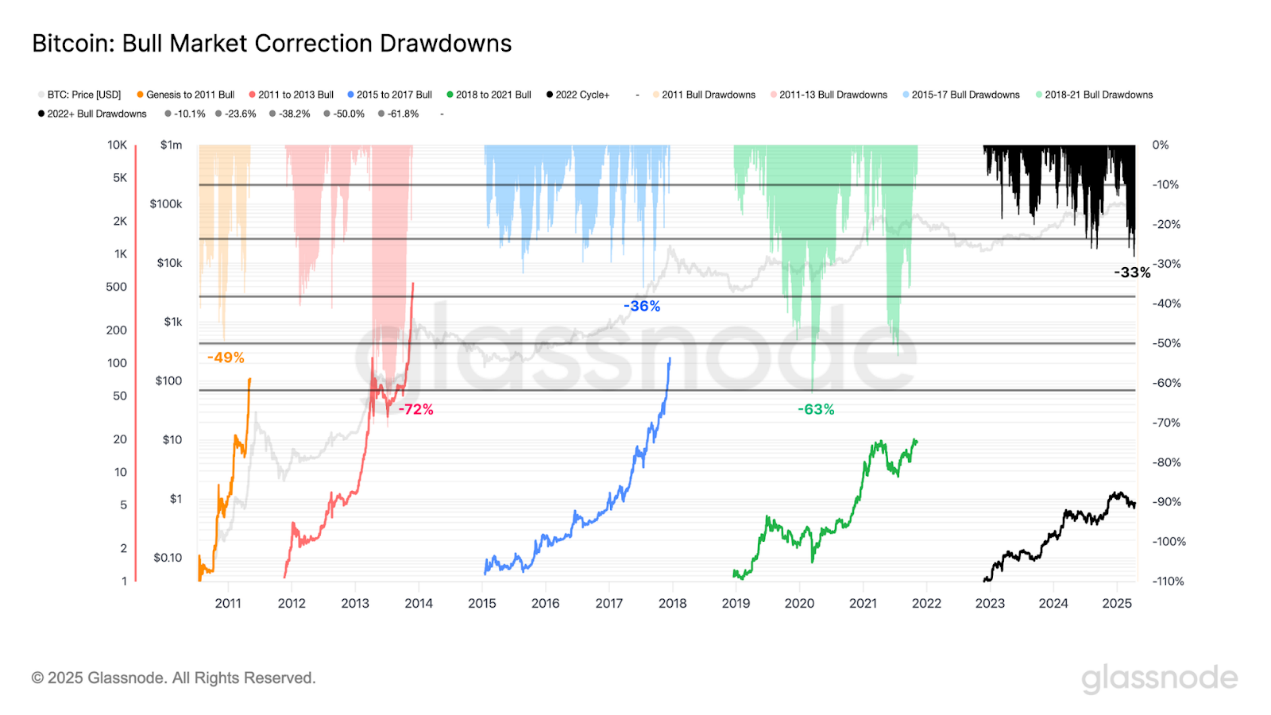
Source: Glassnode
To quantify the resilience of the current cycle, one can assess the median retracements of previous bull markets.
- 2011: -22%
- 2011-2013: -18%
- 2015-2018: -11%
- 2018-2021: -19%
- 2022 and beyond: -7%
The median drawdown in the current cycle has been smaller than in all previous episodes. Since 2023, drawdowns have been smaller and more controlled in nature, suggesting that demand conditions are more resilient and that many investors are more willing to hold on during market turmoil.
Source: Glassnode
Liquidity continues to shrink
In addition, it is possible to assess how macro uncertainty affects Bitcoin’s liquidity conditions.
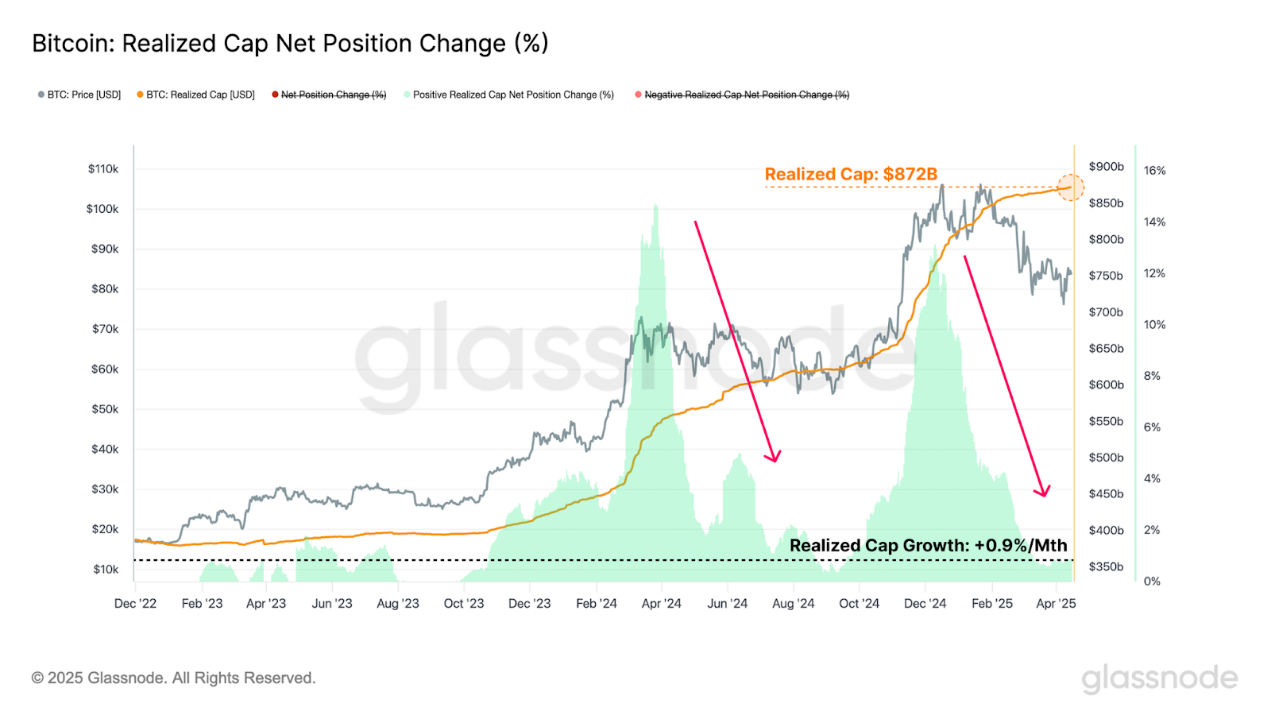
One way to measure liquidity within Bitcoin is the realized market cap metric, which calculates the cumulative net inflows into the digital asset. Realized market cap currently stands at an all-time high of $872 billion, however, capitalization growth has shrunk to just +0.9% per month.
Capital inflows into the asset class remain positive despite a challenging market backdrop. Given that the pace of new capital inflows into the asset class is slowing, indicating that investors are less willing to deploy capital in the short term, risk aversion is likely to remain the prevailing sentiment for now.
Source: Glassnode
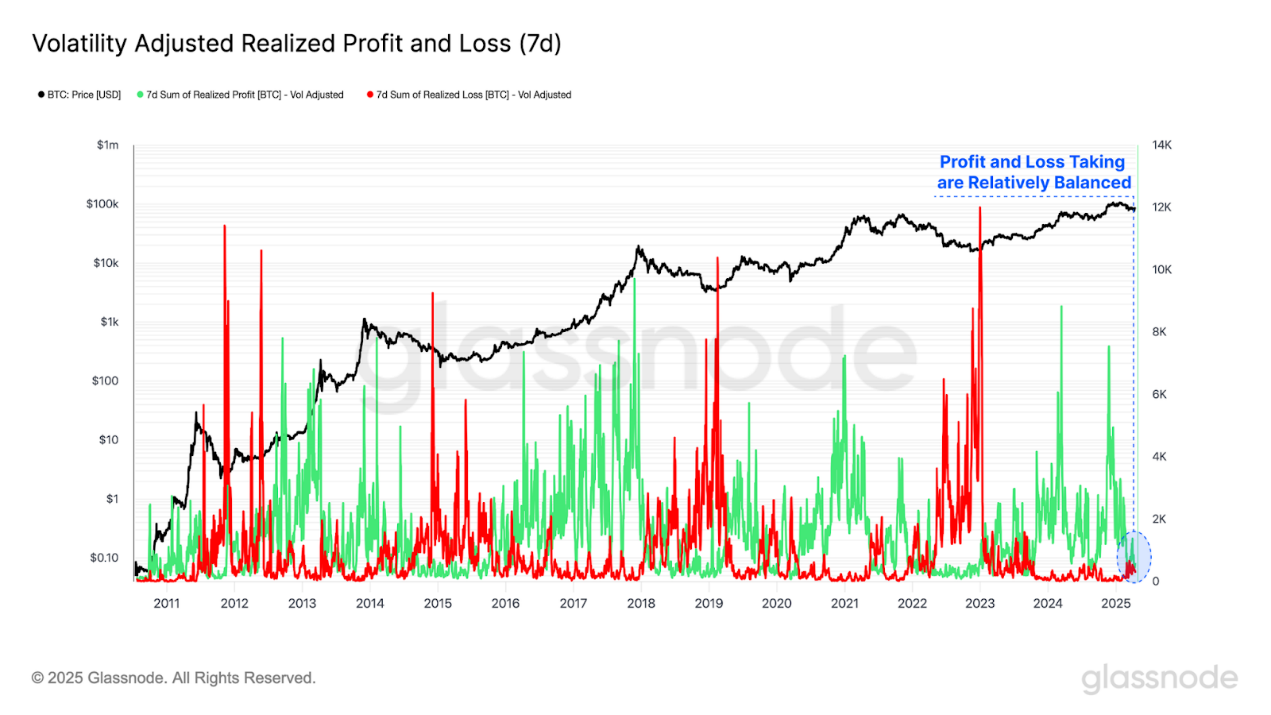
The realized profit and loss indicator, as a component of realized market value, can measure the difference between the purchase price of a token and its selling price on the chain.
- Tokens spent above their purchase price are considered to have locked in realized profits
- Tokens below their purchase price are considered locked in realized losses
Measuring realized PNL in Bitcoin normalizes all profit and loss events. It is further refined by adjusting for volatility (7-day realized volatility), helping to account for Bitcoin’s diminishing returns and growth rates over its 16-year history.
Currently, profit and loss activities are relatively balanced and capital inflow rates are relatively neutral, reflecting the saturation of investor activity within the current price range.
Source: Glassnode
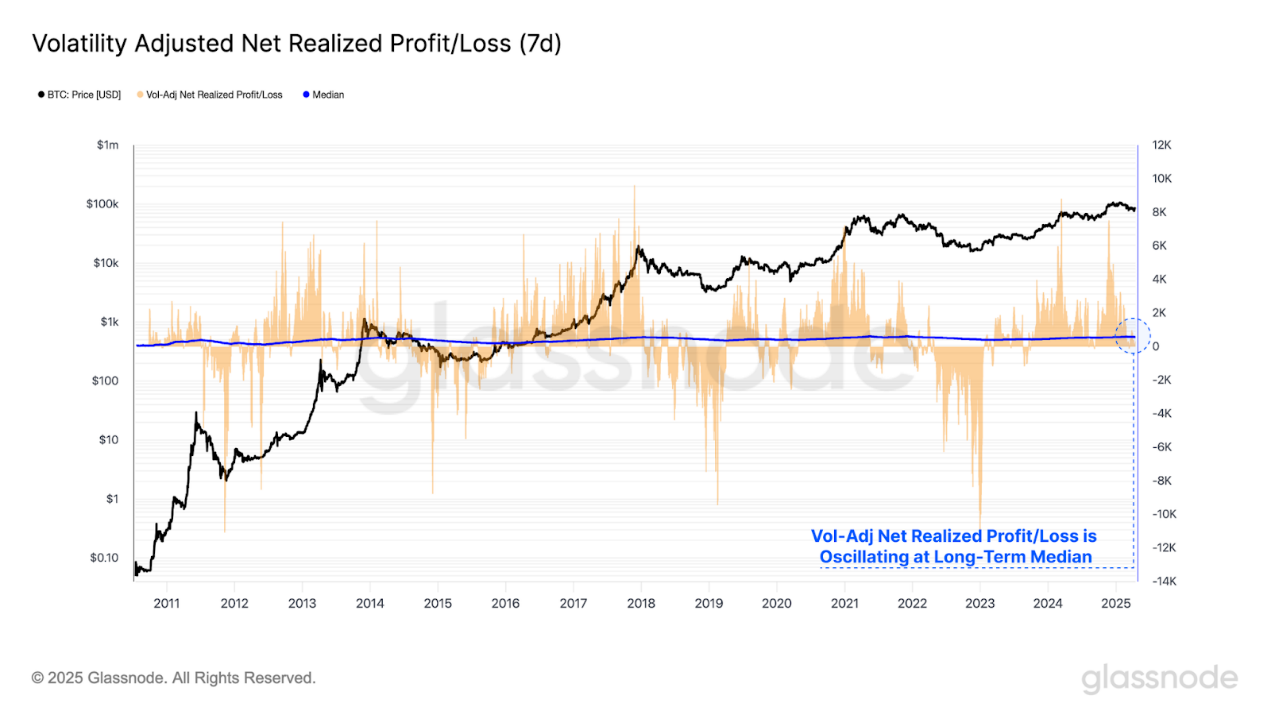
By calculating the difference between realized profits and losses, we can derive the net realized profit and loss metric, which measures the dominant direction of value flowing into/out of the network.
Using the volatility-adjusted net realized profit and loss metric, it can be compared to the cumulative median to distinguish between the two market patterns.
- Prices that are consistently above the median usually signal a bull market and net capital inflows.
- Sustained levels below the cumulative median are generally considered a bear market, with Bitcoin experiencing net capital outflows.
Markets often push investors to the brink of maximum pain, usually peaking at turning points in bull and bear cycles. It can be seen how volatility-adjusted net realized P&L fluctuates around its long-term median, acting as a mean reversion tool.
The indicator has now returned to a neutral median, suggesting that the Bitcoin market is now at a critical decision point and drawing a line for bulls to re-establish support in the current price range.
Source: Glassnode
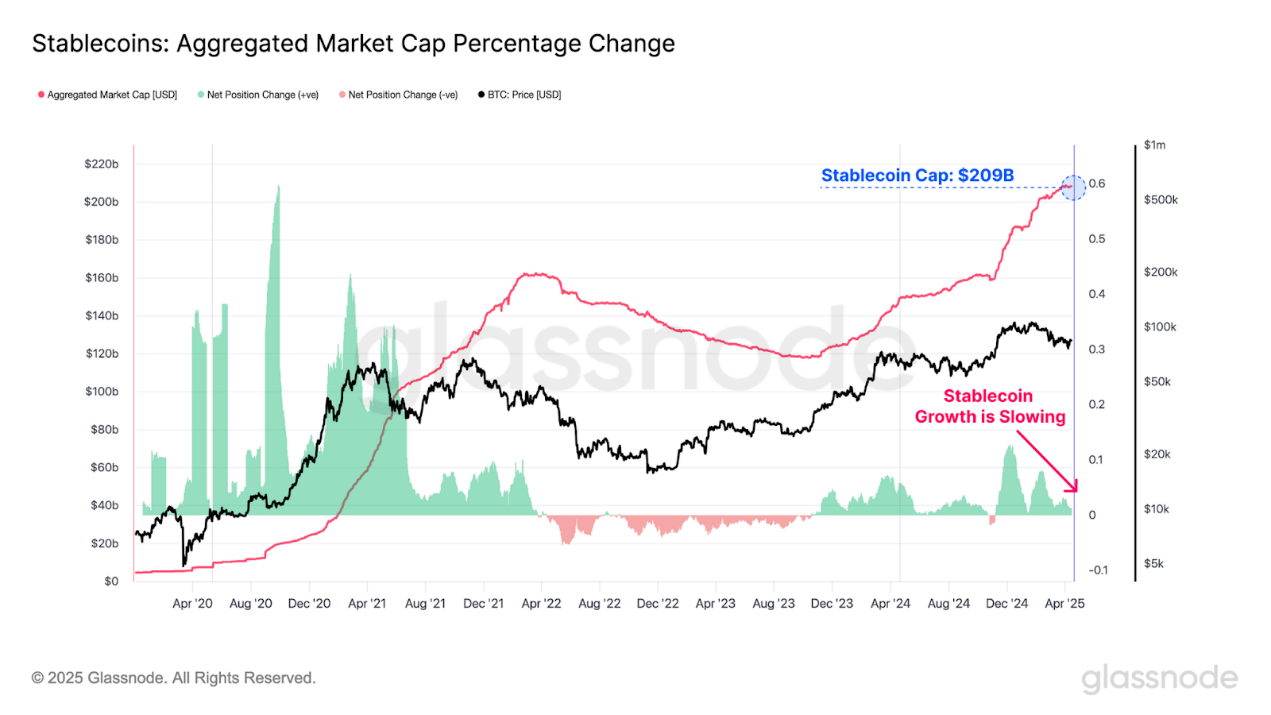
Stablecoins have become a fundamental asset class in the digital asset ecosystem, acting as quoted assets in DEX and CEX. Assessing liquidity from the perspective of stablecoins provides a new dimension for analysis and helps to gain a more comprehensive understanding of the liquidity status of digital assets.
Stablecoin supply growth remains positive but has slowed in recent weeks, further supporting the view that broader digital asset liquidity is shrinking, as reflected in weaker demand for digital dollars.
Source: Glassnode
Examining investor pressure
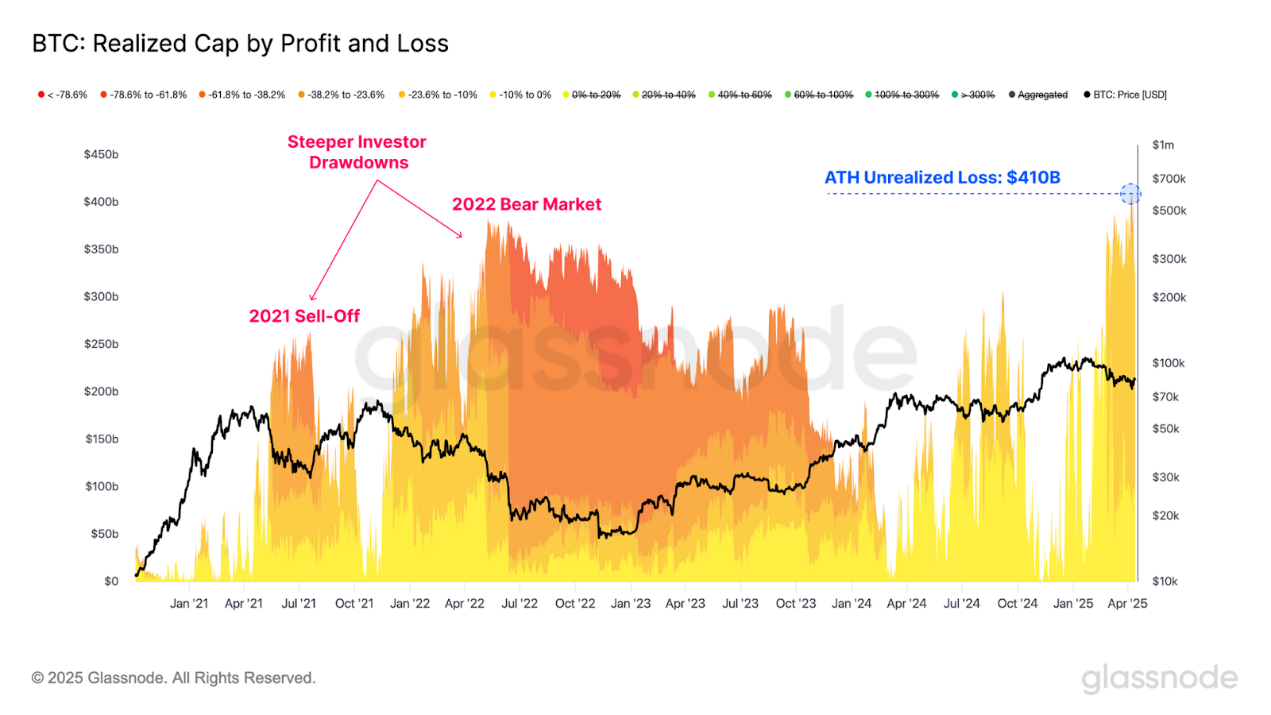
Amid the ongoing market turmoil, it is crucial to assess the scale of unrealized losses currently held by Bitcoin investors.
When measuring the unrealized losses held by the market, it is noted that during the market’s decline to $75,000, unrealized losses reached a new high of $410 billion. When looking at the composition of unrealized losses, it can be seen that most investors are holding up to a drawdown of -23.6%.
The total size of unrealized losses is larger than the May 2021 sell-off and the 2022 bear market. However, for individual investors, the market has experienced more severe drawdowns, as high as -61.8% and -78.6%, respectively.
While the total amount of unrealized losses is larger (considering Bitcoin is now a more valuable asset), individual investors face less challenges than in previous bear markets.
Source: Glassnode
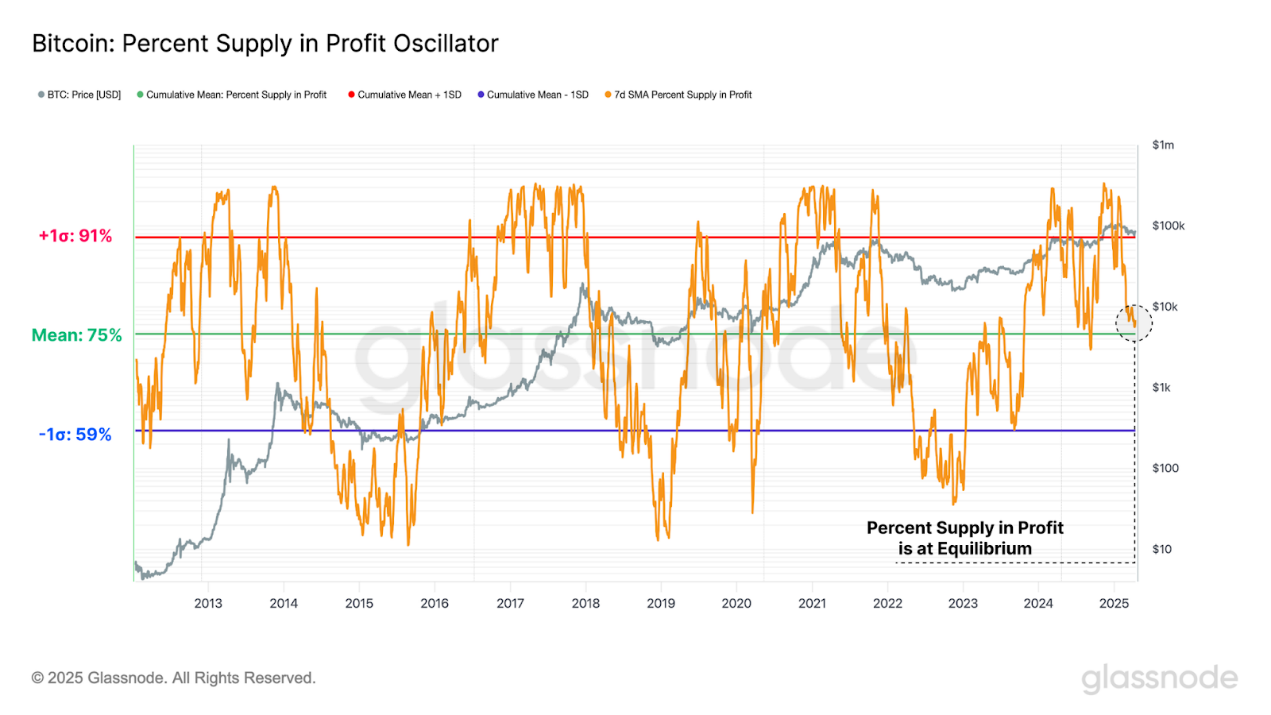
Although unrealized losses have reached an all-time high, the percentage of profitable positions in the circulating supply is still as high as 75%. This shows that most losing investors bought after the top formation appeared.
It is worth noting that the Profitable Supply Percent is approaching its long-term mean. Historically, this is a critical area that needs to be defended before the vast majority of cryptocurrencies fall into losses, and is also a key threshold between bulls and bears.
- A typical feature of a bull market is that earnings supply is above its long-term mean, which usually finds support throughout the bull market.
- Historically, bear markets have been punctuated by periods of deep and sustained declines below the long-term mean, and frequent pullbacks in bear markets confirm declining profitability.
Similar to the net realized profit and loss metric, if it can be held, it will help to rebound from the long-term average range.
Source: Glassnode
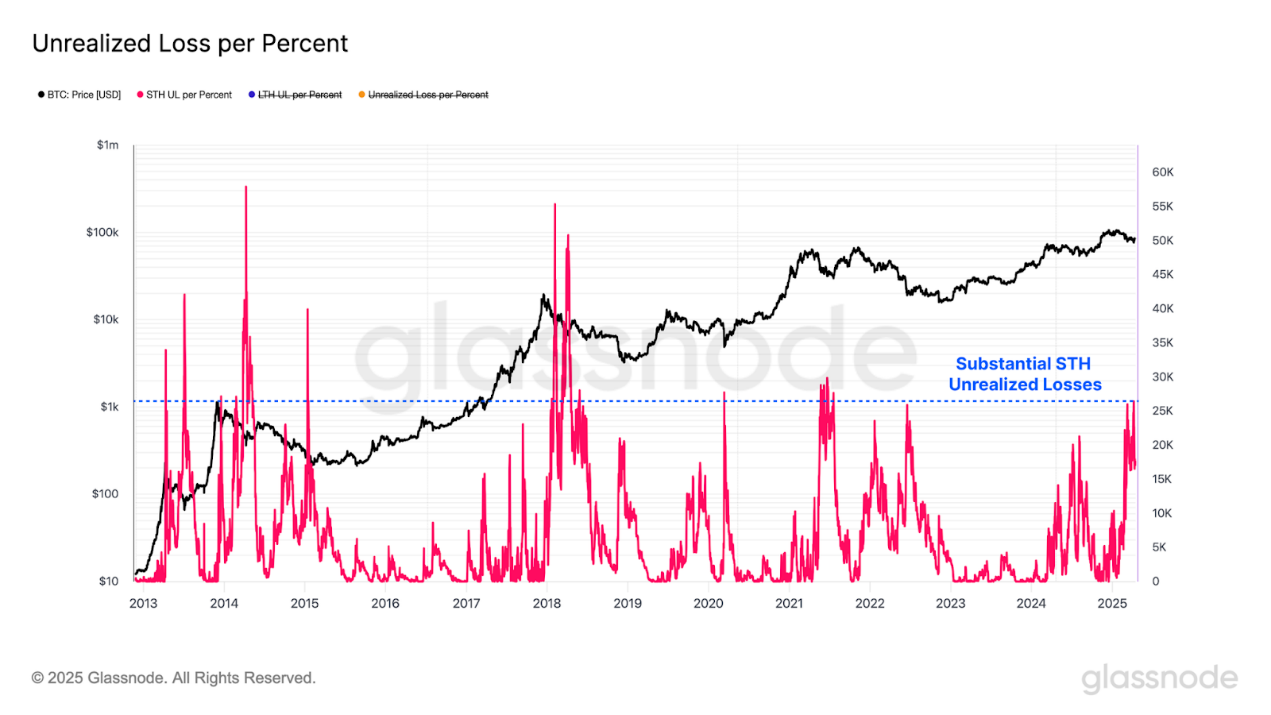
As the market continues to shrink, the absolute size of unrealized losses is expected to grow. To account for this phenomenon and normalize for drawdowns of varying magnitude, a new metric is introduced: unrealized losses per percentage drawdown, which represents the percentage drop in losses in Bitcoin relative to the all-time high.
Applying this metric to the group of short-term holders shows that their unrealized losses, adjusted for the depth of the retracement, have been substantial, comparable to levels seen at the beginning of previous bear markets.
Source: Glassnode
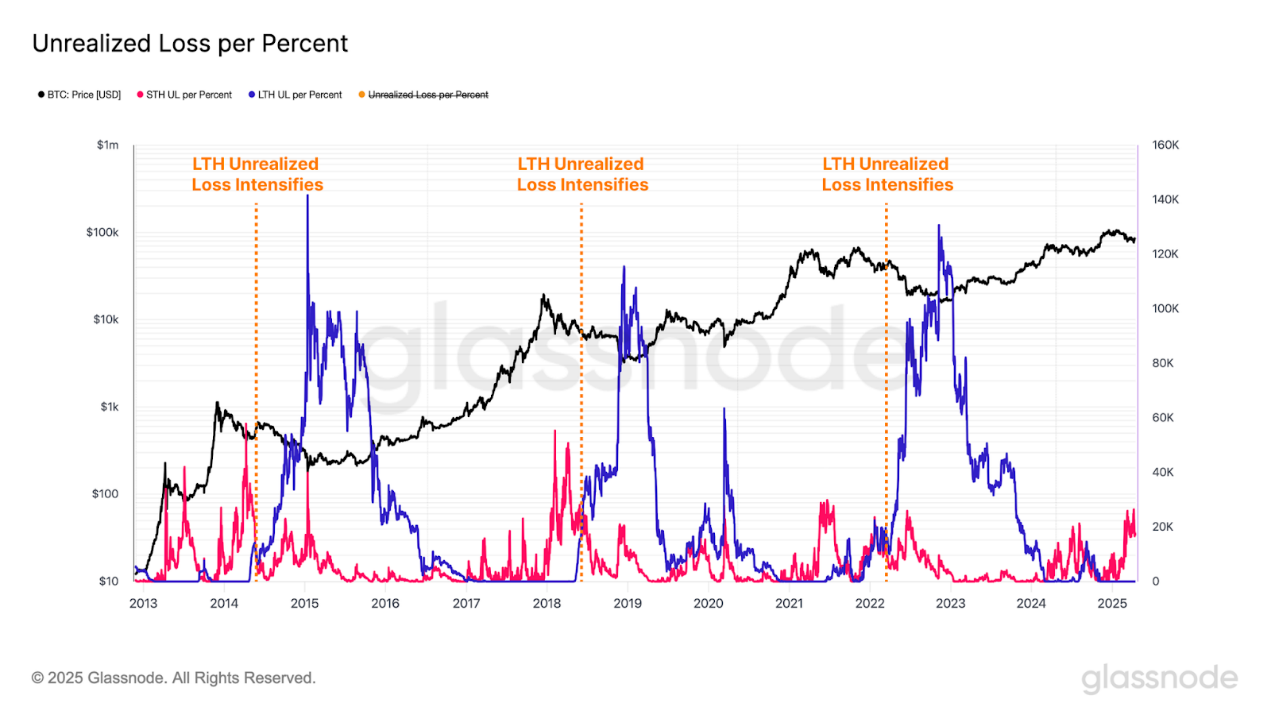
Still, current unrealized losses are concentrated among new investors, while long-term holders remain in a one-sided profit position. However, an important nuance is emerging: as recent top buyers gradually become long-term holders, the level of unrealized losses for this group may rise.
Historically, a sharp increase in unrealized losses among long-term holders has typically signaled a bear market confirmation, albeit with a delay after the market has peaked. As of now, there is no clear evidence that such a shift in pattern is underway.
Source: Glassnode
Summary and Conclusion
The macroeconomic outlook remains uncertain, and ongoing changes in global trade dynamics have exacerbated sharp volatility in U.S. Treasury and stock markets. It is worth noting that Bitcoin and gold have performed particularly strongly during this challenging period. This may be an encouraging sign that the foundations of the financial system are entering a period of transformation and change.
Despite its remarkable resilience, Bitcoin has not been immune to the impact of increased global market volatility, recording its largest drop since the 2023-2025 cycle. This has greatly affected new market participants, who are now bearing the lion's share of market losses. However, from the perspective of individual investors, the market has experienced more severe declines in previous cycles, especially during the bear market in May 2021 and 2022. In addition, mature and long-term investors remain unaffected by the ongoing economic pressure and are almost in a state of unilateral profit.
Related reading: Fidelity: Has Bitcoin reached the peak of this cycle?


You May Also Like

Will XRP price fall below $1.30 support

Republican Clay Fuller wins runoff to succeed Marjorie Taylor Greene in Congress