The post Crypto News: Coinbase Accuses Australia’s Big Four Banks of Systemic Crypto Debanking appeared on BitcoinEthereumNews.com. Coinbase warns that debankingThe post Crypto News: Coinbase Accuses Australia’s Big Four Banks of Systemic Crypto Debanking appeared on BitcoinEthereumNews.com. Coinbase warns that debanking

Crypto News: Coinbase Accuses Australia’s Big Four Banks of Systemic Crypto Debanking

4 min read

Coinbase warns that debanking by Australia’s big banks is systemic, hurting crypto firms, competition, innovation, trust amid tightening regulation, and nationwide pressures.

Coinbase has warned that debanking is becoming a serious and widespread issue in Australia. The problem is no longer isolated and occasional, the crypto exchange said. Instead, it has become an ordinary part of the financial system in the country. As a result, the trust and competition are increasingly threatened.

In a submission to the House of Representatives Standing Committee on Economics, Coinbase had some strong concerns. The Nasdaq-listed company had accused major banks of refusing services to legal crypto businesses. Therefore, it contended that it is being unfairly restricted access to basic banking.

Coinbase Accuses Big Four Banks of Systemic Barriers

Coinbase openly attacked Australia’s Big Four banks. These include Commonwealth Bank, Westpac, ANZ, and National Australia Bank. According to Coinbase, these banks have policies that prevent crypto and fintech companies from using core banking services.

Related Reading: Australia’s Securities Regulator Eases Crackdown On Stablecoins | Live Bitcoin News

These actions have the effect of not allowing people and businesses to use their own money freely, the exchange said. Moreover, Coinbase called the situation an “unlawful regulatory ban” in practice. Because these banks control most of the payment rails, the decisions they make have a wide impact.

Coinbase said that banks tend to deny services as a matter of policy. In many cases, the firms are not individually evaluated on the basis of risk. In turn, compliant crypto companies are treated the same way as high-risk entities.

The exchange also warned that this approach is bad for the consumer. When accounts are closed abruptly, users are deprived of funds and payment services. Therefore, confidence in the financial system starts to decline.

Coinbase said the lack of transparency makes the problem worse. Banks often give few explanations as to why the account is being closed. As a result, affected businesses have a hard time responding to or appealing decisions.

Regulatory Pressure Adds Urgency to the Debate

The warning comes at a time of change in regulation in Australia. In March 2026, the new AML and CTF legislation will come into place. These rules will mean that crypto service providers will have to meet standards similar to banks.

At the same time, Coinbase is faced with new licensing requirements. The exchange is required to obtain an Australian Financial Services Licence. Therefore, access to banking services is becoming even more important.

Coinbase noted that continued debanking may have a negative impact on innovation. It said Australian entrepreneurs could be driven out of the global digital asset market. Meanwhile, other countries keep backing regulated crypto growth.

To rectify the problem, Coinbase pushed the Parliament to take action. It recommended the adoption of measures for transparency under the proposals made in 2022. These have some good reasons for debanking and proper notice periods.

One proposal is that banks should provide at least 30 days’ notice before closing accounts. Another is suggesting internal dispute resolution options for small businesses. Together, these steps are intended to enhance fairness.

Industry reactions have been mixed. ABA chief executive Simon Birmingham said that where banks had the risks, they needed to do something about them. However, he suggested that crypto platforms should improve their controls instead of getting special treatment.

Crypto investor Fred Schebesta backed Coinbase’s concerns. He said debanking is real and rampant throughout Australia. He also pointed to transfer limits and forced crypto sales as examples.

Overall, Coinbase said debanking is “threatening trust to Australia’s economy”. Without reform, innovation and competition might suffer. As regulation tightens, the issue is expected to be kept under close watch.

Source: https://www.livebitcoinnews.com/coinbase-accuses-australias-big-four-banks-of-systemic-crypto-debanking/

Disclaimer: The articles reposted on this site are sourced from public platforms and are provided for informational purposes only. They do not necessarily reflect the views of MEXC. All rights remain with the original authors. If you believe any content infringes on third-party rights, please contact service@support.mexc.com for removal. MEXC makes no guarantees regarding the accuracy, completeness, or timeliness of the content and is not responsible for any actions taken based on the information provided. The content does not constitute financial, legal, or other professional advice, nor should it be considered a recommendation or endorsement by MEXC.

You May Also Like

Three dormant wallets, suspected to belong to the same entity, purchased 5,970 ETH eight hours ago.

Three dormant wallets, suspected to belong to the same entity, purchased 5,970 ETH eight hours ago.

PANews reported on February 4 that, according to Lookonchain monitoring, three wallets that had been dormant for four years (likely controlled by the same entity
Share
PANews2026/02/04 11:36
NVIDIA Stock Price Analysis as OpenAI Issues Concerns About its Chips

NVIDIA Stock Price Analysis as OpenAI Issues Concerns About its Chips

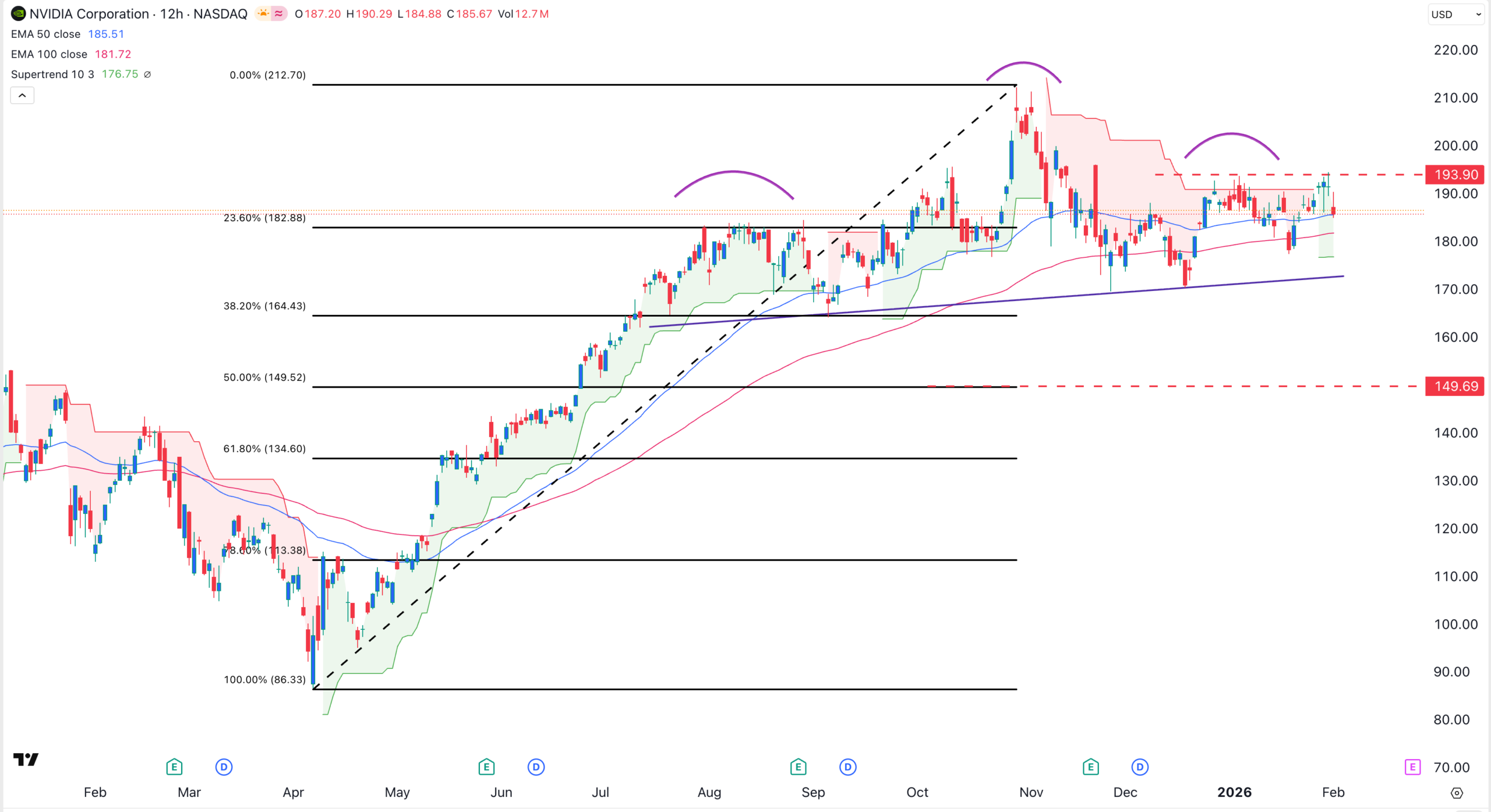
Key Insights NVIDIA stock started the week in the red. It crashed by over 2%. Meanwhile, the S&P 500, Dow Jones, and Nasdaq 100 moved close to their all-time highs
Share
Themarketperiodical2026/02/04 11:27
Ondo Finance Launches USDY Yieldcoin on Stellar, Bringing Tokenized U.S. Treasuries to Users

Ondo Finance Launches USDY Yieldcoin on Stellar, Bringing Tokenized U.S. Treasuries to Users

Ondo Finance, a U.S.-based digital asset firm specializing in bringing traditional financial products on-chain through tokenization, is expanding its yieldcoin USDY to the Stellar network. This lates update marks a step forward in merging tokenized real-world assets with a global payments infrastructure, unlocking new opportunities for users worldwide. The announcement was made at the Stellar Meridian event in Copacabana, Rio de Janeiro, on September 17. USDY Joins the Stellar Ecosystem Ondo Finance, a recognized leader in tokenized real-world assets, announced the deployment of United States Dollar Yield (USDY) on Stellar, the payments-focused blockchain known for speed and low transaction costs. USDY is the most widely available “yieldcoin,” offering investors access to onchain assets backed by U.S. Treasuries. This launch allows Stellar’s global user base to tap into permissionless, yield-bearing assets tied to one of the safest financial instruments in the world. It also aligns with Stellar’s mission of driving fast, affordable cross-border payments. Combining Yield with Payments Infrastructure “Stablecoins unlocked global access to the U.S. dollar. With USDY, we’re taking the next step by bringing U.S. Treasuries onchain in a form that combines stability, liquidity, and yield,” said Ian De Bode, Chief Strategy Officer at Ondo Finance. “Fast, affordable cross-border payments are at the center of what Stellar was designed to do. The global reach of the Stellar ecosystem combined with a yield-bearing asset like USDY levels up what is possible onchain, allowing wallets and businesses to offer yield opportunities to their users,” said Denelle Dixon, CEO of the Stellar Development Foundation. Ondo claims by pairing USDY with Stellar’s infrastructure, new possibilities open up in treasury management, collateralization, and everyday financial applications. Unlocking Institutional and Retail Use Cases USDY currently manages over $650 million in total value locked (TVL) across nine blockchains and offers a 5.3% APY. By launching on Stellar, Ondo Finance extends these benefits to global retail and institutional users. The firm explains balances on Stellar can now become productive, supporting use cases such as onchain savings, institutional treasury strategies, cost-efficient collateral for DeFi protocols, and remittance flows that carry yield rather than remaining static. A Milestone for Tokenized Treasuries With the integration of USDY, Stellar users gain more than just access to stable-value assets—they gain access to institutional-grade yield. For investors outside the U.S., the launch represents a new way to combine the safety of Treasuries with the accessibility of blockchain technology. As tokenization accelerates globally, Ondo Finance’s decision to deploy USDY on Stellar reinforces the narrative that blockchain is not just about speculation, but about reimagining the global financial system through secure, yield-bearing digital assets
Share
CryptoNews2025/09/18 00:46