

Moscow Exchange Crypto Futures: Strategic Expansion to SOL, XRP, and TRX Signals Major Market Evolution
BitcoinWorld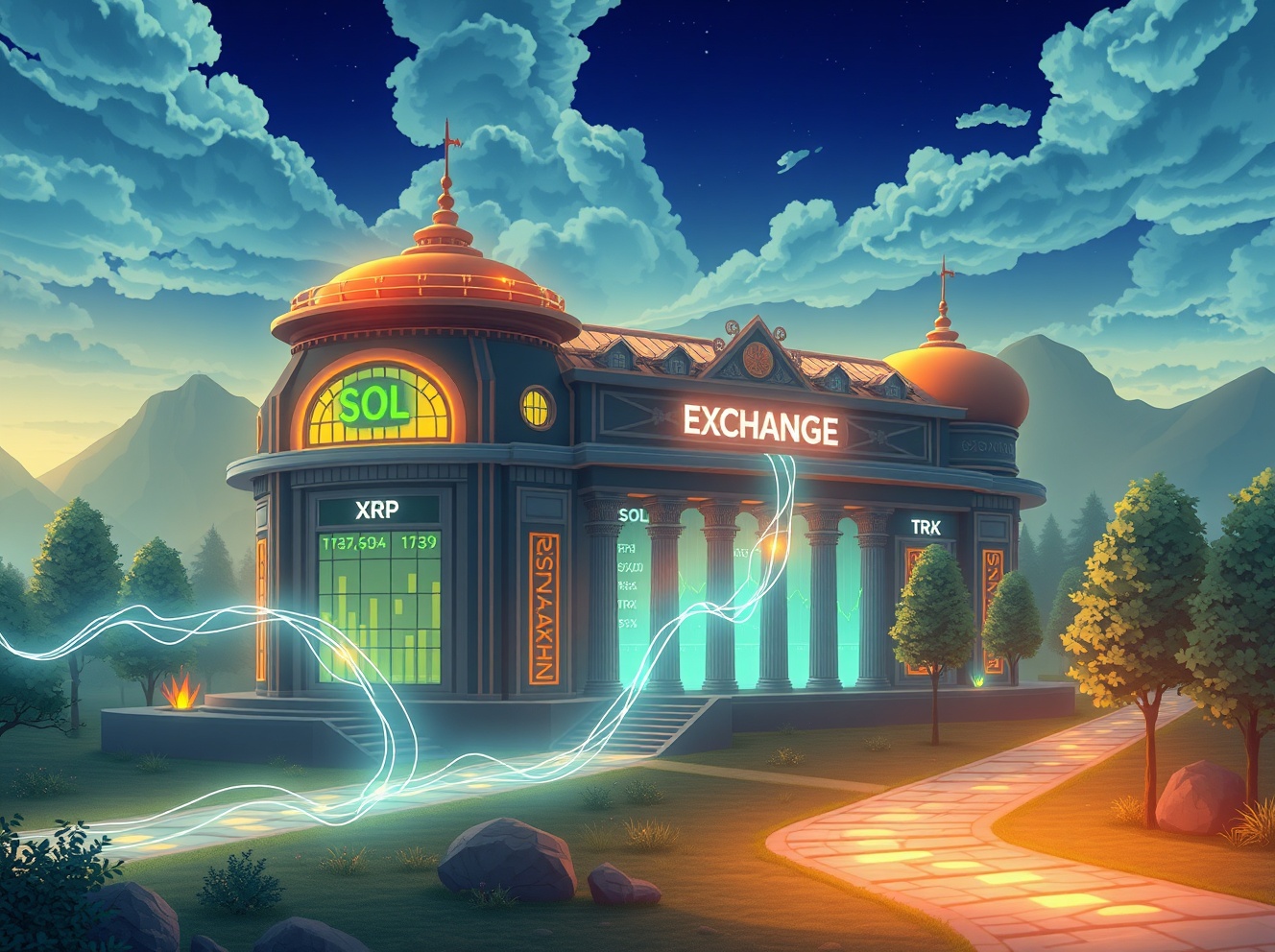
Moscow Exchange Crypto Futures: Strategic Expansion to SOL, XRP, and TRX Signals Major Market Evolution
MOSCOW, RUSSIA – In a significant development for the regional digital asset landscape, the Moscow Exchange (MOEX) has announced plans to launch futures contracts for three major altcoins: Solana (SOL), Ripple (XRP), and Tron (TRX). This strategic expansion, first reported by CoinDesk, follows the exchange’s existing Bitcoin (BTC) and Ethereum (ETH) futures products and represents a calculated step toward broadening Russia’s institutional and retail access to cryptocurrency derivatives. Consequently, this move could reshape local trading dynamics and provide new hedging instruments for market participants.
Moscow Exchange Crypto Futures: A Detailed Roadmap
The Moscow Exchange will implement its expansion in a structured, two-phase process. Initially, the exchange will develop and publish official indices for SOL, XRP, and TRX. These indices will serve as the foundational pricing benchmarks. Subsequently, MOEX will use these indices to introduce cash-settled futures contracts. Notably, all settlements will occur in Russian rubles, distinguishing these products from dollar-denominated contracts on many international platforms.
This methodology mirrors the exchange’s established approach for its BTC and ETH futures, which launched in 2021. The existing contracts have provided a regulated venue for price speculation and risk management. By replicating this framework for new assets, MOEX ensures operational consistency and leverages its existing clearing and risk management infrastructure. Therefore, the rollout aims for minimal technical disruption.
Key aspects of the rollout include:
- Index First, Product Second: The creation of transparent, rules-based indices precedes any derivative listing.
- Ruble Settlement: Contracts are settled in the local fiat currency, reducing foreign exchange complexity for domestic traders.
- Regulatory Alignment: The products operate within the current Russian financial regulatory framework.
Context and Strategic Implications for Russian Finance
This expansion occurs against a complex backdrop of evolving Russian financial regulations and global crypto market trends. The Bank of Russia has historically maintained a cautious stance toward private cryptocurrencies. However, the necessity for regulated financial instruments and the growth of digital asset adoption have prompted a more nuanced approach. The Moscow Exchange, as the country’s premier trading venue, operates at the intersection of this policy evolution.
Analysts view this move as part of a broader strategy to formalize and domesticate cryptocurrency trading activity. By offering regulated futures, MOEX provides an alternative to over-the-counter (OTC) markets and offshore exchanges. This can enhance price discovery, improve market transparency, and attract institutional capital. Furthermore, ruble-settled contracts insulate local traders from direct USD volatility, adding a layer of strategic autonomy.
Expert Analysis on Asset Selection and Market Impact
The choice of SOL, XRP, and TRX is highly strategic. These assets represent distinct blockchain ecosystems with substantial market capitalization and liquidity. Solana is recognized for its high throughput and low-cost transactions. Ripple’s XRP focuses on cross-border payments and financial institution settlements. Tron emphasizes content sharing and decentralized applications. Together, they offer exposure to diverse segments of the crypto economy beyond Bitcoin and Ethereum.
Market experts suggest this tripartite selection mitigates concentration risk. “By launching futures for these three specific altcoins, MOEX is not just adding products; it’s constructing a more balanced derivatives suite,” explains a financial analyst specializing in CIS markets. “It provides Russian traders with tools to express nuanced views on smart contract platforms, payment networks, and entertainment-focused blockchains. This is a logical progression from offering only the two largest assets.”
The table below summarizes the new futures alongside existing offerings:
| Asset | Symbol | Futures Status | Settlement Currency |
|---|---|---|---|
| Bitcoin | BTC | Live | Russian Ruble (RUB) |
| Ethereum | ETH | Live | Russian Ruble (RUB) |
| Solana | SOL | Planned | Russian Ruble (RUB) |
| Ripple | XRP | Planned | Russian Ruble (RUB) |
| Tron | TRX | Planned | Russian Ruble (RUB) |
Technical and Regulatory Framework for the New Contracts
The operational success of these new futures hinges on robust index calculation. MOEX will likely source price data from a basket of major global exchanges to ensure resilience and mitigate manipulation. The contract specifications, including size (contract multiplier), tick size, and expiration cycles, will be critical details for traders. These parameters will determine the accessibility for retail participants and the utility for institutional hedging strategies.
From a regulatory perspective, these products exist in a defined space. They are financial derivatives based on an index, not direct instruments for trading the underlying cryptocurrencies. This distinction is crucial under current Russian law. The development indicates ongoing dialogue between MOEX, the Bank of Russia, and other financial authorities to create a compliant path for digital asset exposure. Consequently, the launch may precede or coincide with further clarifications in the nation’s digital asset legislation.
Comparative Global Landscape and Future Trajectory
Globally, crypto derivatives are a dominant force, with platforms like CME Group, Binance, and Bybit leading in volume. However, the MOEX initiative is notable for its focus on local currency settlement and integration within a traditional, regulated national exchange. This model is more akin to CME’s approach than that of a pure crypto-native platform. It could serve as a template for other national exchanges in regions seeking to formalize crypto markets.
Looking ahead, the successful launch of SOL, XRP, and TRX futures could pave the way for more products. Potential next steps include options contracts, futures on other altcoins, or even physically delivered products if regulations evolve. The move also strengthens Moscow’s position as a financial hub within Eurasia, potentially attracting trading interest from neighboring nations. Therefore, this is more than a product launch; it is a strategic infrastructural investment.
Conclusion
The Moscow Exchange’s plan to launch SOL, XRP, and TRX futures marks a pivotal moment in the institutionalization of cryptocurrency markets within Russia. By extending its derivatives suite beyond Bitcoin and Ethereum, MOEX is providing essential tools for risk management and price discovery for a wider array of digital assets. This ruble-settled initiative aligns with broader trends of financial innovation while operating within national regulatory contours. Ultimately, the success of these Moscow Exchange crypto futures will depend on market adoption, liquidity, and the evolving global regulatory climate, but the strategic direction is clearly set toward greater integration of digital assets into the formal financial system.
FAQs
Q1: When will the SOL, XRP, and TRX futures launch on the Moscow Exchange?
The exchange has announced its plan but has not yet released a specific public launch date. The process involves first creating indices for the assets, followed by the futures contracts. Traders should monitor official MOEX announcements for timelines.
Q2: Why is the Moscow Exchange launching futures for these specific cryptocurrencies?
SOL, XRP, and TRX represent large, liquid altcoins with distinct use cases (smart contracts, payments, entertainment). This selection diversifies the exchange’s crypto derivatives offering beyond BTC and ETH, catering to broader market demand.
Q3: How will these futures contracts be settled?
The contracts will be cash-settled in Russian rubles (RUB). This means traders will profit or lose in rubles based on the price movement of the underlying index, without requiring delivery of the actual cryptocurrencies.
Q4: Who can trade these futures contracts?
Presumably, any eligible participant with an account on the Moscow Exchange, which includes qualified Russian institutional and retail investors, will be able to trade these products, subject to the exchange’s standard membership and risk requirements.
Q5: How does this affect the global perception of cryptocurrency regulation in Russia?
This move signals a continued, pragmatic approach by Russian financial authorities to integrate cryptocurrencies into the regulated financial system, focusing on derivatives as a controlled entry point rather than an outright ban or unregulated free-for-all.
This post Moscow Exchange Crypto Futures: Strategic Expansion to SOL, XRP, and TRX Signals Major Market Evolution first appeared on BitcoinWorld.
You May Also Like
SEC Approves Generic ETF Standards for Digital Assets Market

MemeCon 2025: A Gala Night for Web3 Culture & Creativity in Singapore
