Author: seed.eth On the last trading day of January 2026, the global financial markets witnessed a moment of terror that will go down in history. On Friday, JanuaryAuthor: seed.eth On the last trading day of January 2026, the global financial markets witnessed a moment of terror that will go down in history. On Friday, January

Gold and silver experienced a "Black Friday," while the US dollar staged a dramatic comeback.

2026/02/01 08:00
7 min read

Author: seed.eth

On the last trading day of January 2026, the global financial markets witnessed a moment of terror that will go down in history.

Gold and silver experienced a Black Friday, while the US dollar staged a dramatic comeback.

On Friday, January 30th (Eastern Time), the precious metals market, which had been surging and constantly breaking historical highs, was suddenly hit by a "cold wave".

Spot silver suffered its biggest single-day drop in history, plunging more than 30% at one point during the session; spot gold was not spared either, falling more than 9% in a single day, marking its worst loss since the early 1980s. Meanwhile, the previously weak US dollar index (DXY) suddenly surged, posting its biggest single-day gain since July of last year, rebounding by about 0.9%.

In the US stock market, the S&P 500 fell 0.4%, the Dow Jones Industrial Average fell 0.4%, while the Nasdaq, dominated by technology stocks, plunged 0.9%.

The cryptocurrency market was not spared either. Bitcoin (BTC) plunged as much as 4% to $81,045, hitting a two-month low since November of last year. Although it subsequently rebounded, it remained weak under pressure from continued outflows from ETFs.

This massive global asset restructuring not only wiped out trillions of dollars in market value from the precious metals market, but also marked the first major correction to the trading logic of "weak dollar, strong gold and silver" since Trump returned to the White House.

Policy "hurricane": Warsh's nomination ignites the dollar's counterattack

The immediate trigger for this plunge in gold and silver prices was a major personnel appointment by the Trump administration. News on Friday indicated that Trump had selected Kevin Warsh as the next Federal Reserve Chairman.

This decision caused multiple shocks in the market:

  • Defending the Fed's Independence: Previously, the market was highly concerned that Trump would choose a "proxy" who would completely submit to his will and favor aggressive interest rate cuts. This concern directly contributed to the continued decline of the dollar in January. Warsh, a former Fed governor, is known for his academic rigor and vigilance regarding inflation. His nomination greatly alleviated Wall Street's fears of the Fed's "politicization" and restored market confidence in the Fed's independence.
  • Reshaping Interest Rate Expectations: Warsh historically exhibited a distinctly hawkish stance, showing near-zero tolerance for inflation. Compared to the potentially deep rate cuts that leading figures might have brought, the market quickly adjusted its expectations to a "more moderate and prudent" monetary policy. As assets that do not generate interest, gold and silver have become significantly less attractive under the expectation that "interest rates may remain high."
  • Dollar short positions halted: The dollar index fell by about 1.4% in January, resulting in extremely crowded short positions. The news of Warsh's nomination prompted a large number of dollar short positions to be closed, causing the dollar index to rise rapidly above 96.74, which dealt a heavy blow to dollar-denominated precious metals.

Krishna Guha, vice chairman of Evercore ISI, said the market is trading in line with “Wash’s hawkish stance.” He added, “Wash’s nomination will help stabilize the dollar and reduce the one-sided risk of a continued weakening of the dollar, thus challenging the logic of the ‘currency devaluation trade’—which is also the reason for the sharp drop in gold and silver prices.”

Liquidity crisis in overbought territory

If Walsh's nomination is "Mars," then the extremely overbought state of the gold and silver markets is "dry tinder."

Before the crash on January 30, spot gold had approached the $5,600/ounce mark, while silver had peaked at $120/ounce. Since the beginning of the year, silver had risen by as much as 63%, and gold had risen by nearly 20% this month. A Wall Street quantitative strategist said, "This is no longer a rise that can be explained by fundamentals, but a typical speculative bubble driven by FOMO (fear of missing out).

Multiple technical factors led to Friday's "stampede" sell-off:

RSI indicator peaks: Gold's Relative Strength Index (RSI) reached a 40-year high (RSI close to 90) before the crash, indicating extreme overbought conditions.

Forced liquidation: Due to its high leverage, the silver market experienced massive programmed stop-loss orders after prices broke through key support levels. Estimates suggest that the market capitalization of gold and silver shrank by as much as $7.4 trillion on Friday. This scale of sell-off has evolved into a "liquidity contraction," forcing investors to sell the most liquid assets, gold and silver, to replenish margin for other assets.

Profit-taking: Early investors have a strong desire to cash out when faced with signals of a policy shift.

The combination of a stronger US dollar and a sharp drop in gold and silver prices has directly and severely damaged commodity currencies among the G10 currencies.

Australian Dollar (AUD): It plunged more than 2% at one point during the day. As a leading exporter of resources, the collapse of gold and silver directly damaged its trade foundation, making it the hardest-hit currency among the G10 currencies that day.

Swiss Franc (CHF): The price fell by about 1.5%. The sharp drop in gold prices completely severed the safe-haven premium of the Swiss franc, causing funds to flow into the US dollar, which was supported by hawkish expectations, amid panic.

Swedish krona (SEK): Plunges nearly 1.8% intraday.

Market Outlook: Is it a "Bull Market Correction" or a "Market End Signal"?

A research report from Citibank offers a sober perspective on the market outlook. Citibank points out that half of the risk factors supporting gold (such as geopolitical tensions, US debt concerns, and AI uncertainty) may subside later in 2026.

  • Middle East and Russia-Ukraine Variables: As the Trump administration is committed to achieving "American-style stability" before the 2026 midterm elections, if the Russia-Ukraine conflict and the situation in Iran ease, the safe-haven premium for gold will further diminish.
  • American-style gold stability: Citigroup's mention of "American-style gold stability" suggests that if Warsh successfully takes office and stabilizes the Fed's credibility, the dollar will regain favor with international capital, thus putting medium-term negative pressure on gold prices.

However, some analysts hold a different opinion.

Nanhua Futures points out that despite the significant short-term volatility, demand for silver in the new energy and industrial sectors remains strong, and a supply gap has long existed. This sharp drop is more of a result of deleveraging and bubble deflation than a complete deterioration of fundamentals.

JPMorgan analysts are bullish on gold's long-term prospects. In a recent report, they stated that both private investors and central banks are consistently increasing their gold allocations.

Analysts used the Hui-Heubel ratio (a metric for market breadth and liquidity) to highlight structural differences in liquidity across different assets. The chart shows that gold consistently has a lower Hui-Heubel ratio, indicating stronger liquidity and higher market participation. Silver, on the other hand, has a higher ratio, reflecting weaker liquidity. Assuming people continue to use gold as a substitute for long-term bonds as a stock hedge, private investor allocations to gold could rise from the current slightly over 3% to around 4.6% in the coming years. In this scenario, analysts believe the theoretical price range for gold could reach $8,000 to $8,500 per ounce.

For ordinary investors, the most crucial point to observe at present is:

If, after Warsh takes office, the Federal Reserve's policy focus truly shifts from "blindly supporting growth" to "returning to monetary discipline," then 2026 will be a turning point for the global financial environment.

This shift means that the US dollar index is poised to completely break free from its year-long slump and regain its dominance as the global reserve currency; while gold and silver, pushed to their peak by previous euphoria, may be forced into a long and painful period of consolidation to digest the premium bubble accumulated over the past few years. The future of Bitcoin will become even more uncertain.

Disclaimer: The articles reposted on this site are sourced from public platforms and are provided for informational purposes only. They do not necessarily reflect the views of MEXC. All rights remain with the original authors. If you believe any content infringes on third-party rights, please contact service@support.mexc.com for removal. MEXC makes no guarantees regarding the accuracy, completeness, or timeliness of the content and is not responsible for any actions taken based on the information provided. The content does not constitute financial, legal, or other professional advice, nor should it be considered a recommendation or endorsement by MEXC.

You May Also Like

HitPaw API is Integrated by Comfy for Professional Image and Video Enhancement to Global Creators
HitPaw API is Integrated by Comfy for Professional Image and Video Enhancement to Global Creators

SAN FRANCISCO, Feb. 7, 2026 /PRNewswire/ — HitPaw, a leader in AI-powered visual enhancement solutions, announced Comfy, a global content creation platform, is
Share
AI Journal2026/02/08 09:15
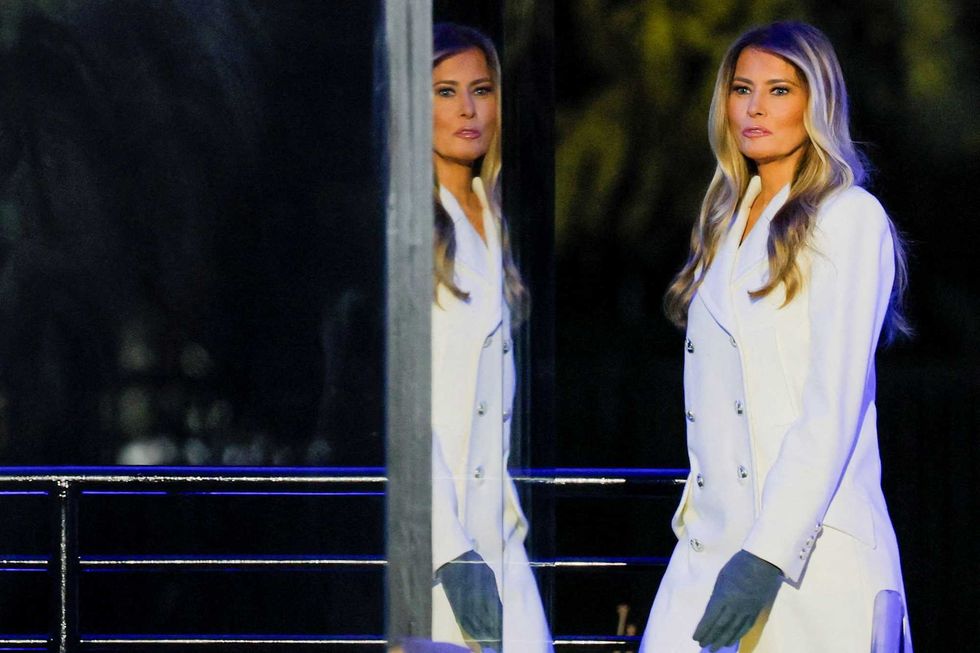
Journalist gives brutal review of Melania movie: 'Not a single person in the theater'
Journalist gives brutal review of Melania movie: 'Not a single person in the theater'

A Journalist gave a brutal review of the new Melania documentary, which has been criticized by those who say it won't make back the huge fees spent to make it,
Share
Rawstory2026/02/08 09:08
Jerome Powell’s Press Conference: Crucial Insights Unveiled for the Market’s Future

Jerome Powell’s Press Conference: Crucial Insights Unveiled for the Market’s Future

BitcoinWorld Jerome Powell’s Press Conference: Crucial Insights Unveiled for the Market’s Future The financial world, including the dynamic cryptocurrency market, often hangs on every word from the Federal Reserve. Recently, Jerome Powell’s press conference following the Federal Open Market Committee (FOMC) meeting concluded, leaving investors and analysts dissecting his remarks for clues about the future economic direction. This event is always a pivotal moment, shaping expectations for inflation, interest rates, and the overall stability of global markets. What Were the Key Takeaways from Jerome Powell’s Press Conference? During Jerome Powell’s press conference, the Fed Chair provided an update on the central bank’s monetary policy decisions and its economic outlook. His statements often reiterate the Fed’s dual mandate: achieving maximum employment and stable prices. This time was no different, with a strong emphasis on managing persistent inflation. Key points from the recent discussion included: Inflation Control: Powell emphasized the Fed’s unwavering commitment to bringing inflation back down to its 2% target. He reiterated that the fight against rising prices remains the top priority, even if it entails some economic slowdown. Interest Rate Policy: While the Fed’s stance on future interest rate adjustments was discussed, the path remains data-dependent. Powell indicated that decisions would continue to be made meeting-by-meeting, based on incoming economic data. Economic Projections: The updated Summary of Economic Projections (SEP) offered insights into the Fed’s forecasts for GDP growth, unemployment, and inflation. These projections help market participants gauge the central bank’s expectations for the economy’s trajectory. Quantitative Tightening (QT): The ongoing process of reducing the Fed’s balance sheet, known as quantitative tightening, was also a topic. This reduction in liquidity in the financial system has broad implications for asset prices. How Did Jerome Powell’s Remarks Impact Cryptocurrency Markets? The conclusion of Jerome Powell’s press conference often sends ripples through traditional financial markets, and cryptocurrencies are increasingly sensitive to these macroeconomic shifts. Digital assets, once thought to be uncorrelated, now frequently react to the Fed’s monetary policy signals. Higher interest rates, for instance, tend to make riskier assets like cryptocurrencies less attractive. This is because investors might prefer safer, interest-bearing investments. Consequently, we often see increased volatility in Bitcoin (BTC) and Ethereum (ETH) prices immediately following such announcements. The tightening of financial conditions, driven by the Fed, reduces overall liquidity in the system, which can put downward pressure on asset valuations across the board. However, some argue that this growing correlation signifies crypto’s increasing integration into the broader financial ecosystem. It suggests that institutional investors and mainstream finance are now paying closer attention to digital assets, treating them more like other risk-on investments. Navigating the Economic Landscape After Jerome Powell’s Press Conference For cryptocurrency investors, understanding the implications of Jerome Powell’s press conference is crucial for making informed decisions. The Fed’s policy trajectory directly influences the availability of capital and investor sentiment, which are key drivers for crypto valuations. Here are some actionable insights for navigating this environment: Stay Informed: Regularly monitor Fed announcements and economic data releases. Understanding the macroeconomic backdrop is as important as analyzing individual crypto projects. Assess Risk Tolerance: In periods of economic uncertainty and tighter monetary policy, a reassessment of personal risk tolerance is wise. Diversification within your crypto portfolio and across different asset classes can mitigate potential downsides. Focus on Fundamentals: While market sentiment can be swayed by macro news, projects with strong fundamentals, clear use cases, and robust development teams tend to perform better in the long run. Long-Term Perspective: Cryptocurrency markets are known for their volatility. Adopting a long-term investment horizon can help weather short-term fluctuations driven by macro events like Fed meetings. The challenges include potential continued volatility and reduced liquidity. However, opportunities may arise from market corrections, allowing strategic investors to accumulate assets at lower prices. In summary, Jerome Powell’s press conference provides essential guidance on the Fed’s economic strategy. Its conclusions have a profound impact on financial markets, including the dynamic world of cryptocurrencies. Staying informed, understanding the nuances of monetary policy, and maintaining a strategic investment approach are paramount for navigating the evolving economic landscape. The Fed’s actions underscore the interconnectedness of traditional finance and the burgeoning digital asset space. Frequently Asked Questions (FAQs) Q1: What is the Federal Open Market Committee (FOMC)? A1: The FOMC is the monetary policy-making body of the Federal Reserve System. It sets the federal funds rate target and directs open market operations, influencing the availability of money and credit in the U.S. economy. Q2: How do the Fed’s interest rate decisions typically affect cryptocurrency markets? A2: Generally, when the Fed raises interest rates, it makes borrowing more expensive and reduces liquidity in the financial system. This often leads investors to shy away from riskier assets like cryptocurrencies, potentially causing prices to decline. Conversely, lower rates can stimulate investment in riskier assets. Q3: What does “data-dependent” mean in the context of Fed policy? A3: “Data-dependent” means that the Federal Reserve’s future monetary policy decisions, such as interest rate adjustments, will primarily be based on the latest economic data. This includes inflation reports, employment figures, and GDP growth, rather than a predetermined schedule. Q4: Should I change my cryptocurrency investment strategy based on Jerome Powell’s press conference? A4: While it’s crucial to be aware of the macroeconomic environment shaped by Jerome Powell’s press conference, drastic changes to a well-researched investment strategy may not always be necessary. It’s recommended to review your portfolio, assess your risk tolerance, and consider if your strategy aligns with the current economic outlook, focusing on long-term fundamentals. If you found this analysis helpful, please consider sharing it with your network! Your insights and shares help us reach more readers interested in the intersection of traditional finance and the exciting world of cryptocurrencies. Spread the word! To learn more about the latest crypto market trends, explore our article on key developments shaping Bitcoin price action. This post Jerome Powell’s Press Conference: Crucial Insights Unveiled for the Market’s Future first appeared on BitcoinWorld.
Share
Coinstats2025/09/18 16:25
