The post Citrea bitcoin mainnet launches ctUSD stablecoin appeared on BitcoinEthereumNews.com. Backed by major venture investors, the Citrea bitcoin initiative The post Citrea bitcoin mainnet launches ctUSD stablecoin appeared on BitcoinEthereumNews.com. Backed by major venture investors, the Citrea bitcoin initiative

Citrea bitcoin mainnet launches ctUSD stablecoin

Backed by major venture investors, the Citrea bitcoin initiative is moving to turn dormant BTC reserves into an active, high-speed financial rail for global markets.

Citrea mainnet goes live with institutional focus

Citrea, a Bitcoin-focused application platform backed by Peter Thiel‘s Founders Fund and Galaxy Ventures, has launched its mainnet, the team announced on Tuesday. The rollout aims to connect bitcoin directly to lending, trading and U.S. dollar settlement, rather than leaving BTC locked in long-term cold storage.

The mainnet is designed to support Bitcoin-backed lending, trading and structured products that settle natively on the Bitcoin network. Moreover, Citrea positions this architecture as a base for an institutional-grade bitcoin settlement layer that does not depend on centralized intermediaries or wrapped BTC representations.

According to the team, the mainnet infrastructure is intended to make it easier for financial institutions and crypto-native platforms to deploy capital onchain while keeping direct exposure to Bitcoin as collateral.

ctUSD stablecoin and U.S. regulatory alignment

Alongside the mainnet, Citrea introduced ctUSD, a native stablecoin designed as the core settlement and liquidity instrument for the ecosystem. The token is fully backed by short-term U.S. Treasury bills and cash, and it is issued by MoonPay, a well-known payments and infrastructure provider in the digital asset sector.

Citrea is positioning ctUSD as a Treasury-backed stablecoin aligned with the GENIUS Act policy framework, in anticipation of forthcoming U.S. stablecoin regulations. However, the project emphasizes that ctUSD remains anchored to Bitcoin-based activity, providing dollar-denominated settlement while preserving BTC as the underlying security layer.

The project describes ctUSD as a liquidity and settlement layer that can underpin institutional-grade activity, including lending, derivatives and structured credit, without shifting value away from the Bitcoin ecosystem.

Mobilizing idle BTC into credit and capital markets

Citrea, which has raised $16.7 million across two funding rounds, is part of a broader wave of Bitcoin-focused projects seeking to expand the network’s role beyond passive holding. That said, the vision is not to replace Bitcoin’s store-of-value narrative, but to enable new credit and yield-generating avenues around it.

As Citrea frames it, the goal is BTC liquidity mobilization at institutional scale. Rather than leaving coins idle in wallets, holders could deploy their assets into lending markets, trading strategies and structured products that settle through ctUSD and remain secured by Bitcoin’s base layer.

Co-founder and CEO Orkun Kilic of Chainway Labs, the company building Citrea, said the mainnet is designed to bring Bitcoin-secured financial activity fully onchain. In his view, the platform can enable BTC-backed lending and bitcoin institutional credit with settlements conducted via ctUSD, giving professional investors a familiar, dollar-based interface around Bitcoin collateral.

Growing competition in Bitcoin-focused infrastructure

Citrea is entering an increasingly competitive field of infrastructure projects that aim to unlock new use cases on the world’s first blockchain. Moreover, the platform is positioning itself against other Bitcoin-oriented networks that seek to extend programmability and capital market functions beyond simple transfers and long-term holding.

Prominent rivals cited by the project include Botanix and Stacks, both often described as Bitcoin layer-2s that enable smart contracts and more complex financial products. However, Citrea stresses its focus on institutional credit, collateralized lending and native settlement as differentiating features.

The team claims that more than 30 Bitcoin-native applications are already prepared to build on the network or integrate its services. These apps are expected to cover a range of financial use cases, from trading platforms and lending protocols to structured products built around Bitcoin collateral and ctUSD settlement.

From passive holding to active Bitcoin capital markets

Across the industry, a growing cohort of developers and investors is pushing to transform Bitcoin from a predominantly passive asset into the foundation of an active capital market. In this context, the citrea bitcoin vision centers on enabling lending, stablecoin settlement and structured finance without requiring users to leave the Bitcoin ecosystem.

Citrea argues that anchoring settlement and collateral to Bitcoin, while using ctUSD for U.S. dollar exposure, can provide a more resilient alternative to wrapped tokens on other chains. Moreover, the team believes this structure could appeal to institutions that want both regulatory clarity and direct ties to Bitcoin’s security model.

As the mainnet goes live and ctUSD enters circulation, Citrea will now need to demonstrate real-world demand for its Bitcoin-based credit markets. The coming months will show whether its approach can meaningfully shift BTC from static storage into an onchain, institutional-grade financial system.

In summary, Citrea’s mainnet launch and ctUSD rollout mark a concerted effort to turn dormant Bitcoin holdings into collateral for lending, credit and settlement, potentially reshaping how BTC participates in global capital markets.

Source: https://en.cryptonomist.ch/2026/01/28/citrea-bitcoin-mainnet-ctusd/

Disclaimer: The articles reposted on this site are sourced from public platforms and are provided for informational purposes only. They do not necessarily reflect the views of MEXC. All rights remain with the original authors. If you believe any content infringes on third-party rights, please contact service@support.mexc.com for removal. MEXC makes no guarantees regarding the accuracy, completeness, or timeliness of the content and is not responsible for any actions taken based on the information provided. The content does not constitute financial, legal, or other professional advice, nor should it be considered a recommendation or endorsement by MEXC.

You May Also Like

CME Group to Launch Solana and XRP Futures Options

CME Group to Launch Solana and XRP Futures Options

The post CME Group to Launch Solana and XRP Futures Options appeared on BitcoinEthereumNews.com. An announcement was made by CME Group, the largest derivatives exchanger worldwide, revealed that it would introduce options for Solana and XRP futures. It is the latest addition to CME crypto derivatives as institutions and retail investors increase their demand for Solana and XRP. CME Expands Crypto Offerings With Solana and XRP Options Launch According to a press release, the launch is scheduled for October 13, 2025, pending regulatory approval. The new products will allow traders to access options on Solana, Micro Solana, XRP, and Micro XRP futures. Expiries will be offered on business days on a monthly, and quarterly basis to provide more flexibility to market players. CME Group said the contracts are designed to meet demand from institutions, hedge funds, and active retail traders. According to Giovanni Vicioso, the launch reflects high liquidity in Solana and XRP futures. Vicioso is the Global Head of Cryptocurrency Products for the CME Group. He noted that the new contracts will provide additional tools for risk management and exposure strategies. Recently, CME XRP futures registered record open interest amid ETF approval optimism, reinforcing confidence in contract demand. Cumberland, one of the leading liquidity providers, welcomed the development and said it highlights the shift beyond Bitcoin and Ethereum. FalconX, another trading firm, added that rising digital asset treasuries are increasing the need for hedging tools on alternative tokens like Solana and XRP. High Record Trading Volumes Demand Solana and XRP Futures Solana futures and XRP continue to gain popularity since their launch earlier this year. According to CME official records, many have bought and sold more than 540,000 Solana futures contracts since March. A value that amounts to over $22 billion dollars. Solana contracts hit a record 9,000 contracts in August, worth $437 million. Open interest also set a record at 12,500 contracts.…
Share
BitcoinEthereumNews2025/09/18 01:39
China Blocks Nvidia’s RTX Pro 6000D as Local Chips Rise

China Blocks Nvidia’s RTX Pro 6000D as Local Chips Rise

The post China Blocks Nvidia’s RTX Pro 6000D as Local Chips Rise appeared on BitcoinEthereumNews.com. China Blocks Nvidia’s RTX Pro 6000D as Local Chips Rise China’s internet regulator has ordered the country’s biggest technology firms, including Alibaba and ByteDance, to stop purchasing Nvidia’s RTX Pro 6000D GPUs. According to the Financial Times, the move shuts down the last major channel for mass supplies of American chips to the Chinese market. Why Beijing Halted Nvidia Purchases Chinese companies had planned to buy tens of thousands of RTX Pro 6000D accelerators and had already begun testing them in servers. But regulators intervened, halting the purchases and signaling stricter controls than earlier measures placed on Nvidia’s H20 chip. Image: Nvidia An audit compared Huawei and Cambricon processors, along with chips developed by Alibaba and Baidu, against Nvidia’s export-approved products. Regulators concluded that Chinese chips had reached performance levels comparable to the restricted U.S. models. This assessment pushed authorities to advise firms to rely more heavily on domestic processors, further tightening Nvidia’s already limited position in China. China’s Drive Toward Tech Independence The decision highlights Beijing’s focus on import substitution — developing self-sufficient chip production to reduce reliance on U.S. supplies. “The signal is now clear: all attention is focused on building a domestic ecosystem,” said a representative of a leading Chinese tech company. Nvidia had unveiled the RTX Pro 6000D in July 2025 during CEO Jensen Huang’s visit to Beijing, in an attempt to keep a foothold in China after Washington restricted exports of its most advanced chips. But momentum is shifting. Industry sources told the Financial Times that Chinese manufacturers plan to triple AI chip production next year to meet growing demand. They believe “domestic supply will now be sufficient without Nvidia.” What It Means for the Future With Huawei, Cambricon, Alibaba, and Baidu stepping up, China is positioning itself for long-term technological independence. Nvidia, meanwhile, faces…
Share
BitcoinEthereumNews2025/09/18 01:37
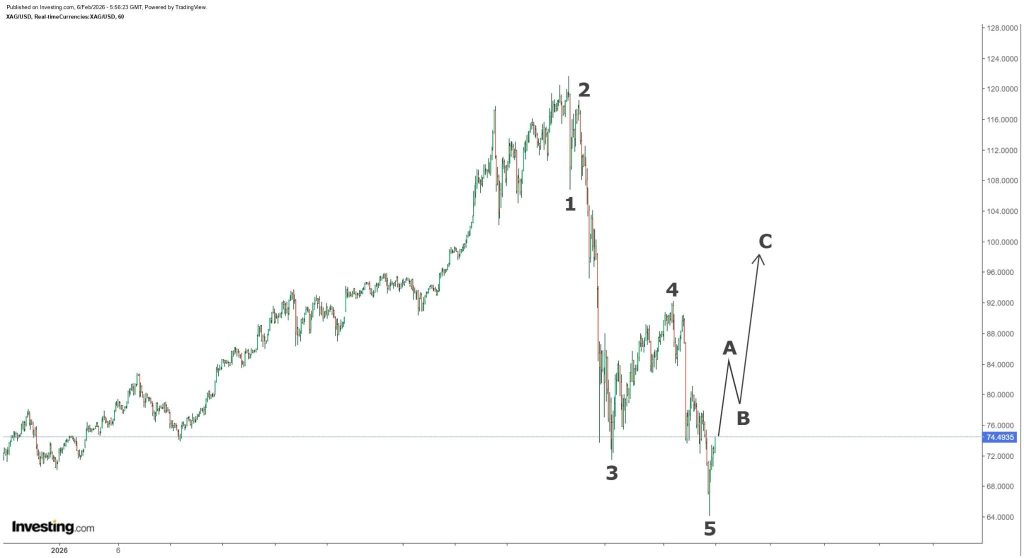
Silver Price Crash Is Over “For Real This Time,” Analyst Predicts a Surge Back Above $90

Silver Price Crash Is Over “For Real This Time,” Analyst Predicts a Surge Back Above $90

Silver has been taking a beating lately, and the Silver price hasn’t exactly been acting like a safe haven. After running up into the highs, the whole move reversed
Share
Captainaltcoin2026/02/07 03:15