

Federal Reserve’s Crucial Shift: Powell Signals Hopeful Employment Stability in Labor Market

BitcoinWorld
Federal Reserve’s Crucial Shift: Powell Signals Hopeful Employment Stability in Labor Market
WASHINGTON, D.C. – March 15, 2025: Federal Reserve Chair Jerome Powell delivered a cautiously optimistic assessment of the U.S. labor market this week, marking a significant policy pivot. The central bank removed language about “downside risks to employment” from its official statement, signaling what Powell described as “some signs of stability” in job markets. This subtle yet crucial shift carries profound implications for monetary policy, financial markets, and the broader economy as we navigate 2025’s economic landscape.
Federal Reserve’s Policy Shift: Analyzing Powell’s Employment Stability Signals
The Federal Open Market Committee’s latest statement underwent a critical revision. Previously, the statement contained explicit warnings about employment risks. However, the March 2025 meeting produced a notably different document. Powell explained this change during his press conference, stating the committee observed “some signs of stability” in labor market conditions. Consequently, the Fed adjusted its communication strategy to reflect this evolving assessment.
This policy adjustment follows eighteen months of volatile employment data. Initially, the post-pandemic recovery created unprecedented job growth. Subsequently, inflationary pressures prompted aggressive rate hikes. Then, labor markets showed remarkable resilience despite tighter financial conditions. Now, recent data suggests a potential normalization phase. The unemployment rate has remained between 3.8% and 4.0% for six consecutive months. Additionally, job openings have stabilized near pre-pandemic levels. Meanwhile, wage growth has moderated to more sustainable levels.
The Data Behind the Decision
Federal Reserve economists analyzed multiple indicators before recommending the language change. Key metrics showing stabilization include:
- Initial Claims Consistency: Weekly unemployment claims have fluctuated within a narrow 210,000-230,000 range
- Job Openings Ratio: The ratio of job openings to unemployed workers declined from 2.0 to 1.4
- Quit Rate Normalization: The “quits rate” returned to 2019 levels at 2.3%
- Participation Stability: Labor force participation held steady at 62.5% for three quarters
| Indicator | Q4 2024 | Q1 2025 | Trend |
|---|---|---|---|
| Unemployment Rate | 3.9% | 3.8% | Stable |
| Monthly Job Gains | 225,000 | 190,000 | Moderating |
| Wage Growth (YoY) | 4.2% | 3.9% | Decelerating |
| Labor Force Participation | 62.5% | 62.5% | Unchanged |
Historical Context: Federal Reserve Communication Evolution
Federal Reserve statements serve as crucial policy tools. Historically, these communications evolved significantly. For instance, the 1990s featured brief, technical statements. Then, the 2008 financial crisis prompted greater transparency. Subsequently, forward guidance became a standard practice. Recently, pandemic-era statements emphasized unprecedented uncertainty. Now, the current shift reflects a return to more normalized conditions.
Powell’s approach mirrors previous chairs’ strategies during transition periods. Alan Greenspan famously used ambiguous language during the 1990s expansion. Similarly, Ben Bernanke introduced explicit thresholds during the recovery from the Great Recession. Janet Yellen emphasized data dependence throughout her tenure. Powell’s current communication balances optimism with caution, acknowledging progress while avoiding premature declarations of victory.
Expert Perspectives on the Policy Adjustment
Former Federal Reserve economists provide valuable context for this development. Dr. Claudia Sahm, creator of the Sahm Rule recession indicator, notes: “The Fed’s language change represents a technical adjustment based on observable data. However, Powell correctly emphasizes avoiding over-interpretation. Labor markets remain dynamic, and stability today doesn’t guarantee stability tomorrow.”
Meanwhile, Harvard economist Jason Furman observes: “This shift suggests the Fed believes the worst employment risks have passed. The central bank can now focus more squarely on inflation persistence without worrying about simultaneously causing a employment collapse. This represents an important milestone in the post-pandemic normalization process.”
Market Implications and Economic Consequences
Financial markets responded moderately to Powell’s announcement. Initially, Treasury yields edged slightly higher. Then, equity markets showed mixed reactions. Specifically, rate-sensitive sectors like technology underperformed. Conversely, cyclical sectors like industrials gained modestly. The dollar index strengthened marginally against major currencies.
The policy shift carries several economic implications. First, it suggests reduced probability of emergency rate cuts. Second, it indicates potential for prolonged higher rates. Third, it implies confidence in economic resilience. Fourth, it reduces uncertainty for business planning. Finally, it provides clearer signals for labor market participants.
Business leaders have welcomed the increased clarity. Microsoft President Brad Smith commented: “Predictable policy environments support investment decisions. The Fed’s clearer assessment helps businesses plan hiring and expansion with greater confidence.” Similarly, National Federation of Independent Business surveys show improved sentiment among small business owners regarding hiring plans.
The Inflation-Employment Tradeoff Revisited
Powell’s comments revive discussions about the Phillips Curve relationship. Traditionally, economists believed in a tradeoff between inflation and unemployment. Recently, this relationship appeared to break down. However, current data suggests a possible re-emergence. Inflation has moderated from 9% peaks to approximately 3%. Simultaneously, employment has stabilized without significant job losses.
This development challenges earlier predictions of necessary recession to control inflation. Instead, the economy appears headed toward a “soft landing.” Powell acknowledged this possibility while emphasizing continued vigilance. The Fed’s dual mandate of price stability and maximum employment now appears more balanced than at any point since 2021.
Sectoral Analysis: Where Employment Stability Manifests
Employment stabilization varies across economic sectors. Healthcare continues showing robust hiring, adding 45,000 positions monthly. Government employment grows steadily at 25,000 monthly gains. Construction maintains moderate growth despite higher rates. Manufacturing shows mixed signals with some regional weakness. Technology sector hiring has stabilized after 2023 contractions.
Geographic patterns also emerge. Southern states lead job creation, particularly Texas and Florida. Midwest manufacturing hubs show stability despite earlier concerns. Coastal technology centers exhibit more variable conditions. Rural employment patterns remain challenging but no longer deteriorating.
Demographic analysis reveals important nuances. Prime-age employment (25-54) reached 80.5%, matching pre-pandemic highs. Minority unemployment gaps narrowed significantly since 2020. Women’s labor force participation recovered fully from pandemic losses. Older worker participation remains elevated compared to historical norms.
Cautionary Notes: Powell’s Warning Against Over-Interpretation
Despite the optimistic signals, Powell emphasized caution repeatedly. He specifically warned against “over-interpreting these signals.” This careful language reflects several concerns. First, economic data remains subject to revisions. Second, geopolitical uncertainties persist. Third, financial conditions could tighten unexpectedly. Fourth, consumer behavior might shift rapidly.
The Federal Reserve maintains multiple policy options. Interest rates could remain elevated for extended periods. Alternatively, rate cuts could commence if conditions deteriorate. Quantitative tightening continues gradually. Forward guidance remains data-dependent. Policy flexibility represents a key strength in uncertain environments.
International factors also warrant consideration. European Central Bank policies influence global financial conditions. Chinese economic performance affects worldwide growth. Emerging market debt situations create potential spillovers. Commodity price volatility persists despite recent stabilization.
Conclusion
Federal Reserve Chair Jerome Powell’s announcement marks a significant moment in post-pandemic economic policy. The removal of downside employment risk language reflects observable labor market stabilization. However, Powell’s cautious tone emphasizes continued vigilance. The Federal Reserve balances optimism with realism as it navigates toward policy normalization. Employment stability provides crucial foundation for sustainable economic expansion. Markets and policymakers will monitor subsequent data for confirmation of these trends. The 2025 economic outlook appears brighter due to these developments, though challenges undoubtedly remain on the path to complete recovery.
FAQs
Q1: What specific language did the Federal Reserve remove from its statement?
The Federal Open Market Committee removed language referencing “downside risks to employment” from its official policy statement. This phrase had appeared in statements since mid-2023 when concerns about labor market deterioration were more pronounced.
Q2: What data indicates employment stability according to Powell?
Chair Powell cited multiple indicators including stable unemployment rates between 3.8-4.0%, consistent job gains around 190,000 monthly, normalized quit rates, and steady labor force participation at 62.5%. These metrics suggest the labor market is neither overheating nor deteriorating rapidly.
Q3: How does this affect interest rate decisions?
Reduced employment concerns allow the Federal Reserve to focus more squarely on inflation persistence. This decreases the likelihood of emergency rate cuts to support employment, potentially leading to prolonged higher rates until inflation sustainably reaches the 2% target.
Q4: What sectors show the strongest employment stability?
Healthcare, government, and construction sectors demonstrate particularly stable employment patterns. Healthcare adds approximately 45,000 jobs monthly, government employment grows steadily, and construction maintains moderate growth despite higher financing costs.
Q5: Could the employment situation change quickly despite these signals?
Yes, Powell emphasized that economic conditions remain dynamic. Historical patterns show labor markets can shift rapidly due to external shocks, policy changes, or unexpected economic developments. The Fed maintains policy flexibility to respond to changing conditions as needed.
This post Federal Reserve’s Crucial Shift: Powell Signals Hopeful Employment Stability in Labor Market first appeared on BitcoinWorld.
You May Also Like

Three dormant wallets, suspected to belong to the same entity, purchased 5,970 ETH eight hours ago.
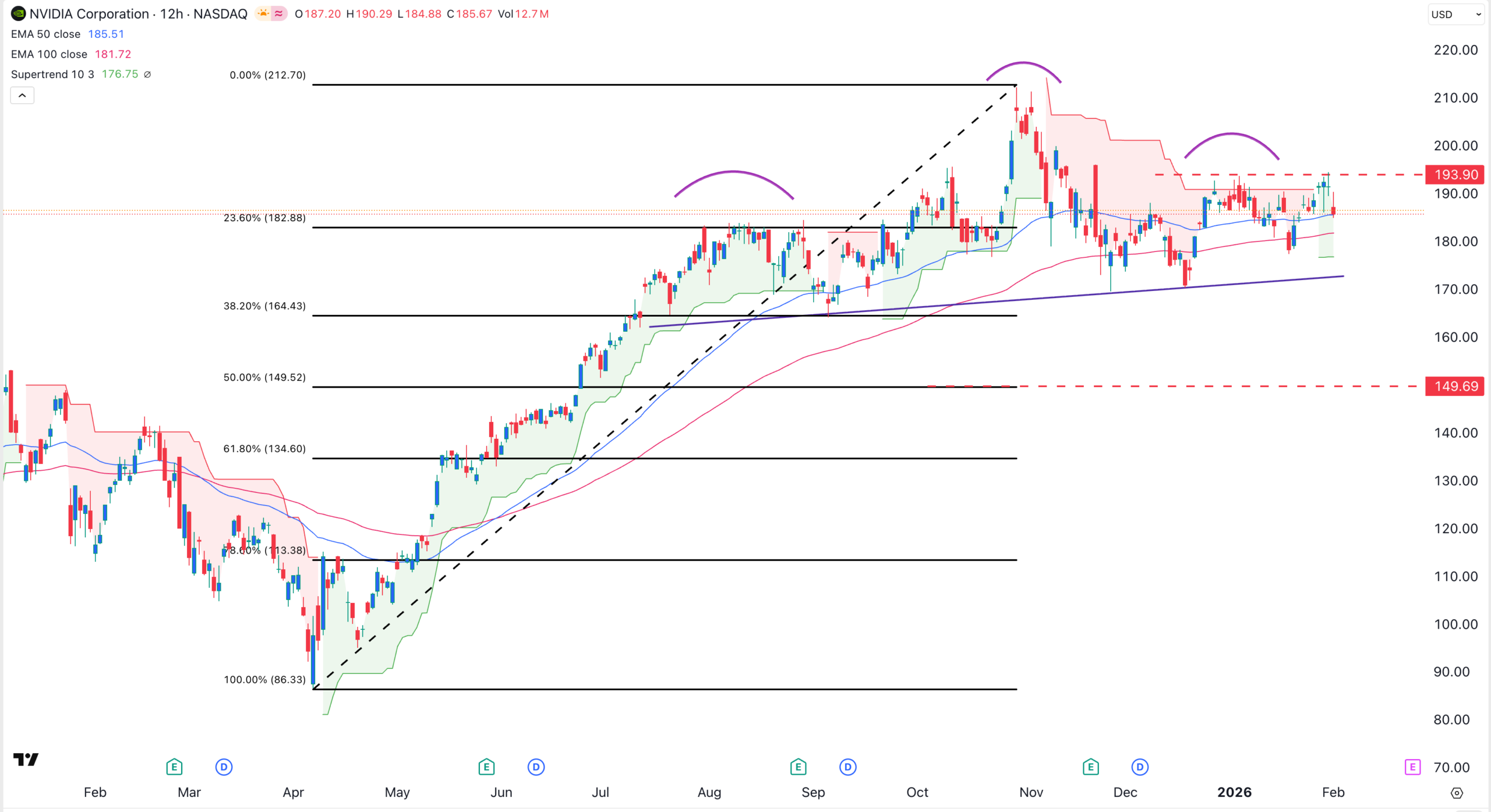
NVIDIA Stock Price Analysis as OpenAI Issues Concerns About its Chips
