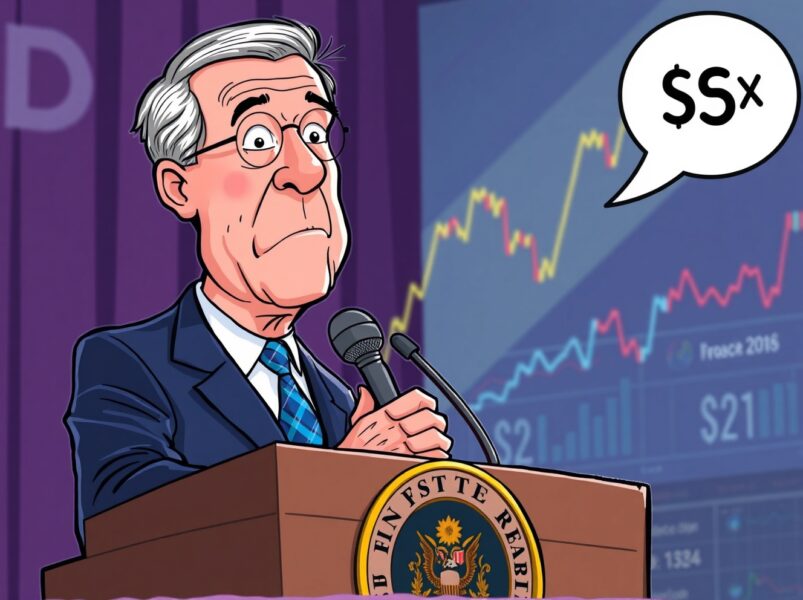
US Crypto Bill Poised for Passage: HSBC’s Crucial Analysis Reveals Path Forward Despite Coinbase Opposition

BitcoinWorld
US Crypto Bill Poised for Passage: HSBC’s Crucial Analysis Reveals Path Forward Despite Coinbase Opposition
WASHINGTON, D.C. – March 2025 – The United States cryptocurrency regulatory landscape faces a pivotal moment as global banking giant HSBC delivers a crucial analysis suggesting the proposed crypto market structure bill will likely pass into law, despite recent opposition from industry leader Coinbase. This development marks a significant turning point for digital asset regulation, potentially establishing the first comprehensive federal framework for cryptocurrency markets that could shape institutional participation for years to come.
HSBC’s Analysis of the US Crypto Bill’s Political Trajectory
HSBC’s financial analysts recently published a detailed assessment of the legislative process surrounding the Digital Asset Market Structure Act. The bank’s research team, leveraging decades of experience monitoring financial regulation across global markets, concluded that political momentum favors the bill’s eventual passage. According to their institutional perspective, lawmakers from both major parties recognize the urgent need for regulatory clarity in the cryptocurrency sector.
Furthermore, the banking institution emphasized that legislative compromise often becomes necessary in complex financial regulation. The current political environment, characterized by divided government and competing priorities, actually increases the likelihood of moderate legislation gaining bipartisan support. HSBC’s analysis specifically noted that the absence of comprehensive regulation creates greater uncertainty for traditional financial institutions considering cryptocurrency exposure.
The Institutional Perspective on Regulatory Frameworks
Traditional financial institutions like HSBC require predictable legal environments before committing substantial capital to new asset classes. The bank’s statement highlighted this fundamental requirement, explaining that institutional investors typically avoid markets with ambiguous regulatory status. This perspective comes from HSBC’s direct experience navigating multiple international regulatory regimes across its global operations.
Consequently, the banking giant views even imperfect legislation as superior to regulatory vacuum. Their analysis draws parallels with historical financial market developments, where initial regulatory frameworks evolved through subsequent amendments and judicial interpretations. This institutional viewpoint contrasts with some cryptocurrency native companies that prefer minimal regulation, highlighting a fundamental tension within the broader digital asset ecosystem.
Coinbase’s Withdrawal and the Stablecoin Controversy
Coinbase, America’s largest cryptocurrency exchange, recently withdrew its support for the proposed legislation following the introduction of provisions concerning stablecoin regulation. The company specifically objected to language that could potentially restrict interest payments on stablecoin holdings. This development created significant uncertainty about the bill’s prospects, given Coinbase’s substantial lobbying influence and industry standing.
The exchange’s concerns center on Section 307 of the proposed legislation, which addresses permissible activities for stablecoin issuers. According to multiple legal analyses, this section contains ambiguous language that regulatory agencies might interpret as prohibiting yield-generating mechanisms for certain stablecoin arrangements. Coinbase executives have argued this interpretation would disadvantage American companies compared to international competitors.
Key Provisions in Controversy: Current Draft vs. Industry Concerns| Legislative Provision | Industry Interpretation | Potential Impact |
|---|---|---|
| Section 307: Stablecoin Operations | Possible ban on interest-bearing accounts | Reduced competitiveness for US exchanges |
| Section 202: Market Structure Definitions | Clarity on security vs. commodity classification | Reduced regulatory uncertainty |
| Section 415: Custody Requirements | Enhanced consumer protection standards | Increased operational costs for providers |
Despite this opposition, HSBC’s analysis suggests that Coinbase’s withdrawal may not derail the legislative process. The banking institution points to several factors supporting this conclusion:
- Broader Industry Support: Multiple other cryptocurrency companies continue supporting the legislation
- Traditional Finance Alignment: Major banks and asset managers favor regulatory clarity
- Bipartisan Sponsorship: The bill enjoys support from both Democratic and Republican legislators
- Administration Priority: The current administration has identified cryptocurrency regulation as a policy priority
The Legislative Timeline and Political Calculus
The Digital Asset Market Structure Act has progressed through multiple congressional committees since its introduction in early 2024. Legislative tracking data shows the bill has accumulated more co-sponsors than any previous cryptocurrency legislation, indicating substantial congressional interest. Committee hearings have featured testimony from both industry representatives and traditional financial regulators, creating a comprehensive legislative record.
Political analysts note that midterm election results created a legislative environment where both parties seek tangible policy achievements. Cryptocurrency regulation represents one of the few financial policy areas where bipartisan agreement appears possible. Furthermore, several legislative staffers have indicated privately that the stablecoin provisions remain subject to negotiation, suggesting possible amendments to address industry concerns.
Historical Precedents in Financial Regulation
Financial regulation experts point to historical parallels that support HSBC’s assessment. The passage of the Commodity Futures Modernization Act in 2000, despite significant industry opposition, established the regulatory framework for derivatives markets that persists today. Similarly, the Dodd-Frank Act of 2010 underwent substantial modifications between introduction and passage while maintaining its core regulatory architecture.
These historical examples demonstrate that comprehensive financial legislation frequently passes despite objections from affected industries. The legislative process inherently involves compromise, with final bills often representing balanced approaches that satisfy multiple stakeholders partially while disappointing them completely. This historical context informs HSBC’s prediction that the current cryptocurrency legislation will follow a similar trajectory.
Potential Impacts on Market Structure and Participation
The proposed legislation would fundamentally reshape cryptocurrency market structure in the United States. Key provisions would establish clear jurisdictional boundaries between the Securities and Exchange Commission (SEC) and the Commodity Futures Trading Commission (CFTC). This jurisdictional clarity alone could accelerate institutional participation by eliminating regulatory ambiguity that has persisted for nearly a decade.
Market analysts predict several specific outcomes if the legislation passes:
- Increased Institutional Investment: Traditional asset managers could allocate more capital to digital assets
- Enhanced Consumer Protections: Standardized custody and disclosure requirements would emerge
- Market Consolidation: Smaller exchanges might struggle with compliance costs
- Innovation Guidance: Clearer rules would guide product development within established parameters
International observers particularly note that comprehensive US regulation could establish de facto global standards, similar to how US securities laws influence international capital markets. This potential for extraterritorial influence increases the stakes of the current legislative debate, explaining why global institutions like HSBC monitor developments so closely.
Conclusion
The US crypto bill represents a watershed moment for digital asset regulation, with HSBC’s analysis providing crucial institutional perspective on its likely passage despite Coinbase opposition. The banking giant’s assessment emphasizes that regulatory clarity, however imperfect, typically precedes substantial institutional investment in emerging asset classes. As legislative negotiations continue, market participants should prepare for a new regulatory era that balances innovation with consumer protection and market integrity. The final legislation will likely establish the foundational framework that governs cryptocurrency markets for the next decade, making the current debate particularly consequential for the entire digital asset ecosystem.
FAQs
Q1: Why does HSBC believe the crypto bill will pass despite Coinbase’s opposition?
HSBC’s analysis considers broader political dynamics, including bipartisan support, administration priorities, and the historical tendency for financial regulation to advance despite industry objections. The bank believes the need for regulatory clarity outweighs specific industry concerns.
Q2: What specific provision caused Coinbase to withdraw support?
Coinbase objected to Section 307 of the proposed legislation, which contains language that might be interpreted as prohibiting interest payments on stablecoin holdings. The company believes this would disadvantage US-based exchanges against international competitors.
Q3: How would this legislation affect ordinary cryptocurrency investors?
The legislation would likely enhance consumer protections through standardized custody requirements and clearer disclosure rules. However, it might also reduce certain yield-generating opportunities available through decentralized finance platforms.
Q4: What timeline does HSBC predict for the legislative process?
While not specifying exact dates, HSBC’s analysis suggests the bill could reach a floor vote within the current congressional session, with possible passage before year-end 2025, depending on amendment negotiations.
Q5: How might this legislation affect cryptocurrency innovation in the United States?
The legislation would establish clearer regulatory boundaries, potentially guiding innovation within defined parameters. Some industry participants worry this could stifle experimental approaches, while others believe it would encourage responsible innovation with reduced regulatory uncertainty.
This post US Crypto Bill Poised for Passage: HSBC’s Crucial Analysis Reveals Path Forward Despite Coinbase Opposition first appeared on BitcoinWorld.
You May Also Like

HitPaw API is Integrated by Comfy for Professional Image and Video Enhancement to Global Creators

Journalist gives brutal review of Melania movie: 'Not a single person in the theater'