Senator Roger Marshall has agreed not to offer a controversial credit card swipe fee amendment during Thursday’s Senate Agriculture Committee markup of landmarkSenator Roger Marshall has agreed not to offer a controversial credit card swipe fee amendment during Thursday’s Senate Agriculture Committee markup of landmark

Senator Shelves Card Fee Fight to Save Crypto Bill From Collapse – Will It Pass Now?

2026/01/27 17:58
4 min read

Senator Roger Marshall has agreed not to offer a controversial credit card swipe fee amendment during Thursday’s Senate Agriculture Committee markup of landmark crypto legislation, removing a major obstacle that threatened to derail the bill’s passage.

The Kansas Republican filed the amendment last week seeking to force payment networks to compete on swipe fees, mirroring his longstanding Credit Card Competition Act co-sponsored with Senator Dick Durbin.

However, Marshall agreed in private Saturday conversations not to call up the provision, which had pitted the finance industry against major retailers and jeopardized support from Republicans expected to back the underlying digital asset legislation, according to Politico.
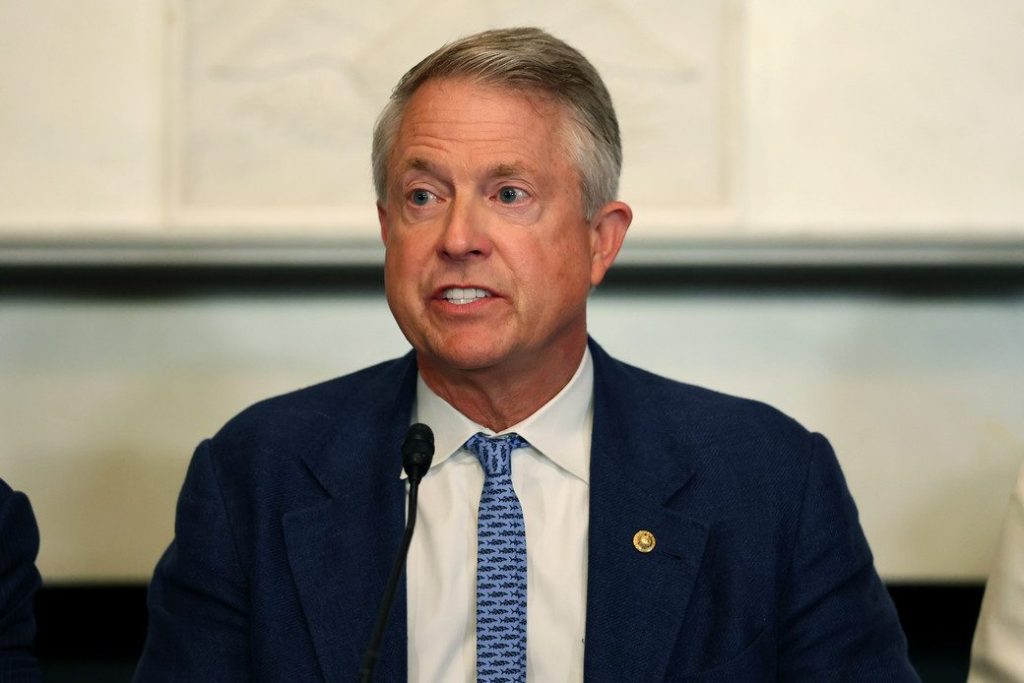
Crypto Bill Card Fee - Senator Marshall ImageSource: Politico

White House Clears Internal Obstacle as External Threats Mount

White House officials became directly involved in preventing the amendment’s consideration, with one source confirming the Marshall provision would have “jeopardized” passage of the crypto bill the administration is pressing to advance through committee.

Durbin, who co-sponsored the credit card measure alongside Senator Peter Welch, is not currently expected to offer the amendment at the markup, though no final decision has been made.

While the credit card dispute now appears resolved, the Thursday markup faces a potentially more serious threat from Washington’s looming budget crisis.

Congress is racing toward a partial government shutdown deadline this weekend, with Senate Democrats blocking a $1.3 trillion appropriations package following a deadly Minneapolis shooting by a Border Patrol agent.

The standoff threatens to furlough hundreds of thousands of federal workers and could disrupt the legislative calendar just as crypto legislation reaches a critical juncture.

Former Utah Governor Gary Herbert called the shutdown threat evidence of “a lack of leadership, a lack of ability to work together.

Agriculture Bill Advances Despite Partisan Fractures and Timing Risks

Despite these challenges, the Agriculture Committee’s markup represents the first formal Senate vote on comprehensive legislation to reform the crypto market structure after months of delays across multiple committees.

The bill would expand the Commodity Futures Trading Commission’s authority over digital commodities, including Bitcoin, though Chairman John Boozman released the text without securing Democratic support after bipartisan negotiations collapsed.

Although it’s unfortunate that we couldn’t reach an agreement, I am grateful for the collaboration that has made this legislation better,” Boozman said, acknowledging that “differences remain on fundamental policy issues.

The committee’s decision to proceed reflects growing urgency as alternative legislative paths have stalled.

The Agriculture Committee’s legislation has become the primary vehicle for crypto regulation after the Senate Banking Committee postponed its parallel CLARITY Act until late February or March, instead pivoting to housing legislation following President Trump’s affordability push.

Banking’s bill stalled after Coinbase CEO Brian Armstrong withdrew support over restrictions on tokenized equities and stablecoin rewards, calling certain provisions “catastrophic.”

Trump Pushes for Passage as Democrats Demand Ethics Guardrails

President Trump confirmed at Davos that he expects to sign crypto market structure legislation “very soon,” stating his administration is working to ensure “America remains the crypto capital of the world.

His public pressure comes as Democratic opposition has intensified over ethics concerns, with Senator Adam Schiff demanding controls covering the White House and Senator Ruben Gallego calling ethics guardrails “a red line.

Beyond partisan divisions, the Thursday markup must navigate the same budget crisis threatening to shut down parts of the federal government.

If Congress fails to pass the appropriations package by Saturday, agencies including DHS and the Pentagon would enter shutdown mode, potentially delaying legislative business and forcing senators to prioritize budget negotiations over crypto regulation.

Patrick Witt, White House Executive Director of the President’s Crypto Council, has urged immediate passage despite imperfect provisions, warning that delays risk “punitive legislation in the wake of a crisis, à la Dodd-Frank” under future Democratic control.

You might not love every part of the CLARITY Act, but I can guarantee you’ll hate a future Dem version even more,” Witt wrote.

Earlier this month, Investment bank TD Cowen also warned the legislation could slip to 2027 as lawmakers position for midterm elections, with full implementation potentially delayed until 2029.

The combination of shutdown risks, partisan ethics disputes, and electoral timing creates a narrow window for passage that Thursday’s markup may represent the industry’s best opportunity to secure regulatory clarity before political conditions deteriorate further.

Disclaimer: The articles reposted on this site are sourced from public platforms and are provided for informational purposes only. They do not necessarily reflect the views of MEXC. All rights remain with the original authors. If you believe any content infringes on third-party rights, please contact service@support.mexc.com for removal. MEXC makes no guarantees regarding the accuracy, completeness, or timeliness of the content and is not responsible for any actions taken based on the information provided. The content does not constitute financial, legal, or other professional advice, nor should it be considered a recommendation or endorsement by MEXC.

You May Also Like

Dramatic Spot Crypto ETF Outflows Rock US Market

Dramatic Spot Crypto ETF Outflows Rock US Market

BitcoinWorld Dramatic Spot Crypto ETF Outflows Rock US Market The cryptocurrency market is always buzzing with activity, and recent developments surrounding US spot Bitcoin and Ethereum ETFs have certainly grabbed attention. After a brief period of inflows, these prominent investment vehicles experienced a significant reversal, recording notable Spot Crypto ETF Outflows on September 22. This shift has sparked discussions among investors and analysts alike, prompting a closer look at what drove these movements and their potential implications for the broader digital asset landscape. What Triggered These Dramatic Spot Crypto ETF Outflows? On September 22, both US spot Bitcoin and Ethereum ETFs collectively observed net outflows, effectively ending a two-day streak of positive inflows. This sudden reversal indicates a potential shift in investor sentiment or market dynamics. Understanding the specifics of these Spot Crypto ETF Outflows is crucial for anyone tracking the pulse of the crypto market. Data from Trader T revealed that spot Bitcoin ETFs alone registered total net outflows amounting to $363.17 million. This substantial figure highlights a notable selling pressure across several key funds. Fidelity’s FBTC led the pack with $276.68 million in outflows. Ark Invest’s ARKB followed, seeing $52.30 million depart. Grayscale’s GBTC, a long-standing player, recorded $24.65 million in outflows. VanEck’s HODL also contributed with $9.54 million. Interestingly, BlackRock’s IBIT and several other funds reported zero flows on this particular day, indicating a concentrated selling activity in specific products rather than a market-wide exodus. How Did Ethereum ETFs Respond to the Spot Crypto ETF Outflows? The trend of net outflows wasn’t limited to Bitcoin. Spot Ethereum ETFs also faced considerable pressure, collectively experiencing $76.06 million in net outflows during the same period. This indicates a broader market sentiment affecting both major cryptocurrencies. Fidelity’s FETH accounted for $33.12 million of the outflows. Bitwise’s ETHW saw $22.30 million withdrawn. BlackRock’s ETHA registered $15.19 million in outflows. Grayscale’s Mini ETH contributed $5.45 million to the total. These figures underscore that while Bitcoin ETFs saw larger absolute outflows, Ethereum ETFs also experienced a significant cooling of investor interest. Such synchronized movements often suggest overarching market factors rather than isolated fund-specific issues. What Are the Broader Implications of These Spot Crypto ETF Outflows? The reversal from inflows to substantial Spot Crypto ETF Outflows could signal a few things. It might reflect profit-taking by investors after recent market rallies, or it could indicate a cautious stance due to macroeconomic uncertainties. Moreover, such movements can influence market sentiment, potentially leading to increased volatility in the short term. For investors, monitoring these ETF flows provides valuable insights into institutional and retail sentiment. Significant outflows can sometimes precede price corrections, offering an opportunity for strategic re-evaluation. Conversely, sustained inflows often suggest growing confidence in digital assets. It is important to remember that ETF flows are just one metric among many. A holistic view, considering on-chain data, macroeconomic indicators, and regulatory news, is essential for making informed decisions in the dynamic crypto space. These Spot Crypto ETF Outflows serve as a reminder of the market’s inherent volatility and the need for continuous vigilance. In summary, the recent dramatic Spot Crypto ETF Outflows from US Bitcoin and Ethereum funds mark a notable shift in the investment landscape. While a two-day inflow streak was broken, these movements are a natural part of a maturing market. They highlight the ebb and flow of investor confidence and the dynamic nature of digital asset investments. As the market continues to evolve, keeping a close eye on these ETF trends will remain crucial for understanding broader sentiment and potential future directions. Frequently Asked Questions (FAQs) Q1: What does “net outflows” mean for crypto ETFs? A1: Net outflows occur when investors redeem more shares from an ETF than they purchase, indicating more money is leaving the fund than entering it. Q2: Which US spot Bitcoin ETFs saw the largest outflows? A2: Fidelity’s FBTC led with $276.68 million in outflows, followed by Ark Invest’s ARKB and Grayscale’s GBTC, contributing significantly to the overall Spot Crypto ETF Outflows. Q3: Were Ethereum ETFs also affected by outflows? A3: Yes, US spot Ethereum ETFs experienced $76.06 million in net outflows, with Fidelity’s FETH and Bitwise’s ETHW being major contributors. Q4: What do these Spot Crypto ETF Outflows suggest about market sentiment? A4: They can suggest a shift towards profit-taking, increased caution due to macroeconomic factors, or a temporary cooling of investor interest in digital assets. Did you find this analysis of Spot Crypto ETF Outflows insightful? Share this article with your network on social media to help others understand the latest trends in the crypto ETF market and contribute to informed discussions! To learn more about the latest crypto market trends, explore our article on key developments shaping Bitcoin and Ethereum institutional adoption. This post Dramatic Spot Crypto ETF Outflows Rock US Market first appeared on BitcoinWorld.
Share
Coinstats2025/09/23 10:55
Remittix Success Leads To Rewarding Presale Investors With 300% Bonus – Here’s How To Get Involved

Remittix Success Leads To Rewarding Presale Investors With 300% Bonus – Here’s How To Get Involved

Besides its enormous presale success, Remittix is also extending a 300% bonus to early purchasers. This temporary bonus can be […] The post Remittix Success Leads
Share
Coindoo2026/02/07 16:39
Korean Crypto Exchange Bithumb Accidentally Gives Away Millions in Bitcoin During Promotion

Korean Crypto Exchange Bithumb Accidentally Gives Away Millions in Bitcoin During Promotion

TLDR Bithumb accidentally sent excess Bitcoin to customers during a promotional “Random Box” event in South Korea Some users reportedly received 2,000 BTC ($139
Share
Coincentral2026/02/07 16:39