New analysis kicking off US$4 million collaboration reveals a 124% increase in MDB financing, while Chinese finance began to flow out of developing countries, withNew analysis kicking off US$4 million collaboration reveals a 124% increase in MDB financing, while Chinese finance began to flow out of developing countries, with

ONE Data and Rockefeller Foundation to Launch New Development Finance Observatory in 2026

7 min read

New analysis kicking off US$4 million collaboration reveals a 124% increase in MDB financing, while Chinese finance began to flow out of developing countries, with Africa hit hardest

WASHINGTON, Jan. 27, 2026 /PRNewswire/ — At a time when international funding to developing countries is in decline, ONE Data announced the “Development Finance Observatory,” with US$4 million total funding from Google.org and The Rockefeller Foundation, to help maximize the impact of every dollar. This first-of-its-kind, interactive data collaboration launching this year will improve the accessibility of development finance data and reduce data fragmentation, while integrating both financial inflows to and outflows from developing economies. The platform is being developed with technical infrastructure support from Google’s Data Commons and produced by ONE Data. An initial analysis finds that over the last decade, China shifted from a net provider of finance for low- and middle-income countries (transferring $48 billion) to a net extractor (pulling $24 billion out). Meanwhile, multilateral lenders stepped up—boosting net financing by 124% and now providing 56% of net flows, or $378.7 billion between 2020-2024.

Today’s development finance data is often fragmented and siloed – with different datasets optimized for different audiences and blind spots that make it hard to answer straightforward questions quickly.  Produced by ONE Data, the Observatory will integrate both financial inflows and outflows to developing economies. Inflows in this analysis include Official Development Assistance (ODA) and new lending to governments – offset by outflows from governments, such as debt servicing.

David McNair, Executive Director at ONE Data, said: “To make better decisions we need accurate, timely facts. This partnership is about harnessing the latest technology to build a public-good data backbone that reduces fragmentation and improves accountability so that everyone from policy-makers to investors to citizens can follow the money and understand the impact it’s having.”

Through an investment in technical infrastructure and AI-enabled tools, the Observatory will provide a fuller picture of financing flows into developing country economies by integrating fragmented datasets into a more coherent system, linking flows across aid, debt, private finance, remittances, and domestic budgets, while making sources and methods transparent and auditable. Allowing for a country-focused view, collapsing the time between data and insight, users will be able to follow the money using natural-language questions.

With $3 million from Google’s philanthropy Google.org, ONE is expanding its technical team to build the Observatory’s platform using Google’s Data Commons. This partnership leverages Google’s foundational infrastructure and technical support to transform fragmented development finance data into a unified, interactive tool.

Prem Ramaswami, Head of Data Commons at Google said: “By leveraging Google’s Data Commons technical infrastructure, we are providing a unified ‘data backbone’, turning disconnected numbers into a clear roadmap for organizations tackling global challenges.”

The Observatory will also represent an ecosystem approach through technical, syndication, and product partnerships. The Rockefeller Foundation, through its public charity, RF Catalytic Capital, is investing $700,000 to support the integration of development finance datasets and help stakeholders to understand the rapidly changing development finance landscape at a more granular level by country, sector, and more. This effort is part of The Rockefeller Foundation’s Build the Shared Future Initiative, which is working to inspire and inform global cooperation that’s equal to the challenges of the 21st century.

Mike Muldoon, Chief of Staff and Counselor at The Rockefeller Foundation, said: “The future of global development needs to be underpinned by data-driven policy. The Development Finance Observatory will provide policymakers a clear, comprehensive picture of existing aid, debt, and repayments in order to ensure that every dollar, public and private, in the system is spent efficiently. By using AI and other technologies to bring together different sources of data and make them easily accessible, we can help leaders make faster, better decisions to support people in need around the world.”

Snapshot of Initial Findings:

The first piece of data analysis from the Observatory, looking at net finance flows into developing countries from 2010 through 2024 (latest available official data) includes, but is not limited to:

  • Bilateral flows have quietly retreated. Aggregate bilateral net flows for the last five years fell by $19 billion compared to the 2010-2014 period, a 6% drop. This decline will steepen from 2025 given the ODA cuts
  • Private finance has evaporated. Public and publicly guaranteed long-term external debt from private sources declined from 19% of net flows to 1%. This type of debt collapsed from $115 billion in net new resources over the 2010-2014 period to $7.3 billion in the last five years.
  • Chinese finance has undergone a “Great Reversal.” China went from being a net provider of finance—transferring $48 billion to low- and lower-middle-income countries (via official and private lenders) a decade ago—to a net extractor of $24 billion. Africa has experienced the most dramatic reversal in Chinese finance. It went from receiving $30 billion to paying out $22 billion, a $52 billion swing.
  • Multilateral institutions have become the bedrock of development finance. These institutions including Multilateral Development Banks such as the World Bank now account for 56% of net flows, up from 28% a decade earlier. They have increased financing by 124% during this period.

Additional Statements of Support:

  • “Data has long been a constraint on better decision-making, investment, and a fuller understanding of both Africa’s challenges and its opportunities. Yet data is essential to shaping credible narratives and grounding meaningful debate. In an age of misinformation, making sense of the noise and the numbers matters more than ever. We welcome ONE Data’s role, and our partnership with them, in bringing clarity and fact-based insight to critical issues.” ― Omar Ben Yeddar, Group Publisher, African Business, which will join the partnership and deliver data driven insights to key audiences in Africa and help ensure the data reaches decision-makers where they work.
  • “Understanding the impact of ODA cuts is critical. This partnership will strengthen the work of academic modellers who seek to inform decision makers on the impacts their decisions are having in the real world.” ― Davide Rasella, Head of the Global Health Impact Assessment and Evaluation Group, ICREA Research Professor, Barcelona Institute for Global Health (ISGlobal), which will collaborate on modelling the health impacts of ODA cuts.
  • “Climate and development finance cannot be analysed in isolation. New AI and data science approaches make it possible to connect fragmented text-based information and generate more coherent evidence across policy and finance — supporting clearer, more accountable decision-making.” Michal Nachmany, CEO, Climate Policy Radar, which will collaborate on AI-based modelling of text data to enhance the integration of climate and development finance insights.

About ONE Data
ONE Data is an initiative from the ONE Campaign that transforms fragmented, inaccessible development data into trusted, actionable insights for policymakers, campaigners, journalists, and citizens. We organize the world’s public finance data – democratising access and collapsing the time from data to insight. For more information, sign up for our newsletter at https://substack.com/@insider.

About The Rockefeller Foundation

The Rockefeller Foundation is a pioneering philanthropy built on collaborative partnerships at the frontiers of science, technology, and innovation that enable individuals, families, and communities to flourish. We make big bets to promote the well-being of humanity in food, health, energy, and finance, including in connection with our affiliated public charity, RF Catalytic Capital[NJ1]  (RFCC). For more information, sign up for our newsletter at www.rockefellerfoundation.org/subscribe and follow us on X @RockefellerFdn and LinkedIn @the-rockefeller-foundation.

Cision View original content:https://www.prnewswire.com/news-releases/one-data-and-rockefeller-foundation-to-launch-new-development-finance-observatory-in-2026-302670569.html

SOURCE The Rockefeller Foundation

Disclaimer: The articles reposted on this site are sourced from public platforms and are provided for informational purposes only. They do not necessarily reflect the views of MEXC. All rights remain with the original authors. If you believe any content infringes on third-party rights, please contact service@support.mexc.com for removal. MEXC makes no guarantees regarding the accuracy, completeness, or timeliness of the content and is not responsible for any actions taken based on the information provided. The content does not constitute financial, legal, or other professional advice, nor should it be considered a recommendation or endorsement by MEXC.

You May Also Like

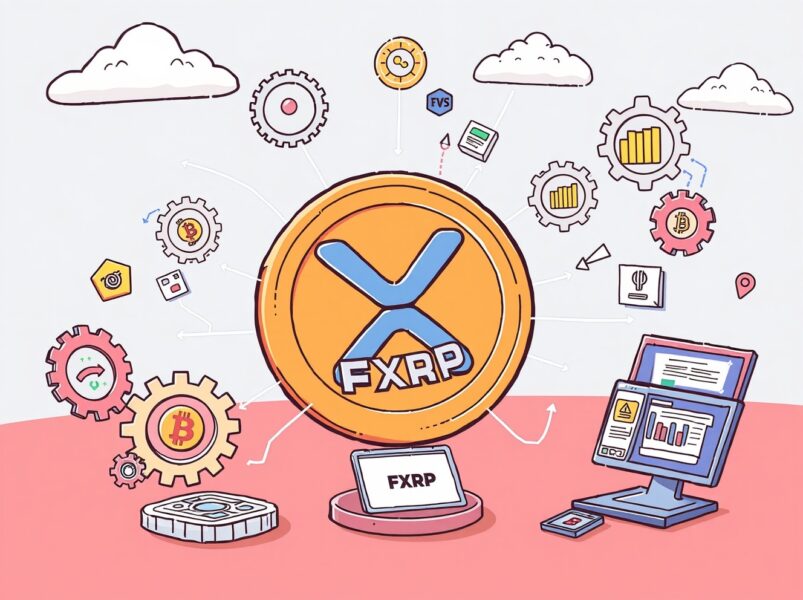
Unleash Potential: Flare Network’s FXRP Revolutionizes DeFi Access for XRP
Unleash Potential: Flare Network’s FXRP Revolutionizes DeFi Access for XRP

BitcoinWorld Unleash Potential: Flare Network’s FXRP Revolutionizes DeFi Access for XRP The world of decentralized finance (DeFi) is constantly evolving, and a major new development is set to excite XRP enthusiasts. Flare Network has just launched FXRP, an innovative solution designed to bring XRP directly into the heart of DeFi applications. This move opens up a wealth of new possibilities for XRP holders, allowing them to engage with lending, borrowing, and trading platforms like never before. It’s a significant step towards a more interconnected crypto ecosystem. What is FXRP and Why is it a Game-Changer for XRP? At its core, FXRP is an over-collateralized, wrapped version of XRP. Think of it as a digital twin of XRP, but one that lives on the Flare Network. This design is crucial because XRP itself doesn’t natively support smart contracts in the same way that Ethereum or other DeFi-centric blockchains do. Consequently, XRP has largely been excluded from the burgeoning DeFi sector. However, FXRP changes this narrative completely. By wrapping XRP, Flare Network creates a token that can interact with smart contracts on its own blockchain. This means XRP holders can now: Access a wider range of DeFi protocols. Participate in decentralized lending and borrowing. Engage in yield farming opportunities. Trade their XRP on decentralized exchanges. This initiative transforms XRP from a primarily transactional asset into a more versatile, programmable one within the DeFi landscape. How Can You Acquire and Utilize FXRP? Getting your hands on FXRP is straightforward, offering flexibility for users. You have two primary methods to acquire this wrapped token. First, users can mint FXRP directly on the Flare Network. This process typically involves locking up an equivalent amount of XRP as collateral, ensuring the wrapped token remains fully backed. Alternatively, if direct minting isn’t your preference, you can acquire FXRP on various decentralized exchanges (DEXs). Platforms like SparkDEX, BlazeSwap, and Enosys are among the initial venues where you can trade for FXRP. This accessibility makes it easy for existing DeFi users and new participants alike to join the Flare Network ecosystem and explore its offerings. The over-collateralization aspect adds an extra layer of security, providing confidence in the token’s backing. Expanding DeFi Horizons: The Broader Impact of FXRP The introduction of FXRP extends far beyond just enabling XRP holders to participate in DeFi. It has a much broader impact on the entire decentralized finance ecosystem. By integrating a widely adopted asset like XRP, Flare Network significantly boosts the total value locked (TVL) and liquidity available within DeFi. This influx of capital and users can lead to more robust and efficient markets. Moreover, FXRP positions Flare Network as a vital bridge between different blockchain ecosystems. It demonstrates how assets from one chain can gain new functionality and utility on another, fostering greater interoperability. This cross-chain capability is essential for the long-term growth and sustainability of decentralized finance, as it breaks down silos and encourages a more unified digital economy. The potential for future integrations with other tokens and protocols is immense, further solidifying Flare’s role. Navigating the Challenges and Future of FXRP While the launch of FXRP presents exciting opportunities, it’s also important to consider potential challenges. As with any new technology in the crypto space, security remains a paramount concern. The integrity of the wrapping mechanism and the underlying smart contracts must be rigorously maintained. Furthermore, user adoption and education will be key to the success of FXRP. New users need clear guidance on how to safely mint, acquire, and use the token in various DeFi applications. The competitive landscape also plays a role; other wrapped assets exist, and FXRP must demonstrate its unique value proposition. However, with its strong backing and the innovative approach of Flare Network, FXRP is well-positioned for growth. Its ability to unlock XRP’s potential for DeFi is a powerful differentiator, promising a vibrant future for both the token and the network. Actionable Insights: Getting Started with FXRP in DeFi If you’re an XRP holder looking to explore the new opportunities presented by FXRP, here are some actionable insights to help you get started: Do Your Research: Before engaging with any DeFi platform, thoroughly research its reputation, security audits, and user reviews. Understand how FXRP interacts with specific protocols. Understand the Risks: DeFi carries inherent risks, including smart contract vulnerabilities, impermanent loss, and market volatility. Familiarize yourself with these risks before committing funds. Start Small: Consider starting with a small amount of FXRP to familiarize yourself with the process of minting, acquiring, and using it in DeFi applications. Stay Informed: Follow official Flare Network channels and reputable crypto news sources to stay updated on new integrations, security announcements, and community developments related to FXRP. By taking these steps, you can confidently navigate the exciting new world that FXRP opens up for XRP within decentralized finance. In conclusion, the launch of FXRP by Flare Network is a monumental step forward for the XRP community and the broader DeFi ecosystem. It effectively bridges a gap, allowing one of the most widely held cryptocurrencies to participate actively in decentralized finance. This innovation not only expands the utility of XRP but also reinforces Flare Network’s commitment to building a more interconnected and functional blockchain world. As FXRP gains traction, we can expect to see a surge in innovative DeFi applications and a more vibrant, inclusive financial landscape for all. Frequently Asked Questions (FAQs) Q1: What exactly is FXRP? A1: FXRP is an over-collateralized, wrapped version of XRP, specifically designed to enable XRP holders to use their assets within decentralized finance (DeFi) applications on the Flare Network. Q2: How is FXRP different from standard XRP? A2: While FXRP is backed by XRP, its key difference is that it resides on the Flare Network and is compatible with smart contracts. This allows it to be used in DeFi protocols for lending, borrowing, and trading, which standard XRP cannot do natively. Q3: Where can I acquire FXRP? A3: You can acquire FXRP by minting it directly on the Flare Network by locking up XRP, or by purchasing it on decentralized exchanges such as SparkDEX, BlazeSwap, and Enosys. Q4: What are the main benefits of using FXRP in DeFi? A4: The primary benefits include gaining access to a wide array of DeFi services like lending, borrowing, and trading on DEXs, thereby increasing the utility and potential earning opportunities for XRP holders within the decentralized ecosystem. Q5: What is Flare Network’s role in the creation of FXRP? A5: Flare Network is the blockchain platform that hosts FXRP. It provides the smart contract functionality and infrastructure necessary to wrap XRP and enable its use in DeFi applications, acting as a bridge for XRP into the decentralized world. If you found this article insightful and believe in the potential of FXRP to revolutionize DeFi, please share it with your network! Help spread the word about how Flare Network is bridging the gap for XRP holders and expanding the possibilities within decentralized finance. Your support helps grow our community and keeps everyone informed about the latest crypto innovations. To learn more about the latest crypto market trends, explore our article on key developments shaping decentralized finance institutional adoption. This post Unleash Potential: Flare Network’s FXRP Revolutionizes DeFi Access for XRP first appeared on BitcoinWorld.
Share
Coinstats2025/09/24 22:45
Fed Lowers Rates By 25bps: How Bitcoin And Crypto Prices Responded And What’s Next
Fed Lowers Rates By 25bps: How Bitcoin And Crypto Prices Responded And What’s Next

The Federal Reserve (Fed) announced its first interest rate cut of the year, leading to an immediate reaction in the cryptocurrency market. Bitcoin (BTC) experienced a notable decline, dropping below the $115,000 threshold shortly after the announcement.  Expert Predicts Crypto Rally Fed Chair Jerome Powell addressed the current economic landscape, noting that while inflation has […]
Share
Bitcoinist2025/09/18 03:11
XRP Price Outlook As Peter Brandt Predicts BTC Price Might Crash to $42k

XRP Price Outlook As Peter Brandt Predicts BTC Price Might Crash to $42k

The post XRP Price Outlook As Peter Brandt Predicts BTC Price Might Crash to $42k appeared on BitcoinEthereumNews.com. XRP price led cryptocurrency losses on Friday
Share
BitcoinEthereumNews2026/02/06 19:06