Decentralized AI isn’t a silver bullet, but it builds rights and attribution into the system, offering creators a seat at the table they’ve long been denied.Decentralized AI isn’t a silver bullet, but it builds rights and attribution into the system, offering creators a seat at the table they’ve long been denied.

The future of work is AI-powered. Decentralization makes it fair | Opinion

2025/07/11 14:57
6 min read
For feedback or concerns regarding this content, please contact us at crypto.news@mexc.com

Disclosure: The views and opinions expressed here belong solely to the author and do not represent the views and opinions of crypto.news’ editorial.

In a recent study published by Stanford researchers, 1,500 U.S. workers, including writers, designers, and artists, shared their views on AI in the workplace. The data is clear: creative professionals, if one can believe it, do not want AI to automate their core work. Less than a fifth of tasks in arts, design, and media were seen as suitable for automation. Creatives welcome help with repetitive chores but want to keep authorship and control.

For anyone working in creative fields, this is a familiar feeling. Creative labor is already undervalued, and new AI tools blur the line between collaboration and co-optation. They open their feeds and see their art, remixed by AI, printed on merch, and sold by strangers without their consent or any credit. But someone’s getting paid, and it isn’t the creatives.

Generative AI is already transforming work. It drafts emails, composes music, designs logos, and scripts dialogue. For many creatives, this isn’t collaboration. It’s co-optation. The very models doing the work were trained on your voice, your style, your archive.

As AI becomes both collaborator and competitor, questions about ownership grow louder. Who gets paid when a machine generates? Who is protected when reputations are at stake?

When AI becomes the artist and the thief

While it has opened doors for creativity and productivity, the centralized AI economy is built on scraped content.

In 2023, artists Sarah Andersen, Kelly McKernan, and Karla Ortiz sued Stability AI and Midjourney for training models on their work without permission. Getty Images filed suit after its watermarked photos appeared in AI outputs. A deepfake of Taylor Swift went viral with over 45 million views. Scarlett Johansson’s team intervened when OpenAI released a voice assistant that resembled her, despite her refusal to license her voice. The New York Times sued OpenAI and Microsoft for using its archives without authorization. Universal Music accused Anthropic of generating copyrighted lyrics.

These legal fights reflect a system that imitates human creativity while distancing itself from the people who made the originals.

What DeAI can do for creators

There is another path. Decentralized AI, or DeAI, offers a structural alternative. It embeds rights and attribution into the systems themselves. It is not a silver bullet. DeAI depends on legal clarity, broad adoption, and strong governance. But it does address one core problem: creators are too often excluded from the platforms and tools that rely on their work.

DeAI makes attribution programmable. A creator uploads data, defines usage terms, and binds those terms to smart contracts. These contracts automatically determine who can access the data, how it can be used, and under what conditions. A song trained on your voice without a license could be flagged and blocked before anyone ever hears it.

This is already happening in the field. The startup MyShell, which builds multilingual voice AI, used the Sahara platform to source tens of thousands of voice clips in a decentralized way. Instead of scraping YouTube or hiring a studio, they crowdsourced samples from contributors around the world by tracking, attributing, and compensating them using on-chain records. Creators retained control of their data while still participating in a scalable training pipeline. MyShell, meanwhile, saved time and cost without compromising quality. That is the promise of DeAI: fair exchange at the point of data.

Imagine a photographer uploading a portrait with rules attached: free to view on social platforms, $5 to use in a blog post, prohibited for AI training without a separate agreement. Ethical developers could license it with one click. Bad actors would be denied access automatically. That creates a different kind of system, one in which artists are licensors, not victims.

A long fight, a new toolkit

This debate has a long history. The Statute of Anne in 1710 gave authors, not printers, the right to control their work. France’s 19th-century moral rights protected the integrity of creative output. Even Renaissance artists like Albrecht Dürer fought against unauthorized copies. Every era of technological disruption has forced a redefinition of ownership.

DeAI continues that lineage. Where copyright created legal scaffolding, DeAI turns rights into software logic. And where laws often lag behind technology, decentralized infrastructure can help enforce ethical standards at scale.

Still, no system is perfect. DeAI could be co-opted. A consortium dominated by large studios might set licensing standards that sideline independent creators. A bug in a smart contract could lock a work away forever, with no one to fix it. There is no guarantee that decentralization alone will create fairness. Like any system, it depends on who builds it, who maintains it, and who benefits.

But these risks already exist in today’s opaque and extractive AI landscape. The difference is that DeAI, at its best, allows creators to help shape the tools that govern their work.

The next creative economy

Millions of people are trying to build sustainable lives through creative labor. For Gen Z and younger millennials, many of whom are priced out of traditional assets, burdened by student debt, and navigating unstable job markets, the ability to participate in ownership matters.

If we don’t rebuild the infrastructure of authorship now, we risk locking in a system that exploits by default. The choice is not between a flawless decentralized model and the current one. It is between a system with transparent, addressable flaws and one with opaque, unaccountable ones.

Getting this right will take more than good intentions. Creators and their guilds need to begin standardizing digital identity and asset registration. Developers should prioritize open, interoperable systems instead of closed platforms. Policymakers must create legal protections for artists who register their work on-chain, recognizing those registries with the same authority as traditional copyright offices.

Creative labor deserves protection. Participation should be rewarded. Exploitation should not.
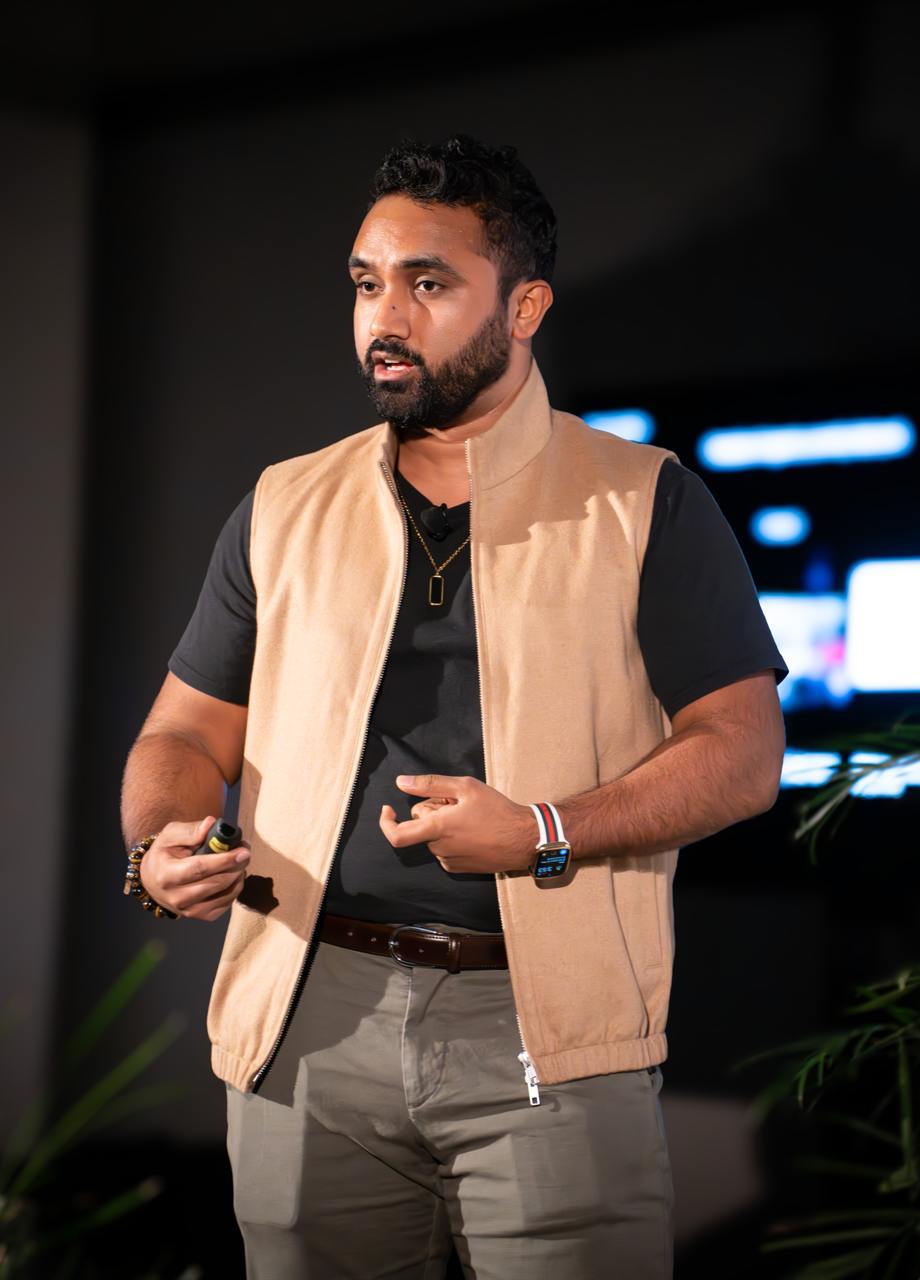
Shashank Sripada
Shashank Sripada

Shashank Sripada is the co-founder and COO of Gaia. Shashank merges institutional rigor with systemic change. After managing $7B+ in assets and advising the White House, he co-founded Gaia to prove decentralized models can scale equitably. A trained economist (LSE) and serial entrepreneur, he critiques traditional finance’s gatekeepers while designing frameworks that prioritize transparency. “Capital should build bridges, not walls.”

Market Opportunity
Threshold Logo
Threshold Price(T)
$0.006349
$0.006349$0.006349
+5.18%
USD
Threshold (T) Live Price Chart
Disclaimer: The articles reposted on this site are sourced from public platforms and are provided for informational purposes only. They do not necessarily reflect the views of MEXC. All rights remain with the original authors. If you believe any content infringes on third-party rights, please contact crypto.news@mexc.com for removal. MEXC makes no guarantees regarding the accuracy, completeness, or timeliness of the content and is not responsible for any actions taken based on the information provided. The content does not constitute financial, legal, or other professional advice, nor should it be considered a recommendation or endorsement by MEXC.

You May Also Like

Lovable AI’s Astonishing Rise: Anton Osika Reveals Startup Secrets at Bitcoin World Disrupt 2025

Lovable AI’s Astonishing Rise: Anton Osika Reveals Startup Secrets at Bitcoin World Disrupt 2025

BitcoinWorld Lovable AI’s Astonishing Rise: Anton Osika Reveals Startup Secrets at Bitcoin World Disrupt 2025 Are you ready to witness a phenomenon? The world of technology is abuzz with the incredible rise of Lovable AI, a startup that’s not just breaking records but rewriting the rulebook for rapid growth. Imagine creating powerful apps and websites just by speaking to an AI – that’s the magic Lovable brings to the masses. This groundbreaking approach has propelled the company into the spotlight, making it one of the fastest-growing software firms in history. And now, the visionary behind this sensation, co-founder and CEO Anton Osika, is set to share his invaluable insights on the Disrupt Stage at the highly anticipated Bitcoin World Disrupt 2025. If you’re a founder, investor, or tech enthusiast eager to understand the future of innovation, this is an event you cannot afford to miss. Lovable AI’s Meteoric Ascent: Redefining Software Creation In an era where digital transformation is paramount, Lovable AI has emerged as a true game-changer. Its core premise is deceptively simple yet profoundly impactful: democratize software creation. By enabling anyone to build applications and websites through intuitive AI conversations, Lovable is empowering the vast majority of individuals who lack coding skills to transform their ideas into tangible digital products. This mission has resonated globally, leading to unprecedented momentum. The numbers speak for themselves: Achieved an astonishing $100 million Annual Recurring Revenue (ARR) in less than a year. Successfully raised a $200 million Series A funding round, valuing the company at $1.8 billion, led by industry giant Accel. Is currently fielding unsolicited investor offers, pushing its valuation towards an incredible $4 billion. As industry reports suggest, investors are unequivocally “loving Lovable,” and it’s clear why. This isn’t just about impressive financial metrics; it’s about a company that has tapped into a fundamental need, offering a solution that is both innovative and accessible. The rapid scaling of Lovable AI provides a compelling case study for any entrepreneur aiming for similar exponential growth. The Visionary Behind the Hype: Anton Osika’s Journey to Innovation Every groundbreaking company has a driving force, and for Lovable, that force is co-founder and CEO Anton Osika. His journey is as fascinating as his company’s success. A physicist by training, Osika previously contributed to the cutting-edge research at CERN, the European Organization for Nuclear Research. This deep technical background, combined with his entrepreneurial spirit, has been instrumental in Lovable’s rapid ascent. Before Lovable, he honed his skills as a co-founder of Depict.ai and a Founding Engineer at Sana. Based in Stockholm, Osika has masterfully steered Lovable from a nascent idea to a global phenomenon in record time. His leadership embodies a unique blend of profound technical understanding and a keen, consumer-first vision. At Bitcoin World Disrupt 2025, attendees will have the rare opportunity to hear directly from Osika about what it truly takes to build a brand that not only scales at an incredible pace in a fiercely competitive market but also adeptly manages the intense cultural conversations that inevitably accompany such swift and significant success. His insights will be crucial for anyone looking to understand the dynamics of high-growth tech leadership. Unpacking Consumer Tech Innovation at Bitcoin World Disrupt 2025 The 20th anniversary of Bitcoin World is set to be marked by a truly special event: Bitcoin World Disrupt 2025. From October 27–29, Moscone West in San Francisco will transform into the epicenter of innovation, gathering over 10,000 founders, investors, and tech leaders. It’s the ideal platform to explore the future of consumer tech innovation, and Anton Osika’s presence on the Disrupt Stage is a highlight. His session will delve into how Lovable is not just participating in but actively shaping the next wave of consumer-facing technologies. Why is this session particularly relevant for those interested in the future of consumer experiences? Osika’s discussion will go beyond the superficial, offering a deep dive into the strategies that have allowed Lovable to carve out a unique category in a market long thought to be saturated. Attendees will gain a front-row seat to understanding how to identify unmet consumer needs, leverage advanced AI to meet those needs, and build a product that captivates users globally. The event itself promises a rich tapestry of ideas and networking opportunities: For Founders: Sharpen your pitch and connect with potential investors. For Investors: Discover the next breakout startup poised for massive growth. For Innovators: Claim your spot at the forefront of technological advancements. The insights shared regarding consumer tech innovation at this event will be invaluable for anyone looking to navigate the complexities and capitalize on the opportunities within this dynamic sector. Mastering Startup Growth Strategies: A Blueprint for the Future Lovable’s journey isn’t just another startup success story; it’s a meticulously crafted blueprint for effective startup growth strategies in the modern era. Anton Osika’s experience offers a rare glimpse into the practicalities of scaling a business at breakneck speed while maintaining product integrity and managing external pressures. For entrepreneurs and aspiring tech leaders, his talk will serve as a masterclass in several critical areas: Strategy Focus Key Takeaways from Lovable’s Journey Rapid Scaling How to build infrastructure and teams that support exponential user and revenue growth without compromising quality. Product-Market Fit Identifying a significant, underserved market (the 99% who can’t code) and developing a truly innovative solution (AI-powered app creation). Investor Relations Balancing intense investor interest and pressure with a steadfast focus on product development and long-term vision. Category Creation Carving out an entirely new niche by democratizing complex technologies, rather than competing in existing crowded markets. Understanding these startup growth strategies is essential for anyone aiming to build a resilient and impactful consumer experience. Osika’s session will provide actionable insights into how to replicate elements of Lovable’s success, offering guidance on navigating challenges from product development to market penetration and investor management. Conclusion: Seize the Future of Tech The story of Lovable, under the astute leadership of Anton Osika, is a testament to the power of innovative ideas meeting flawless execution. Their remarkable journey from concept to a multi-billion-dollar valuation in record time is a compelling narrative for anyone interested in the future of technology. By democratizing software creation through Lovable AI, they are not just building a company; they are fostering a new generation of creators. His appearance at Bitcoin World Disrupt 2025 is an unmissable opportunity to gain direct insights from a leader who is truly shaping the landscape of consumer tech innovation. Don’t miss this chance to learn about cutting-edge startup growth strategies and secure your front-row seat to the future. Register now and save up to $668 before Regular Bird rates end on September 26. To learn more about the latest AI market trends, explore our article on key developments shaping AI features. This post Lovable AI’s Astonishing Rise: Anton Osika Reveals Startup Secrets at Bitcoin World Disrupt 2025 first appeared on BitcoinWorld.
Share
Coinstats2025/09/17 23:40
How to Check Your SASSA SRD Grant Status in 2025 (Complete Guide for Applicants)

How to Check Your SASSA SRD Grant Status in 2025 (Complete Guide for Applicants)

The Social Relief of Distress (SRD) grant has become a vital financial support system for millions of South Africans. Managed by the South African Social Security
Share
Techbullion2026/04/08 13:08
Spot CVD Chart Reveals Critical Bitcoin Support Levels as Institutional Orders Surge on April 2

Spot CVD Chart Reveals Critical Bitcoin Support Levels as Institutional Orders Surge on April 2

BitcoinWorld Spot CVD Chart Reveals Critical Bitcoin Support Levels as Institutional Orders Surge on April 2 On April 2, 2025, at precisely 10:00 a.m. UTC, a detailed
Share
bitcoinworld2026/04/02 18:45

$30,000 in PRL + 15,000 USDT

$30,000 in PRL + 15,000 USDT$30,000 in PRL + 15,000 USDT

Deposit & trade PRL to boost your rewards!





