NRW.BANK, a German state-owned development bank, has issued a €100 million ($116.7 million) blockchain-based bond on the Polygon network, marking a major public-sector step into digital securities. The bond, with a two-year maturity, was issued under Germany’s Electronic Securities Act (eWpG). This legislation enables the issuance and registration of bonds entirely on blockchain networks, eliminating the need for physical certificates. Cashlink Registers Regulated Bond on Polygon as eWpG Law Fuels DLT Adoption The German bank used the infrastructure of Cashlink Technologies, a BaFin-licensed crypto securities registrar, to register the bond, with Polygon serving as the underlying blockchain. NRWBANK, Germany’s largest regional development bank, has tokenized its first fully digital bond, with support from leading financial institutions like @DeutscheBank , @dzbank , and @DekaBank . Polygon will serve as the rails for the EUR 100 million bond, registered via Cashlink as… pic.twitter.com/37jqqQpz8F — Polygon (@0xPolygon) July 10, 2025 According to the report, institutional investors such as Deutsche Bank, DZ BANK, and DekaBank took part in the offering, acting as joint lead managers. “This is more than a technical milestone. It’s a signal that public financial institutions are ready to move beyond blockchain pilots and start integrating these systems at scale,” said Michael Duttlinger, CEO of Cashlink. The bond marks the first time NRW.BANK has made a fully digital issuance of this kind, further reflecting growing confidence in blockchain for regulated capital markets. Notably, Germany’s eWpG law, introduced in 2021, has created a clear legal path for the use of distributed ledger technology in securities. This has helped attract banks and public institutions toward tokenized finance. While still small in size compared to the traditional bond market, digital bond activity is accelerating. Polygon’s involvement in the issuance also comes at a time when the network is preparing for a major technical upgrade. The Polygon Foundation is set to deploy Heimdall 2.0 , a new consensus layer for its proof-of-stake blockchain. Scheduled to go live on Thursday, the upgrade seeks to reduce finality time to just five seconds and enhance network resilience by minimizing the likelihood of chain reorganizations. “This is the most technically complex hard fork Polygon PoS has seen since its launch in 2020,” wrote Sandeep Nailwal, CEO of the Polygon Foundation, on X. Shipping Announcement! 🚢 We’ve been on a shipping spree—and next up is Polygon PoS’s consensus layer, Heimdall v2, landing 10 July 2025. ‼️ This is the most technically complex hard-fork Polygon PoS has seen since it's launch in 2020 ‼️ What’s changing? 1. Heimdall sheds all… — Sandeep | CEO, Polygon Foundation (※,※) (@sandeepnailwal) July 8, 2025 He added that the upgrade would reduce the finality time to around five seconds and decrease the risk of chain reorganizations. The coincidence of the bond issuance and the Polygon upgrade indicates the growing maturity of the blockchain infrastructure underpinning tokenized finance. Digital bonds offer advantages such as real-time tracking, faster settlement, and reduced administrative overhead, which are now attracting public-sector issuers. Germany Advances Digital Bond Push as Banks and Industrials Embrace Blockchain Germany is quickly emerging as a hub for regulated blockchain finance. Recent digital bond issuances by major institutions, including DZ BANK, DekaBank, Commerzbank, NRW.BANK, KfW, and Siemens, indicate the country’s accelerating adoption of tokenized securities, enabled by its 2021 Electronic Securities Act (eWpG). Earlier this month, KfW, Germany’s state-owned development bank, issued a CHF 140 million digital bond via the SIX Digital Exchange (SDX) in Switzerland. Beyond banking, German industrial giant Siemens also entered the digital securities space. In February 2023, Siemens issued its first digital bond, worth €60 million ($64 million), on Polygon’s public mainnet. Beyond digital bonds, Germany’s traditional banking sector is deepening its engagement with crypto. Sparkassen-Finanzgruppe, the nation’s largest banking group with over 50 million customers, seeks to introduce crypto trading services to its customers by mid-2026. The move will be coordinated through Dekabank, a financial institution owned by Sparkassen, and will allow retail clients to buy and sell Bitcoin and Ether directly within the group’s mobile banking app. The German Savings Banks Association confirmed the development, framing it as a response to the recently implemented EU Markets in Crypto-Assets (MiCA) regulation. According to the group, the goal is to offer customers “reliable access to a regulated crypto offering.” Sparkassen joins a growing list of German banks moving toward crypto adoption; for example, DZ Bank, the country’s second-largest lender , began testing trading and custody services for digital assets in 2023 through a partnership with Boerse Stuttgart Digital. Similarly, Landesbank Baden-Württemberg announced plans earlier this year to launch crypto custody services for institutional clients in collaboration with Austrian exchange Bitpanda. Meanwhile, Polygon continues its strategic pivot. Following the May 24 resignation of co-founder Mihailo Bjelic , leadership has been consolidated under Sandeep Nailwal, now acting as CEO of the Polygon Foundation. BIG update – As the largest holder of POL and someone who dedicated his life to development and success of @0xPolygon from the very beginning, I have decided to take full control of Polygon Foundation and will be its CEO going forward. Polygon Foundation owns and oversees… — Sandeep | CEO, Polygon Foundation (※,※) (@sandeepnailwal) June 11, 2025 Under Nailwal, Polygon seeks to sunset its underperforming zkEVM chain and refocus on core verticals, including real-world asset (RWA) tokenization, stablecoin payments, and its proof-of-stake (PoS) chain. Despite a drop in market cap, from $20 billion at its peak to $1.7 billion, Polygon remains a key player in tokenization. Incredible. Arbitrum and @0xPolygon together account for 83% of the entire tokenized global bond market Source: @RWA_xyz pic.twitter.com/IDbzeKhiwi — Peter (📖, ✍️, 🔑) (@p_petertherock) July 10, 2025 According to rwa.xyz , the network ranks 6th in total RWA value, with over $343 million in assets across 254 tokenized instruments. It also captures 37.7% of the entire tokenized bond market, signaling its continued relevance in institutional blockchain infrastructure.NRW.BANK, a German state-owned development bank, has issued a €100 million ($116.7 million) blockchain-based bond on the Polygon network, marking a major public-sector step into digital securities. The bond, with a two-year maturity, was issued under Germany’s Electronic Securities Act (eWpG). This legislation enables the issuance and registration of bonds entirely on blockchain networks, eliminating the need for physical certificates. Cashlink Registers Regulated Bond on Polygon as eWpG Law Fuels DLT Adoption The German bank used the infrastructure of Cashlink Technologies, a BaFin-licensed crypto securities registrar, to register the bond, with Polygon serving as the underlying blockchain. NRWBANK, Germany’s largest regional development bank, has tokenized its first fully digital bond, with support from leading financial institutions like @DeutscheBank , @dzbank , and @DekaBank . Polygon will serve as the rails for the EUR 100 million bond, registered via Cashlink as… pic.twitter.com/37jqqQpz8F — Polygon (@0xPolygon) July 10, 2025 According to the report, institutional investors such as Deutsche Bank, DZ BANK, and DekaBank took part in the offering, acting as joint lead managers. “This is more than a technical milestone. It’s a signal that public financial institutions are ready to move beyond blockchain pilots and start integrating these systems at scale,” said Michael Duttlinger, CEO of Cashlink. The bond marks the first time NRW.BANK has made a fully digital issuance of this kind, further reflecting growing confidence in blockchain for regulated capital markets. Notably, Germany’s eWpG law, introduced in 2021, has created a clear legal path for the use of distributed ledger technology in securities. This has helped attract banks and public institutions toward tokenized finance. While still small in size compared to the traditional bond market, digital bond activity is accelerating. Polygon’s involvement in the issuance also comes at a time when the network is preparing for a major technical upgrade. The Polygon Foundation is set to deploy Heimdall 2.0 , a new consensus layer for its proof-of-stake blockchain. Scheduled to go live on Thursday, the upgrade seeks to reduce finality time to just five seconds and enhance network resilience by minimizing the likelihood of chain reorganizations. “This is the most technically complex hard fork Polygon PoS has seen since its launch in 2020,” wrote Sandeep Nailwal, CEO of the Polygon Foundation, on X. Shipping Announcement! 🚢 We’ve been on a shipping spree—and next up is Polygon PoS’s consensus layer, Heimdall v2, landing 10 July 2025. ‼️ This is the most technically complex hard-fork Polygon PoS has seen since it's launch in 2020 ‼️ What’s changing? 1. Heimdall sheds all… — Sandeep | CEO, Polygon Foundation (※,※) (@sandeepnailwal) July 8, 2025 He added that the upgrade would reduce the finality time to around five seconds and decrease the risk of chain reorganizations. The coincidence of the bond issuance and the Polygon upgrade indicates the growing maturity of the blockchain infrastructure underpinning tokenized finance. Digital bonds offer advantages such as real-time tracking, faster settlement, and reduced administrative overhead, which are now attracting public-sector issuers. Germany Advances Digital Bond Push as Banks and Industrials Embrace Blockchain Germany is quickly emerging as a hub for regulated blockchain finance. Recent digital bond issuances by major institutions, including DZ BANK, DekaBank, Commerzbank, NRW.BANK, KfW, and Siemens, indicate the country’s accelerating adoption of tokenized securities, enabled by its 2021 Electronic Securities Act (eWpG). Earlier this month, KfW, Germany’s state-owned development bank, issued a CHF 140 million digital bond via the SIX Digital Exchange (SDX) in Switzerland. Beyond banking, German industrial giant Siemens also entered the digital securities space. In February 2023, Siemens issued its first digital bond, worth €60 million ($64 million), on Polygon’s public mainnet. Beyond digital bonds, Germany’s traditional banking sector is deepening its engagement with crypto. Sparkassen-Finanzgruppe, the nation’s largest banking group with over 50 million customers, seeks to introduce crypto trading services to its customers by mid-2026. The move will be coordinated through Dekabank, a financial institution owned by Sparkassen, and will allow retail clients to buy and sell Bitcoin and Ether directly within the group’s mobile banking app. The German Savings Banks Association confirmed the development, framing it as a response to the recently implemented EU Markets in Crypto-Assets (MiCA) regulation. According to the group, the goal is to offer customers “reliable access to a regulated crypto offering.” Sparkassen joins a growing list of German banks moving toward crypto adoption; for example, DZ Bank, the country’s second-largest lender , began testing trading and custody services for digital assets in 2023 through a partnership with Boerse Stuttgart Digital. Similarly, Landesbank Baden-Württemberg announced plans earlier this year to launch crypto custody services for institutional clients in collaboration with Austrian exchange Bitpanda. Meanwhile, Polygon continues its strategic pivot. Following the May 24 resignation of co-founder Mihailo Bjelic , leadership has been consolidated under Sandeep Nailwal, now acting as CEO of the Polygon Foundation. BIG update – As the largest holder of POL and someone who dedicated his life to development and success of @0xPolygon from the very beginning, I have decided to take full control of Polygon Foundation and will be its CEO going forward. Polygon Foundation owns and oversees… — Sandeep | CEO, Polygon Foundation (※,※) (@sandeepnailwal) June 11, 2025 Under Nailwal, Polygon seeks to sunset its underperforming zkEVM chain and refocus on core verticals, including real-world asset (RWA) tokenization, stablecoin payments, and its proof-of-stake (PoS) chain. Despite a drop in market cap, from $20 billion at its peak to $1.7 billion, Polygon remains a key player in tokenization. Incredible. Arbitrum and @0xPolygon together account for 83% of the entire tokenized global bond market Source: @RWA_xyz pic.twitter.com/IDbzeKhiwi — Peter (📖, ✍️, 🔑) (@p_petertherock) July 10, 2025 According to rwa.xyz , the network ranks 6th in total RWA value, with over $343 million in assets across 254 tokenized instruments. It also captures 37.7% of the entire tokenized bond market, signaling its continued relevance in institutional blockchain infrastructure.


German State Bank Issues €100M Bond on Polygon – Is TradFi Finally Embracing Crypto?

2025/07/11 11:07
4 min read
For feedback or concerns regarding this content, please contact us at crypto.news@mexc.com

NRW.BANK, a German state-owned development bank, has issued a €100 million ($116.7 million) blockchain-based bond on the Polygon network, marking a major public-sector step into digital securities.

The bond, with a two-year maturity, was issued under Germany’s Electronic Securities Act (eWpG). This legislation enables the issuance and registration of bonds entirely on blockchain networks, eliminating the need for physical certificates.

Cashlink Registers Regulated Bond on Polygon as eWpG Law Fuels DLT Adoption

The German bank used the infrastructure of Cashlink Technologies, a BaFin-licensed crypto securities registrar, to register the bond, with Polygon serving as the underlying blockchain.

According to the report, institutional investors such as Deutsche Bank, DZ BANK, and DekaBank took part in the offering, acting as joint lead managers.

“This is more than a technical milestone. It’s a signal that public financial institutions are ready to move beyond blockchain pilots and start integrating these systems at scale,” said Michael Duttlinger, CEO of Cashlink.

The bond marks the first time NRW.BANK has made a fully digital issuance of this kind, further reflecting growing confidence in blockchain for regulated capital markets.

Notably, Germany’s eWpG law, introduced in 2021, has created a clear legal path for the use of distributed ledger technology in securities. This has helped attract banks and public institutions toward tokenized finance. While still small in size compared to the traditional bond market, digital bond activity is accelerating.

Polygon’s involvement in the issuance also comes at a time when the network is preparing for a major technical upgrade. The Polygon Foundation is set to deploy Heimdall 2.0, a new consensus layer for its proof-of-stake blockchain.

Scheduled to go live on Thursday, the upgrade seeks to reduce finality time to just five seconds and enhance network resilience by minimizing the likelihood of chain reorganizations.

“This is the most technically complex hard fork Polygon PoS has seen since its launch in 2020,” wrote Sandeep Nailwal, CEO of the Polygon Foundation, on X.

He added that the upgrade would reduce the finality time to around five seconds and decrease the risk of chain reorganizations.

The coincidence of the bond issuance and the Polygon upgrade indicates the growing maturity of the blockchain infrastructure underpinning tokenized finance. Digital bonds offer advantages such as real-time tracking, faster settlement, and reduced administrative overhead, which are now attracting public-sector issuers.

Germany Advances Digital Bond Push as Banks and Industrials Embrace Blockchain

Germany is quickly emerging as a hub for regulated blockchain finance. Recent digital bond issuances by major institutions, including DZ BANK, DekaBank, Commerzbank, NRW.BANK, KfW, and Siemens, indicate the country’s accelerating adoption of tokenized securities, enabled by its 2021 Electronic Securities Act (eWpG).

Earlier this month, KfW, Germany’s state-owned development bank, issued a CHF 140 million digital bond via the SIX Digital Exchange (SDX) in Switzerland. Beyond banking, German industrial giant Siemens also entered the digital securities space. In February 2023, Siemens issued its first digital bond, worth €60 million ($64 million), on Polygon’s public mainnet.

Beyond digital bonds, Germany’s traditional banking sector is deepening its engagement with crypto. Sparkassen-Finanzgruppe, the nation’s largest banking group with over 50 million customers, seeks to introduce crypto trading services to its customers by mid-2026.

The move will be coordinated through Dekabank, a financial institution owned by Sparkassen, and will allow retail clients to buy and sell Bitcoin and Ether directly within the group’s mobile banking app.

The German Savings Banks Association confirmed the development, framing it as a response to the recently implemented EU Markets in Crypto-Assets (MiCA) regulation.

According to the group, the goal is to offer customers “reliable access to a regulated crypto offering.”

Sparkassen joins a growing list of German banks moving toward crypto adoption; for example, DZ Bank, the country’s second-largest lender, began testing trading and custody services for digital assets in 2023 through a partnership with Boerse Stuttgart Digital.

Similarly, Landesbank Baden-Württemberg announced plans earlier this year to launch crypto custody services for institutional clients in collaboration with Austrian exchange Bitpanda.

Meanwhile, Polygon continues its strategic pivot. Following the May 24 resignation of co-founder Mihailo Bjelic, leadership has been consolidated under Sandeep Nailwal, now acting as CEO of the Polygon Foundation.

Under Nailwal, Polygon seeks to sunset its underperforming zkEVM chain and refocus on core verticals, including real-world asset (RWA) tokenization, stablecoin payments, and its proof-of-stake (PoS) chain.

Despite a drop in market cap, from $20 billion at its peak to $1.7 billion, Polygon remains a key player in tokenization.

According to rwa.xyz, the network ranks 6th in total RWA value, with over $343 million in assets across 254 tokenized instruments. It also captures 37.7% of the entire tokenized bond market, signaling its continued relevance in institutional blockchain infrastructure.

Market Opportunity
SIX Logo
SIX Price(SIX)
$0.00915
$0.00915$0.00915
+1.44%
USD
SIX (SIX) Live Price Chart
Disclaimer: The articles reposted on this site are sourced from public platforms and are provided for informational purposes only. They do not necessarily reflect the views of MEXC. All rights remain with the original authors. If you believe any content infringes on third-party rights, please contact crypto.news@mexc.com for removal. MEXC makes no guarantees regarding the accuracy, completeness, or timeliness of the content and is not responsible for any actions taken based on the information provided. The content does not constitute financial, legal, or other professional advice, nor should it be considered a recommendation or endorsement by MEXC.
Tags:

You May Also Like

BCH Technical Analysis Apr 8
BCH Technical Analysis Apr 8

The post BCH Technical Analysis Apr 8 appeared on BitcoinEthereumNews.com. BCH’s 24-hour trading volume is running below recent averages at 110.17 million dollars
Share
BitcoinEthereumNews2026/04/08 13:44
Lovable AI’s Astonishing Rise: Anton Osika Reveals Startup Secrets at Bitcoin World Disrupt 2025

Lovable AI’s Astonishing Rise: Anton Osika Reveals Startup Secrets at Bitcoin World Disrupt 2025


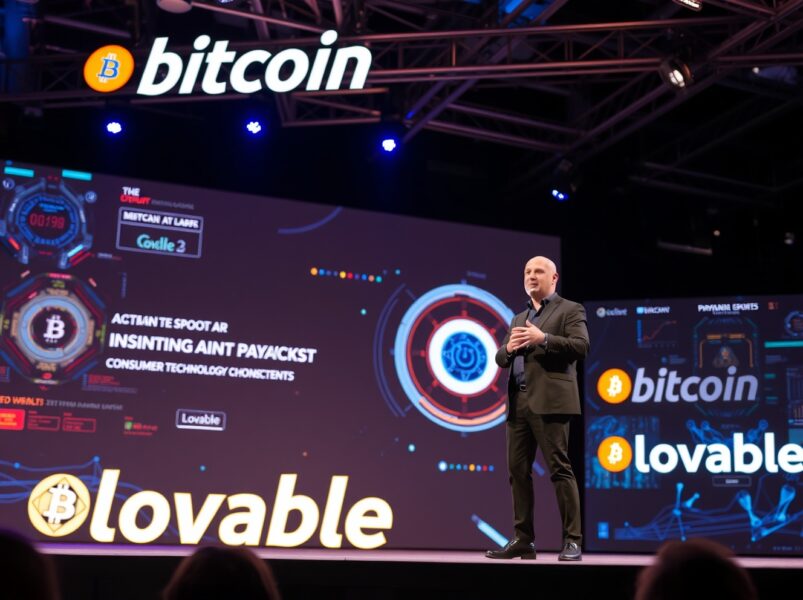
BitcoinWorld Lovable AI’s Astonishing Rise: Anton Osika Reveals Startup Secrets at Bitcoin World Disrupt 2025 Are you ready to witness a phenomenon? The world of technology is abuzz with the incredible rise of Lovable AI, a startup that’s not just breaking records but rewriting the rulebook for rapid growth. Imagine creating powerful apps and websites just by speaking to an AI – that’s the magic Lovable brings to the masses. This groundbreaking approach has propelled the company into the spotlight, making it one of the fastest-growing software firms in history. And now, the visionary behind this sensation, co-founder and CEO Anton Osika, is set to share his invaluable insights on the Disrupt Stage at the highly anticipated Bitcoin World Disrupt 2025. If you’re a founder, investor, or tech enthusiast eager to understand the future of innovation, this is an event you cannot afford to miss. Lovable AI’s Meteoric Ascent: Redefining Software Creation In an era where digital transformation is paramount, Lovable AI has emerged as a true game-changer. Its core premise is deceptively simple yet profoundly impactful: democratize software creation. By enabling anyone to build applications and websites through intuitive AI conversations, Lovable is empowering the vast majority of individuals who lack coding skills to transform their ideas into tangible digital products. This mission has resonated globally, leading to unprecedented momentum. The numbers speak for themselves: Achieved an astonishing $100 million Annual Recurring Revenue (ARR) in less than a year. Successfully raised a $200 million Series A funding round, valuing the company at $1.8 billion, led by industry giant Accel. Is currently fielding unsolicited investor offers, pushing its valuation towards an incredible $4 billion. As industry reports suggest, investors are unequivocally “loving Lovable,” and it’s clear why. This isn’t just about impressive financial metrics; it’s about a company that has tapped into a fundamental need, offering a solution that is both innovative and accessible. The rapid scaling of Lovable AI provides a compelling case study for any entrepreneur aiming for similar exponential growth. The Visionary Behind the Hype: Anton Osika’s Journey to Innovation Every groundbreaking company has a driving force, and for Lovable, that force is co-founder and CEO Anton Osika. His journey is as fascinating as his company’s success. A physicist by training, Osika previously contributed to the cutting-edge research at CERN, the European Organization for Nuclear Research. This deep technical background, combined with his entrepreneurial spirit, has been instrumental in Lovable’s rapid ascent. Before Lovable, he honed his skills as a co-founder of Depict.ai and a Founding Engineer at Sana. Based in Stockholm, Osika has masterfully steered Lovable from a nascent idea to a global phenomenon in record time. His leadership embodies a unique blend of profound technical understanding and a keen, consumer-first vision. At Bitcoin World Disrupt 2025, attendees will have the rare opportunity to hear directly from Osika about what it truly takes to build a brand that not only scales at an incredible pace in a fiercely competitive market but also adeptly manages the intense cultural conversations that inevitably accompany such swift and significant success. His insights will be crucial for anyone looking to understand the dynamics of high-growth tech leadership. Unpacking Consumer Tech Innovation at Bitcoin World Disrupt 2025 The 20th anniversary of Bitcoin World is set to be marked by a truly special event: Bitcoin World Disrupt 2025. From October 27–29, Moscone West in San Francisco will transform into the epicenter of innovation, gathering over 10,000 founders, investors, and tech leaders. It’s the ideal platform to explore the future of consumer tech innovation, and Anton Osika’s presence on the Disrupt Stage is a highlight. His session will delve into how Lovable is not just participating in but actively shaping the next wave of consumer-facing technologies. Why is this session particularly relevant for those interested in the future of consumer experiences? Osika’s discussion will go beyond the superficial, offering a deep dive into the strategies that have allowed Lovable to carve out a unique category in a market long thought to be saturated. Attendees will gain a front-row seat to understanding how to identify unmet consumer needs, leverage advanced AI to meet those needs, and build a product that captivates users globally. The event itself promises a rich tapestry of ideas and networking opportunities: For Founders: Sharpen your pitch and connect with potential investors. For Investors: Discover the next breakout startup poised for massive growth. For Innovators: Claim your spot at the forefront of technological advancements. The insights shared regarding consumer tech innovation at this event will be invaluable for anyone looking to navigate the complexities and capitalize on the opportunities within this dynamic sector. Mastering Startup Growth Strategies: A Blueprint for the Future Lovable’s journey isn’t just another startup success story; it’s a meticulously crafted blueprint for effective startup growth strategies in the modern era. Anton Osika’s experience offers a rare glimpse into the practicalities of scaling a business at breakneck speed while maintaining product integrity and managing external pressures. For entrepreneurs and aspiring tech leaders, his talk will serve as a masterclass in several critical areas: Strategy Focus Key Takeaways from Lovable’s Journey Rapid Scaling How to build infrastructure and teams that support exponential user and revenue growth without compromising quality. Product-Market Fit Identifying a significant, underserved market (the 99% who can’t code) and developing a truly innovative solution (AI-powered app creation). Investor Relations Balancing intense investor interest and pressure with a steadfast focus on product development and long-term vision. Category Creation Carving out an entirely new niche by democratizing complex technologies, rather than competing in existing crowded markets. Understanding these startup growth strategies is essential for anyone aiming to build a resilient and impactful consumer experience. Osika’s session will provide actionable insights into how to replicate elements of Lovable’s success, offering guidance on navigating challenges from product development to market penetration and investor management. Conclusion: Seize the Future of Tech The story of Lovable, under the astute leadership of Anton Osika, is a testament to the power of innovative ideas meeting flawless execution. Their remarkable journey from concept to a multi-billion-dollar valuation in record time is a compelling narrative for anyone interested in the future of technology. By democratizing software creation through Lovable AI, they are not just building a company; they are fostering a new generation of creators. His appearance at Bitcoin World Disrupt 2025 is an unmissable opportunity to gain direct insights from a leader who is truly shaping the landscape of consumer tech innovation. Don’t miss this chance to learn about cutting-edge startup growth strategies and secure your front-row seat to the future. Register now and save up to $668 before Regular Bird rates end on September 26. To learn more about the latest AI market trends, explore our article on key developments shaping AI features. This post Lovable AI’s Astonishing Rise: Anton Osika Reveals Startup Secrets at Bitcoin World Disrupt 2025 first appeared on BitcoinWorld.


Share
Coinstats2025/09/17 23:40
How to Check Your SASSA SRD Grant Status in 2025 (Complete Guide for Applicants)

How to Check Your SASSA SRD Grant Status in 2025 (Complete Guide for Applicants)

The Social Relief of Distress (SRD) grant has become a vital financial support system for millions of South Africans. Managed by the South African Social Security
Share
Techbullion2026/04/08 13:08

$30,000 in PRL + 15,000 USDT

$30,000 in PRL + 15,000 USDT$30,000 in PRL + 15,000 USDT

Deposit & trade PRL to boost your rewards!
