

Handelaren op Polymarket rekenen dit jaar niet op een explosieve bitcoinrally. De kans dat Bitcoin (BTC) vóór het einde van het jaar 150.000 dollar bereikt, schattenHandelaren op Polymarket rekenen dit jaar niet op een explosieve bitcoinrally. De kans dat Bitcoin (BTC) vóór het einde van het jaar 150.000 dollar bereikt, schatten
Populaire gokmarkt ziet slechts 21 procent kans op Bitcoin van $150.000 in 2026
For feedback or concerns regarding this content, please contact us at crypto.news@mexc.com
Handelaren op Polymarket rekenen dit jaar niet op een explosieve bitcoinrally. De kans dat Bitcoin (BTC) vóór het einde van het jaar 150.000 dollar bereikt, schatten zij op slechts 21 procent. Dat staat in scherp contrast met analisten die spreken over een vertraagde bullmarkt en koersdoelen die pas in 2026 echt ambitieus worden. Juist dat spanningsveld maakt de cijfers van Polymarket interessant. In de actuele markt “Welke prijs bereikt Bitcoin voor 2027?” domineren de schappelijke voorspellingen. De populairste uitkomst is een bitcoinprijs van 100.000 dollar. Die grens hebben we inmiddels al meerdere keren doorbroken. Die krijgt ongeveer 80 procent kans. Hogere niveaus verliezen snel steun. 120.000 dollar noteert 45 procent, 130.000 dollar 35 procent en 140.000 dollar 28 procent. Bij 150.000 dollar blijft nog maar een vijfde van de handelaren over. Dit zijn geen vrijblijvende voorspellingen. Dit zijn weddenschappen met geld, geplaatst door speculanten die hun risico scherp afwegen. Check onze Discord Connect met "like-minded" crypto enthousiastelingen Leer gratis de basis van Bitcoin & trading - stap voor stap, zonder voorkennis. Krijg duidelijke uitleg & charts van ervaren analisten. Sluit je aan bij een community die samen groeit. Nu naar Discord Polymarket laat zien wat handelaren echt durven inzetten Dat onderscheid is essentieel. Banken en onderzoeksbureaus publiceren koersdoelen op basis van scenario’s en aannames. Polymarket dwingt tot een keuze. Wie hier meedoet, zet kapitaal op een concrete uitkomst binnen een afgebakende periode. Daarmee fungeert Polymarket minder als koersmodel en meer als thermometer voor marktsentiment. En die thermometer wijst momenteel niet op euforie, maar op terughoudendheid. Die houding past bij de bredere onzekerheid in de markt. De bekende vierjarige cyclus rond de bitcoin-halving verliest aan voorspellende waarde. Bitcoin sloot 2025 bovendien zwakker af dan veel handelaren hadden verwacht. Voor actieve speculanten is dat geen reden om bearish te worden, maar wel om minder agressief te spelen. Bitcoin is al lang meer dan kopen en wachten De cijfers krijgen pas echt betekenis als je kijkt naar hoe mensen tegenwoordig op bitcoin inzetten. De simpele strategie van kopen en wachten op hogere prijzen is slechts één van de opties. De markt is complexer geworden. Beleggers en traders kiezen onder meer voor: Het kopen van bitcoin met vooraf vastgestelde verkoopdoelen. Bedrijven blijven dat ook stug doen, met Strategy voorop. Futures- en optieposities om te profiteren van kortetermijnbewegingen. Derivaten zijn populair: in 2025 ging het om ruim $86 biljoen (!) dollar. Voorspellingsmarkten zoals Polymarket, waar men gokt op specifieke prijsniveaus. Polymarket hoort duidelijk bij die laatste categorie. Voorzichtige odds wijzen erop dat handelaren weinig vertrouwen hebben in snelle, extreme koerssprongen. Analisten kijken verder vooruit dan gokmarkten Tegelijkertijd blijven veel analisten positief. Grote partijen zoals Standard Chartered, Strategy en Bernstein noemen een bitcoinprijs van 150.000 dollar haalbaar, maar vrijwel altijd met 2026 als tijdshorizon. Ook macro-economische verwachtingen spelen mee. De aankomende benoeming van een nieuwe voorzitter van de Federal Reserve door Donald Trump voedt speculatie over renteverlagingen. Lagere rentes ondersteunen traditioneel risicovolle activa zoals crypto. Die verwachting werkte eind 2025 al door in de goud- en zilverprijs, die nieuwe records bereikten. Bitcoin bleef achter. Voor bulls is dat uitgestelde kracht. Voor Polymarket-gebruikers is het vooral een reden om hun inzetten te beperken. Verschillende verhalen Ook nieuwe Amerikaanse cryptowetgeving, waaronder de GENIUS Act en de CLARITY Act, geldt voor veel analisten als potentiële katalysator. Meer duidelijkheid kan institutioneel kapitaal aantrekken. Voorspellingsmarkten kijken echter niet naar narratieven, maar naar waarschijnlijkheid binnen een vaste periode. Dat verklaart waarom extreme koersdoelen, zoals de 200.000 tot 250.000 dollar die Tom Lee van Fundstrat noemt, nauwelijks steun krijgen op Polymarket. Niet omdat ze onmogelijk zijn, maar omdat ze niet snel genoeg worden geacht. Polymarket laat vooral zien hoe verschillend tijdshorizons in de markt worden gewogen. Waar analisten vooruitkijken naar 2026 en verder, richten gebruikers van voorspellingsmarkten zich op de kans dat een specifiek prijsniveau binnen een beperkte periode wordt gehaald. De lage odds voor 150.000 dollar zeggen daarmee minder over het langetermijnvertrouwen in bitcoin en meer over de terughoudendheid van handelaren op de korte termijn. In een markt met futures, opties en gokmarkten kiezen veel deelnemers liever voor waarschijnlijkheid dan voor maximale upside. Best wallet - betrouwbare en anonieme wallet Best wallet - betrouwbare en anonieme wallet Meer dan 60 chains beschikbaar voor alle crypto Vroege toegang tot nieuwe projecten Hoge staking belongingen Lage transactiekosten Best wallet review Koop nu via Best Wallet Let op: cryptocurrency is een zeer volatiele en ongereguleerde investering. Doe je eigen onderzoek.
Het bericht Populaire gokmarkt ziet slechts 21 procent kans op Bitcoin van $150.000 in 2026 is geschreven door Robin Heester en verscheen als eerst op Bitcoinmagazine.nl.
Market Opportunity
OP Price(OP)
$0.1162
$0.1162$0.1162
USD
OP (OP) Live Price Chart
Disclaimer: The articles reposted on this site are sourced from public platforms and are provided for informational purposes only. They do not necessarily reflect the views of MEXC. All rights remain with the original authors. If you believe any content infringes on third-party rights, please contact crypto.news@mexc.com for removal. MEXC makes no guarantees regarding the accuracy, completeness, or timeliness of the content and is not responsible for any actions taken based on the information provided. The content does not constitute financial, legal, or other professional advice, nor should it be considered a recommendation or endorsement by MEXC.
You May Also Like

Facts Vs. Hype: Analyst Examines XRP Supply Shock Theory
Prominent analyst Cheeky Crypto (203,000 followers on YouTube) set out to verify a fast-spreading claim that XRP’s circulating supply could “vanish overnight,” and his conclusion is more nuanced than the headline suggests: nothing in the ledger disappears, but the amount of XRP that is truly liquid could be far smaller than most dashboards imply—small enough, in his view, to set the stage for an abrupt liquidity squeeze if demand spikes. XRP Supply Shock? The video opens with the host acknowledging his own skepticism—“I woke up to a rumor that XRP supply could vanish overnight. Sounds crazy, right?”—before committing to test the thesis rather than dismiss it. He frames the exercise as an attempt to reconcile a long-standing critique (“XRP’s supply is too large for high prices”) with a rival view taking hold among prominent community voices: that much of the supply counted as “circulating” is effectively unavailable to trade. His first step is a straightforward data check. Pulling public figures, he finds CoinMarketCap showing roughly 59.6 billion XRP as circulating, while XRPScan reports about 64.7 billion. The divergence prompts what becomes the video’s key methodological point: different sources count “circulating” differently. Related Reading: Analyst Sounds Major XRP Warning: Last Chance To Get In As Accumulation Balloons As he explains it, the higher on-ledger number likely includes balances that aggregators exclude or treat as restricted, most notably Ripple’s programmatic escrow. He highlights that Ripple still “holds a chunk of XRP in escrow, about 35.3 billion XRP locked up across multiple wallets, with a nominal schedule of up to 1 billion released per month and unused portions commonly re-escrowed. Those coins exist and are accounted for on-ledger, but “they aren’t actually sitting on exchanges” and are not immediately available to buyers. In his words, “for all intents and purposes, that escrow stash is effectively off of the market.” From there, the analysis moves from headline “circulating supply” to the subtler concept of effective float. Beyond escrow, he argues that large strategic holders—banks, fintechs, or other whales—may sit on material balances without supplying order books. When you strip out escrow and these non-selling stashes, he says, “the effective circulating supply… is actually way smaller than the 59 or even 64 billion figure.” He cites community estimates in the “20 or 30 billion” range for what might be truly liquid at any given moment, while emphasizing that nobody has a precise number. That effective-float framing underpins the crux of his thesis: a potential supply shock if demand accelerates faster than fresh sell-side supply appears. “Price is a dance between supply and demand,” he says; if institutional or sovereign-scale users suddenly need XRP and “the market finds that there isn’t enough XRP readily available,” order books could thin out and prices could “shoot on up, sometimes violently.” His phrase “circulating supply could collapse overnight” is presented not as a claim that tokens are destroyed or removed from the ledger, but as a market-structure scenario in which available inventory to sell dries up quickly because holders won’t part with it. How Could The XRP Supply Shock Happen? On the demand side, he anchors the hypothetical to tokenization. He points to the “very early stages of something huge in finance”—on-chain tokenization of debt, stablecoins, CBDCs and even gold—and argues the XRP Ledger aims to be “the settlement layer” for those assets.He references Ripple CTO David Schwartz’s earlier comments about an XRPL pivot toward tokenized assets and notes that an institutional research shop (Bitwise) has framed XRP as a way to play the tokenization theme. In his construction, if “trillions of dollars in value” begin settling across XRPL rails, working inventories of XRP for bridging, liquidity and settlement could rise sharply, tightening effective float. Related Reading: XRP Bearish Signal: Whales Offload $486 Million In Asset To illustrate, he offers two analogies. First, the “concert tickets” model: you think there are 100,000 tickets (100B supply), but 50,000 are held by the promoter (escrow) and 30,000 by corporate buyers (whales), leaving only 20,000 for the public; if a million people want in, prices explode. Second, a comparison to Bitcoin’s halving: while XRP has no programmatic halving, he proposes that a sudden adoption wave could function like a de facto halving of available supply—“XRP’s version of a halving could actually be the adoption event.” He also updates the narrative context that long dogged XRP. Once derided for “too much supply,” he argues the script has “totally flipped.” He cites the current cycle’s optics—“XRP is sitting above $3 with a market cap north of around $180 billion”—as evidence that raw supply counts did not cap price as tightly as critics claimed, and as a backdrop for why a scarcity narrative is gaining traction. Still, he declines to publish targets or timelines, repeatedly stressing uncertainty and risk. “I’m not a financial adviser… cryptocurrencies are highly volatile,” he reminds viewers, adding that tokenization could take off “on some other platform,” unfold more slowly than enthusiasts expect, or fail to get to “sudden shock” scale. The verdict he offers is deliberately bound. The theory that “XRP supply could vanish overnight” is imprecise on its face; the ledger will not erase coins. But after examining dashboard methodologies, escrow mechanics and the behavior of large holders, he concludes that the effective float could be meaningfully smaller than headline supply figures, and that a fast-developing tokenization use case could, under the right conditions, stress that float. “Overnight is a dramatic way to put it,” he concedes. “The change could actually be very sudden when it comes.” At press time, XRP traded at $3.0198. Featured image created with DALL.E, chart from TradingView.com
Share
NewsBTC2025/09/18 11:00
Shiba Inu Leader Breaks Silence on $2.4M Shibarium Exploit, Confirms Active Recovery
The lead developer of Shiba Inu, Shytoshi Kusama, has publicly addressed the Shibarium bridge exploit that occurred recently, draining $2.4 million from the network. After days of speculation about his involvement in managing the crisis, the project leader broke his silence.Kusama emphasized that a special ”war room” has been set up to restore stolen finances and enhance network security. The statement is his first official words since the bridge compromise occurred.”Although I am focusing on AI initiatives to benefit all our tokens, I remain with the developers and leadership in the war room,” Kusama posted on social media platform X. He dismissed claims that he had distanced himself from the project as ”utterly preposterous.”The developer said that the reason behind his silence at first was strategic. Before he could make any statements publicly, he must have taken time to evaluate what he termed a complex and deep situation properly. Kusama also vowed to provide further updates in the official Shiba Inu channels as the team comes up with long-term solutions.Attack Details and Immediate ResponseAs highlighted in our previous article, targeted Shibarium's bridge infrastructure through a sophisticated attack vector. Hackers gained unauthorized access to validator signing keys, compromising the network's security framework.The hackers executed a flash loan to acquire 4.6 million BONE ShibaSwap tokens. The validator power on the network was majority held by them after this purchase. They were able to transfer assets out of Shibarium with this control.The response of Shibarium developers was timely to limit the breach. They instantly halted all validator functions in order to avoid additional exploitation. The team proceeded to deposit the assets under staking in a multisig hardware wallet that is secure.External security companies were involved in the investigation effort. Hexens, Seal 911, and PeckShield are collaborating with internal developers to examine the attack and discover vulnerabilities.The project's key concerns are network stability and the protection of user funds, as underlined by the lead developer, Dhairya. The team is working around the clock to restore normal operations.In an effort to recover the funds, Shiba Inu has offered a bounty worth 5 Ether ($23,000) to the hackers. The bounty offer includes a 30-day deadline with decreasing rewards after seven days.Market Impact and Recovery IncentivesThe exploit caused serious volatility in the marketplace of Shiba Inu ecosystem tokens. SHIB dropped about 6% after the news of the attack. However, The token has bounced back and is currently trading at around $0.00001298 at the time of writing.SHIB Price Source CoinMarketCap
Share
Coinstats2025/09/18 02:25
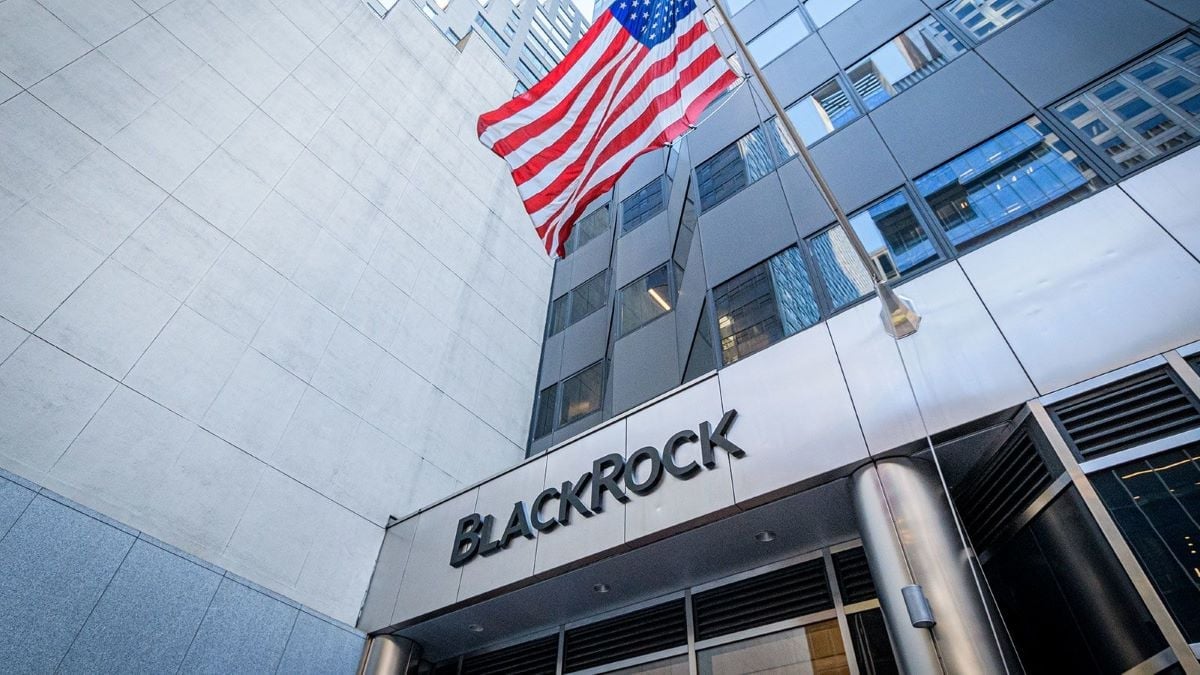
BlackRock and Marvel Studios Acquire Big Stakes in Mutual Capital
BlackRock and Marvel Studios acquire major stakes in Mutual Capital, boosting its role as a leader in asset tokenization.]]>
Share
Crypto News Flash2025/09/18 17:10
